Rules Regulations Tenants Of Forestry
Description
Get your form ready online
Our built-in tools help you complete, sign, share, and store your documents in one place.
Make edits, fill in missing information, and update formatting in US Legal Forms—just like you would in MS Word.
Download a copy, print it, send it by email, or mail it via USPS—whatever works best for your next step.
Sign and collect signatures with our SignNow integration. Send to multiple recipients, set reminders, and more. Go Premium to unlock E-Sign.
If this form requires notarization, complete it online through a secure video call—no need to meet a notary in person or wait for an appointment.
We protect your documents and personal data by following strict security and privacy standards.

Make edits, fill in missing information, and update formatting in US Legal Forms—just like you would in MS Word.

Download a copy, print it, send it by email, or mail it via USPS—whatever works best for your next step.

Sign and collect signatures with our SignNow integration. Send to multiple recipients, set reminders, and more. Go Premium to unlock E-Sign.

If this form requires notarization, complete it online through a secure video call—no need to meet a notary in person or wait for an appointment.

We protect your documents and personal data by following strict security and privacy standards.
Looking for another form?

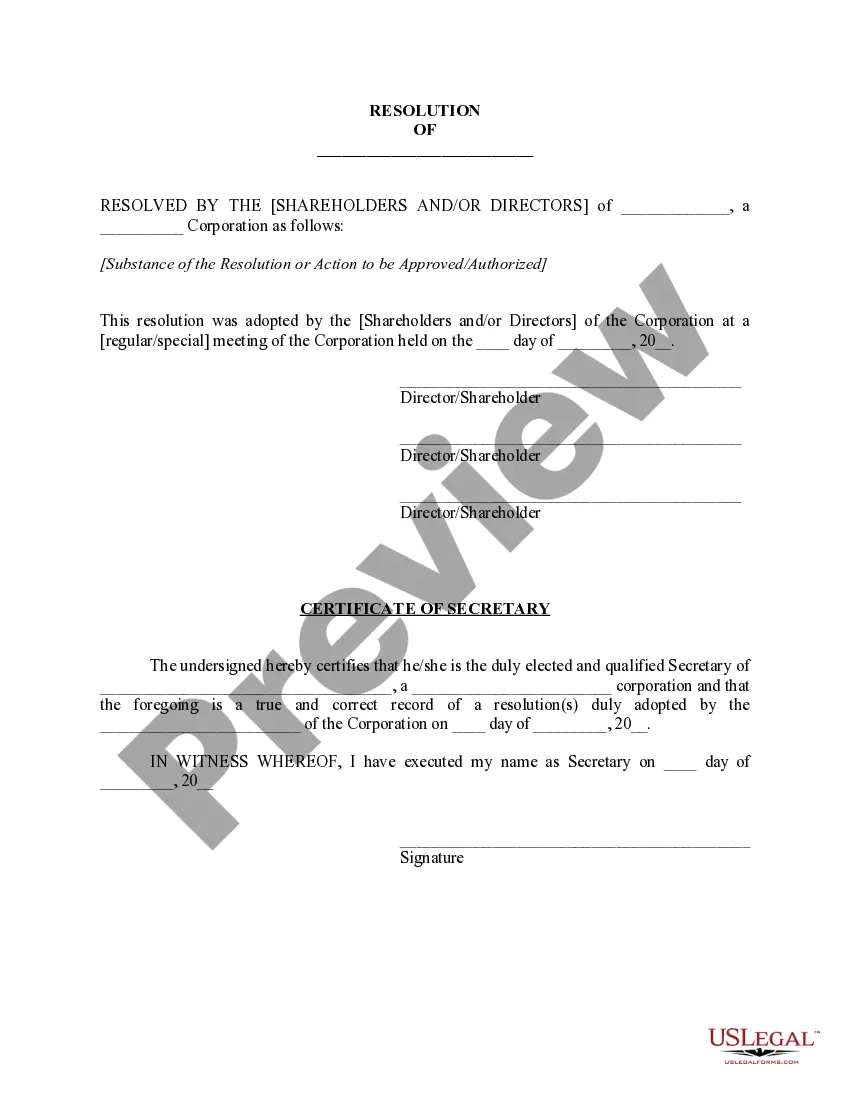


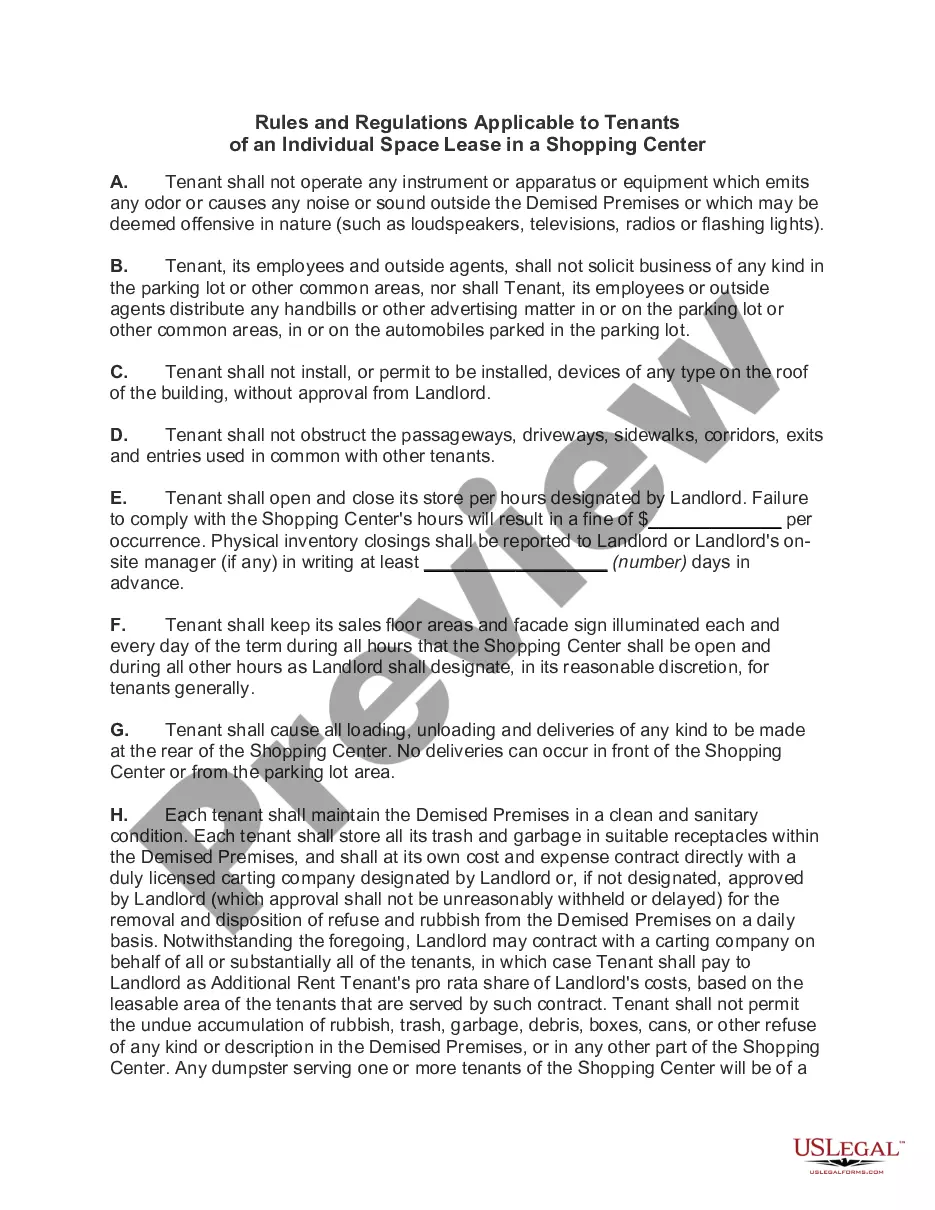
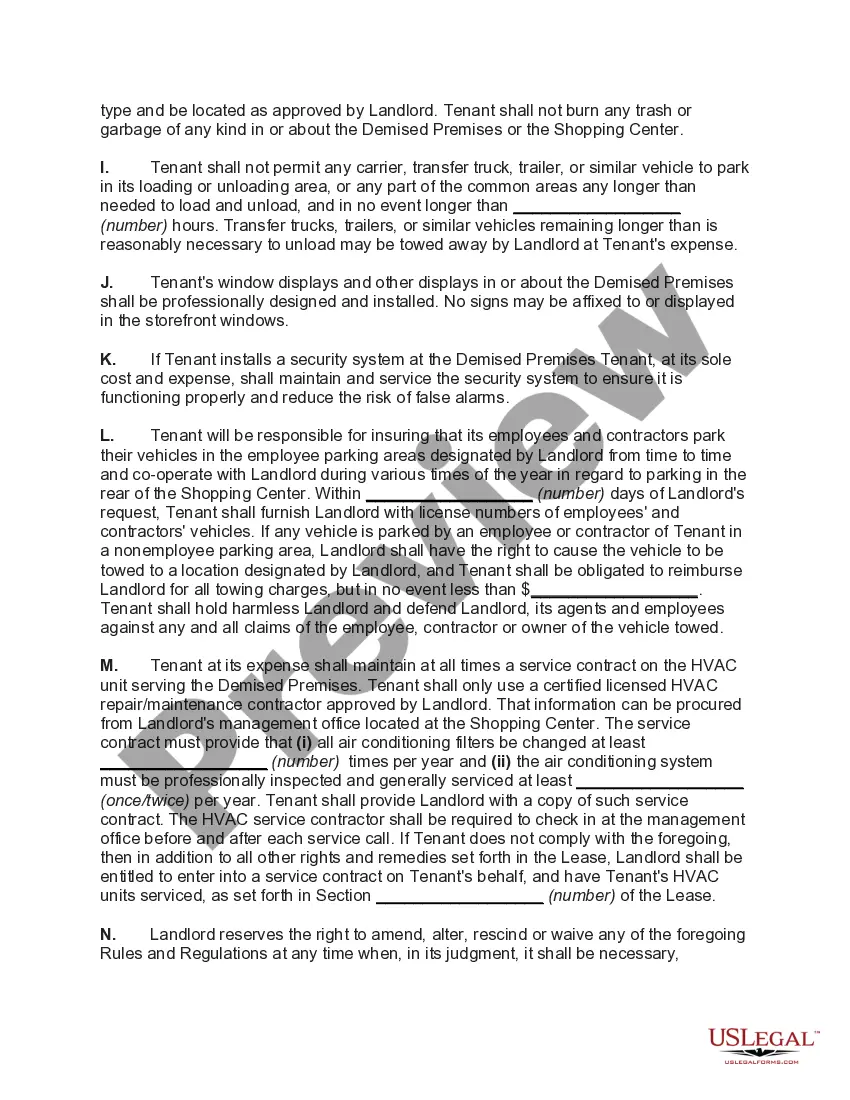
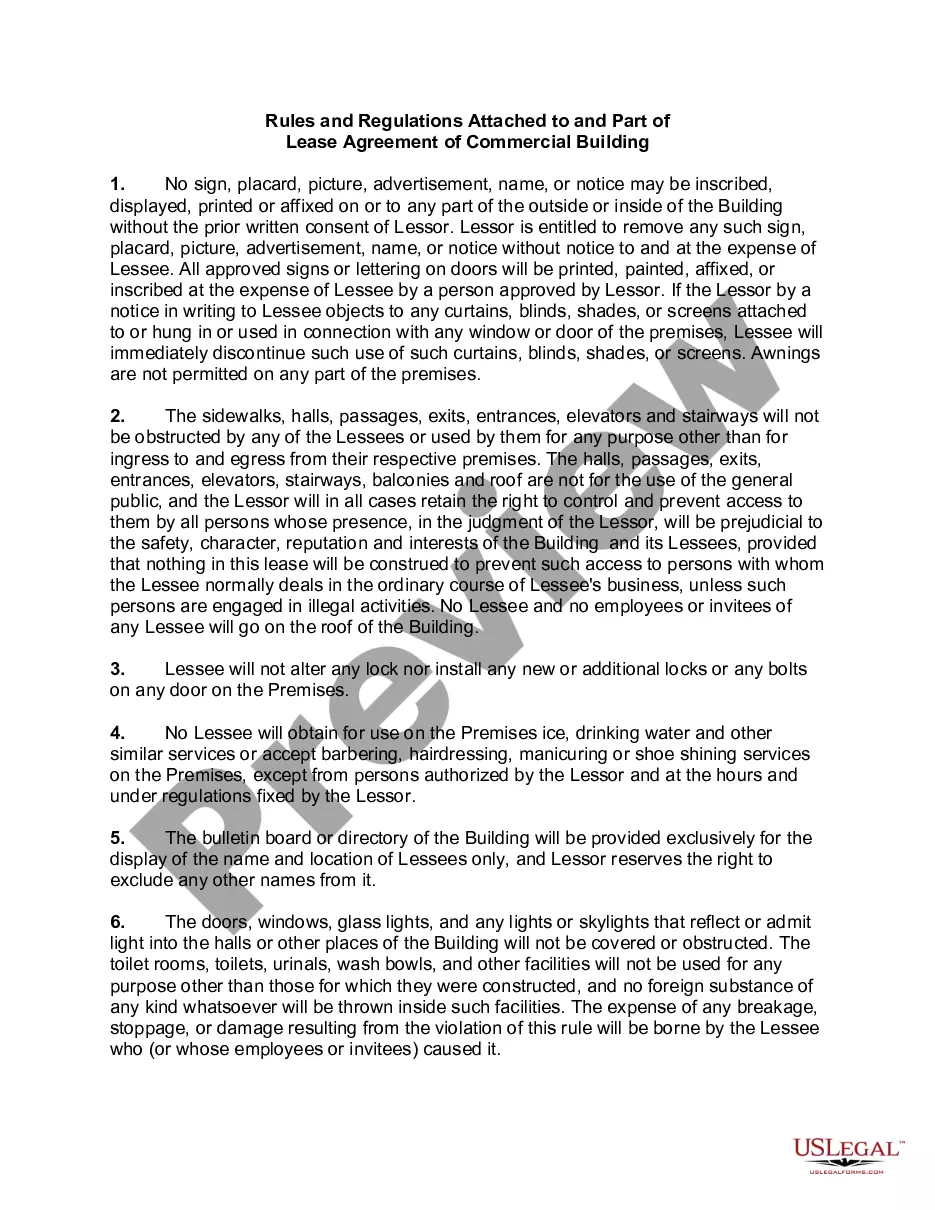
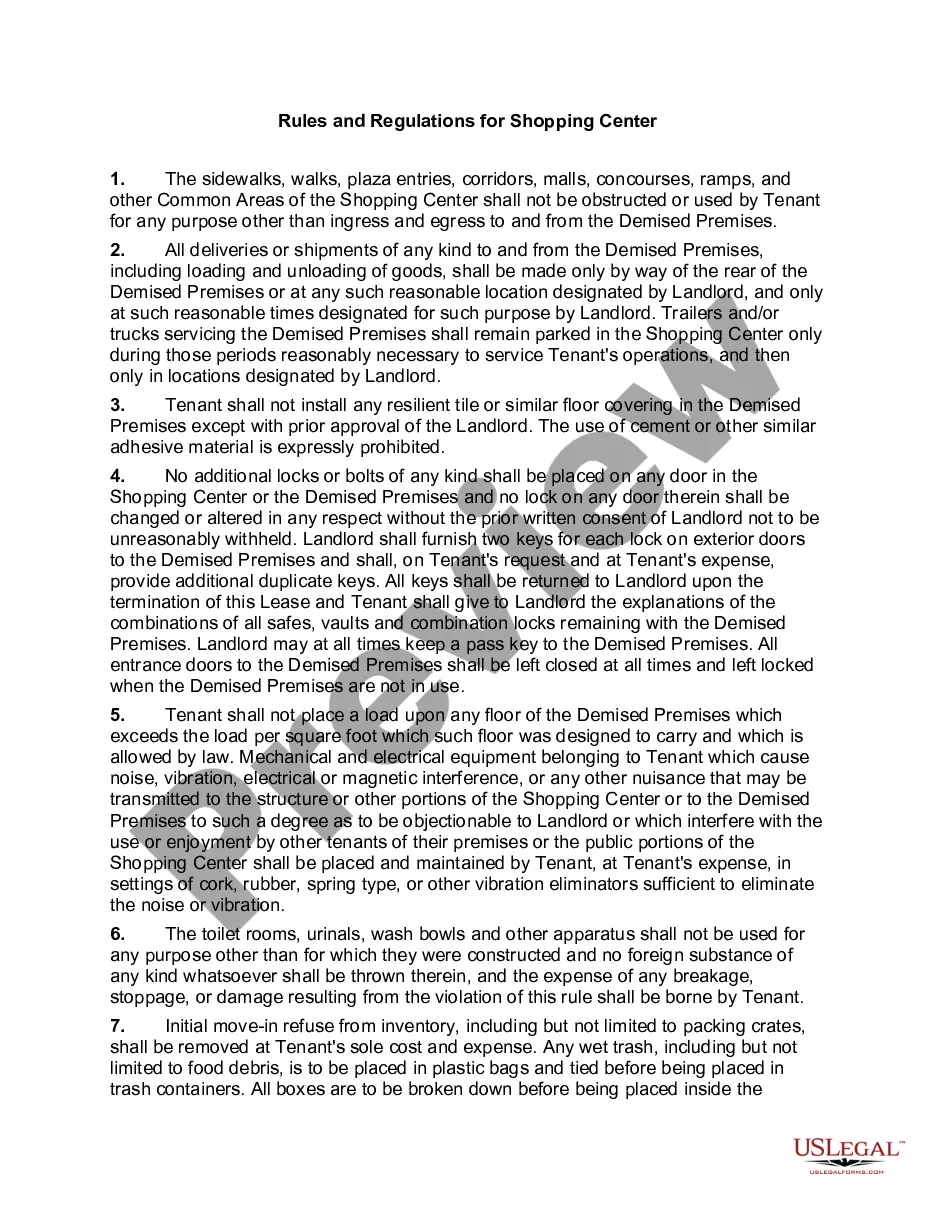
How to fill out Rules And Regulations Applicable To Tenants Of An Individual Space Lease In Shopping Center?
Regardless of whether for commercial reasons or personal issues, everyone must confront legal matters at some point in their life.
Completing legal documents requires meticulous attention, starting with selecting the appropriate form template.
After it is saved, you can fill out the form using editing software or print it and complete it manually. With a vast US Legal Forms catalog available, you do not have to waste time searching for the suitable template online. Use the library’s user-friendly navigation to obtain the correct template for any circumstance.
- For instance, if you choose an incorrect version of the Rules Regulations Tenants Of Forestry, it will be denied upon submission.
- Thus, it is crucial to find a trustworthy source of legal documents like US Legal Forms.
- If you need to obtain a Rules Regulations Tenants Of Forestry template, follow these straightforward steps.
- Utilize the search bar or catalog navigation to locate the necessary template.
- Review the details of the form to ensure it aligns with your situation, state, and area.
- Click on the form’s preview to examine it.
- If it is the wrong form, return to the search feature to find the Rules Regulations Tenants Of Forestry sample you need.
- Download the file if it satisfies your requirements.
- If you already possess a US Legal Forms account, simply click Log in to access previously saved templates in My documents.
- If you do not have an account yet, you can download the form by clicking Buy now.
- Select the appropriate pricing option.
- Complete the account registration form.
- Choose your payment method: use a credit card or PayPal account.
- Select the document format you desire and download the Rules Regulations Tenants Of Forestry.
Form popularity
FAQ
(2) The State Government may make rules for regulating the management of village forests, prescribing the conditions under which the community to which any such assignment is made may be provided with timber or other forest-produce or pasture, and their duties for the protection and improvement of such forest.
Under section 35 of Indian Forest Act, 1927, the Government of India had imposed restrictions vide various notifications to the land owners of private forest lands for regulating and prohibiting the use of such private forest lands for non forestry purpose with a view to protect the forest lands.
Forestry laws govern activities in designated forest lands, most commonly with respect to forest management and timber harvesting. Forestry laws generally adopt management policies for public forest resources, such as multiple use and sustained yield.
The FOREST Act will require companies that import wood and wood products to certify they have exercised reasonable care to ensure that goods made were not produced from illegally deforested land. It will also establish a purchasing preference for the federal government for deforestation-free products.
The most famous one was the Indian Forest Act of 1878. Both the 1878 act and the 1927 act sought to consolidate and reserve the areas having forest cover, or significant wildlife, to regulate movement and transit of forest produce, and duty leviable on timber and other forest produce.