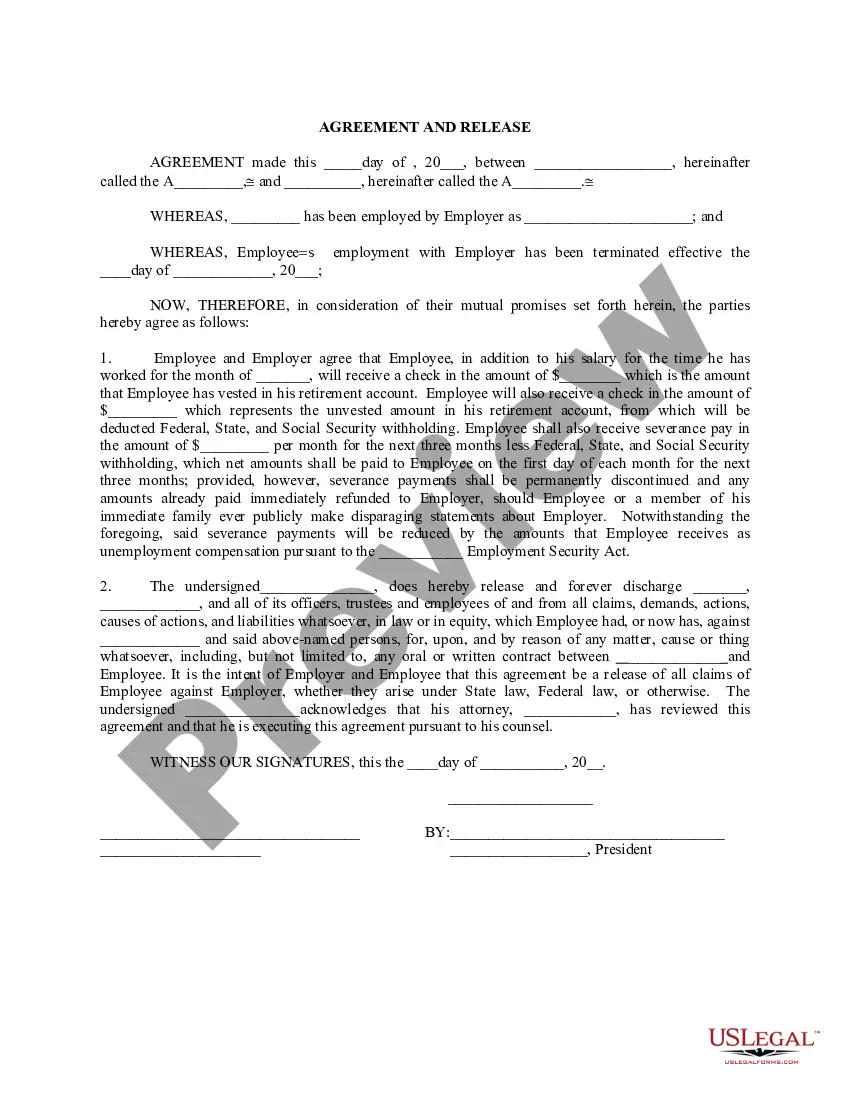
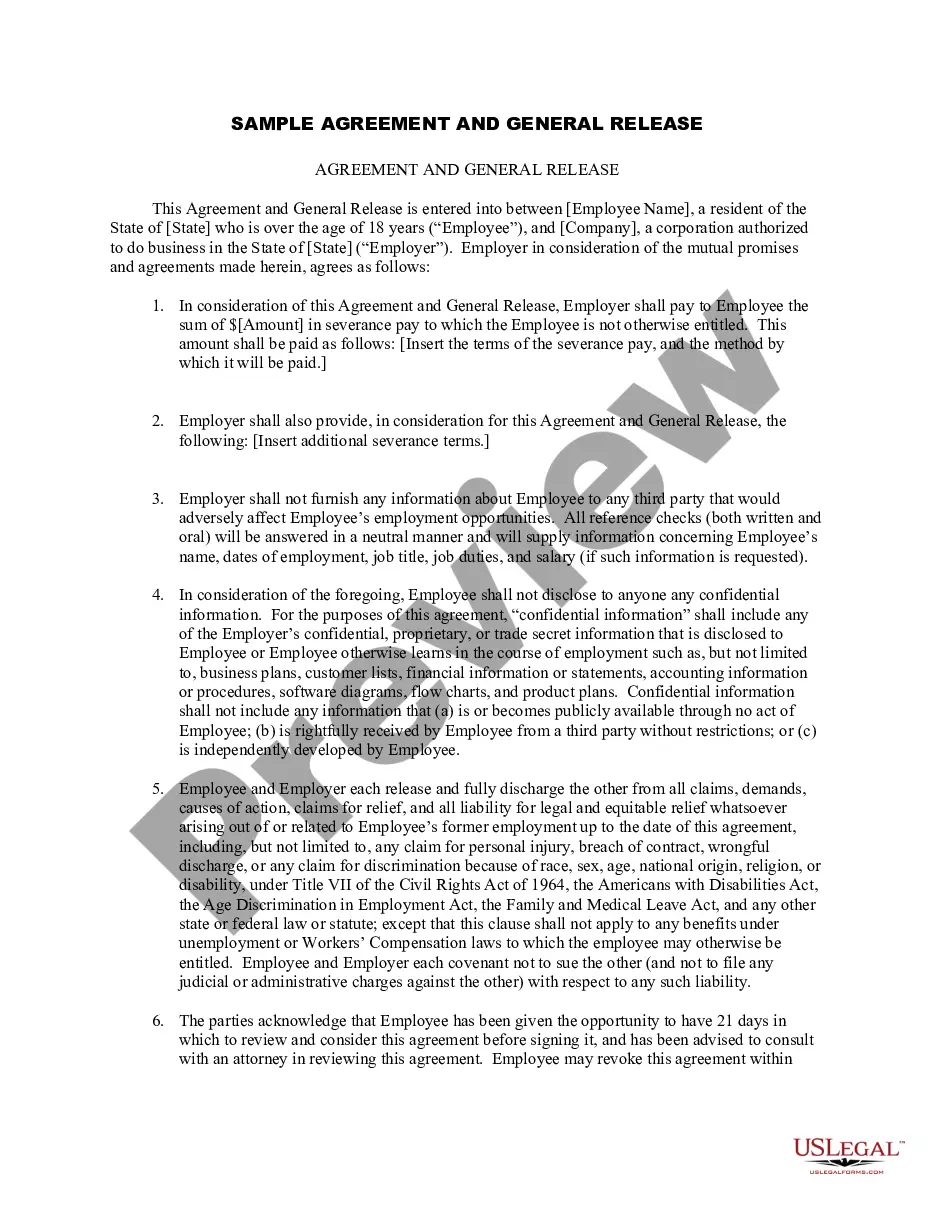
Severance Agreement With Non-disparagement Clause
Description
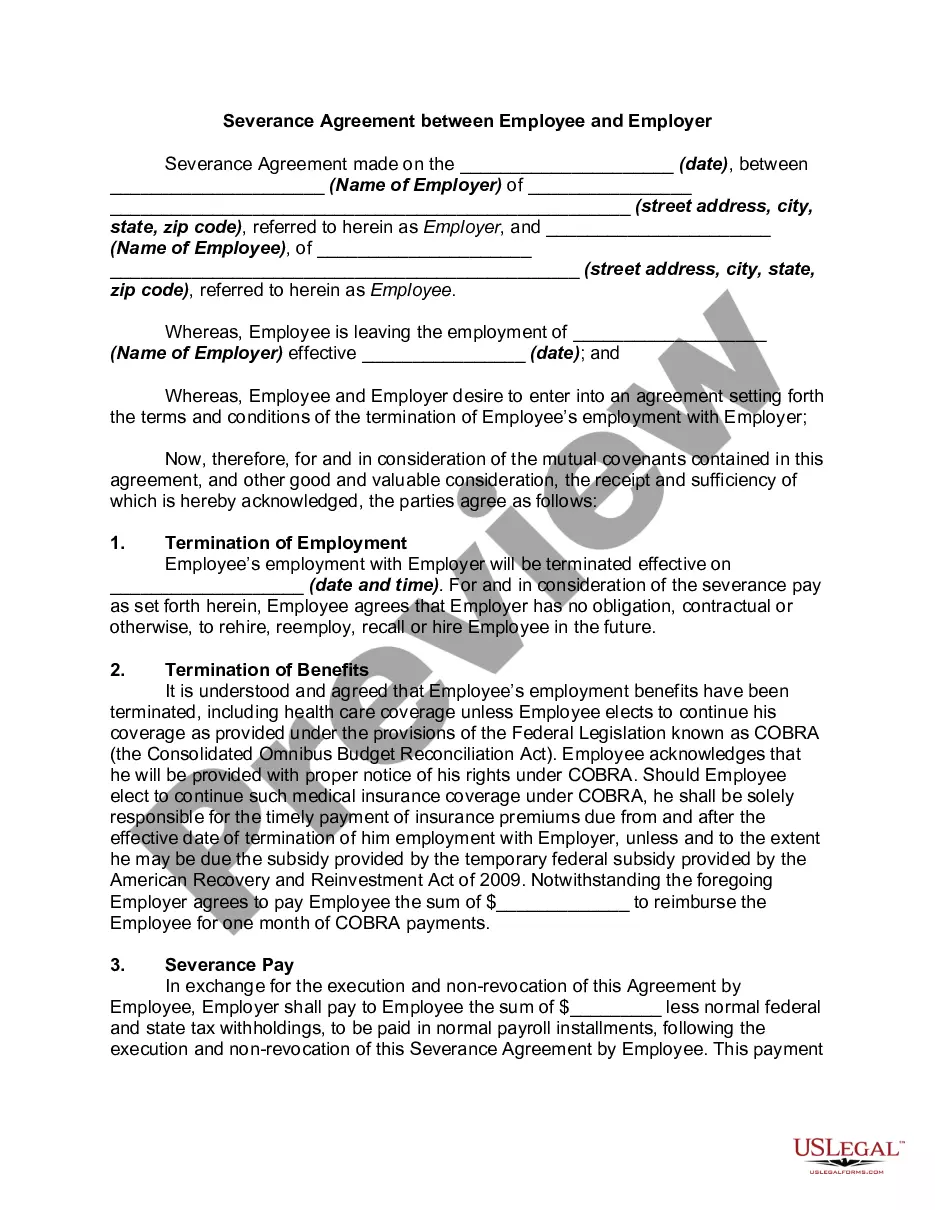
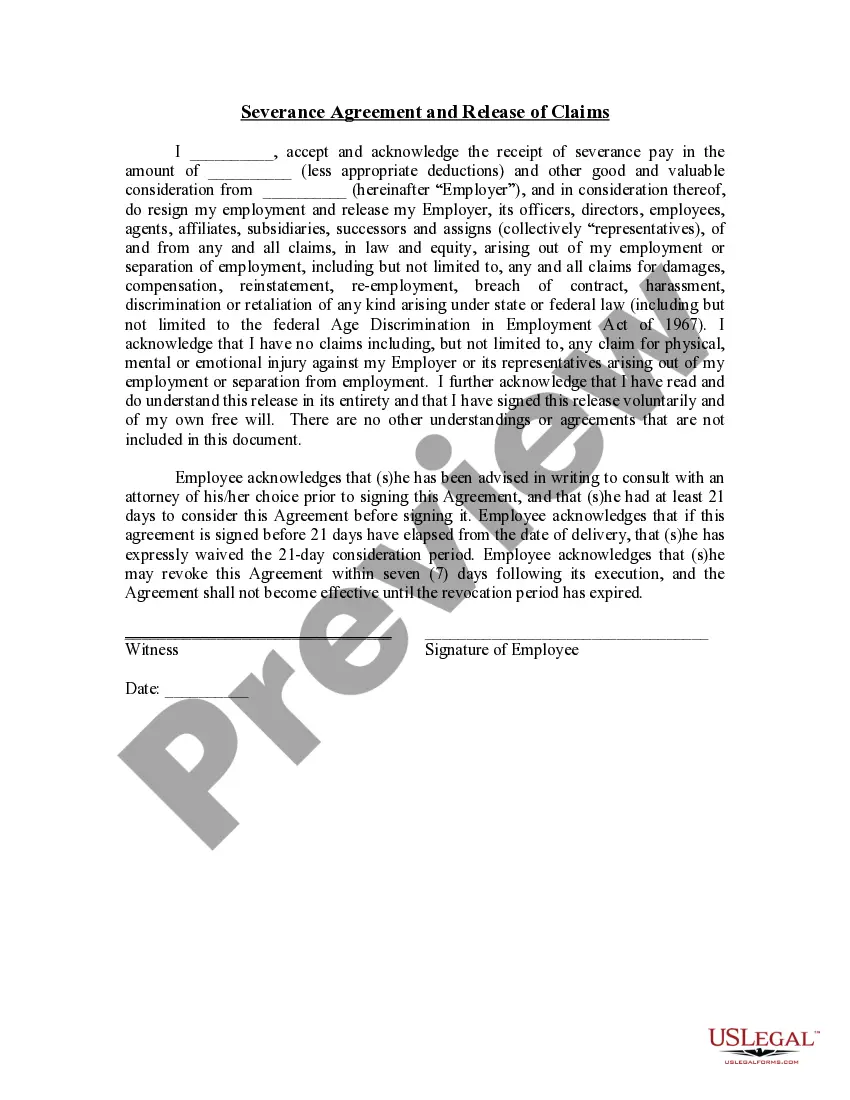
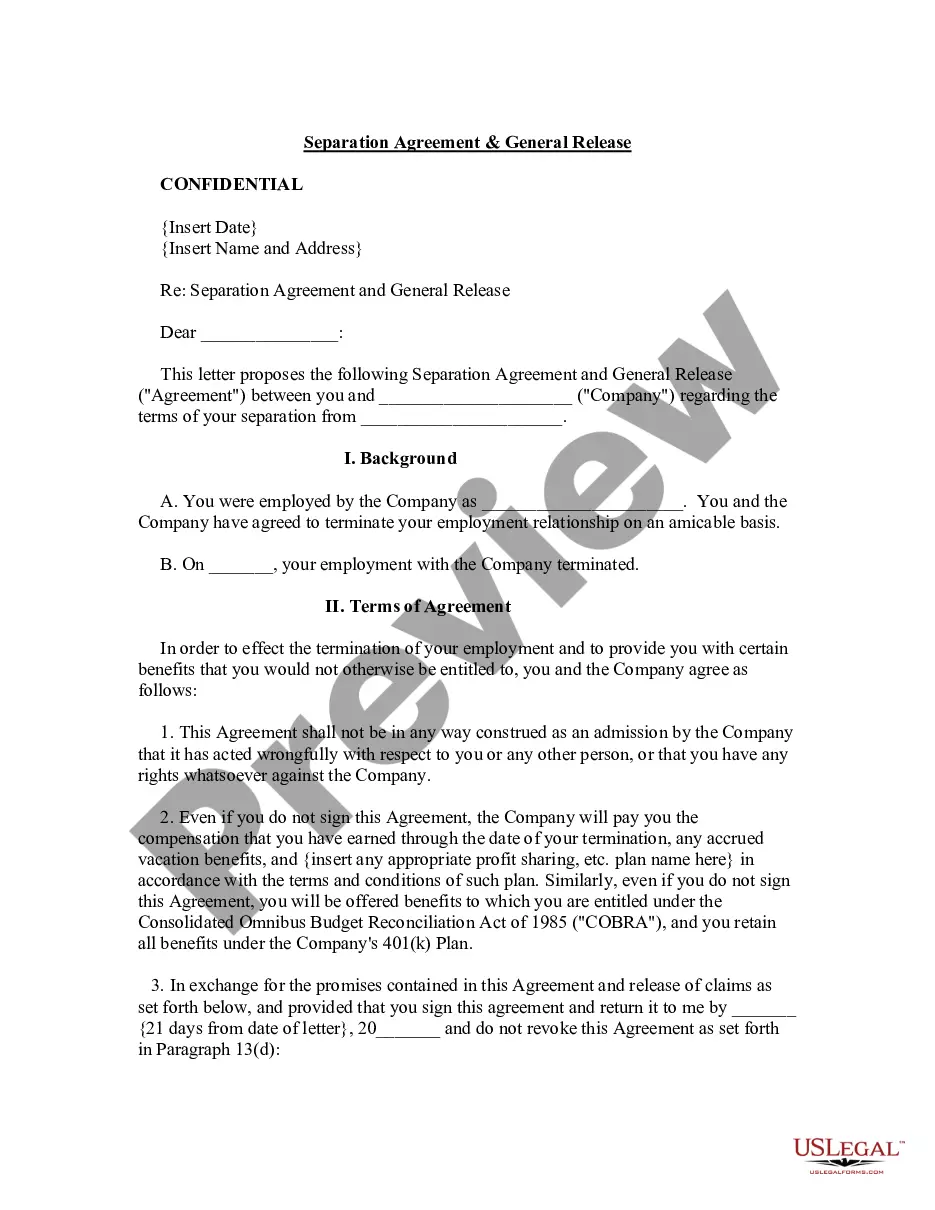
Get your form ready online
Our built-in tools help you complete, sign, share, and store your documents in one place.
Make edits, fill in missing information, and update formatting in US Legal Forms—just like you would in MS Word.
Download a copy, print it, send it by email, or mail it via USPS—whatever works best for your next step.
Sign and collect signatures with our SignNow integration. Send to multiple recipients, set reminders, and more. Go Premium to unlock E-Sign.
If this form requires notarization, complete it online through a secure video call—no need to meet a notary in person or wait for an appointment.
We protect your documents and personal data by following strict security and privacy standards.

Make edits, fill in missing information, and update formatting in US Legal Forms—just like you would in MS Word.

Download a copy, print it, send it by email, or mail it via USPS—whatever works best for your next step.

Sign and collect signatures with our SignNow integration. Send to multiple recipients, set reminders, and more. Go Premium to unlock E-Sign.

If this form requires notarization, complete it online through a secure video call—no need to meet a notary in person or wait for an appointment.

We protect your documents and personal data by following strict security and privacy standards.
Looking for another form?
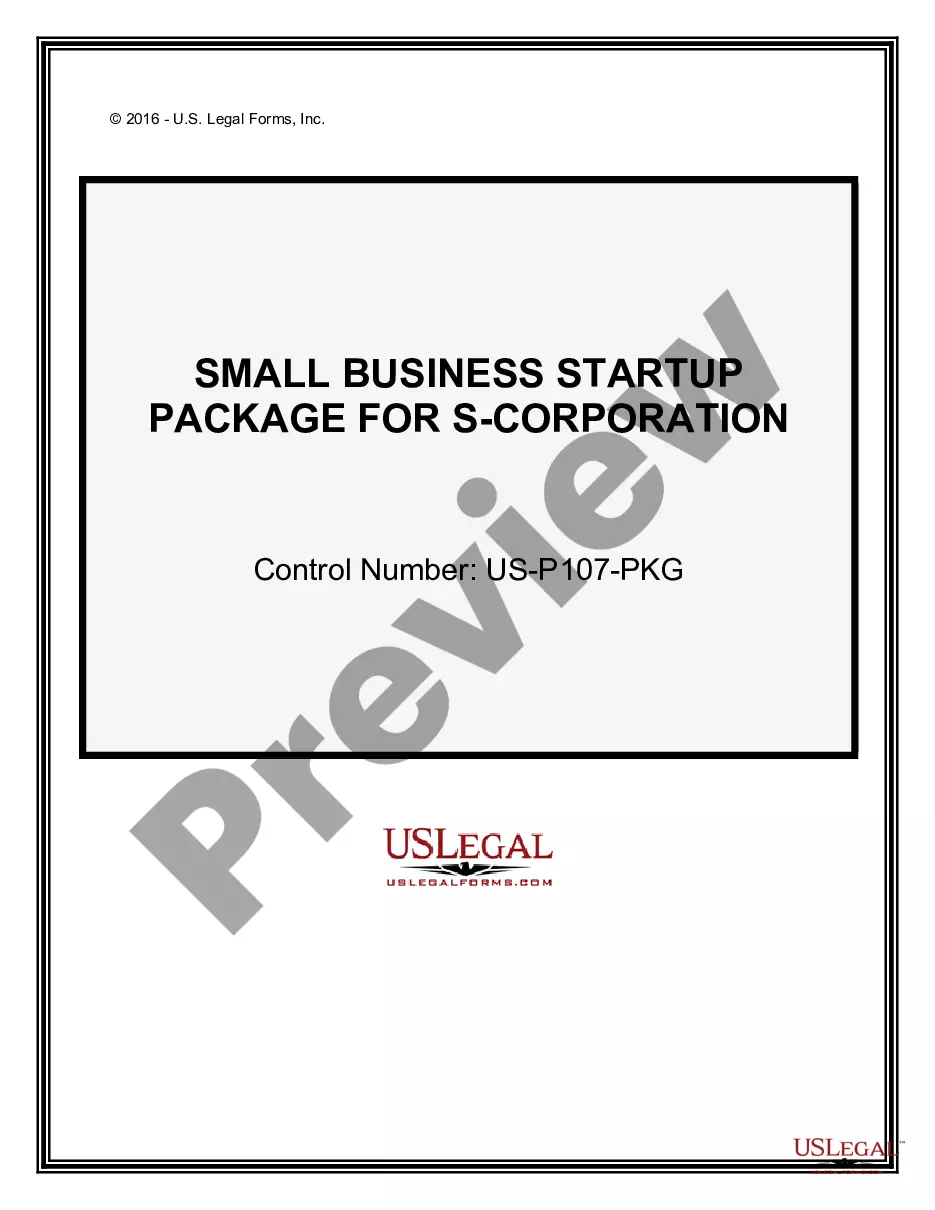

How to fill out Agreement And Release Regarding Severance Of Employment?
- If you're a returning user, simply log in to your account and download the desired form by clicking the Download button, ensuring your subscription is active.
- For first-time users, start by reviewing the Preview mode and document description to select the appropriate form that aligns with your requirements and local laws.
- Utilize the Search tab to find alternative templates if necessary, confirming the form matches your criteria before proceeding.
- Purchase the document by clicking on the Buy Now button and selecting your preferred subscription plan; registration is essential for access.
- Complete your payment using your credit card or PayPal, finalizing your subscription.
- Download your severance agreement form and save it on your device, allowing you easy access from the My Forms section of your profile.
US Legal Forms empowers individuals and attorneys to efficiently complete legal documents with an extensive library featuring over 85,000 fillable forms.
Start your journey towards a professionally crafted severance agreement today and ensure your legal documents are sound. Discover the benefits by visiting US Legal Forms now!
Form popularity
FAQ
The non-disparagement clause in a severance agreement prevents parties from making negative statements about one another. This clause aims to foster a respectful separation while protecting reputations. It is especially important in a severance agreement with a non-disparagement clause because it provides a clear framework for both sides, reducing the risk of disputes. By including these clauses, companies maintain a positive image while offering employees peace of mind.
A severance agreement can become invalid if it does not meet legal requirements or if one party did not sign willingly. For instance, if there was coercion or if the agreement lacks essential components, like consideration, it may not hold up in court. Additionally, if a severance agreement with a non-disparagement clause contradicts existing statutes or public policy, it could also be deemed unenforceable. Understanding these factors is crucial for both employers and employees.
You can indeed incorporate a noncompete clause within a severance agreement. It's important that this clause aligns with legal standards, ensuring it is reasonable and not too restrictive. By adding a noncompete to your severance agreement with a non-disparagement clause, both parties establish clear expectations for future employment. Consulting with a legal advisor can provide further insights into crafting a balanced agreement.
Yes, you can include a non-compete clause in a severance agreement. However, it must be reasonable in duration and geographic scope to be enforceable. Including a non-compete in your severance agreement with a non-disparagement clause can help protect the business interests of the employer. Ensure that you fully understand the implications before agreeing to such terms, and don't hesitate to seek legal guidance.
A noncompete agreement may be voided if it is found to be overly restrictive, unreasonable in duration or geographic scope, or if it was signed under duress. Additionally, if the employer does not provide adequate consideration, such as compensation or benefits, it may weaken the agreement's enforceability. Understanding the specifics of your noncompete within the context of a severance agreement with a non-disparagement clause is important. Legal consultation is recommended to address these issues.
Yes, non-disparagement clauses are legal in severance agreements, including those with a non-disparagement clause. These clauses serve to protect both the employee and employer, preventing negative statements that could harm reputations. It is advisable to ensure that the terms are reasonable and clearly defined to prevent future disputes. Utilizing platforms like US Legal Forms can assist you in drafting a compliant and effective severance agreement.
A severance agreement can be voided under several circumstances, such as coercion, misrepresentation, or if it violates state labor laws. If either party breaches the terms agreed upon, or if the agreement is deemed unconscionable, it may also become void. It is essential to understand the specific details of your severance agreement with a non-disparagement clause to avoid potential pitfalls. For any ambiguities, seeking legal advice can provide clarity.
Non-compete agreements can still be valid if you get laid off, depending on state laws and the specific terms of the agreement. When entering a severance agreement with a non-disparagement clause, it is crucial to review any non-compete clauses present. Some states have restrictions on enforcing these agreements post-layoff, so understanding your rights is vital. Consulting a legal professional may help you navigate these complex issues.
Yes, requiring a non-disclosure agreement (NDA) in a severance agreement with a non-disparagement clause is generally legal. Such NDAs help ensure that sensitive information, such as trade secrets or confidential company data, remains protected after employment ends. However, it's essential to ensure that the NDA is reasonable and does not overly restrict an employee's future opportunities. Consulting a legal expert can help clarify the specifics of your severance agreement.
Yes, non-disparagement clauses are frequently included in severance agreements with non-disparagement clauses. These clauses help protect the reputation of both parties involved. By agreeing to such terms, employees can receive their severance while maintaining a respectful atmosphere. The prevalence of these clauses reflects their importance in managing relationships and reputations post-employment.