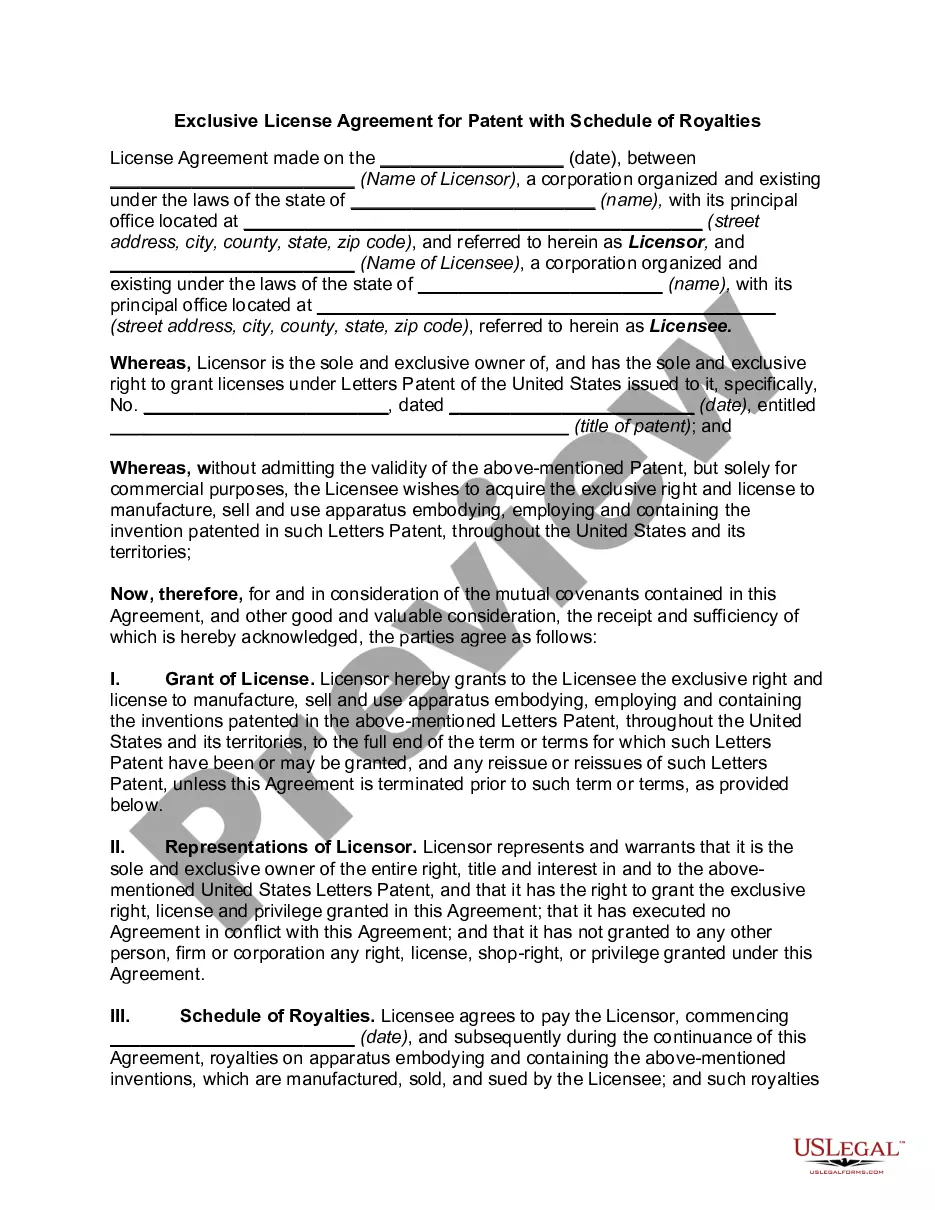
License Patent With For Thesis Defense
Description
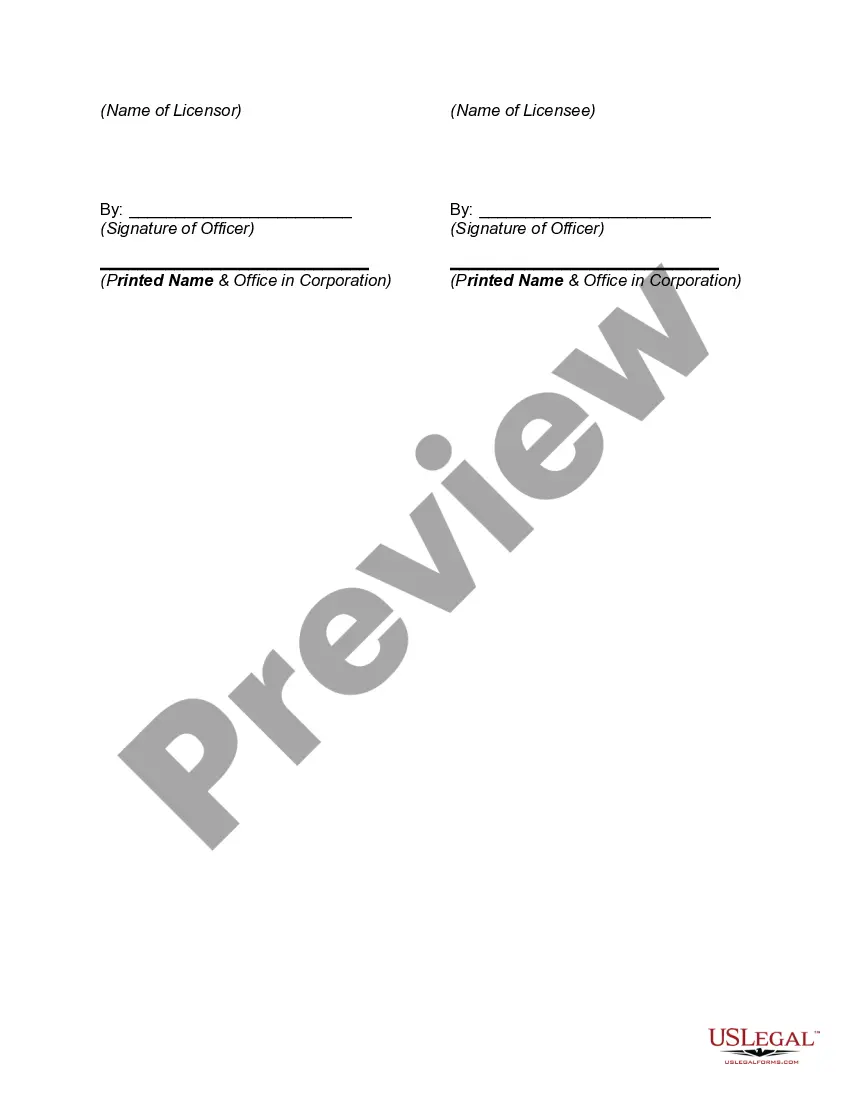
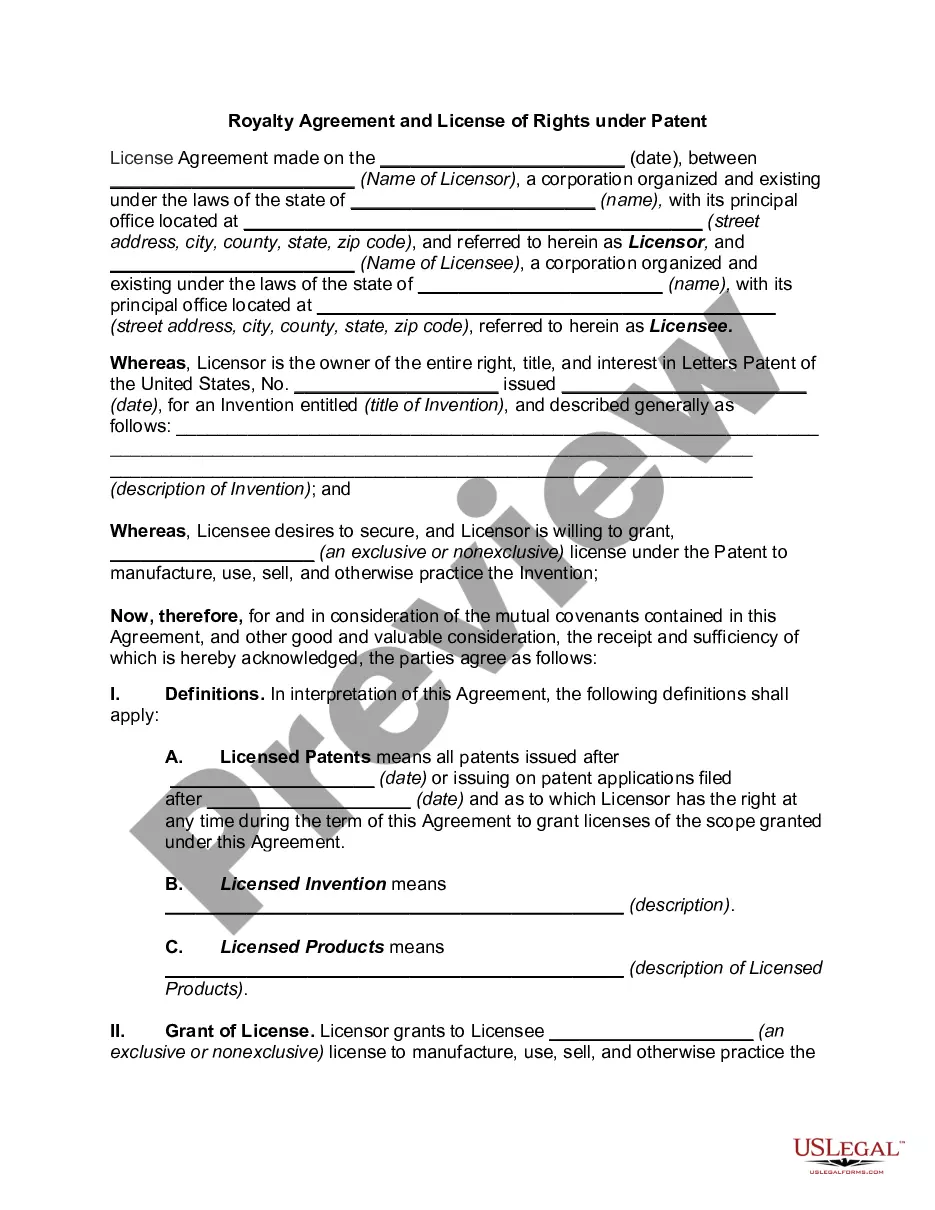
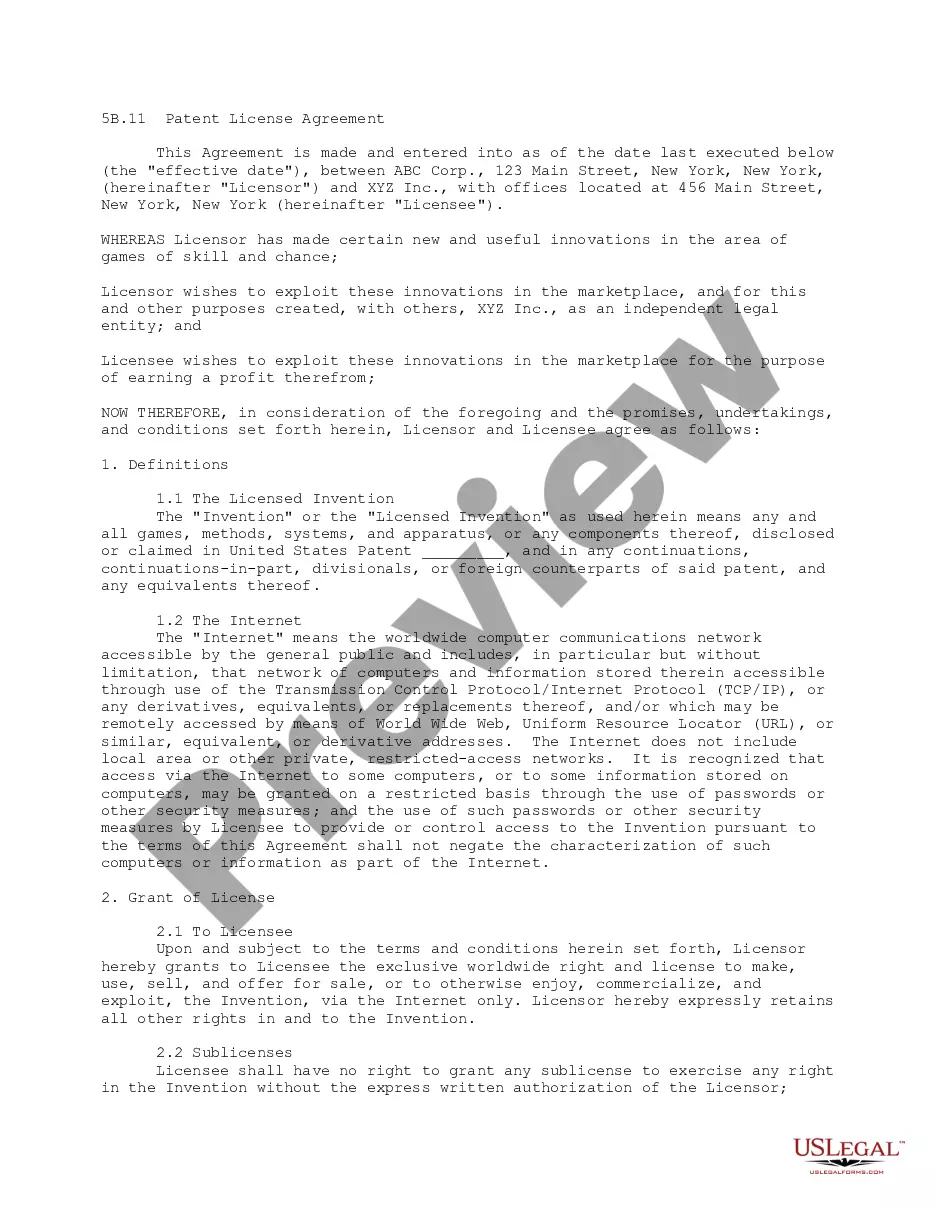
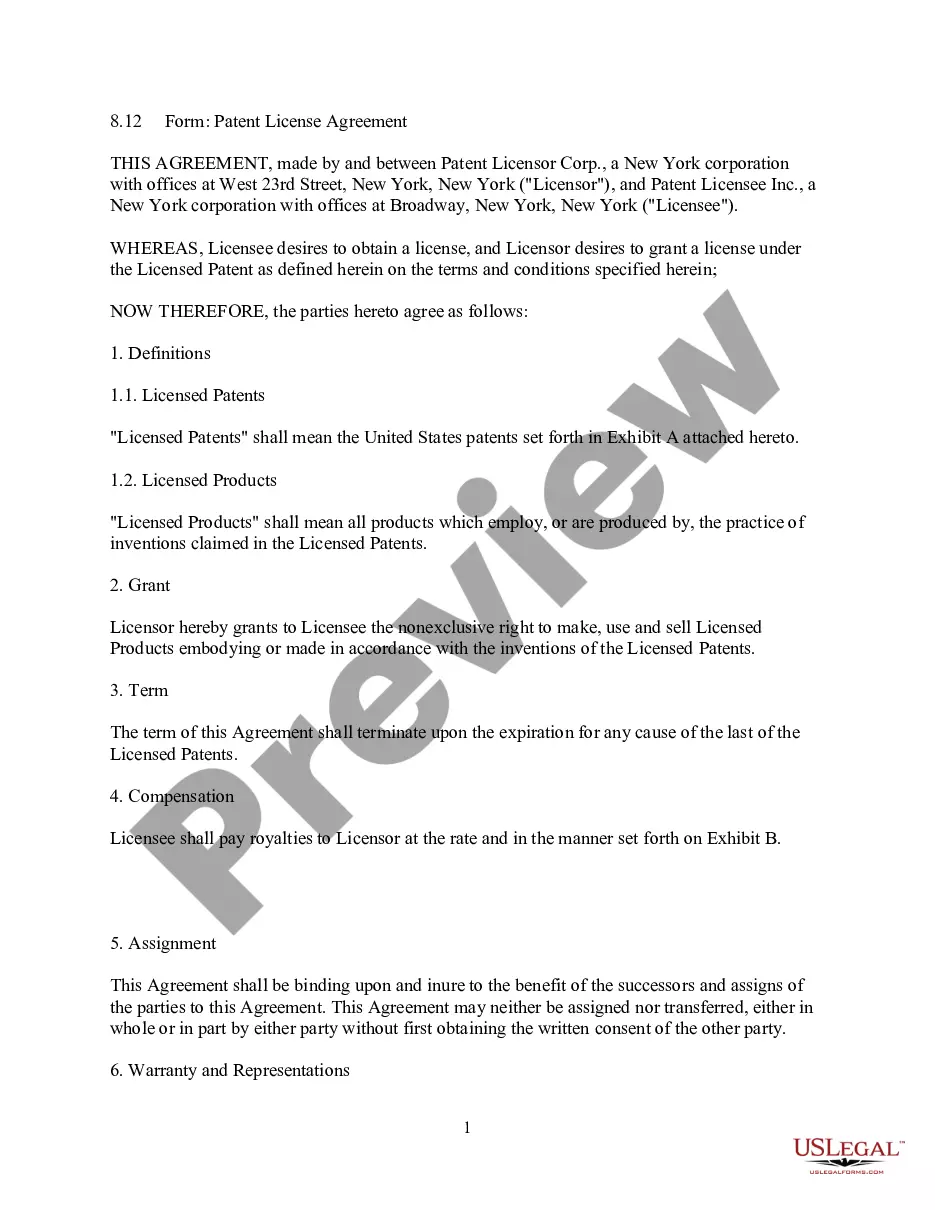
Get your form ready online
Our built-in tools help you complete, sign, share, and store your documents in one place.
Make edits, fill in missing information, and update formatting in US Legal Forms—just like you would in MS Word.
Download a copy, print it, send it by email, or mail it via USPS—whatever works best for your next step.
Sign and collect signatures with our SignNow integration. Send to multiple recipients, set reminders, and more. Go Premium to unlock E-Sign.
If this form requires notarization, complete it online through a secure video call—no need to meet a notary in person or wait for an appointment.
We protect your documents and personal data by following strict security and privacy standards.

Make edits, fill in missing information, and update formatting in US Legal Forms—just like you would in MS Word.

Download a copy, print it, send it by email, or mail it via USPS—whatever works best for your next step.

Sign and collect signatures with our SignNow integration. Send to multiple recipients, set reminders, and more. Go Premium to unlock E-Sign.

If this form requires notarization, complete it online through a secure video call—no need to meet a notary in person or wait for an appointment.

We protect your documents and personal data by following strict security and privacy standards.
Looking for another form?




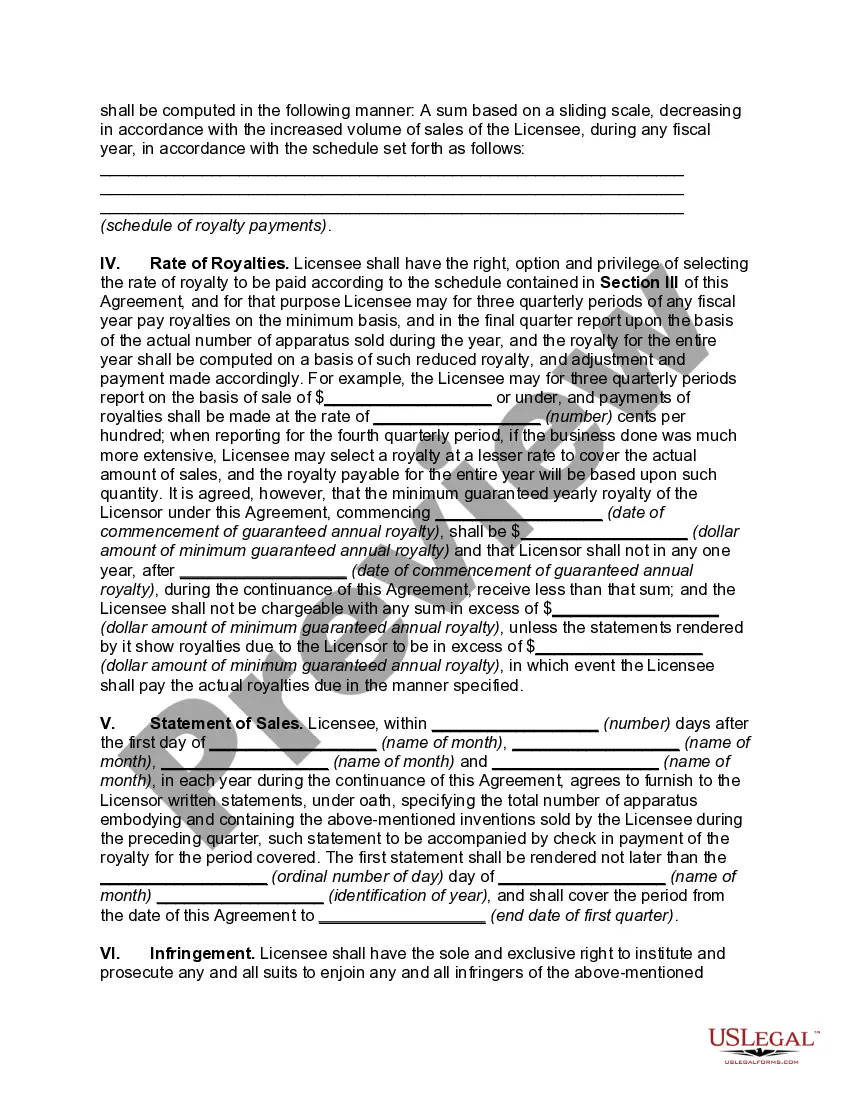
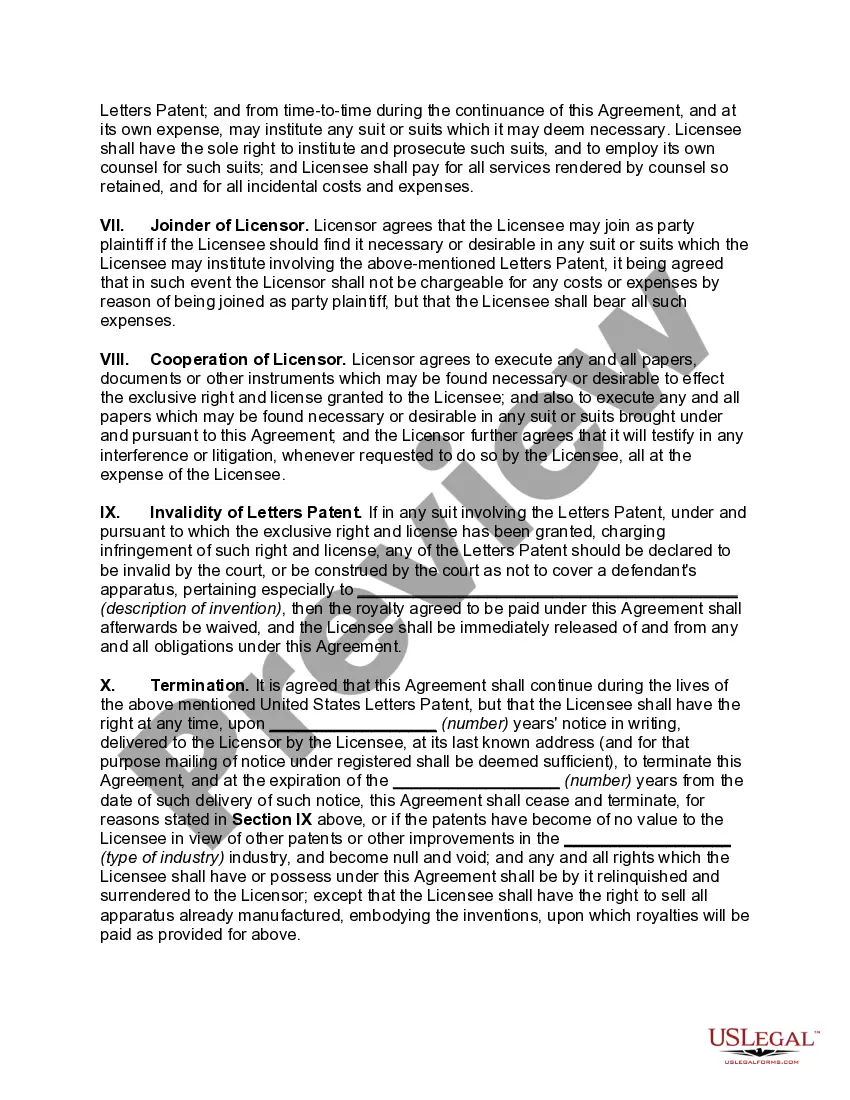
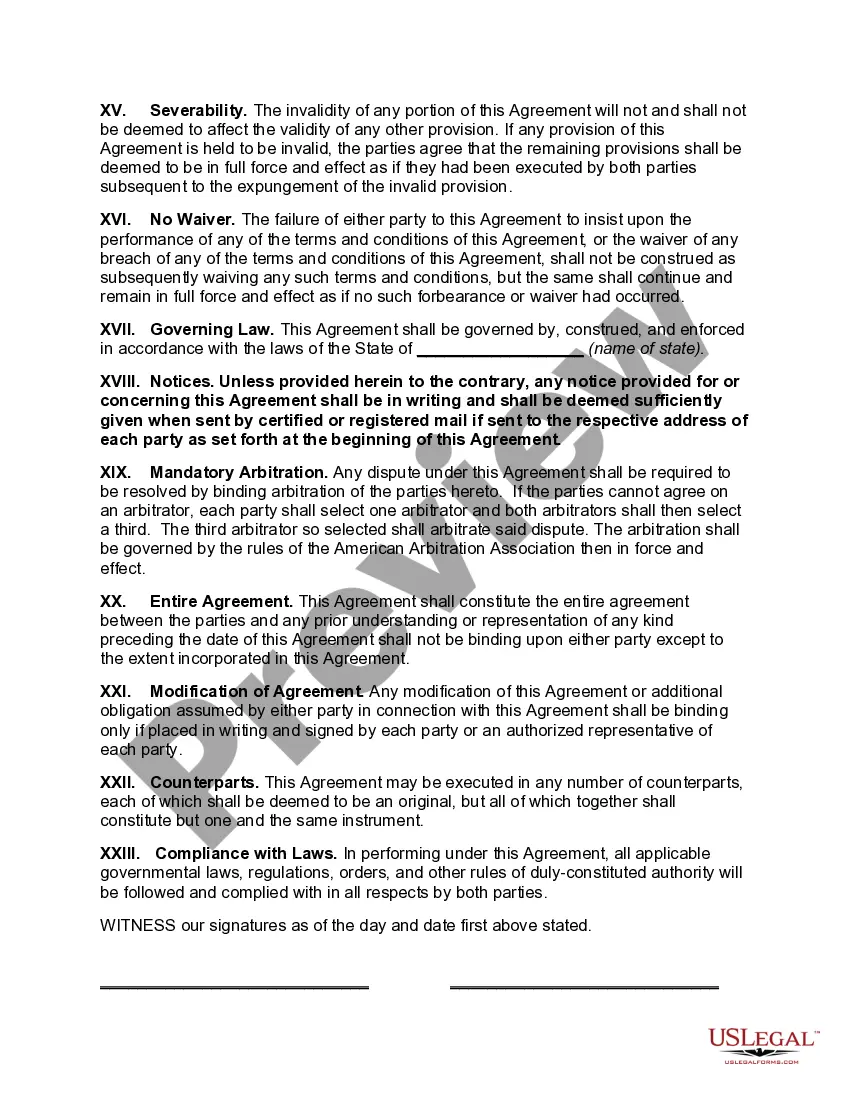
How to fill out Exclusive License Agreement For Patent With Schedule Of Royalties?
- If you have used US Legal Forms before, log in to access your account and download the required form template by clicking the Download button. Ensure your subscription remains valid; renew if necessary.
- If you are a new user, start by checking the Preview mode and form descriptions to identify a template that suits your requirements and complies with local jurisdiction.
- If you need a different template, utilize the Search tab above to find one that matches your criteria.
- Once you find a suitable document, click on the Buy Now button and select your preferred subscription plan. You’ll need to create an account to unlock all resources.
- Proceed to make your purchase by entering your credit card details or logging into PayPal to complete the transaction.
- Finally, download your form and save it to your device. You can access it anytime via the My Forms section of your profile.
In conclusion, US Legal Forms empowers individuals and legal professionals to create precise and legally valid documents. With an extensive library of over 85,000 forms and access to expert support, you can confidently navigate the licensing process.
Don't wait to secure your intellectual property—visit US Legal Forms today and begin your journey towards successfully licensing your patent!
Form popularity
FAQ
Writing a patent disclosure involves detailing your invention comprehensively and clearly. Begin with a description of your invention's purpose, followed by its components and functionalities. To effectively License patent with for thesis defense, emphasize how your invention stands out from existing solutions. Utilizing platforms like US Legal Forms can simplify the disclosure process, ensuring you include all necessary elements for successful protection.
Yes, you can write your own patent application, but it's important to understand the complexities involved. Crafting a strong application requires a clear understanding of patent law and the specific requirements for your invention. If you're ready to License patent with for thesis defense, consider using online resources or services that guide you through the process. Tools like US Legal Forms can provide templates and assistance to streamline your application.
Licensing your patent involves drafting a licensing agreement that outlines the terms of use, fees, and duration. This process can be complex, but resources like US Legal Forms can provide templates and guidance to help you navigate the legal landscape. Successfully licensing your patent with for thesis defense can open up new opportunities and revenue streams for your research.
Yes, your thesis is considered intellectual property, but ownership may be influenced by your university's policies or funding agreements. Protecting your intellectual property, such as licensing a patent with for thesis defense, affirms your rights and allows you to control how your work is used or commercialized. Understanding how to protect your thesis can enhance your academic and professional career.
You can copyright your PhD thesis as it qualifies as a piece of original work. Copyright grants you specific rights over reproduction, distribution, and derivative works related to your thesis. This protection is important for your academic integrity and can work alongside your efforts to license your patent with for thesis defense.
Yes, you can patent your PhD research if it meets specific criteria, including novelty, usefulness, and non-obviousness. Licensing a patent with for thesis defense allows you to protect your inventions derived from your research while also enabling you to earn royalties. Always consult a legal expert for tailored advice, ensuring you navigate the complexities of patent law accurately.
You typically own your PhD thesis, but this can vary depending on your university's policies and any agreements you signed. If you created your thesis as part of a contract with a sponsor or while using university resources, they may retain some rights. It is crucial to review your institutional guidelines to ensure your rights are clearly understood, especially if you plan to license your patent with for thesis defense.
Becoming a licensed patent agent involves a few steps, starting with a solid understanding of patent law. You must study for and pass the USPTO registration exam to demonstrate your competence. Afterward, you'll need to gain experience in patent prosecution and client interactions. This knowledge is essential if you plan to license a patent for thesis defense, as it allows you to navigate the complexities of patent law efficiently.
To obtain a patent, your invention must be novel, useful, and non-obvious. First, it must be new, meaning it has not been disclosed publicly before the filing. Second, it should offer some practical utility, and third, it should not be an obvious step to someone with knowledge of the field. Meeting these criteria is crucial when you aim to license a patent for thesis defense successfully.
To obtain a patent license, you first need to identify the patent owner and negotiate terms directly with them. The agreement should clearly outline the rights and responsibilities associated with the license. Moreover, using a reliable platform like US Legal Forms can simplify the process, ensuring proper documentation and compliance when you license a patent for thesis defense.