Drug Workplace Act Federal For Dummies
Description
Get your form ready online
Our built-in tools help you complete, sign, share, and store your documents in one place.
Make edits, fill in missing information, and update formatting in US Legal Forms—just like you would in MS Word.
Download a copy, print it, send it by email, or mail it via USPS—whatever works best for your next step.
Sign and collect signatures with our SignNow integration. Send to multiple recipients, set reminders, and more. Go Premium to unlock E-Sign.
If this form requires notarization, complete it online through a secure video call—no need to meet a notary in person or wait for an appointment.
We protect your documents and personal data by following strict security and privacy standards.

Make edits, fill in missing information, and update formatting in US Legal Forms—just like you would in MS Word.

Download a copy, print it, send it by email, or mail it via USPS—whatever works best for your next step.

Sign and collect signatures with our SignNow integration. Send to multiple recipients, set reminders, and more. Go Premium to unlock E-Sign.

If this form requires notarization, complete it online through a secure video call—no need to meet a notary in person or wait for an appointment.

We protect your documents and personal data by following strict security and privacy standards.
Looking for another form?

How to fill out Alcohol And Drug Free Workplace Policy?
- If you are a returning user, log in to your account to access and download your needed form template directly. Check that your subscription is active and renew it if necessary.
- For first-time users, start by browsing the extensive library. Review the Preview mode and form descriptions to ensure that the selected form meets your specific needs and adheres to local regulations.
- If you encounter any discrepancies or need an additional document, use the Search tab at the top to locate the correct template.
- After finding the right form, click the Buy Now button and select a subscription plan that suits you. You need to create an account to gain full access to the library.
- Proceed to checkout by providing your payment details, either via credit card or PayPal, to secure your subscription.
- Finally, download your chosen form and save it on your device. You can always revisit it from the My Forms section in your profile.
US Legal Forms stands out for its extensive collection, offering more than competitors while ensuring documents are legally sound and easy to navigate. With access to over 85,000 fillable forms, users can find what they need efficiently.
Don’t let paperwork overwhelm you! Explore US Legal Forms today and simplify your legal pursuits with ease.
Form popularity
FAQ
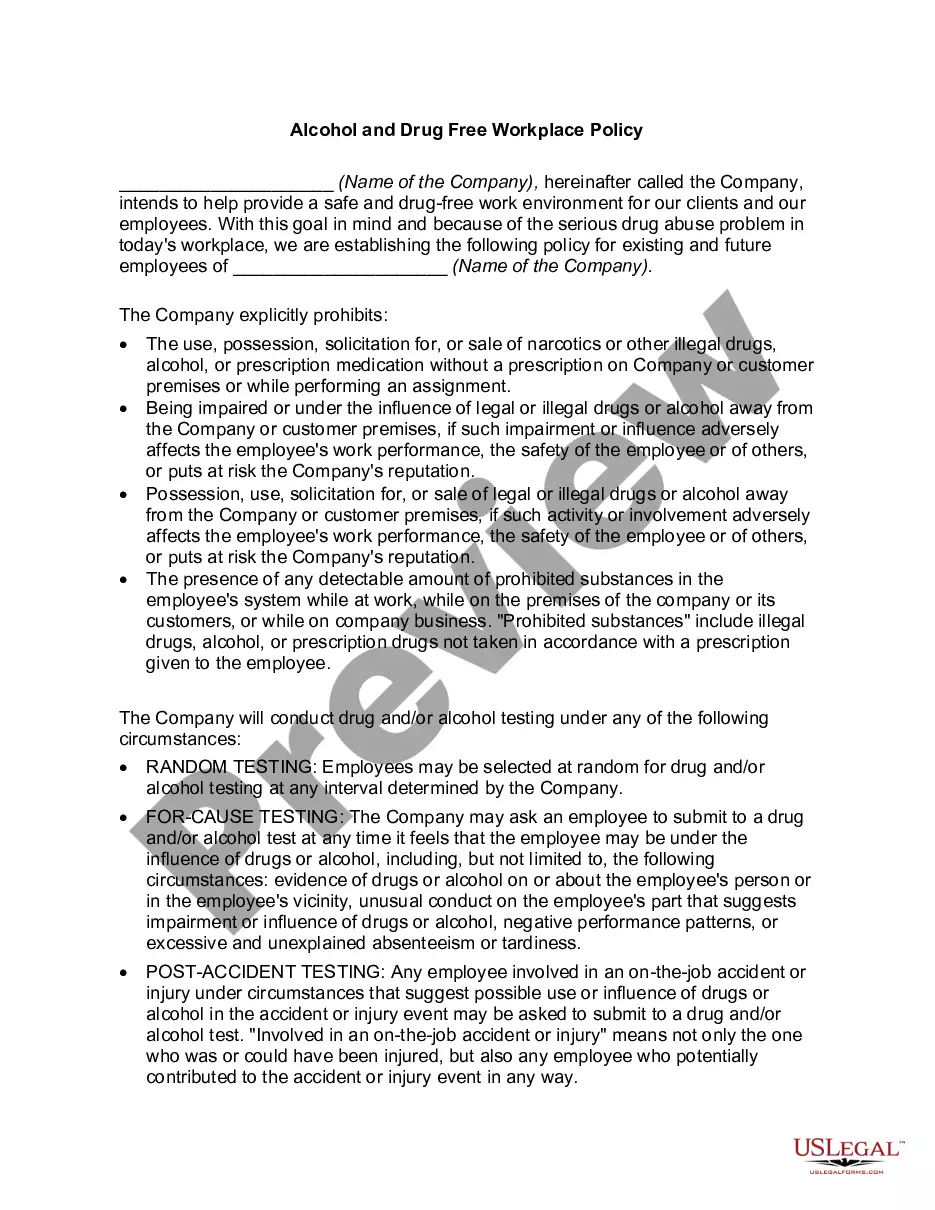
The federal drug Control Act focuses on regulating controlled substances in the United States. It establishes guidelines for the manufacture, distribution, and use of drugs to prevent misuse. This act plays a crucial role in ensuring safe access to medications while maintaining strict control over potentially harmful substances. Understanding this act is essential for anyone wanting a clear overview of the Drug Workplace Act federal for dummies.
Acceptable reasons for deferring a drug test include medical emergencies, recent hospitalization, or prescribed medication use that could affect the results. Familiarizing yourself with the Drug Workplace Act Federal for dummies will allow you to understand your rights better. If you find yourself needing to defer a test, uslegalforms offers the tools and templates required to document your request properly and professionally.
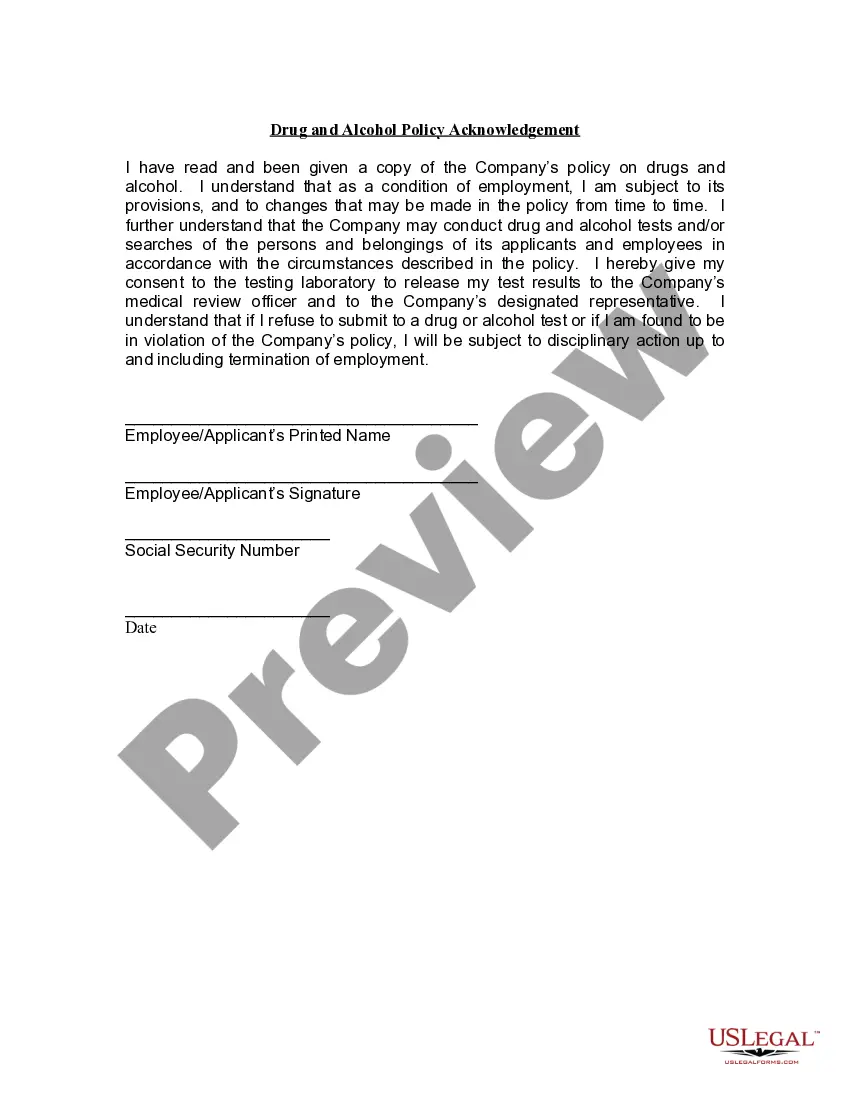
When addressing a failed drug test, it's crucial to communicate openly and honestly. First, consider the reasons that led to the result, such as medication, supplements, or accidental exposure. Understanding the provisions of the Drug Workplace Act Federal for dummies can help clarify your rights and responsibilities. Utilizing resources from uslegalforms can provide you with the necessary documentation and guidance for presenting your case effectively.
To find out if you passed your eScreen drug test, you should wait for the results to be communicated by your employer or the testing facility. Testing organizations often notify you through a secure portal or by phone, depending on their protocols. If you have questions about the tests performed or the results, you can always reach out to the testing provider directly. Being informed about these processes can alleviate the anxiety surrounding drug testing, especially in relation to the Drug Workplace Act federal guidelines.
If an employee in a TDP tests positive for illicit drugs, the company typically follows a strict protocol guided by the Drug Workplace Act federal regulations. This often involves suspension pending further investigation and potential disciplinary action, including termination. Employers must also ensure that they provide support resources, such as rehabilitation programs, as part of a comprehensive response. Understanding these procedures can help all employees navigate the consequences of drug testing more effectively.
To ascertain if your position is a TDP, check with your human resources department or your employee handbook, as these resources usually categorize job roles subject to drug testing. Many organizations outline TDP roles based on safety concerns and federal guidelines. You may also find helpful information in your company's drug policy. Knowing your role can help you prepare adequately for potential drug tests.
To find out if a job will subject you to drug testing, review the company’s drug policy, often found in the employee handbook. Many employers make this information clear during the hiring process, particularly for TDP jobs. You can always ask the hiring manager directly for clarity. Familiarizing yourself with the Drug Workplace Act federal can also provide insights into common testing requirements.
A TDP job, or testing designated position, refers to a role that is subject to regular drug testing as part of workplace safety regulations. The Drug Workplace Act federal guidelines help employers determine which positions require testing. These roles often involve safety-sensitive tasks that could endanger the employee or others if impaired. Understanding TDP jobs is crucial for employees to navigate their workplace drug policies effectively.