Client Real Estate With Little Money
Description

Get your form ready online
Our built-in tools help you complete, sign, share, and store your documents in one place.
Make edits, fill in missing information, and update formatting in US Legal Forms—just like you would in MS Word.
Download a copy, print it, send it by email, or mail it via USPS—whatever works best for your next step.
Sign and collect signatures with our SignNow integration. Send to multiple recipients, set reminders, and more. Go Premium to unlock E-Sign.
If this form requires notarization, complete it online through a secure video call—no need to meet a notary in person or wait for an appointment.
We protect your documents and personal data by following strict security and privacy standards.

Make edits, fill in missing information, and update formatting in US Legal Forms—just like you would in MS Word.

Download a copy, print it, send it by email, or mail it via USPS—whatever works best for your next step.

Sign and collect signatures with our SignNow integration. Send to multiple recipients, set reminders, and more. Go Premium to unlock E-Sign.

If this form requires notarization, complete it online through a secure video call—no need to meet a notary in person or wait for an appointment.

We protect your documents and personal data by following strict security and privacy standards.
Looking for another form?

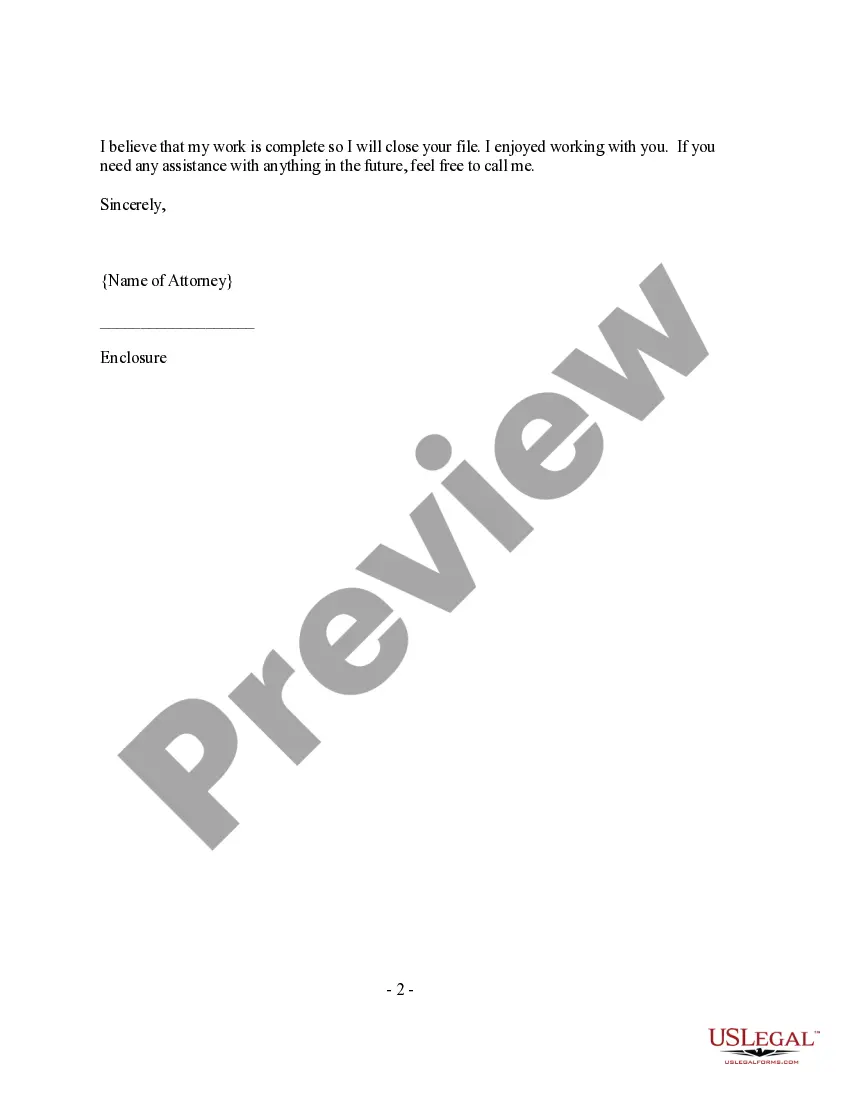
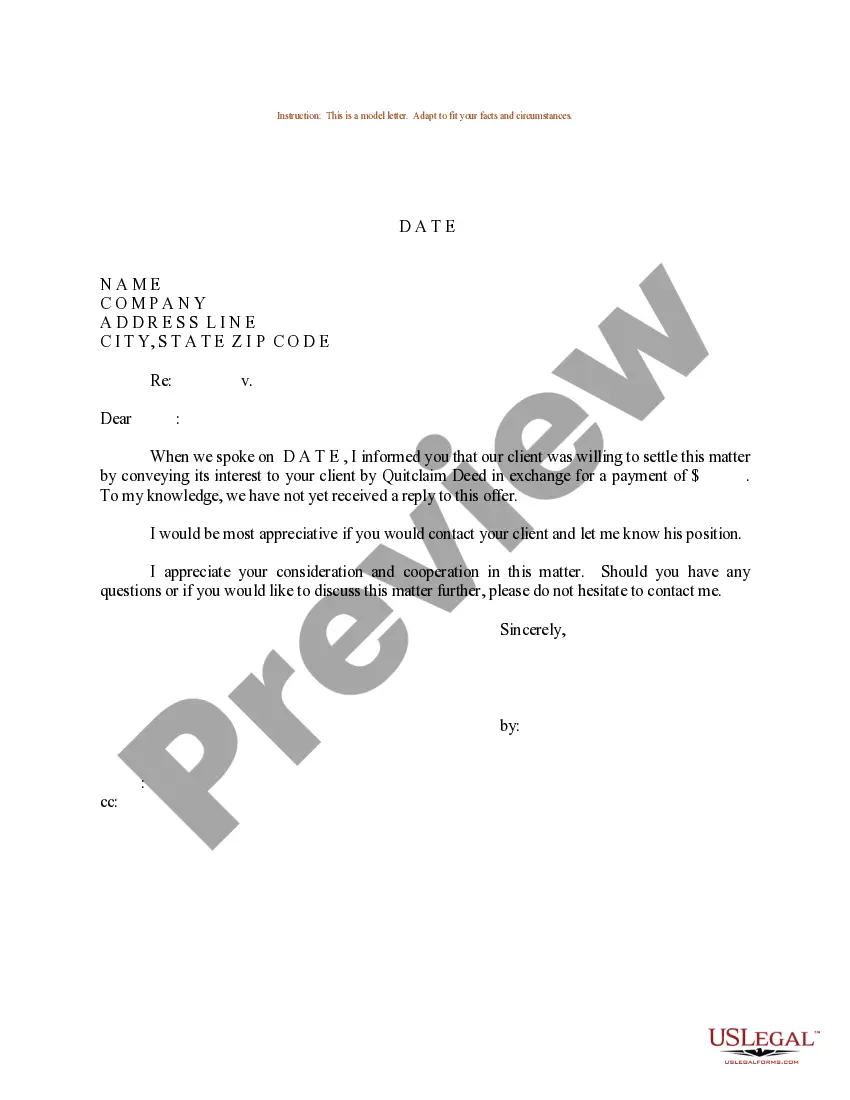
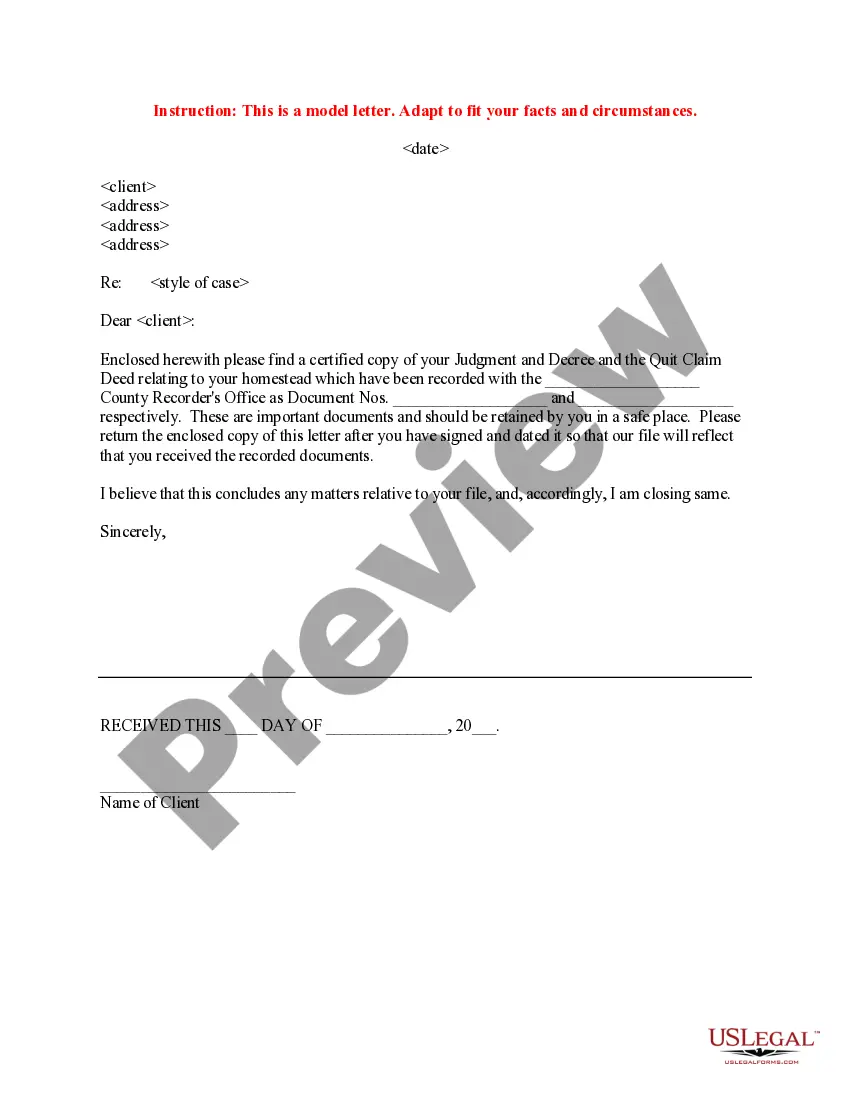
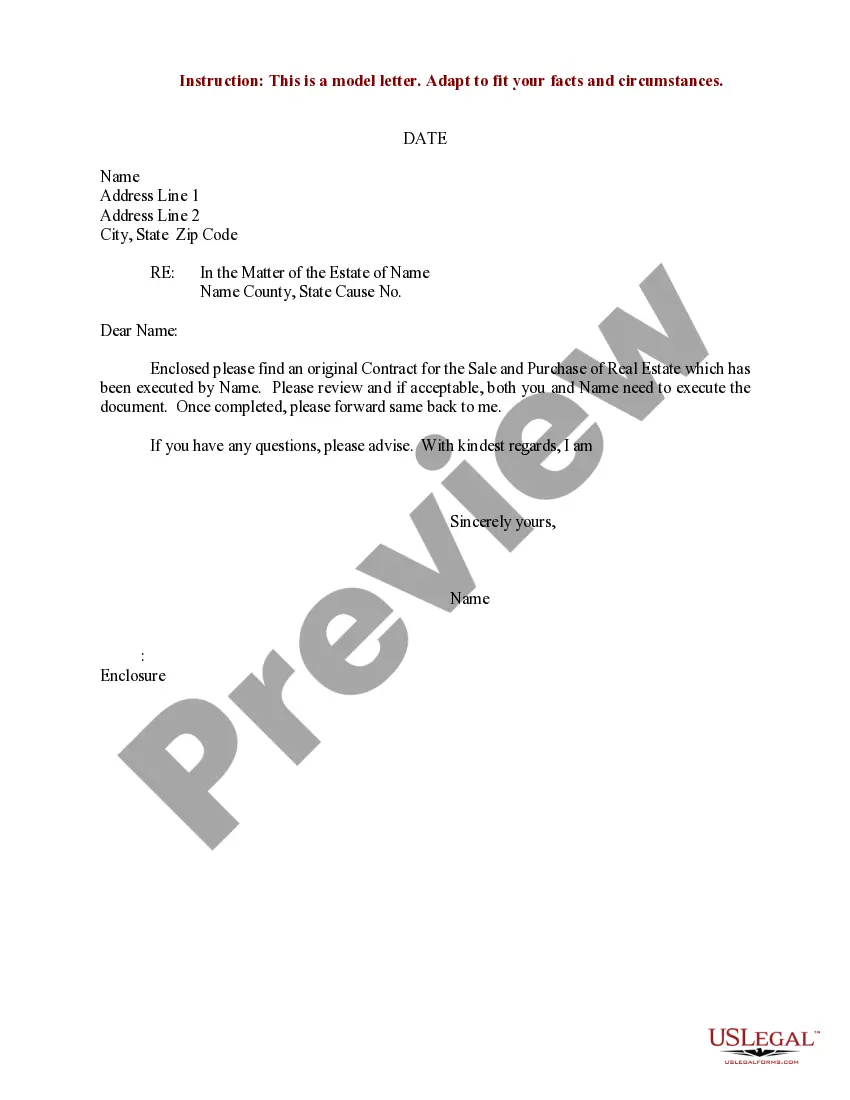
How to fill out Sample Letter To Client Regarding Real Estate Documents Related To Homestead?
Creating legal documents from the ground up can often feel overwhelming.
Some situations may require extensive research and significant financial investment.
If you seek a more straightforward and cost-effective method of generating Client Real Estate With Little Money or any other documentation without unnecessary complications, US Legal Forms is always available to assist you.
Our online repository of more than 85,000 current legal forms encompasses nearly every aspect of your financial, legal, and personal affairs. With just a few clicks, you can swiftly reach state- and county-specific templates carefully crafted for you by our legal experts.
US Legal Forms boasts a solid reputation and over 25 years of experience. Join us today and turn form processing into a simple and efficient task!
- Utilize our platform whenever you require a dependable and trustworthy service to quickly locate and obtain the Client Real Estate With Little Money.
- If you are already familiar with our services and had previously created an account with us, simply Log In to your account, find the template and download it promptly or re-download it anytime later in the My documents tab.
- Don’t possess an account? No problem. Registering is quick and easy, allowing you to navigate the library seamlessly.
- Before you proceed to download Client Real Estate With Little Money, please follow these suggestions.
- Examine the document preview and descriptions to ensure you are viewing the correct form.
Form popularity
FAQ
Clients in real estate with little money can use the 7 percent rule to identify properties that align with their budget and investment goals. By targeting properties that provide a solid income return, you can make smarter, more calculated decisions, thus minimizing the risk of financial loss. This rule acts as a benchmark, guiding you towards potential opportunities that meet your financial requirements. For additional support, consider utilizing resources from UsLegalForms, which can help you navigate the investment landscape effectively.
The 7 percent rule in real estate suggests that an investment property should generate at least 7 percent of its value in income annually. This guideline helps investors assess profitability, especially for those exploring client real estate with little money. By following this rule, you can ensure that your investment remains viable and offers a reasonable return. For clients with limited funds, understanding this principle aids in making informed decisions in real estate investments.
Investing in client real estate with little money can be tricky, but $5000 can serve as a solid starting point. With this amount, you can explore options like real estate crowdfunding or investing in a Real Estate Investment Trust (REIT). Both methods allow you to leverage your investment while minimizing your risk. Utilizing resources like USLegalForms can streamline your investment processes, ensuring that you handle all legal documentation correctly.
Getting into client real estate with little money is possible by exploring various strategies. You might consider partnering with other investors, or looking for opportunities like wholesaling, where you can secure contracts to property without owning them outright. Additionally, utilizing platforms like USLegalForms can help you navigate the paperwork and legalities involved, making the process smoother. Focus on building a network and researching area markets to identify affordable options.
The three golden rules of real estate include location, location, and location. This timeless saying underscores the importance of choosing the right area for your investment, as it significantly affects the property's value. For clients in real estate with little money, understanding these rules helps guide strategic decisions when selecting a property that aligns with financial goals. Remember, the right location can turn a modest investment into a valuable asset.
The 4 3 2 1 rule is a guideline to help clients prioritize their real estate needs. It suggests focusing on four walls, three bedrooms, two bathrooms, and one garage when looking for a property. For clients in real estate with little money, this rule simplifies the search process and narrows down options to what truly matters. By applying this rule, you can make informed decisions without feeling overwhelmed.
10: You Won't Settle for a Lower Price. Never tell your agent you won't reduce the sale price on your house. ... 6: You are Selling the Home Because of a Divorce. ... 5: You Have to Sell Because of Financial Problems. ... 2: You're Interested in a Certain Type of Buyer. ... 1: Anything -- Before You've Signed an Agreement.
Thank you for being such a great client. Your trust and support throughout the process of finding your new home was greatly appreciated. I am so grateful for the opportunity to have served you and your friends and family. It is because of clients like you that my business continues to grow and thrive.
10 Best Ways to Invest in Real Estate With Little or No Money Purchase Money Mortgage/Seller Financing. ... Investing In Real Estate Through Lease Option. ... Hard Money Lenders. ... Microloans. ... Forming Partnerships to Invest in Real Estate With Little Money. ... Home Equity Loans. ... Trade Houses. ... Special US Govt.
Be specific: Include details about the transaction demonstrating your knowledge and expertise. Be personal: Take the time to make a personal connection with the client by acknowledging their specific needs and preferences. Be memorable: Use the thank you letter to differentiate yourself from other real estate agents.