Church Musician Salary
Description
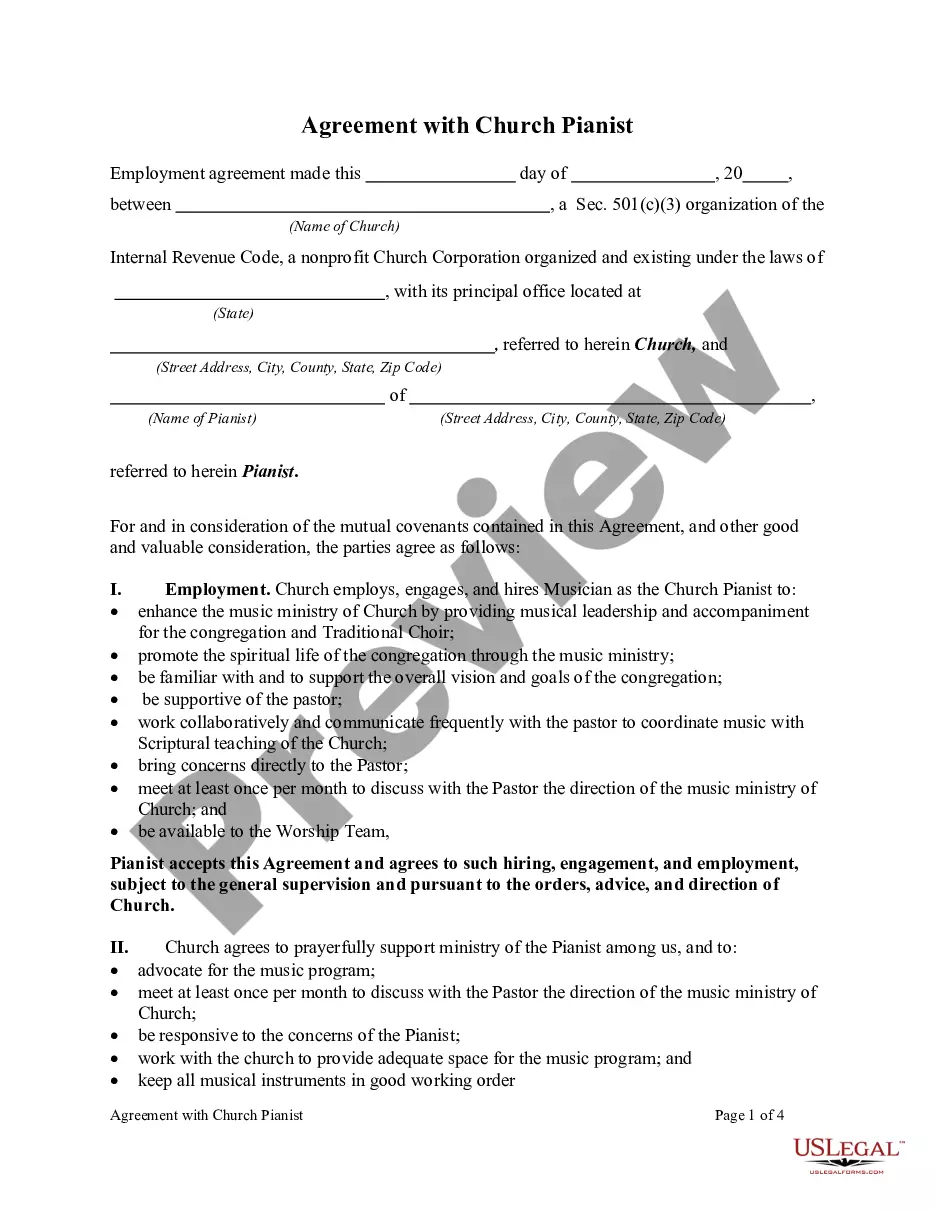
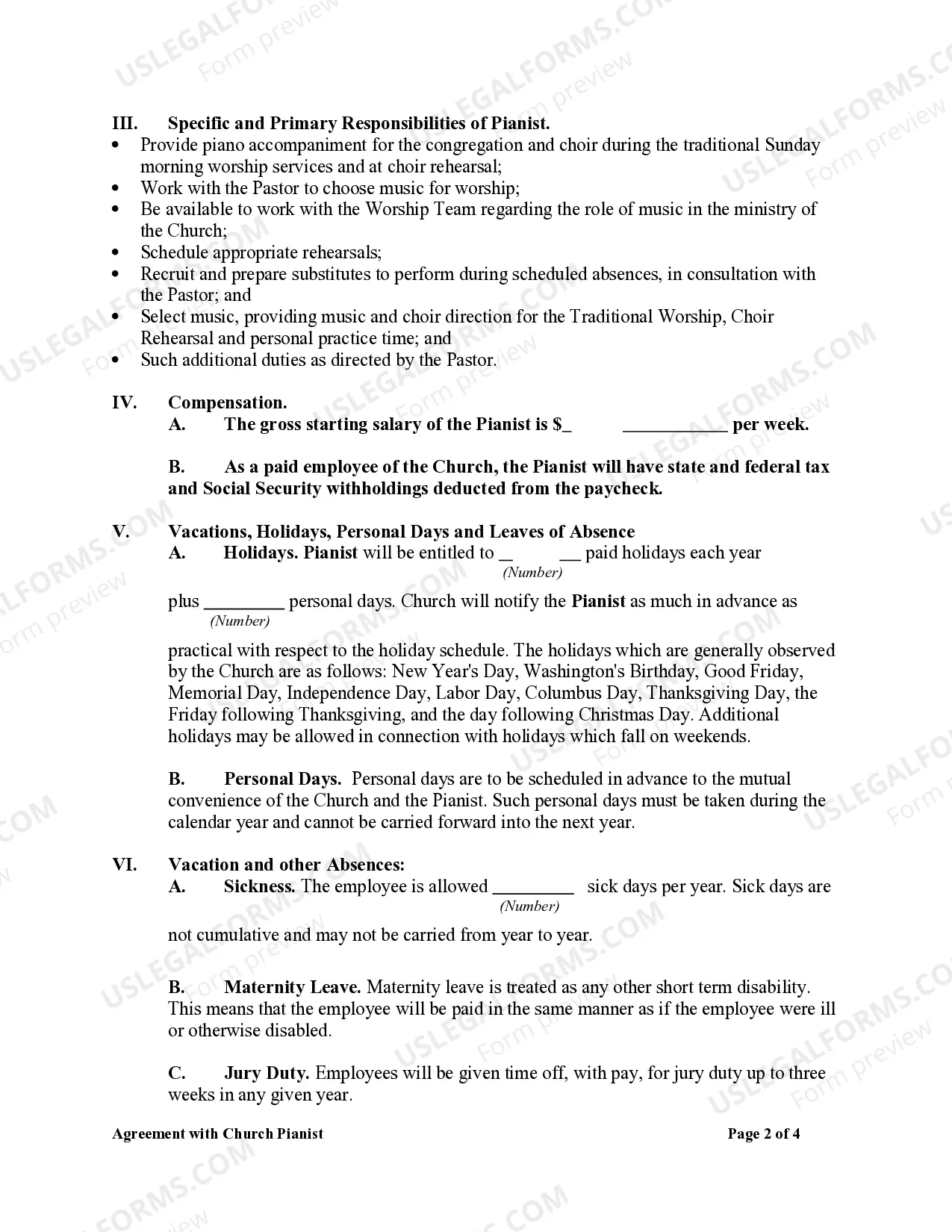
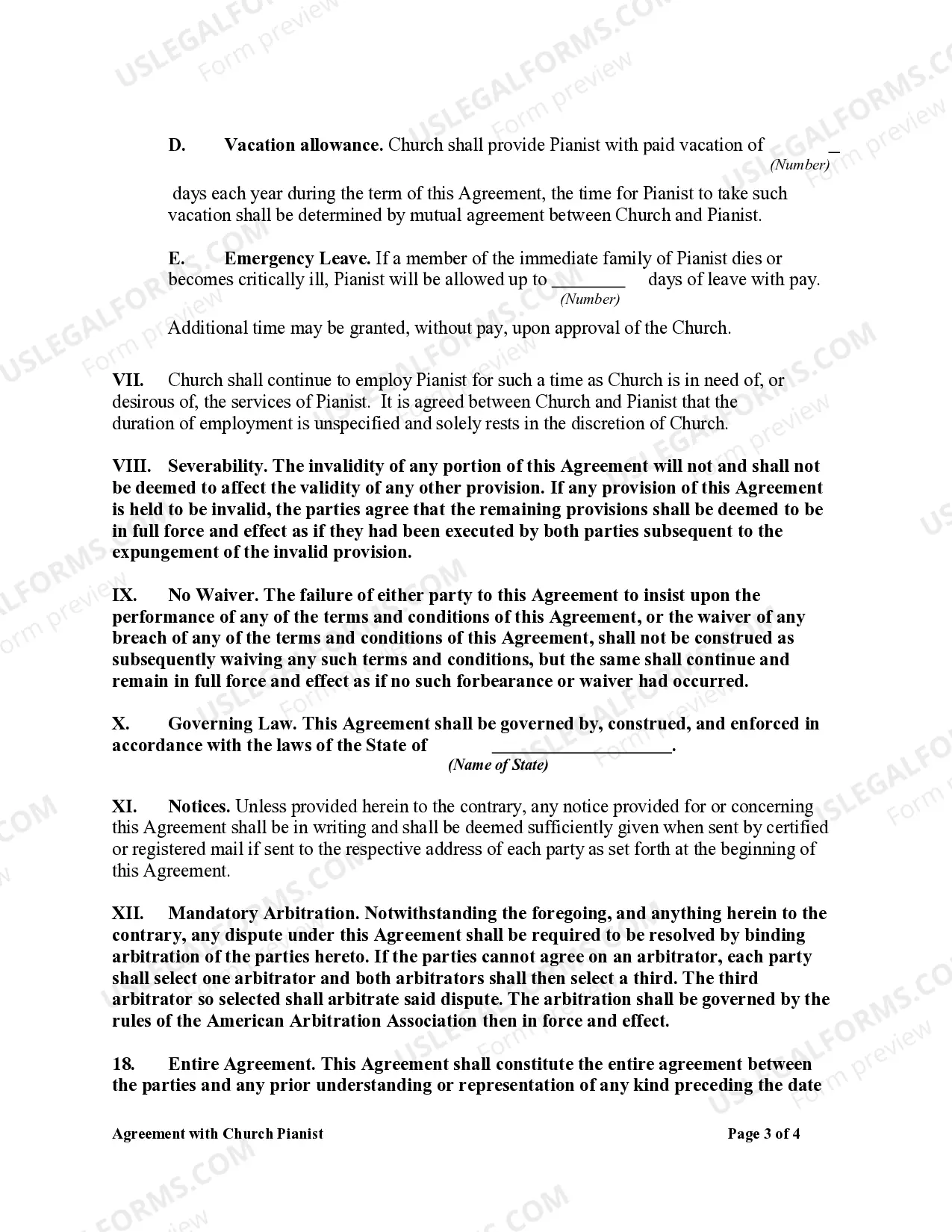
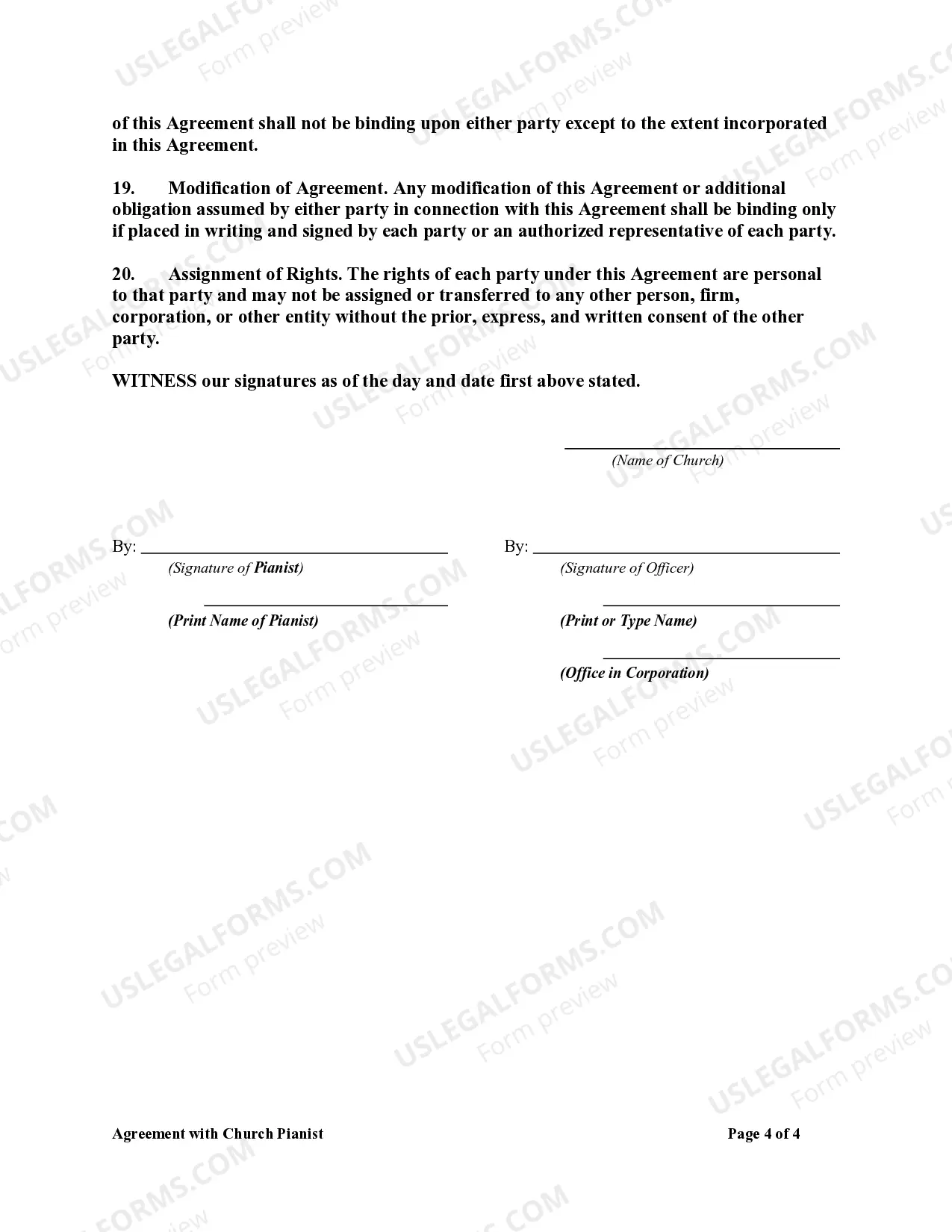
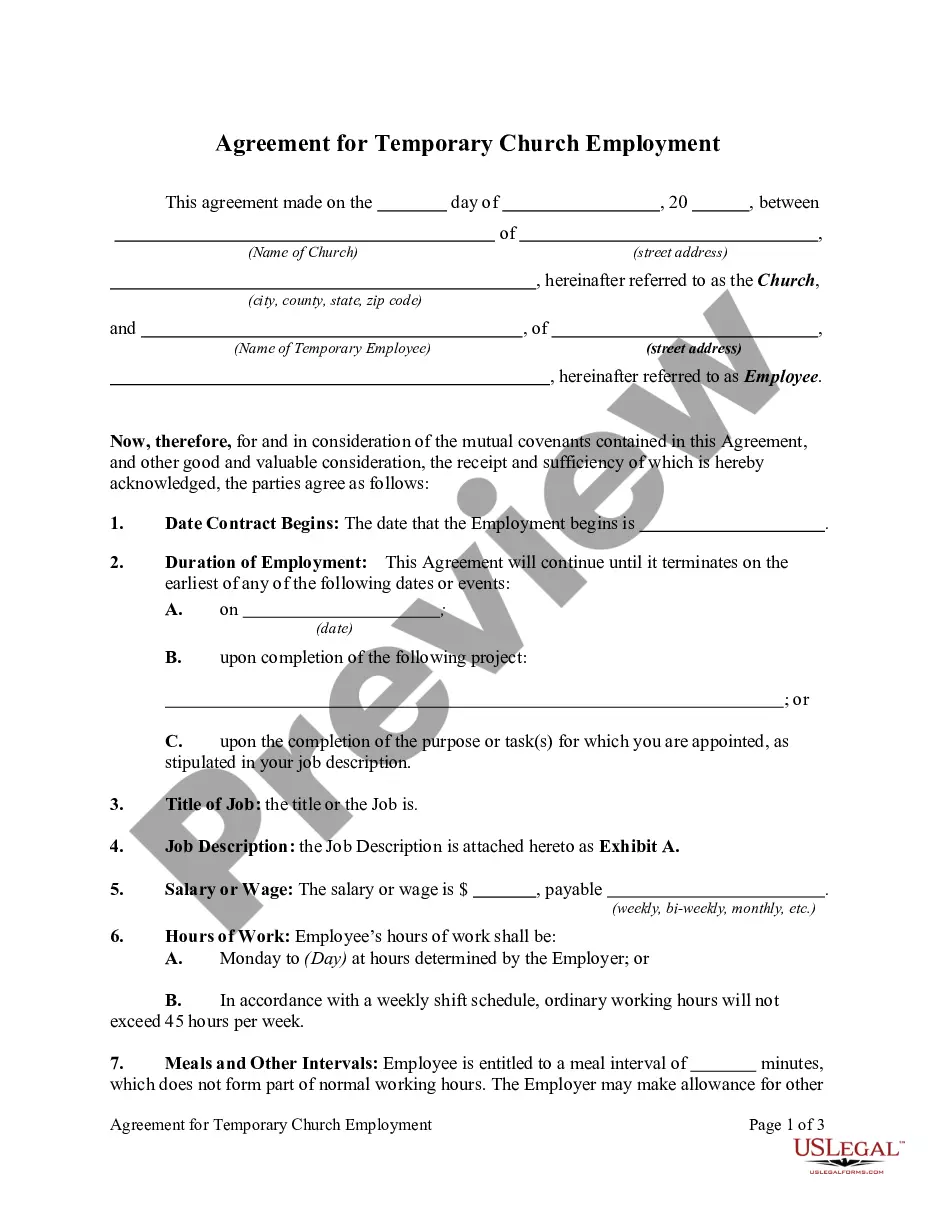
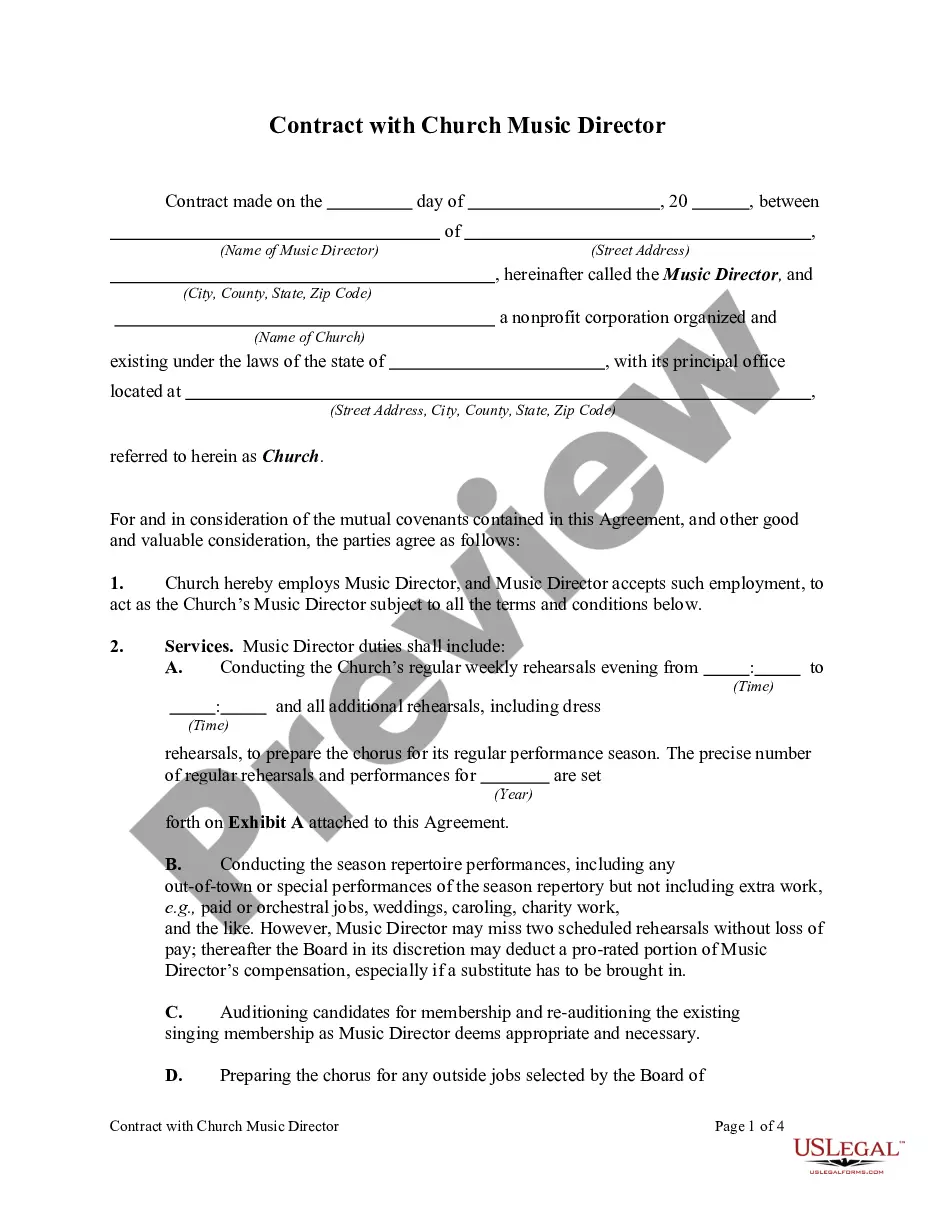
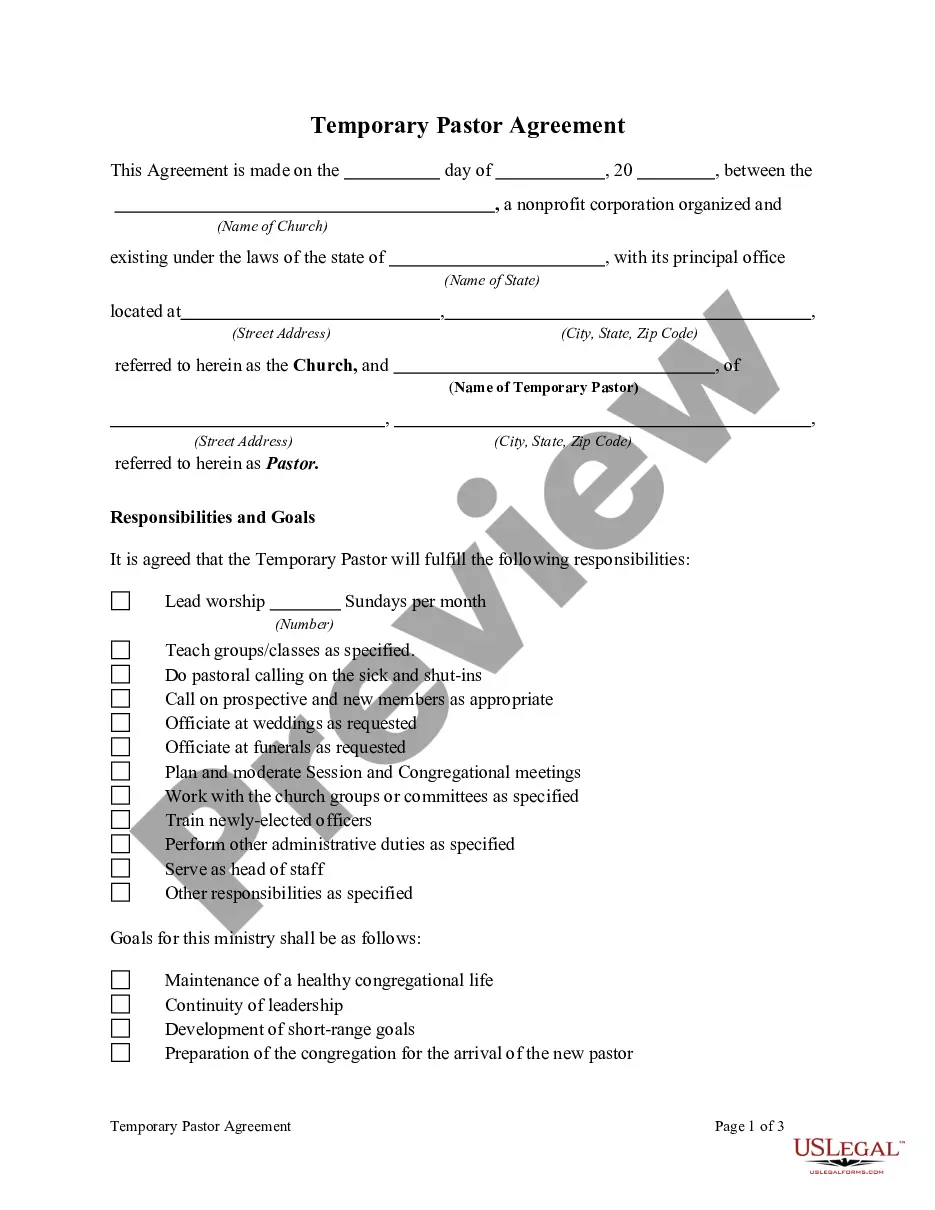
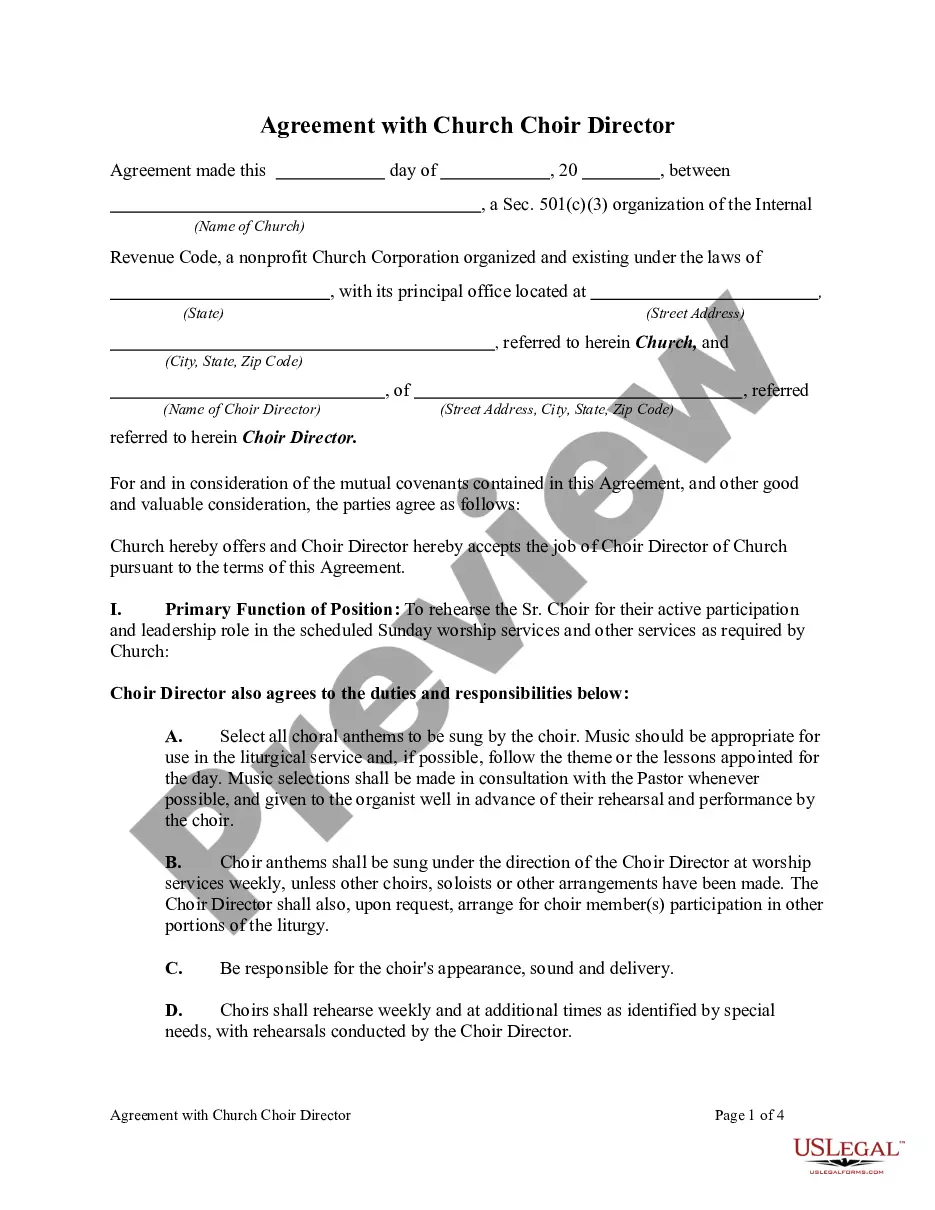
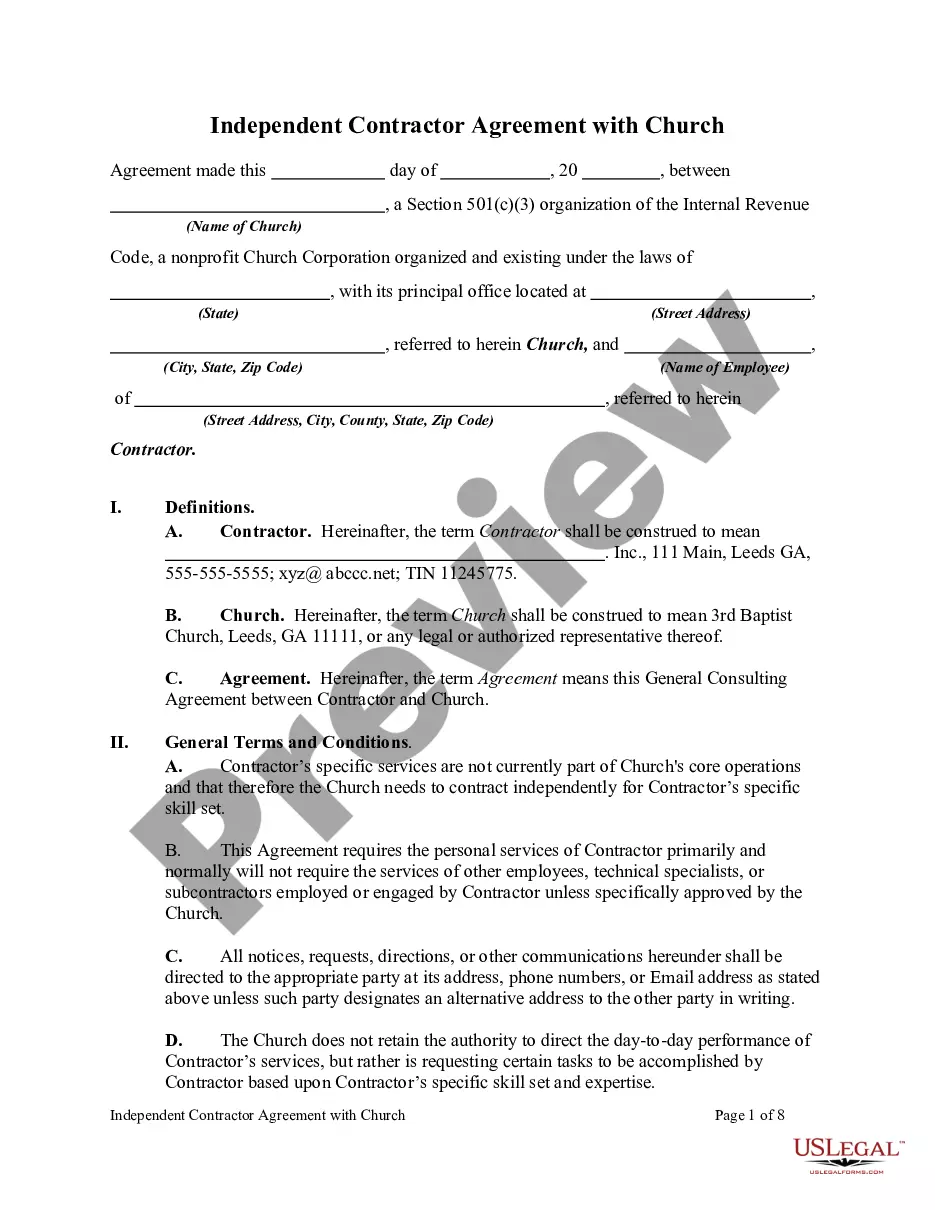
Get your form ready online
Our built-in tools help you complete, sign, share, and store your documents in one place.
Make edits, fill in missing information, and update formatting in US Legal Forms—just like you would in MS Word.
Download a copy, print it, send it by email, or mail it via USPS—whatever works best for your next step.
Sign and collect signatures with our SignNow integration. Send to multiple recipients, set reminders, and more. Go Premium to unlock E-Sign.
If this form requires notarization, complete it online through a secure video call—no need to meet a notary in person or wait for an appointment.
We protect your documents and personal data by following strict security and privacy standards.

Make edits, fill in missing information, and update formatting in US Legal Forms—just like you would in MS Word.

Download a copy, print it, send it by email, or mail it via USPS—whatever works best for your next step.

Sign and collect signatures with our SignNow integration. Send to multiple recipients, set reminders, and more. Go Premium to unlock E-Sign.

If this form requires notarization, complete it online through a secure video call—no need to meet a notary in person or wait for an appointment.

We protect your documents and personal data by following strict security and privacy standards.
Looking for another form?
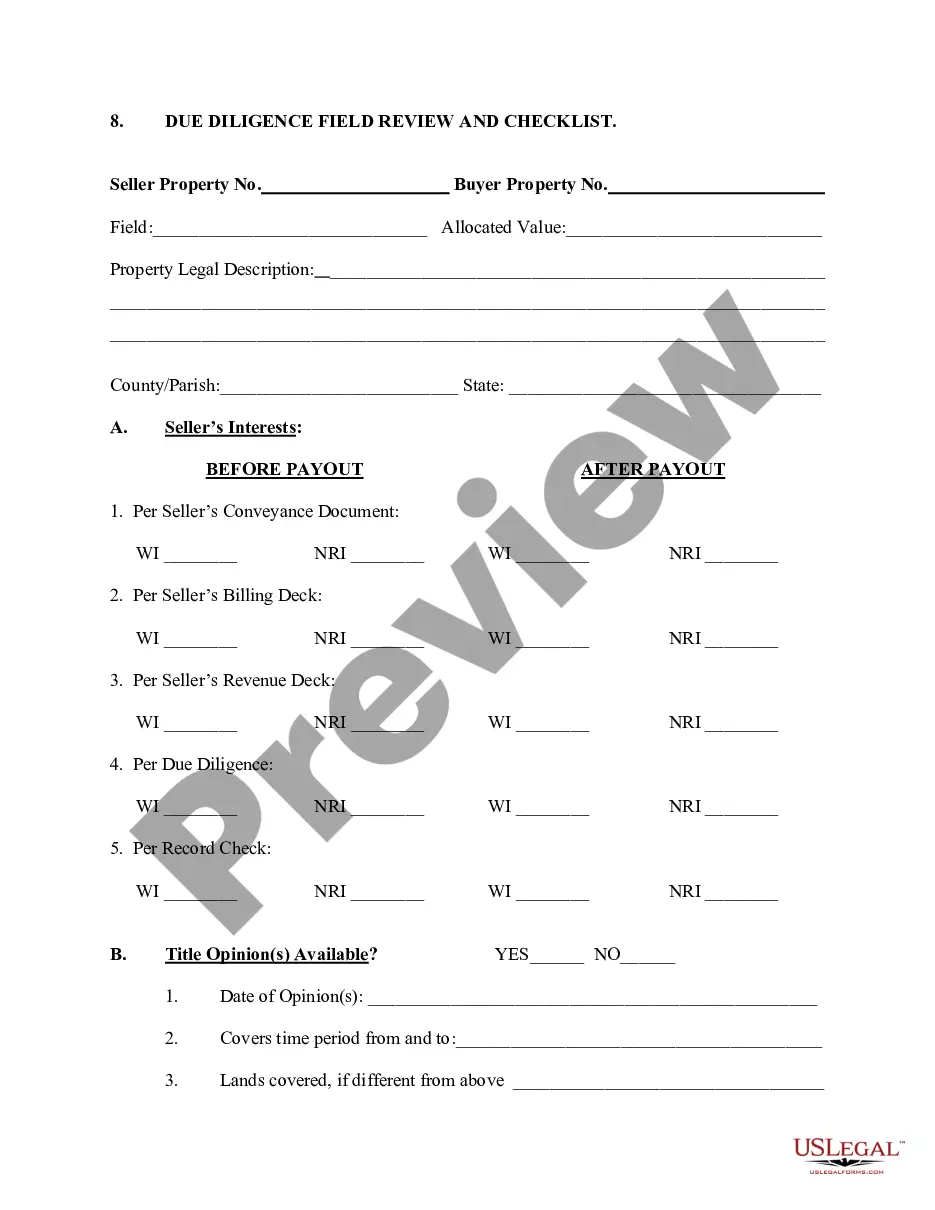
How to fill out Agreement With Church Pianist?
Managing legal documents and processes can be a lengthy addition to your daily routine.
Church Musician Salary and similar forms typically require you to search for them and comprehend how to complete them efficiently.
Therefore, if you are overseeing financial, legal, or personal affairs, possessing a comprehensive and user-friendly online directory of forms readily available will be highly beneficial.
US Legal Forms is the leading online platform for legal documents, featuring over 85,000 state-specific forms and a range of resources that will assist you in completing your paperwork effortlessly.
Is it your first time using US Legal Forms? Register and establish a free account in a few minutes, and you’ll receive access to the form catalog and Church Musician Salary. After that, follow the instructions below to finish your form.
- Explore the inventory of pertinent documents available to you with a single click.
- US Legal Forms offers state- and county-specific forms accessible anytime for download.
- Protect your document management processes by utilizing a high-quality service that allows you to create any form within moments without extra or hidden charges.
- Simply Log In to your account, locate Church Musician Salary, and download it right away in the My documents section.
- You can also access previously saved forms.
Form popularity
FAQ
Church musicians can operate as either employees or independent contractors, depending on the specifics of their contract. Employees typically have set hours and receive direct supervision, while independent contractors enjoy more freedom in their work. The classification affects church musician salary and the church's financial obligations. Churches should consult legal resources, like USLegalForms, to ensure correct classification.
Musicians can be classified as employees or independent contractors depending on the arrangement with the church. If the church provides benefits, supervision, or specific hours of work, musicians likely qualify as employees. Understanding the classification affects the church musician salary, tax responsibilities, and benefits. It is essential for churches to clarify these roles to ensure compliance with labor laws.
To increase your chances of getting hired as a church musician, tailor your application to highlight relevant experience and skills. Engage in auditions, if available, and be prepared to showcase your versatility across musical genres. Joining online music communities can also provide insights into job openings. Lastly, consider using platforms like USLegalForms to streamline your job application process and enhance your presentation.
The going rate for a church musician can vary widely depending on factors such as location and experience. Generally, church musician salaries can range from $20 to $50 per hour, with many factors influencing this figure. It’s essential to research local salaries and consider the church's size and budget. Knowing this information can aid you when discussing potential compensation.
To get hired as a musician, focusing on your portfolio is key. Perform at local events, create recordings, and engage with your audience online to showcase your talents. Reach out directly to churches, facilitate conversations with music directors, and inquire about available positions. Understanding the typical church musician salary can help you negotiate terms and set realistic expectations during discussions.
To secure a position as a church musician, start by building your musical skills and gaining experience in various musical styles. Networking within your local church community can open doors to job opportunities. Additionally, you can create a strong resume that highlights your musical background and tailor it specifically for church roles. Resources like USLegalForms can provide you with templates to help you present your qualifications effectively.
Church drummers contribute significantly to worship services, and their salary reflects their vital role. Generally, the church musician salary for drummers ranges from $25,000 to $50,000, depending on factors like skill level and church size. Some drummers may also receive bonuses for additional performances or special events. For those exploring this career path, knowing the church musician salary is essential for setting realistic expectations.
The church musician salary for gospel musicians typically varies based on experience, location, and the size of the congregation. On average, gospel musicians can earn between $30,000 to $60,000 annually. Many musicians also receive additional compensation for special events, such as weddings and church festivals. If you're considering a career in this field, understanding the potential church musician salary can be beneficial.
Church musicians can be classified as either 1099 independent contractors or W2 employees, depending on their arrangement with the church. If they receive regular paychecks and benefits, they are usually W2 employees. On the other hand, freelance musicians performing on a temporary basis may receive a 1099 form. Knowing these distinctions can impact the overall church musician salary, so it’s essential for musicians to be aware of their employment status.
A church musician typically holds titles such as music director, choirmaster, or worship leader. Their primary role involves providing musical support during services and guiding the congregation in worship. Understanding the various roles can help clarify the factors that influence church musician salary. Many churches designate specific roles that align with their musical needs and their budget.