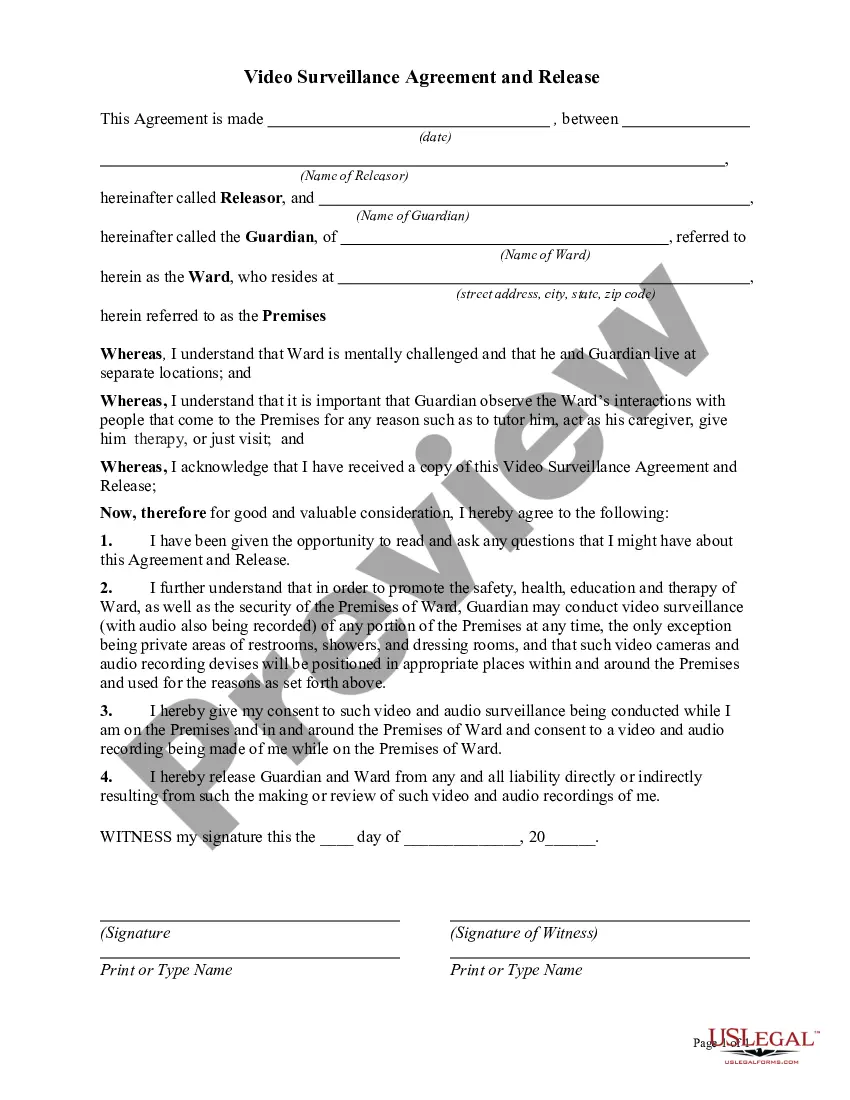
Video Surveillance Agreement Without Court
Description
Get your form ready online
Our built-in tools help you complete, sign, share, and store your documents in one place.
Make edits, fill in missing information, and update formatting in US Legal Forms—just like you would in MS Word.
Download a copy, print it, send it by email, or mail it via USPS—whatever works best for your next step.
Sign and collect signatures with our SignNow integration. Send to multiple recipients, set reminders, and more. Go Premium to unlock E-Sign.
If this form requires notarization, complete it online through a secure video call—no need to meet a notary in person or wait for an appointment.
We protect your documents and personal data by following strict security and privacy standards.

Make edits, fill in missing information, and update formatting in US Legal Forms—just like you would in MS Word.

Download a copy, print it, send it by email, or mail it via USPS—whatever works best for your next step.

Sign and collect signatures with our SignNow integration. Send to multiple recipients, set reminders, and more. Go Premium to unlock E-Sign.

If this form requires notarization, complete it online through a secure video call—no need to meet a notary in person or wait for an appointment.

We protect your documents and personal data by following strict security and privacy standards.
Looking for another form?

How to fill out Video Surveillance Agreement And Release?
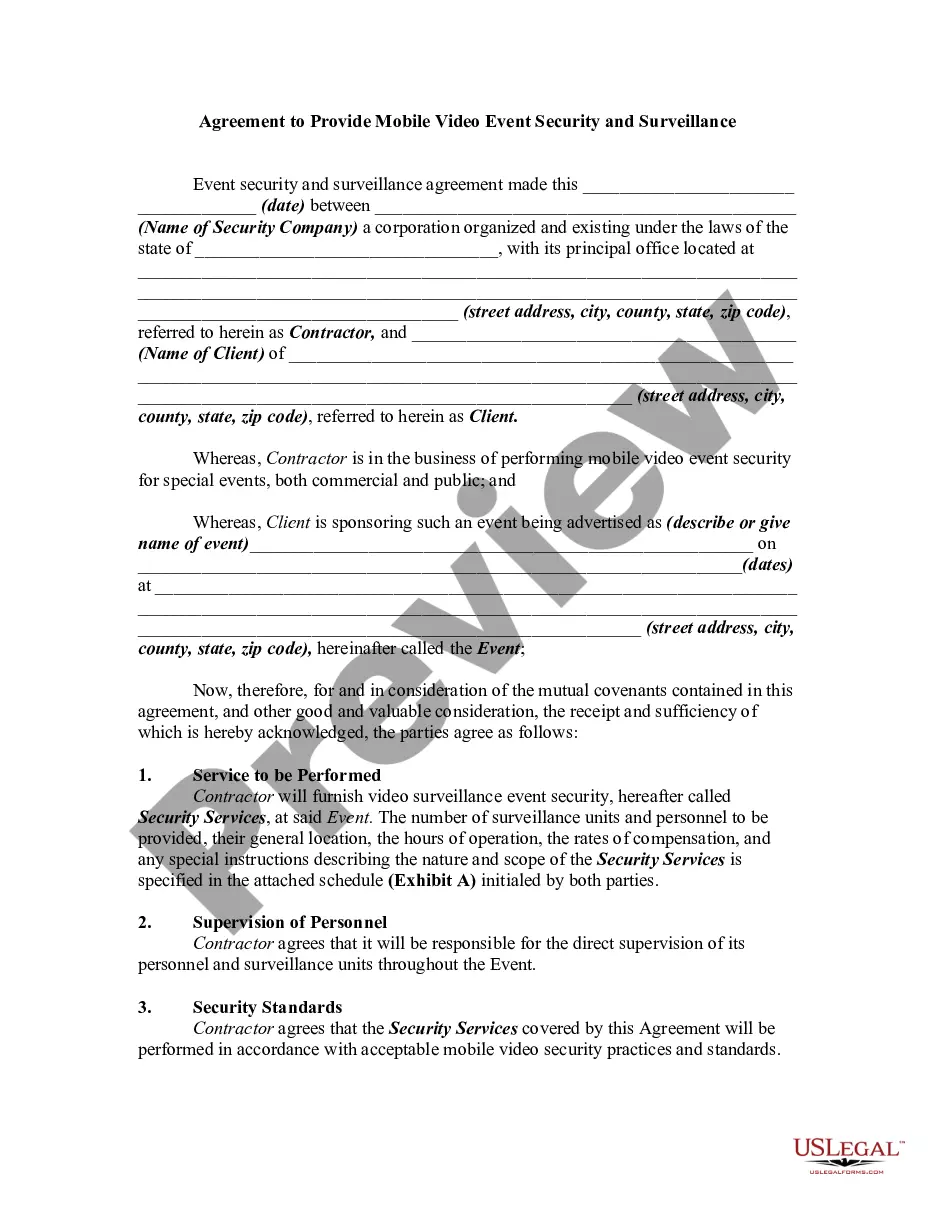
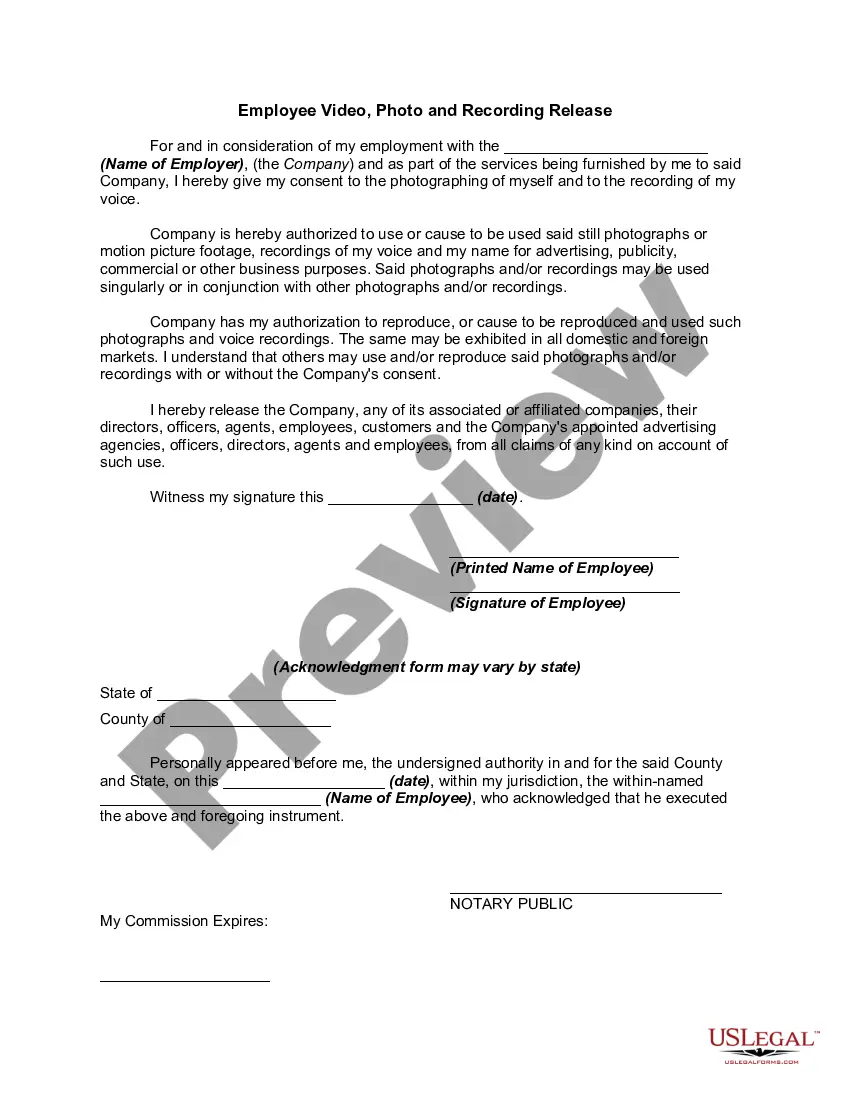
The Video Surveillance Contract Without Court you observe on this page is a reusable legal model crafted by expert attorneys in compliance with national and local statutes and regulations.
For over 25 years, US Legal Forms has supplied individuals, businesses, and legal professionals with over 85,000 validated, state-specific documents for any enterprise and personal event. It’s the fastest, simplest, and most dependable method to acquire the documentation you require, as the service ensures the utmost level of information security and anti-malware safeguards.
Select the format you desire for your Video Surveillance Contract Without Court (PDF, DOCX, RTF) and store the sample on your device.
- Search for the document you require and examine it.
- Browse the sample you sought and preview it or review the template description to confirm it meets your needs. If it does not, utilize the search bar to find the right one. Click Buy Now once you have located the template you need.
- Register and Log In.
- Choose the pricing plan that fits you and establish an account. Use PayPal or a credit card for a swift payment. If you already possess an account, Log In and verify your subscription to proceed.
- Obtain the editable template.
Form popularity
FAQ
To retrieve CCTV footage, you must first obtain permission from the property owner. Once granted, follow their procedures, which may involve filling out a request form. Keep in mind that familiarity with the video surveillance agreement without court can guide you during this process.
No. People have the right to CCTV cameras and smart doorbells on their property. They should try to point cameras away from neighbours' homes and gardens, shared spaces or public streets. But this is not always possible, and it is not illegal to do so.
Wroclawski says, legally, no. ?If police ask for your footage, you can choose to share it with them or you can simply ignore the request,? Wroclawski said. If you don't share the video, Ring states it won't give law enforcement access to your cameras, your videos, or any of your personal information.
How To Legally Request Video Footage. In California, you must follow the rules of discovery when obtaining surveillance video. This means you must provide notice to the other party that you are seeking the video, and you must comply with any protective orders or confidentiality agreements.
A subpoena is a legal order that compels the custodian to provide the video footage. A court order is a more formal legal order that is issued by a judge. To obtain a subpoena or court order, you must file a motion with the court and show that the video footage is relevant and necessary to the case.
Is Video Evidence Enough to Convict the Defendant? As long as the video evidence is admissible in court and provides incriminating proof, the answer is generally ?yes?. However, it must provide answers to several questions, including the identity of the person on the tape and what crime has been committed.