Chef Agreement Sample For Food
Description
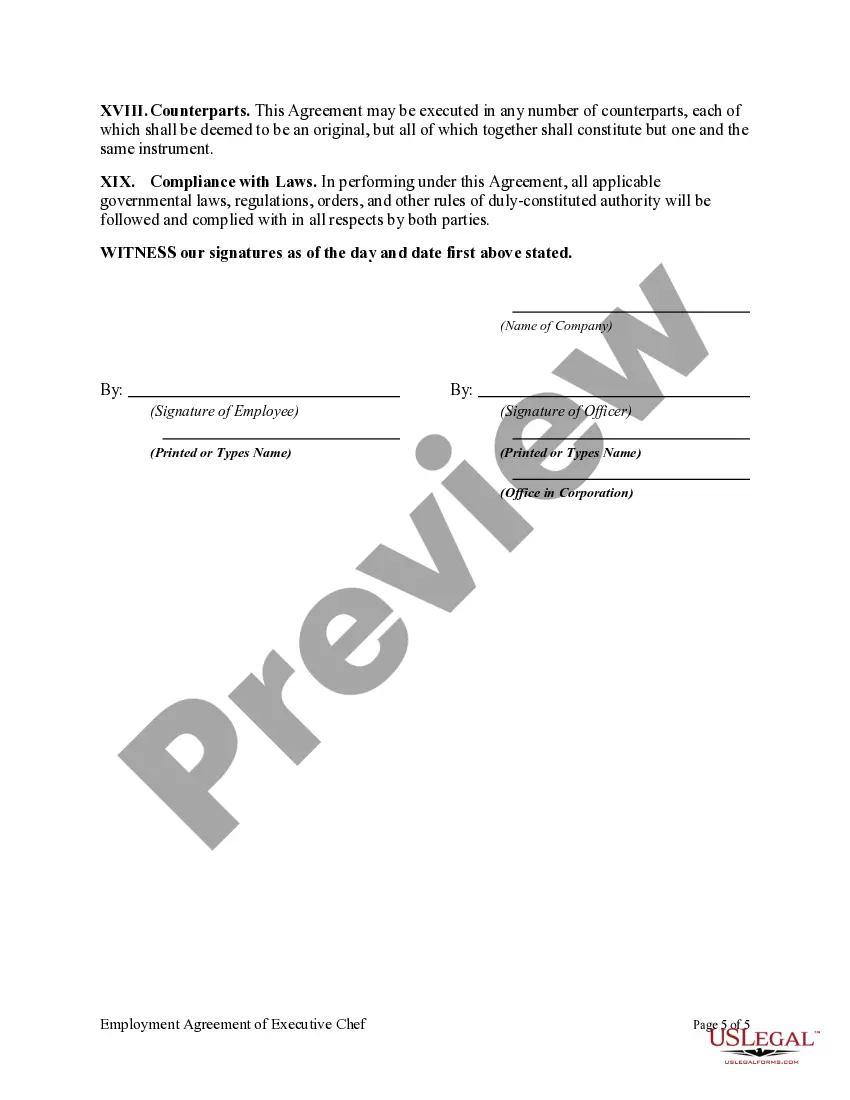
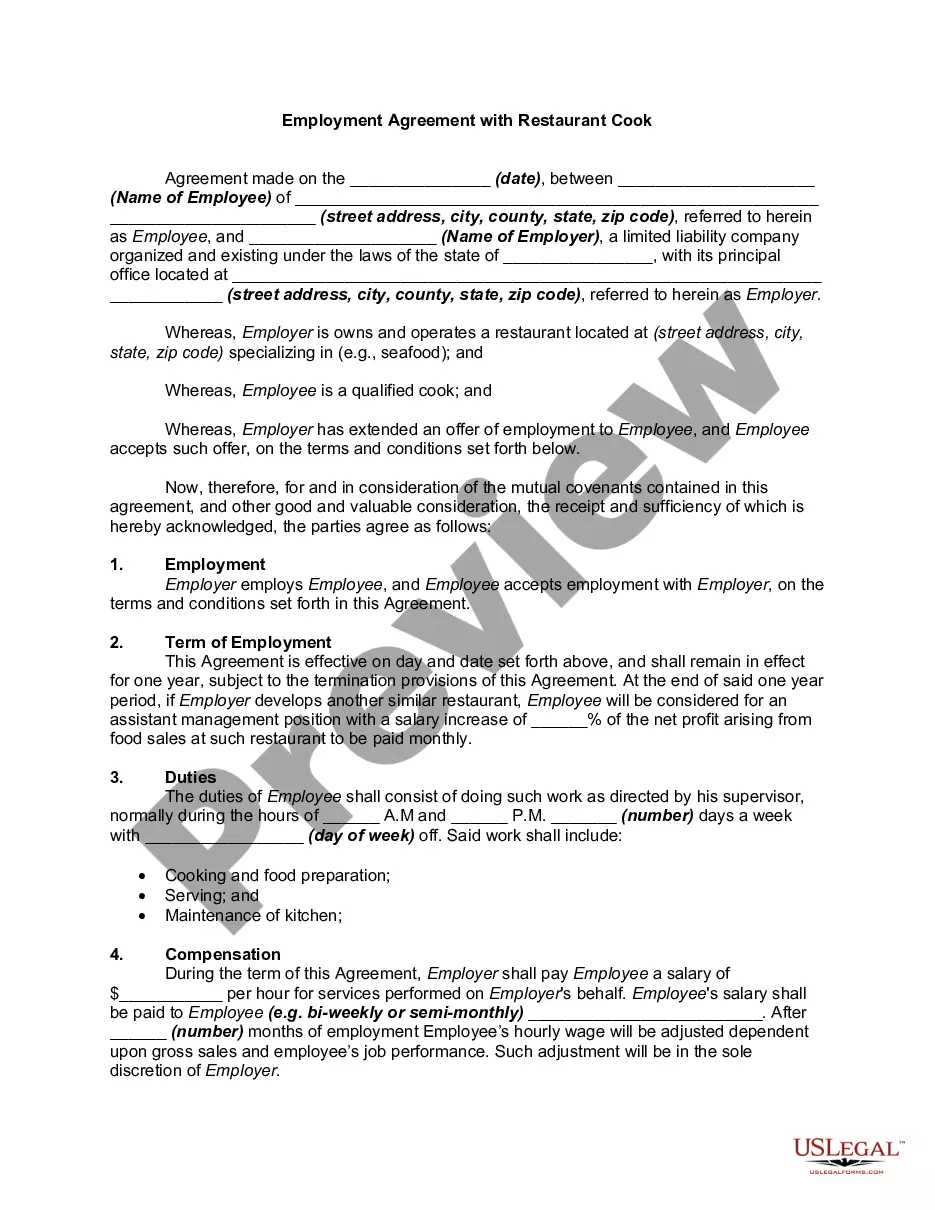
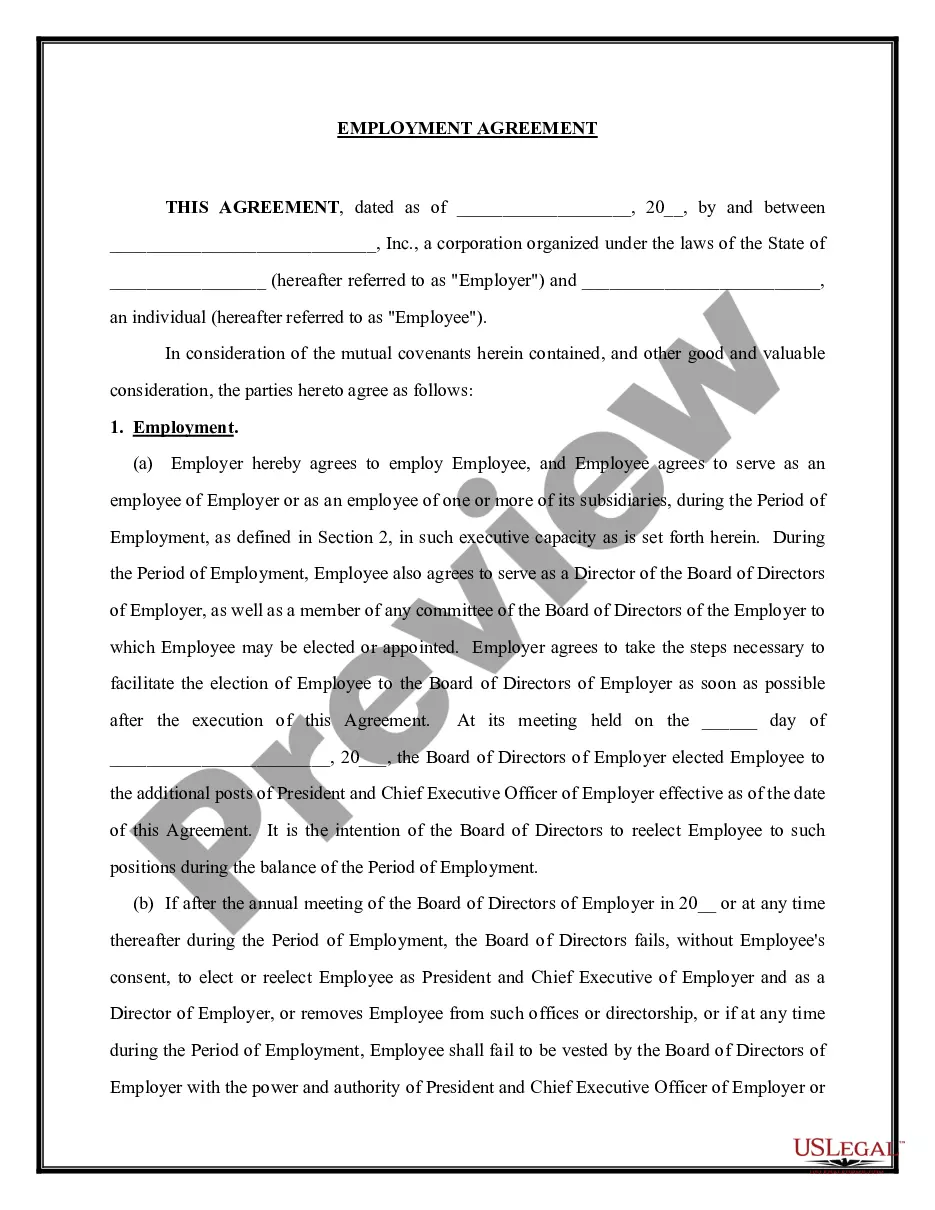
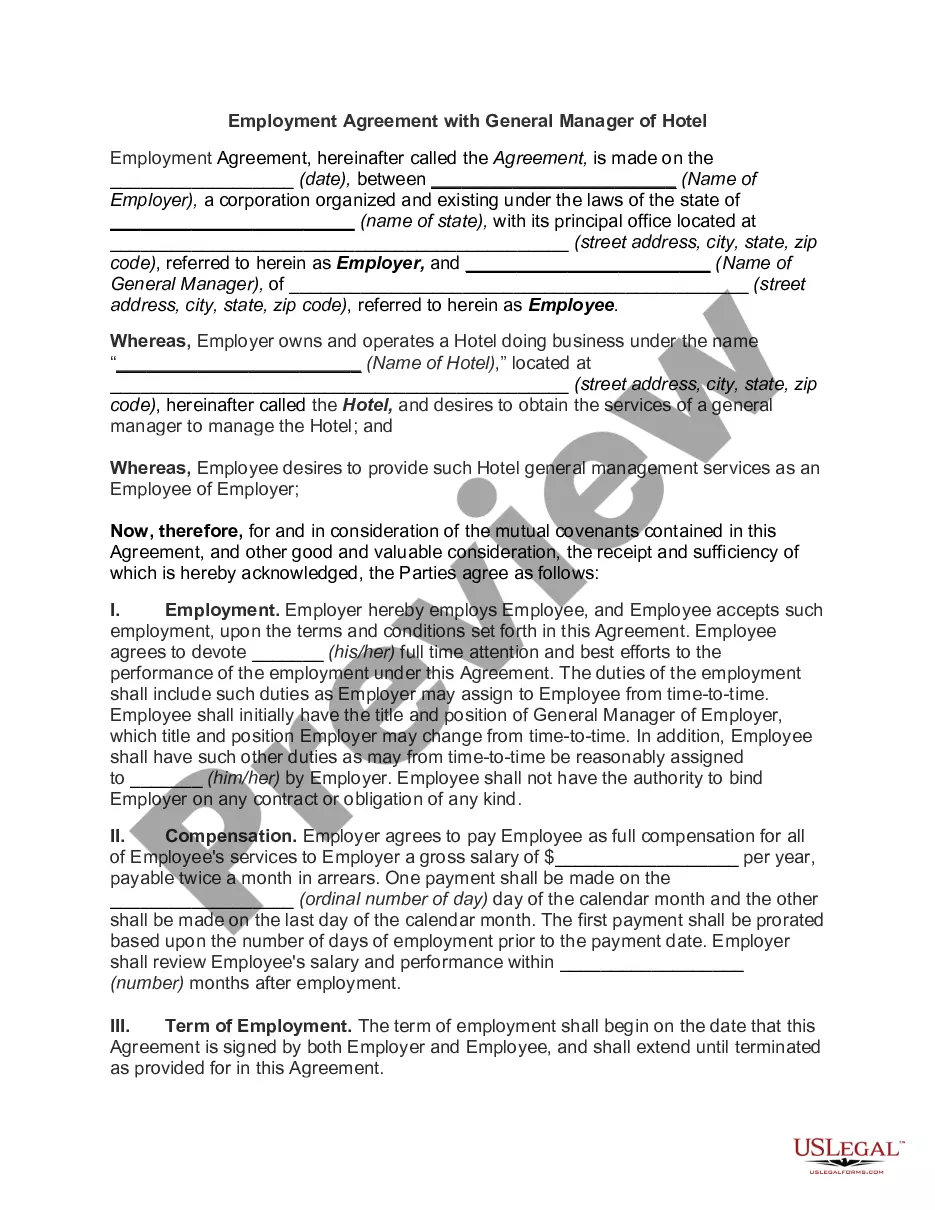
Get your form ready online
Our built-in tools help you complete, sign, share, and store your documents in one place.
Make edits, fill in missing information, and update formatting in US Legal Forms—just like you would in MS Word.
Download a copy, print it, send it by email, or mail it via USPS—whatever works best for your next step.
Sign and collect signatures with our SignNow integration. Send to multiple recipients, set reminders, and more. Go Premium to unlock E-Sign.
If this form requires notarization, complete it online through a secure video call—no need to meet a notary in person or wait for an appointment.
We protect your documents and personal data by following strict security and privacy standards.

Make edits, fill in missing information, and update formatting in US Legal Forms—just like you would in MS Word.

Download a copy, print it, send it by email, or mail it via USPS—whatever works best for your next step.

Sign and collect signatures with our SignNow integration. Send to multiple recipients, set reminders, and more. Go Premium to unlock E-Sign.

If this form requires notarization, complete it online through a secure video call—no need to meet a notary in person or wait for an appointment.

We protect your documents and personal data by following strict security and privacy standards.
Looking for another form?






How to fill out Employment Agreement Of Executive Chef?
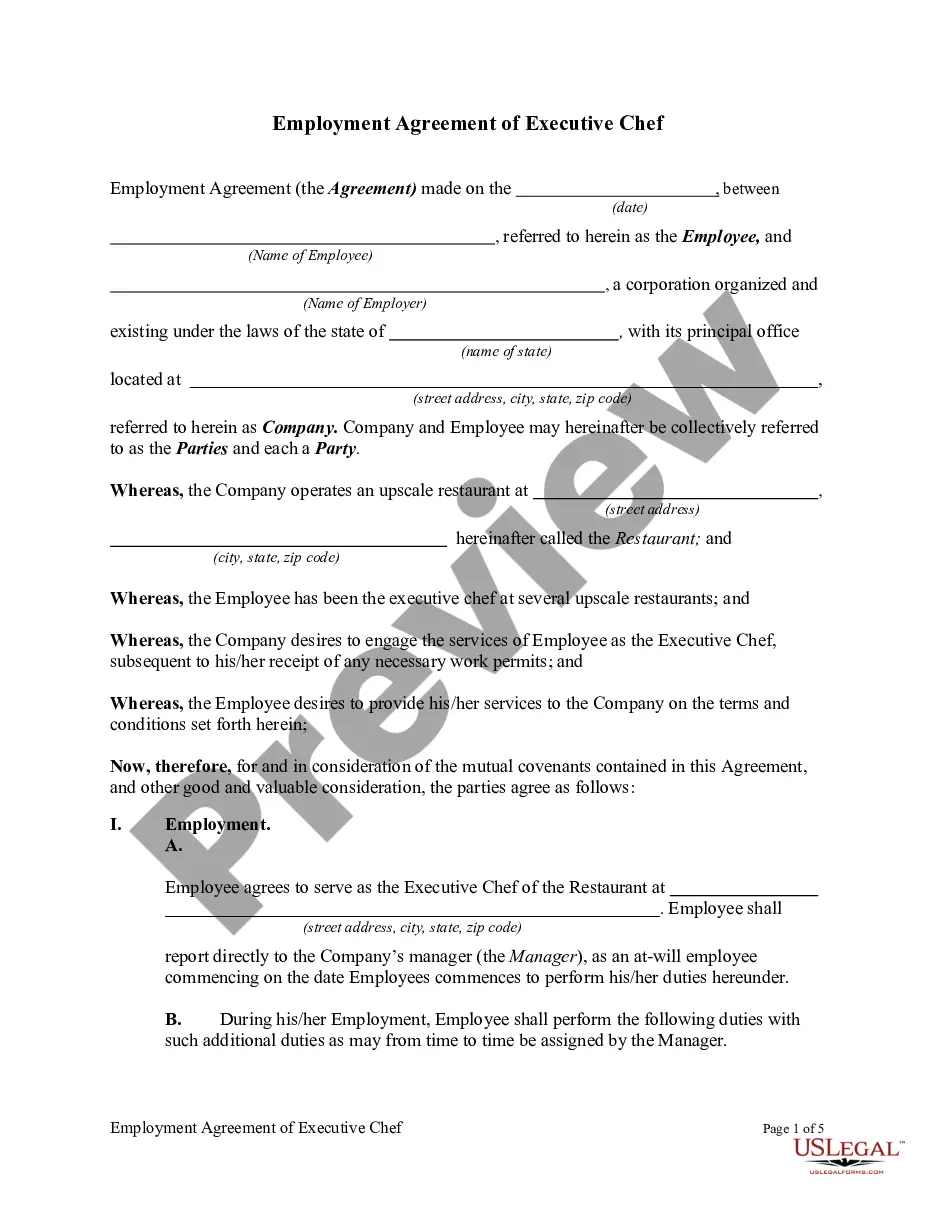
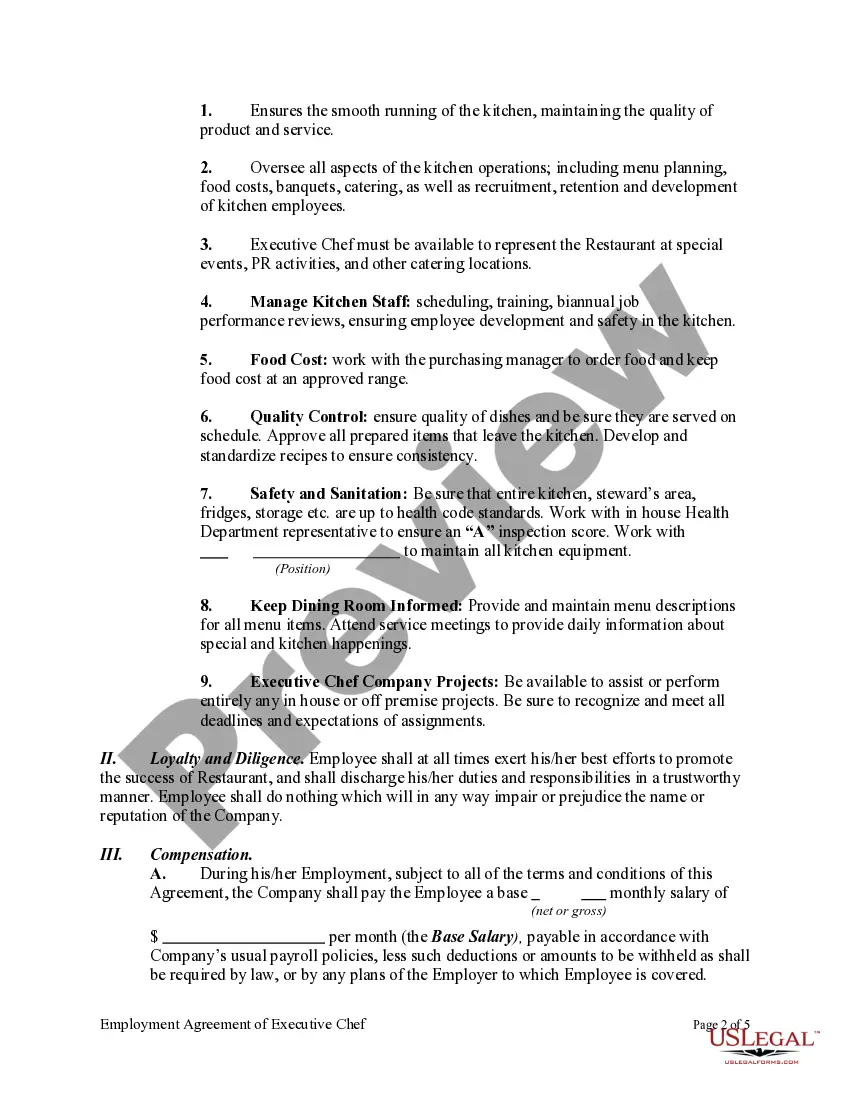
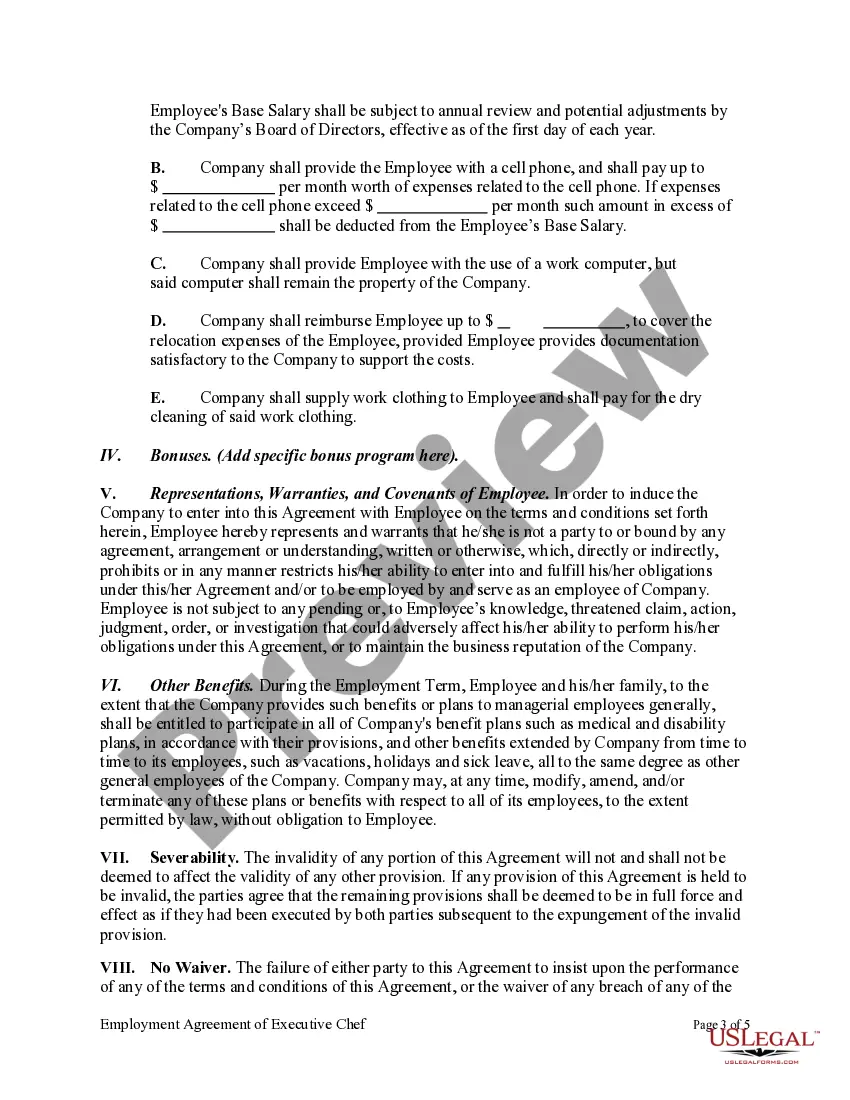
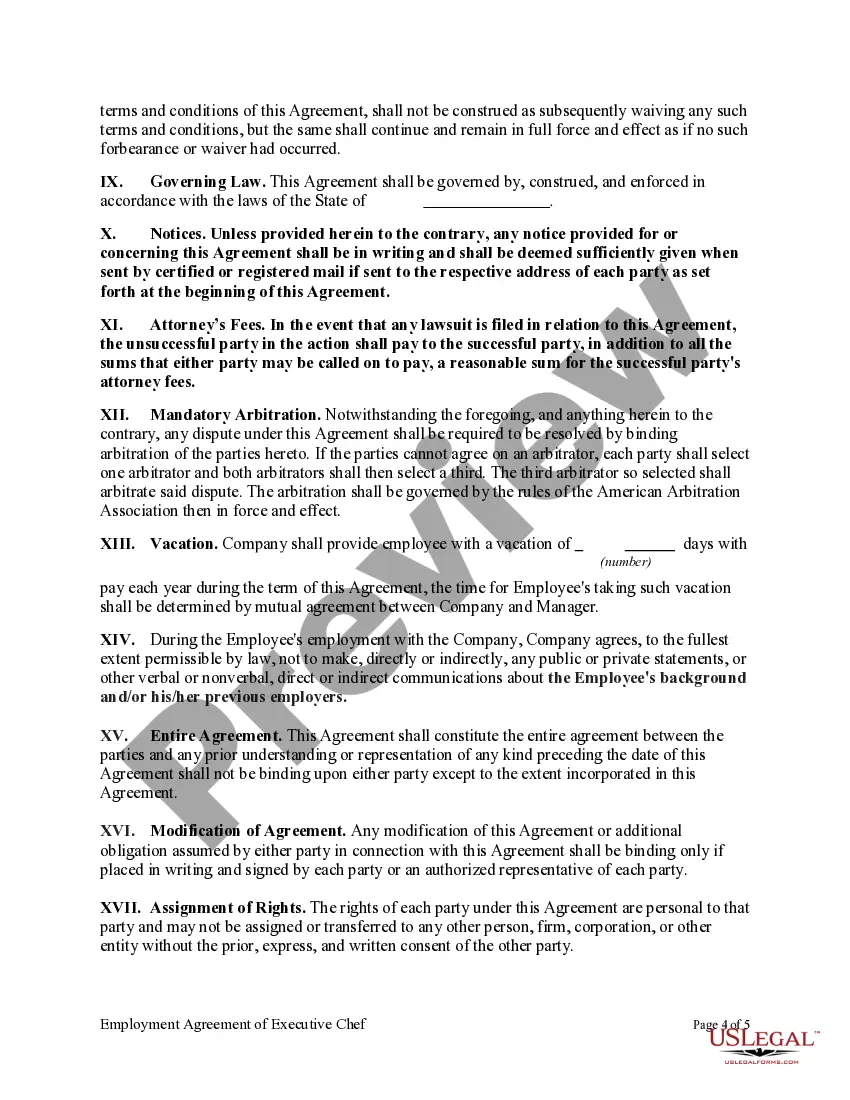
Finding a go-to place to take the most recent and appropriate legal templates is half the struggle of working with bureaucracy. Choosing the right legal documents calls for precision and attention to detail, which is why it is important to take samples of Chef Agreement Sample For Food only from trustworthy sources, like US Legal Forms. A wrong template will waste your time and hold off the situation you are in. With US Legal Forms, you have little to be concerned about. You can access and check all the details about the document’s use and relevance for your situation and in your state or county.
Take the listed steps to finish your Chef Agreement Sample For Food:
- Utilize the catalog navigation or search field to locate your sample.
- Open the form’s information to see if it fits the requirements of your state and county.
- Open the form preview, if there is one, to make sure the template is definitely the one you are searching for.
- Resume the search and look for the right template if the Chef Agreement Sample For Food does not fit your needs.
- If you are positive about the form’s relevance, download it.
- If you are a registered user, click Log in to authenticate and gain access to your selected forms in My Forms.
- If you do not have an account yet, click Buy now to obtain the template.
- Pick the pricing plan that suits your requirements.
- Go on to the registration to complete your purchase.
- Finalize your purchase by picking a payment method (bank card or PayPal).
- Pick the document format for downloading Chef Agreement Sample For Food.
- Once you have the form on your device, you can change it with the editor or print it and finish it manually.
Remove the headache that comes with your legal documentation. Explore the comprehensive US Legal Forms library where you can find legal templates, check their relevance to your situation, and download them on the spot.
Form popularity
FAQ
Common Skills Needed to be a Chef Business Sense. Budgeting. Management/supervision. ... Cleanliness. Health and food safety. Sanitary practices. ... Creativity. Presentation. Recipe creation. ... Culinary Expertise. Ingredient selection. Knife skills. ... Organization. Planning. Multitasking. ... Team Player. Collaborate. ... Attention to Detail. Measuring.
Head culinary chefs will spend the time before dinner delegating key menu items and overseeing mise en place. Throughout the course of the dinner service, chefs will find their roles vary significantly as they coordinate kitchen staff, oversee quality and production speeds and assist with cooking.
Chef responsibilities include studying recipes, setting up menus and preparing high-quality dishes. You should be able to delegate tasks to kitchen staff to ensure meals are prepared in a timely manner.
Develop recipes and determine how to present dishes. Plan menus and ensure the quality of meals. Inspect supplies, equipment, and work areas for cleanliness and functionality. Hire, train, and supervise cooks and other food preparation workers.
What does a chef do? Preparing food and ingredients. Managing kitchen staff or other employees. Ordering kitchen food supply. Controlling kitchen costs. Cooking food and plating it. Meeting with guests to ensure they like their food. Creating menus or revising current menus. Managing food budget.