Wage Assignment Example With Explanation
Description
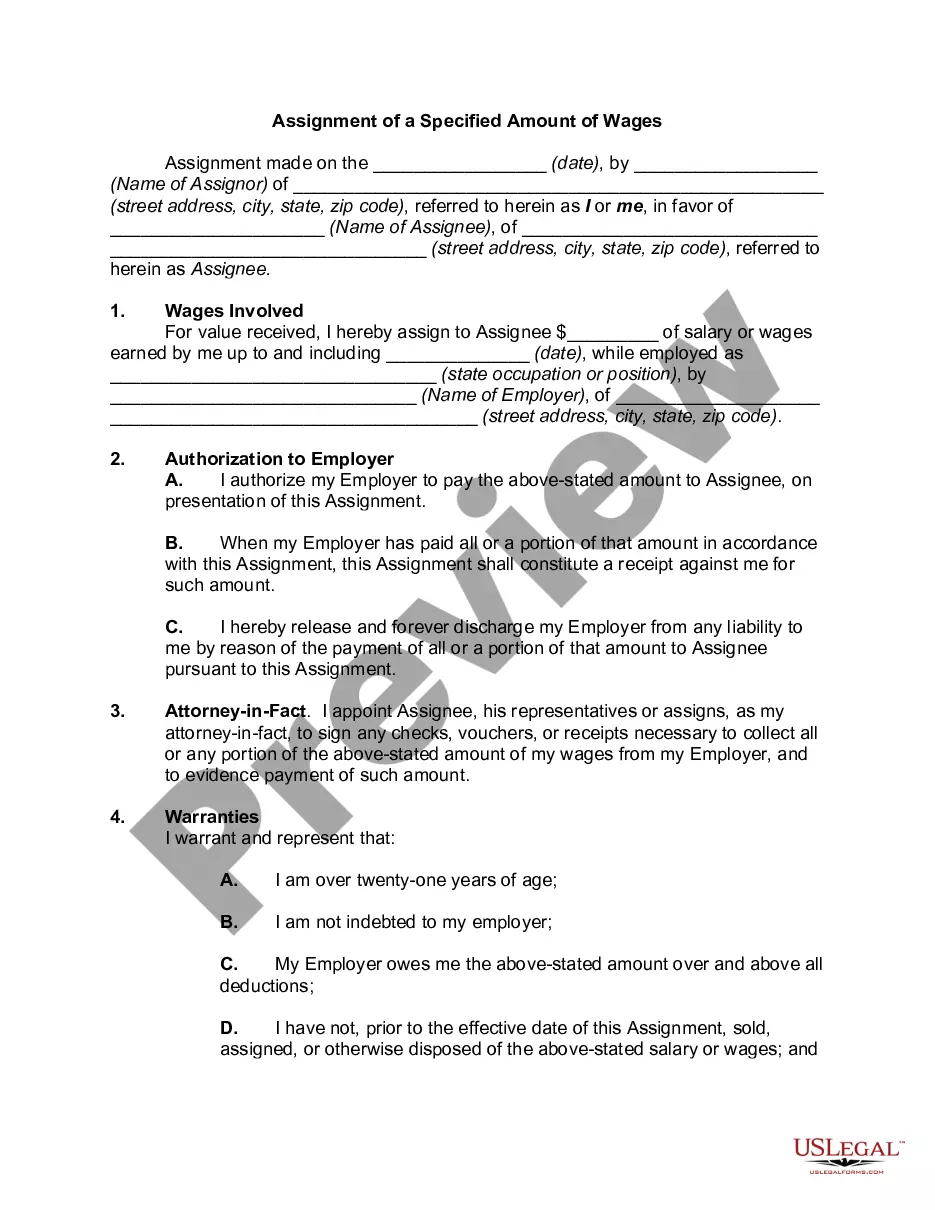
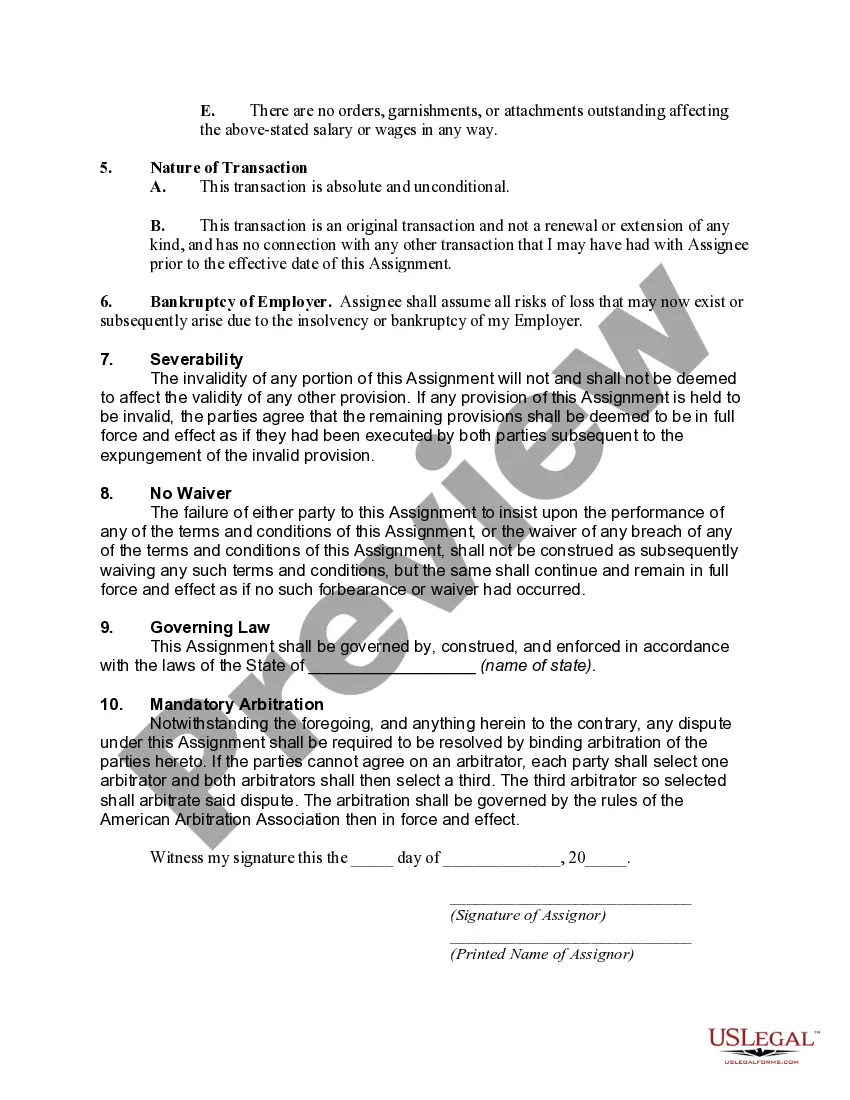
Get your form ready online
Our built-in tools help you complete, sign, share, and store your documents in one place.
Make edits, fill in missing information, and update formatting in US Legal Forms—just like you would in MS Word.
Download a copy, print it, send it by email, or mail it via USPS—whatever works best for your next step.
Sign and collect signatures with our SignNow integration. Send to multiple recipients, set reminders, and more. Go Premium to unlock E-Sign.
If this form requires notarization, complete it online through a secure video call—no need to meet a notary in person or wait for an appointment.
We protect your documents and personal data by following strict security and privacy standards.

Make edits, fill in missing information, and update formatting in US Legal Forms—just like you would in MS Word.

Download a copy, print it, send it by email, or mail it via USPS—whatever works best for your next step.

Sign and collect signatures with our SignNow integration. Send to multiple recipients, set reminders, and more. Go Premium to unlock E-Sign.

If this form requires notarization, complete it online through a secure video call—no need to meet a notary in person or wait for an appointment.

We protect your documents and personal data by following strict security and privacy standards.
Looking for another form?





How to fill out Assignment Of A Specified Amount Of Wages?
Utilizing legal document examples that comply with federal and local laws is essential, and the internet provides numerous choices to select from.
However, why spend time searching for the appropriately prepared Wage Assignment Example With Explanation template online when the US Legal Forms virtual library already consolidates such documents in one location.
US Legal Forms stands as the largest online legal repository with over 85,000 editable templates created by legal professionals for any business and personal scenario.
Enjoy the most comprehensive and user-friendly legal document service!
- They are easy to navigate with all documents categorized by state and intended use.
- Our specialists keep abreast of legal changes, ensuring that you can trust your form is current and adheres to regulations when acquiring a Wage Assignment Example With Explanation from our site.
- Obtaining a Wage Assignment Example With Explanation is straightforward and rapid for both existing and new clients.
- If you possess an account with an active subscription, Log In and store the document example you require in your desired format.
- If you are a new visitor to our site, follow the steps below.
Form popularity
FAQ
Filling out a wage statement involves providing your personal information, employer details, and the specific amount to assign. You will need to indicate the frequency of payments and ensure all amounts are accurate. To make the process easier, consider looking for a wage assignment example with explanation, which can guide you through the necessary steps and help you avoid common mistakes.
A practical example of wage assignment involves an individual consenting to direct 10% of their paycheck to settle a credit card debt. This arrangement would be documented and agreed upon by both the employer and the creditor, ensuring transparency and consistency in payments. Through this example, we see how wage assignments help manage financial obligations without the complexities of court mandates. Learners can benefit from exploring various wage assignment examples with explanation through US Legal Forms.
Wage garnishment and wage assignment are both methods for debt collection, but they operate differently. A wage garnishment occurs through a court order, mandating employers to withhold a portion of your earnings to satisfy a debt. In contrast, a wage assignment allows you to voluntarily allocate a portion of your earnings to a creditor without court involvement. This distinction is important when considering a wage assignment example with explanation.
A wage is a fixed regular payment, often calculated on an hourly, daily, or piecework basis. For instance, if you earn $20 per hour and work 40 hours a week, your weekly wage would be $800 before taxes and deductions. This regular income provides the financial basis for many personal expenses and obligations. Understanding wages is critical when discussing a wage assignment example with explanation.
To determine the reason for your wage garnishment, first review the documents you received from the court or collection agency. They typically outline the debt that led to the garnishment. If you need more clarity, consider consulting with a legal professional or using resources available on platforms like US Legal Forms. They provide a wage assignment example with explanation that can help you understand the underlying reasons behind garnishments.
Lenders get a wage garnishment by taking the borrower to court. Wage assignments do not go through the courts. Instead, the lender just sends the borrower a notice & begins taking a portion of their wages.
A wage assignment is a voluntary agreement between the employee and creditor where an amount is withheld from the employee's paycheck to satisfy a debt owed to a third-party recipient, whereas under a wage garnishment, the amount withheld from the employee's check is typically obtained through a court order initiated ...
This development is important for multistate employers because Illinois is the only state with a statute that clearly and unequivocally provides that employers must honor contracts employees make with third parties to assign wages. Under the Illinois Wage Assignment Act, 740 ILCS §§170/.
A wage assignment take funds directly from an employee's paycheck to pay back a debt. Wage assignments may be either voluntary or involuntary. A wage assignment, when involuntary, may also be referred to as wage garnishment and requires a court order. 1?