Executor Of Estate With Trust
Description
Get your form ready online
Our built-in tools help you complete, sign, share, and store your documents in one place.
Make edits, fill in missing information, and update formatting in US Legal Forms—just like you would in MS Word.
Download a copy, print it, send it by email, or mail it via USPS—whatever works best for your next step.
Sign and collect signatures with our SignNow integration. Send to multiple recipients, set reminders, and more. Go Premium to unlock E-Sign.
If this form requires notarization, complete it online through a secure video call—no need to meet a notary in person or wait for an appointment.
We protect your documents and personal data by following strict security and privacy standards.

Make edits, fill in missing information, and update formatting in US Legal Forms—just like you would in MS Word.

Download a copy, print it, send it by email, or mail it via USPS—whatever works best for your next step.

Sign and collect signatures with our SignNow integration. Send to multiple recipients, set reminders, and more. Go Premium to unlock E-Sign.

If this form requires notarization, complete it online through a secure video call—no need to meet a notary in person or wait for an appointment.

We protect your documents and personal data by following strict security and privacy standards.
Looking for another form?
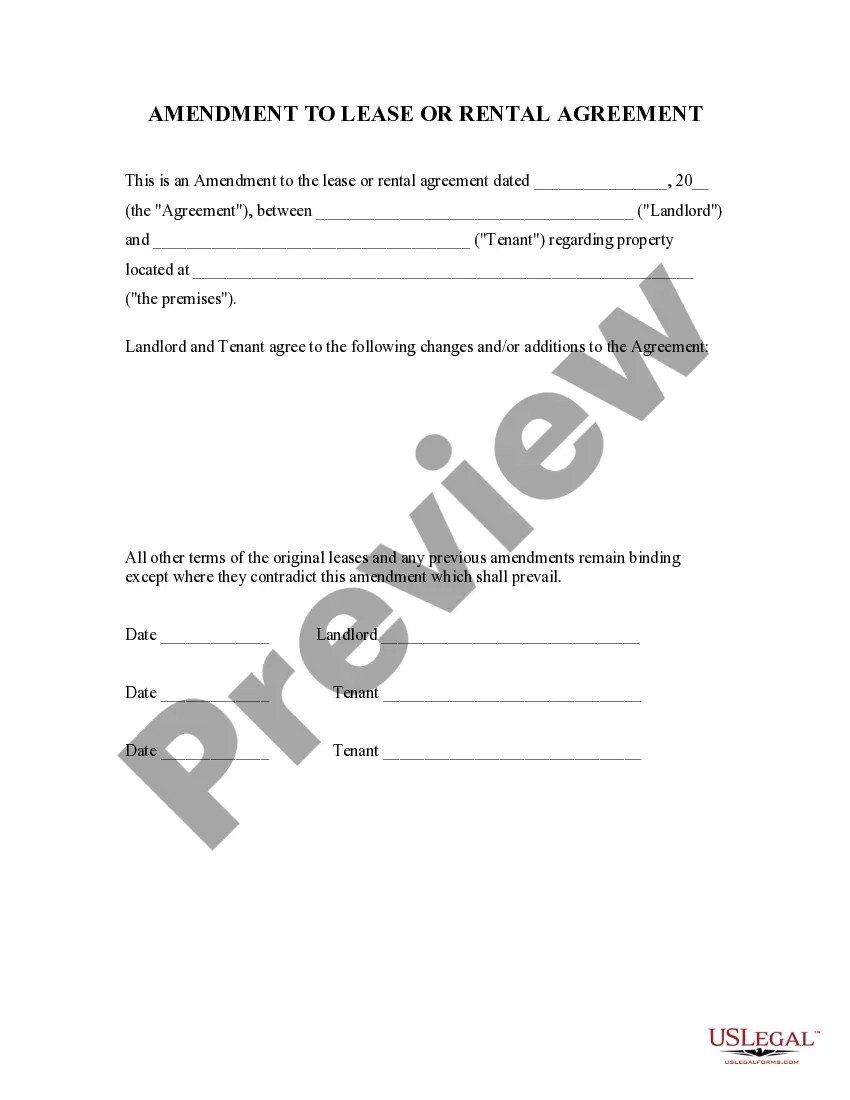

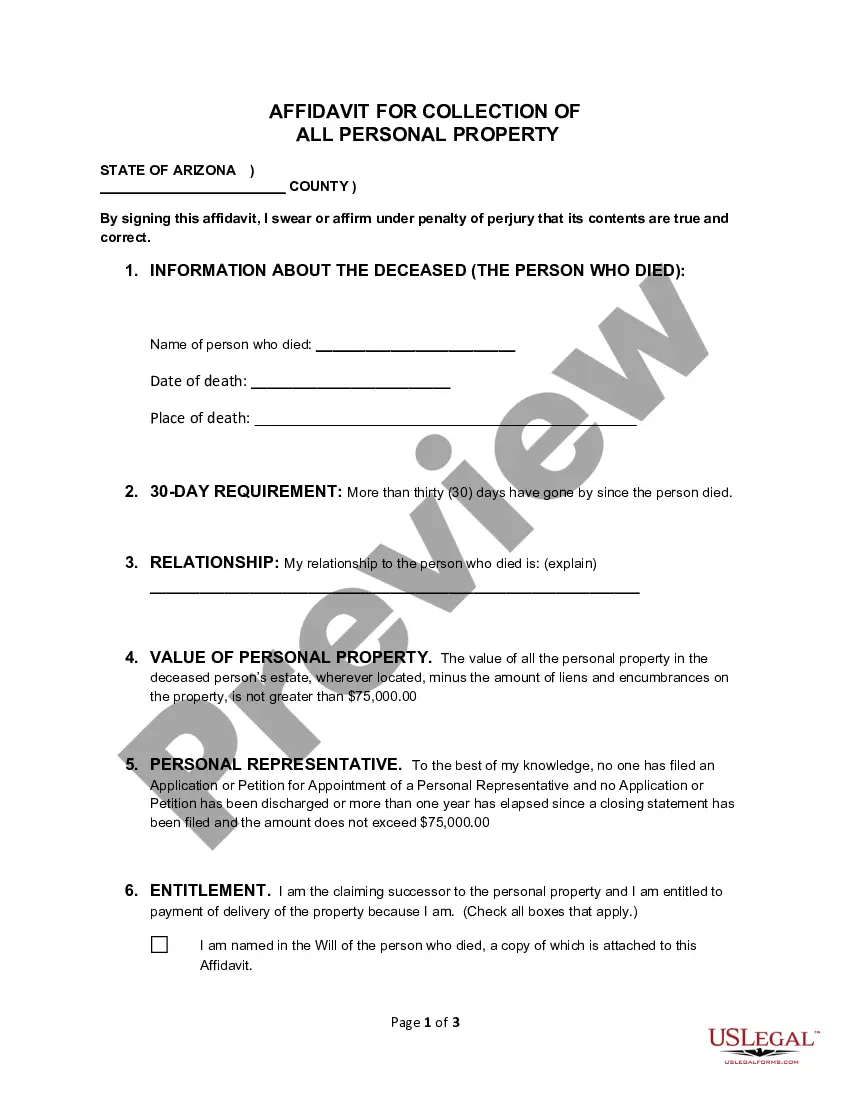





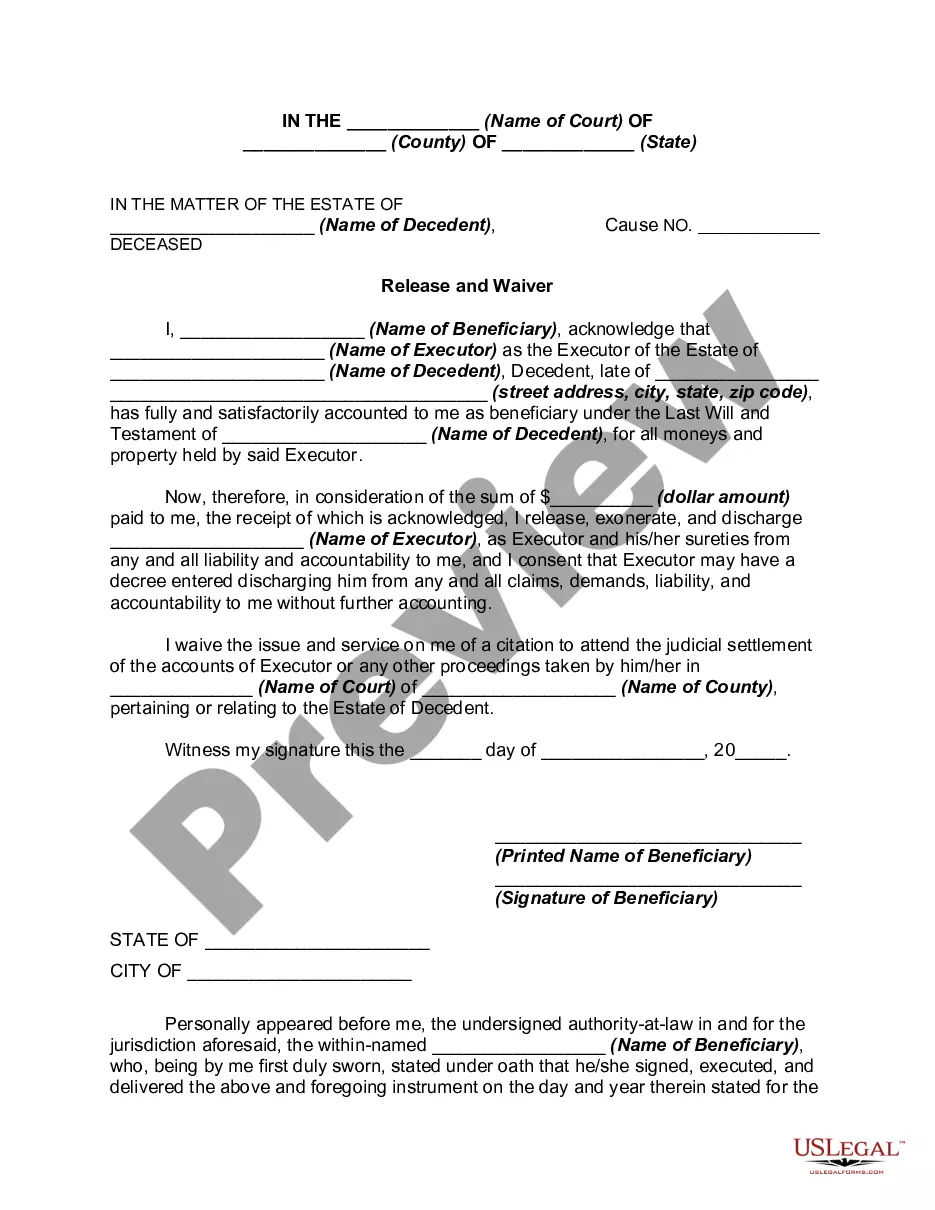
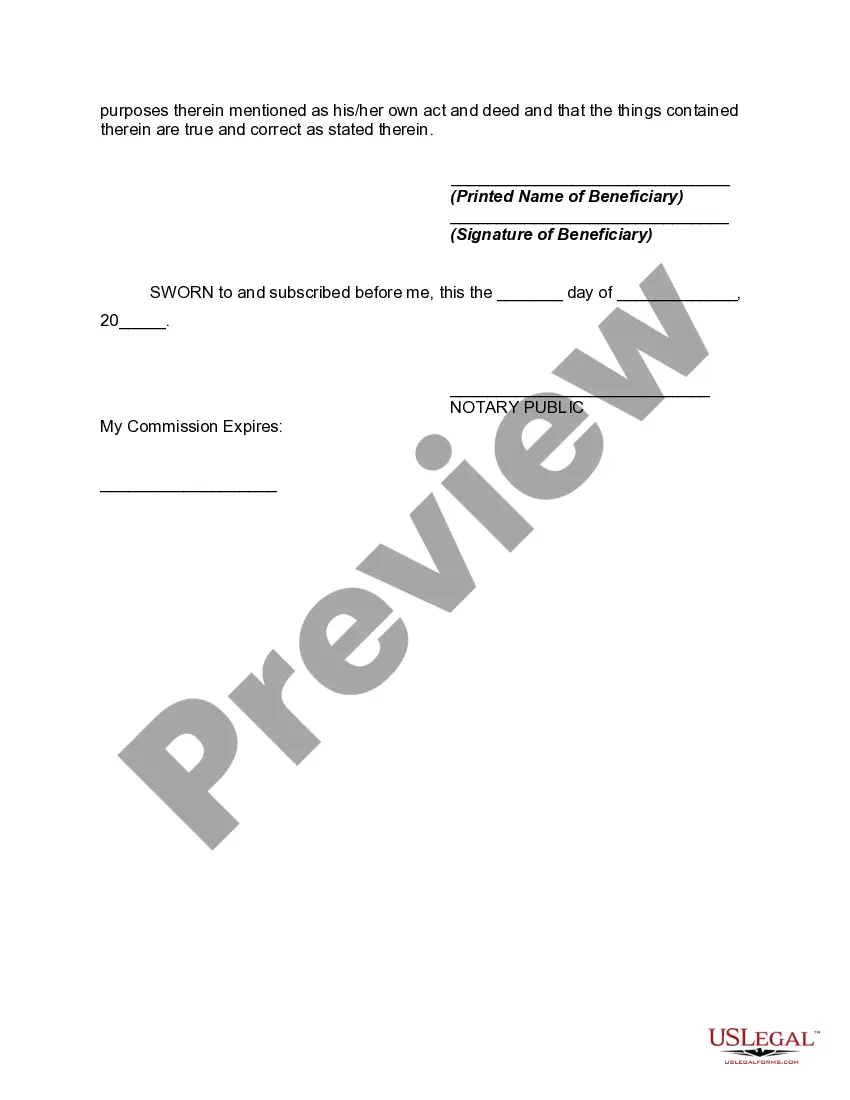
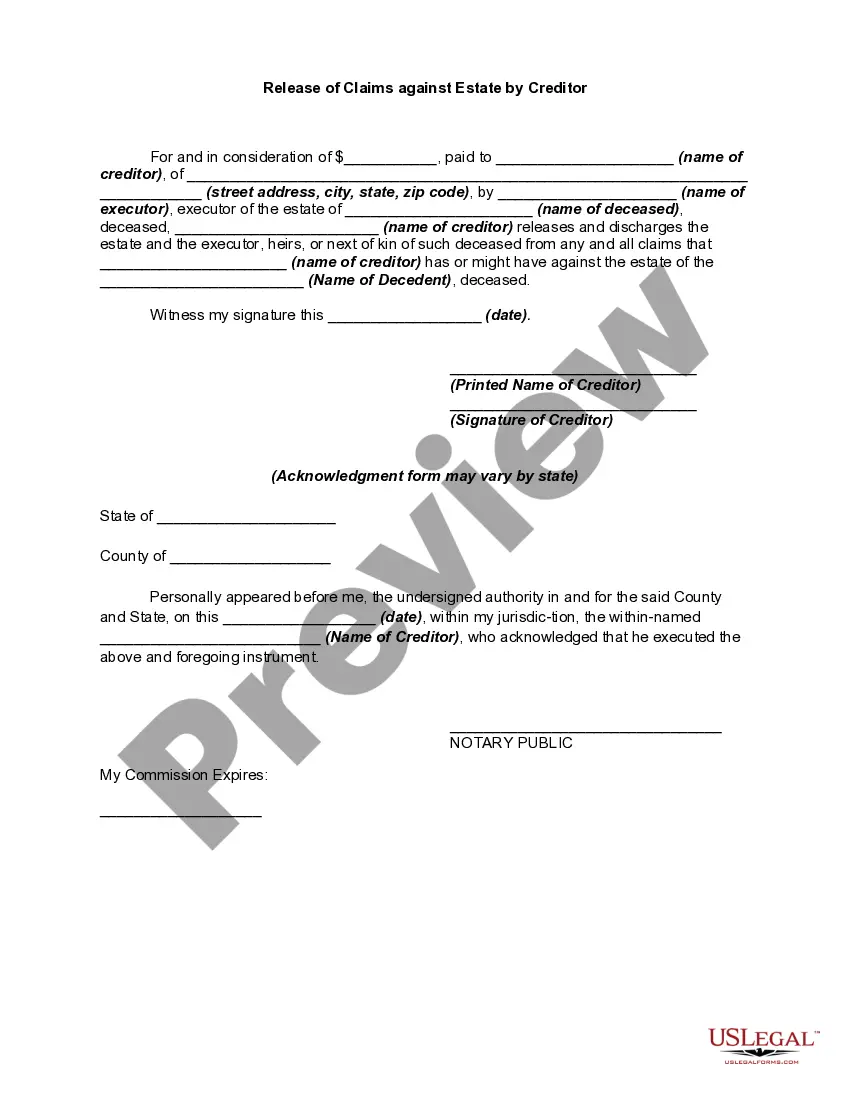
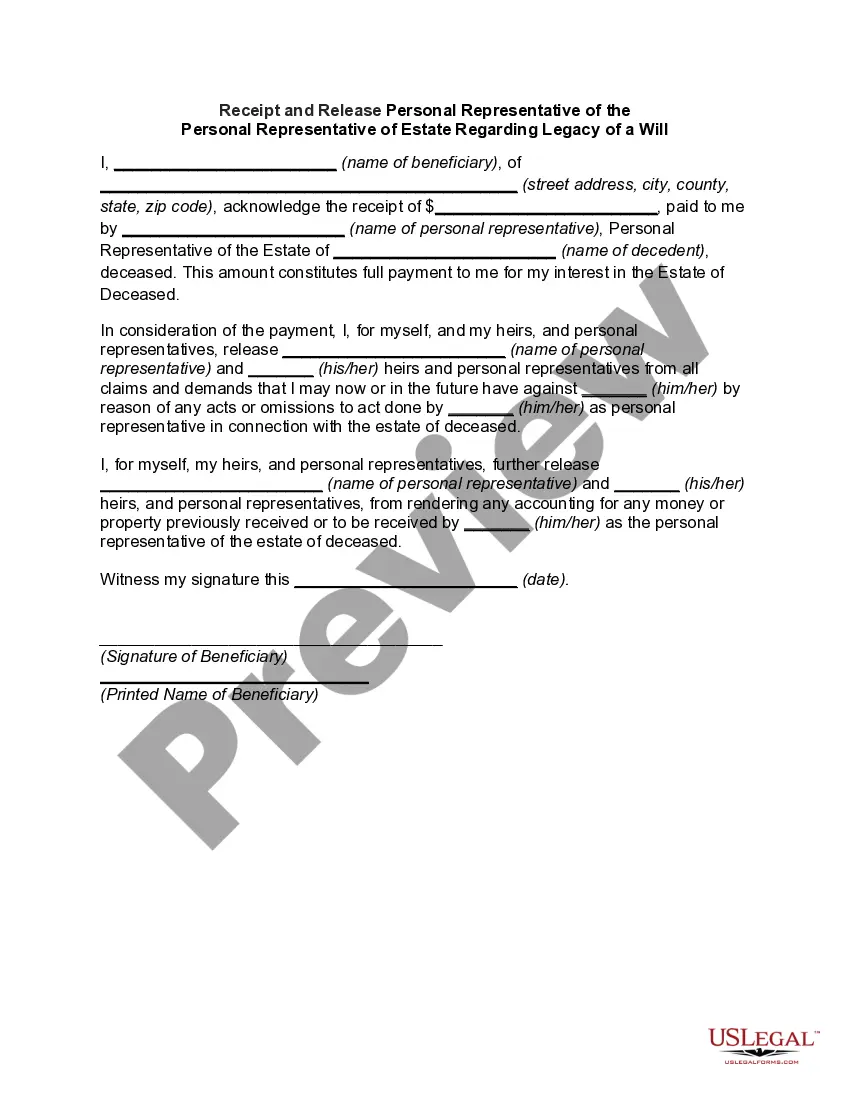
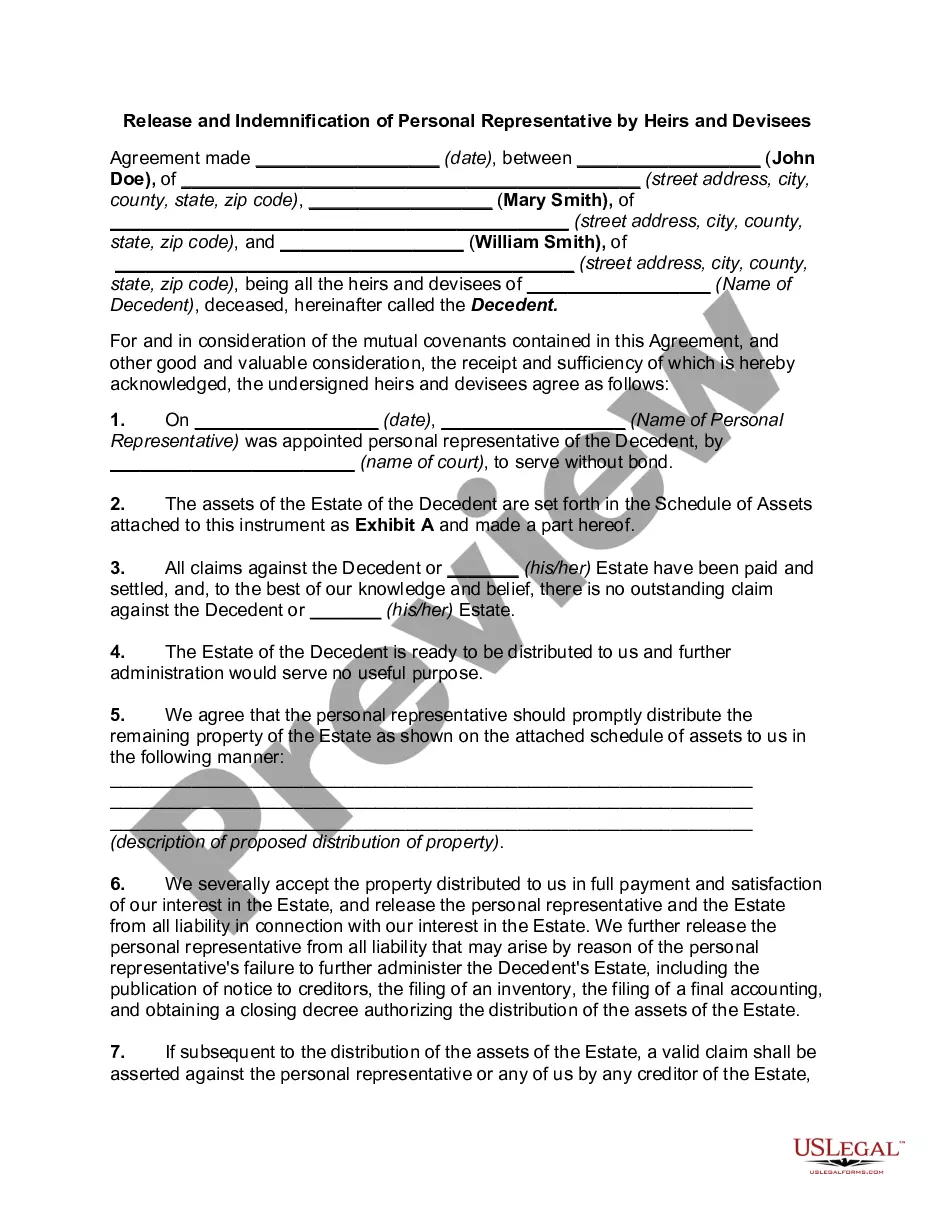
How to fill out Release And Exoneration Of Executor On Distribution To Beneficiary Of Will And Waiver Of Citation Of Final Settlement?
- If you've previously used US Legal Forms, log in to your account and select the needed template. Click the Download button, ensuring your subscription is active. If it has expired, renew it as per your payment plan.
- For first-time users, start by browsing the available templates. Check the preview and descriptions to confirm they align with your jurisdiction and needs.
- If necessary, utilize the Search tab to find alternative templates that better fit your requirements.
- Once you find the correct document, click on the Buy Now button and select a suitable subscription plan. Registration will be required for access to the legal library.
- Complete your purchase by entering your credit card information or using your PayPal account to process the subscription payment.
- After payment, download the form directly to your device. You can also access it later via the My Forms section in your profile.
US Legal Forms provides a robust library of over 85,000 fillable and editable legal forms, ensuring that users can find specific documents tailored to their legal needs. With access to premium experts for form assistance, you can confidently complete your legal documents correctly.
Ensure you take advantage of US Legal Forms for an efficient approach to managing estate documentation. Start today and simplify your role as an executor of an estate with trust!
Form popularity
FAQ
No, the executor of an estate with trust cannot take everything for personal gain. They are obligated to follow the trust's directives and distribute assets according to the deceased's wishes. Personal benefits from trust assets are typically prohibited unless expressly allowed by the trust terms. This structured approach safeguards beneficiaries' rights and maintains fairness in asset distribution.
The executor of an estate with trust cannot act beyond the authority granted by the trust and applicable laws. For instance, they cannot make personal use of trust assets or alter the terms of the trust without proper consent. Additionally, executors must avoid conflicts of interest and follow fiduciary duties to protect the interests of beneficiaries. These limitations ensure accountability and transparency in the administration process.
While both roles involve managing assets, the executor of an estate with trust and the trustee are not the same. The executor is responsible for administering the estate upon death, whereas the trustee manages the trust during its lifespan. In some cases, the same individual may hold both positions, but their responsibilities differ based on the defined roles and the terms of the trust. Understanding these differences is essential for proper estate management.
When working with your executor of estate with trust, it's crucial to provide comprehensive information about your assets, debts, and any specific wishes you have regarding the distribution of your estate. Share details about bank accounts, property, insurance policies, and any other relevant documents. This transparency helps your executor fulfill your wishes accurately and efficiently.
As the executor of a will, your first steps involve locating the will and filing it with the probate court. You should also begin notifying beneficiaries and gather important information about the deceased's assets and debts. This organization sets the stage for effectively managing the estate with trust, making your responsibilities clearer.
To serve as the executor of an estate with trust, you must provide certain documents. Typically, you will need a copy of the will, identification, and sometimes a court document known as letters testamentary. These documents establish your authority and validate your role as the executor, ensuring a smooth administration of the estate.
Just like before, engaging a lawyer to help with the executor role is beneficial, though not mandatory. A qualified attorney guiding you through the steps can streamline the process and help avoid mistakes. For individuals without experience in estate management, legal support can provide peace of mind and clarity.
While it is not strictly necessary to hire a lawyer to become an executor of estate with trust, it can be helpful. A lawyer can assist in navigating complex legal requirements, ensuring compliance with state laws, and managing potential disputes among heirs. Consider consulting legal assistance, especially for large estates or when conflicts arise.
One disadvantage of being an executor of estate with trust is the potential for significant personal responsibility. Executors must settle debts, manage assets, and navigate legal requirements, which can be overwhelming. Moreover, executors also face potential liability if they fail to follow the deceased's wishes or mismanage the estate.
Choosing the right executor of estate with trust requires careful thought. Ideally, select someone responsible, trustworthy, and organized, as this person will handle significant financial decisions. Often, individuals opt for a family member or a close friend, but sometimes appointing a professional like a lawyer or an accountant may be advantageous.