Mediation Vs Arbitration Definition Within A Contract
Description

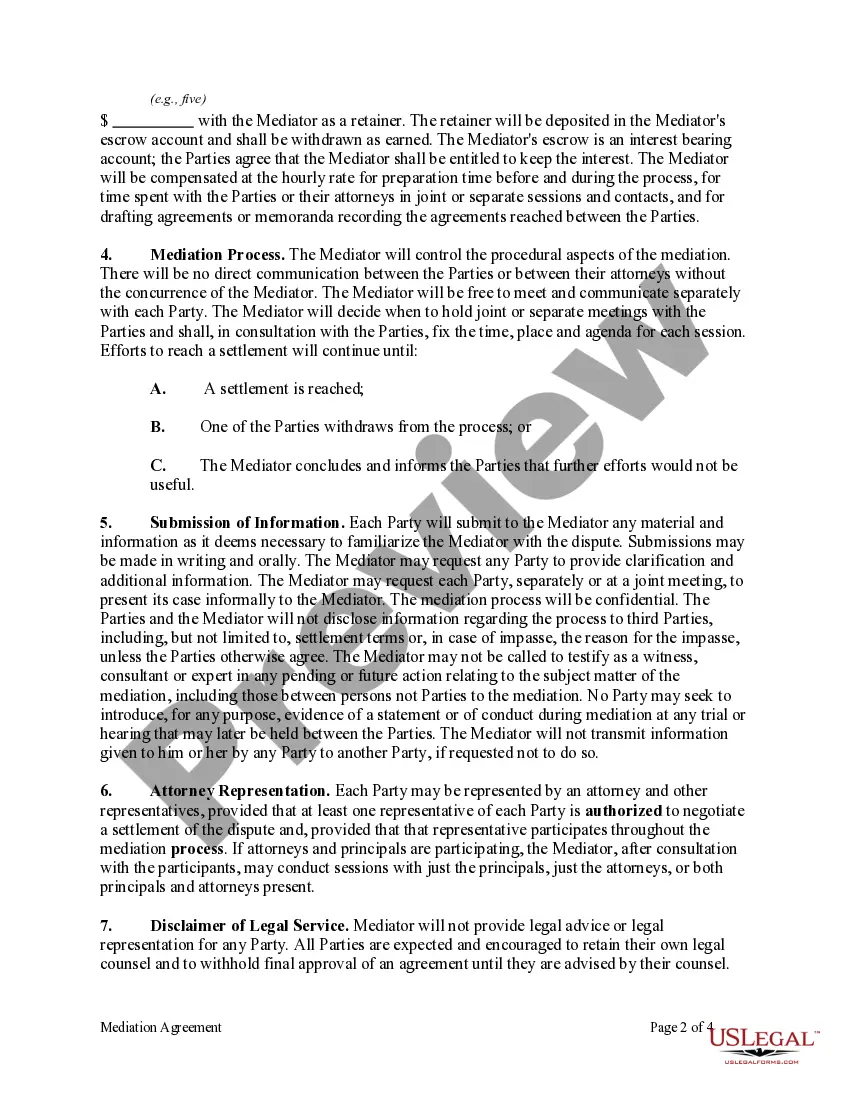
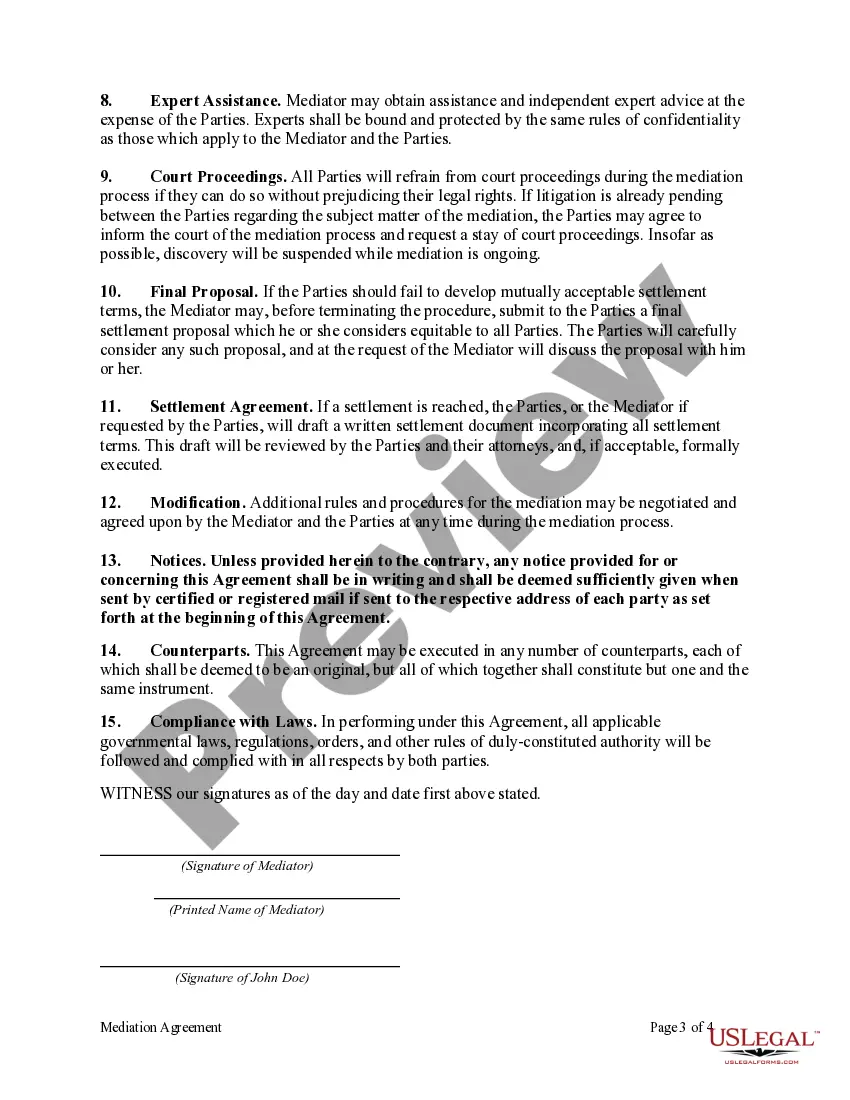


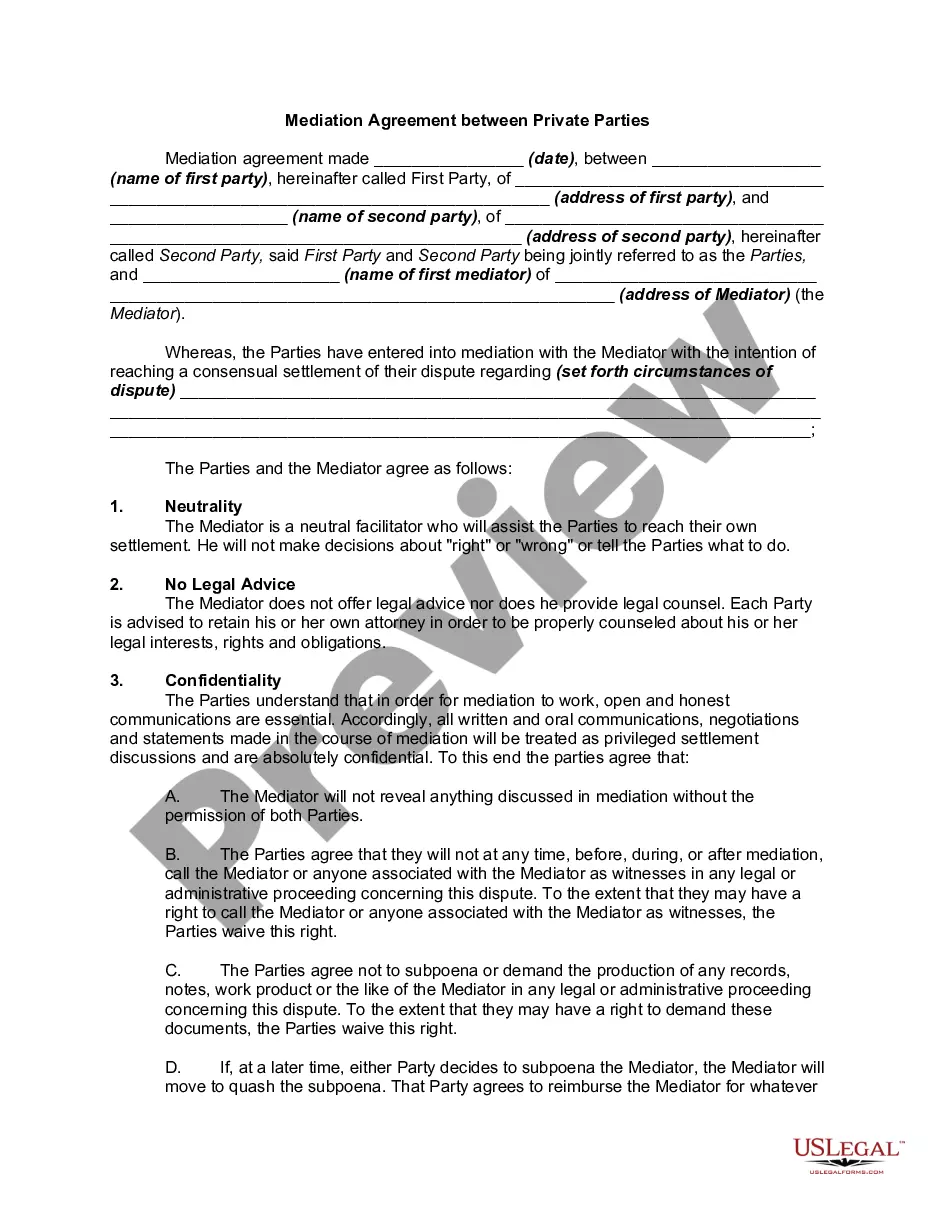
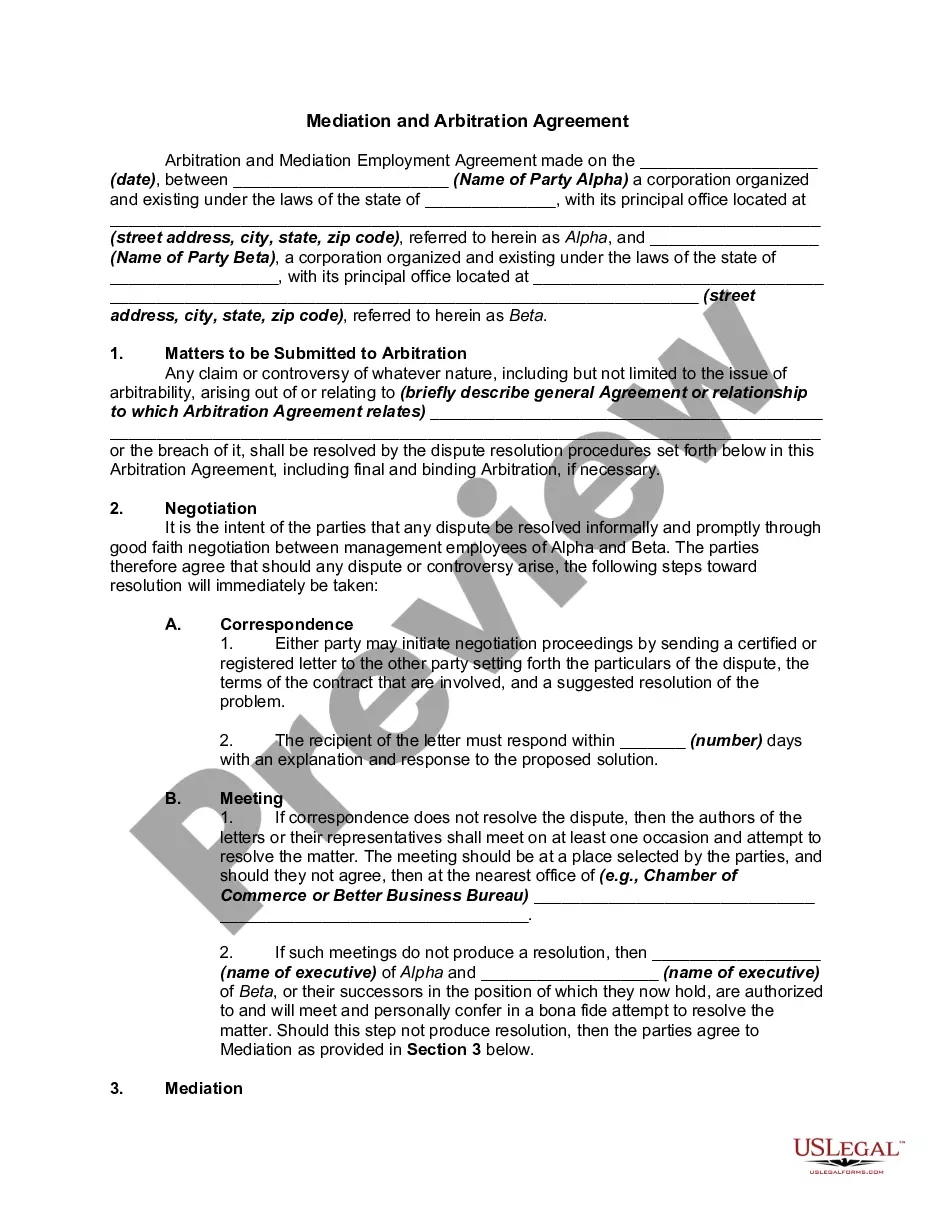





How to fill out Mediation Agreement?
Legal paperwork management may be perplexing, even for the most well-informed specialists.
When you are looking for a Mediation vs Arbitration Explanation Within A Contract and lack the time to devote to finding the correct and most recent version, the processes can be stressful.
Leverage a repository of articles, guides, and resources pertinent to your situation and demands.
Save time and energy searching for the documentation you require, and utilize US Legal Forms’ sophisticated search and Review feature to obtain Mediation vs Arbitration Explanation Within A Contract.
Choose the format you need, then Download, fill out, sign, print, and send your document. Enjoy the US Legal Forms web repository, backed by 25 years of expertise and reliability. Transform your routine document management into a seamless and user-friendly process today.
- If you have a monthly subscription, sign in to your US Legal Forms account, look for the form, and retrieve it.
- Check the My documents tab to see the paperwork you previously stored and to organize your files as you wish.
- If this is your first experience with US Legal Forms, register an account and gain unlimited access to all the platform's features.
- After obtaining the form you need, confirm it is the correct document by previewing it and examining its description.
- Ensure that the template is valid in your state or region.
- Select Buy Now when you are prepared.
- Access state- or region-specific legal and business documents.
- US Legal Forms addresses any needs you may encounter, whether personal or professional, all in one location.
- Employ cutting-edge tools to complete and oversee your Mediation vs Arbitration Explanation Within A Contract.
Form popularity
FAQ
Yes, it is possible to utilize both mediation and arbitration in the dispute resolution process. Many contracts allow for mediation as a first step, followed by arbitration if necessary. This combination can be beneficial, as it provides an opportunity for resolution through discussion before resorting to a more formal arbitration process. Exploring the mediation vs arbitration definition within a contract will help clarify your options.
Mediation should be used when parties wish to resolve their disputes without the need for a formal hearing. It is an excellent option for conflicts where communication is still possible and parties are open to negotiation. By understanding the mediation vs arbitration definition within a contract, you can recognize when mediation is the most appropriate first step.
Choosing between mediation and arbitration depends on the nature of the dispute and the desired outcomes. Mediation is ideal for parties seeking a collaborative solution while retaining control over the process. In contrast, arbitration is more suitable when a binding decision is necessary. Familiarizing yourself with the mediation vs arbitration definition within a contract can guide your decision-making.
While it is not always mandatory to conduct mediation before arbitration, many contracts specify this requirement. This approach encourages parties to resolve their disputes amicably without escalating to arbitration. When you understand the mediation vs arbitration definition within a contract, you can determine the best path for dispute resolution tailored to your situation.
In many cases, mediation occurs before arbitration. This sequence allows parties to attempt resolution through negotiation and discussion first. If mediation is unsuccessful, arbitration may then be pursued as a more formal method of dispute resolution. Understanding the mediation vs arbitration definition within a contract can help clarify the order of these processes.
Arbitration and mediation serve distinct purposes in resolving disputes within a contract. In mediation, a neutral third party facilitates communication between the parties to help them reach a voluntary agreement. Conversely, arbitration involves a neutral arbitrator who makes a binding decision after hearing both sides. Understanding the mediation vs arbitration definition within a contract is crucial for selecting the appropriate method for your needs.
Yes, mediation and arbitration can be combined in a process known as med-arb. This approach allows parties to first attempt to resolve their disputes through mediation. If mediation fails, the same mediator can then act as an arbitrator to make a binding decision. Understanding the mediation vs arbitration definition within a contract is crucial, as it helps parties navigate their options effectively and choose the best method for dispute resolution.
Typically, mediation comes first as a preliminary step to resolve disputes amicably before resorting to arbitration. Many contracts include a mediation clause that encourages parties to engage in mediation prior to arbitration. This sequence allows for a potentially quicker and less adversarial resolution, aligning with the mediation vs arbitration definition within a contract.
Choosing between mediation and arbitration depends on the specific needs of the parties involved. Mediation can be ideal for those seeking a collaborative approach, while arbitration might be better for those needing a binding resolution. Assessing the nature of the dispute and desired outcomes will help determine which method is more suitable.
I would recommend arbitration because it offers a more structured process with a definitive outcome. Unlike mediation, which relies on negotiation, arbitration leads to a binding decision, providing closure to the dispute. For someone facing potential litigation, arbitration can resolve the issue more efficiently and prevent costly court proceedings.