Mediation Vs Arbitration Definition With Example
Description

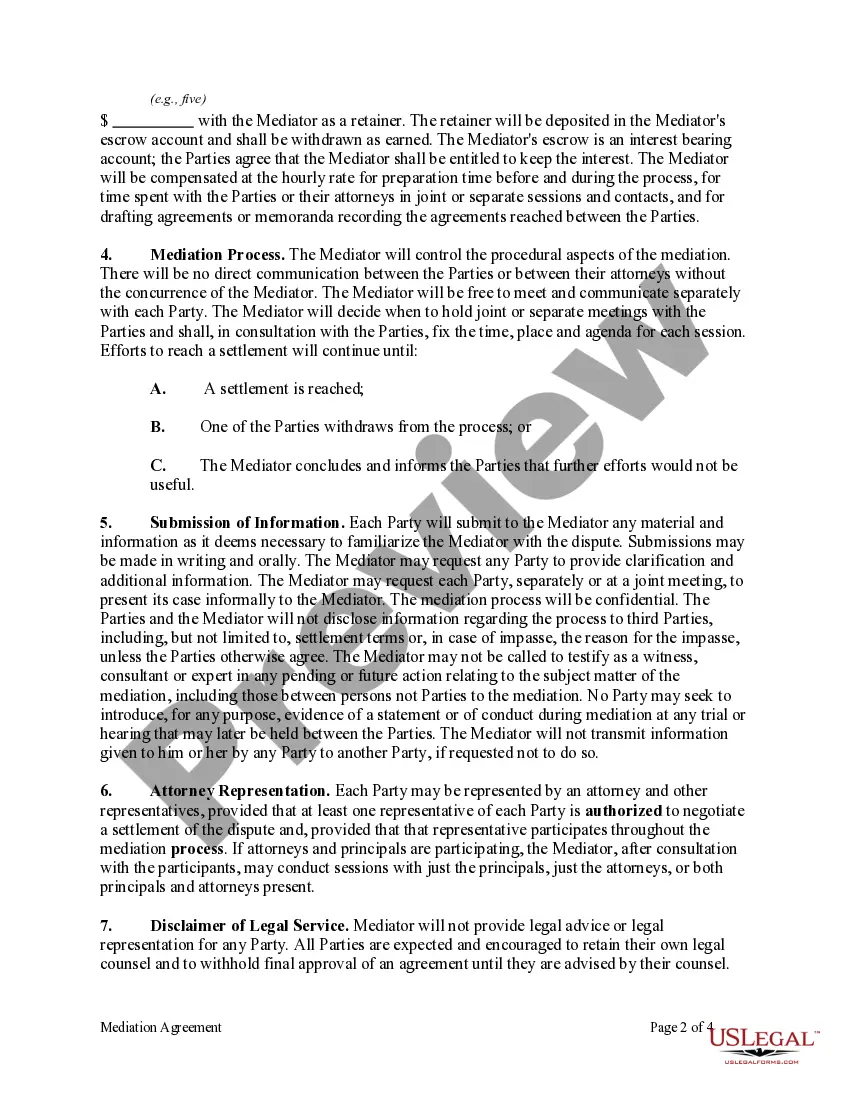
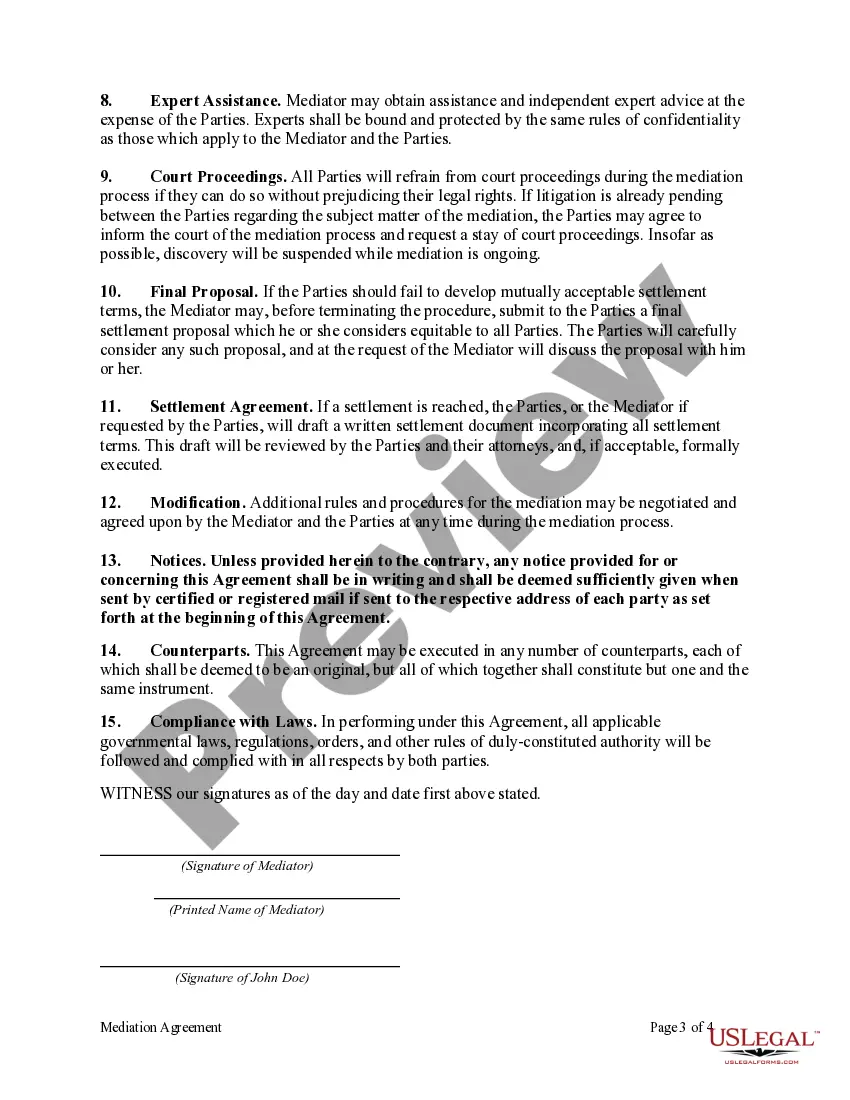


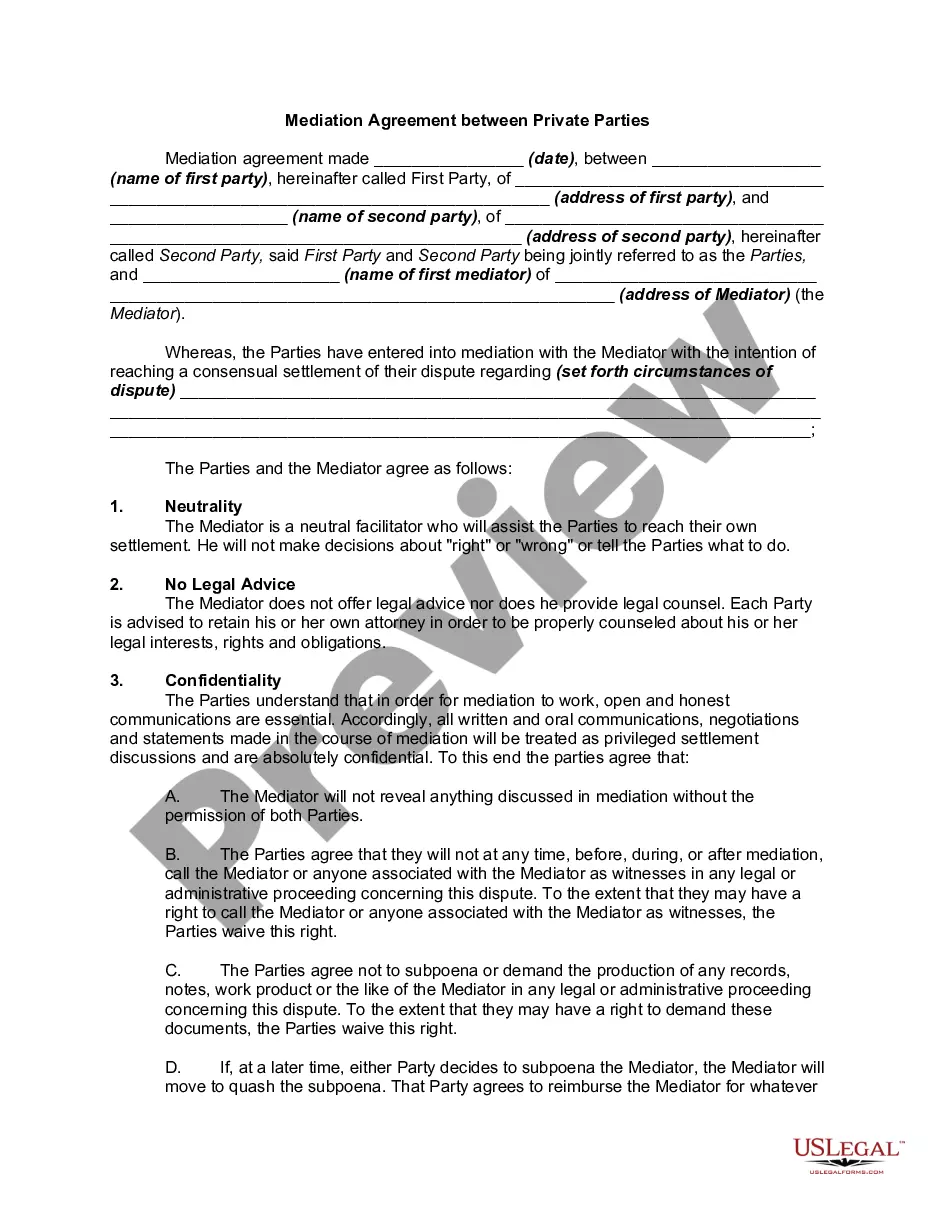
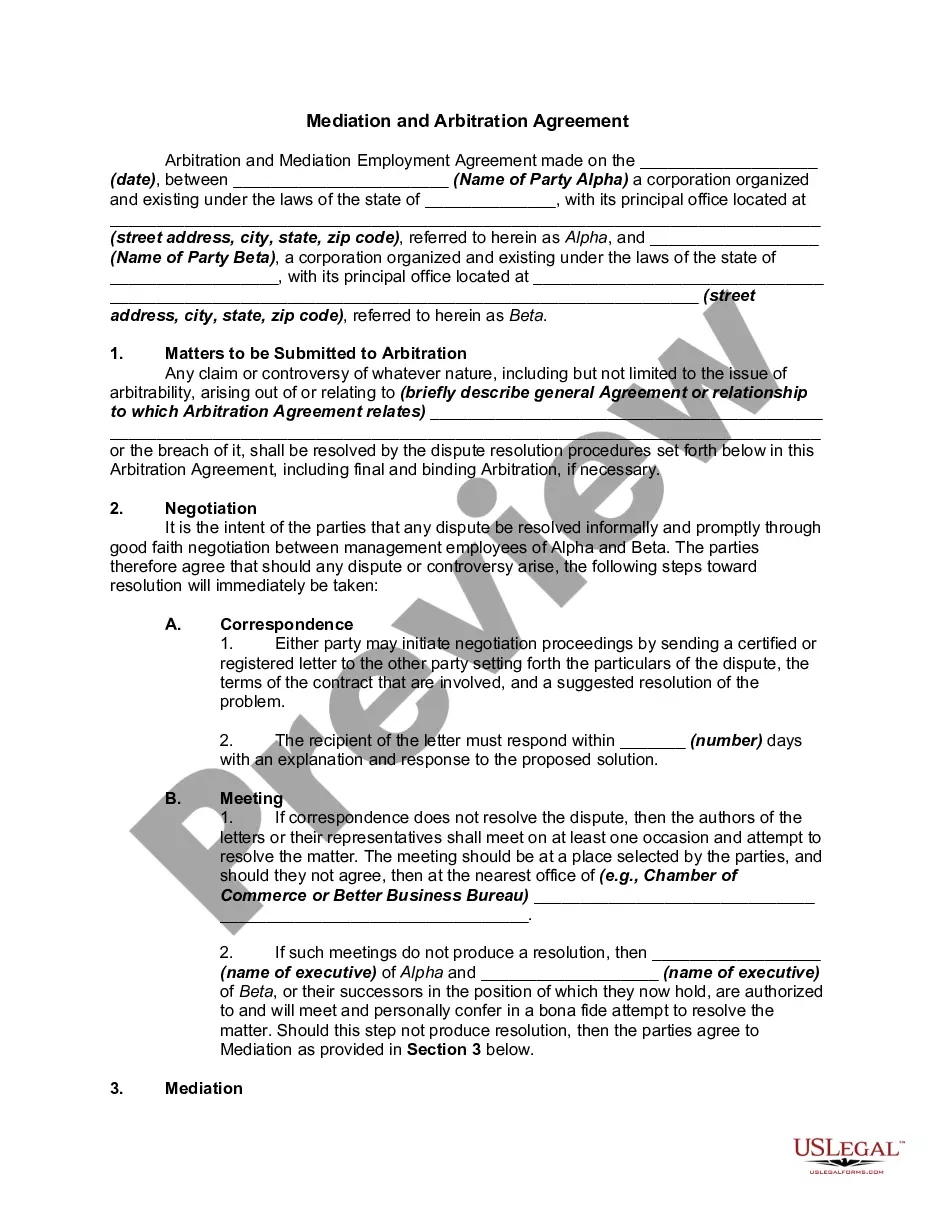
Get your form ready online
Our built-in tools help you complete, sign, share, and store your documents in one place.
Make edits, fill in missing information, and update formatting in US Legal Forms—just like you would in MS Word.
Download a copy, print it, send it by email, or mail it via USPS—whatever works best for your next step.
Sign and collect signatures with our SignNow integration. Send to multiple recipients, set reminders, and more. Go Premium to unlock E-Sign.
If this form requires notarization, complete it online through a secure video call—no need to meet a notary in person or wait for an appointment.
We protect your documents and personal data by following strict security and privacy standards.

Make edits, fill in missing information, and update formatting in US Legal Forms—just like you would in MS Word.

Download a copy, print it, send it by email, or mail it via USPS—whatever works best for your next step.

Sign and collect signatures with our SignNow integration. Send to multiple recipients, set reminders, and more. Go Premium to unlock E-Sign.

If this form requires notarization, complete it online through a secure video call—no need to meet a notary in person or wait for an appointment.

We protect your documents and personal data by following strict security and privacy standards.
Looking for another form?





How to fill out Mediation Agreement?
It’s widely recognized that you cannot transition into a legal expert in a day, nor can you swiftly comprehend how to effectively create Mediation Vs Arbitration Definition With Example without possessing a distinct set of abilities.
Assembling legal documents is an extensive process necessitating specific training and expertise. Thus, why not delegate the development of the Mediation Vs Arbitration Definition With Example to the professionals.
With US Legal Forms, which boasts one of the largest legal document collections, you can discover anything from court forms to templates for internal corporate communication. We understand the significance of adherence and compliance with federal and state regulations.
You can regain access to your documents from the My documents section at any point. If you’re already a client, you can easily Log In, and find and download the template from the same area.
Regardless of the intent behind your forms—be it financial, legal, or personal—our platform is here to assist you. Experience US Legal Forms today!
- Locate the form you require by utilizing the search function at the top of the website.
- Preview it (if this option is available) and review the accompanying description to assess whether Mediation Vs Arbitration Definition With Example is what you require.
- Restart your search if you are seeking a different template.
- Sign up for a complimentary account and choose a subscription plan to buy the template.
- Click Buy now. Once your payment is processed, you can download the Mediation Vs Arbitration Definition With Example, complete it, print it, and forward it to the necessary parties or organizations.
Form popularity
FAQ
To write a statement of claim for arbitration, start by clearly outlining the parties involved and the nature of the dispute. Include a detailed account of the facts, the legal basis for your claims, and the specific relief you seek. This process aligns with the mediation vs arbitration definition with example, as it emphasizes the formal structure required in arbitration, contrasting with the informal nature of mediation. Using platforms like US Legal Forms can simplify this process, providing templates and guidance to help you articulate your claims effectively.
A good example of mediation occurs when two business partners face a disagreement over financial distributions. In this situation, a neutral mediator helps both parties communicate their perspectives and work towards a mutually acceptable solution. This example illustrates the mediation vs arbitration definition with example, as mediation focuses on collaboration and compromise rather than a binding decision imposed by an arbitrator.
The main difference between arbitration and mediation lies in the process and outcome. Mediation involves a neutral third party helping disputing parties reach a voluntary agreement, while arbitration is a more formal process where an arbitrator makes a binding decision. In understanding the mediation vs arbitration definition with example, mediation promotes collaboration, whereas arbitration provides a conclusive resolution. If you're navigating these options, uslegalforms can help clarify the best path for your situation.
I would recommend arbitration to a friend because it provides a faster and more definitive resolution than mediation. While mediation focuses on negotiation and may not result in a binding agreement, arbitration ends with a enforceable decision. This can be crucial if the dispute is likely to escalate into litigation. In discussing mediation vs arbitration definition with example, the clear resolution that arbitration offers can be advantageous.
In arbitration, the outcome can depend heavily on the strength of each party's case and the evidence presented. Generally, the party that is better prepared and presents a more compelling argument tends to prevail. However, arbitration is designed to be fair, so each party has an equal opportunity to make their case. Understanding the mediation vs arbitration definition with example can help you strategize effectively.
Typically, mediation takes less time than arbitration. Mediation allows parties to discuss their differences and reach a mutually agreeable solution, which can happen quickly. In contrast, arbitration can involve more formal procedures and may require several sessions to resolve. Thus, if you're looking for speed in the mediation vs arbitration definition with example, mediation often wins.
You should consider using arbitration when you want a binding resolution to a dispute outside the court system. Arbitration is often faster than litigation and can provide more privacy. Additionally, it is beneficial when both parties seek a definitive decision, as arbitration results in an enforceable award. In the context of mediation vs arbitration definition with example, arbitration resolves issues directly, whereas mediation seeks to facilitate negotiation.
Yes, you can participate in both mediation and arbitration. Mediation is a voluntary process where a neutral third party helps disputants reach a consensus. In contrast, arbitration involves a neutral party making a binding decision after hearing both sides. Understanding the mediation vs arbitration definition with example can help you choose the right approach for your situation. Using platforms like US Legal Forms can provide you with the necessary documents and guidance to navigate either process effectively.
You should use mediation when you prefer a more informal and flexible resolution process, while arbitration is suitable for disputes requiring a binding decision. Mediation encourages negotiation and open communication, making it ideal for cases where preserving relationships is important. Conversely, arbitration serves well when parties seek a definitive ruling from an impartial arbitrator. Familiarizing yourself with the mediation vs arbitration definition with example can empower you to select the right method for your dispute.
Mediation should be used when both parties are willing to engage in dialogue and seek a collaborative solution. It is particularly effective in resolving disputes related to family matters, business conflicts, or workplace issues. If you want to maintain relationships or desire a less adversarial process, mediation is often the best choice. Knowing the mediation vs arbitration definition with example can help you determine when to opt for this approach.