Mediation Form Statement For Court
Description


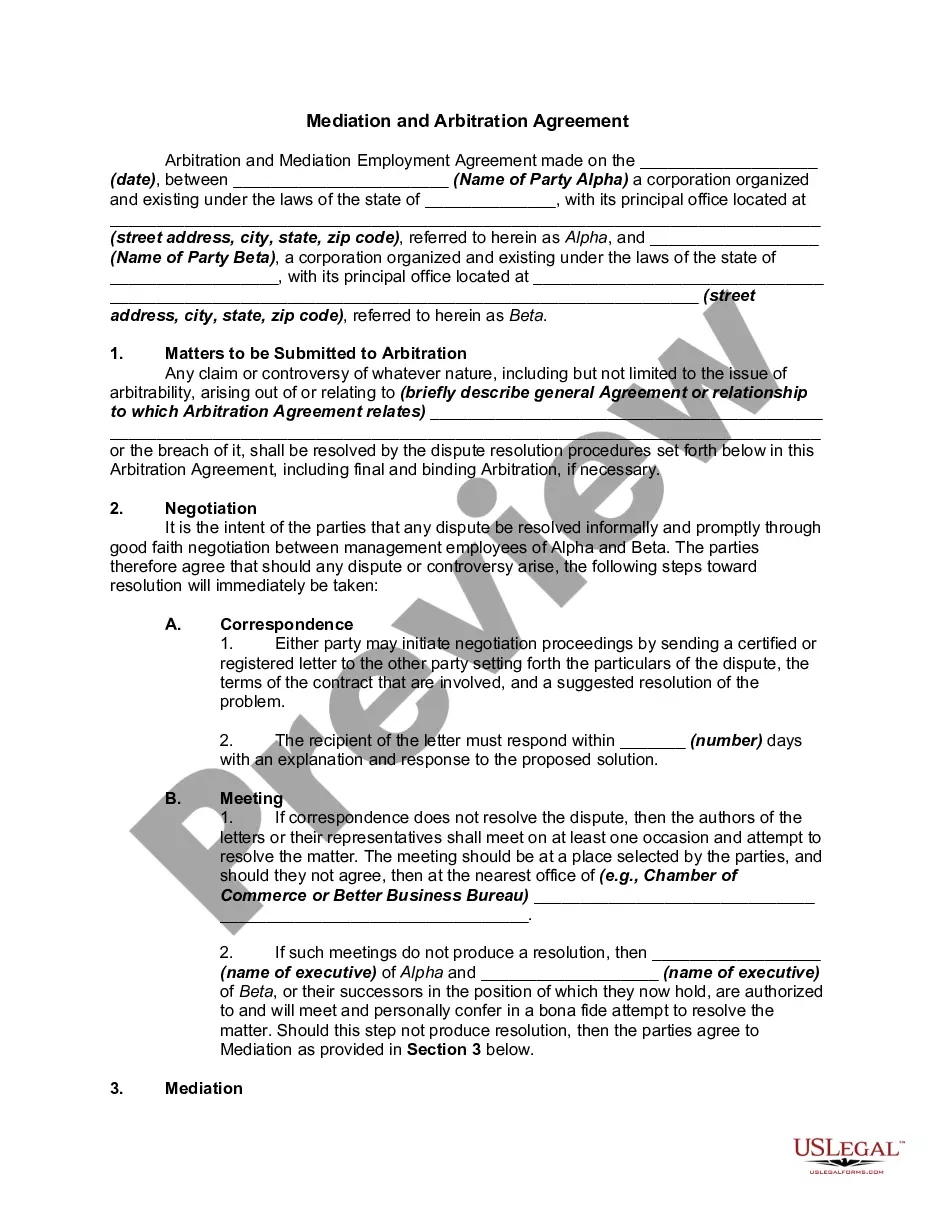
Get your form ready online
Our built-in tools help you complete, sign, share, and store your documents in one place.
Make edits, fill in missing information, and update formatting in US Legal Forms—just like you would in MS Word.
Download a copy, print it, send it by email, or mail it via USPS—whatever works best for your next step.
Sign and collect signatures with our SignNow integration. Send to multiple recipients, set reminders, and more. Go Premium to unlock E-Sign.
If this form requires notarization, complete it online through a secure video call—no need to meet a notary in person or wait for an appointment.
We protect your documents and personal data by following strict security and privacy standards.

Make edits, fill in missing information, and update formatting in US Legal Forms—just like you would in MS Word.

Download a copy, print it, send it by email, or mail it via USPS—whatever works best for your next step.

Sign and collect signatures with our SignNow integration. Send to multiple recipients, set reminders, and more. Go Premium to unlock E-Sign.

If this form requires notarization, complete it online through a secure video call—no need to meet a notary in person or wait for an appointment.

We protect your documents and personal data by following strict security and privacy standards.
Looking for another form?
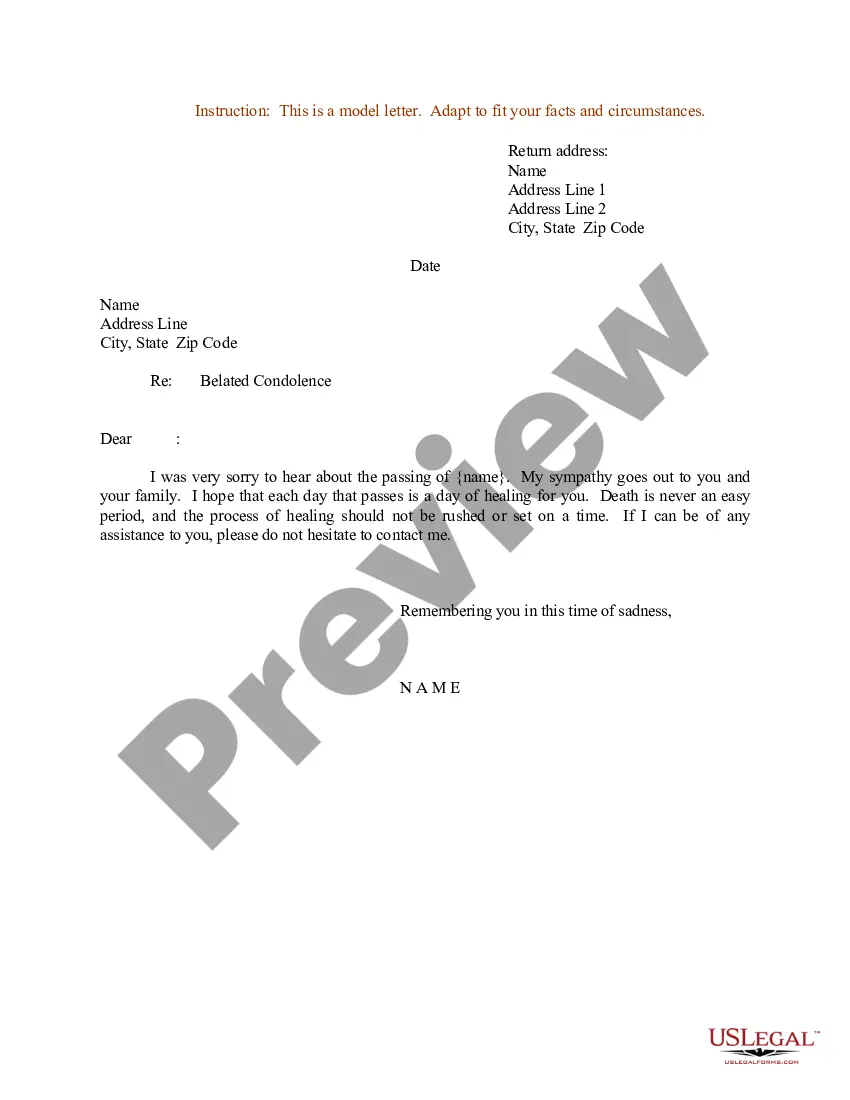




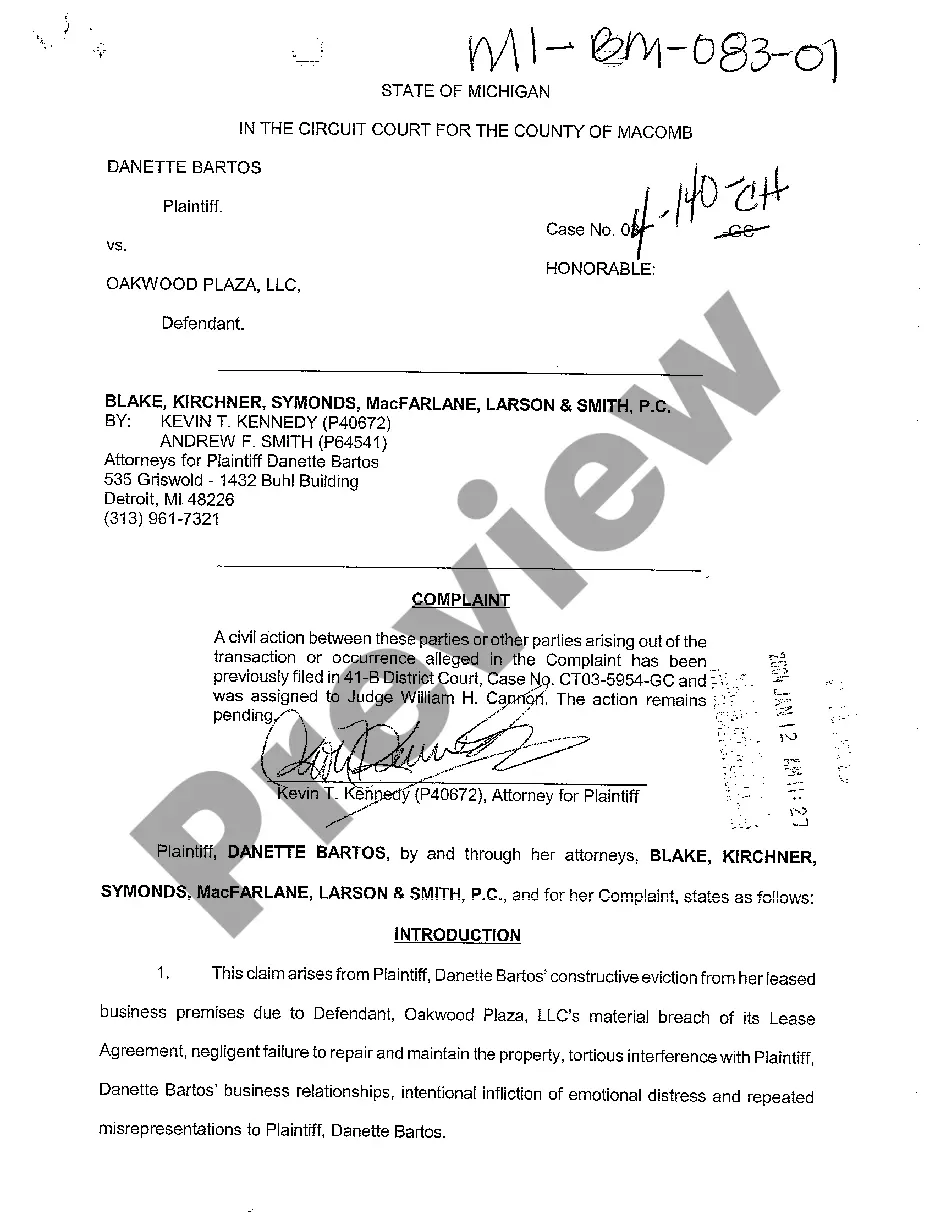



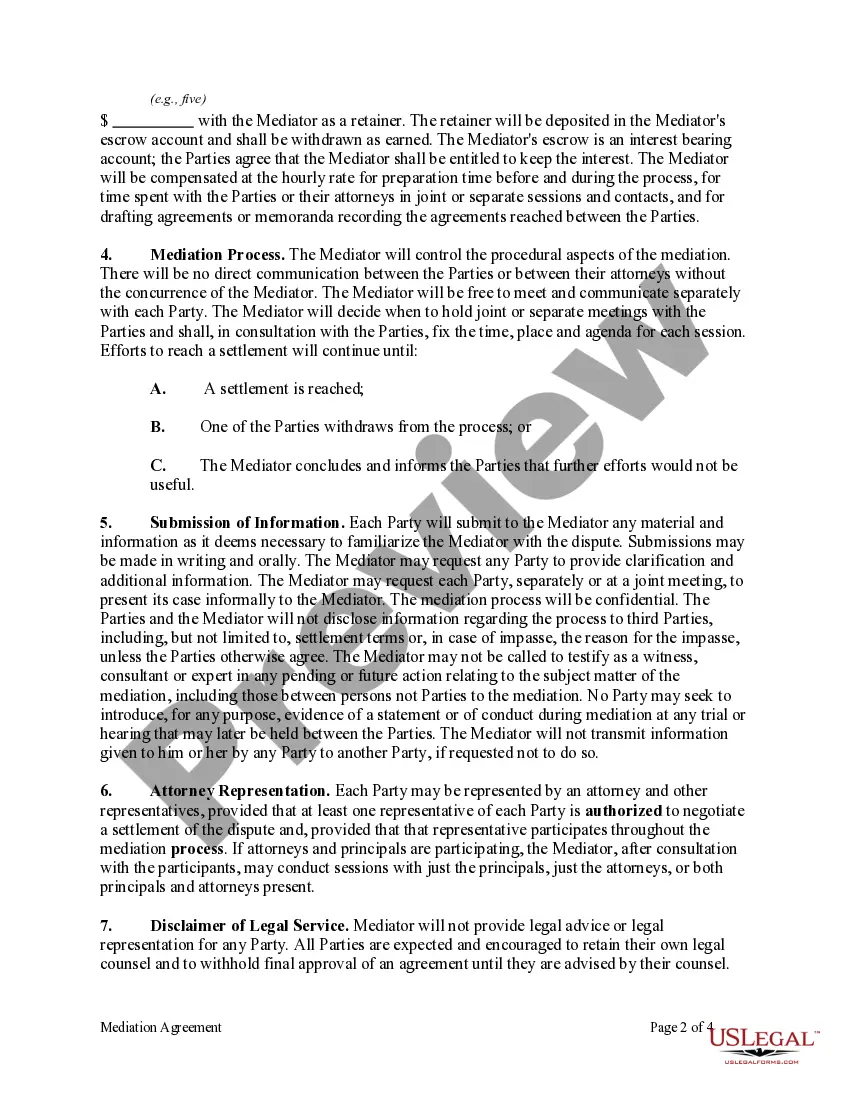
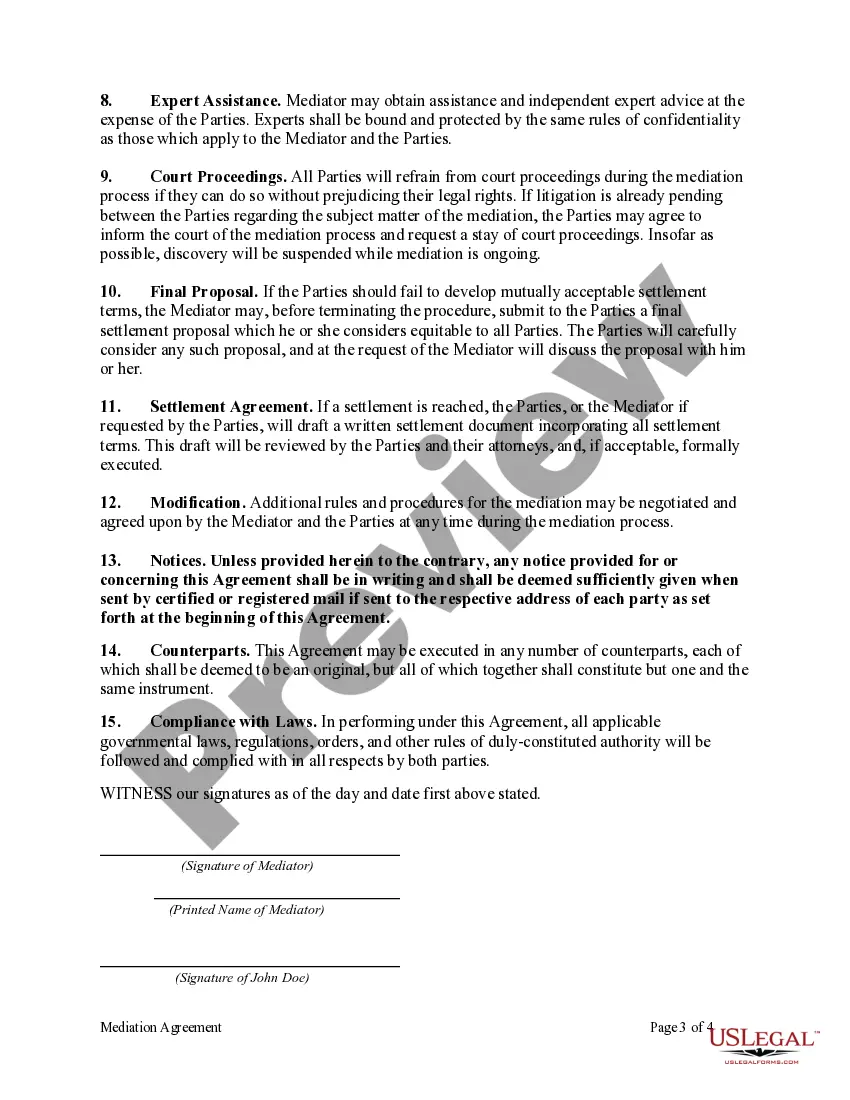
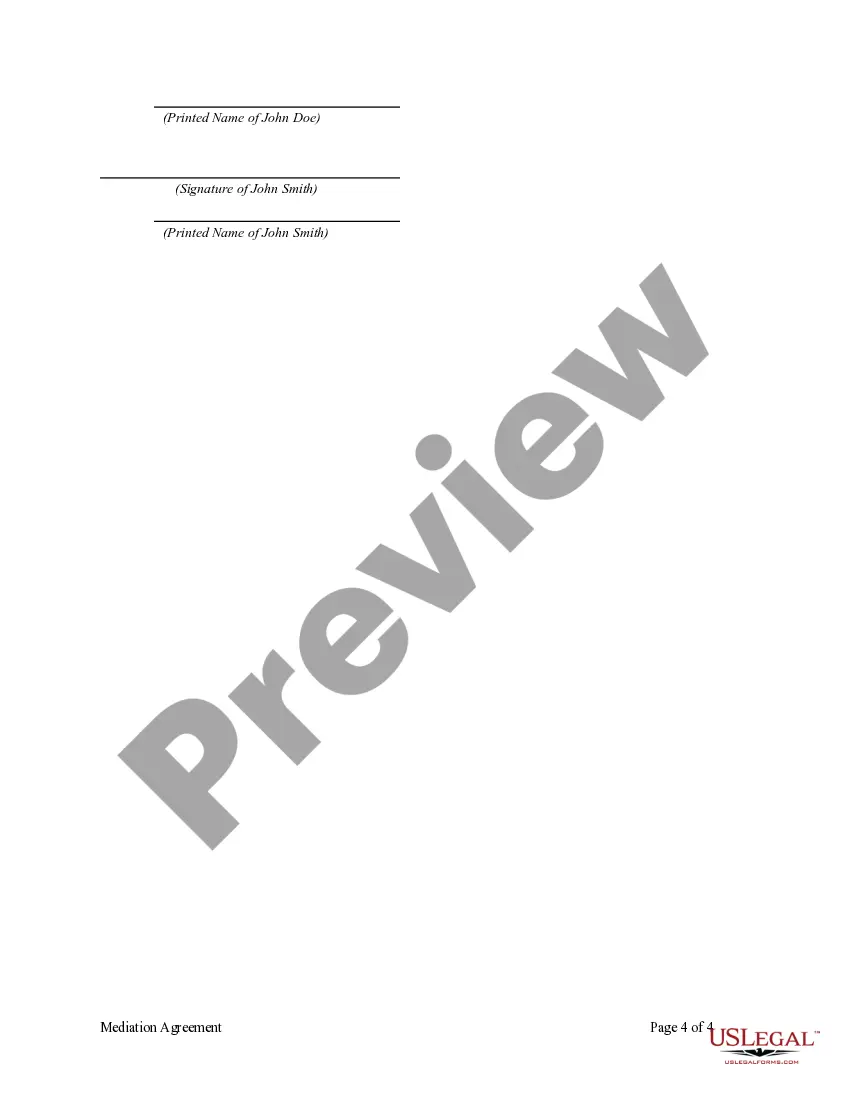
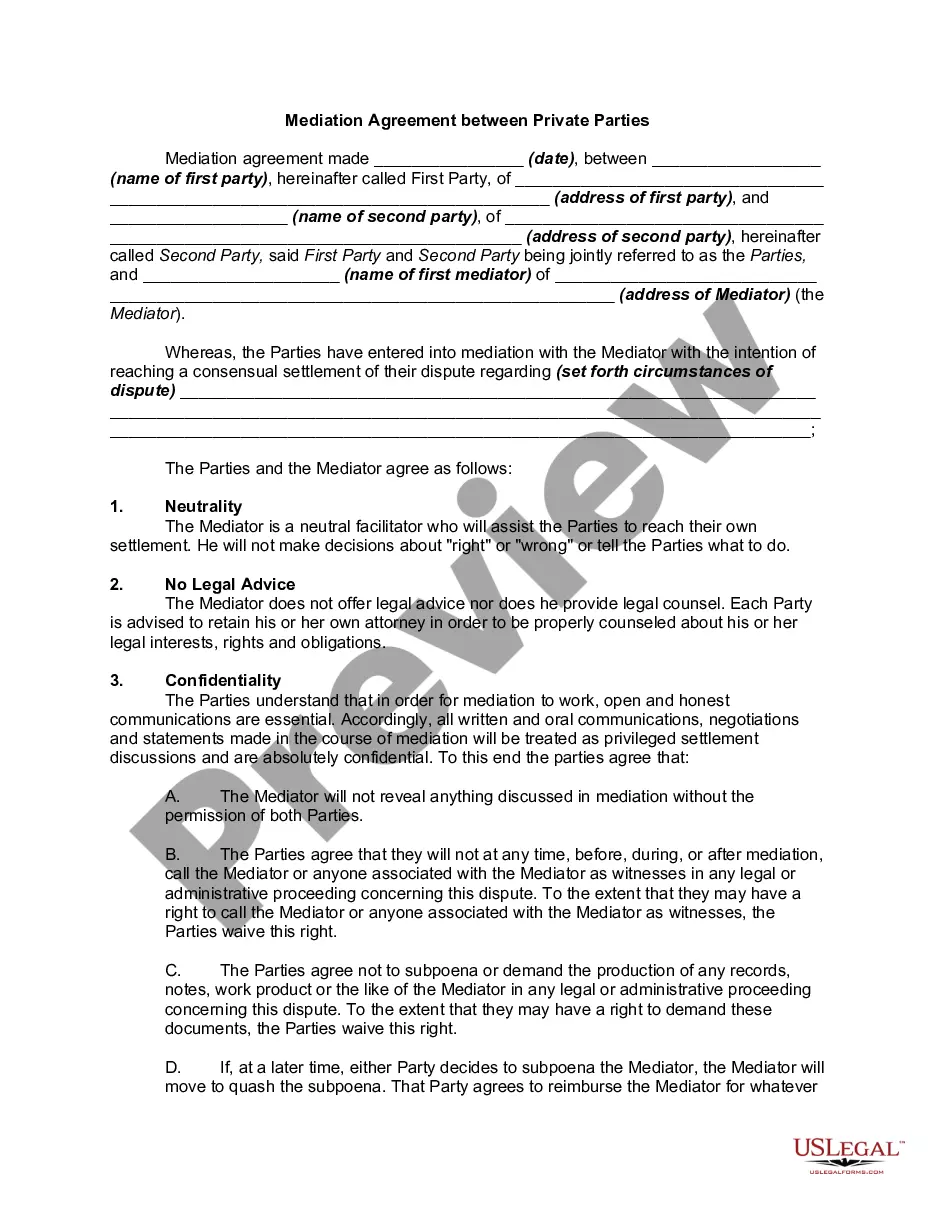
How to fill out Mediation Agreement?
Getting a go-to place to access the most recent and appropriate legal templates is half the struggle of working with bureaucracy. Finding the right legal files calls for accuracy and attention to detail, which is why it is crucial to take samples of Mediation Form Statement For Court only from trustworthy sources, like US Legal Forms. A wrong template will waste your time and hold off the situation you are in. With US Legal Forms, you have very little to be concerned about. You can access and view all the details about the document’s use and relevance for your situation and in your state or county.
Consider the listed steps to finish your Mediation Form Statement For Court:
- Make use of the catalog navigation or search field to find your sample.
- Open the form’s information to check if it matches the requirements of your state and region.
- Open the form preview, if there is one, to ensure the form is the one you are looking for.
- Resume the search and locate the appropriate template if the Mediation Form Statement For Court does not match your requirements.
- If you are positive about the form’s relevance, download it.
- When you are an authorized user, click Log in to authenticate and gain access to your picked templates in My Forms.
- If you do not have an account yet, click Buy now to get the form.
- Pick the pricing plan that suits your needs.
- Proceed to the registration to complete your purchase.
- Finalize your purchase by picking a payment method (bank card or PayPal).
- Pick the file format for downloading Mediation Form Statement For Court.
- Once you have the form on your device, you may modify it using the editor or print it and finish it manually.
Remove the hassle that accompanies your legal documentation. Explore the comprehensive US Legal Forms catalog where you can find legal templates, examine their relevance to your situation, and download them immediately.
Form popularity
FAQ
Provide a concise summary of the facts and claims. The mediator will not have the patience or need to read an appellate brief. Avoid prose but use headings and bullet points to organize the section, and to summarize the claims, defenses and background about the parties.
Now, let's get into these tips a little deeper. Find the Right Tone. In court, you might have a very different tone than you do in a mediation summary. ... Tell a Good Story. ... Include Evidence That Supports Your Position. ... Add an Analysis Section. ... Consider including Visual Aids.
Good afternoon, my name is _______________ and I am serving as your mediator today. I am a [certified*] mediator trained to assist in resolving disputes such as the one before us today. I am pleased to be here to assist you in working through your issues and believe you will find mediation to be a very helpful process.
You should follow these tips about what to avoid saying and doing to improve your chances of a successful mediation. Don't Be Disrespectful. ... Mediation is Not About Placing Blame. ... Don't Demand More Money. ... Don't Introduce Brand New Information. ... Don't Say, ?That's Confidential Information? ... Don't Make Ultimatums.
In sum, a mediation brief should focus on the structure and timing of the brief and the case itself, including the facts, procedural history, applicable case law, decision-making factors, and unresolved issues and potential options for settlement.