Convertible Promissory Note Vs Convertible Note
Description
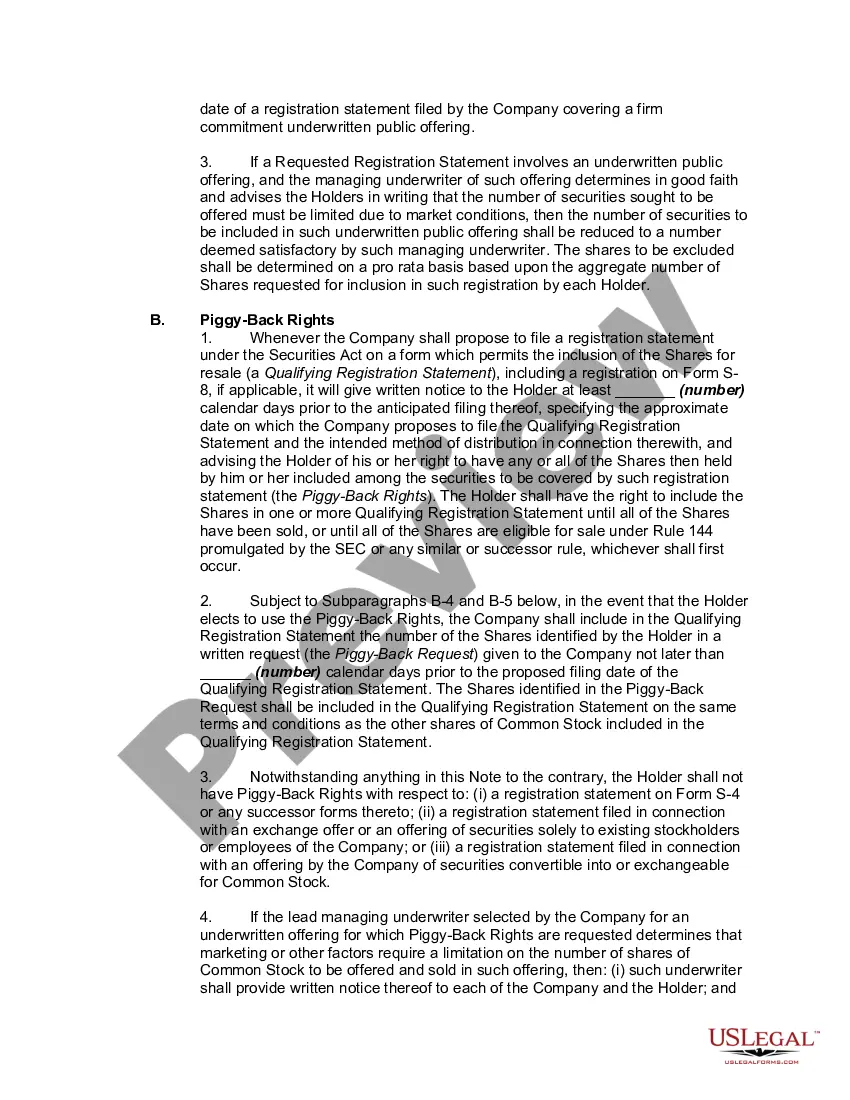
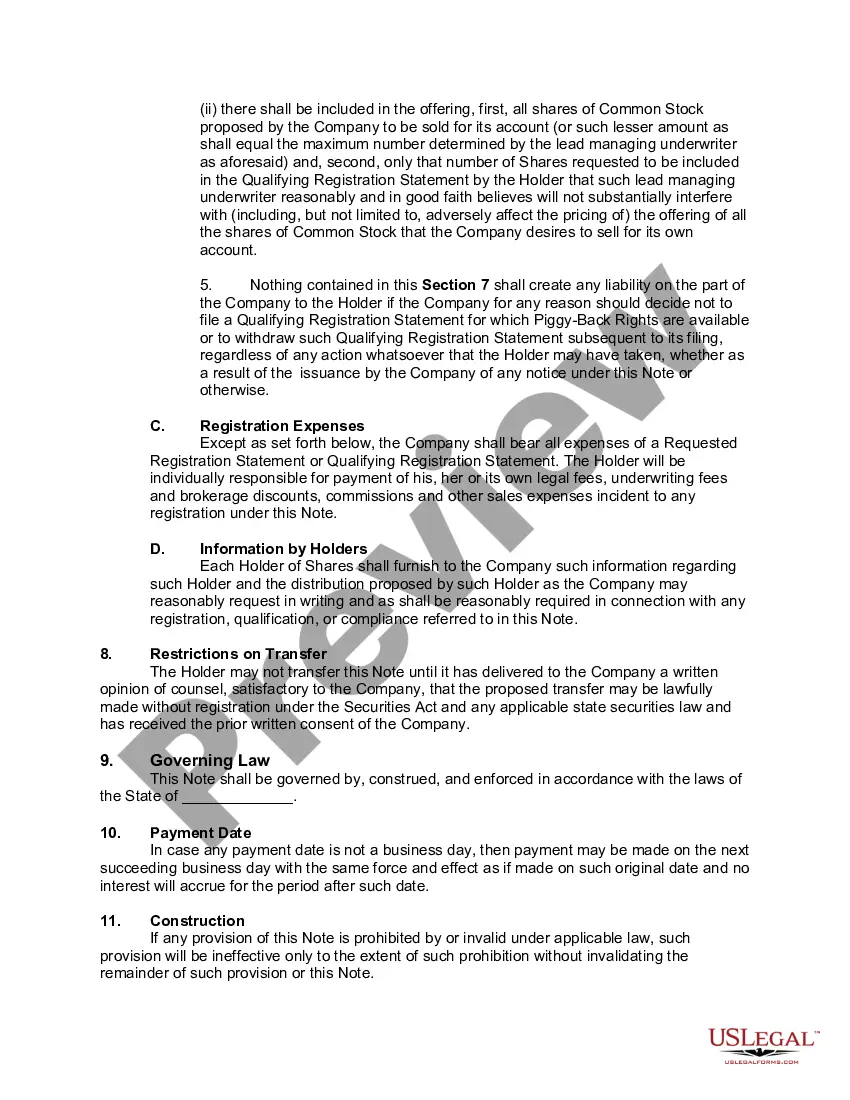
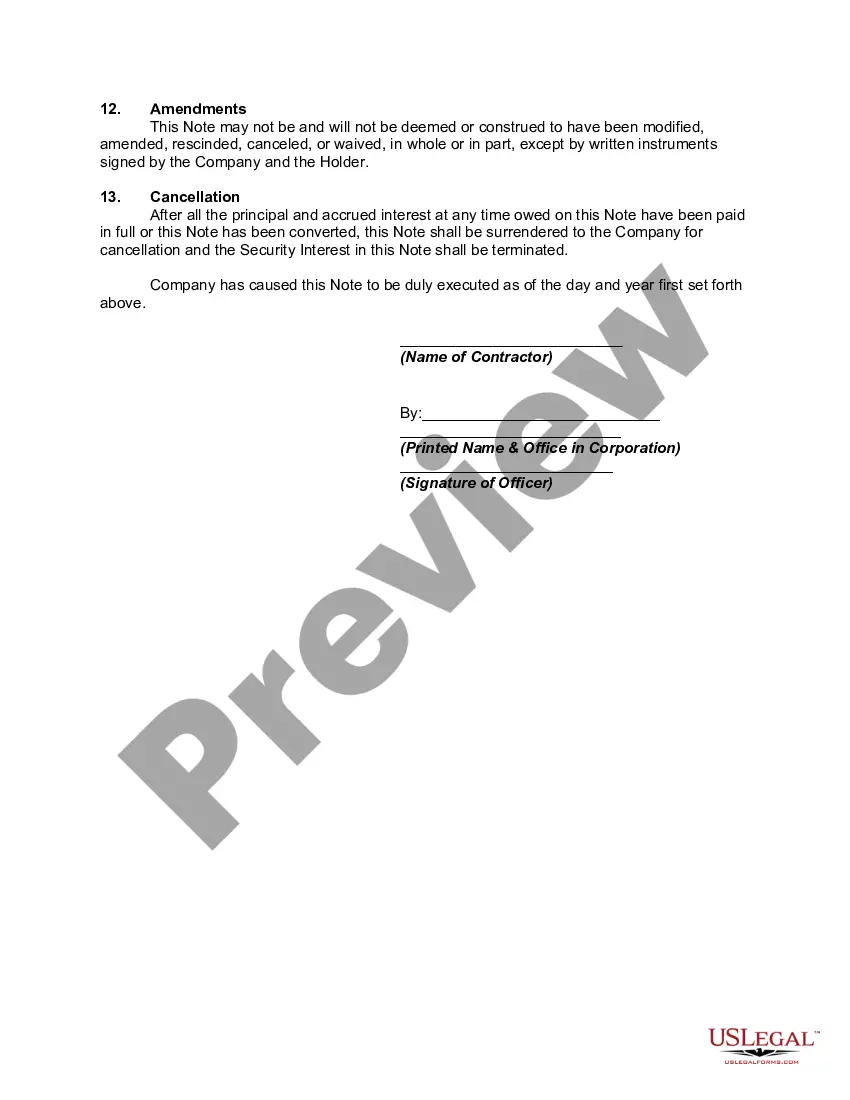
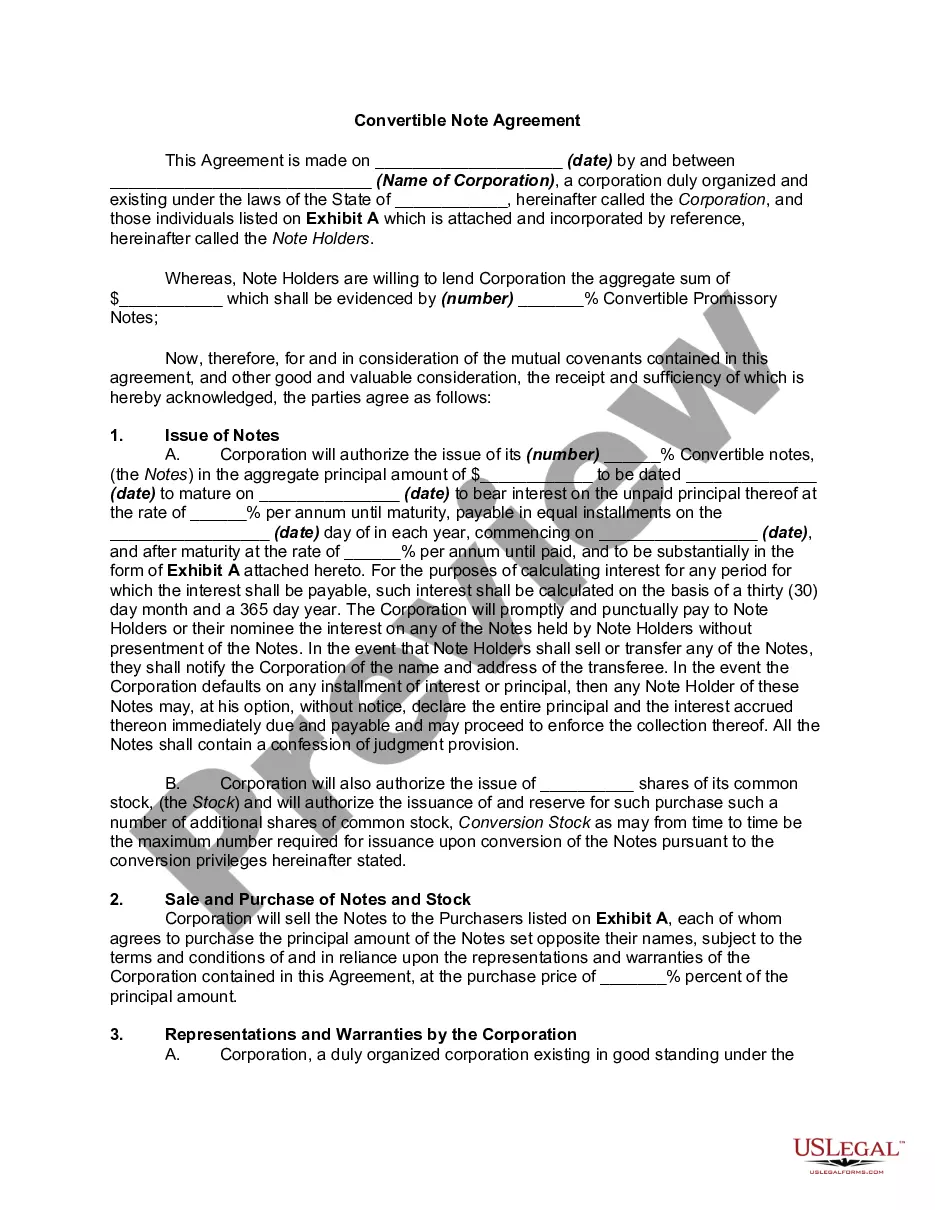
Get your form ready online
Our built-in tools help you complete, sign, share, and store your documents in one place.
Make edits, fill in missing information, and update formatting in US Legal Forms—just like you would in MS Word.
Download a copy, print it, send it by email, or mail it via USPS—whatever works best for your next step.
Sign and collect signatures with our SignNow integration. Send to multiple recipients, set reminders, and more. Go Premium to unlock E-Sign.
If this form requires notarization, complete it online through a secure video call—no need to meet a notary in person or wait for an appointment.
We protect your documents and personal data by following strict security and privacy standards.

Make edits, fill in missing information, and update formatting in US Legal Forms—just like you would in MS Word.

Download a copy, print it, send it by email, or mail it via USPS—whatever works best for your next step.

Sign and collect signatures with our SignNow integration. Send to multiple recipients, set reminders, and more. Go Premium to unlock E-Sign.

If this form requires notarization, complete it online through a secure video call—no need to meet a notary in person or wait for an appointment.

We protect your documents and personal data by following strict security and privacy standards.
Looking for another form?





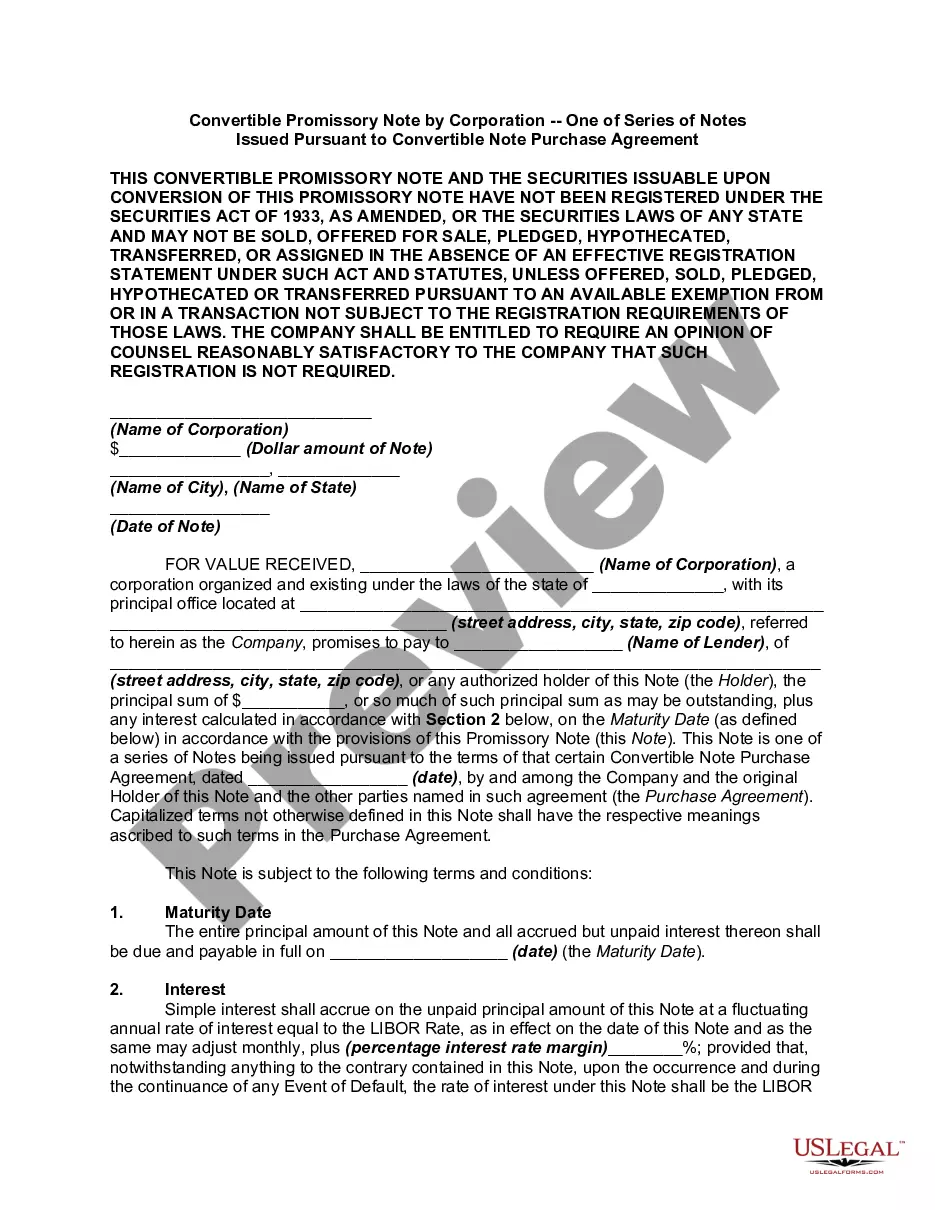
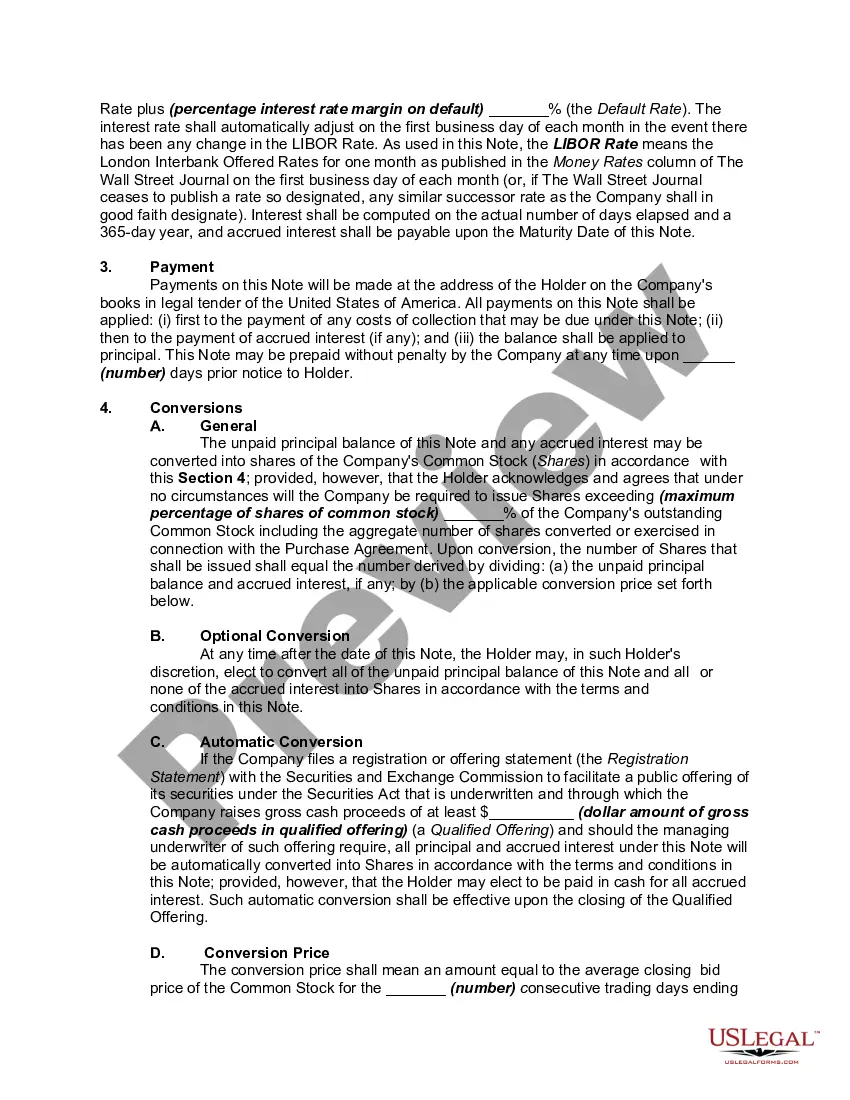
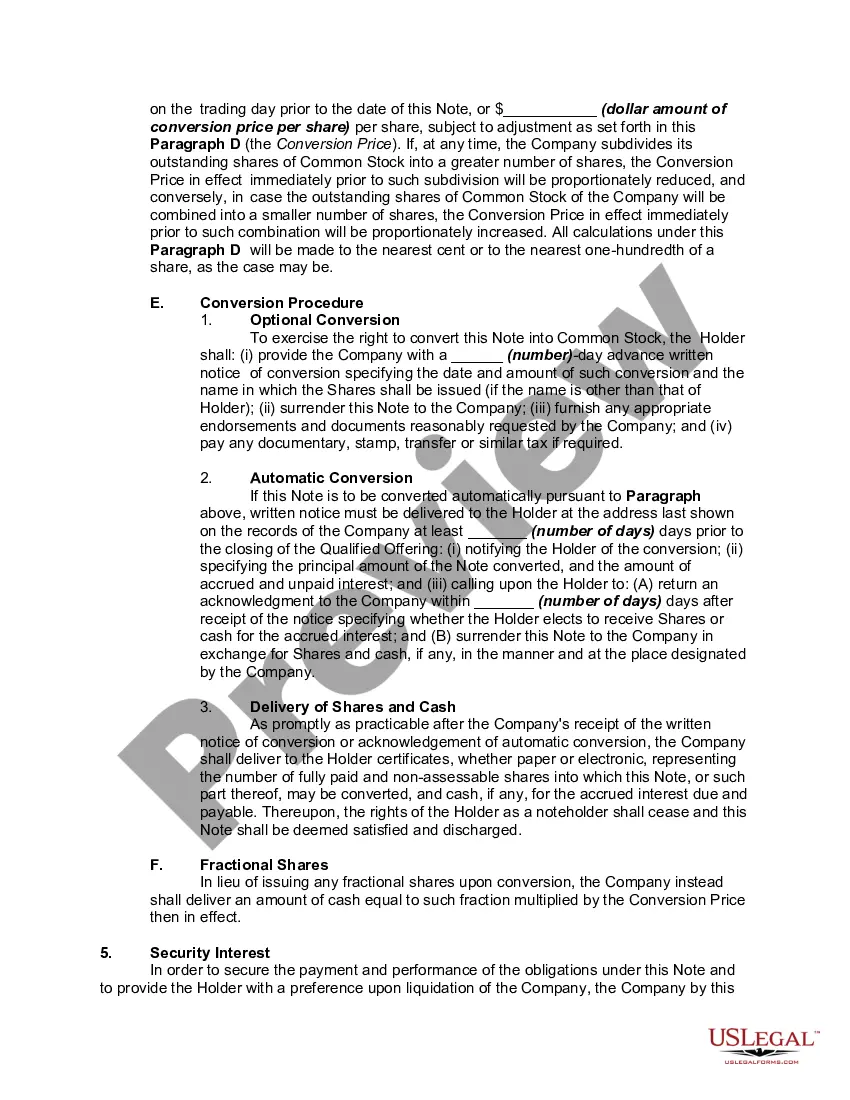
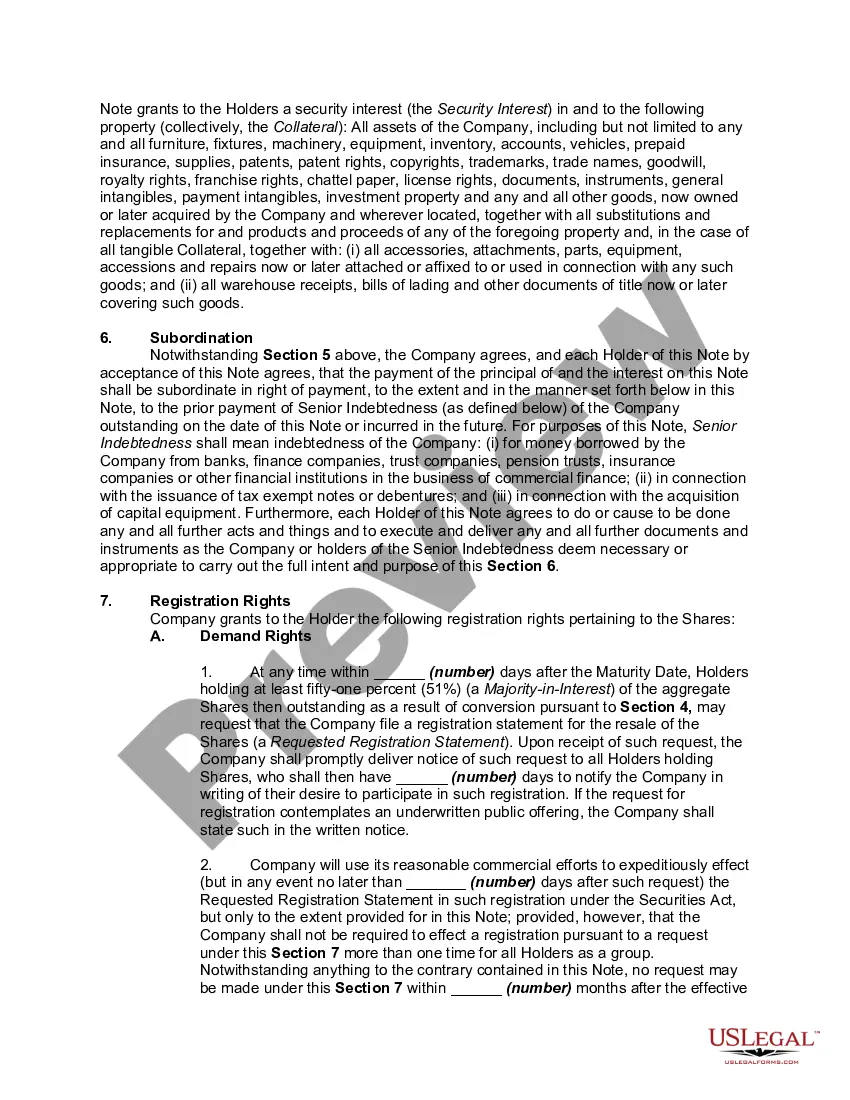
How to fill out Convertible Promissory Note By Corporation - One Of Series Of Notes Issued Pursuant To Convertible Note Purchase Agreement?
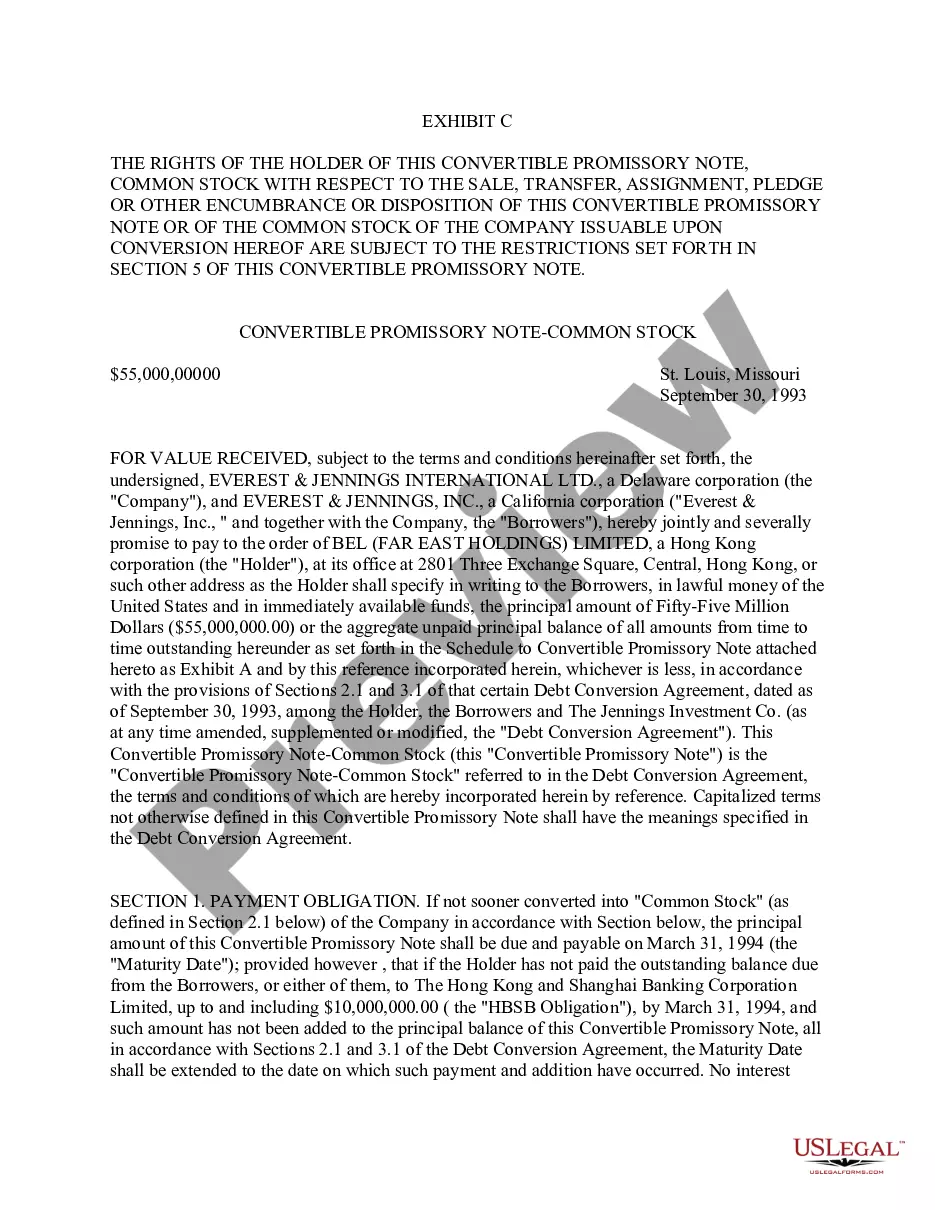
It’s clear that you cannot instantly become a legal specialist, nor can you swiftly grasp how to prepare a Convertible Promissory Note versus a Convertible Note without a specific background. Creating legal documents is a lengthy task that demands particular training and expertise. Therefore, why not entrust the preparation of the Convertible Promissory Note versus Convertible Note to the experts.
With US Legal Forms, one of the most extensive legal template collections, you can find everything from court paperwork to templates for workplace communication. We acknowledge how vital compliance and adherence to federal and local rules and regulations are. That’s why, on our platform, all documents are location-specific and current.
Here’s how you can initiate your use of our website and acquire the form you require in just a few minutes.
You can retrieve your documents from the My documents section at any time. If you’re a returning client, you can simply Log In, and find and download the template from the same section.
Regardless of the intention behind your forms—be it financial and legal, or personal—our website has you covered. Experience US Legal Forms today!
- Identify the form you need by utilizing the search bar at the top of the site.
- Preview it (if this feature is available) and review the accompanying description to ascertain whether the Convertible Promissory Note versus Convertible Note meets your needs.
- Restart your search if you require another form.
- Create a free account and choose a subscription plan to purchase the document.
- Select Buy now. Once the transaction is finalized, you can download the Convertible Promissory Note versus Convertible Note, complete it, print it, and send or mail it to the relevant individuals or organizations.
Form popularity
FAQ
From a negotiation standpoint, the instruments vary in the different elements commonly subject to negotiation. A Convertible Note involves, at a minimum, discussions around: cap, discount, interest and maturity date . Conversely, a SAFE usually involves one point of negotiation: cap.
Convertible notes are originally structured as debt investments, but have a provision that allows the principal plus accrued interest to convert into an equity investment at a later date.
Convertible notes are promissory notes that serve an additional business purpose other than merely representing debt. Convertible notes include all of the terms of a vanilla promissory note, such as an interest rate and the pledge of underlying security (if applicable).
So the cash coming in from your convertible note will generally equate to the liability that you add to the balance sheet. And, if your accounting is doing a good job, the accrued interest is a non-cash expense that flows through your income statement and impacts your accumulated net income in the equity section.
Checks, bills of exchange, and promissory notes are all considered negotiable instruments because the person who holds these notes can claim payment provided that they are taken: For consideration.