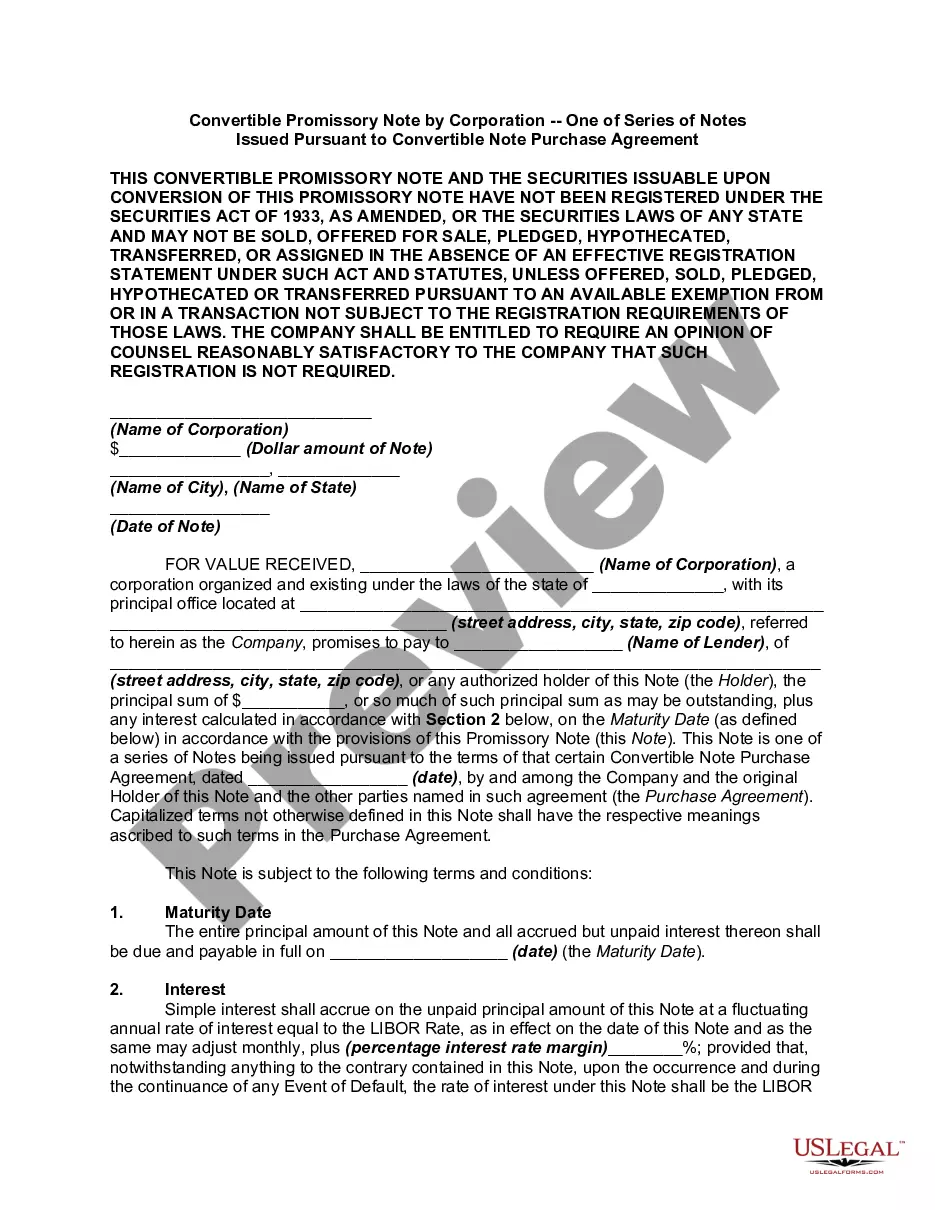
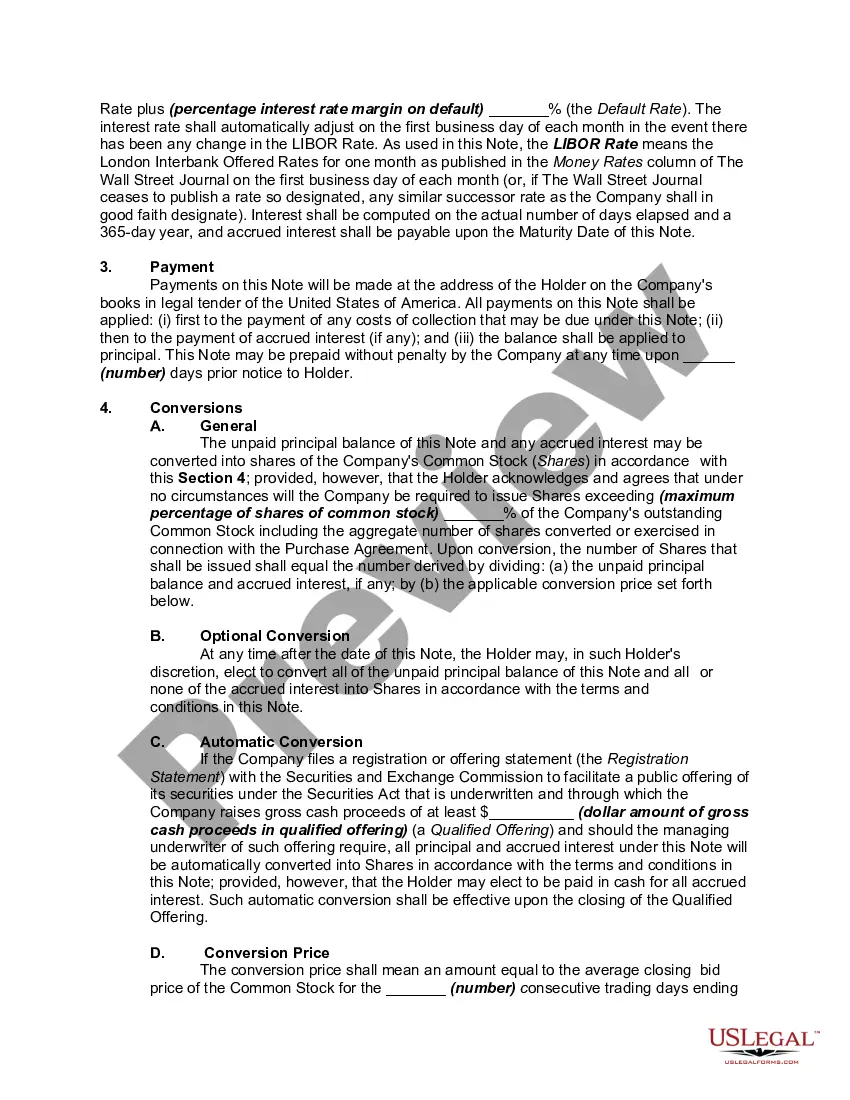
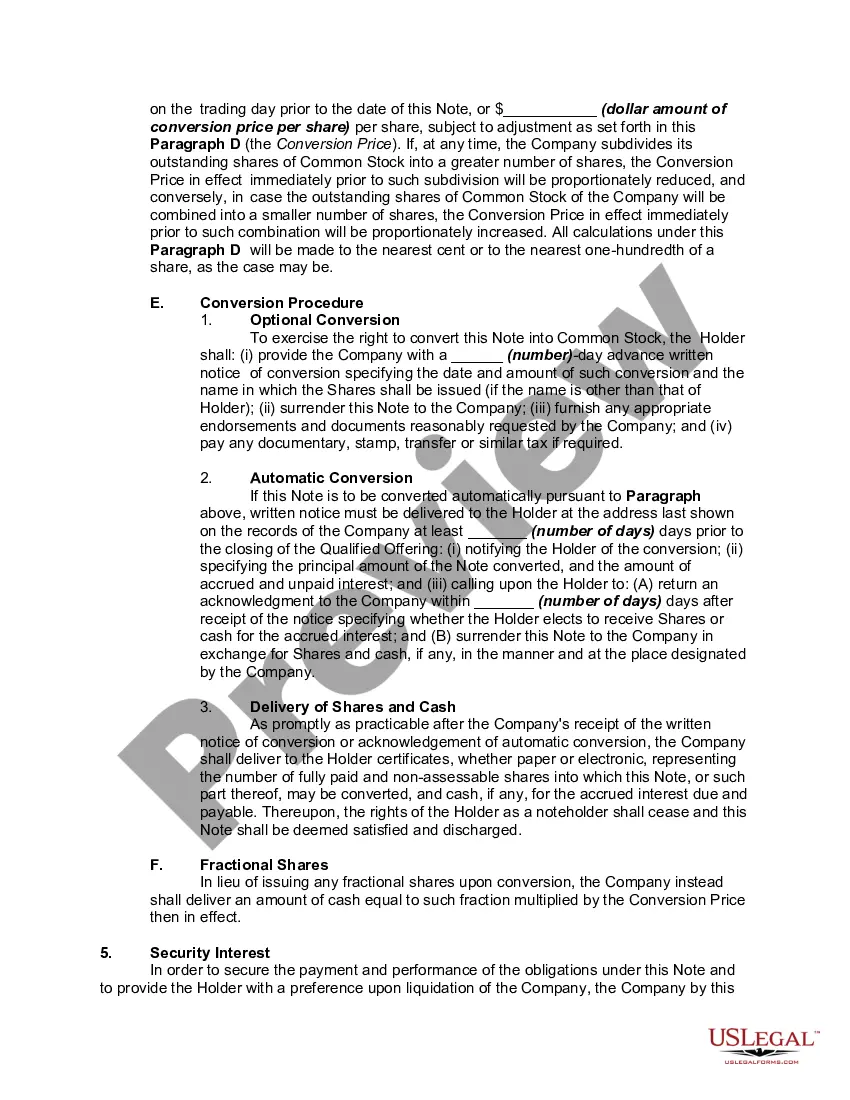
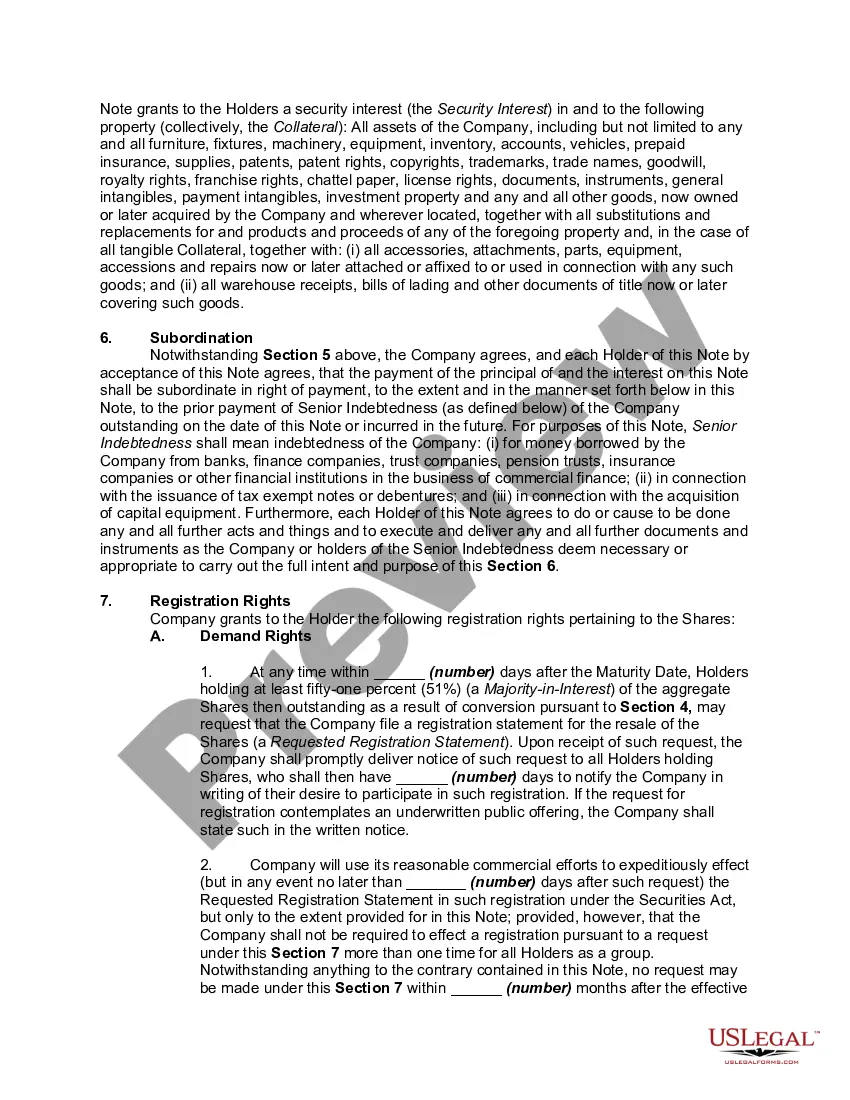
Convertible Promissory Note Form With Two Points
Description
Get your form ready online
Our built-in tools help you complete, sign, share, and store your documents in one place.
Make edits, fill in missing information, and update formatting in US Legal Forms—just like you would in MS Word.
Download a copy, print it, send it by email, or mail it via USPS—whatever works best for your next step.
Sign and collect signatures with our SignNow integration. Send to multiple recipients, set reminders, and more. Go Premium to unlock E-Sign.
If this form requires notarization, complete it online through a secure video call—no need to meet a notary in person or wait for an appointment.
We protect your documents and personal data by following strict security and privacy standards.

Make edits, fill in missing information, and update formatting in US Legal Forms—just like you would in MS Word.

Download a copy, print it, send it by email, or mail it via USPS—whatever works best for your next step.

Sign and collect signatures with our SignNow integration. Send to multiple recipients, set reminders, and more. Go Premium to unlock E-Sign.

If this form requires notarization, complete it online through a secure video call—no need to meet a notary in person or wait for an appointment.

We protect your documents and personal data by following strict security and privacy standards.
Looking for another form?


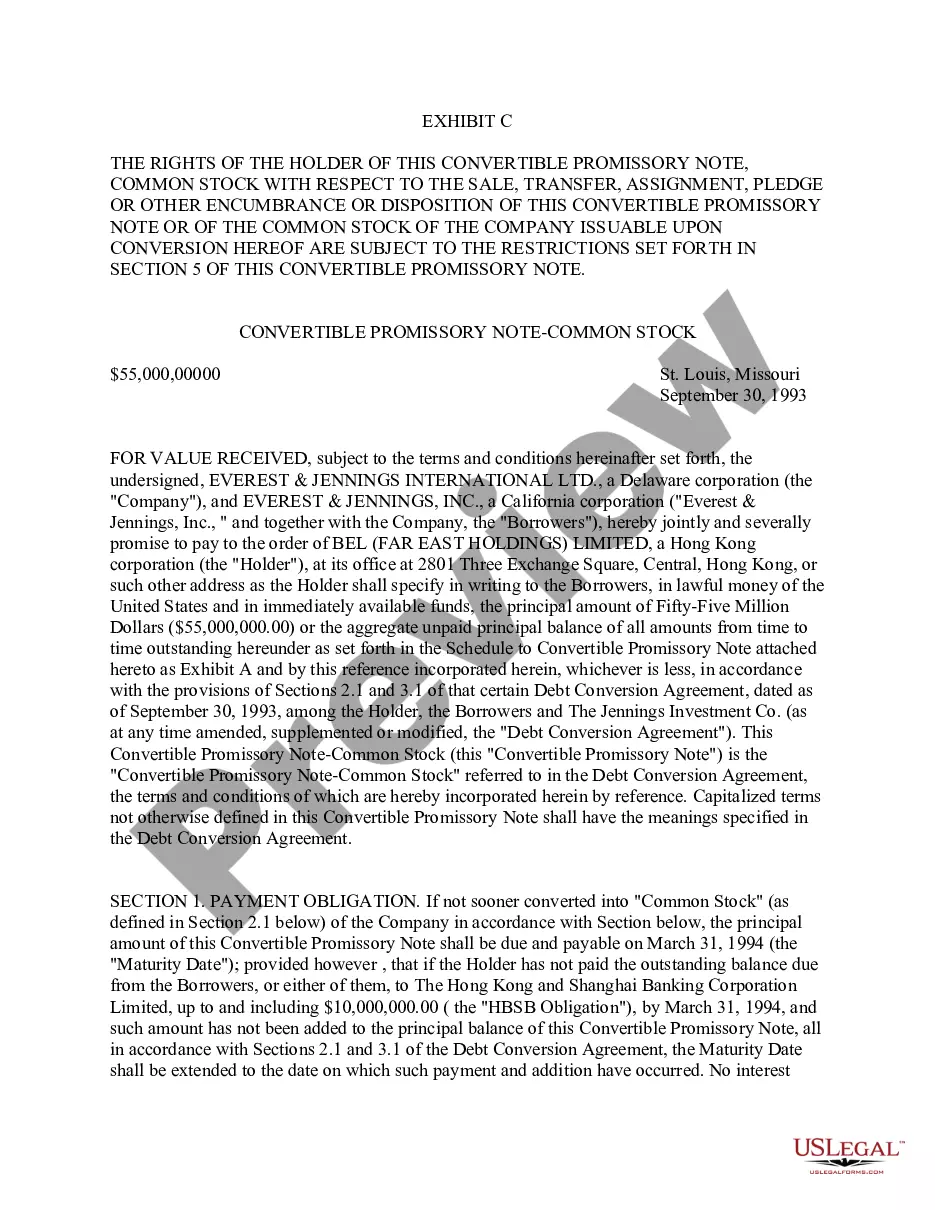
How to fill out Convertible Promissory Note By Corporation - One Of Series Of Notes Issued Pursuant To Convertible Note Purchase Agreement?
Whether for corporate purposes or for individual matters, everyone must manage legal circumstances at some stage in their existence.
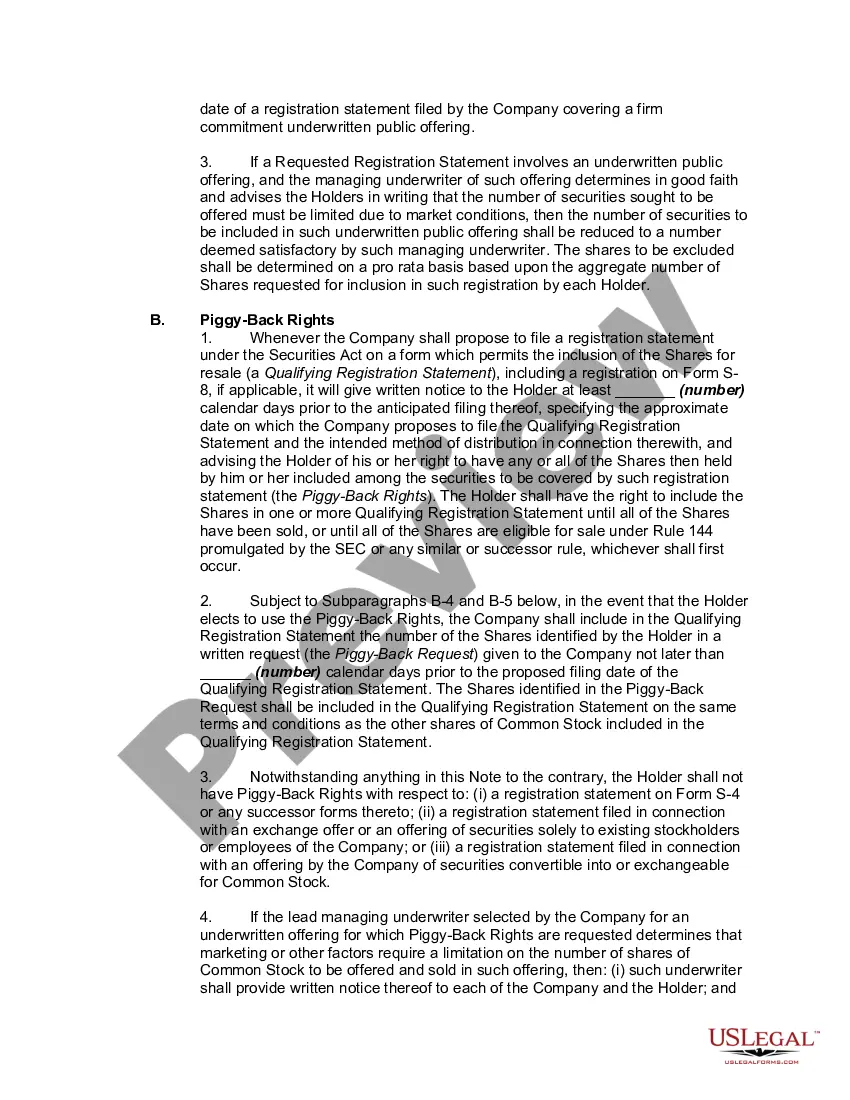
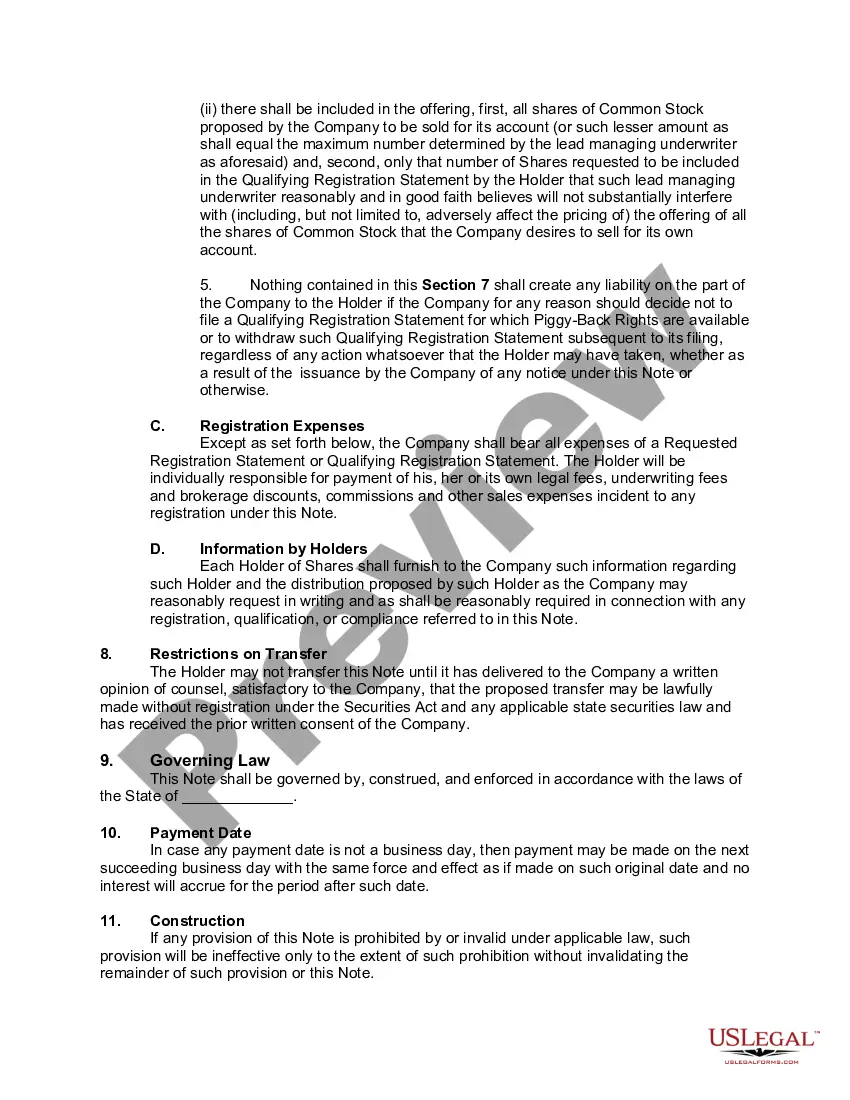
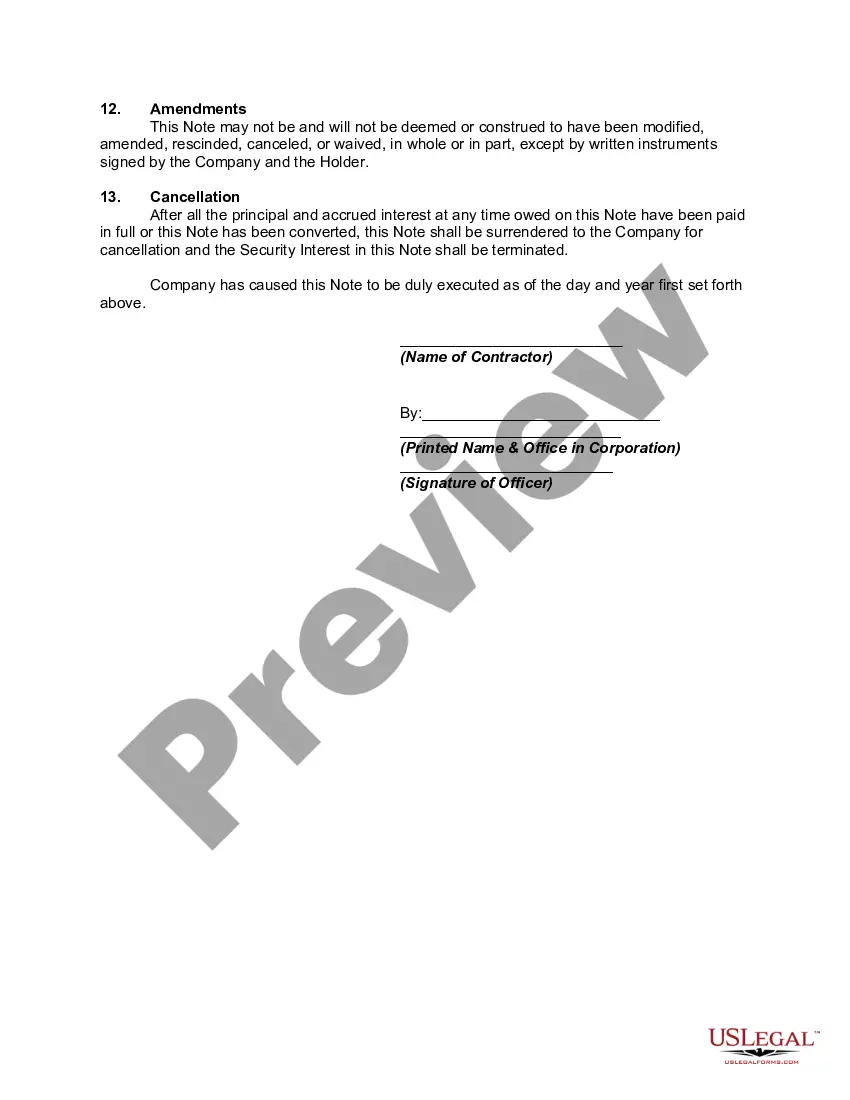
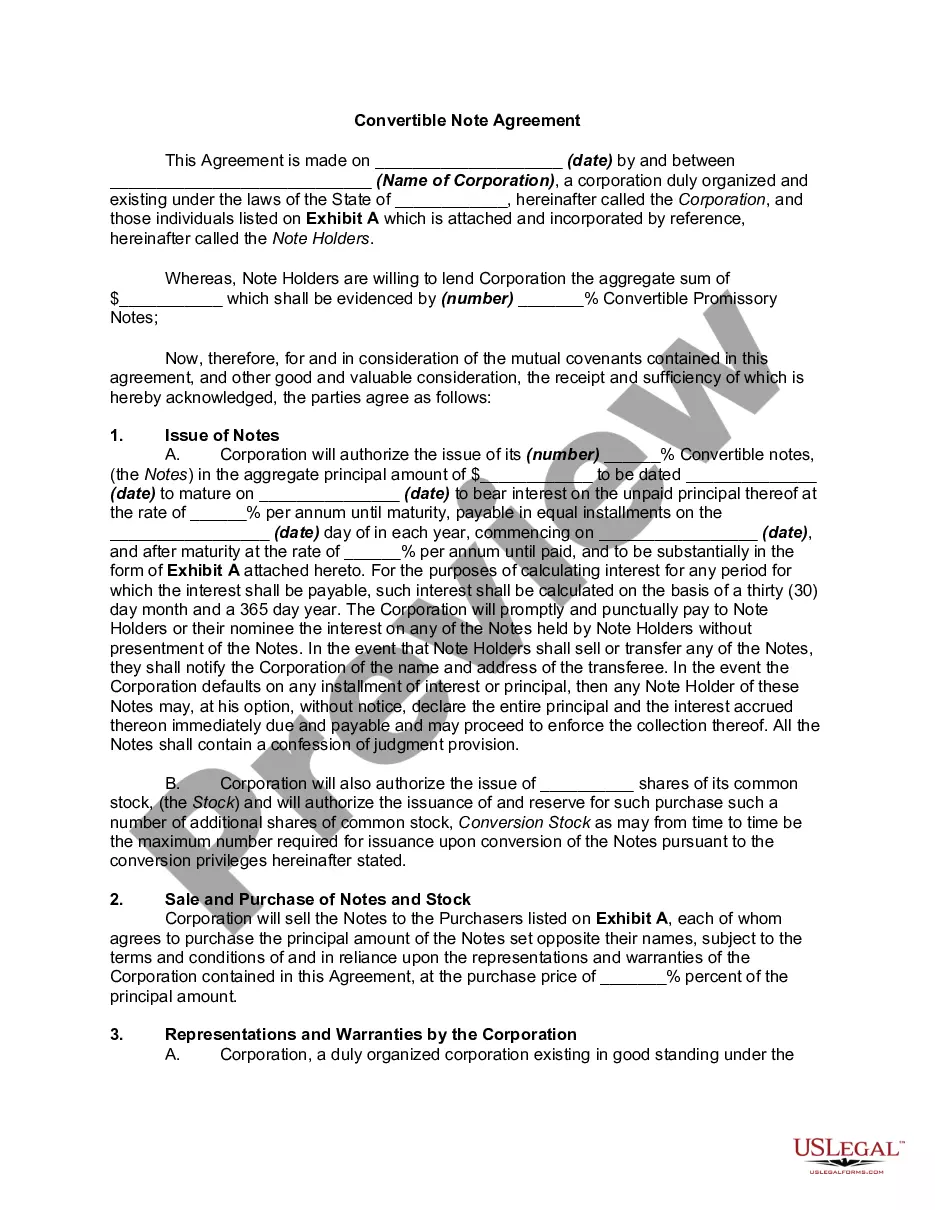
Filling out legal forms requires careful consideration, beginning with selecting the appropriate form template. For instance, if you choose an incorrect version of the Convertible Promissory Note Form With Two Points, it will be rejected when you submit it.
Once it is saved, you can complete the form using editing software or print it out and fill it in by hand. With the extensive US Legal Forms library available, you never need to waste time searching for the appropriate sample online. Utilize the catalog's straightforward navigation to find the right template for any circumstance.
- Locate the template you require by using the search bar or browsing the catalog.
- Examine the form's description to ensure it aligns with your situation, state, and county.
- Click on the form's preview to view it.
- If it is the wrong document, return to the search tool to find the Convertible Promissory Note Form With Two Points template you need.
- Download the file once it meets your requirements.
- If you already have a US Legal Forms account, simply click Log in to access previously saved templates in My documents.
- In case you don’t have an account yet, you can download the form by clicking Buy now.
- Choose the correct pricing option.
- Fill out the account registration form.
- Select your payment method: you may use a credit card or PayPal account.
- Choose the document format you prefer and download the Convertible Promissory Note Form With Two Points.
Form popularity
FAQ
Convertible notes can be challenging for investors because they convert into equity and may not provide immediate returns. This conversion also creates uncertainty regarding ownership percentages and valuations of the company at the time of conversion. As with any investment, the risk of the company failing before the conversion can lead to a loss. Utilizing a convertible promissory note form with two points helps clarify some of these aspects for all parties involved.
A primary disadvantage of a promissory note is that it can be difficult to enforce in some situations, especially without sufficient collateral. If the borrower defaults, the lender may need to pursue legal action, which can be time-consuming and costly. Additionally, depending on the terms, a promissory note can lead to misunderstandings between parties. For a more secure agreement, consider using a convertible promissory note form with two points.
Rule 144 governs the resale of securities, including convertible notes, by ensuring compliance with specific regulations. When you utilize a convertible promissory note form with two points, this rule outlines the holding period and conditions under which these securities can be sold. For instance, it typically requires a six-month holding period for public companies before resale is permissible. Understanding Rule 144 can safeguard your investments and ensure regulatory compliance.
The process of issuing a convertible note begins with drafting a legally sound agreement that includes key terms like interest and conversion rates. Next, parties involved must engage in negotiations to ensure mutual understanding through the convertible promissory note form with two points. Once finalized, both parties can sign the document, allowing the investor to transfer funds to the company. This structured process helps establish a strong foundation facilitating future equity conversion.
To issue convertible notes, start by determining the terms of the agreement, including interest rates and conversion events. You will need to draft a convertible promissory note form with two points, outlining the obligations and rights of both parties involved. Once the terms are clear, you can share the document with potential investors for their review and approval. After receiving their consent, you can proceed to formalize the agreement.
The process of issuing convertible notes begins with drafting a convertible promissory note form, detailing the terms of investment and possible conversion into equity. After that, you pitch the deal to potential investors, highlighting the growth opportunity. Once you secure commitments, ensure all required signatures are obtained, and maintain organized records for compliance.
A promissory note typically requires one signature from the borrower, affirming their commitment to repay the debt. While not mandatory, having a second signature from a witness or co-signer can bolster the document’s credibility and enforceability. It is advisable to consult legal advice to determine the best approach for your situation.
Creating a convertible note involves drafting a convertible promissory note form that covers critical elements like interest rate, maturity date, and conversion terms. You can use platforms like US Legal Forms to ensure that your document meets legal requirements and contains essential clauses. Once your note is drafted, seek advice from a legal expert to finalize the details and proceed with signatures.
For tax purposes, when you issue a convertible note, you generally do not recognize income until conversion or repayment occurs. The interest that accrues is typically considered taxable income. Investors may also face tax consequences based on the conversion into equity, so it is crucial to consult a tax advisor for personalized guidance.
To issue a convertible note, start by drafting a convertible promissory note form that outlines the terms and conditions, such as interest rates and maturity dates. Next, ensure that both parties understand the conversion feature, which allows the note to become equity in the future. Finally, have the necessary documents signed and delivered, making the agreement formal and legally binding.