Convertible Note Notes Issue For Two Main Reasons
Description
Get your form ready online
Our built-in tools help you complete, sign, share, and store your documents in one place.
Make edits, fill in missing information, and update formatting in US Legal Forms—just like you would in MS Word.
Download a copy, print it, send it by email, or mail it via USPS—whatever works best for your next step.
Sign and collect signatures with our SignNow integration. Send to multiple recipients, set reminders, and more. Go Premium to unlock E-Sign.
If this form requires notarization, complete it online through a secure video call—no need to meet a notary in person or wait for an appointment.
We protect your documents and personal data by following strict security and privacy standards.

Make edits, fill in missing information, and update formatting in US Legal Forms—just like you would in MS Word.

Download a copy, print it, send it by email, or mail it via USPS—whatever works best for your next step.

Sign and collect signatures with our SignNow integration. Send to multiple recipients, set reminders, and more. Go Premium to unlock E-Sign.

If this form requires notarization, complete it online through a secure video call—no need to meet a notary in person or wait for an appointment.

We protect your documents and personal data by following strict security and privacy standards.
Looking for another form?







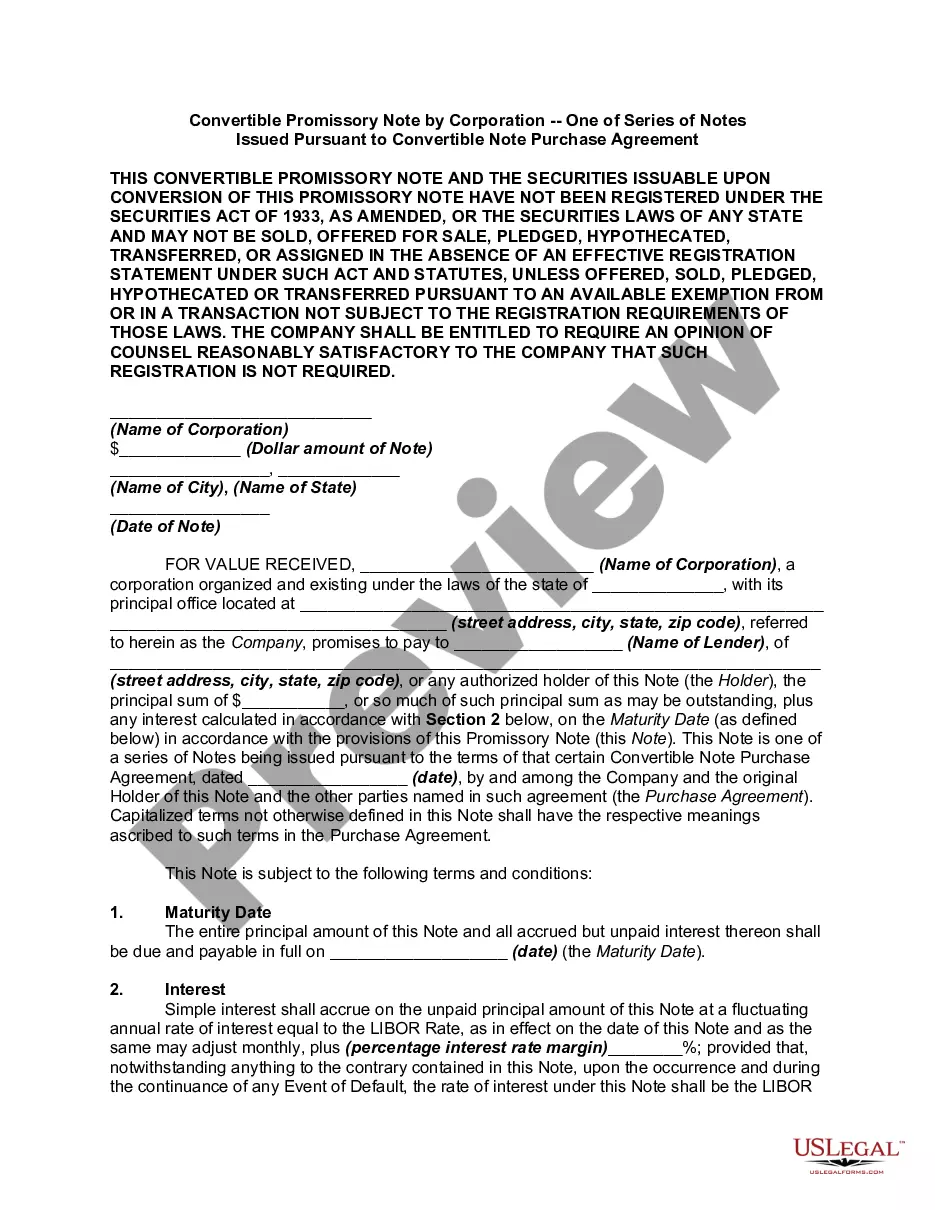
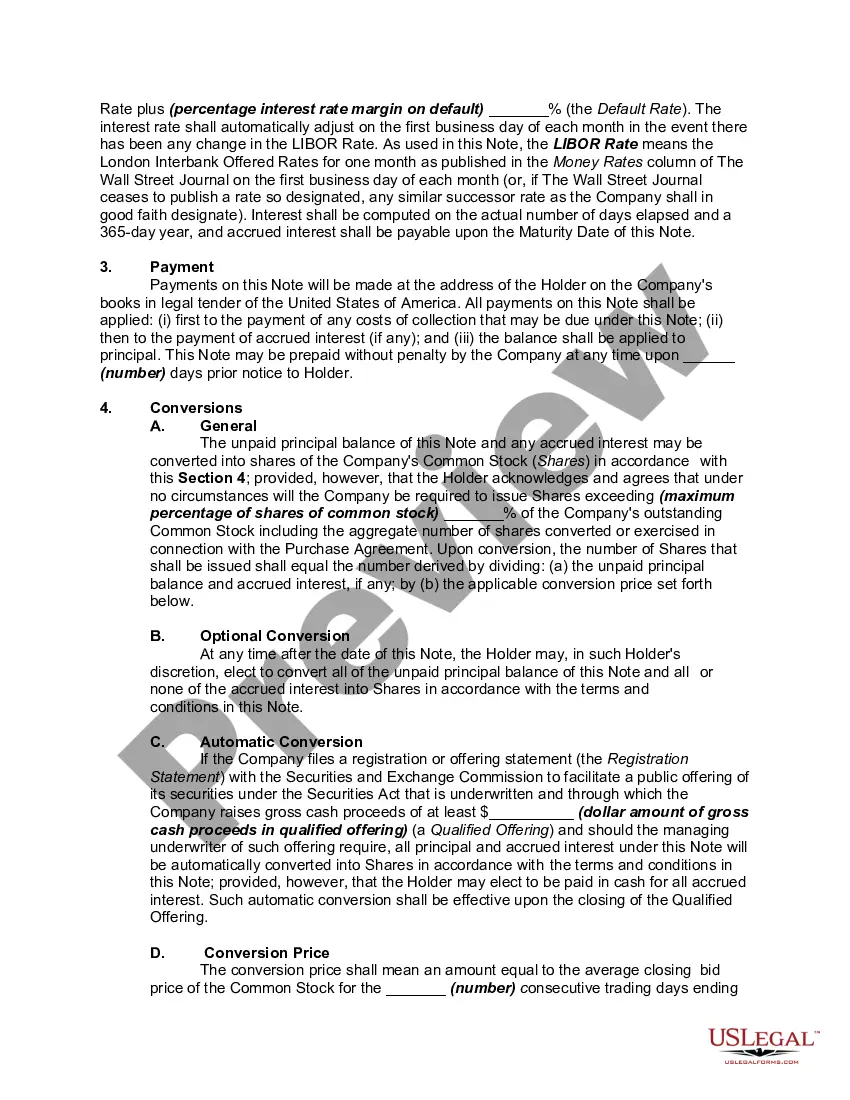
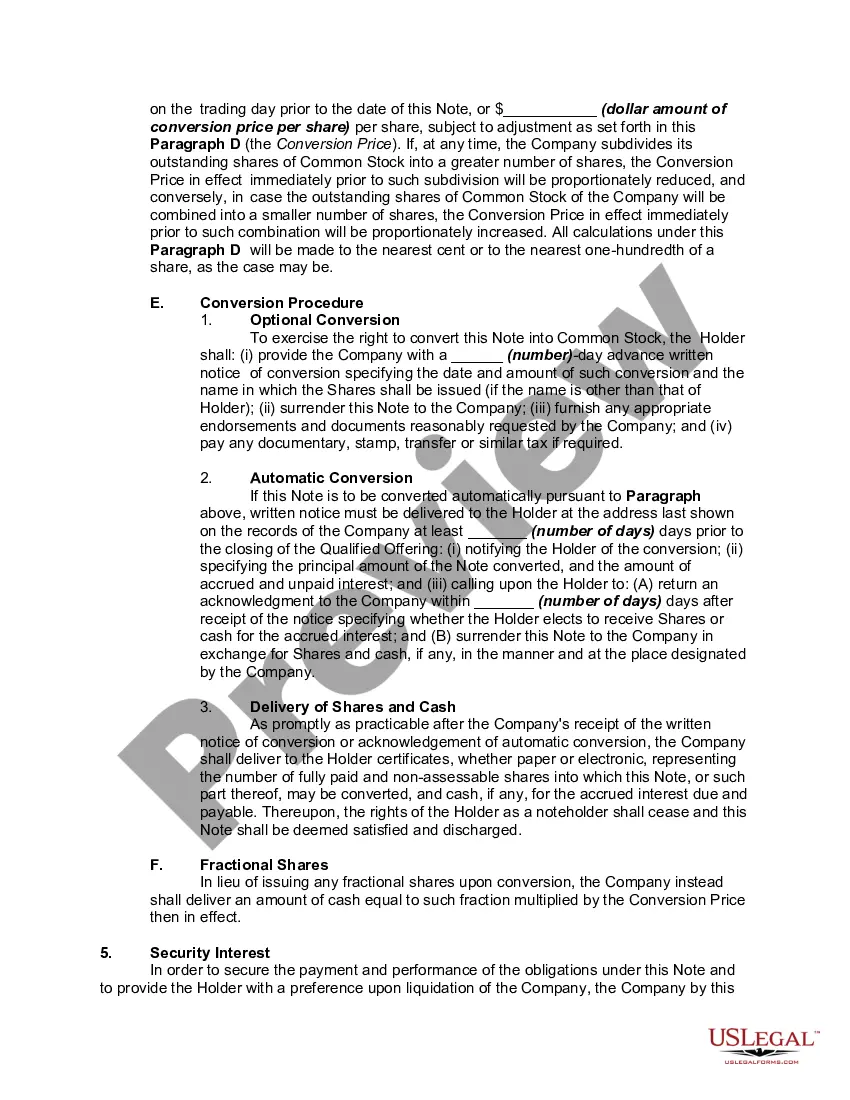
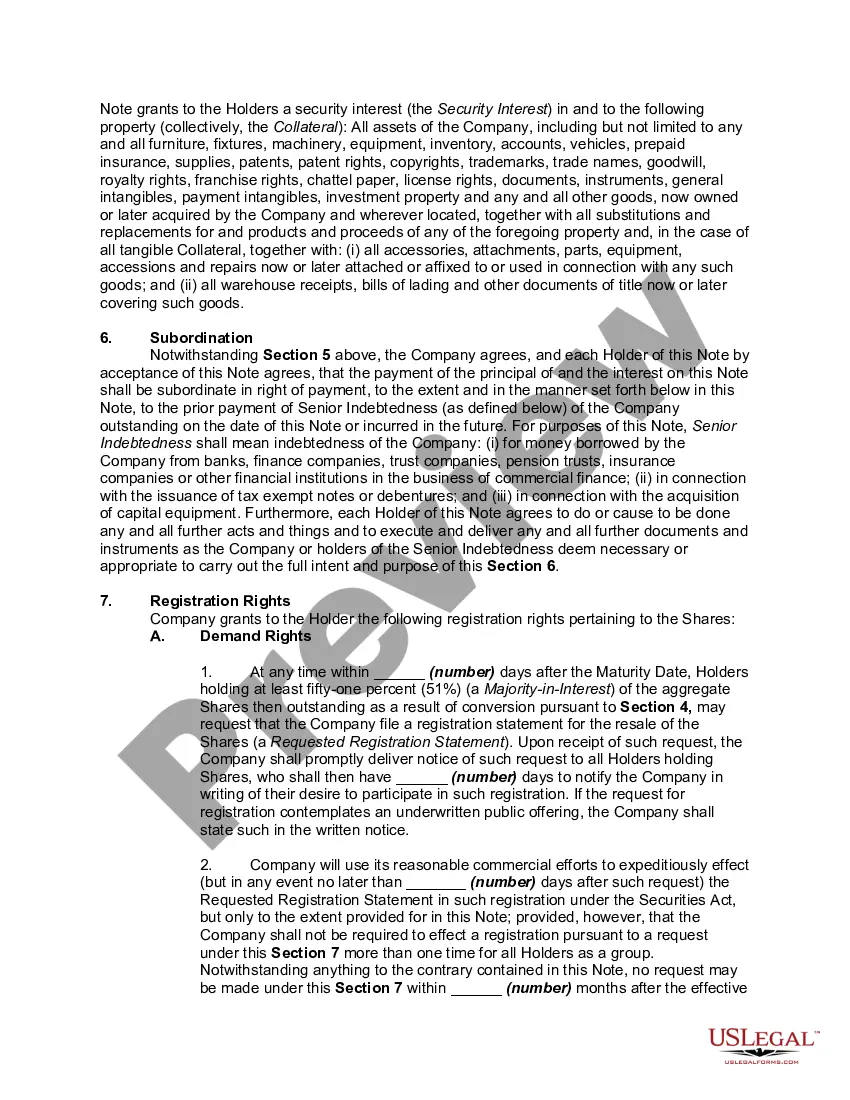
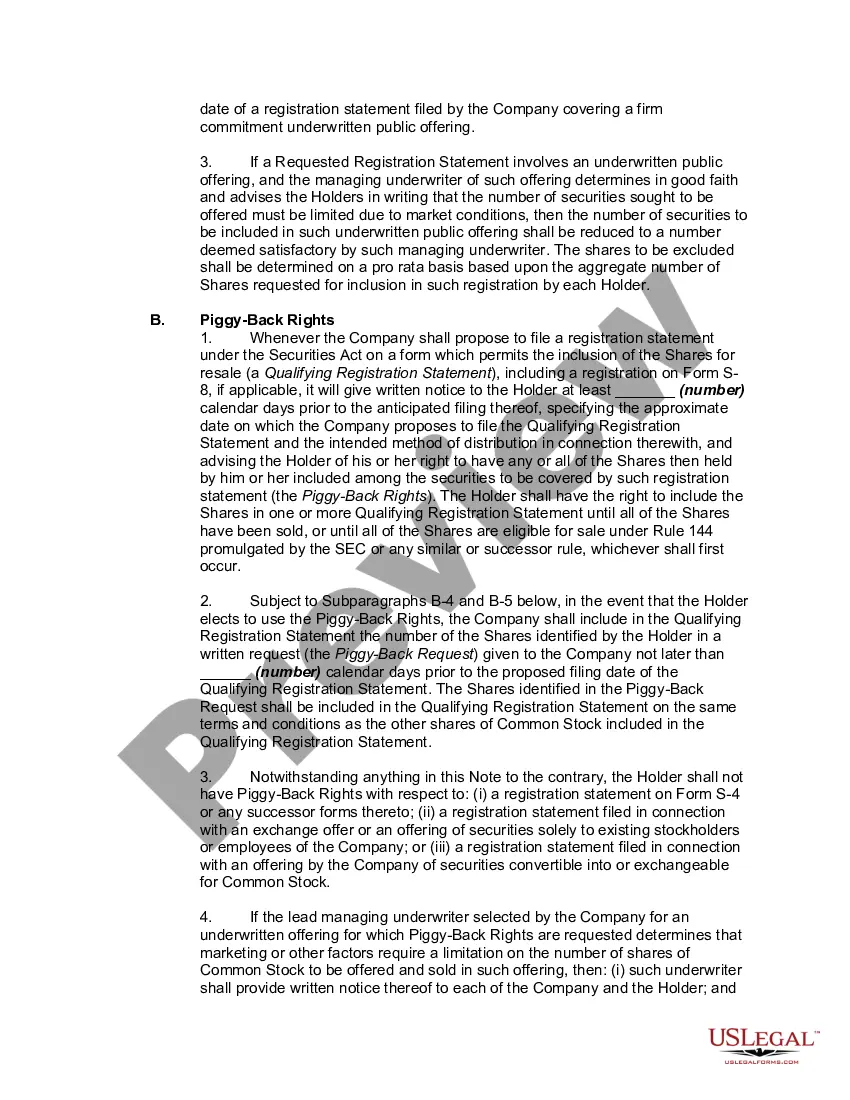
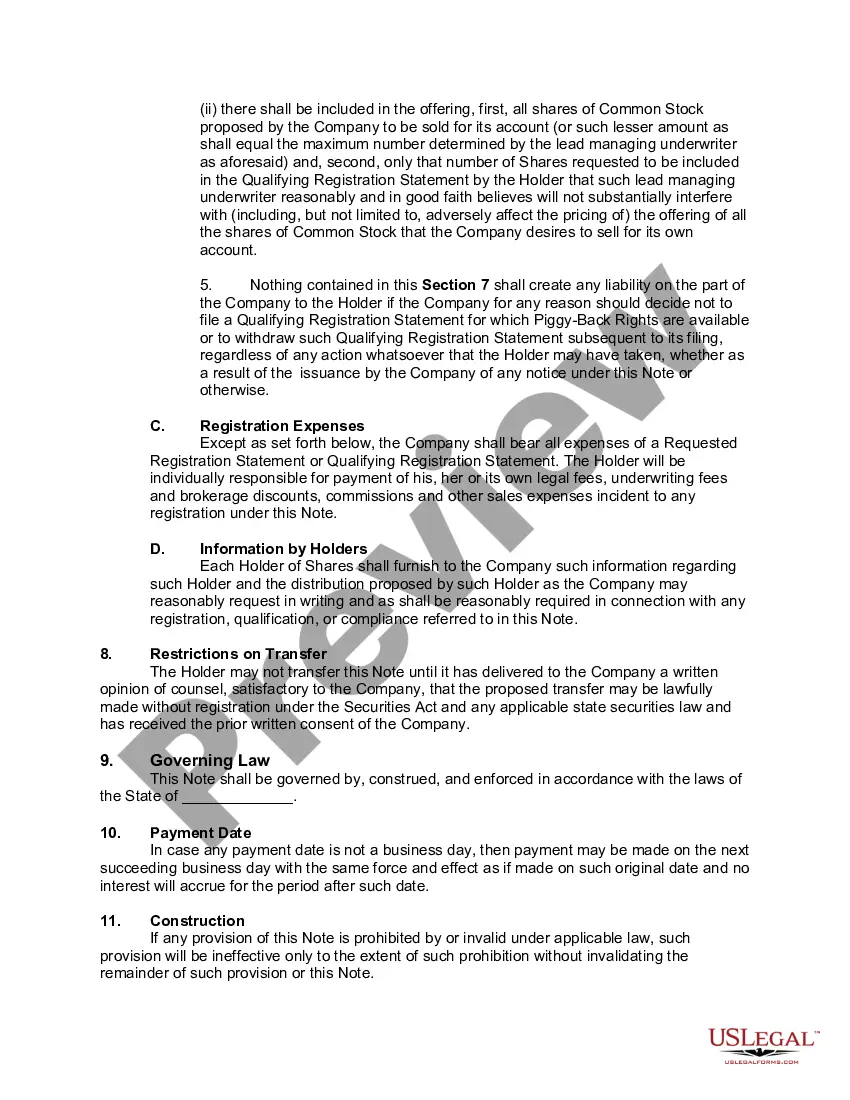
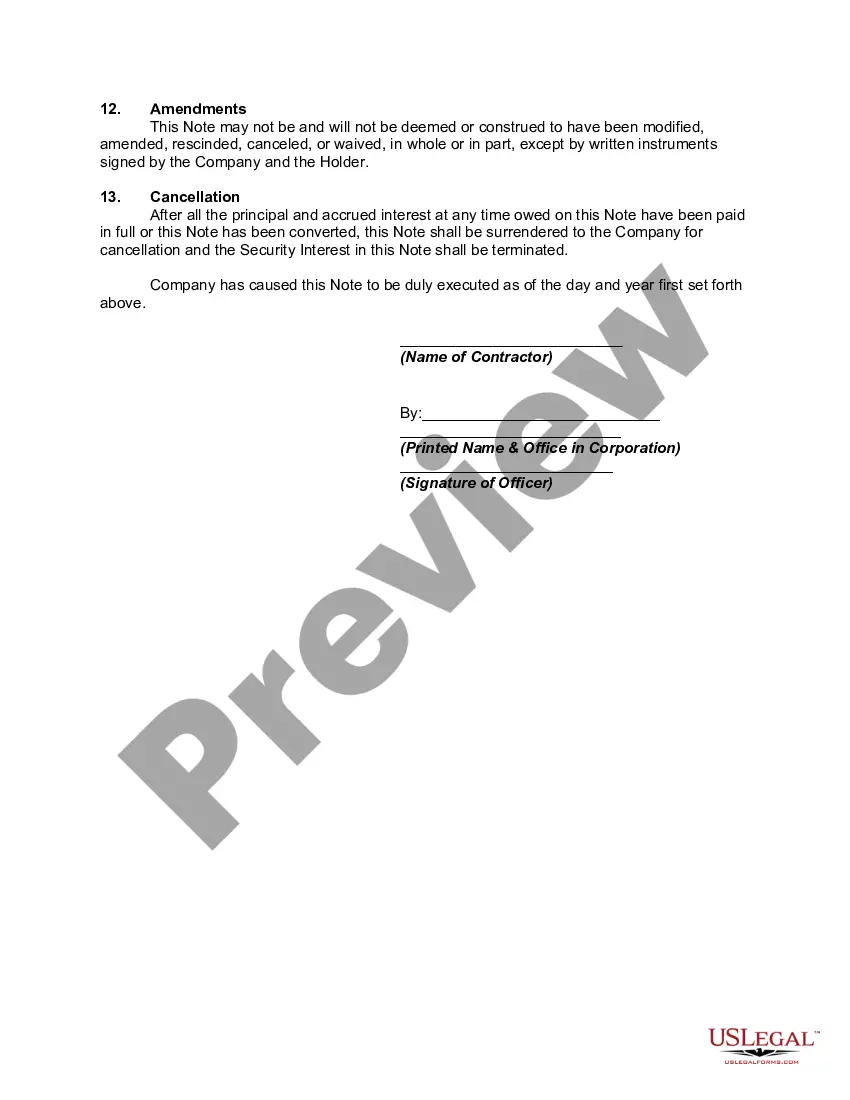
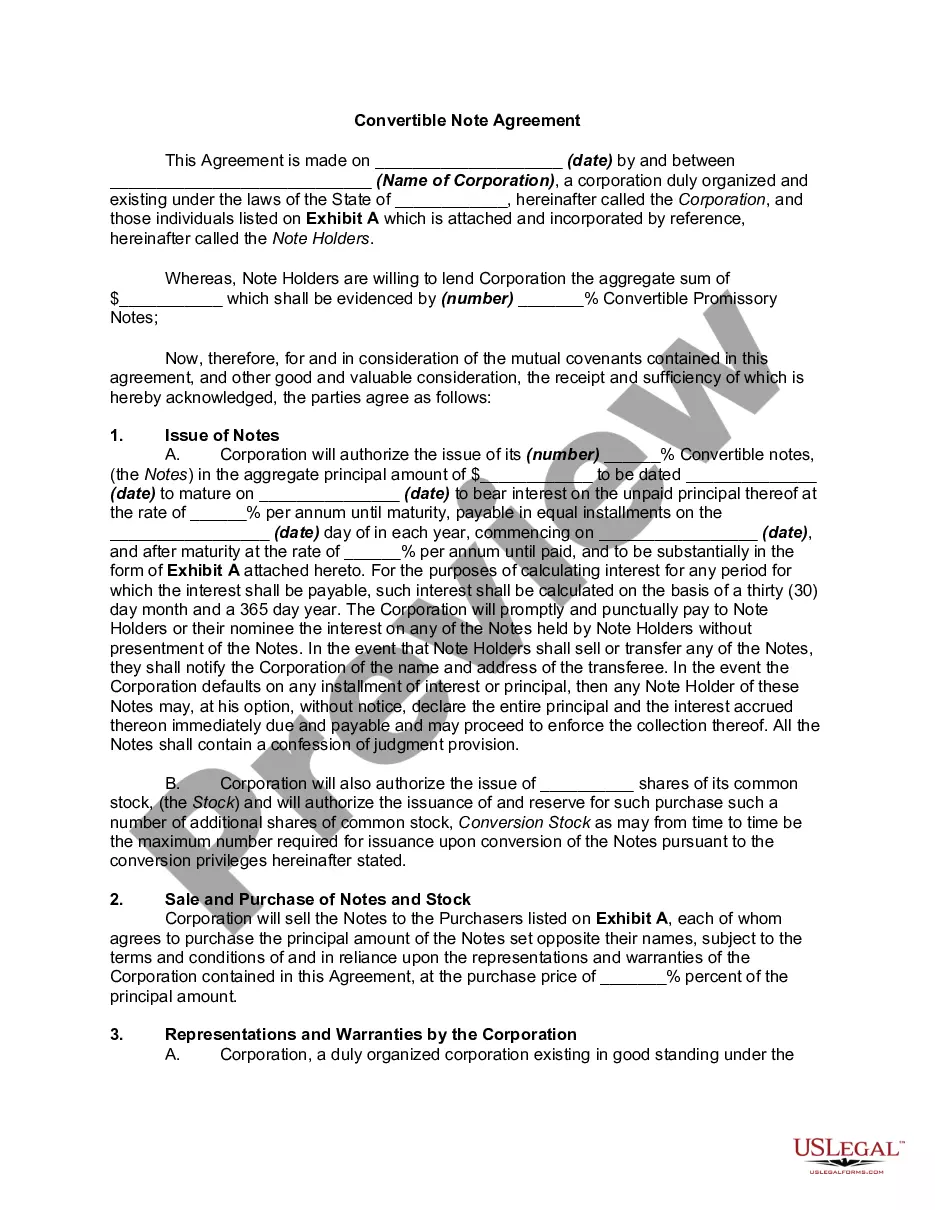
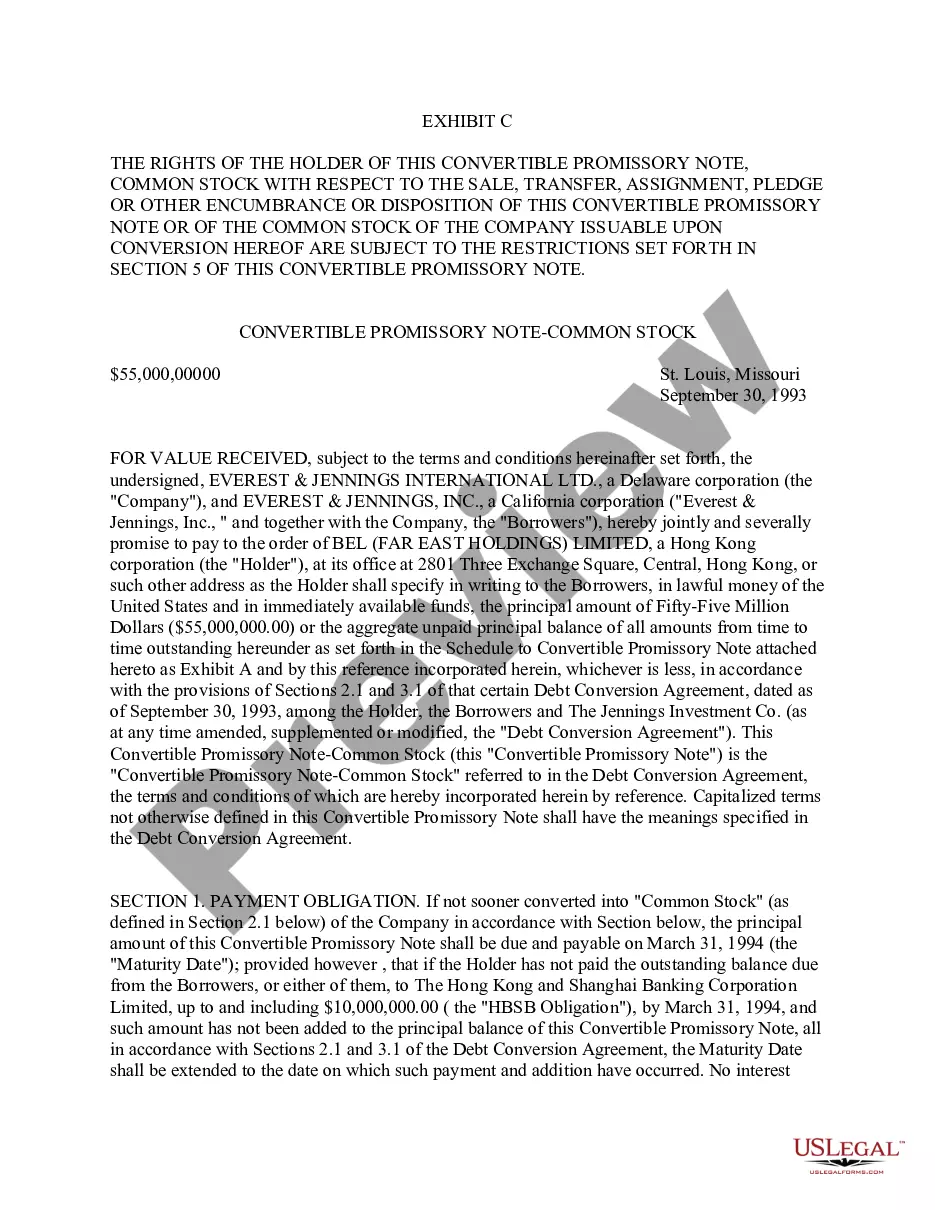
How to fill out Convertible Promissory Note By Corporation - One Of Series Of Notes Issued Pursuant To Convertible Note Purchase Agreement?
Managing legal documents can be perplexing, even for the most seasoned professionals.
When you are looking for a Convertible Note Notes Issue For Two Primary Reasons and lack the time to dedicate to finding the correct and current version, the procedure can be challenging.
US Legal Forms meets all your requirements, from personal to business documents, all in one place.
Utilize cutting-edge tools to manage and complete your Convertible Note Notes Issue For Two Primary Reasons.
Here are the steps to follow after obtaining the form you need: Make sure it is the appropriate form by previewing it and reviewing its details.
- Access a database of articles, guides, and materials pertinent to your situation and needs.
- Save time and effort in locating the documents you require by using US Legal Forms’ advanced search and Review tool to find the Convertible Note Notes Issue For Two Primary Reasons and retrieve it.
- If you hold a membership, Log In to your US Legal Forms account, find the form, and obtain it.
- Check your My documents tab to see the documents you have previously saved and organize your folders as necessary.
- If this is your first encounter with US Legal Forms, create a free account to access unlimited benefits of the platform.
- An extensive online form library could revolutionize the way those in need address these issues efficiently.
- US Legal Forms is a leading provider in online legal documents, offering over 85,000 state-specific legal forms accessible at your convenience.
- With US Legal Forms, you can access forms that are specific to your state or county.
Form popularity
FAQ
The rules for convertible notes typically include terms related to interest rates, conversion prices, and maturity dates. They are aimed at providing flexibility for both investors and startups while ensuring that legal standards are met. Knowing the specifics of the convertible note notes issue for two main reasons can help you better structure your investment and ensure compliance with regulations.
If a convertible note never converts, the holder must make a choice at maturity. They can either demand repayment of the principal and accrued interest or negotiate alternative terms with the issuer. Understanding the convertible note notes issue for two main reasons can help you avoid potential pitfalls and structure a beneficial agreement.
Convertible notes are usually treated as debt for tax purposes until conversion occurs. This means you may recognize interest income throughout the term of the note, which can remain taxable. After conversion, the tax treatment changes, and equity ownership may lead to capital gains tax when the underlying shares are sold, highlighting why understanding the convertible note notes issue for two main reasons is crucial.
The tax implications of a convertible note can vary depending on how the note is structured and when it is converted. Generally, interest income on convertible notes can be taxable unless it’s converted into equity, which might allow for different tax treatment. It's advisable to consult with a tax professional to navigate the nuances of the convertible note notes issue for two main reasons.
A common reason for issuing convertible bonds is to inspire investor confidence during uncertain market times. These bonds provide a way for companies to raise capital without immediately diluting equity, maintaining a favorable balance between investor appeal and company control.
One significant reason corporations issue convertible debt is to appeal to risk-averse investors by providing a safety net in the form of fixed returns while retaining the option to convert into equity later. This dual benefit allows corporations to attract a broader range of investment, helping them secure essential funding.
The procedure for issuing a convertible note involves several steps, including drafting the note agreement, determining the conversion terms, and obtaining necessary approvals from the company's board. Once the terms are set, the company can offer the notes to investors who see value in potentially converting their debt into equity in the future.
A company may issue convertible notes to attract investors who desire both safety in fixed income and the potential for equity participation in the future. Convertible notes offer flexibility, allowing the company to delay equity valuation until a later financing round, which can be beneficial in uncertain market conditions.
Corporations typically issue convertible notes for two main reasons: to raise capital while enticing investors with the potential for equity conversion, and to maintain lower interest rates compared to traditional debt instruments. This dual approach helps companies secure necessary funding while offering investors a beneficial option, aligning their interests with the company's growth.
Companies often choose convertible notes over non-convertible bonds primarily for two significant reasons: they offer investors a chance to convert their debt into equity, thus aligning interests, and they usually entail lower initial interest rates. This can lead to reduced financial pressure for the company while still attracting potential investors. Additionally, the convertible note notes issue for two main reasons often provides a smoother transition to equity financing, making it a favored choice for startups seeking growth. Hence, understanding these advantages can significantly influence your funding strategy.