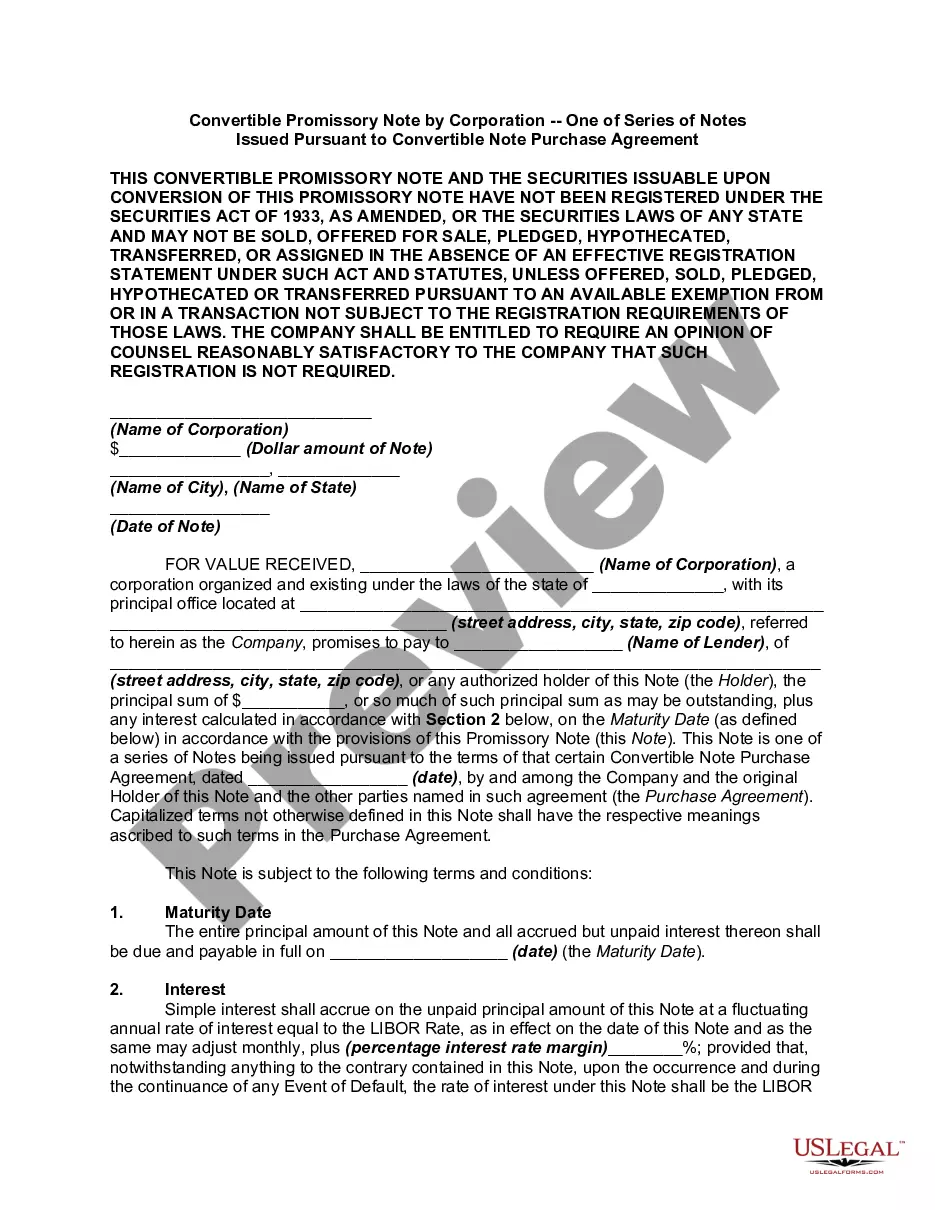
Convertible Note Corporation With Stock
Description
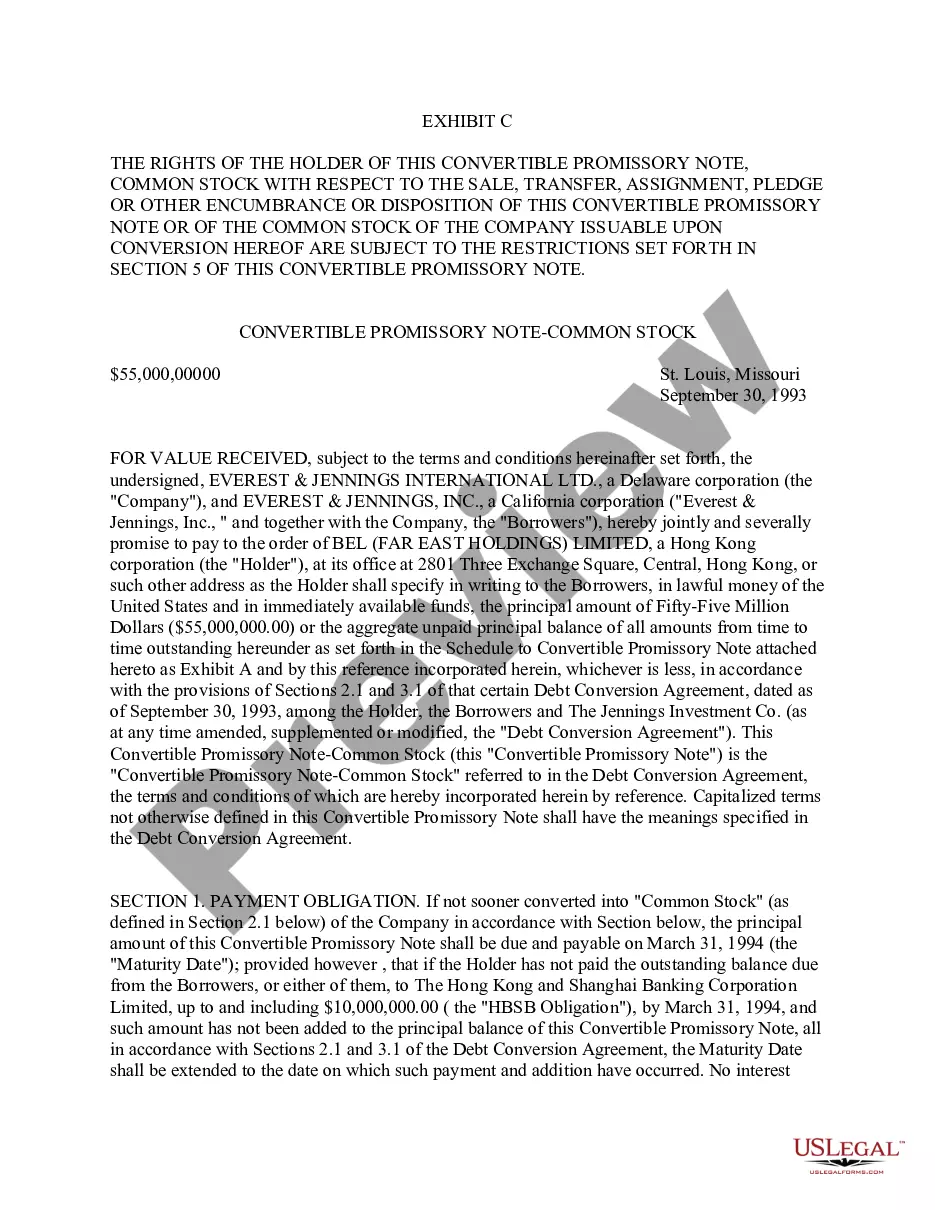
Get your form ready online
Our built-in tools help you complete, sign, share, and store your documents in one place.
Make edits, fill in missing information, and update formatting in US Legal Forms—just like you would in MS Word.
Download a copy, print it, send it by email, or mail it via USPS—whatever works best for your next step.
Sign and collect signatures with our SignNow integration. Send to multiple recipients, set reminders, and more. Go Premium to unlock E-Sign.
If this form requires notarization, complete it online through a secure video call—no need to meet a notary in person or wait for an appointment.
We protect your documents and personal data by following strict security and privacy standards.

Make edits, fill in missing information, and update formatting in US Legal Forms—just like you would in MS Word.

Download a copy, print it, send it by email, or mail it via USPS—whatever works best for your next step.

Sign and collect signatures with our SignNow integration. Send to multiple recipients, set reminders, and more. Go Premium to unlock E-Sign.

If this form requires notarization, complete it online through a secure video call—no need to meet a notary in person or wait for an appointment.

We protect your documents and personal data by following strict security and privacy standards.
Looking for another form?










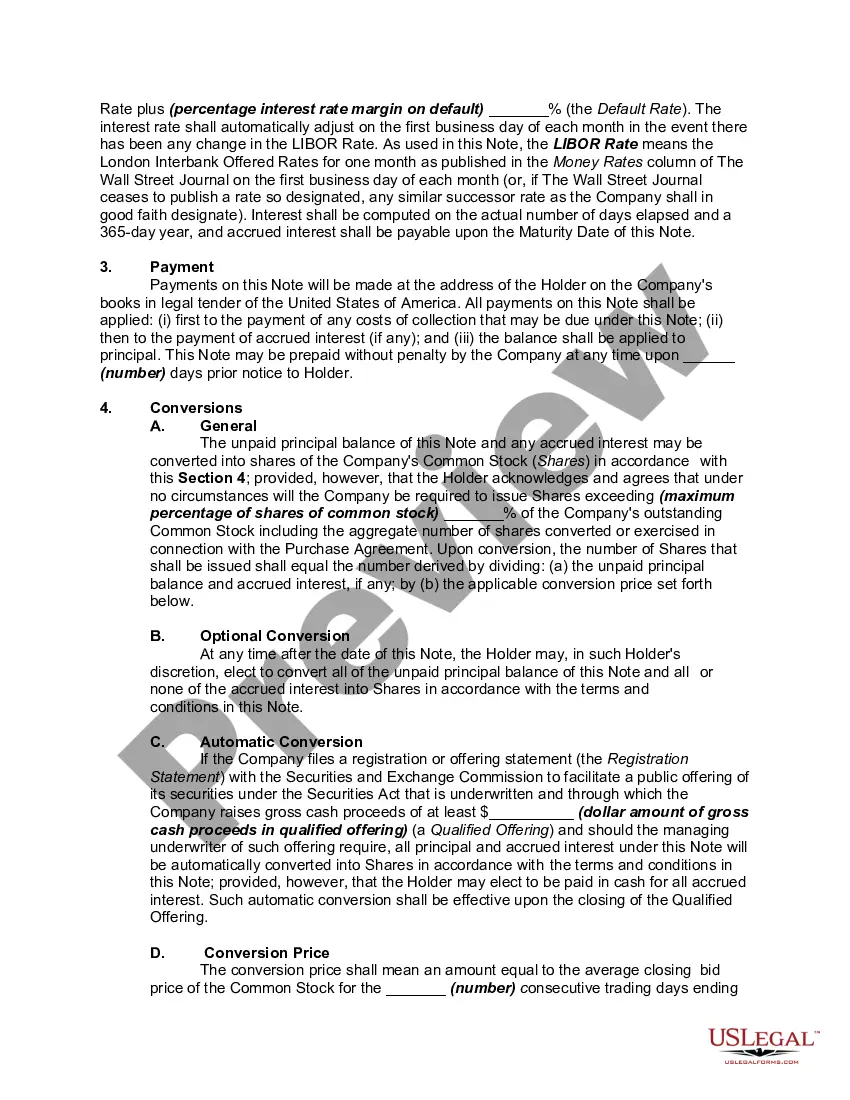
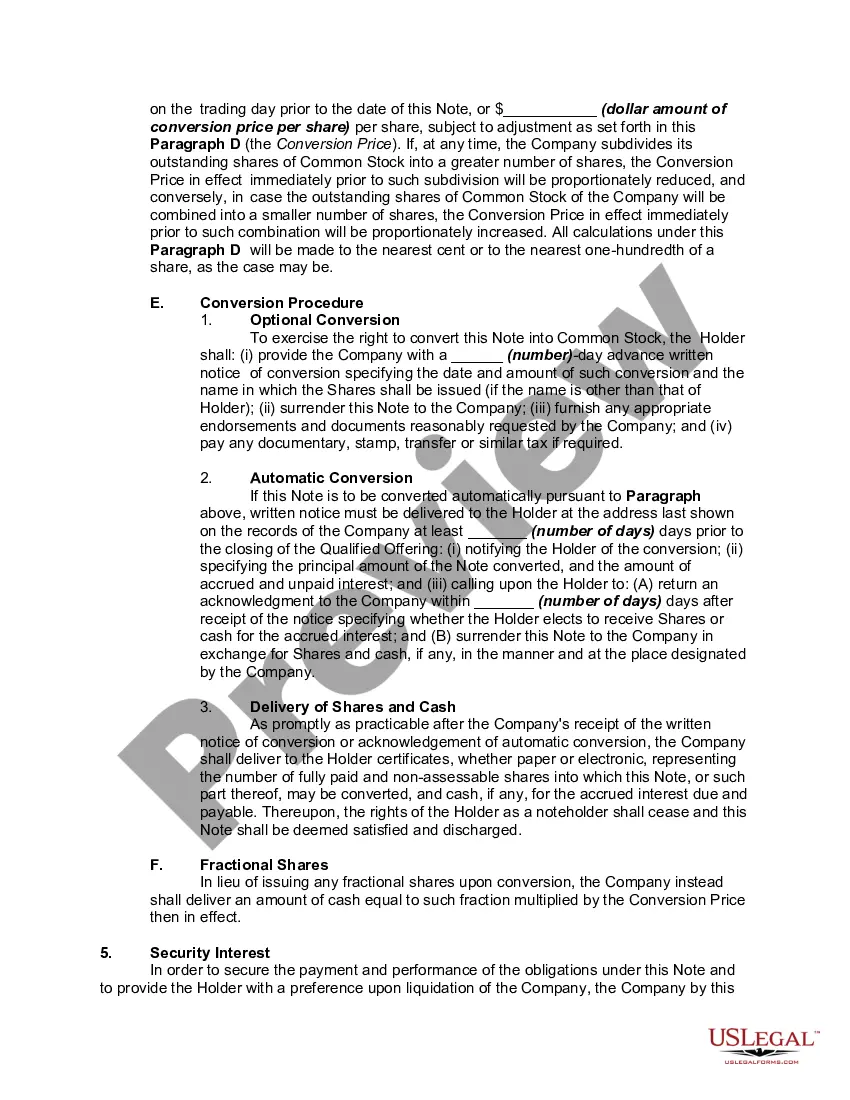
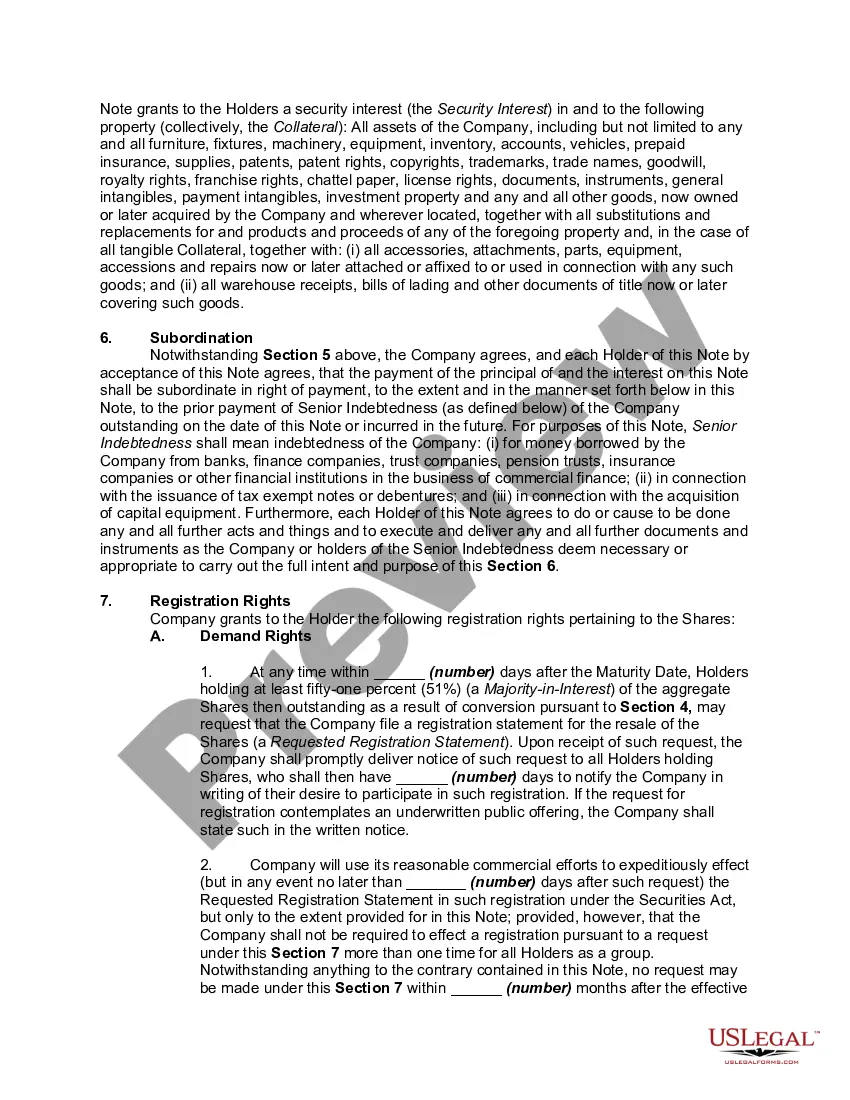
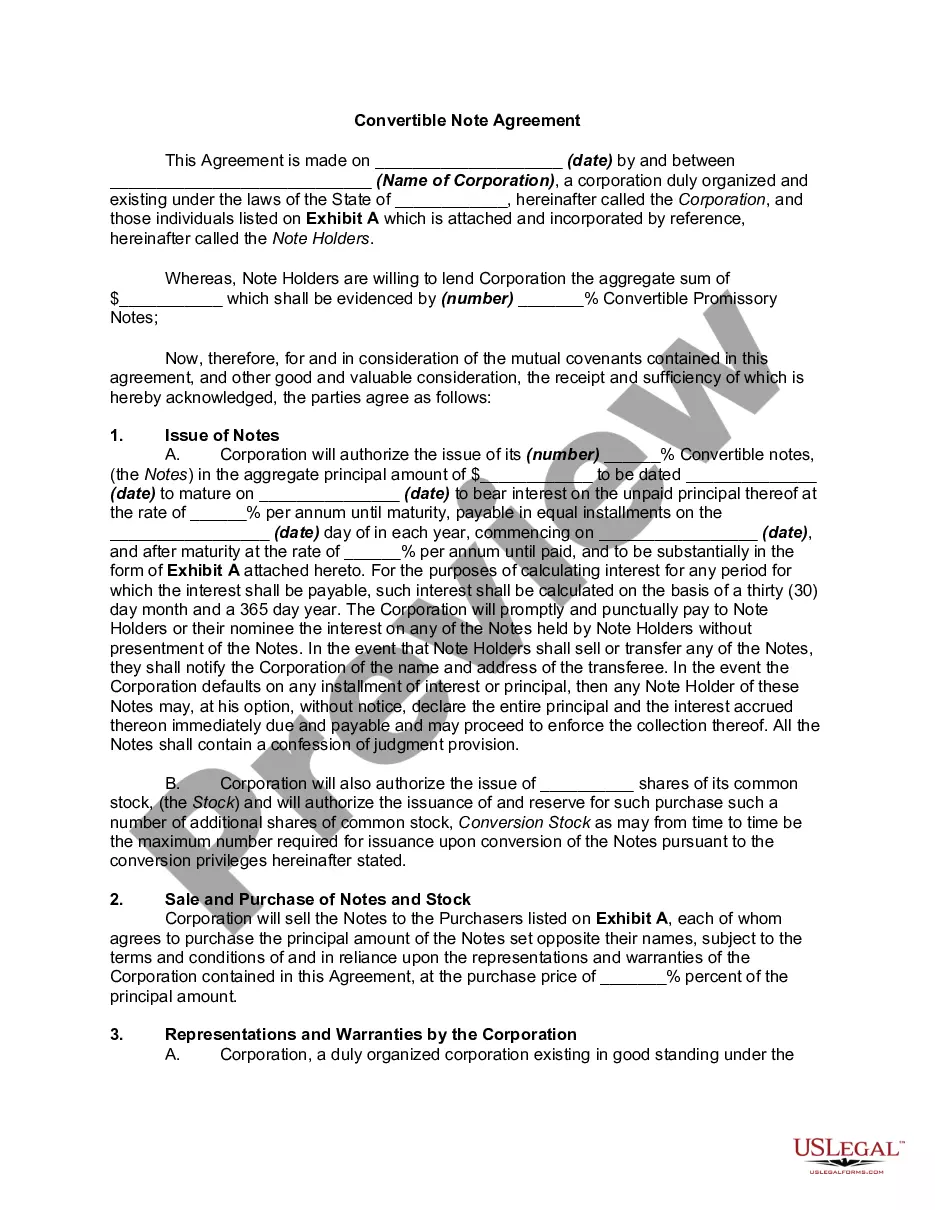
How to fill out Convertible Promissory Note By Corporation - One Of Series Of Notes Issued Pursuant To Convertible Note Purchase Agreement?
Utilizing legal documents that adhere to national and local laws is crucial, and the web provides numerous choices to choose from.
However, what is the purpose of spending time looking for the accurately written Convertible Note Corporation With Stock example online when the US Legal Forms digital library already consolidates such documents in one location.
US Legal Forms is the largest virtual legal repository, boasting over 85,000 editable documents created by lawyers for any corporate and personal scenarios.
Leverage the most comprehensive and user-friendly legal document service!
- They are straightforward to navigate, with all files organized by state and intended purpose.
- Our experts monitor legislative changes, ensuring that you can always trust your form to be current and compliant when obtaining a Convertible Note Corporation With Stock from our site.
- Acquiring a Convertible Note Corporation With Stock is easy and quick for both existing and new users.
- If you already possess an account with an active subscription, sign in and save the document sample you need in your desired format.
- For new visitors to our platform, follow the instructions below.
Form popularity
FAQ
Investor preference between SAFEs and convertible notes often depends on specific circumstances and investment goals. SAFEs provide simplicity and often favor startups, while convertible notes include interest and possibly a maturity date. Understanding the pros and cons of each option helps determine which is better suited for your needs, particularly in a convertible note corporation with stock.
Convertible preferred stock presents some disadvantages that investors should consider. These stocks usually come with less control compared to common shares and may also have lower voting rights. Additionally, their fixed dividends can be less attractive if the company's profits grow, particularly in a convertible note corporation with stock where common stockholders may benefit more.
Convertible debt, or CCD, typically has specific terms defining its conversion period. If the terms allow, it can be converted after 10 years; however, many notes include a maturity date that impacts this option. Generally, understanding your agreement's specific clauses is crucial, especially in a convertible note corporation with stock.
In many cases, stockholder approval is necessary to issue convertible securities, including convertible notes. This requirement often stems from corporate governance policies and regulations. Engaging a legal platform like US Legal Forms can assist you in understanding your company's obligations regarding stockholder approval when dealing with a convertible note corporation with stock.
While convertible notes offer advantages, there are notable disadvantages as well. One significant issue is the potential for dilution if a company raises further funding. Additionally, these notes can create complications if the company does not progress toward a qualifying financing round, which can leave investors in uncertain positions, especially in a convertible note corporation with stock.
A convertible note can be beneficial for acquiring stock, particularly for investors seeking flexibility. This type of financing allows early-stage companies to raise capital while postponing the valuation of their business. Investors can later convert their notes into equity, usually at a discounted rate, making it an attractive option within a convertible note corporation with stock.
Convertible notes can be a strategic option for companies looking to raise capital while providing potential future equity to investors. They offer flexibility and can convert to stock at a later date, often at favorable terms. This mechanism allows investors to potentially benefit from equity in a convertible note corporation with stock while minimizing risk in the early stages of investment.
Convertible notes can qualify as Qualified Small Business (QSB) stock under specific conditions set by the IRS. These conditions include holding the stock for a certain period and ensuring it meets the qualifying requirements established by the tax code. Engaging with a knowledgeable financial advisor can help clarify these details within the context of a convertible note corporation with stock, ensuring compliance and potential tax benefits.
Accounting for a convertible note requires a clear understanding of its structure and financial implications. Initially, record the note as a liability on your balance sheet, reflecting its face value. During conversion to equity, reclassify the amount as equity, which aligns with the convertible note corporation with stock structure, ensuring accurate financial reporting that complies with accounting standards.
To convert a convertible debt instrument, such as a convertible note, into equity shares, you typically need to follow the conversion terms outlined in the agreement. This often involves notifying the company of your intent to convert, which can trigger the issuance of stocks based on a predetermined valuation. By understanding the details in your convertible note agreement, you can smoothly transition from debt to equity within the convertible note corporation with stock framework.