Assignment And Subletting
Description
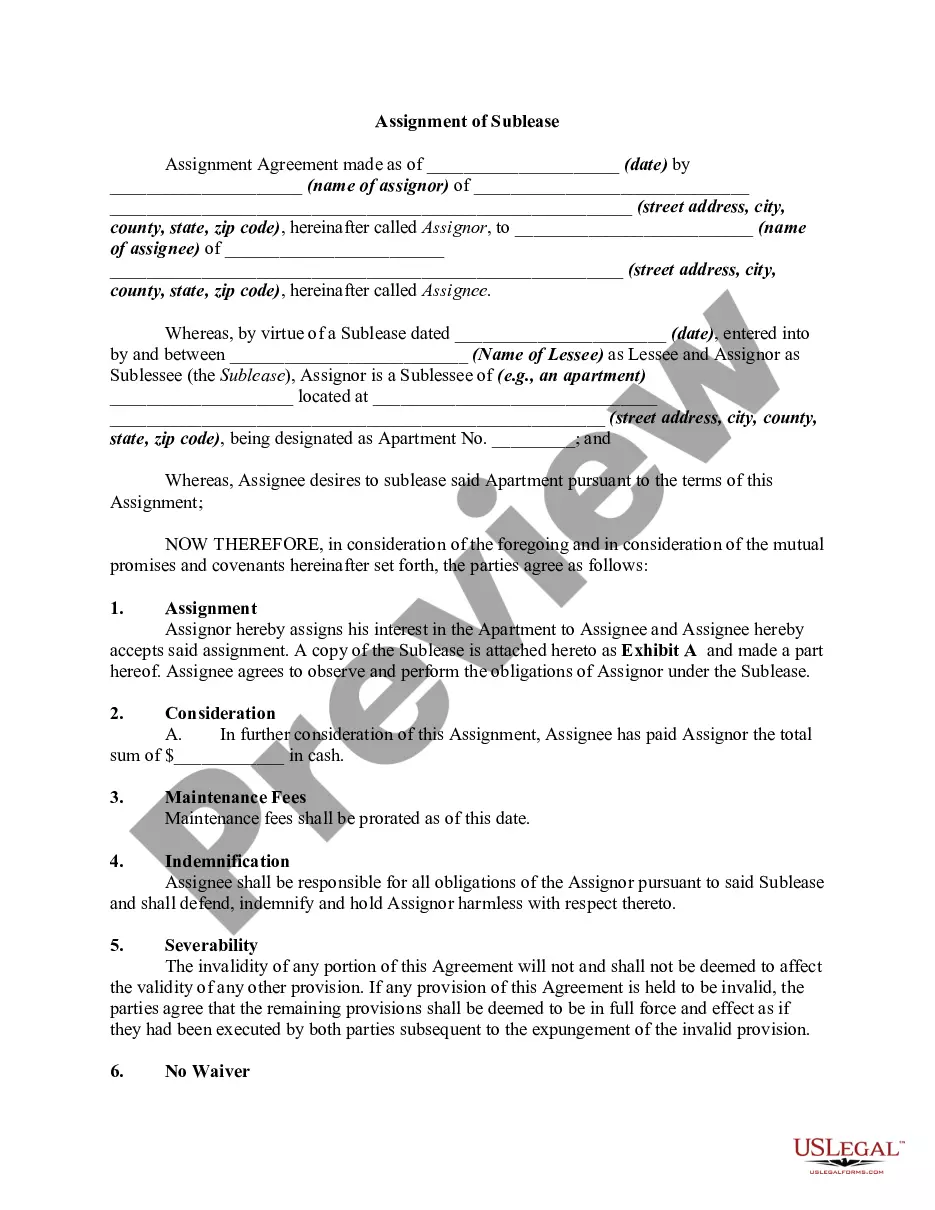
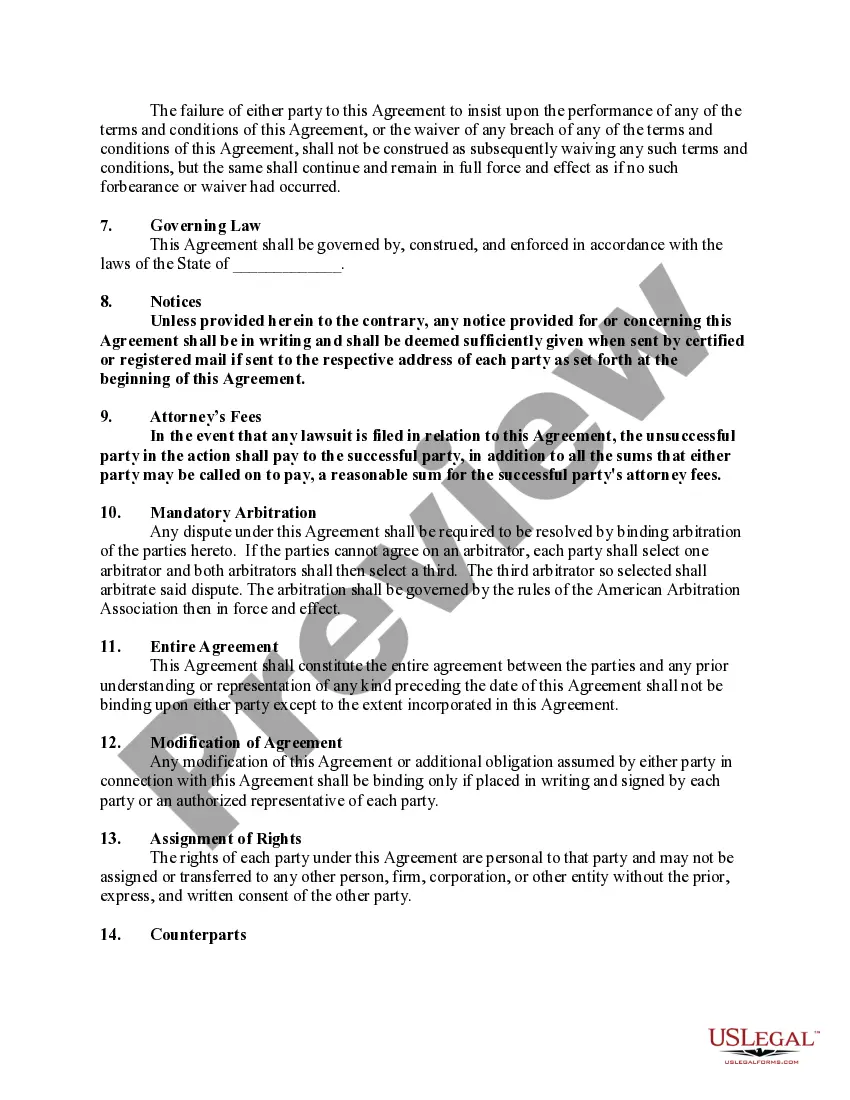
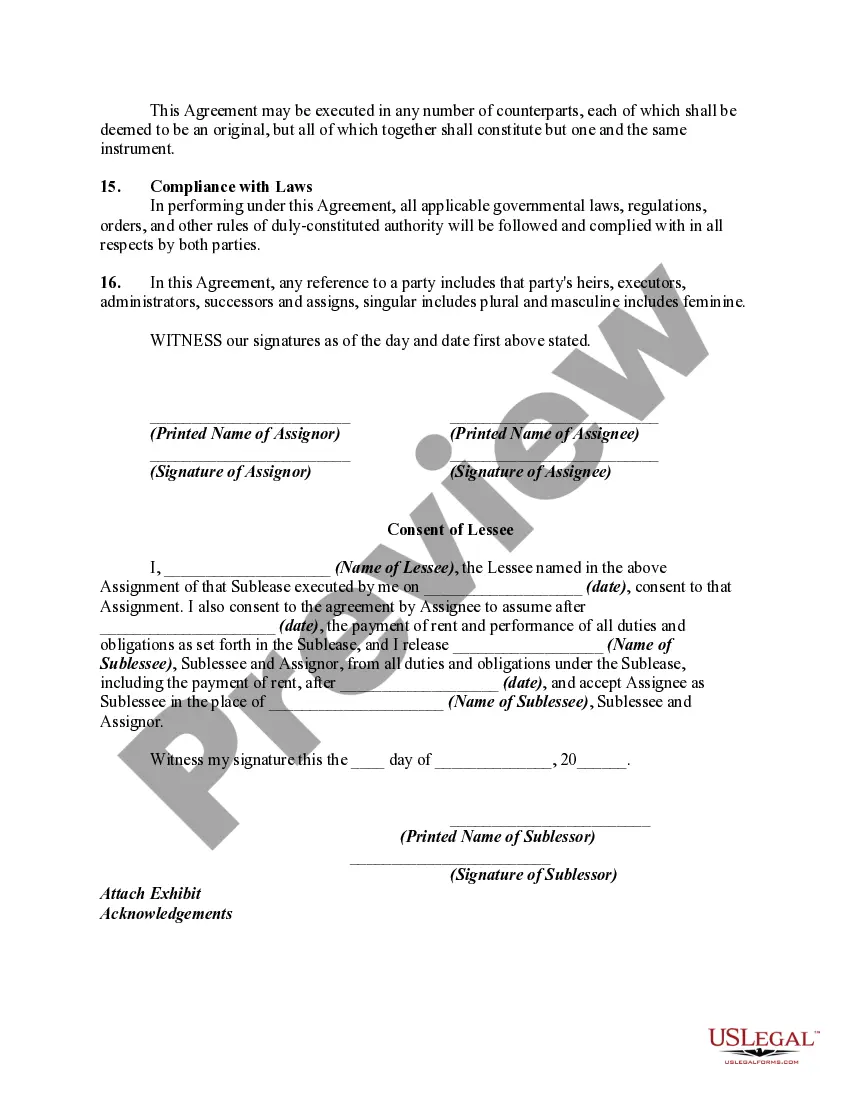
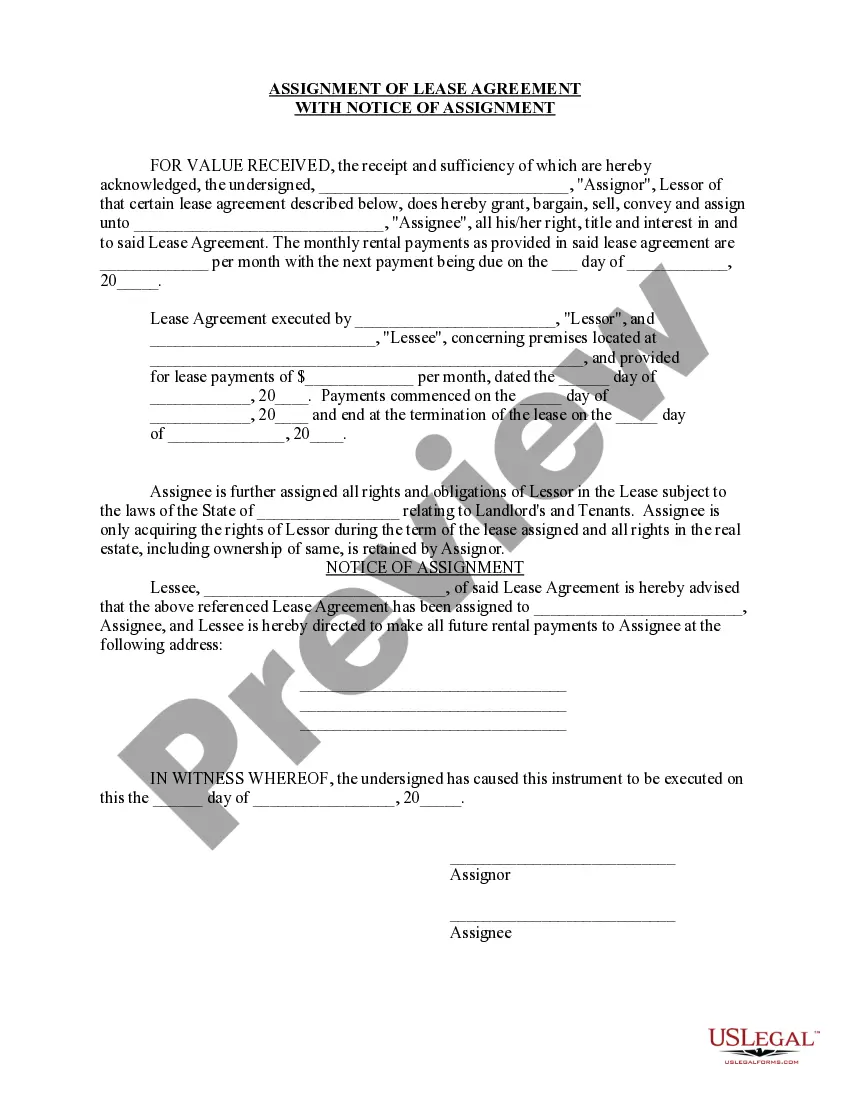
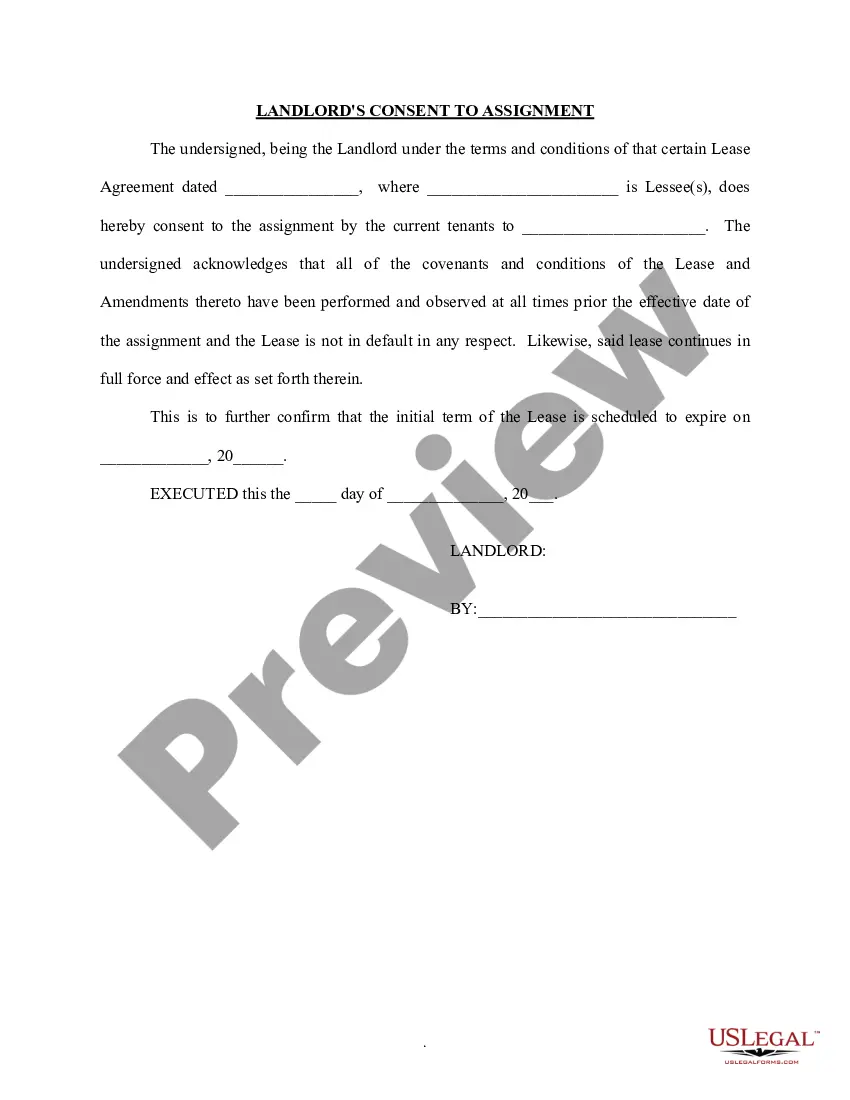
How to fill out Assignment Of Sublease?
- If you're a returning user, log in to your account and click the Download button to retrieve your desired form template. Ensure that your subscription is active, or renew it if necessary.
- For first-time users, start by checking the Preview mode and description of forms available to ensure you select the correct document that aligns with your jurisdiction.
- If you find inconsistencies or need a different template, utilize the Search tab to locate the appropriate form that meets your specifications.
- Once you have selected the correct document, click on the Buy Now button and choose a subscription plan that fits your needs. Create an account to access the extensive library.
- Complete your purchase by providing payment details through credit card or your PayPal account, facilitating easy access to forms.
- After purchase, download your form and save it to your device. You can also revisit it anytime via the My Forms section of your profile.
In conclusion, US Legal Forms empowers you to efficiently manage assignment and subletting agreements with a comprehensive, user-friendly library of over 85,000 legal forms. By following these steps, you can ensure that your documents are precise and legally sound.
Start utilizing US Legal Forms today to streamline your legal documentation process!
Form popularity
FAQ
Subletting and assignment are often confused, but they serve different purposes in leasing. Subletting allows the original tenant to rent the space to another party, while retaining their lease agreement with the landlord. Assignment, however, requires the original tenant to relinquish all rights and obligations to a new tenant. To navigate your options between assignment and subletting effectively, consider consulting resources like uslegalforms for expert advice.
The primary difference between assignment and subletting lies in the transfer of lease obligations. With an assignment, the tenant fully transfers their lease rights and responsibilities to someone else. On the other hand, subletting involves renting out a portion of the lease while keeping the original lease intact. Being aware of these distinctions can greatly influence your leasing strategy, so consider addressing your questions further with platforms like uslegalforms for tailored guidance.
The terms assignee and sublet represent distinct concepts in rental agreements. An assignee is a person who takes over the lease entirely, assuming all associated rights and responsibilities. In contrast, a sublet remains under the original lease, where the primary tenant retains some obligation. Understanding these differences can help you navigate your options regarding assignment and subletting more effectively.
In leasing terms, assignment refers to transferring your lease obligations to another party. When you assign your lease, the assignee takes over your responsibilities for rent payments and property maintenance. It is important to remember that, depending on the lease agreement, you may still retain liabilities. Therefore, understanding the intricacies of assignment and subletting is crucial.
To write a sublet letter, start with a respectful greeting and clearly state your request to sublet the property. Include relevant details such as the subtenant's name, the duration of the sublease, and any other pertinent information. Conclude the letter by expressing gratitude for the landlord's consideration and request a timely response, which can greatly impact your plans concerning assignment and subletting.
The assignment and subletting clause is a provision in the lease that defines the rights of the tenant to assign or sublet the rental property. This clause usually requires tenants to obtain landlord approval before subleasing, which helps protect the landlord's interests. Understanding this clause is essential for effectively navigating your rental agreements regarding assignment and subletting.
To write a sublet agreement, begin by including all relevant parties and their contact information. Next, specify the rental property's details, the sublease term, and payment terms. Additionally, incorporate any necessary rules or restrictions, and ensure both parties sign the agreement to uphold its legality, particularly in contexts involving assignment and subletting.
An example of consent to a sublease might read, 'The landlord hereby grants permission for the tenant to sublet the premises to Subtenant's Name for the period of start date to end date.' This written consent protects both parties and clarifies responsibilities, especially concerning payment and property condition during the sublease, enhancing your understanding of assignment and subletting.
An example of a sublease clause could state that 'The tenant may not sublease the rental property without prior written consent from the landlord.' This clause ensures that the landlord has control over who occupies the property, providing a safeguard for the property's condition and the lease terms. Clear sublease clauses are vital in any lease agreement related to assignment and subletting.
A sublease cannot be an assignment because they serve different purposes. In a sublease, the original tenant maintains some responsibility for the lease while allowing another person to occupy the unit. An assignment, on the other hand, relinquishes all obligations to the new tenant. Thus, it's vital to choose the right approach based on your needs in the context of assignment and subletting.