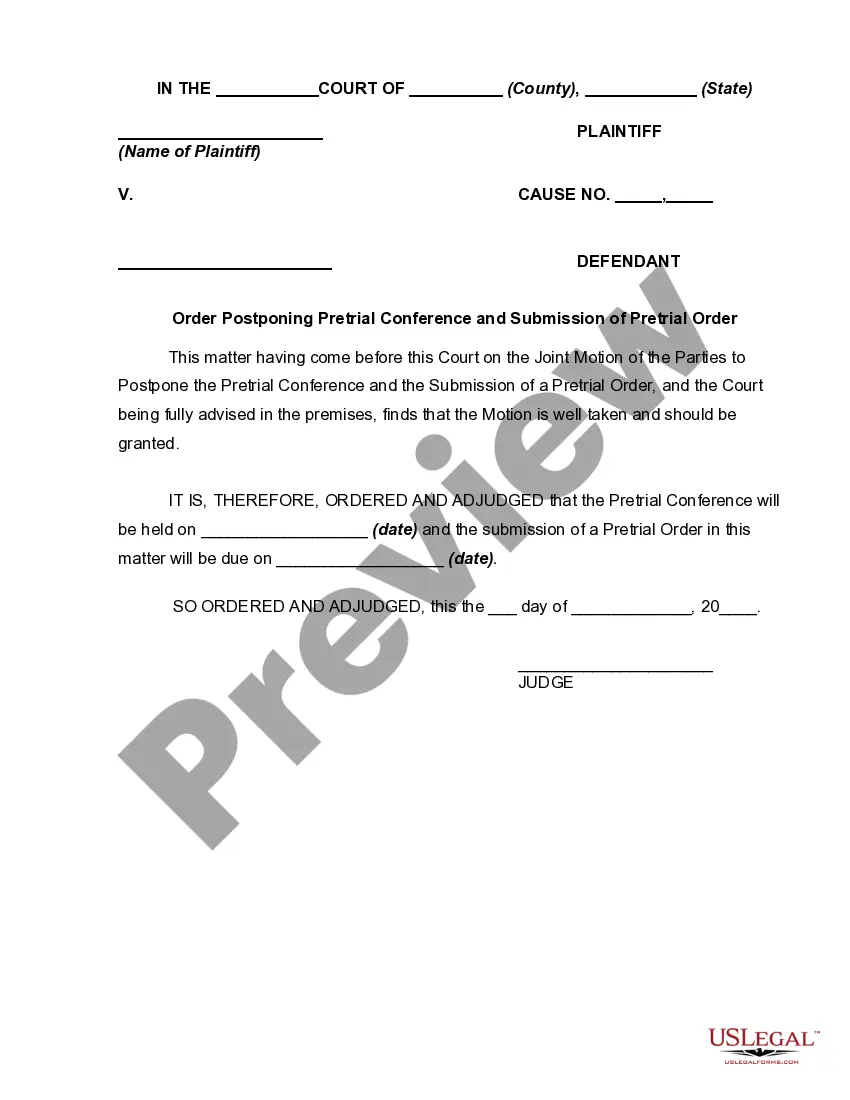
Pretrial Court Motion Format
Description
Get your form ready online
Our built-in tools help you complete, sign, share, and store your documents in one place.
Make edits, fill in missing information, and update formatting in US Legal Forms—just like you would in MS Word.
Download a copy, print it, send it by email, or mail it via USPS—whatever works best for your next step.
Sign and collect signatures with our SignNow integration. Send to multiple recipients, set reminders, and more. Go Premium to unlock E-Sign.
If this form requires notarization, complete it online through a secure video call—no need to meet a notary in person or wait for an appointment.
We protect your documents and personal data by following strict security and privacy standards.

Make edits, fill in missing information, and update formatting in US Legal Forms—just like you would in MS Word.

Download a copy, print it, send it by email, or mail it via USPS—whatever works best for your next step.

Sign and collect signatures with our SignNow integration. Send to multiple recipients, set reminders, and more. Go Premium to unlock E-Sign.

If this form requires notarization, complete it online through a secure video call—no need to meet a notary in person or wait for an appointment.

We protect your documents and personal data by following strict security and privacy standards.
Looking for another form?







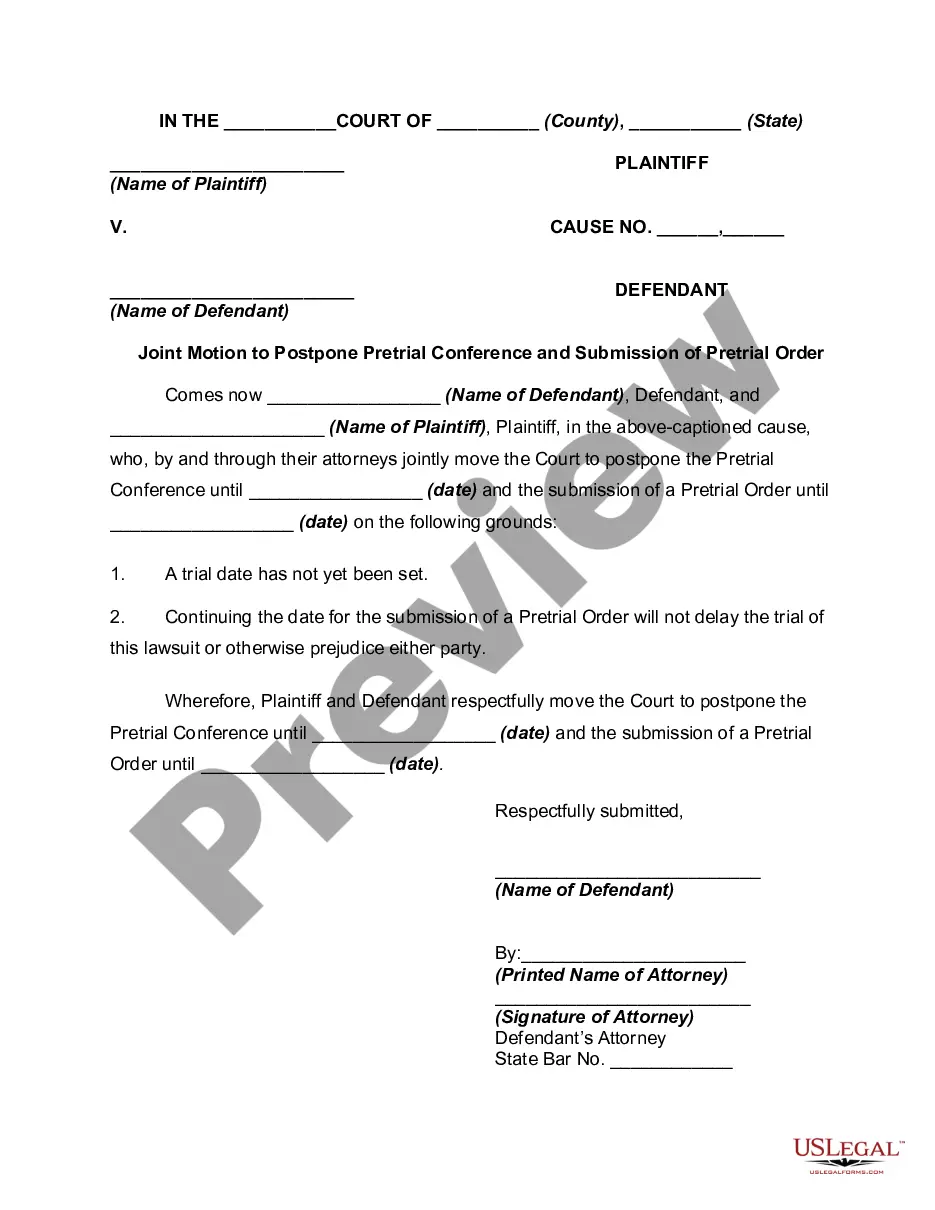
How to fill out Order Postponing Pretrial Conference And Submission Of Pretrial Order?
Accessing legal document examples that adhere to federal and state regulations is essential, and the internet provides numerous options to select from.
However, what is the benefit of spending time looking for the appropriate Pretrial Court Motion Format example online if the US Legal Forms digital library already has such templates compiled in one location.
US Legal Forms is the largest online legal collection with over 85,000 customizable templates created by attorneys for any business and personal situations. They are straightforward to navigate, with all documents organized by state and intended use.
Search for another example using the search feature at the top of the page if needed. Click Buy Now when you’ve found the right form and select a subscription plan. Create an account or sign in and process your payment with PayPal or a credit card. Choose the format for your Pretrial Court Motion Format and download it. All templates accessed through US Legal Forms are reusable. To re-download and complete previously saved forms, navigate to the My documents section in your account. Enjoy the most extensive and user-friendly legal documentation service!
- Our specialists keep abreast of legislative updates, ensuring your documentation is current and compliant when obtaining a Pretrial Court Motion Format from our site.
- Acquiring a Pretrial Court Motion Format is quick and easy for both existing and new users.
- If you already possess an account with an active subscription, Log In and download the document example you need in your desired format.
- For newcomers to our site, follow the outlined steps below.
- Evaluate the template using the Preview feature or via the text outline to confirm it fulfills your requirements.
Form popularity
FAQ
Writing motions for court requires clarity and specificity. Begin by outlining the issues, stating the relief sought, and providing supporting arguments. Following the correct pretrial court motion format will not only aid in presenting your case but also increase the chances of a favorable outcome.
A motion should be formatted with proper headings, a clear structure, and appropriate legal citations. Ensure the document is typed, double-spaced, and uses a readable font. By applying the pretrial court motion format correctly, you enhance the clarity and effectiveness of your motion.
To format a court motion correctly, include a title, the court's name, and the parties involved at the top of the document. Follow this with a clear introduction, body sections explaining the facts, arguments, and a conclusion. Consistently using the pretrial court motion format will make your motion more professional and persuasive.
Pre-trial motions are requests for the court to decide specific legal issues before the trial starts. These motions can help streamline the process by clarifying what matters are in dispute. Knowing the purpose of each type of pre-trial motion can assist you in utilizing the pretrial court motion format to your advantage.
To write a proper motion, start with a clear title indicating the type of motion being made. Next, present a concise statement explaining the relief sought and the legal basis for your request. Adhering to the correct pretrial court motion format ensures that your motion is easily understood and accepted by the court.
A pretrial motion can include various types, such as a motion to dismiss, motion for summary judgment, or motion to change venue. These motions aim to resolve specific issues before the trial begins. Understanding the different examples helps you navigate the pretrial court motion format effectively.
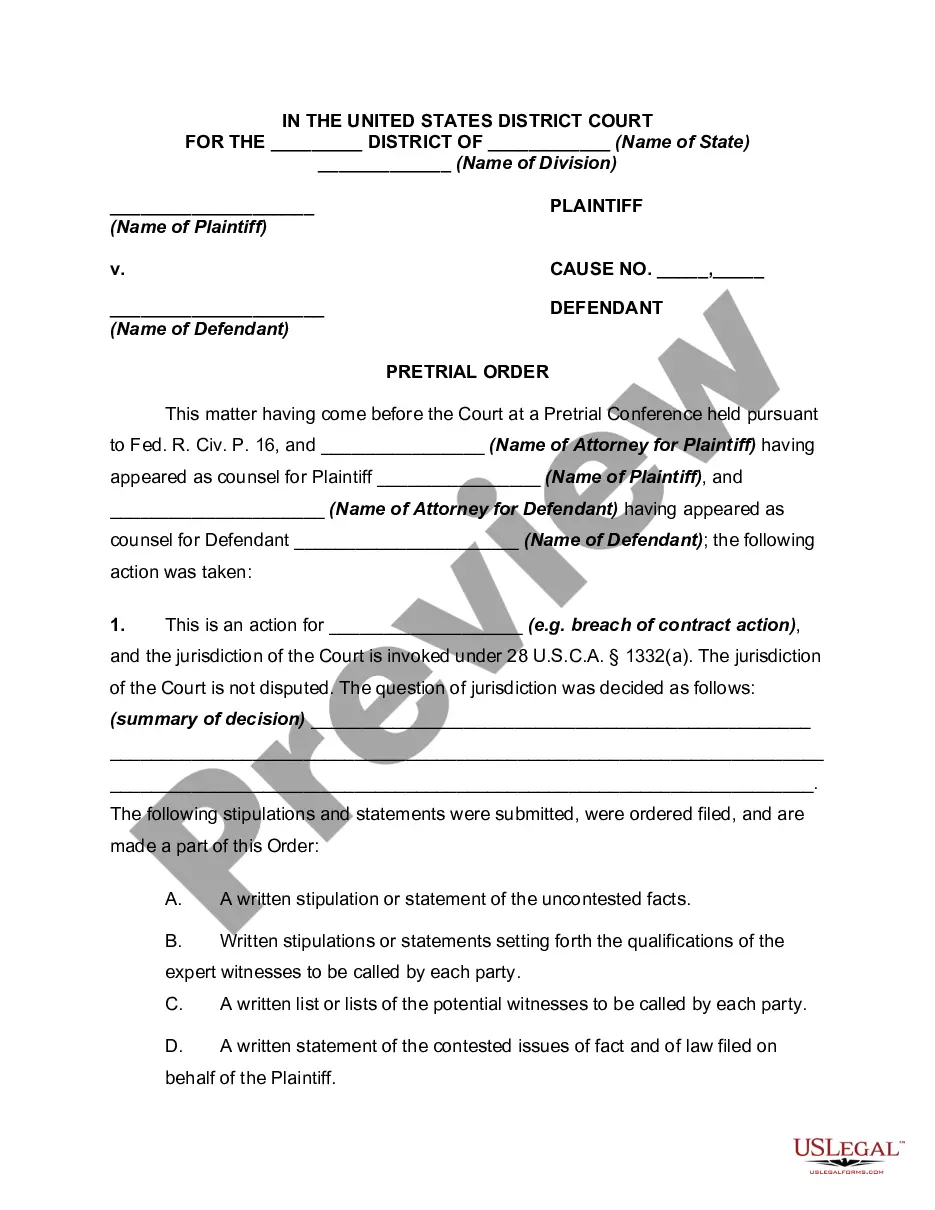
The format for writing a motion typically includes a title, introduction, body, and conclusion. Start with a clear title that identifies the motion, followed by a statement of the facts and relevant law. Then, clearly state the specific request you are making, ensuring you follow the pretrial court motion format for organization and presentation. You can rely on platforms like uslegalforms to access templates and guidance that simplify the creation of your motion, helping you present your case effectively.
A pretrial motion can include a motion to dismiss, which requests the court to terminate the case before it goes to trial. This type of motion often outlines reasons such as lack of evidence or failure to state a claim. Understanding the pretrial court motion format is crucial when drafting this document, as it ensures clarity and adherence to court requirements. By following the proper format, you can effectively present your arguments and increase your chances of a favorable ruling.
The hardest cases to win in court often involve complex legal issues, strong opposition, or a lack of compelling evidence. For example, criminal cases where evidence is circumstantial or civil cases involving large corporations can be particularly challenging. If you find yourself in such a situation, understanding the pretrial court motion format can help you build a stronger case. Additionally, utilizing services like US Legal Forms can help you navigate these complexities with confidence.
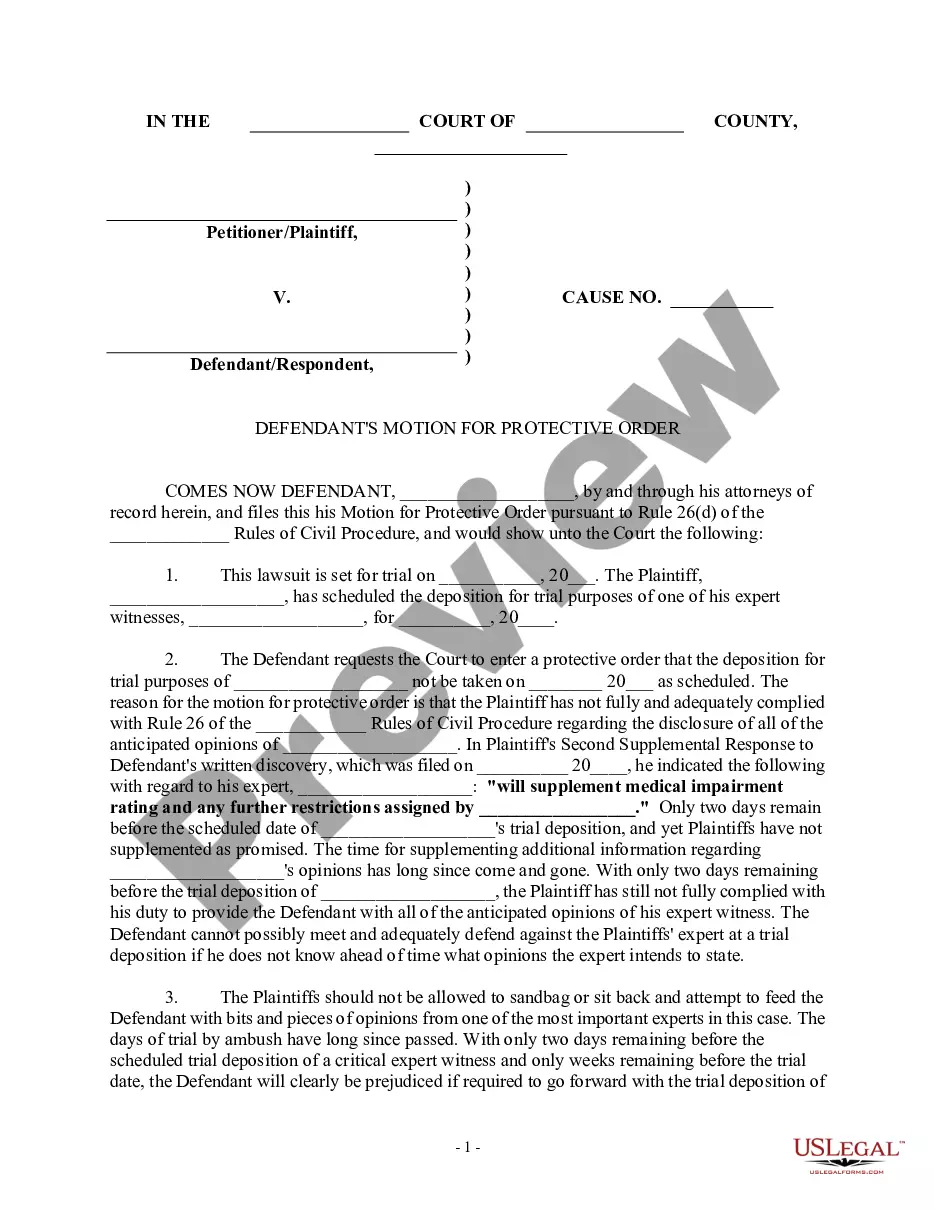
The three most common pretrial motions are motions to dismiss, motions for summary judgment, and motions to suppress evidence. Each of these motions addresses different aspects of a case and requires careful attention to detail in the pretrial court motion format. Understanding each motion's purpose can help you effectively prepare and present your arguments. Accessing resources like US Legal Forms can provide valuable insights and templates.