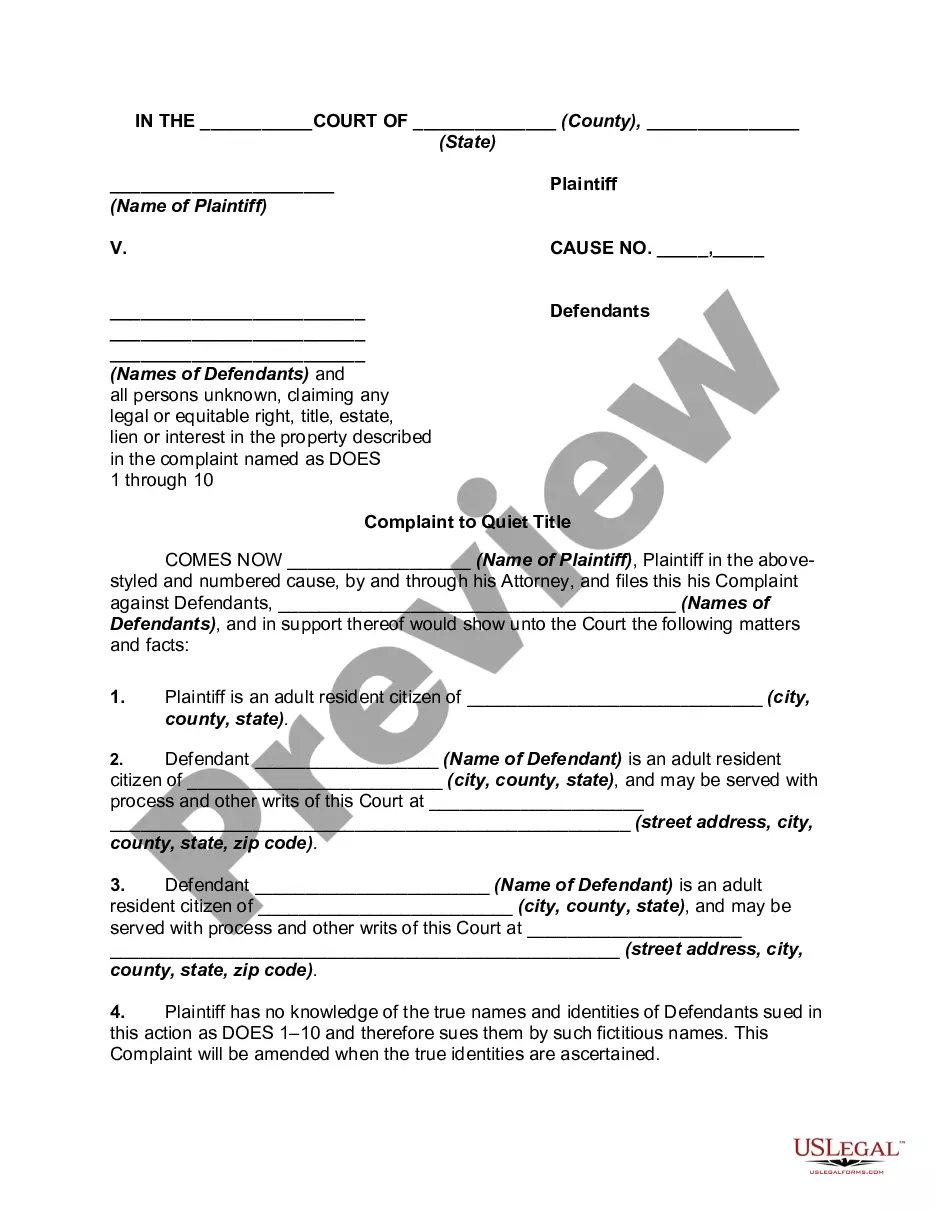
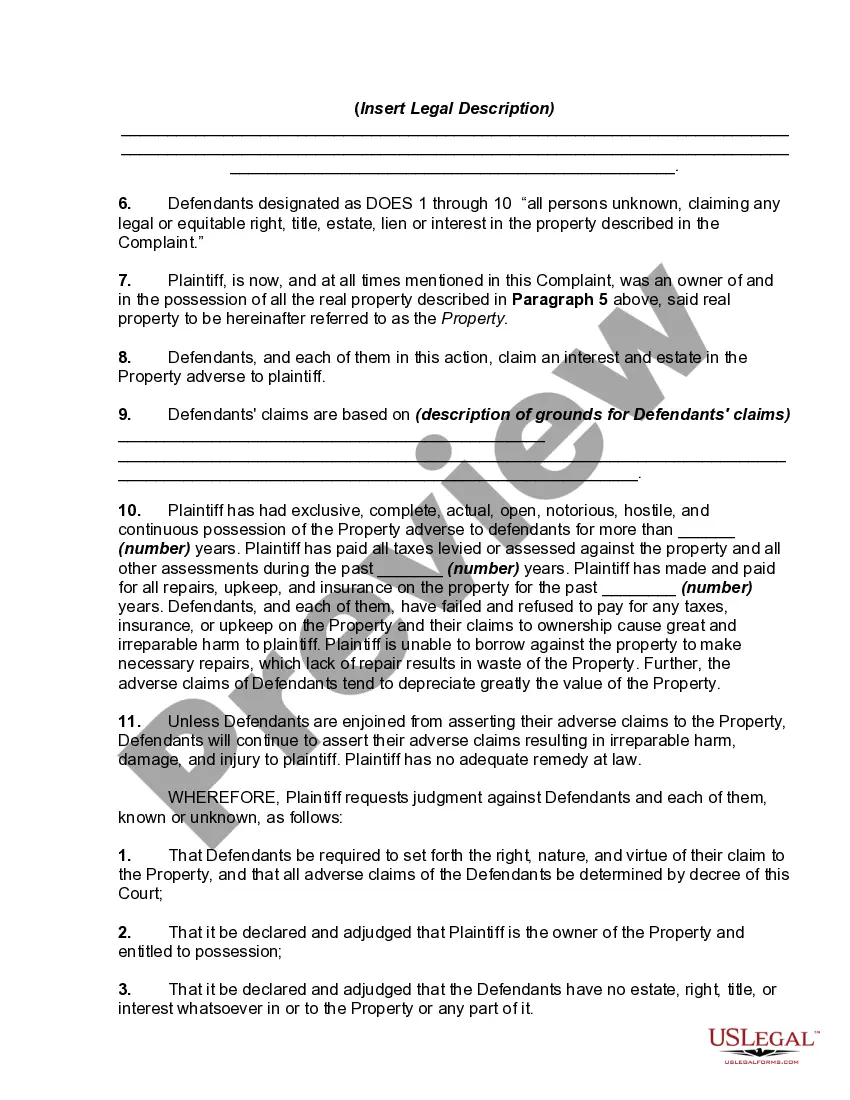
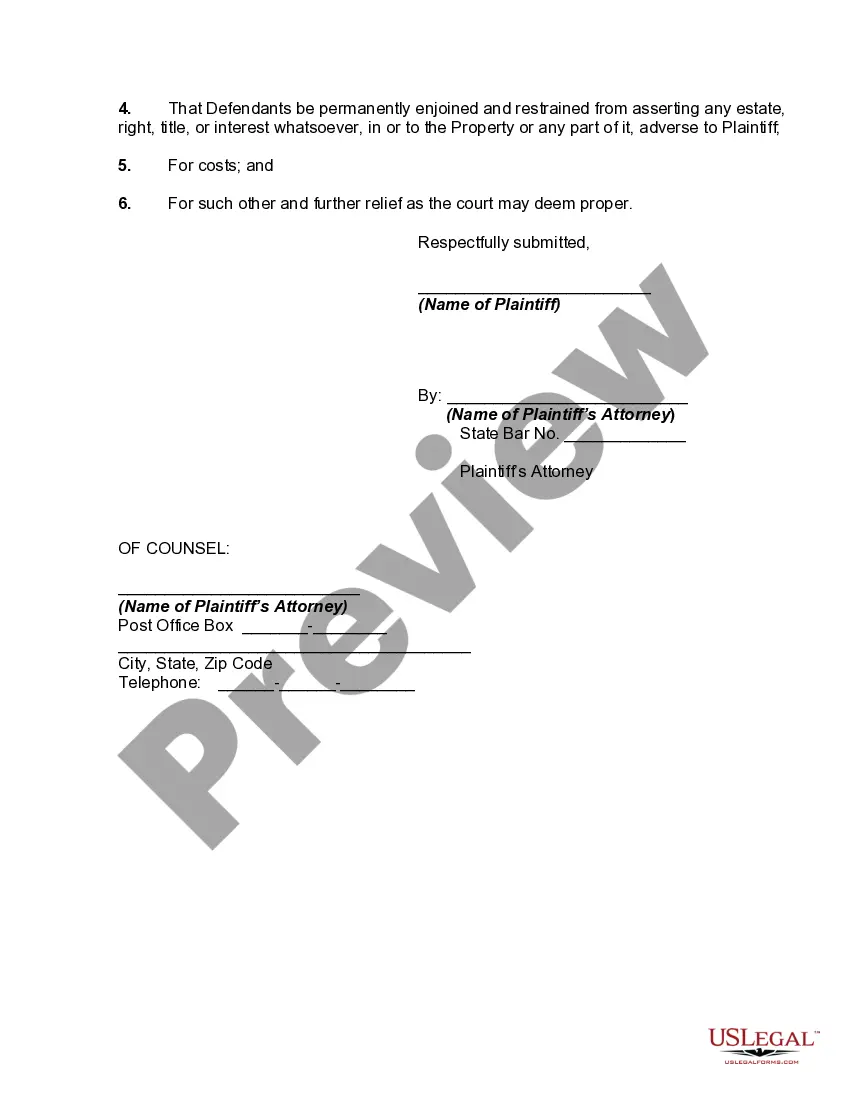
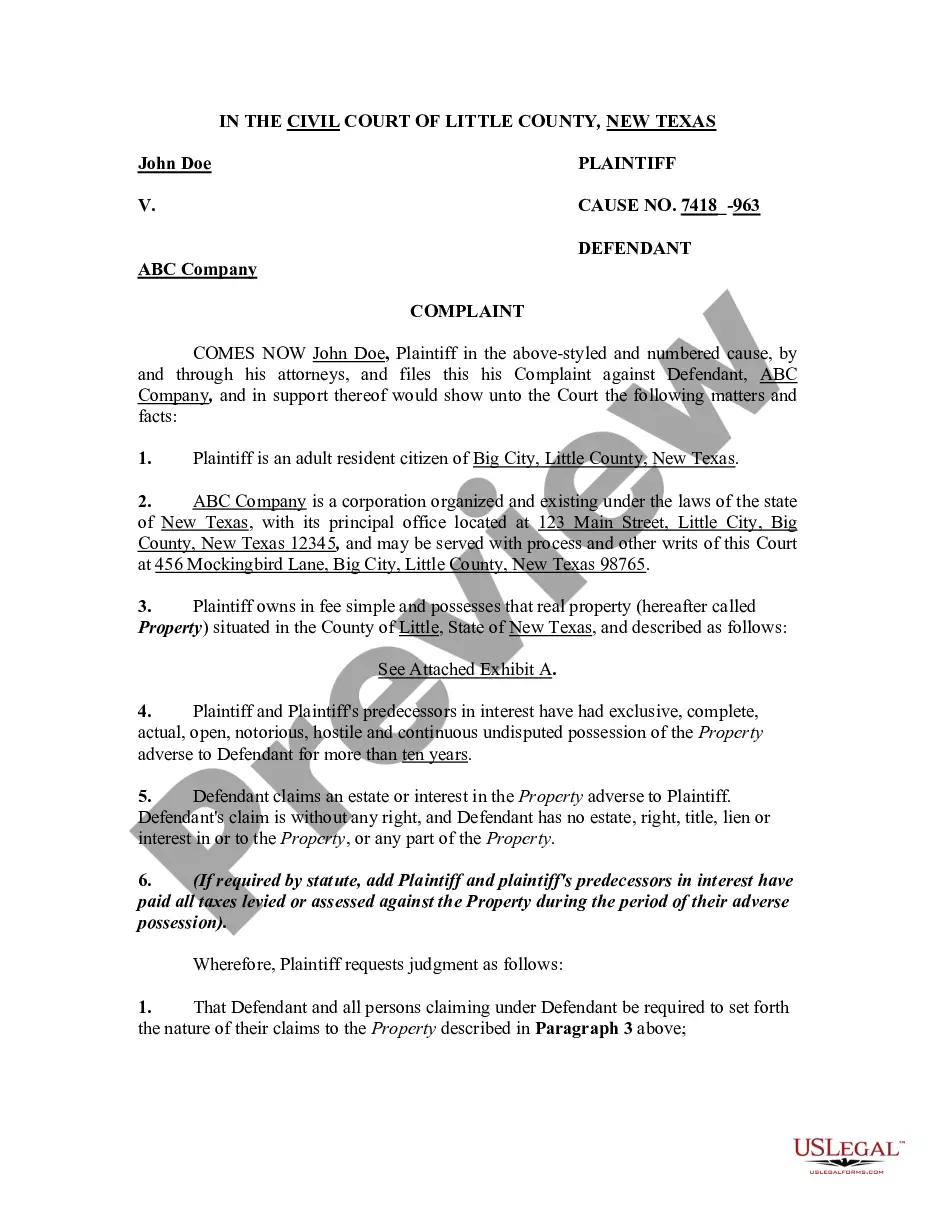
Suit To Quiet Title In Texas
Description
Get your form ready online
Our built-in tools help you complete, sign, share, and store your documents in one place.
Make edits, fill in missing information, and update formatting in US Legal Forms—just like you would in MS Word.
Download a copy, print it, send it by email, or mail it via USPS—whatever works best for your next step.
Sign and collect signatures with our SignNow integration. Send to multiple recipients, set reminders, and more. Go Premium to unlock E-Sign.
If this form requires notarization, complete it online through a secure video call—no need to meet a notary in person or wait for an appointment.
We protect your documents and personal data by following strict security and privacy standards.

Make edits, fill in missing information, and update formatting in US Legal Forms—just like you would in MS Word.

Download a copy, print it, send it by email, or mail it via USPS—whatever works best for your next step.

Sign and collect signatures with our SignNow integration. Send to multiple recipients, set reminders, and more. Go Premium to unlock E-Sign.

If this form requires notarization, complete it online through a secure video call—no need to meet a notary in person or wait for an appointment.

We protect your documents and personal data by following strict security and privacy standards.
Looking for another form?

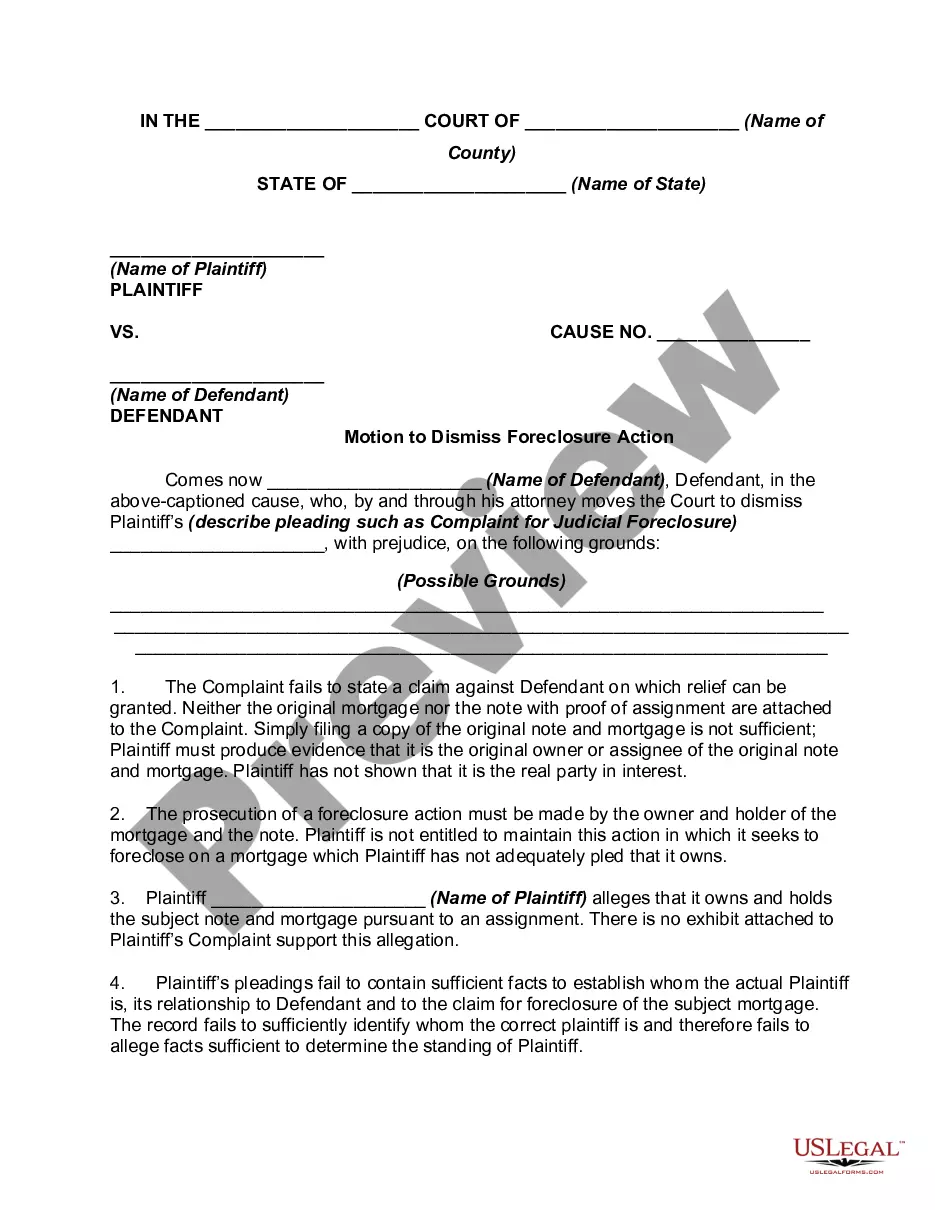



How to fill out Complaint To Quiet Title By Adverse Possessor With Unknown Defendants?
It's widely recognized that you cannot instantly become a legal authority, nor can you swiftly learn how to draft a Suit To Quiet Title In Texas without possessing a specialized background.
The formulation of legal documents is a lengthy endeavor that necessitates particular training and expertise. Therefore, why not entrust the development of the Suit To Quiet Title In Texas to the experts.
With US Legal Forms, one of the most extensive libraries of legal templates, you can find everything from court documents to templates for internal corporate correspondence. We realize the importance of compliance and adherence to federal and state laws and regulations.
Click Buy now. Once the payment is completed, you can acquire the Suit To Quiet Title In Texas, fill it out, print it, and send or mail it to the specified individuals or organizations.
You can access your documents again from the My documents tab at any time. If you're an existing customer, you can simply Log In, and find and download the template from the same tab.
- Here’s how to begin using our website and obtain the document you require in just a few minutes.
- Find the document you’re looking for with the search bar located at the top of the page.
- Preview it (if this option is available) and review the accompanying description to determine if Suit To Quiet Title In Texas is what you need.
- Start your search over if you require any additional template.
- Sign up for a free account and choose a subscription plan to buy the template.
Form popularity
FAQ
The primary elements of a suit to quiet title in Texas include proving your ownership, detailing any adverse claims, and demonstrating how those claims should be resolved. You must establish the validity of your title and provide a factual basis for why those competing claims should be dismissed. Understanding each element is crucial to building a strong case.
When you receive a petition to quiet title in Texas, you should prepare and file an answer that addresses each allegation. Your response must assert any defenses you wish to pursue, such as counterclaims or evidence that weakens the plaintiff's case. It's advisable to seek legal assistance to craft an effective response.
Winning a suit to quiet title in Texas requires presenting strong evidence to establish your claim over the property. You should prepare your case meticulously, anticipating possible defenses from the opposing party. Often, a solid legal strategy backed by thorough documentation and witness testimony can help secure a favorable outcome.
Success in a suit to quiet title in Texas hinges on thorough preparation and clear evidence of your property ownership. It's vital to gather all necessary documents, like title deeds and relevant agreements, to support your case. Consulting an experienced attorney can also enhance your chances by ensuring proper procedures are followed.
To file a suit to quiet title in Texas, start by preparing a petition detailing your ownership and the basis for the action. You then file this petition in the proper court. It's essential to serve all interested parties and respond to any defenses they may raise, making sure you follow local rules and procedures.
In a suit to quiet title in Texas, the plaintiff holds the burden of proof. This means you must provide sufficient evidence to establish your rightful ownership of the property. The evidence can include deeds, tax records, and any documentation supporting your claim, while the defendant may need to counter with proof of their claims.
To file a suit to quiet title in Texas, you start by preparing a petition that outlines your claim to the property. After you draft this legal document, you must file it with the appropriate Texas court, paying the required filing fees. It’s essential to serve notice to all parties with a potential interest in the property, as they may need to respond to the suit. If you prefer a streamlined process, consider using the US Legal Forms platform, which offers templates and guidance for filing a suit to quiet title in Texas.
Winning a suit to quiet title in Texas requires providing clear and convincing evidence of your ownership. This involves demonstrating that no other party has a legal claim or interest in the property in question. Additionally, filing the lawsuit correctly and following all required procedures is crucial. Utilizing platforms like USLegalForms can guide you through the paperwork and processes, ensuring you take the right steps toward securing your property rights.
To fight a suit to quiet title in Texas, you should gather evidence to support your claim on the property. This evidence may include previous deeds, tax records, and witness testimonies to prove your ownership rights. Engaging a skilled attorney can bolster your arguments in court and help you understand the legal requirements for a successful defense. Being proactive and prepared increases your chances of a favorable outcome.
The cause of action for a suit to quiet title in Texas arises when a party wants to establish clear ownership of property. This legal action resolves disputes regarding the title to real estate, removing any claims or clouds on the title. To succeed, the plaintiff must demonstrate superior title against all other claimants. Consulting with an attorney experienced in property law can help you navigate this process efficiently.