Adverse
Description
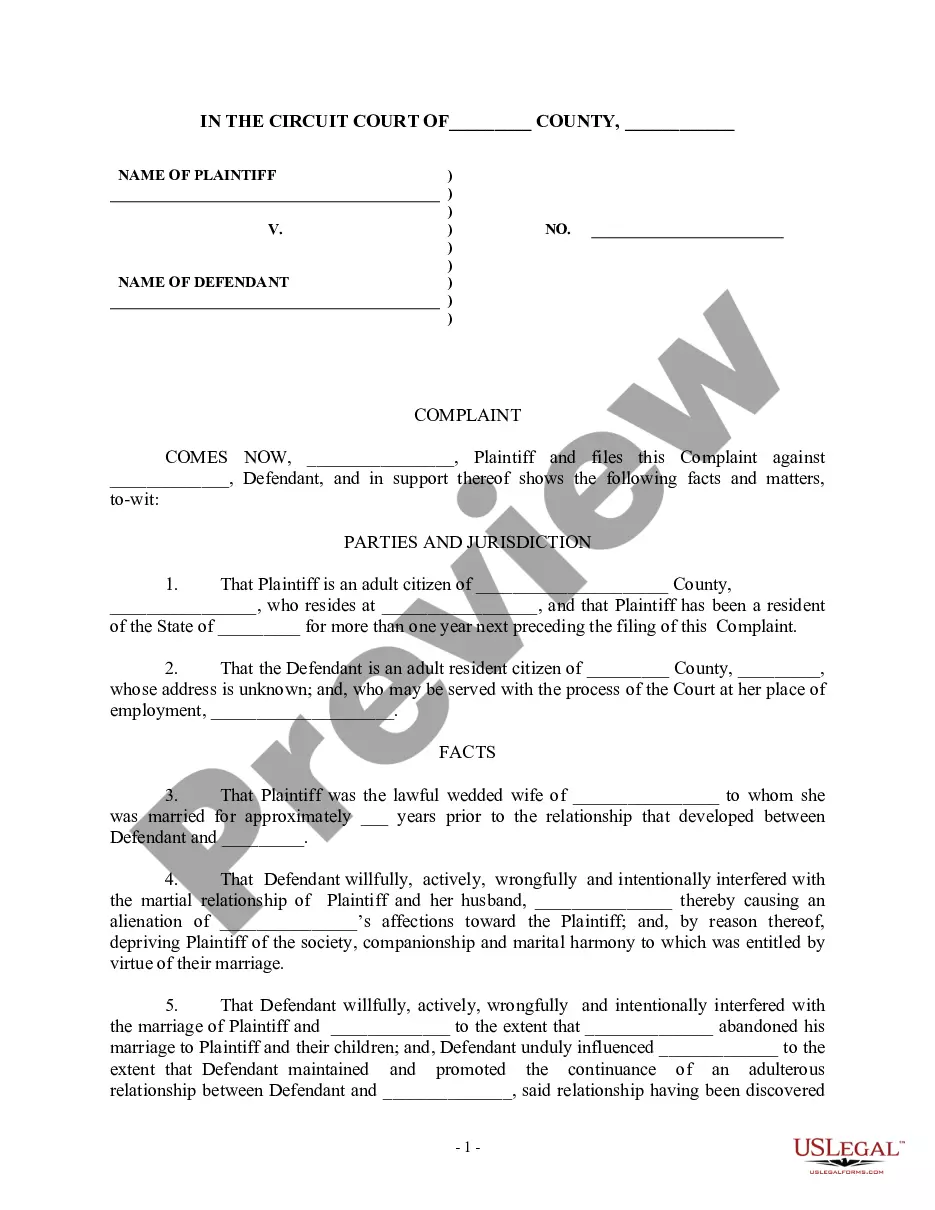
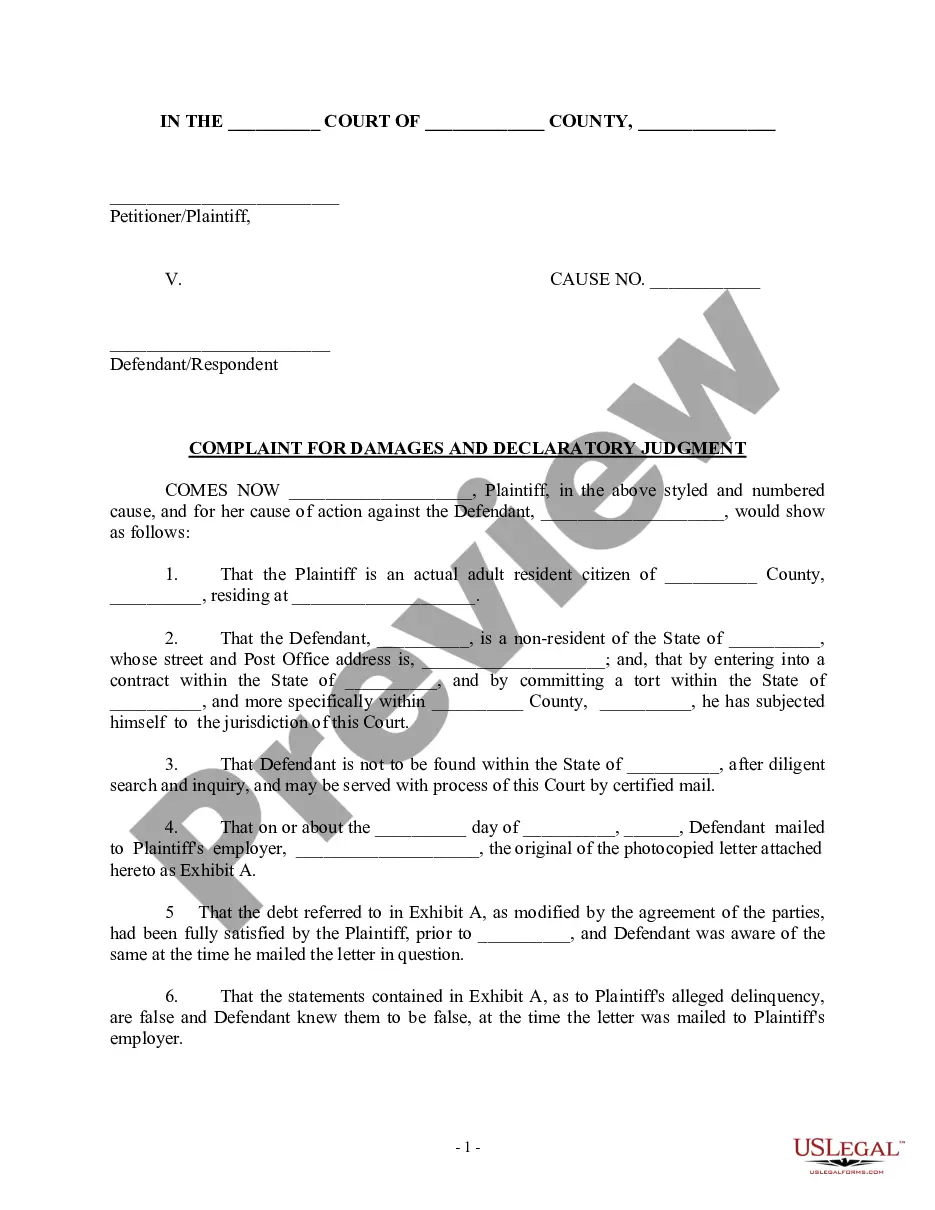
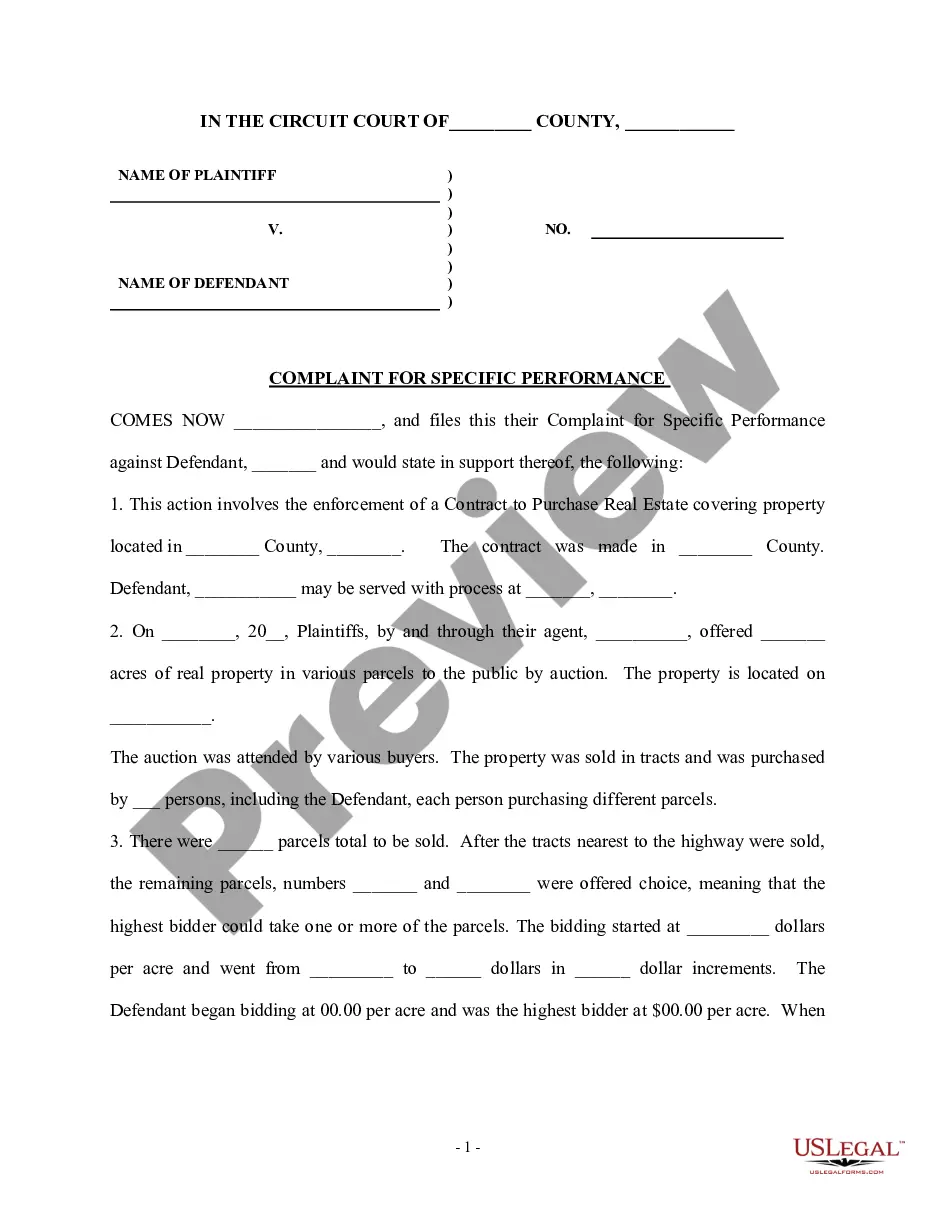
Get your form ready online
Our built-in tools help you complete, sign, share, and store your documents in one place.
Make edits, fill in missing information, and update formatting in US Legal Forms—just like you would in MS Word.
Download a copy, print it, send it by email, or mail it via USPS—whatever works best for your next step.
Sign and collect signatures with our SignNow integration. Send to multiple recipients, set reminders, and more. Go Premium to unlock E-Sign.
If this form requires notarization, complete it online through a secure video call—no need to meet a notary in person or wait for an appointment.
We protect your documents and personal data by following strict security and privacy standards.

Make edits, fill in missing information, and update formatting in US Legal Forms—just like you would in MS Word.

Download a copy, print it, send it by email, or mail it via USPS—whatever works best for your next step.

Sign and collect signatures with our SignNow integration. Send to multiple recipients, set reminders, and more. Go Premium to unlock E-Sign.

If this form requires notarization, complete it online through a secure video call—no need to meet a notary in person or wait for an appointment.

We protect your documents and personal data by following strict security and privacy standards.
Looking for another form?


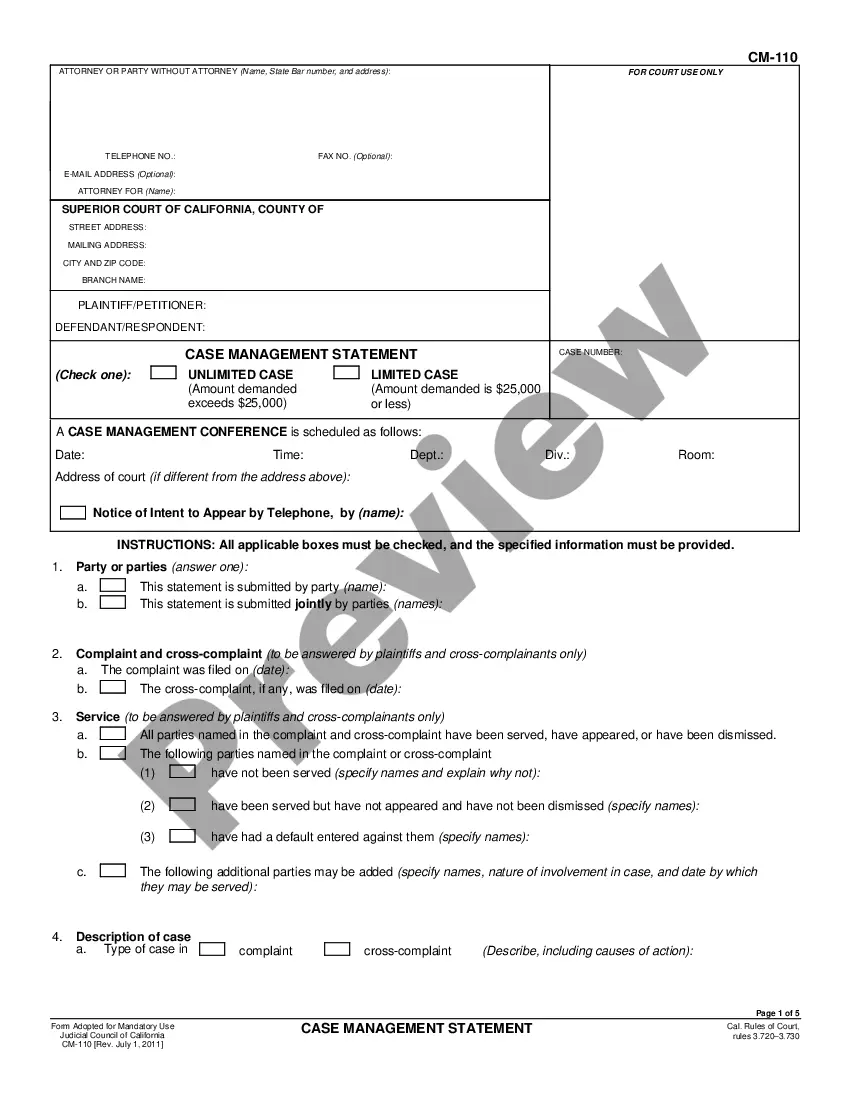
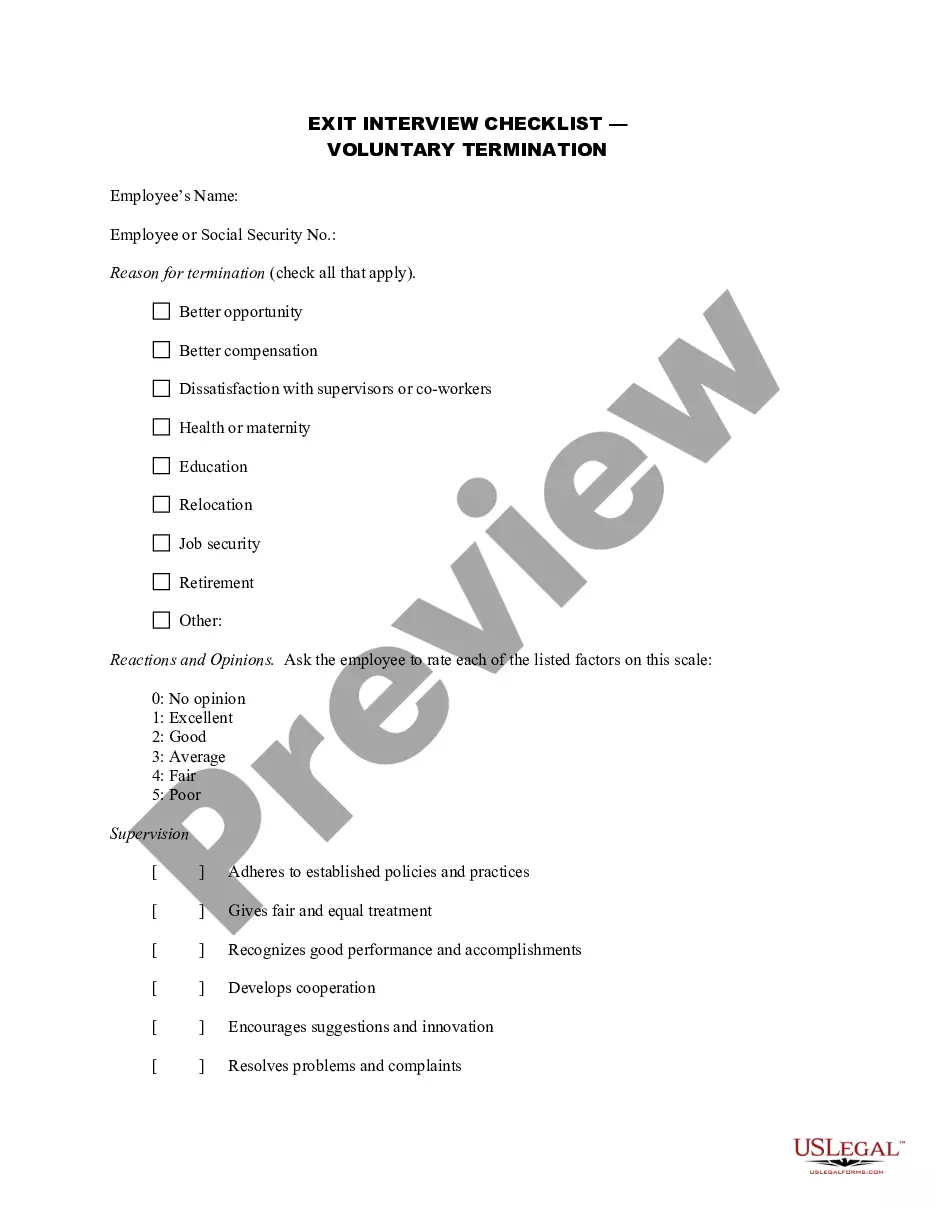
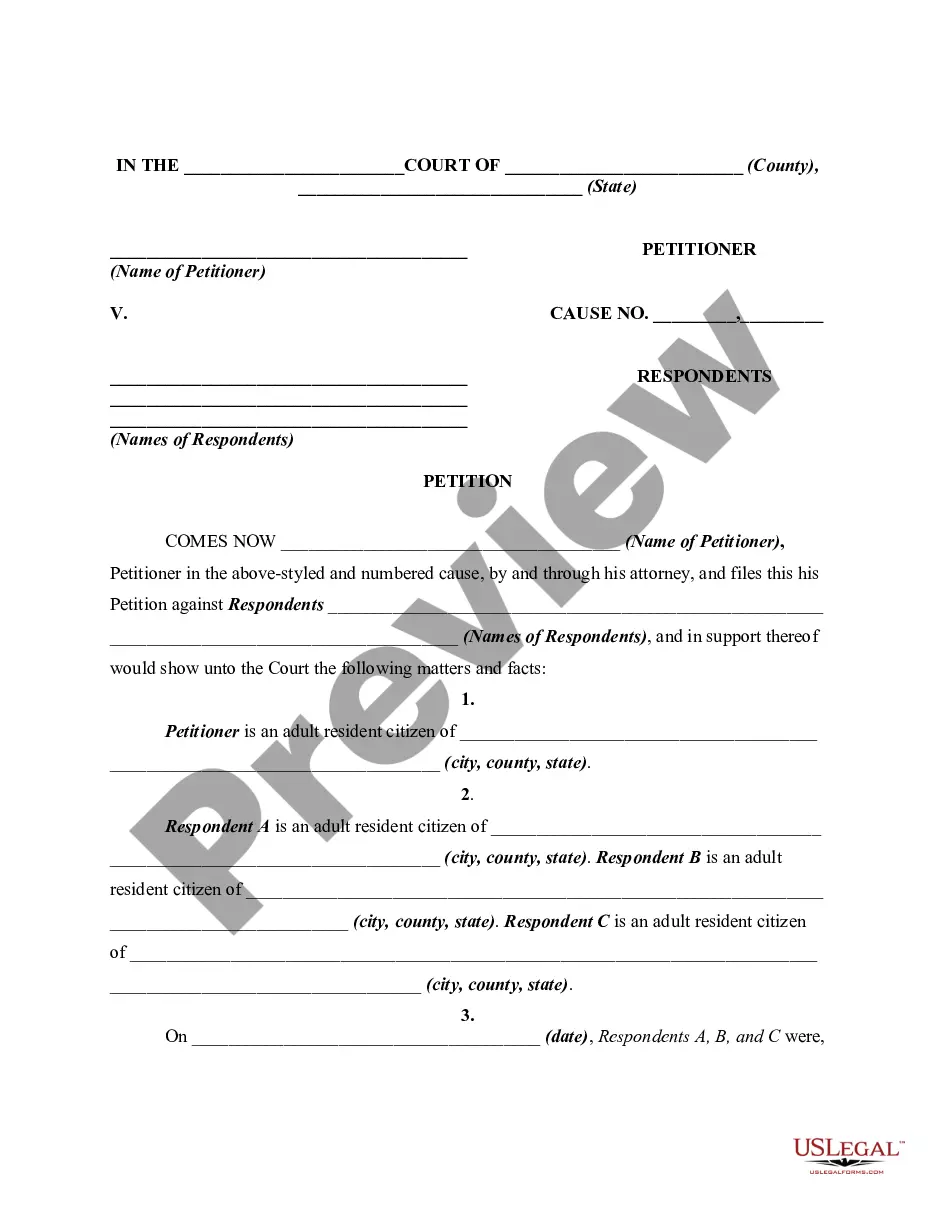

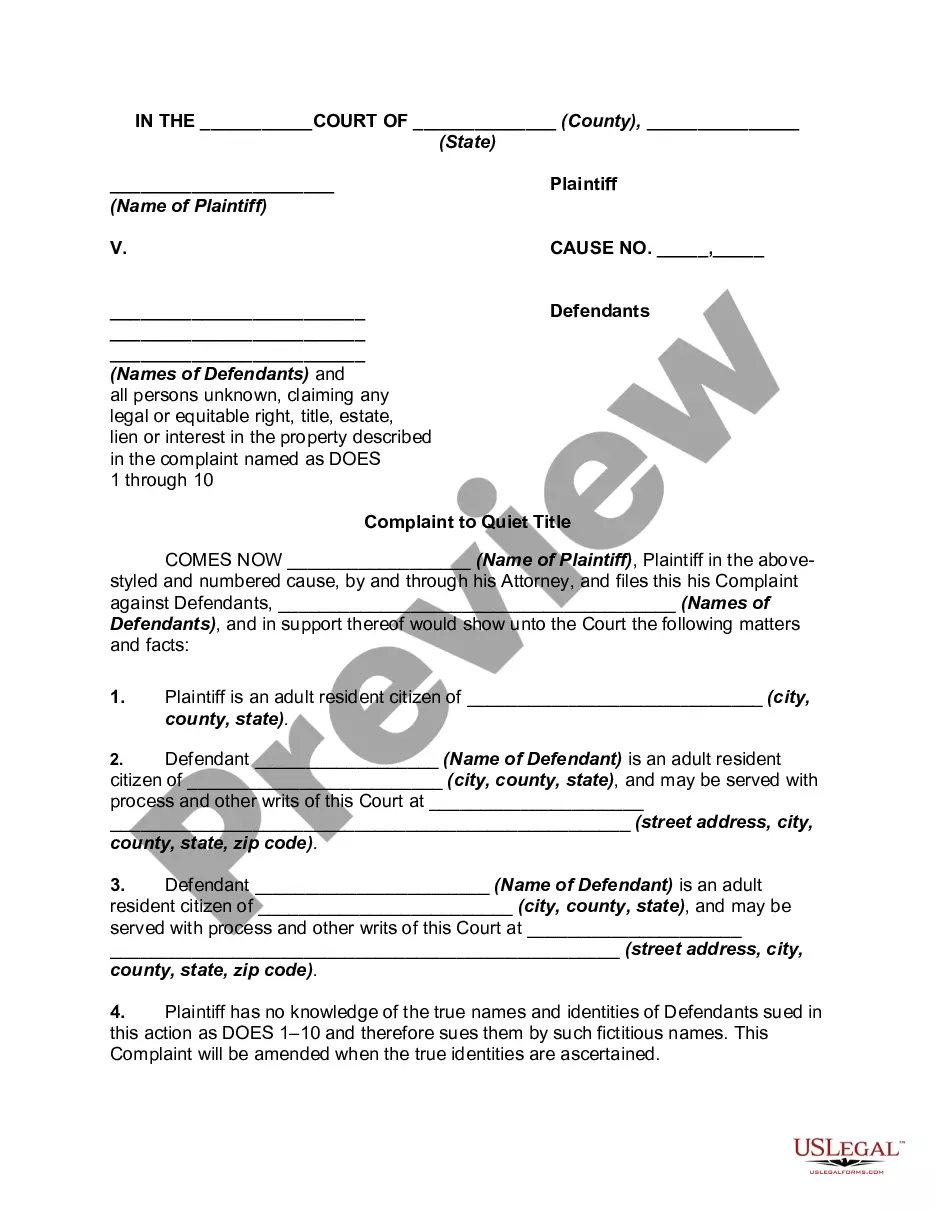
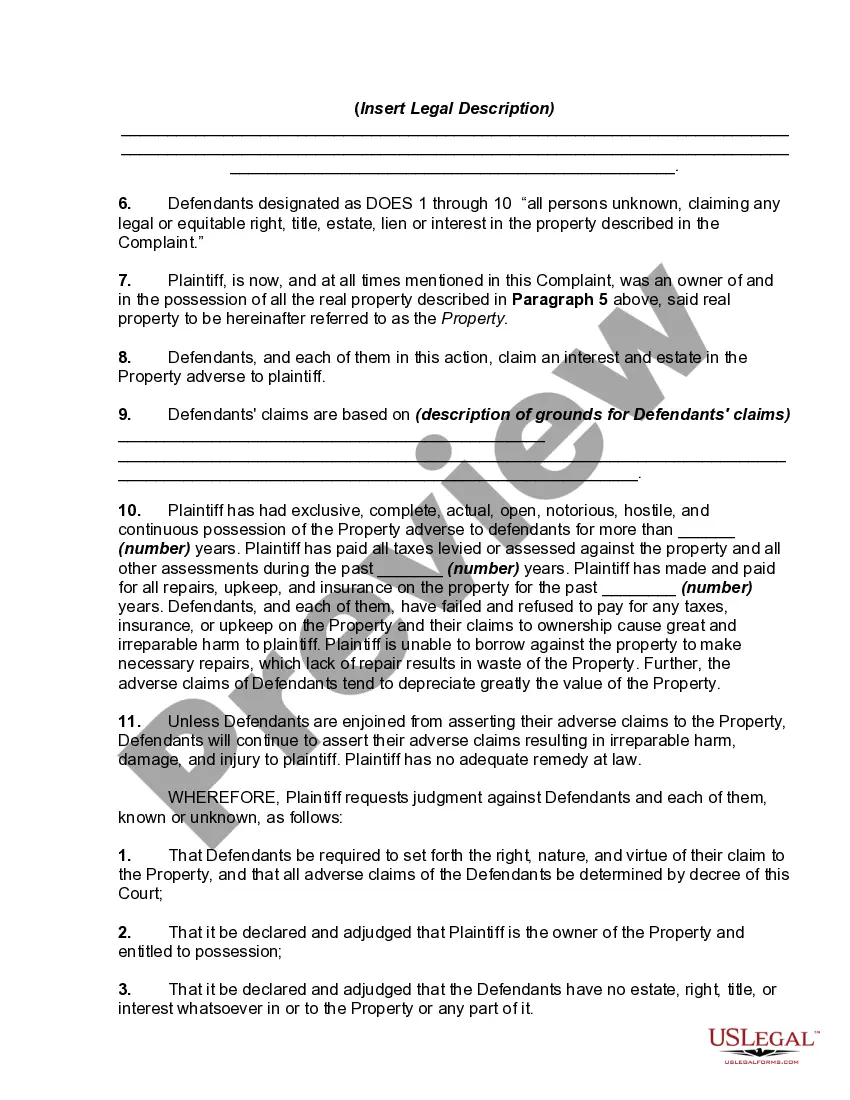
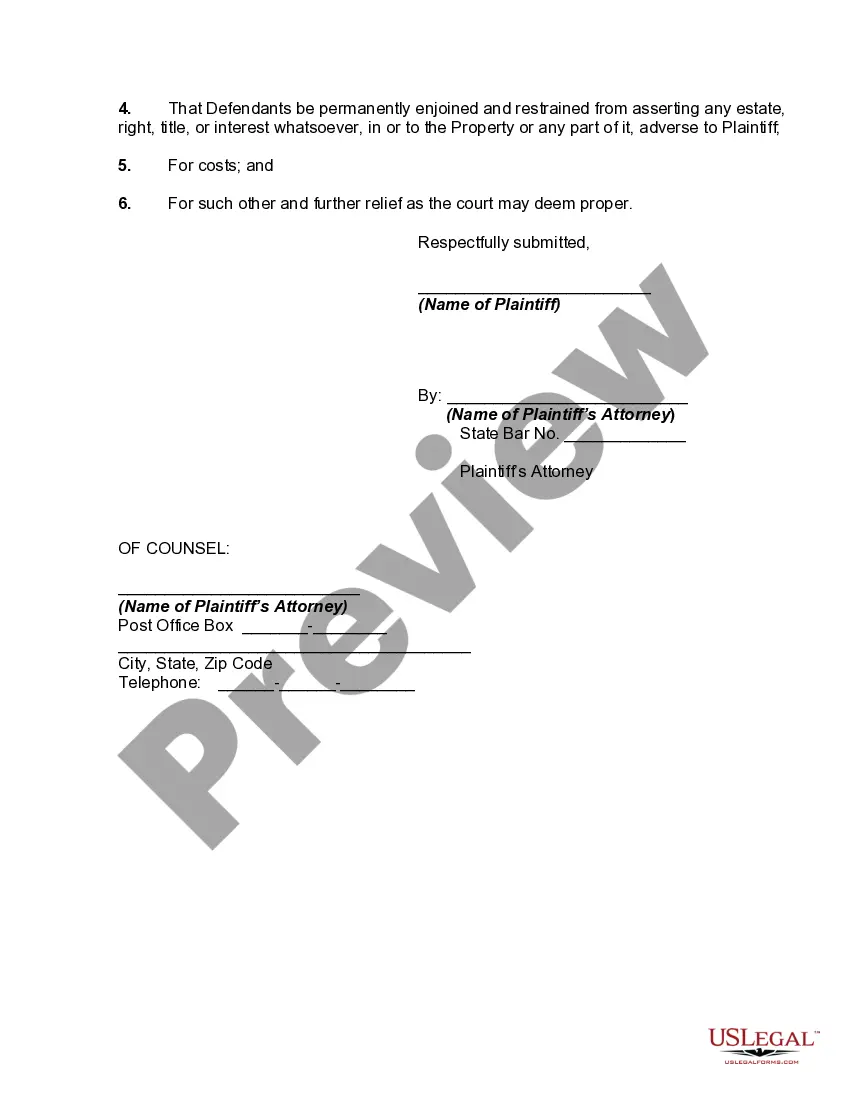
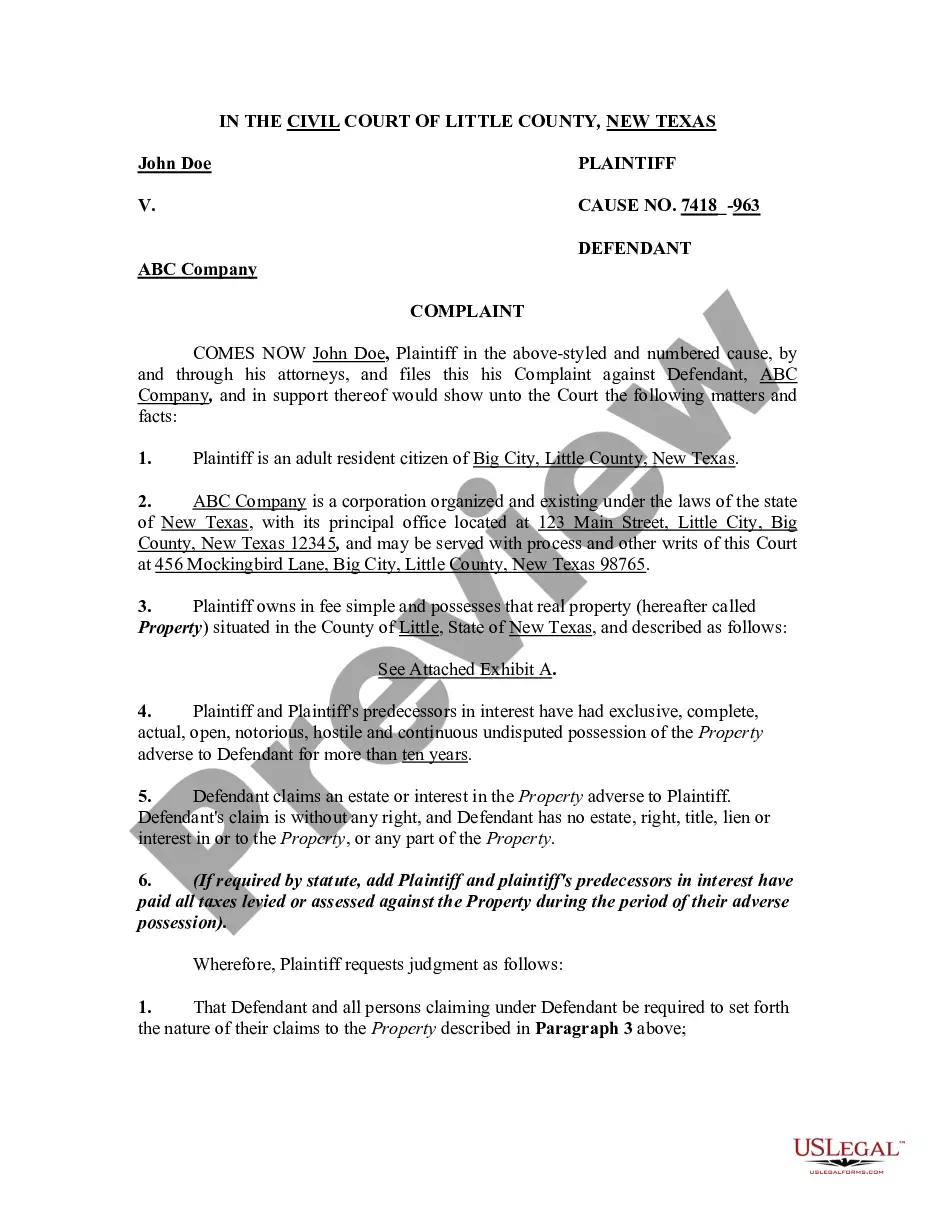
How to fill out Complaint To Quiet Title By Adverse Possessor With Unknown Defendants?
- Log in to your US Legal Forms account. Ensure your subscription is active before proceeding. If necessary, renew it to maintain access.
- For first-time users, review the form descriptions and preview mode to select the document that aligns with your requirements and complies with your jurisdiction.
- If the desired template isn’t accurate, utilize the Search function to find a suitable alternative before continuing.
- To obtain the document, click the 'Buy Now' button and select your preferred subscription plan, remembering to create an account for full access.
- Complete your purchase using a credit card or PayPal to finalize your subscription.
- Download the form to your device and keep it in the 'My Forms' section of your profile for future reference.
In conclusion, US Legal Forms offers a robust solution for managing legal documents, especially useful in adverse situations. With features designed for ease and efficiency, users can ensure their documents are not only accessible but also legally sound. Explore US Legal Forms today to take control of your legal needs.
Start using their extensive library and simplify your legal document management!
Form popularity
FAQ
Synonyms for 'adverse' include unfavorable, harmful, and detrimental. These terms convey similar meanings and can be used interchangeably in various contexts, especially in legal discussions. Understanding these synonyms can help you articulate adverse situations more clearly.
Use 'adverse' when describing situations or circumstances that are unfavorable or harmful. In contrast, choose 'averse' when discussing personal feelings of opposition or reluctance. Being precise in your language can facilitate clearer communication in legal documents.
The term 'adverse' refers to something that is harmful or unfavorable, particularly in legal contexts. For instance, adverse rulings or outcomes can impact the direction of a case. Understanding the meaning of 'adverse' can enhance your legal knowledge and decision-making.
An example of 'adverse' could be a legal scenario where adverse weather conditions affect the outcome of an event, causing delays or damages. In such cases, the adverse conditions lead to negative consequences that require legal attention. Recognizing adverse situations can help you address them effectively.
The correct term depends on the context. 'Adverse' is used to describe situations or conditions that are detrimental, while 'averse' refers to personal feelings of opposition. When dealing with adverse conditions in legal matters, use 'adverse' to accurately convey the harmful nature of a situation.
It seems like there may be a typo in your question, as both terms are 'adverse.' However, if you meant 'adverse' versus 'averse,' the distinction lies in usage. 'Adverse' relates to negative outcomes or effects, while 'averse' describes a personal predisposition against something. Understanding these nuances can aid in legal contexts where adverse outcomes are discussed.
It's important to understand the difference between these terms. An 'adverse conflict' refers to a situation that is harmful or unfavorable, often causing legal issues. In contrast, 'averse' describes a feeling of reluctance or disfavor. By clarifying these terms, you can better navigate legal situations involving adverse conflicts.
To defeat an adverse possession claim, one effective strategy is to provide evidence that you maintained ownership of the property or that the claimant has not met all required criteria. This includes proving that the possession was not continuous, exclusive, or open. Additionally, documenting your own use and upkeep of the property can strengthen your position. Utilizing tools available through US Legal Forms can help you prepare the necessary documentation and arguments to protect your property rights.
The latest Supreme Court decisions regarding adverse possession often focus on clarifying the conditions under which claims can be legally recognized. Although specific cases can vary, these rulings typically address issues like the nature of possession and the burden of proof required. Staying informed on such rulings is vital for anyone involved in or considering an adverse possession claim. Consulting legal resources, such as US Legal Forms, can help you stay updated on relevant legal developments.
Yes, adverse possession is legal in the United States, but the laws governing it differ from state to state. Each jurisdiction has specific requirements regarding the duration of possession and the nature of use. This legal concept allows individuals to claim ownership of property under certain conditions. Knowing your rights and the applicable laws is essential when dealing with adverse possession.