Dismiss Dismiss
Description
Get your form ready online
Our built-in tools help you complete, sign, share, and store your documents in one place.
Make edits, fill in missing information, and update formatting in US Legal Forms—just like you would in MS Word.
Download a copy, print it, send it by email, or mail it via USPS—whatever works best for your next step.
Sign and collect signatures with our SignNow integration. Send to multiple recipients, set reminders, and more. Go Premium to unlock E-Sign.
If this form requires notarization, complete it online through a secure video call—no need to meet a notary in person or wait for an appointment.
We protect your documents and personal data by following strict security and privacy standards.

Make edits, fill in missing information, and update formatting in US Legal Forms—just like you would in MS Word.

Download a copy, print it, send it by email, or mail it via USPS—whatever works best for your next step.

Sign and collect signatures with our SignNow integration. Send to multiple recipients, set reminders, and more. Go Premium to unlock E-Sign.

If this form requires notarization, complete it online through a secure video call—no need to meet a notary in person or wait for an appointment.

We protect your documents and personal data by following strict security and privacy standards.
Looking for another form?






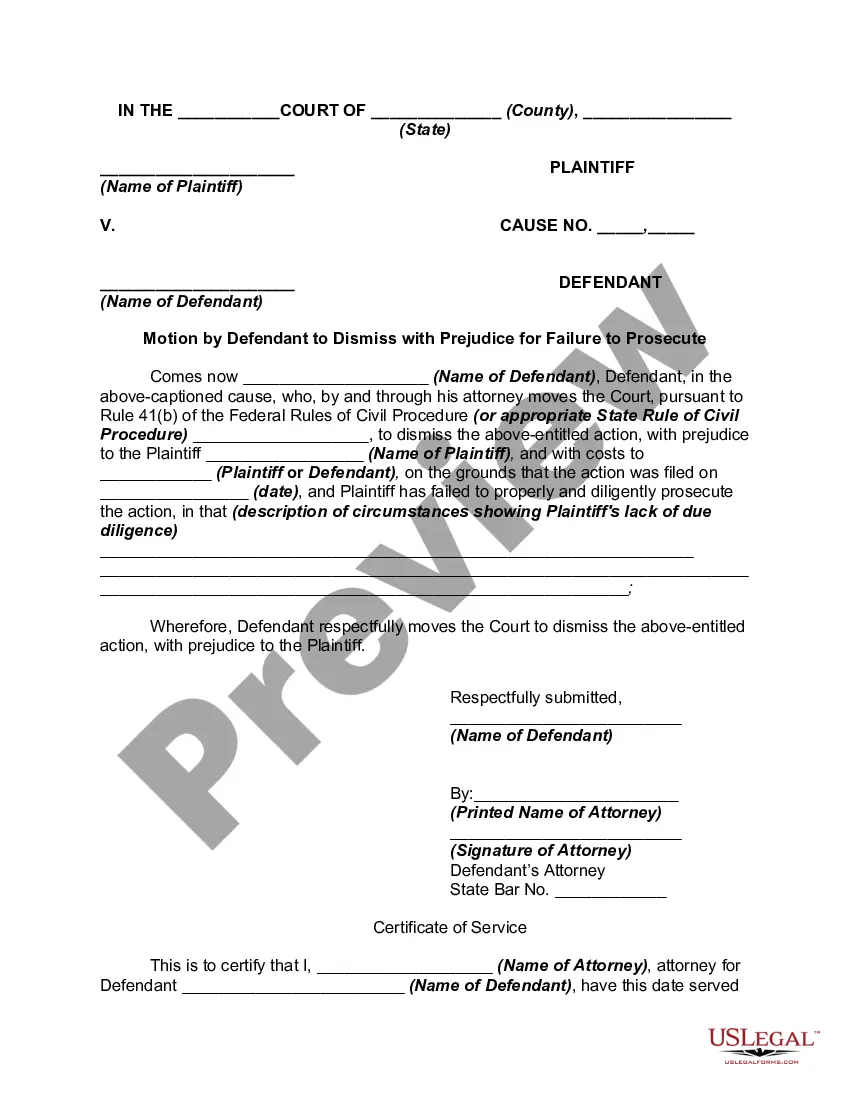
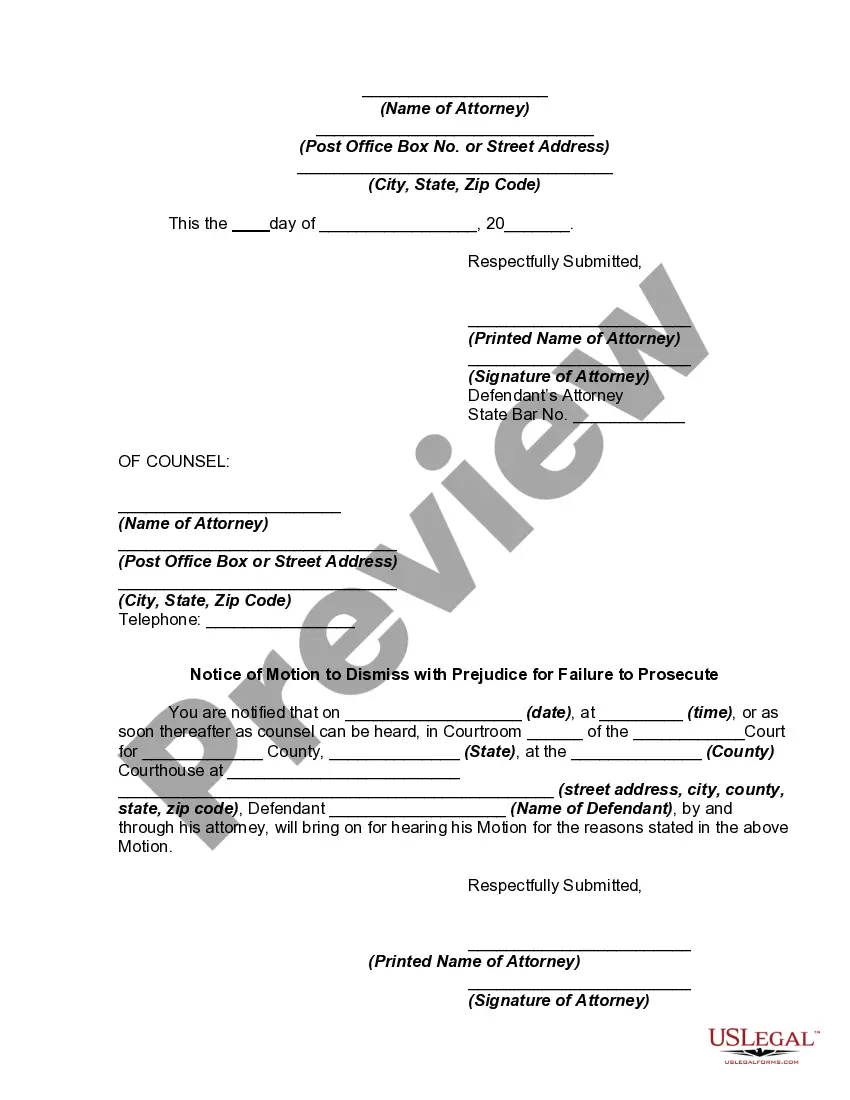
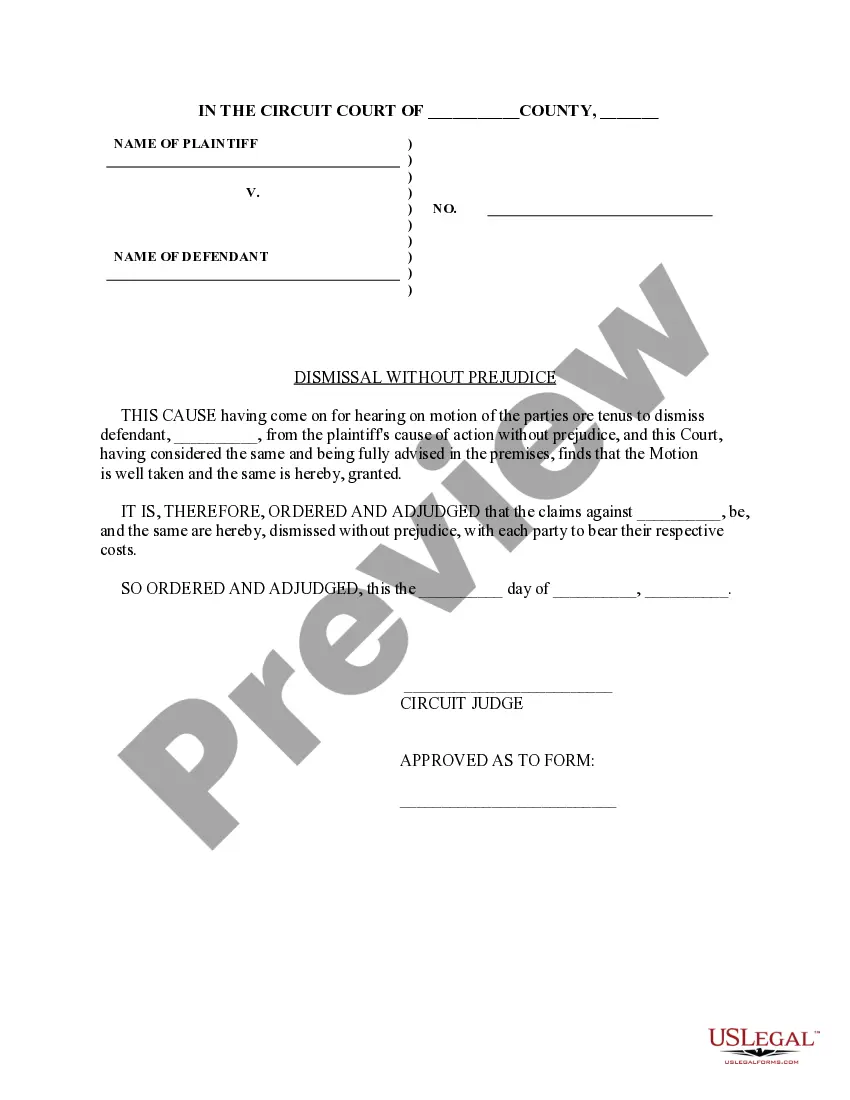
How to fill out Motion By Defendant To Dismiss With Prejudice For Failure To Prosecute?
- Log in to your US Legal Forms account. Ensure your subscription is currently active.
- Review the Preview mode and descriptions of the legal forms. Confirm that the selected form suits your needs.
- If a different document is necessary, utilize the Search feature to find alternatives that align with your requirements.
- Select the form and click the 'Buy Now' button to choose your subscription plan. Account registration will be needed for full access.
- Complete your purchase by entering your payment details, either via credit card or PayPal.
- Download the form to your device. You can later access it anytime from the 'My Forms' section of your profile.
In conclusion, utilizing US Legal Forms gives users the advantage of an extensive library and support from premium experts, ensuring that your legal documents are both accurate and compliant. Having access to a vast collection of forms is key in the fast-paced legal landscape.
Start your seamless experience today by visiting US Legal Forms and explore the options available for your legal needs!
Form popularity
FAQ
One of the most common reasons for case dismissals is lack of sufficient evidence. Prosecutors must have enough solid proof to support their charges; if they cannot, they may opt to dismiss the case. Other reasons include procedural errors or issues with the law enforcement process. Understanding these reasons can be vital, and uslegalforms can help navigate the complexities surrounding dismissals.
Research shows that around 30% of all criminal cases and a significant number of civil cases are dismissed during the legal process. This percentage underscores the importance of strong legal representation and understanding one's rights. Each case is unique, but knowing the dismissal rate can give you perspective on your situation. uslegalforms can provide resources to aid in understanding and potentially achieving a dismissal.
When a case gets dismissed, it means that the court has determined that it will no longer proceed with the case. This can occur because of legal flaws, lack of evidence, or other compelling reasons. A dismissal typically results in the charges being dropped, which can be a relief for the accused. Knowing the implications of a dismissal can aid individuals in making informed decisions about their cases.
Cases are often thrown out before trial due to various legal shortcomings, such as violations of rights or improper procedures. These dismissals help to protect individuals from unfair prosecutions. The specific frequency varies by jurisdiction and case type, making it essential for defendants to understand local laws. Legal resources from platforms like uslegalforms can clarify the nuances in dismissing a case.
To pursue a case dismissal, you may need to file a motion with the court, presenting valid reasons for the request. This usually requires a qualified attorney who can prepare the necessary legal documentation and effectively argue your case. Having a professional by your side increases your chances of achieving a dismissal. Tools available at uslegalforms can assist in creating motions and other legal documents necessary for the process.
Dismissals occur regularly in the legal system, with a significant percentage of cases being dismissed before reaching trial. Various factors influence this, including insufficient evidence, procedural issues, or plea agreements. Knowing the frequency of dismissals can prepare individuals for their legal experience. It emphasizes the importance of a solid legal strategy, which platforms like uslegalforms can help provide.
Prosecutors may dismiss cases due to lack of evidence. If key witnesses are unavailable or if the evidence does not support the charges, a prosecutor might choose to dismiss the case. This decision often aims to ensure that only credible cases proceed through the legal system, maintaining justice. Understanding the reasons behind a dismissal can help defendants navigate their legal journeys more effectively.
Generally, it is favorable when your case is dismissed as it usually indicates that you do not face legal consequences anymore. However, the specific implications can vary based on your circumstances. Consulting with a professional can help you understand the full impact of a dismissed case.
If a court order is dismissed, it means the order is no longer in effect. This can have significant implications for the involved parties, often resulting in the discontinuation of legal proceedings. Recognizing when and why an order is dismissed can shape your legal strategy.
Yes, when you hear that someone has been dismissed from their position, it generally means they have been fired. However, it can also imply a broader range of situations where someone's involvement is ended. Understanding this distinction can be vital in employment matters.