Dismiss
Description
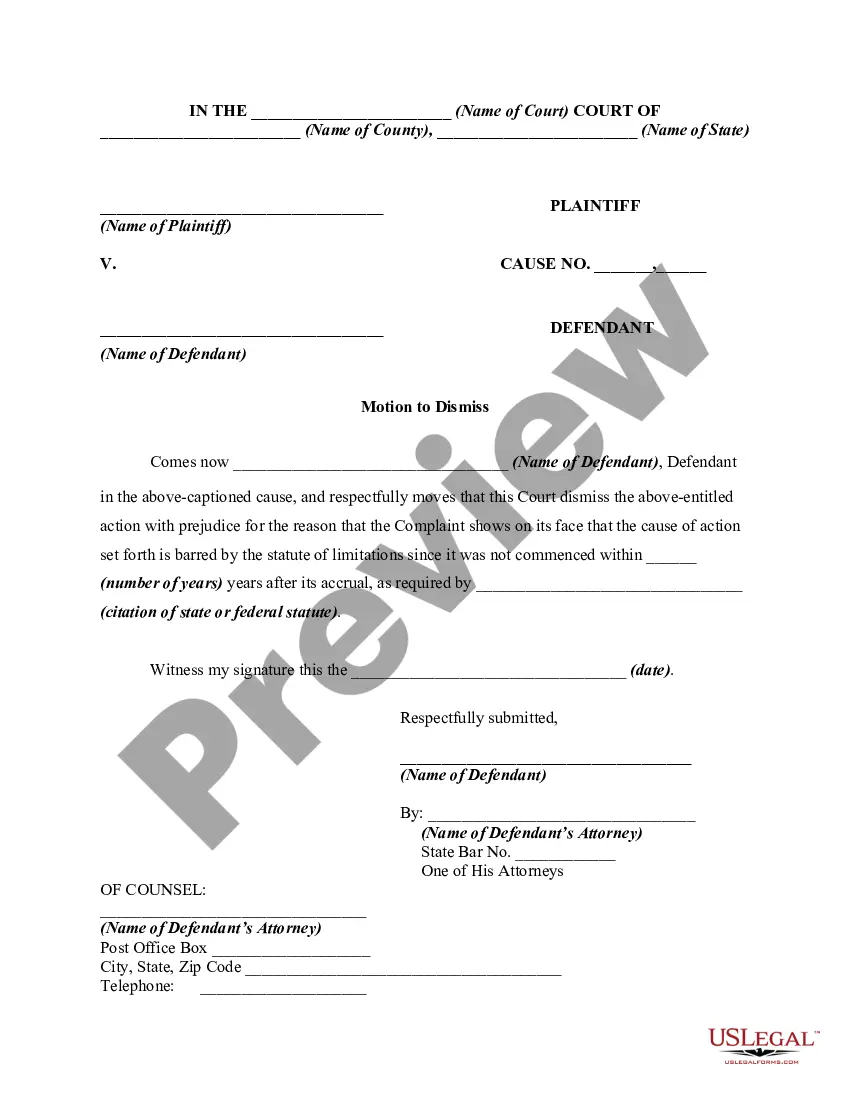
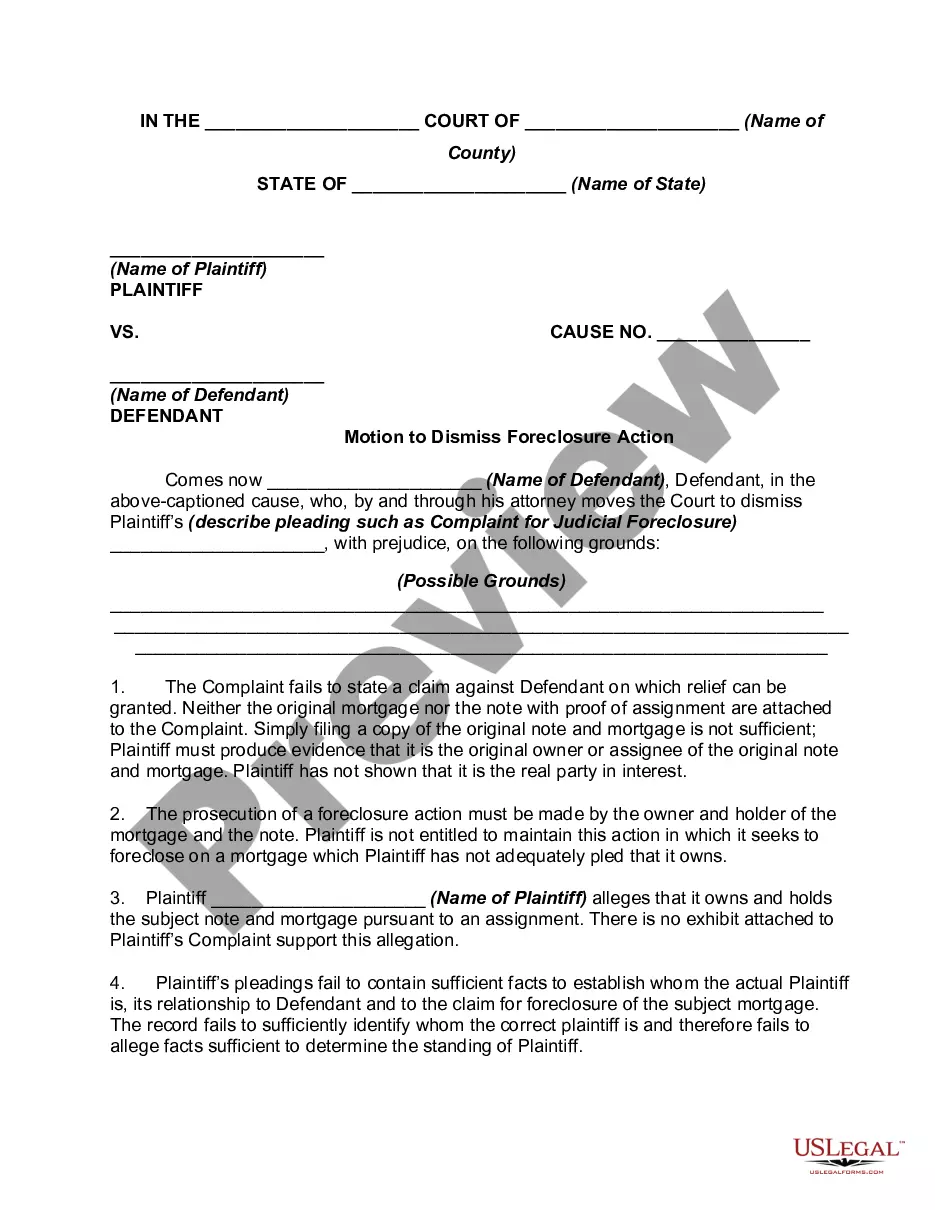
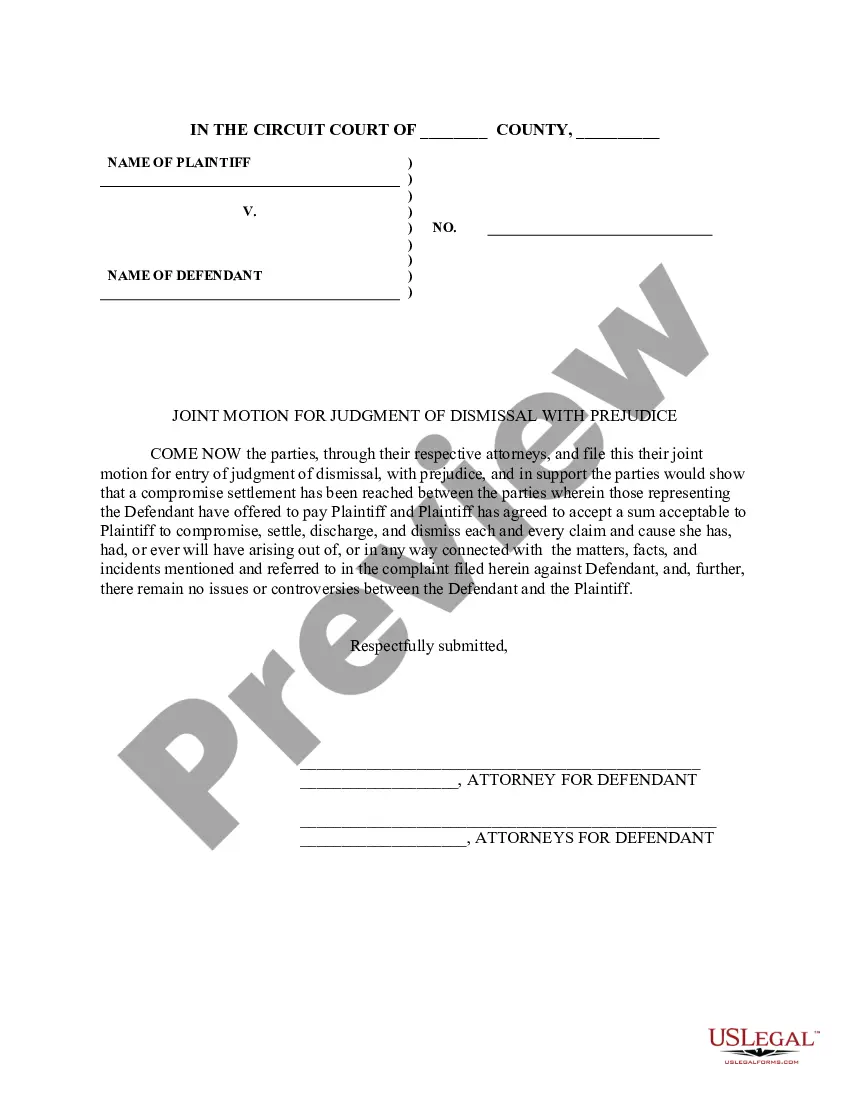
Get your form ready online
Our built-in tools help you complete, sign, share, and store your documents in one place.
Make edits, fill in missing information, and update formatting in US Legal Forms—just like you would in MS Word.
Download a copy, print it, send it by email, or mail it via USPS—whatever works best for your next step.
Sign and collect signatures with our SignNow integration. Send to multiple recipients, set reminders, and more. Go Premium to unlock E-Sign.
If this form requires notarization, complete it online through a secure video call—no need to meet a notary in person or wait for an appointment.
We protect your documents and personal data by following strict security and privacy standards.

Make edits, fill in missing information, and update formatting in US Legal Forms—just like you would in MS Word.

Download a copy, print it, send it by email, or mail it via USPS—whatever works best for your next step.

Sign and collect signatures with our SignNow integration. Send to multiple recipients, set reminders, and more. Go Premium to unlock E-Sign.

If this form requires notarization, complete it online through a secure video call—no need to meet a notary in person or wait for an appointment.

We protect your documents and personal data by following strict security and privacy standards.
Looking for another form?
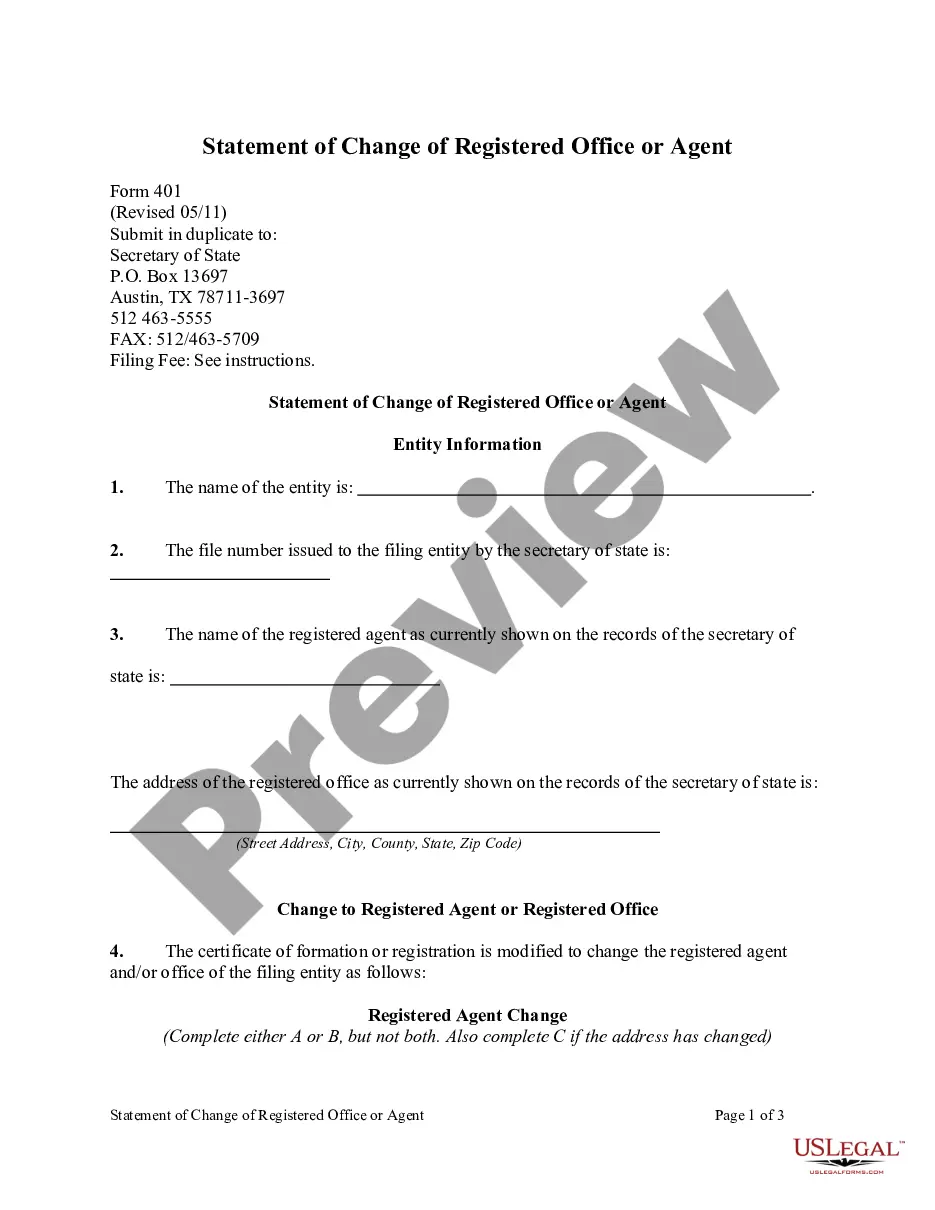





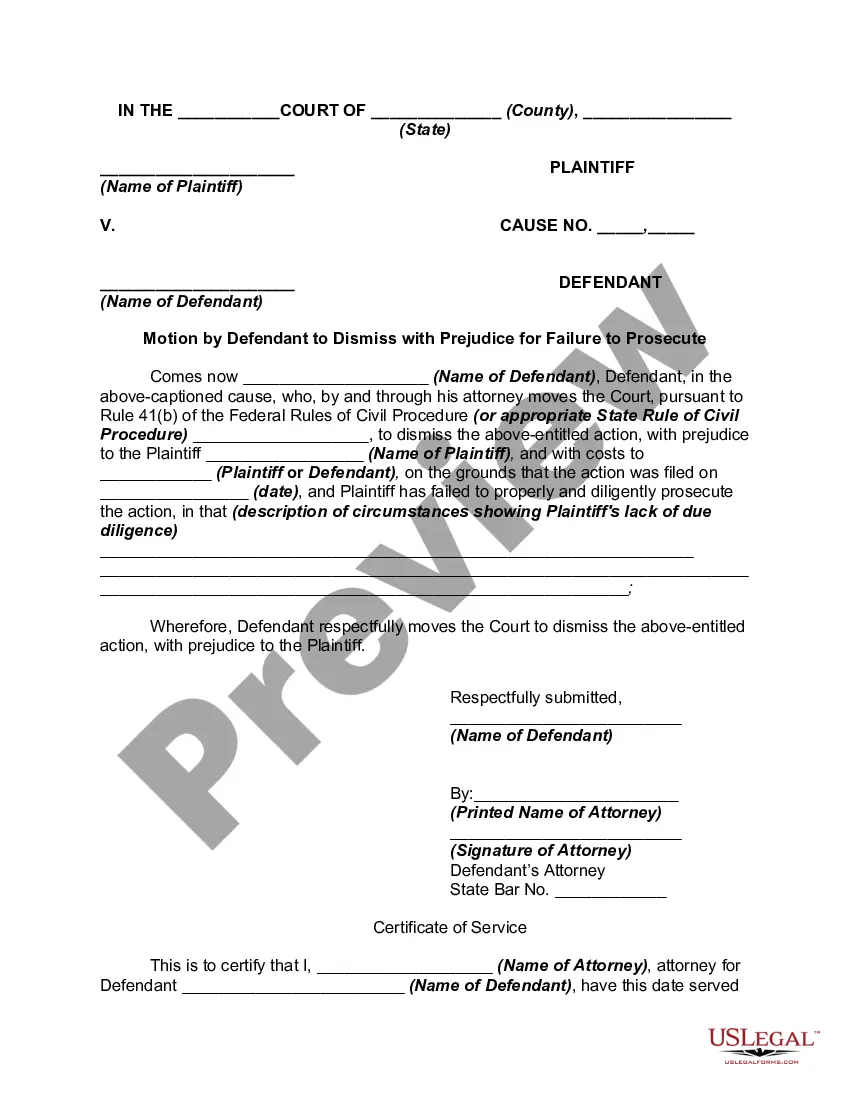
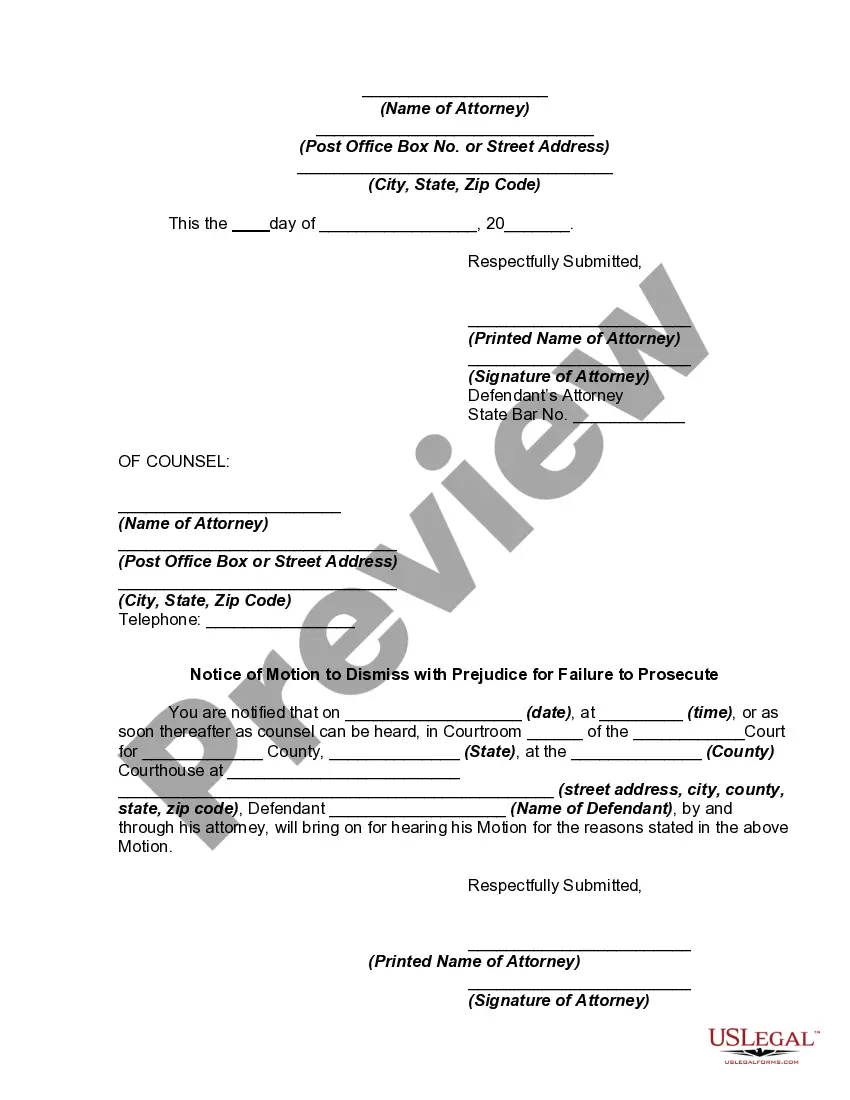
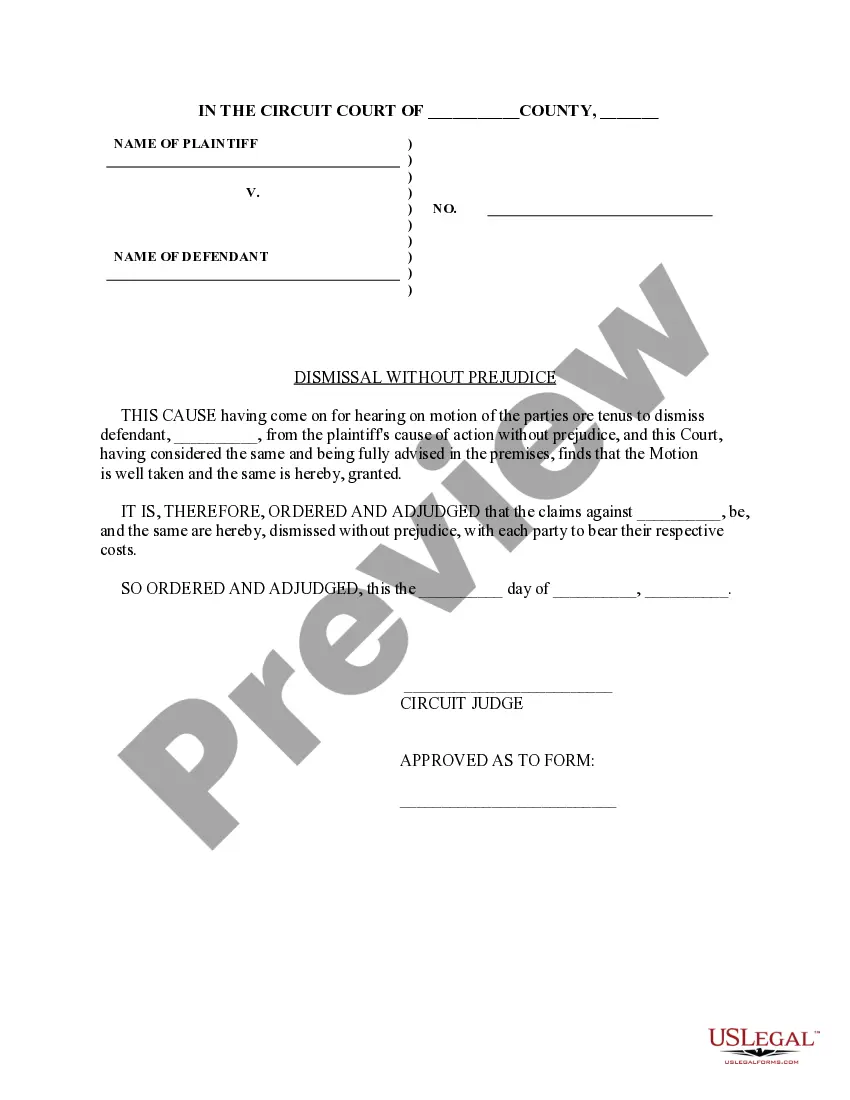
How to fill out Motion By Defendant To Dismiss With Prejudice For Failure To Prosecute?
- Log in to your account if you've used US Legal Forms before. If your subscription is valid, simply download the required form template by clicking the Download button.
- For first-time users, start by browsing our extensive library. Check the Preview mode and form description to ensure it fits your needs and complies with local jurisdiction requirements.
- If you encounter any inconsistencies, use the Search tab to find the correct template that meets your criteria.
- Purchase the document by clicking the Buy Now button. Select your preferred subscription plan and create an account to access our resources.
- Complete your purchase by entering your credit card details or using your PayPal account.
- Finally, download your form to complete it. You can access it anytime later from the My Forms section in your profile.
By following these straightforward steps, you can ensure that you obtain the necessary legal documents with ease and confidence. US Legal Forms offers a robust collection of over 85,000 forms, setting us apart in affordability and accessibility.
Don't let legal paperwork stress you out. Start your journey with US Legal Forms today and empower yourself with the legal tools you need!
Form popularity
FAQ
To argue against a motion to dismiss, focus on presenting strong evidence and building logical arguments that counter the claims made in the motion. Highlight any legal precedents or factual inconsistencies that support your case's validity. Additionally, thorough preparation and understanding the legal standards for overcoming a motion to dismiss can significantly improve your chances of success. Utilizing tools from platforms like US Legal Forms can help you find relevant forms and guidance.
Judges typically have a reasonable timeframe to rule on a motion to dismiss, which can vary by jurisdiction. In many cases, judges are expected to make their decisions within a few weeks to months after the motion is filed. However, the complexity of the case and the court's schedule can influence this timing. Staying informed about these timelines helps manage expectations regarding the progression of your case.
Disagreeing with a motion involves filing a formal response in court, where you articulate your reasons for opposing it. You must present compelling arguments and evidence to support your stance, emphasizing how the motion should not succeed. Writing this response clearly and succinctly is vital, ensuring that it addresses all relevant points. Engaging a legal expert can provide valuable guidance in crafting this response.
Dismissals occur more frequently than many expect, with various statistics suggesting that a significant portion of civil cases do not reach trial. Legal studies often show that nearly 50% of cases settle or get dismissed before trial. The reasons can vary, but many are related to lack of evidence or procedural compliance. Awareness of these statistics can help clients set realistic expectations.
Several factors can cause a case to dismiss, including procedural mistakes, lack of jurisdiction, or failure to state a claim. If the party bringing the case does not follow the necessary legal procedures, the court may dismiss the case. Furthermore, if the case does not fall within the court's jurisdiction or lacks essential legal claims, dismissal is likely. It’s crucial to understand these points when pursuing or defending against a case.
One of the most common reasons for cases to dismiss is a lack of substantial evidence. When the prosecution or plaintiff cannot present enough proof to support their claims, the court often decides to dismiss the case. Additionally, procedural errors can also lead to dismissal, as the legal process must adhere to strict guidelines. Understanding these factors helps clients navigate their legal journeys.
Rejecting a motion involves presenting a counterargument that clearly indicates why the motion should not be granted. Start by detailing the factual inaccuracies or legal flaws present in the motion to dismiss. Include strong evidence or precedents that support your case and explain how these elements show the motion lacks merit. A well-crafted rejection can encourage the court to favor your side.
To answer a motion to dismiss, you should draft a formal document that addresses all claims raised in the motion. Clearly state your reasons for contesting the dismissal, supported by law and relevant facts. Your response should demonstrate the legitimacy of your case, highlighting any procedural errors or misunderstandings made by the opposing party. A well-organized answer will help strengthen your position in court.
Responding to a motion to dismiss requires careful attention to detail. Firstly, you must review the claims made in the motion thoroughly. Address each argument presented, providing factual and legal reasons why the court should not dismiss your case. Utilizing resources like US Legal Forms can help guide you in structuring a comprehensive and effective response.
Writing a reply to a motion involves explaining why the arguments presented in the motion should not be accepted. Start by summarizing the main points of the opposing motion to dismiss, then provide well-reasoned arguments to counter each point. It's also beneficial to include relevant law and factual evidence supporting your position. A strong, clear reply can make a significant difference in the court's decision.