Vacated Judgment With Prejudice
Description
Get your form ready online
Our built-in tools help you complete, sign, share, and store your documents in one place.
Make edits, fill in missing information, and update formatting in US Legal Forms—just like you would in MS Word.
Download a copy, print it, send it by email, or mail it via USPS—whatever works best for your next step.
Sign and collect signatures with our SignNow integration. Send to multiple recipients, set reminders, and more. Go Premium to unlock E-Sign.
If this form requires notarization, complete it online through a secure video call—no need to meet a notary in person or wait for an appointment.
We protect your documents and personal data by following strict security and privacy standards.

Make edits, fill in missing information, and update formatting in US Legal Forms—just like you would in MS Word.

Download a copy, print it, send it by email, or mail it via USPS—whatever works best for your next step.

Sign and collect signatures with our SignNow integration. Send to multiple recipients, set reminders, and more. Go Premium to unlock E-Sign.

If this form requires notarization, complete it online through a secure video call—no need to meet a notary in person or wait for an appointment.

We protect your documents and personal data by following strict security and privacy standards.
Looking for another form?
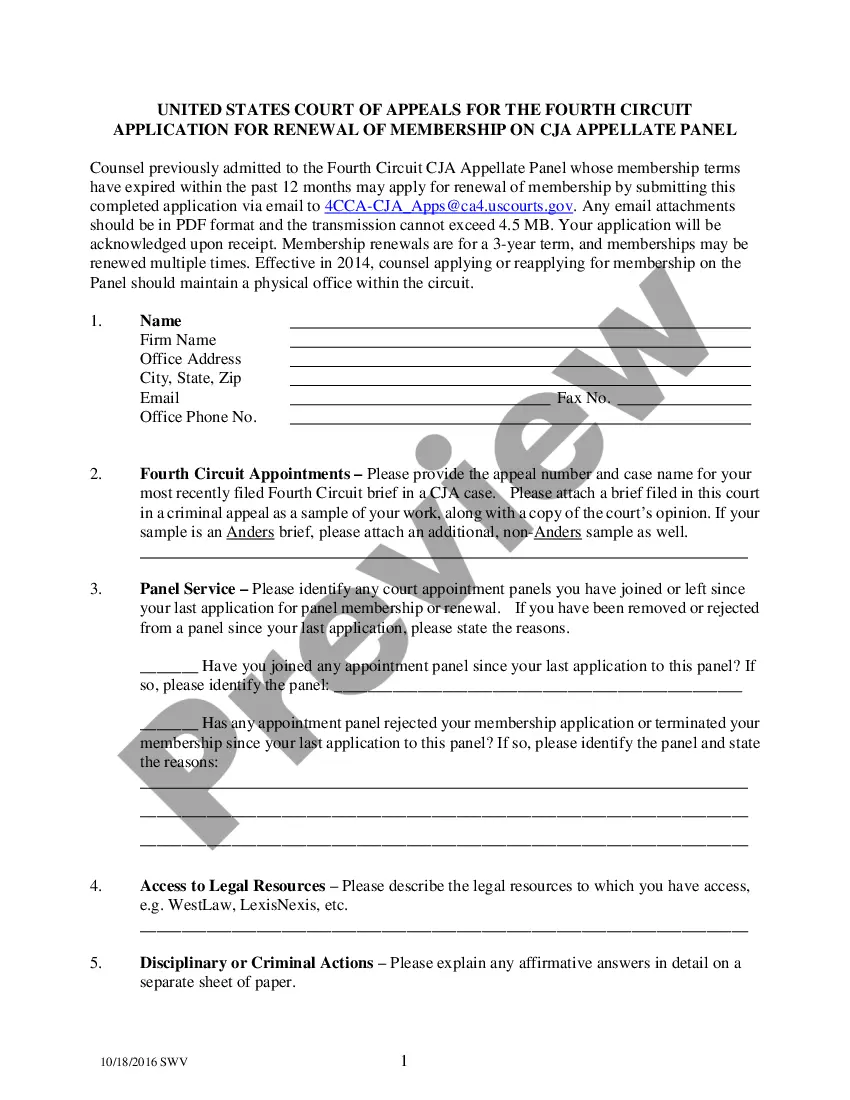
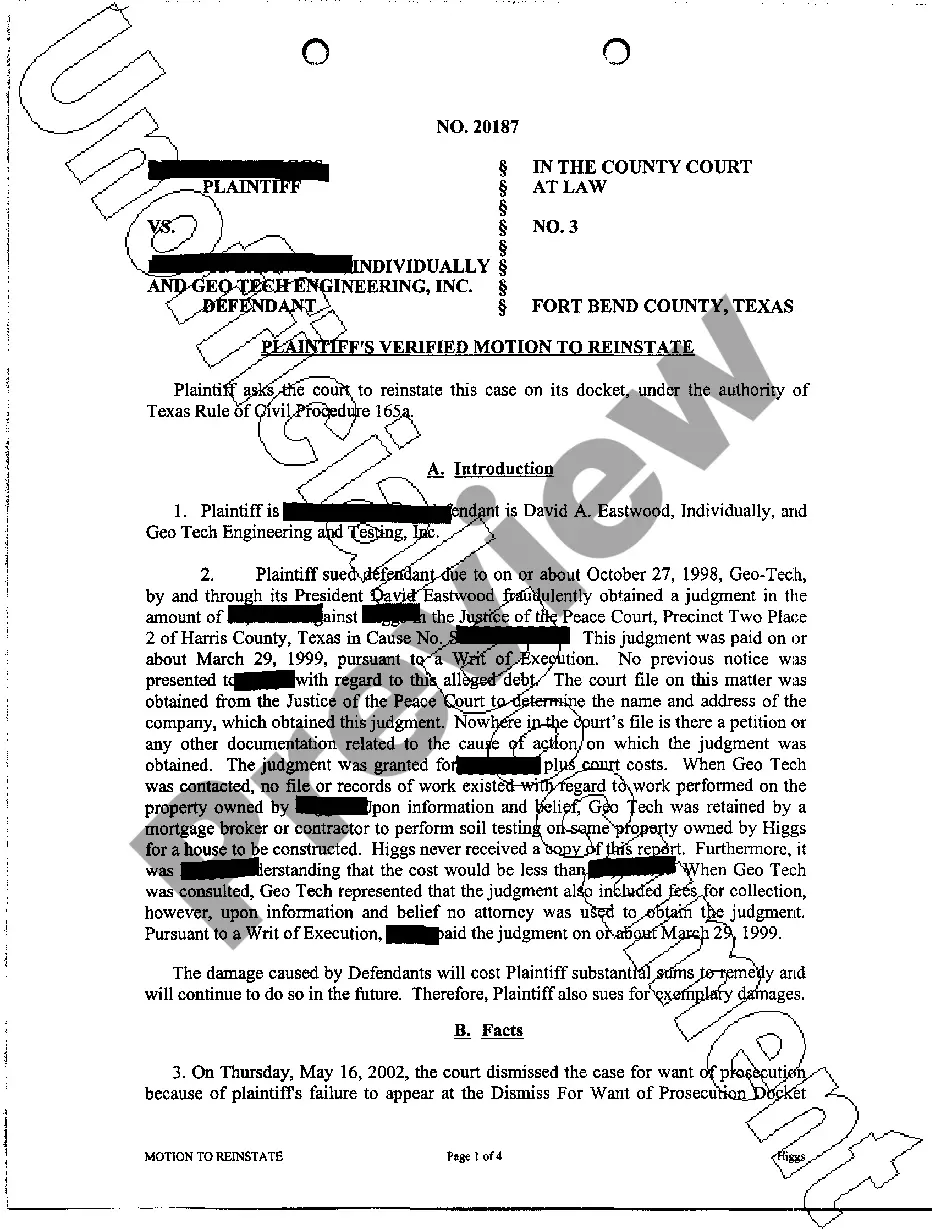





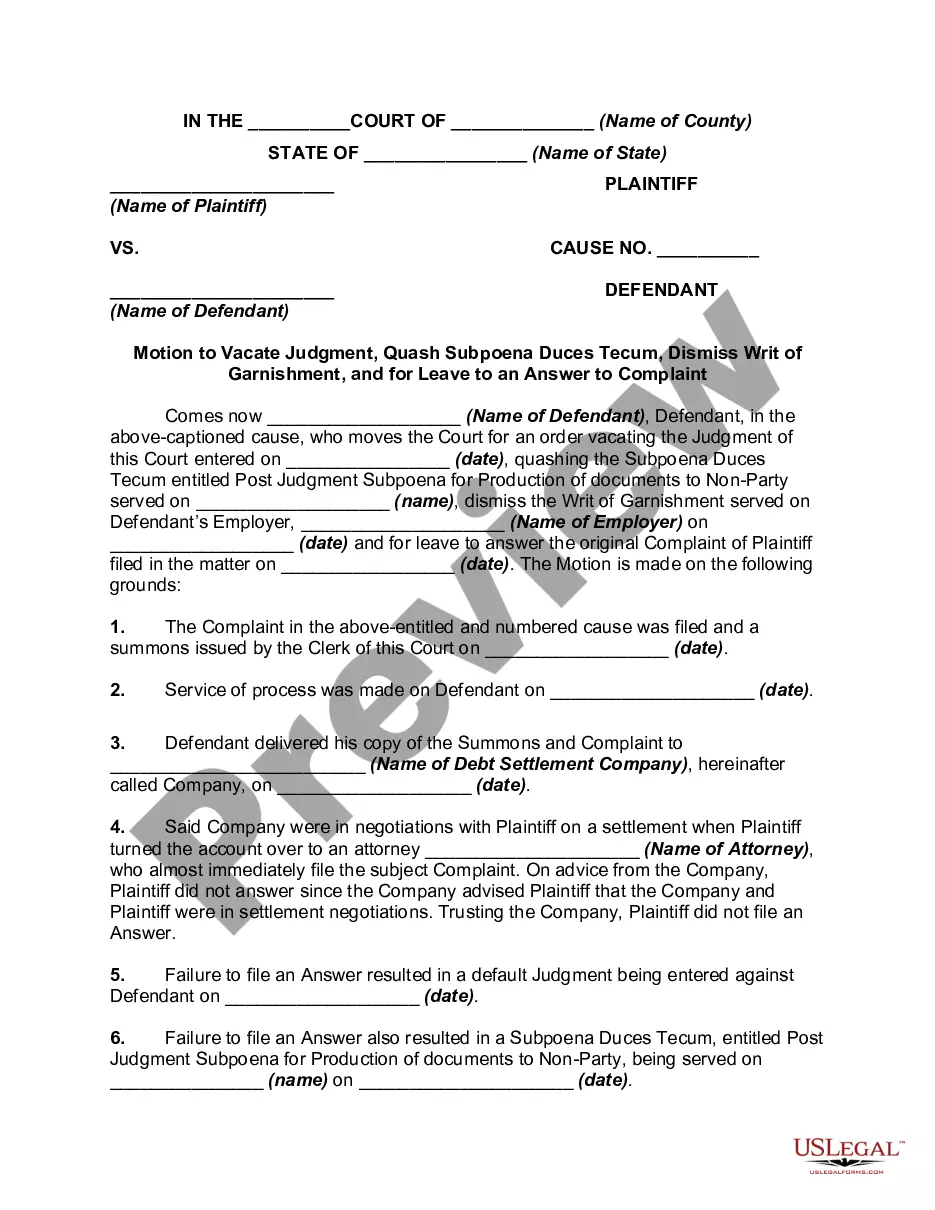
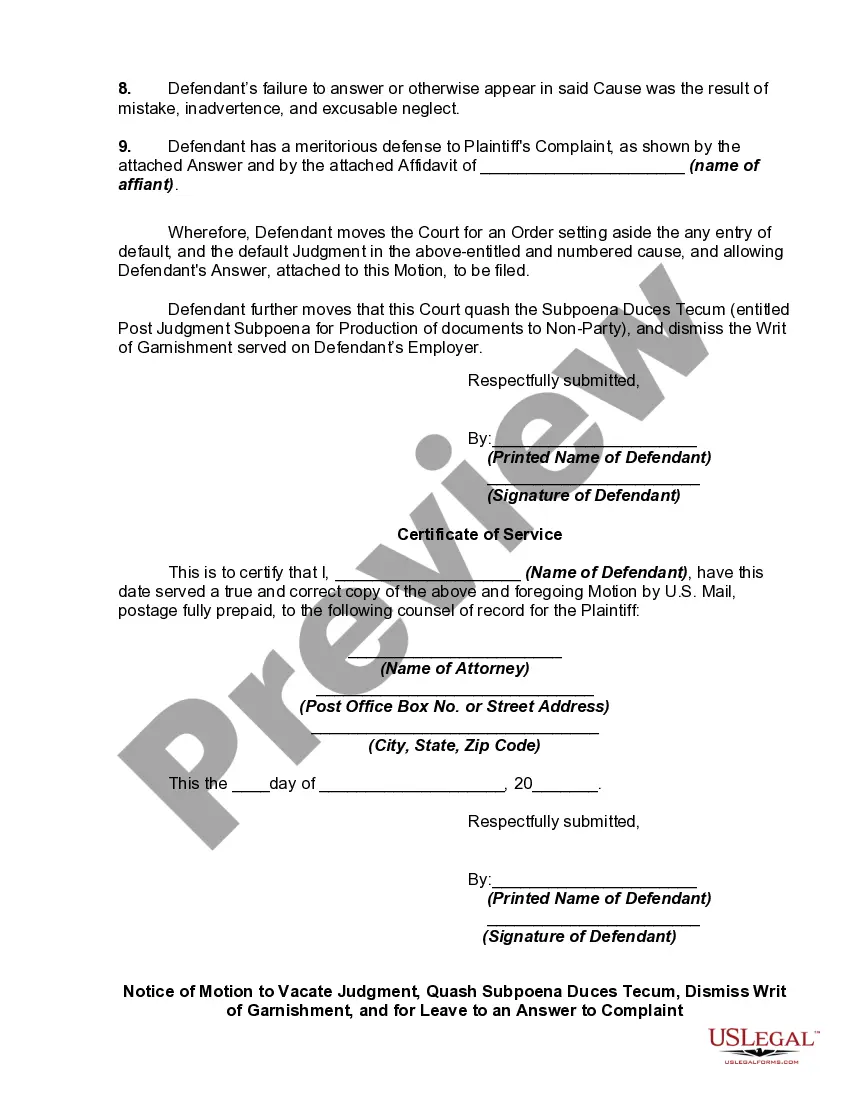
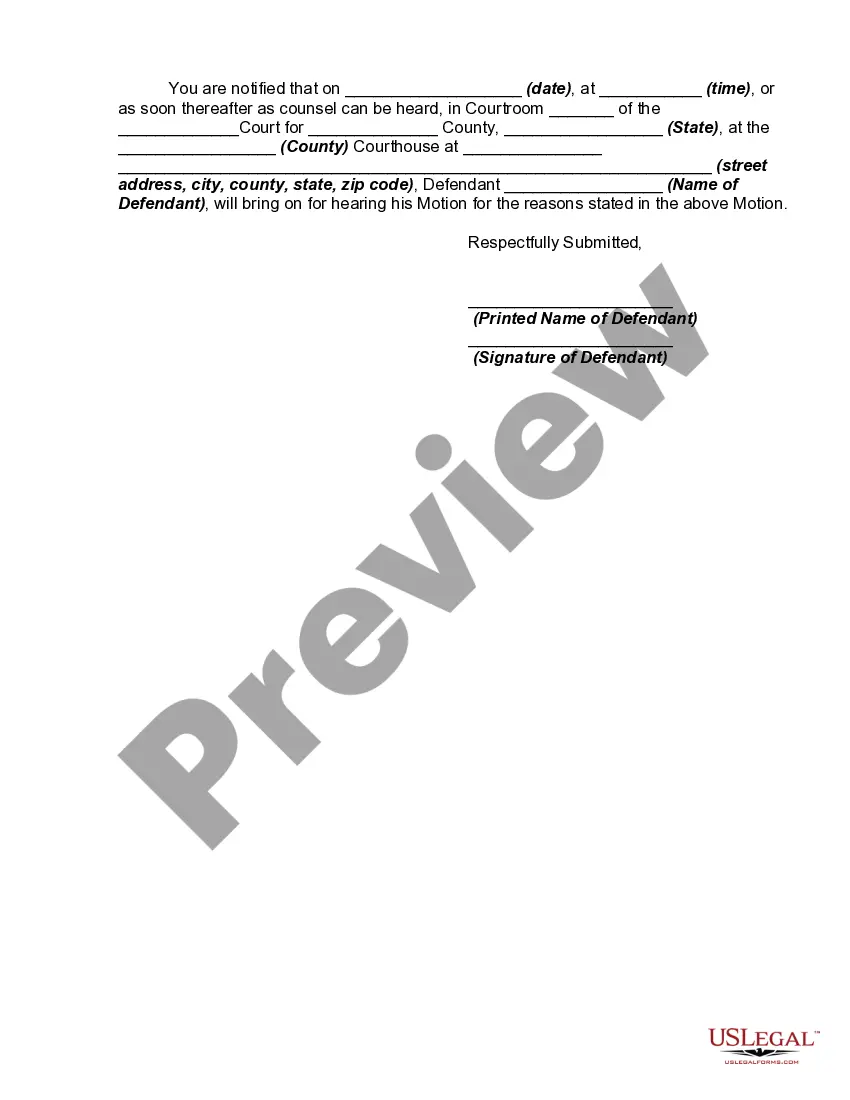
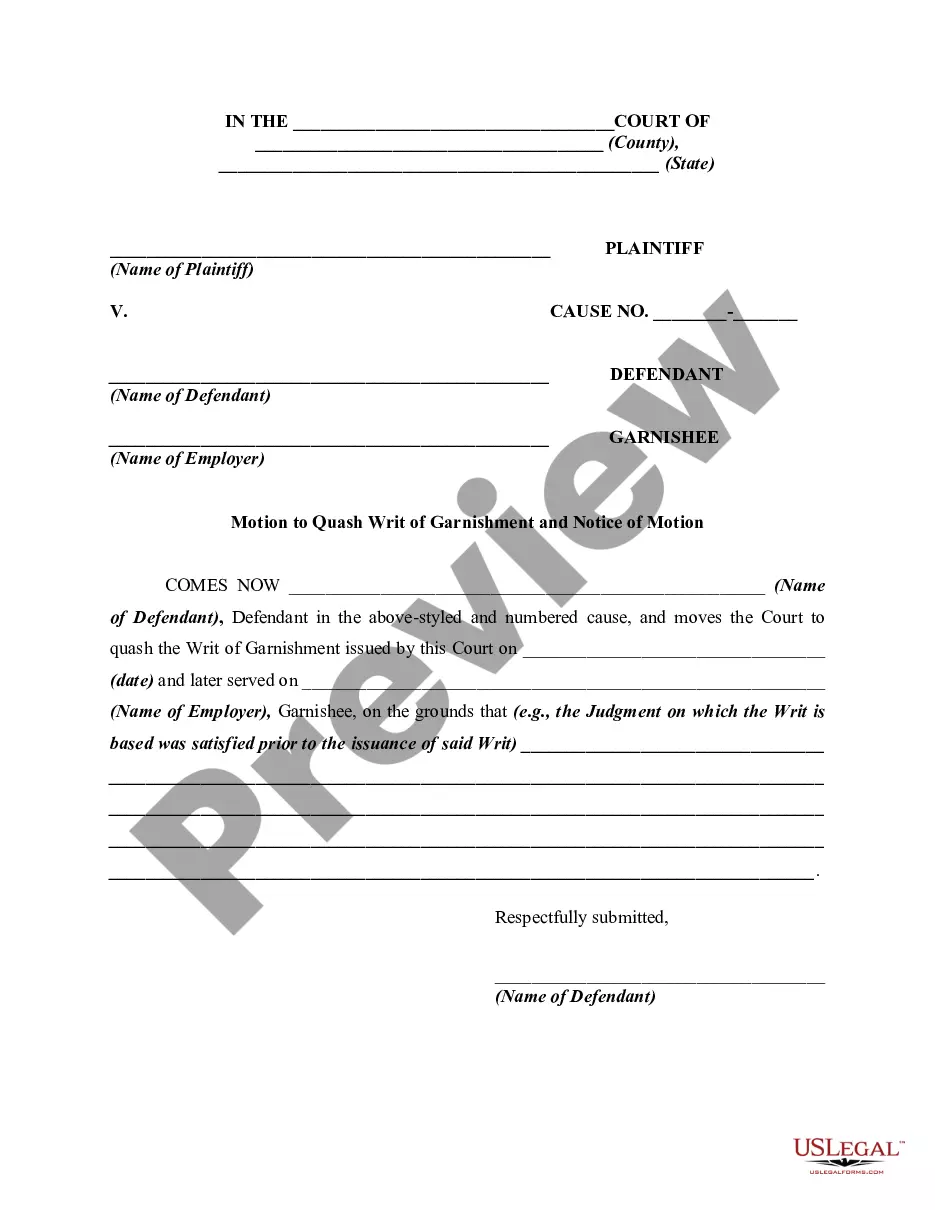
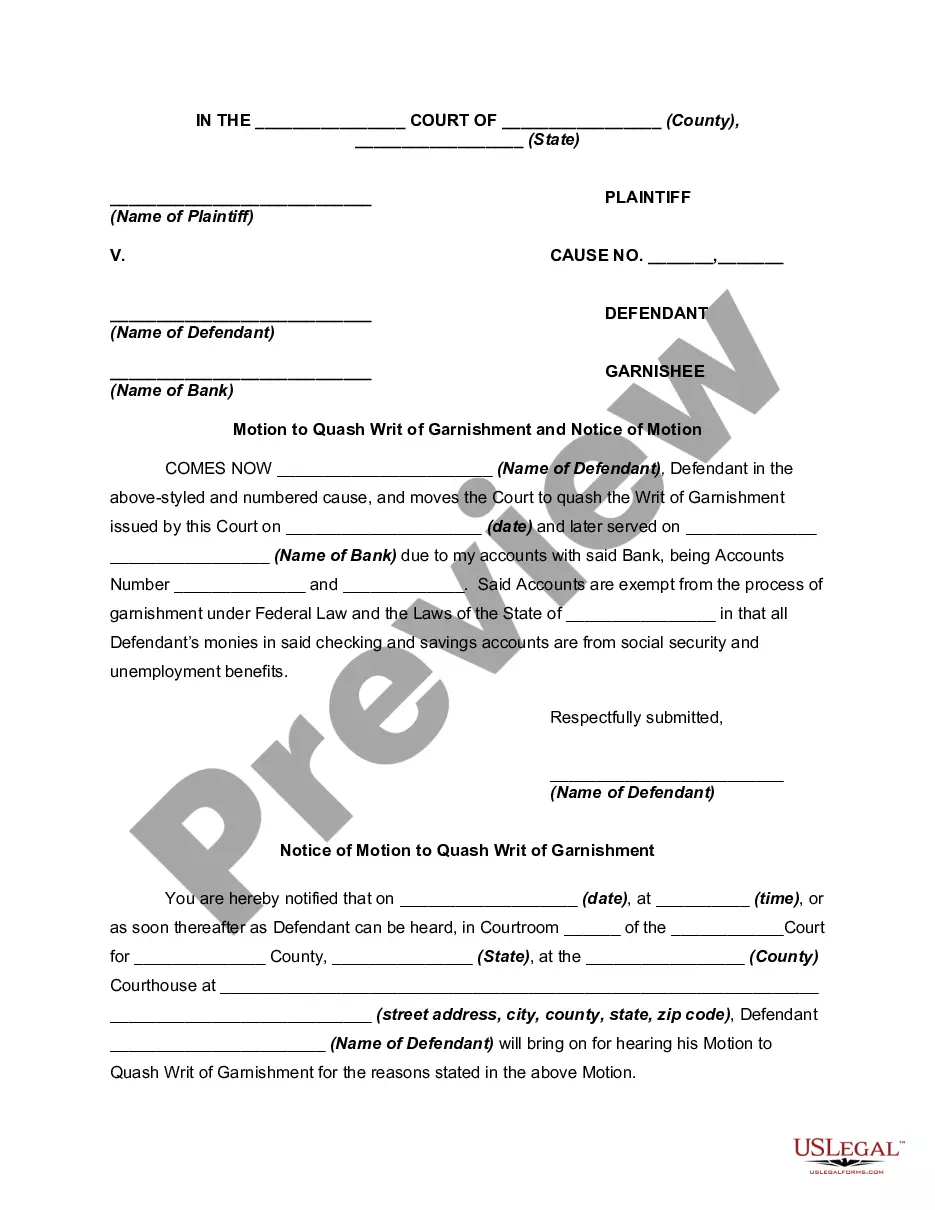
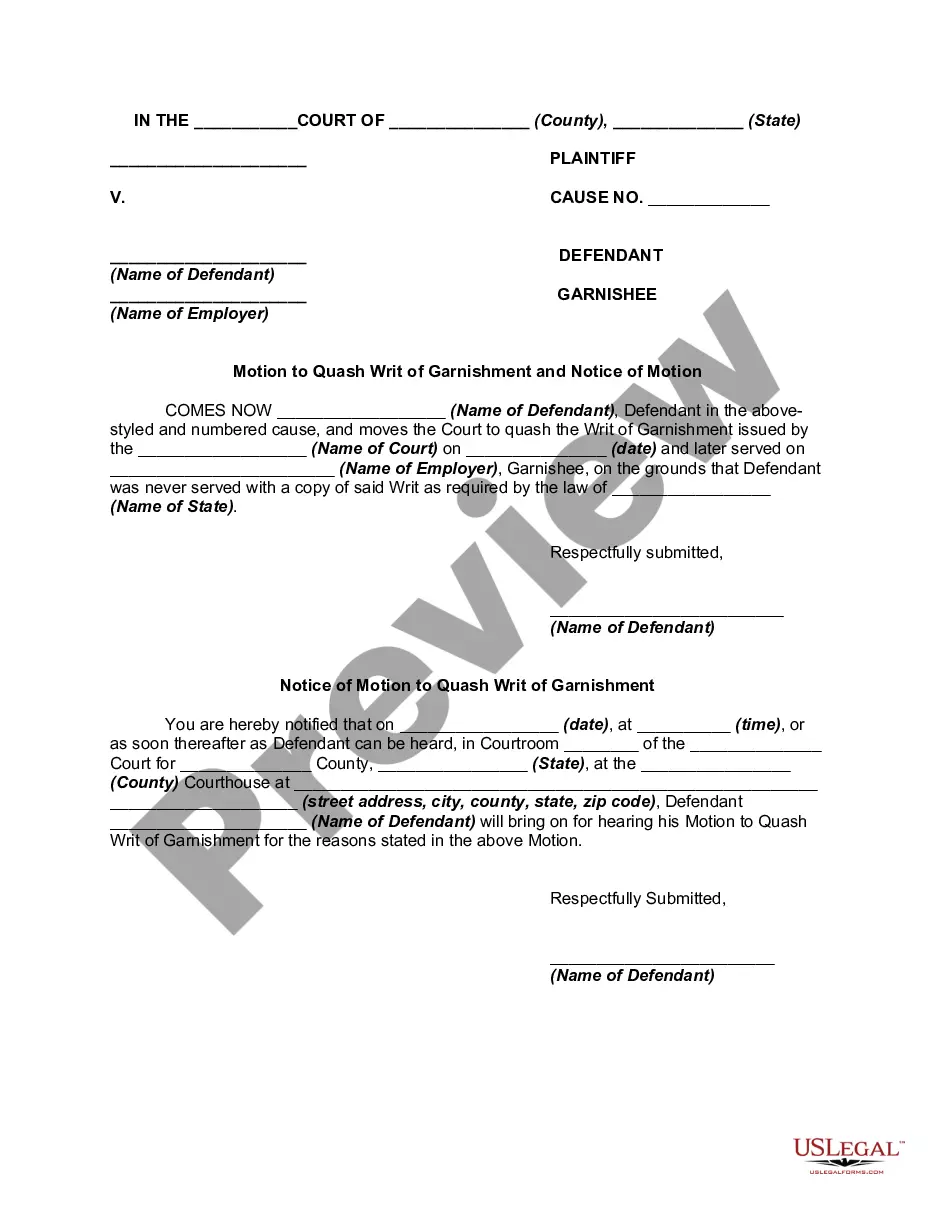
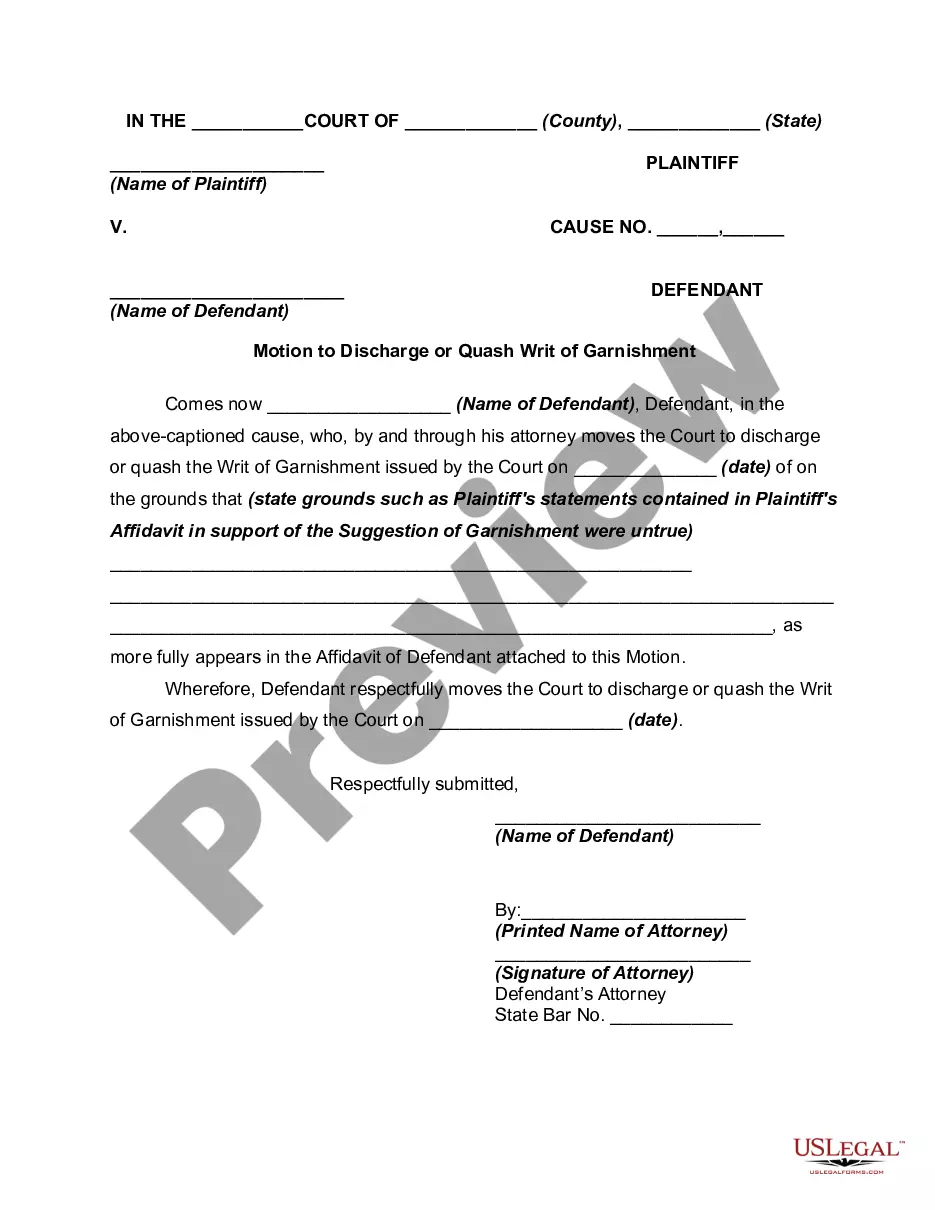
How to fill out Motion To Vacate Judgment, Quash Subpoena Duces Tecum, Dismiss Writ Of Garnishment, And For Leave To File An Answer To Complaint?
The Vacated Judgment With Prejudice you observe on this page is a reusable legal model composed by expert attorneys in accordance with federal and regional statutes.
For over 25 years, US Legal Forms has offered individuals, enterprises, and lawyers with more than 85,000 authenticated, state-specific documents for any business and personal situation.
Subscribe to US Legal Forms to have validated legal templates for every aspect of life readily available.
- Look for the document you require and examine it.
- Select the pricing option that fits you and create an account.
- Select the format you prefer for your Vacated Judgment With Prejudice (PDF, Word, RTF) and store the document on your device.
- Print the template to fill it out manually. Alternatively, utilize an online multifunctional PDF editor to quickly and accurately complete and sign your form with a legally-binding electronic signature.
- Utilize the same document again whenever needed.
Form popularity
FAQ
The phrase 'a judge is in prejudice' often conveys a bias that could affect impartiality in a ruling. However, in legal context, it is more relevant to recognize how a judgment can be vacated or dismissed with prejudice. When a case is dismissed with prejudice, it indicates a conclusion that is firm and unwavering, meant to uphold the integrity of the court. Addressing issues related to vacated judgment with prejudice is vital for ensuring fairness in legal proceedings.
When a judge dismisses a case with prejudice, it establishes that the case cannot be refiled or pursued again in the future. This ruling typically suggests that the judge found substantial shortcomings in the case, which render it invalid. As a result, the plaintiff loses the right to appeal or bring the same suit later. Awareness of a vacated judgment with prejudice helps individuals recognize the finality of such legal outcomes.
'Vacated with prejudice' refers to a court's decision to nullify a previous judgment while also prohibiting any future attempts to litigate the same claim. This judgment means the matter is conclusively resolved, preventing further legal action in that jurisdiction. Consequently, a vacated judgment with prejudice signifies that the case has been effectively closed. Understanding this term is crucial for managing legal matters adequately.
A judge may dismiss a case with prejudice for various reasons, often related to the credibility of evidence or legal flaws in the claim. For instance, if the plaintiff repeatedly fails to comply with court orders or presents frivolous arguments, the judge may choose to dismiss with prejudice. This decision prevents the plaintiff from bringing the same claim in the future. Knowing about vacated judgment with prejudice can clarify the serious nature of such dismissals.
A motion to dismiss with prejudice can occur when a plaintiff fails to provide sufficient evidence to support their claims. For example, if a case regarding a breach of contract lacks fundamental proof, the defendant may file a motion to dismiss with prejudice. This signifies that the court finds the case entirely non-viable, and the plaintiff cannot refile in the same court. Thus, understanding vacated judgment with prejudice helps navigate the implications of such dismissals.
Vacating a judgment can be a complex process, often depending on the circumstances of the case. Legal standards and reasons for vacating vary by jurisdiction, which can add layers of difficulty. However, with the right information and assistance, such as from a trusted platform like US Legal Forms, you can navigate this process with confidence. Knowing your options empowers you to take action regarding your judgment.
While vacated and cancelled may seem similar, they hold different meanings in legal contexts. A vacated judgment with prejudice means the judgment is nullified, while a cancellation implies a complete termination of the matter without necessarily addressing the merits. Recognizing these distinctions can aid in addressing your legal concerns more effectively. Utilizing reliable legal platforms can help clarify these terms further.
When a ruling is vacated, it signals that the court has decided to nullify the original judgment. This action restores the parties to their status before the ruling, essentially allowing further legal action. For individuals facing a vacated judgment with prejudice, it’s important to understand how this affects future cases. Consulting with legal experts can provide clarity and guidance.
A motion to vacate the verdict is a formal request made to the court to overturn its previous decision. This motion typically argues that there are compelling reasons to reconsider the ruling, such as legal errors or new evidence. If granted, the court may vacate the judgment and allow for a new trial or different outcome. Using appropriate legal resources can help you navigate this process effectively.
When a ruling is vacated, it indicates that the previous judgment is rendered void. This means the case is essentially reopened, and the parties may have the opportunity to present their arguments again. Additionally, if a vacated judgment with prejudice is issued, it may prevent the same case from being brought back in the future. This process is significant for protecting your legal rights.