Motion Judgment File With The State
Description
Get your form ready online
Our built-in tools help you complete, sign, share, and store your documents in one place.
Make edits, fill in missing information, and update formatting in US Legal Forms—just like you would in MS Word.
Download a copy, print it, send it by email, or mail it via USPS—whatever works best for your next step.
Sign and collect signatures with our SignNow integration. Send to multiple recipients, set reminders, and more. Go Premium to unlock E-Sign.
If this form requires notarization, complete it online through a secure video call—no need to meet a notary in person or wait for an appointment.
We protect your documents and personal data by following strict security and privacy standards.

Make edits, fill in missing information, and update formatting in US Legal Forms—just like you would in MS Word.

Download a copy, print it, send it by email, or mail it via USPS—whatever works best for your next step.

Sign and collect signatures with our SignNow integration. Send to multiple recipients, set reminders, and more. Go Premium to unlock E-Sign.

If this form requires notarization, complete it online through a secure video call—no need to meet a notary in person or wait for an appointment.

We protect your documents and personal data by following strict security and privacy standards.
Looking for another form?
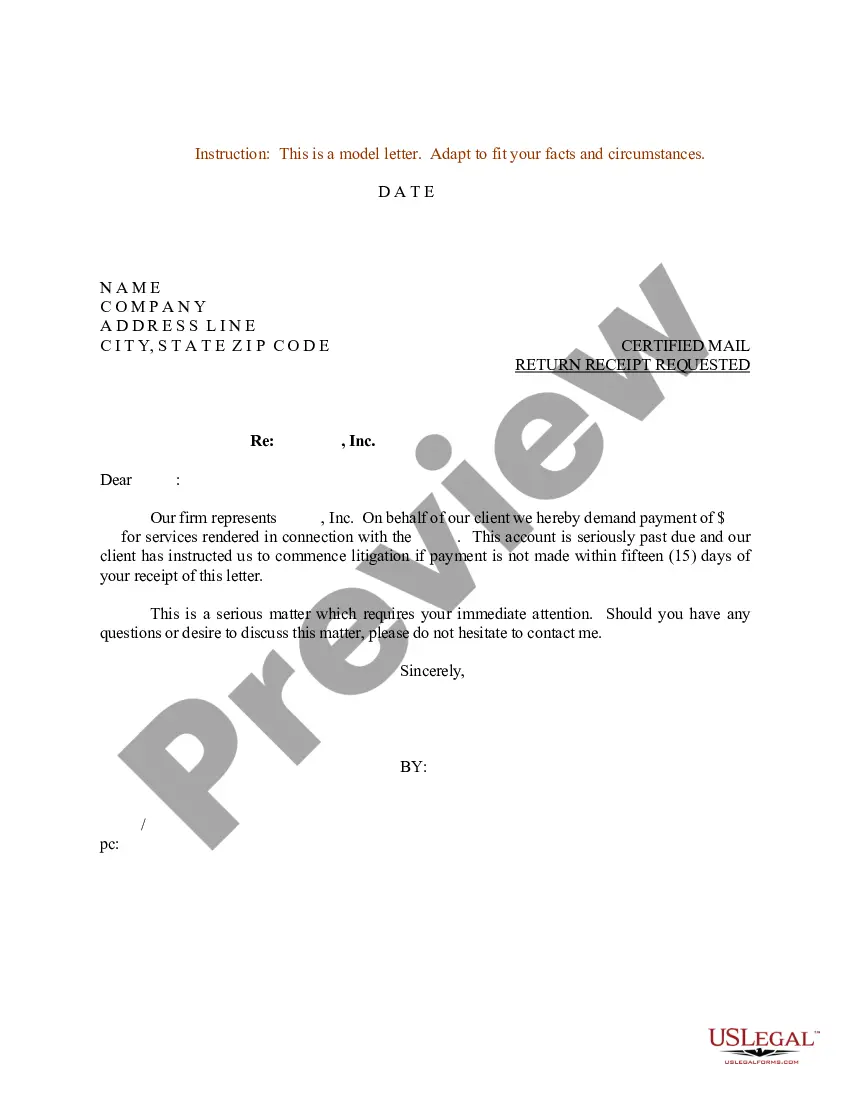
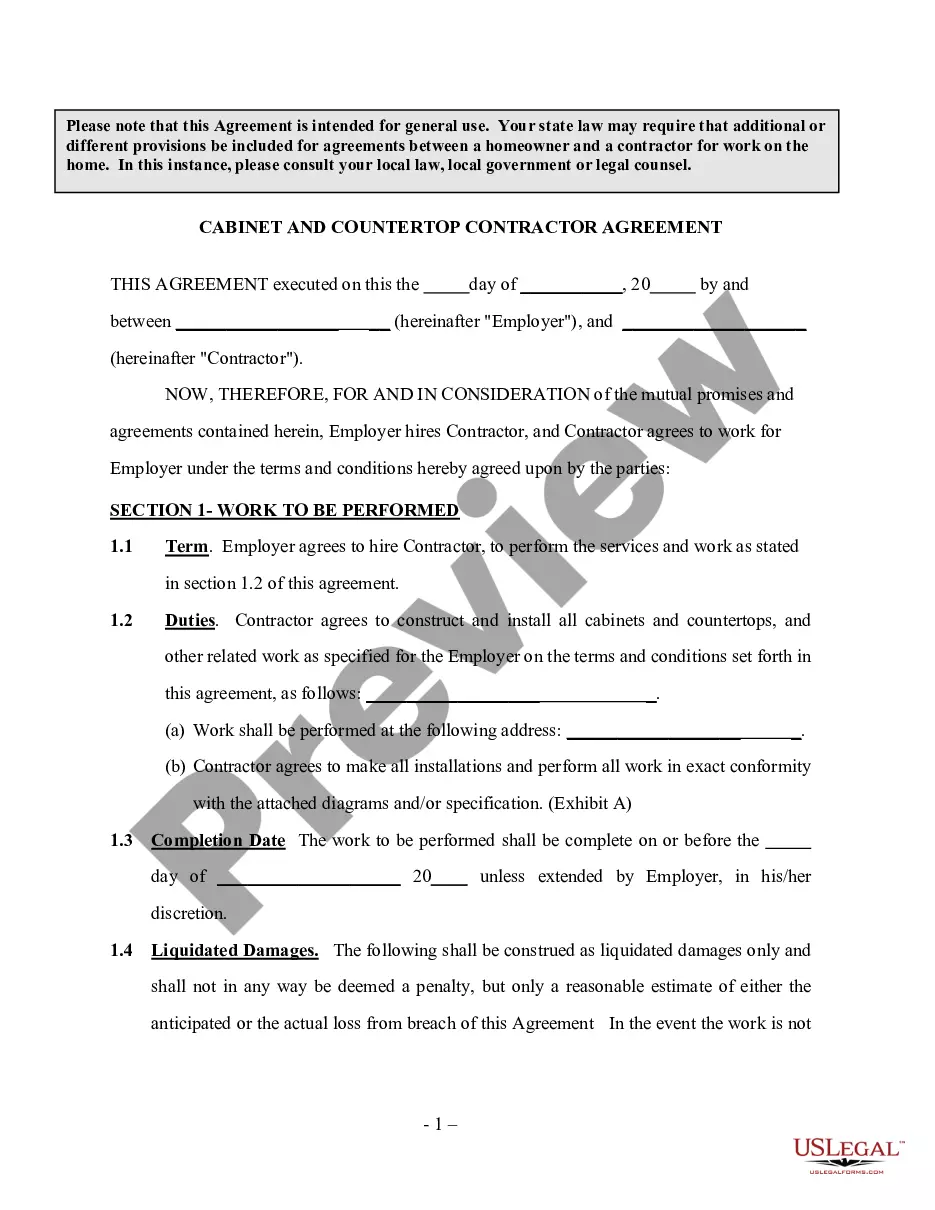


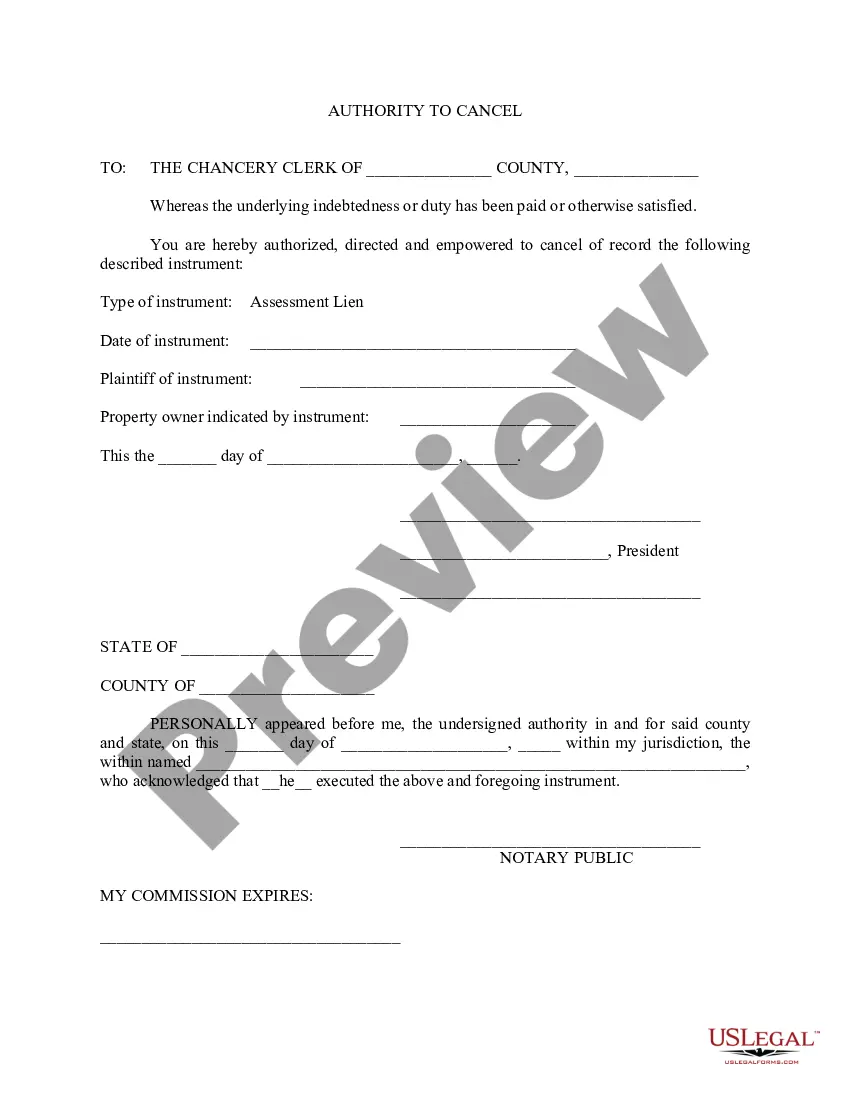





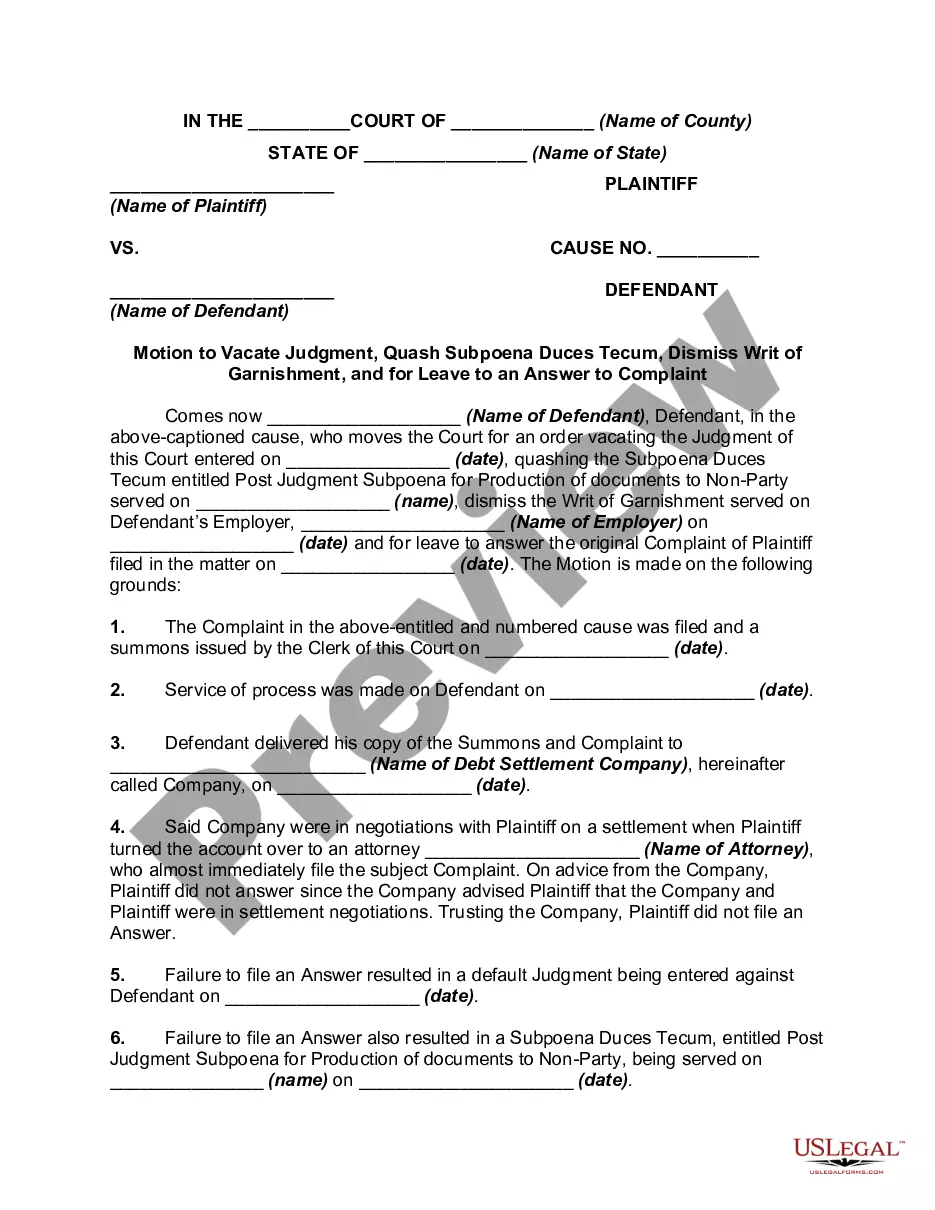
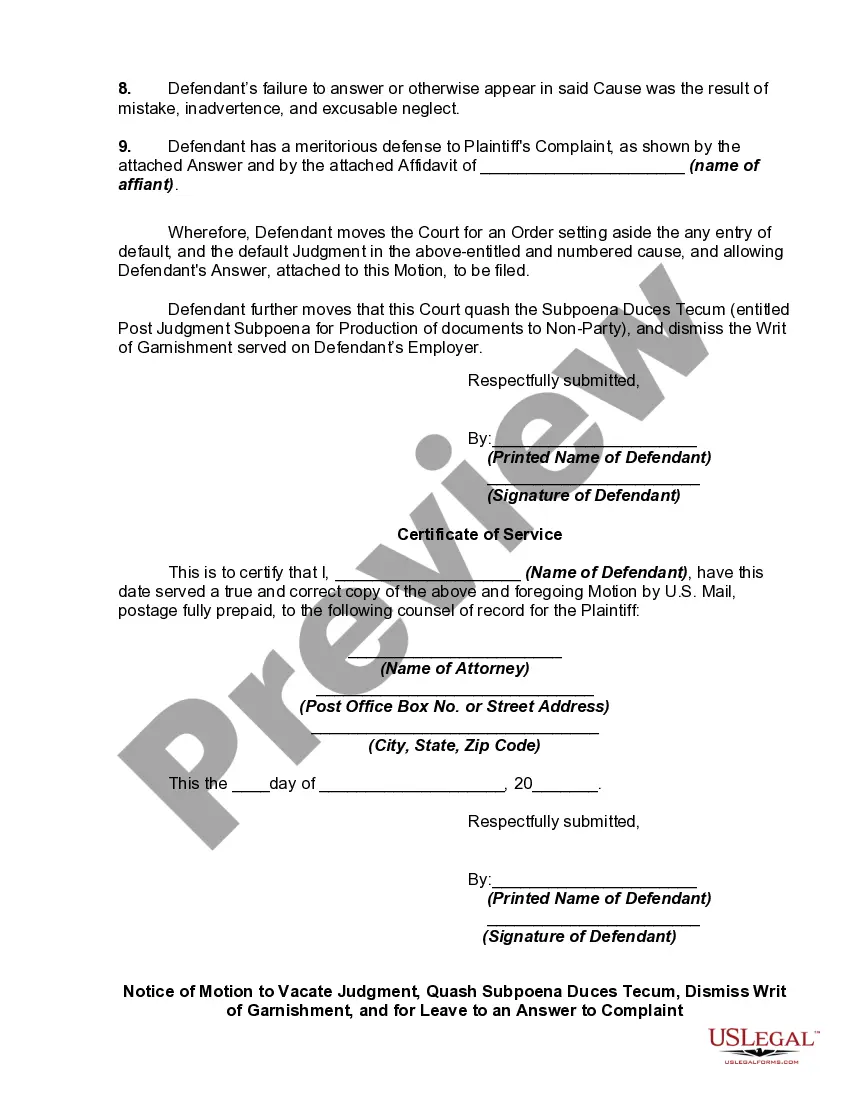
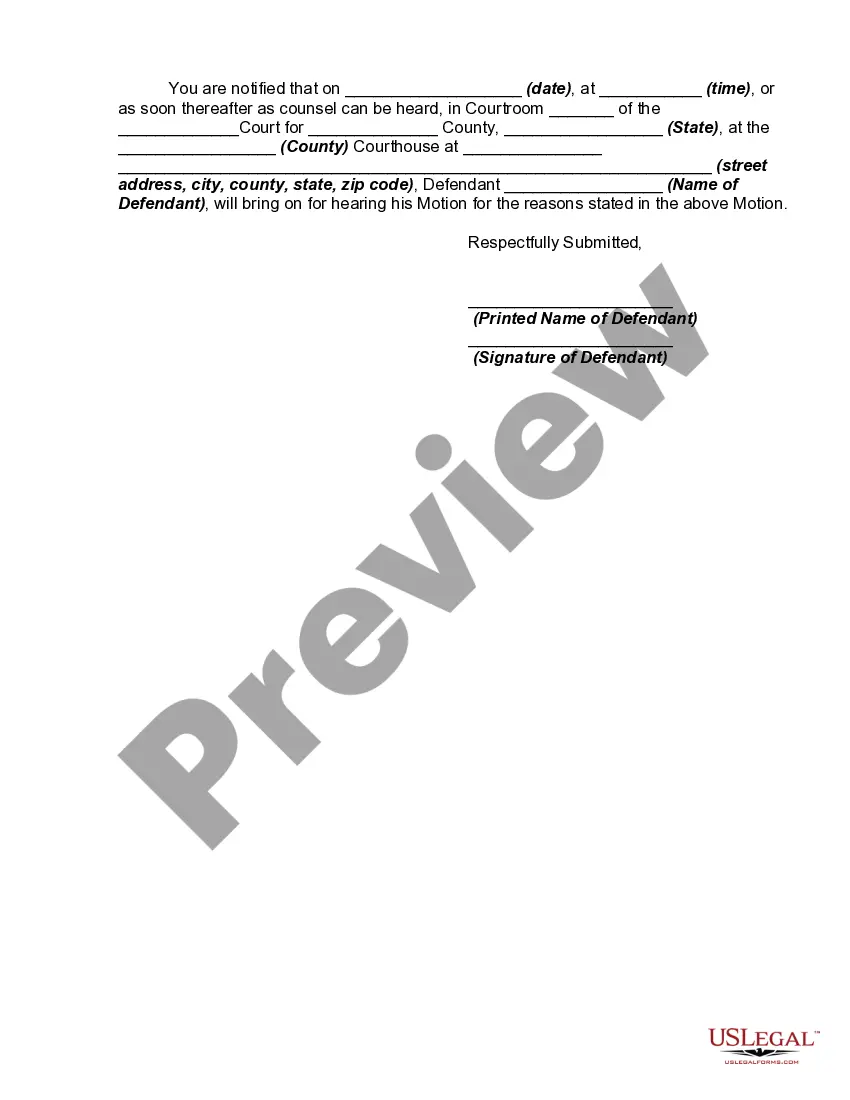
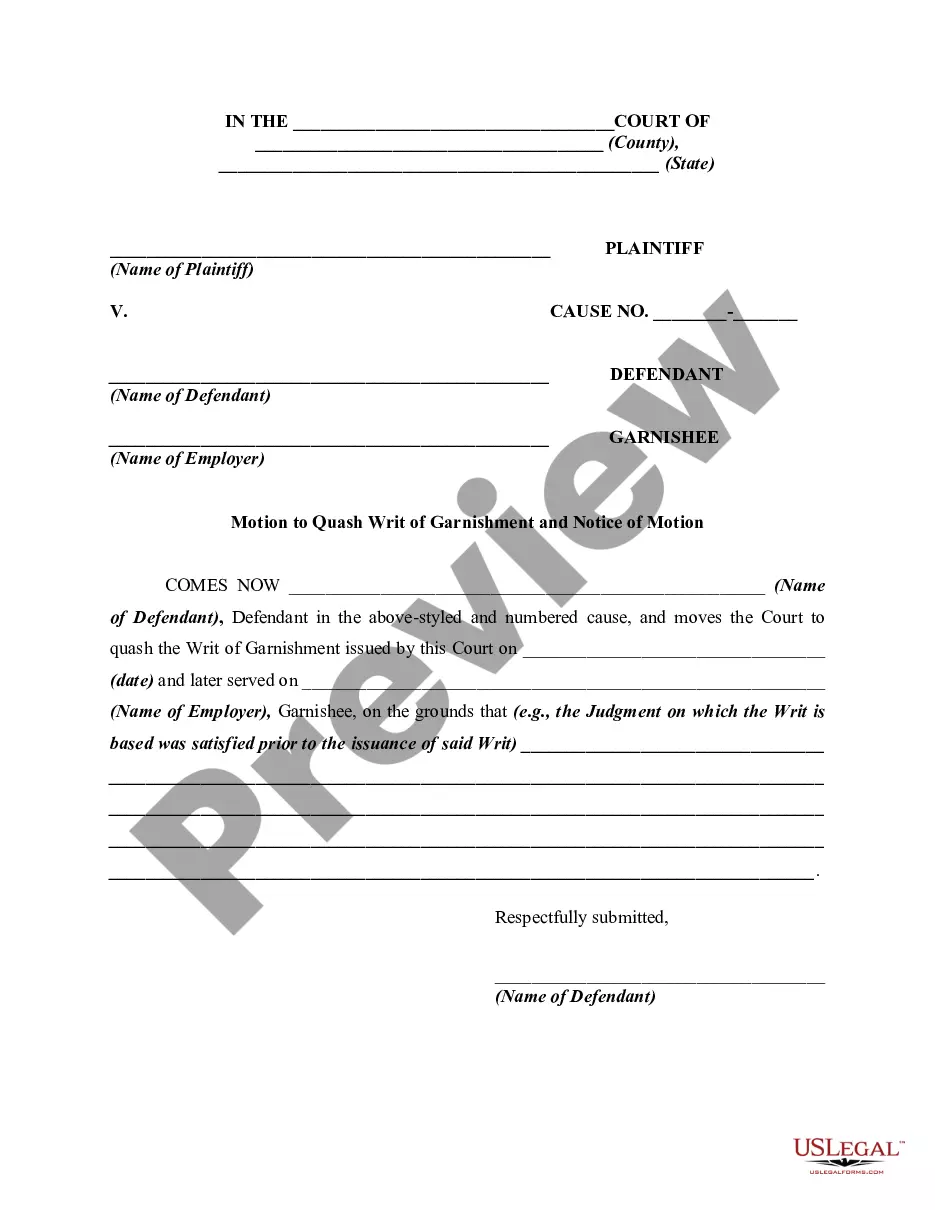
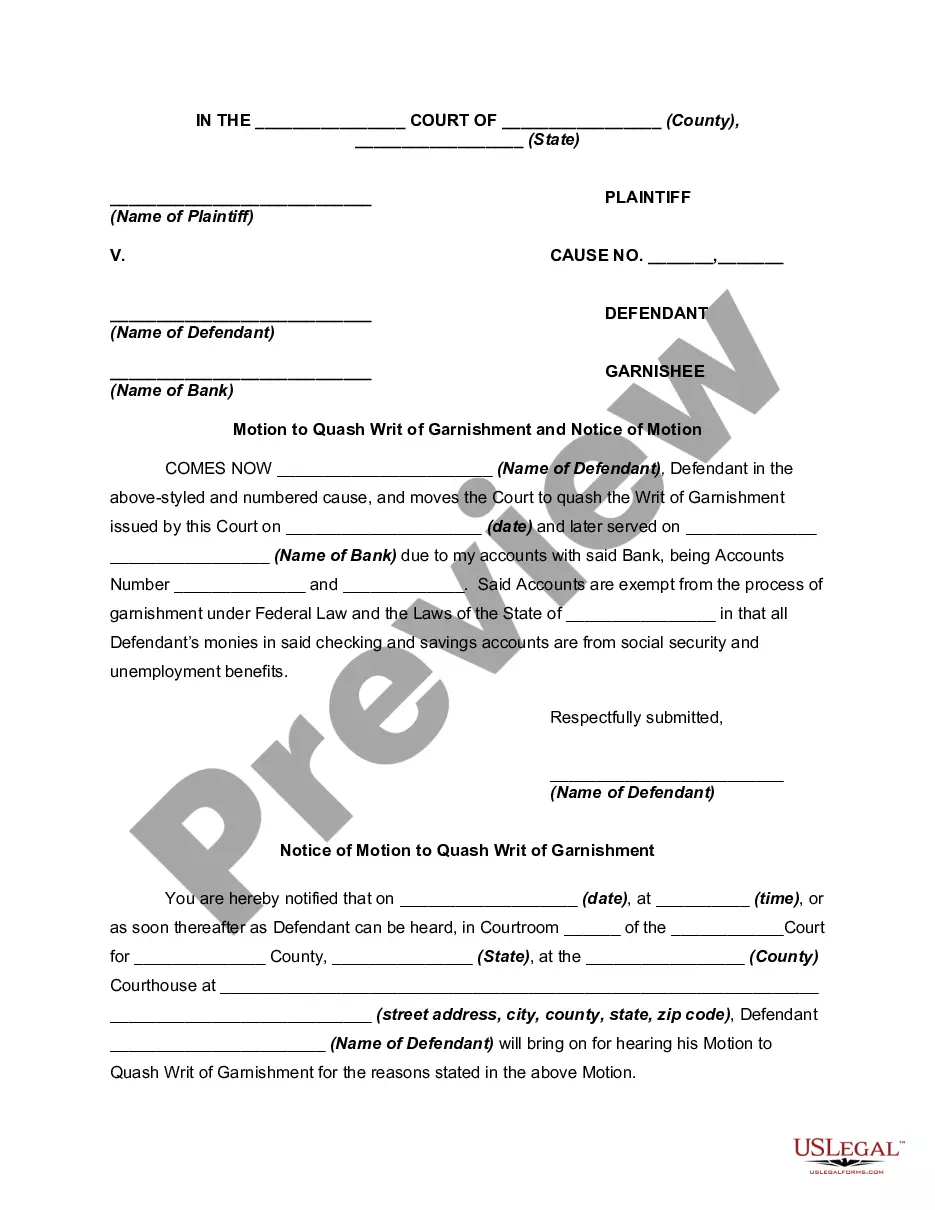
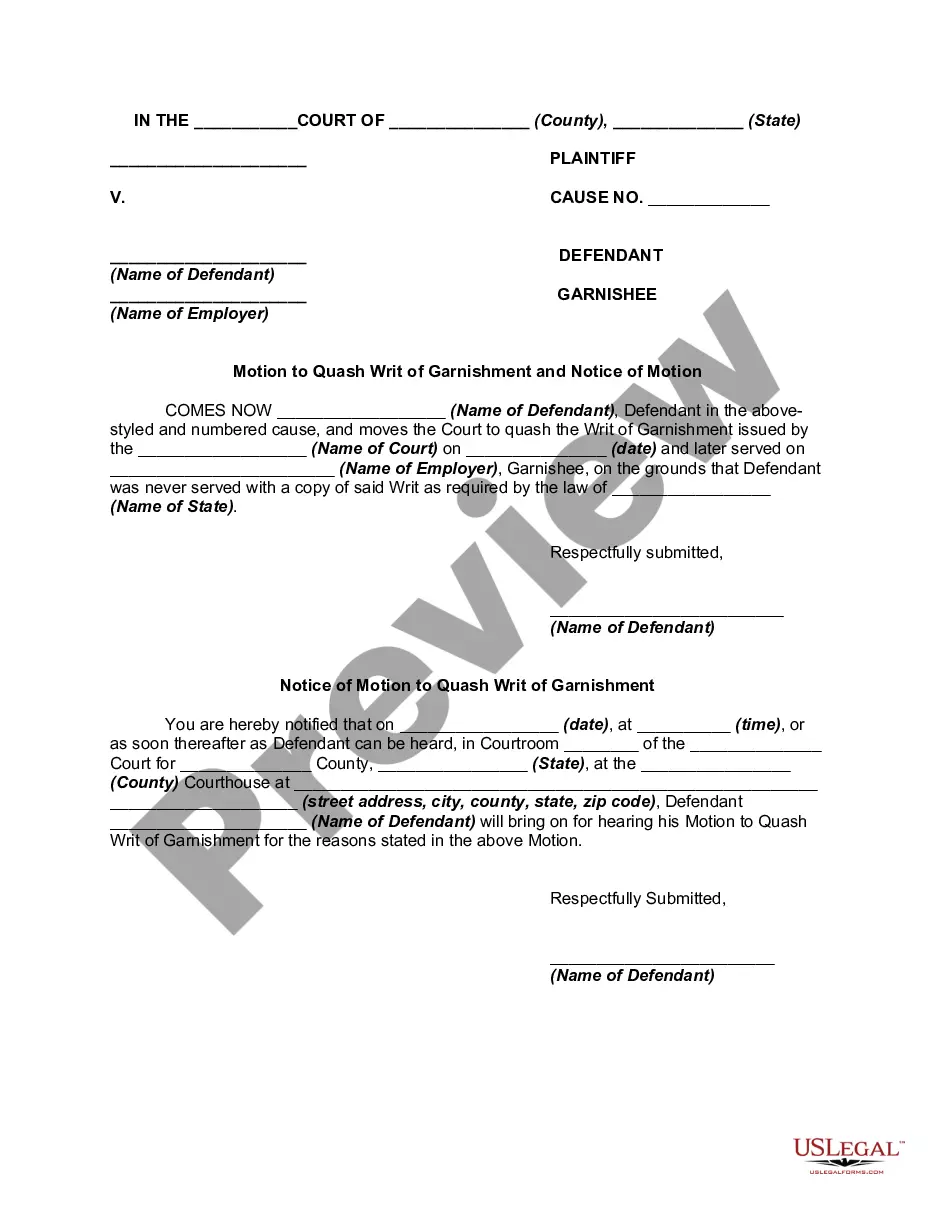
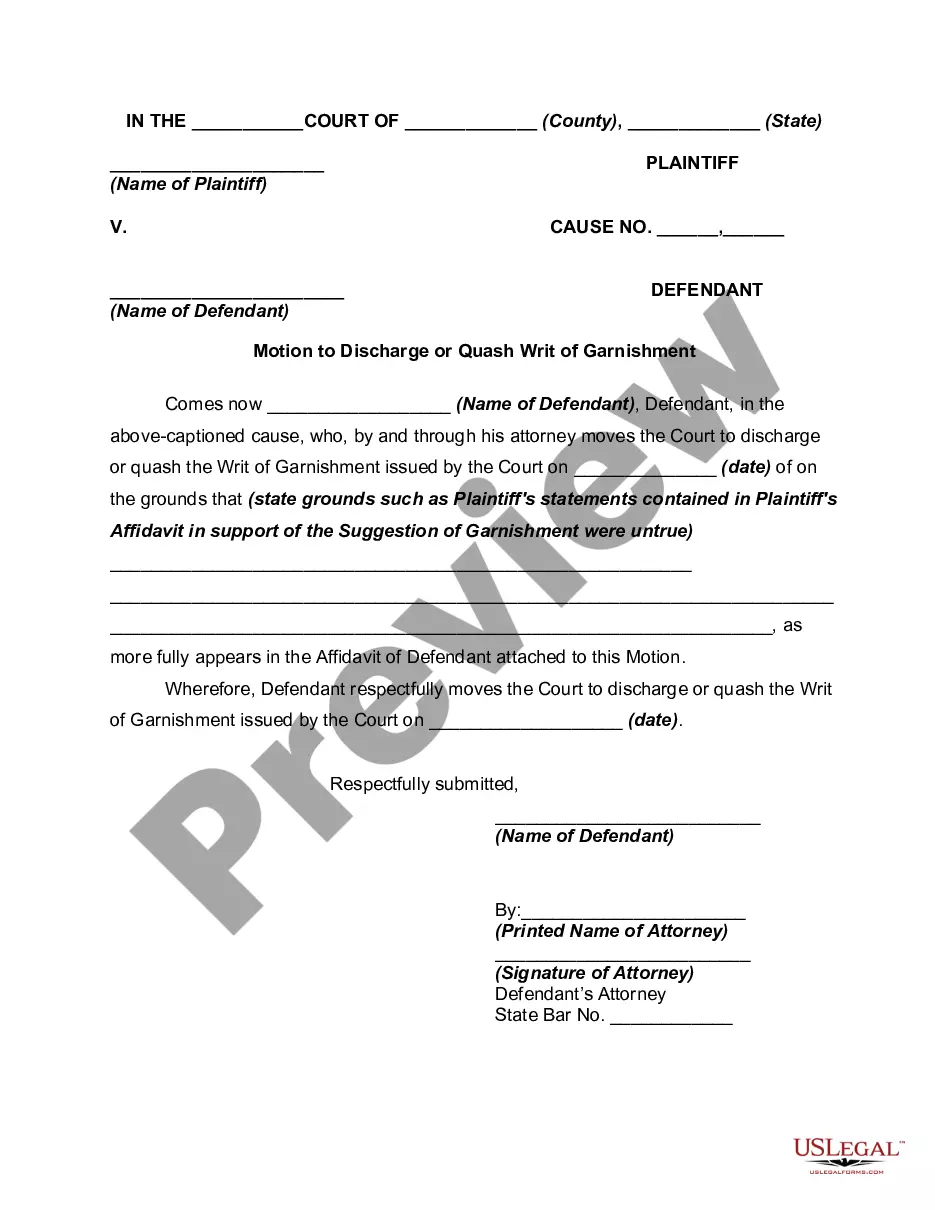
How to fill out Motion To Vacate Judgment, Quash Subpoena Duces Tecum, Dismiss Writ Of Garnishment, And For Leave To File An Answer To Complaint?
Securing a reliable source to obtain the most up-to-date and suitable legal templates is a significant part of navigating bureaucracy. Selecting the appropriate legal documents requires precision and careful consideration, which highlights the importance of sourcing Motion Judgment File With The State exclusively from credible providers, such as US Legal Forms. An incorrect template can squander your time and prolong your situation. With US Legal Forms, you have minimal concerns. You can access and view all the information regarding the document’s application and suitability for your situation and in your jurisdiction.
Follow these steps to finalize your Motion Judgment File With The State.
Eliminate the hassle associated with your legal documents. Browse the comprehensive US Legal Forms catalog to discover legal templates, assess their relevance to your situation, and download them immediately.
- Utilize the catalog navigation or search bar to locate your template.
- Review the form’s description to ensure it aligns with the requirements of your jurisdiction and county.
- Check the form preview, if available, to confirm the template is the one you need.
- If the Motion Judgment File With The State does not meet your requirements, continue your search to find the correct template.
- Once you are certain of the form’s applicability, download it.
- If you are a registered user, click Log in to verify and access your chosen templates in My documents.
- If you do not have an account yet, click Buy now to acquire the template.
- Select the pricing plan that suits your needs.
- Proceed to the registration to complete your transaction.
- Conclude your purchase by selecting a payment method (credit card or PayPal).
- Choose the file format for downloading Motion Judgment File With The State.
- After you have the form on your device, you may edit it using the editor or print it to complete it manually.
Form popularity
FAQ
When the state files a motion, it typically means that the government is seeking a legal ruling or action in a case involving public interest. This can happen in criminal cases, civil rights issues, or other legal matters where the state has a vested interest. Understanding the implications of such motions is crucial, and the US Legal platform can provide resources to help you navigate these legal waters.
To respond to a motion for judgment, carefully review the claims made and prepare a written response addressing each point. You may need to gather evidence or legal precedents to support your position. Using the US Legal platform can provide you with templates and examples that can simplify your response process and ensure you cover all necessary arguments.
Yes, judgments can follow you from state to state, as they are generally enforceable across state lines. Once a judgment is entered, it may be recorded in other states, allowing creditors to pursue collection actions in those jurisdictions. Familiarizing yourself with how to motion judgment file with the state can help you manage these situations effectively.
Motion for judgment means requesting the court to issue a judgment without going to a full trial, asserting that there is no factual dispute to be decided by a jury. This motion can streamline the legal process, saving time and resources for both parties involved. If you find yourself needing to file such a motion, the US Legal platform offers comprehensive resources to help you draft your documents accurately.
A motion for judgment refers to a formal request to the court to rule in favor of one party based on the lack of sufficient evidence from the opposing side. This motion argues that even if all evidence is viewed in the light most favorable to the other party, there is no legal basis for a verdict against the moving party. If you need assistance with this process, consider using the US Legal platform for templates and guidance.
The four types of judgments include default judgments, summary judgments, consent judgments, and judgments after trial. Default judgments occur when one party does not respond, while summary judgments are granted when there’s no genuine dispute of material fact. Consent judgments arise from agreements between parties, and judgments after trial result from jury or judge decisions. Understanding these types can help you navigate the motion judgment file with the state more effectively.
You should file a motion for judgment as a matter of law when you believe there is insufficient evidence for a reasonable jury to reach a different conclusion. This usually occurs after the opposing party has presented their case but before the jury deliberates. By doing so, you can seek a ruling from the judge based on the evidence presented. Utilizing the US Legal platform can guide you in crafting this motion effectively.
A motion for judgment can generally be filed after the completion of the discovery phase or when the opposing party has failed to respond appropriately to a lawsuit. Timing is critical, as filing too early or too late can affect the outcome. To ensure you meet all necessary deadlines, consider using resources from US Legal Forms, which provide guidance on filing a motion judgment file with the state accurately and timely.
A motion is a formal request made to a court, asking for a specific ruling or order, while a judgment is the final decision made by the court. In essence, a motion initiates the legal process, whereas a judgment concludes it. Understanding this difference is crucial when you prepare to file a motion judgment file with the state. US Legal Forms offers resources that clarify these distinctions, making your legal journey smoother.
To support a motion for judgment, you typically need documented proof such as contracts, correspondence, and other relevant records. This evidence should clearly demonstrate your claims and the basis for the motion. When you file a motion judgment file with the state, ensure all supporting documents are well-organized and presented professionally. Using a reliable platform like US Legal Forms can help streamline this process.