Personal Trainer Form With Multiple Locations
Description
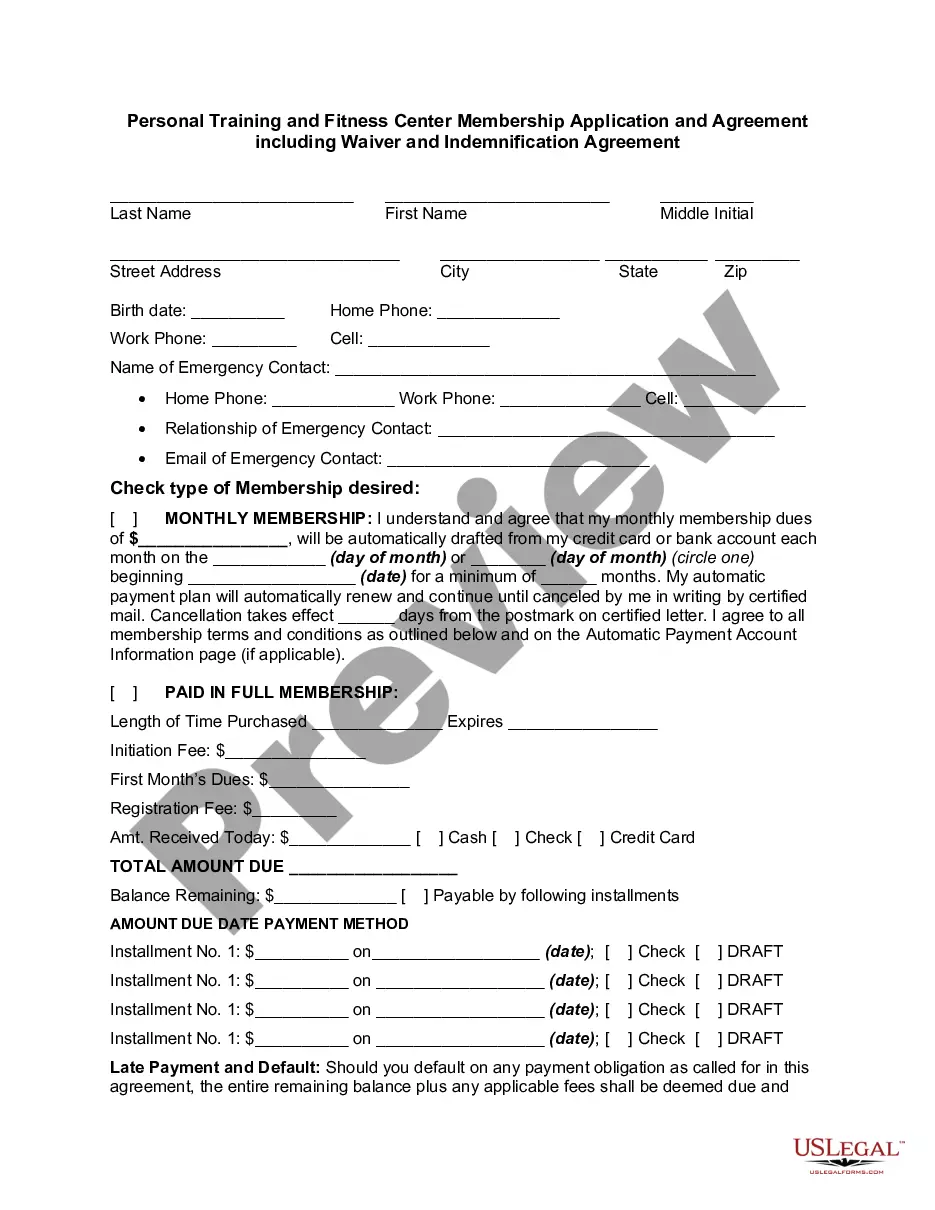
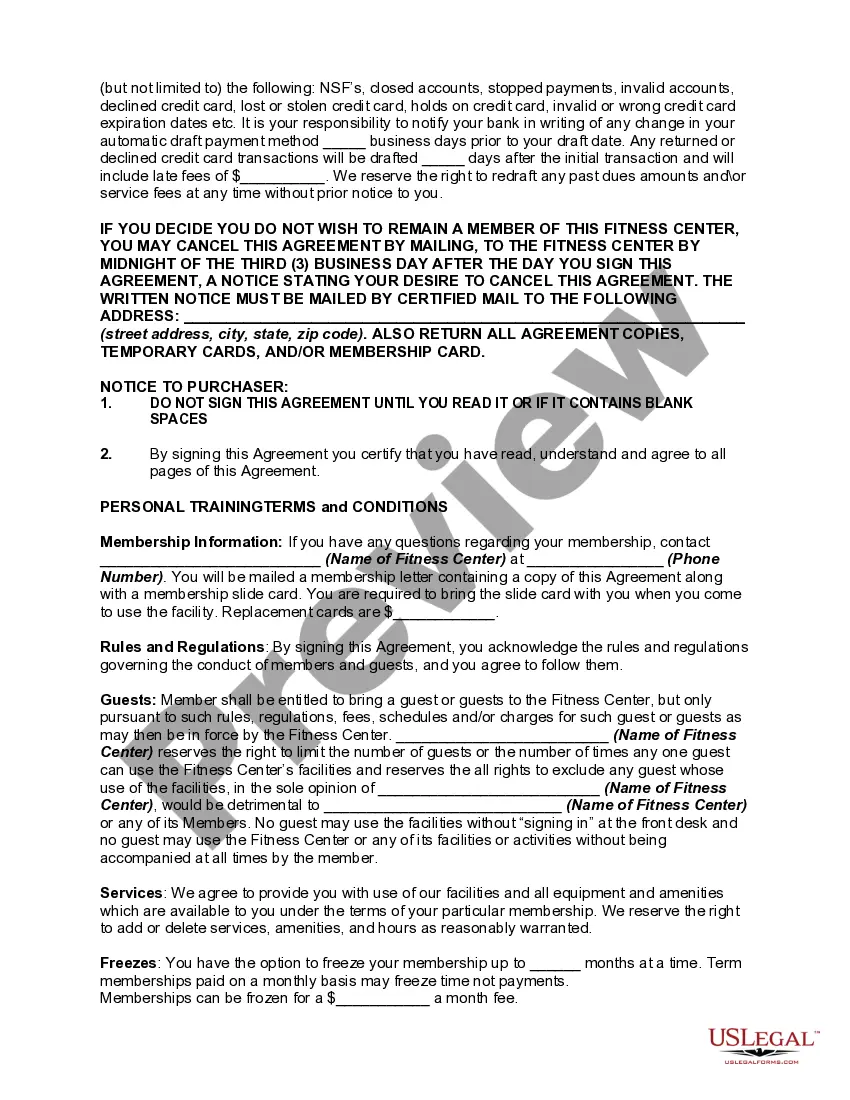
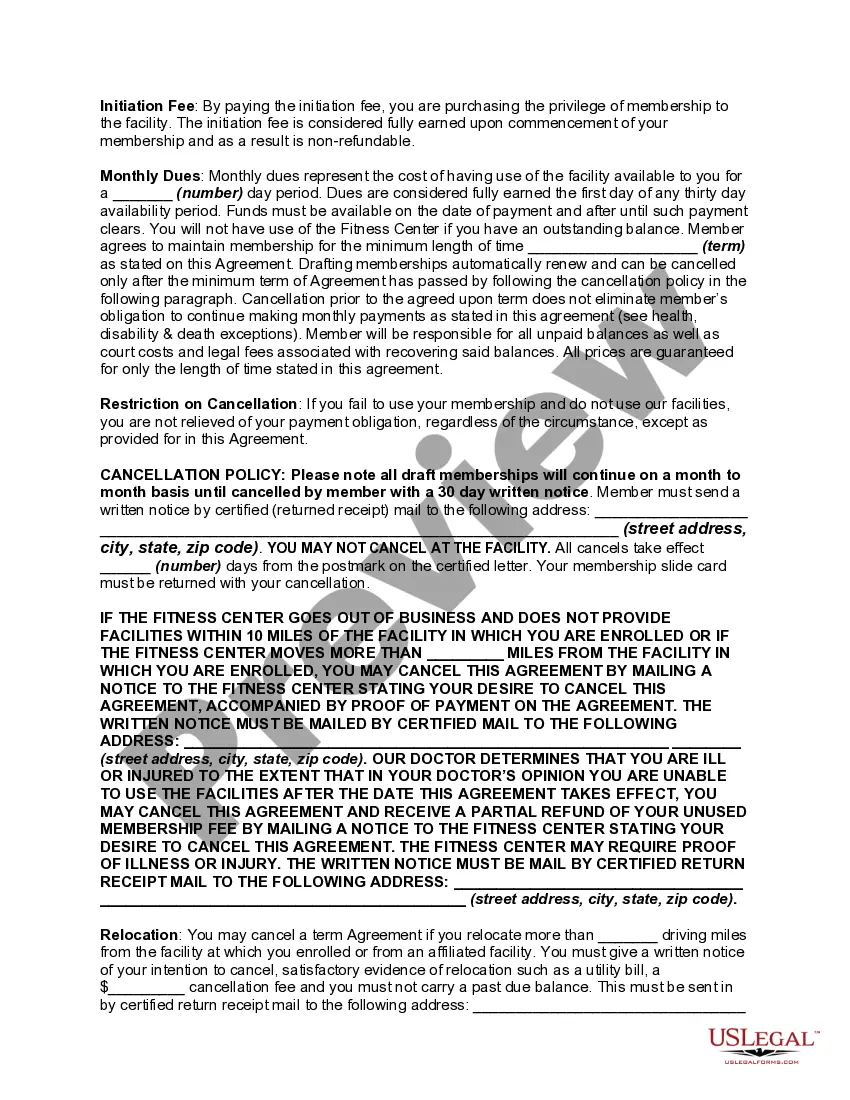
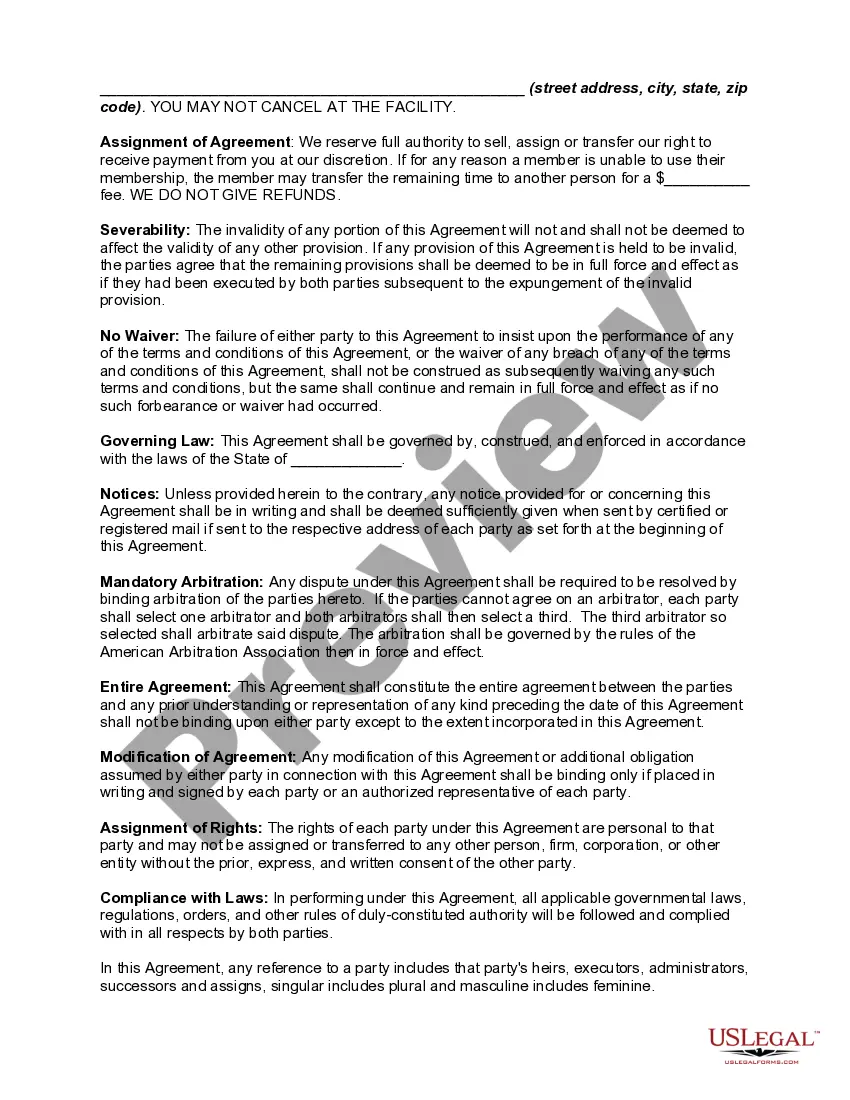
Get your form ready online
Our built-in tools help you complete, sign, share, and store your documents in one place.
Make edits, fill in missing information, and update formatting in US Legal Forms—just like you would in MS Word.
Download a copy, print it, send it by email, or mail it via USPS—whatever works best for your next step.
Sign and collect signatures with our SignNow integration. Send to multiple recipients, set reminders, and more. Go Premium to unlock E-Sign.
If this form requires notarization, complete it online through a secure video call—no need to meet a notary in person or wait for an appointment.
We protect your documents and personal data by following strict security and privacy standards.

Make edits, fill in missing information, and update formatting in US Legal Forms—just like you would in MS Word.

Download a copy, print it, send it by email, or mail it via USPS—whatever works best for your next step.

Sign and collect signatures with our SignNow integration. Send to multiple recipients, set reminders, and more. Go Premium to unlock E-Sign.

If this form requires notarization, complete it online through a secure video call—no need to meet a notary in person or wait for an appointment.

We protect your documents and personal data by following strict security and privacy standards.
Looking for another form?
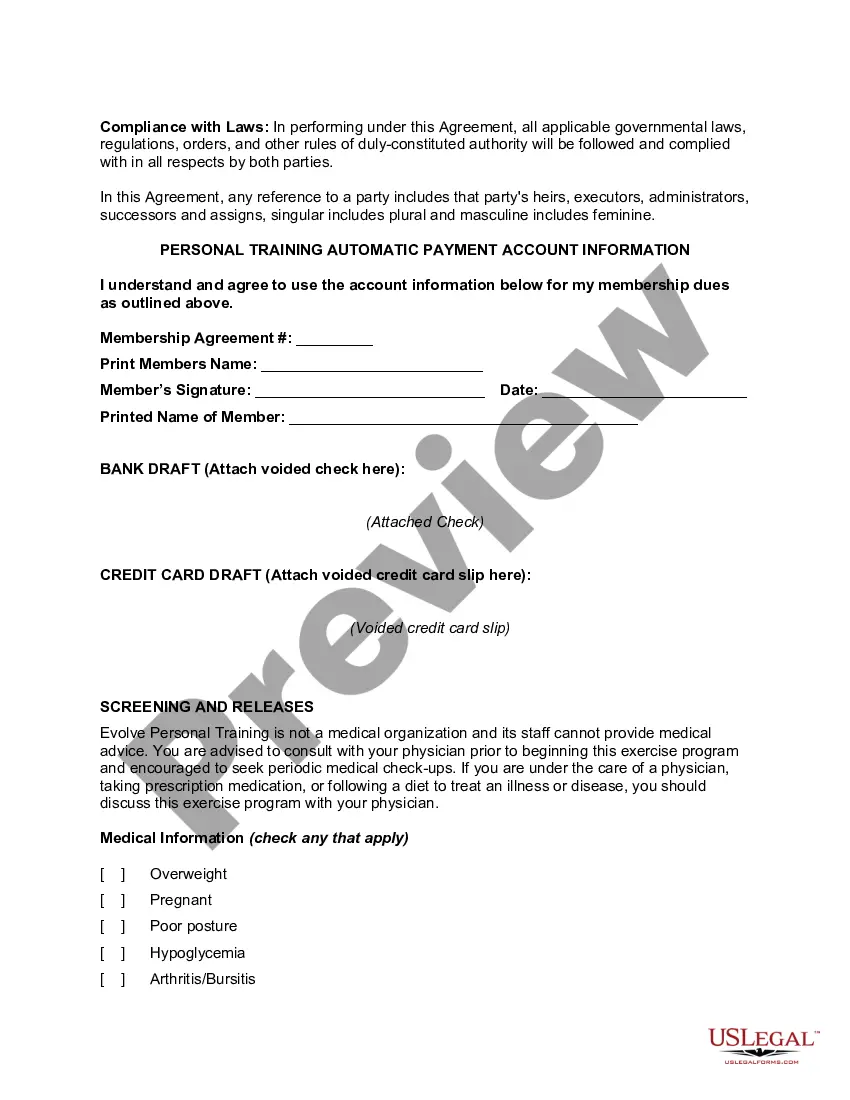
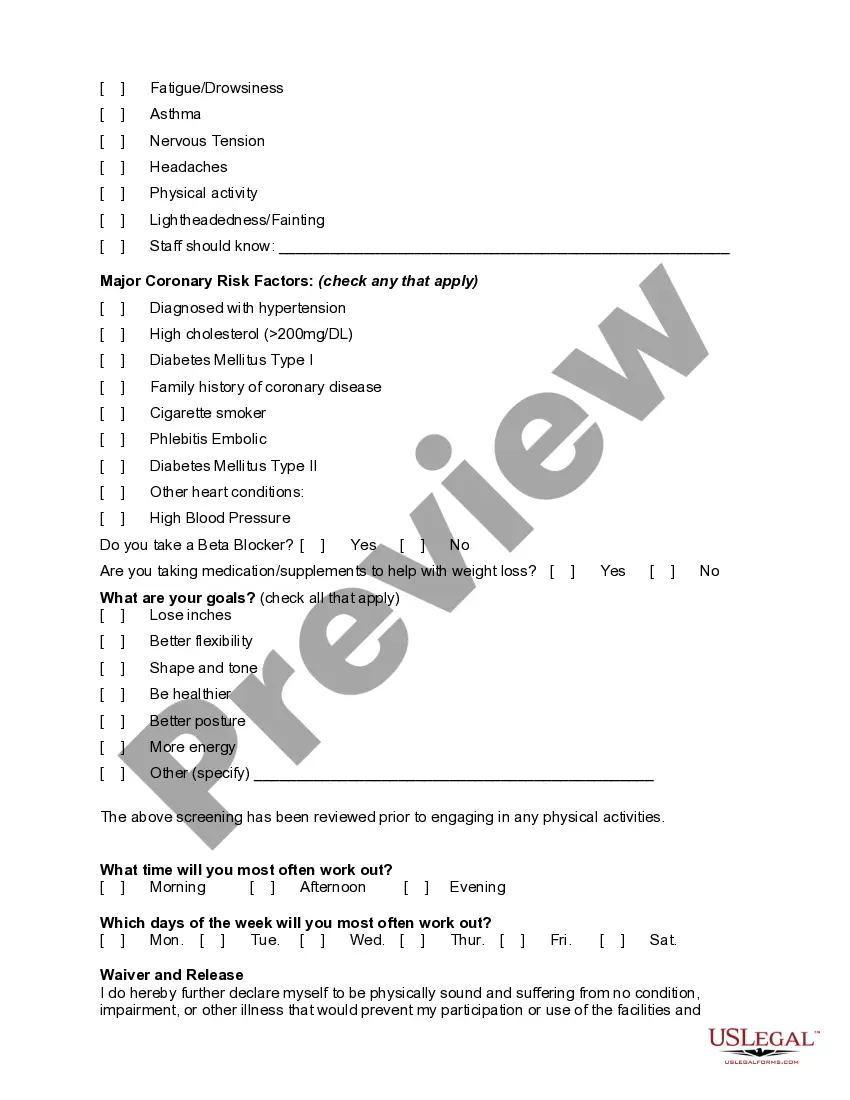
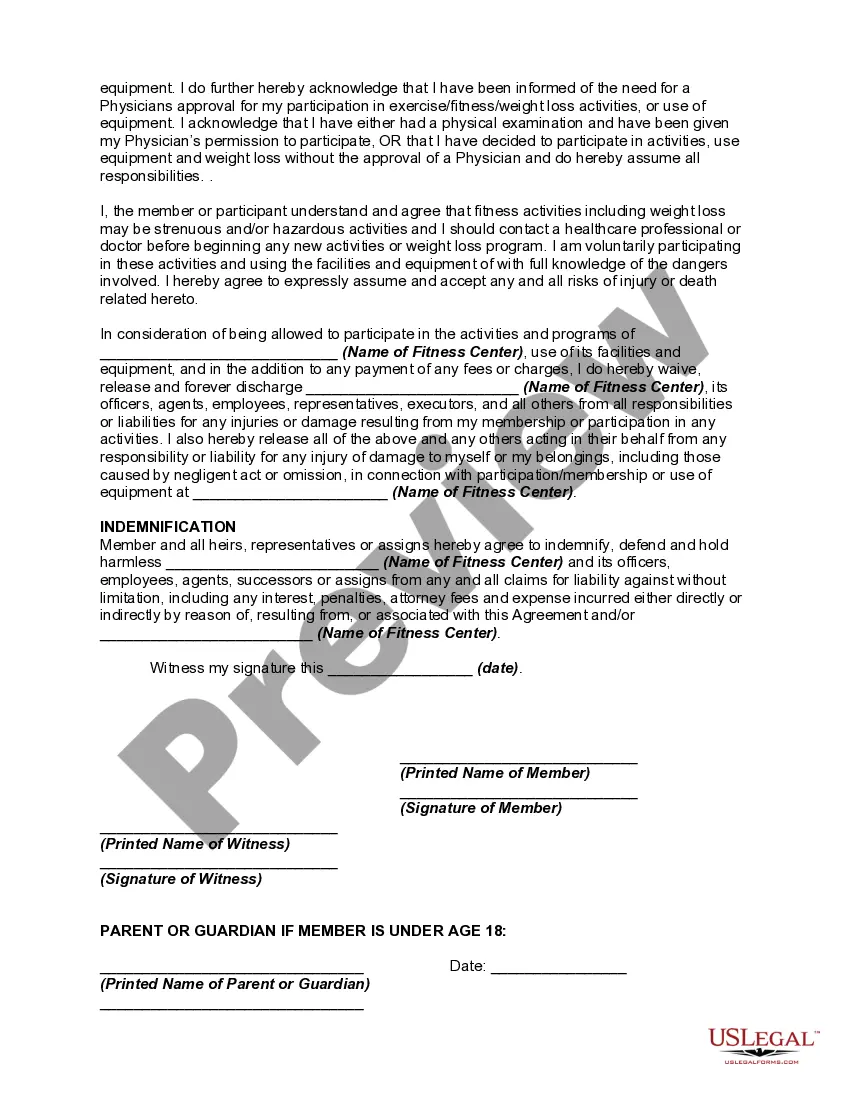
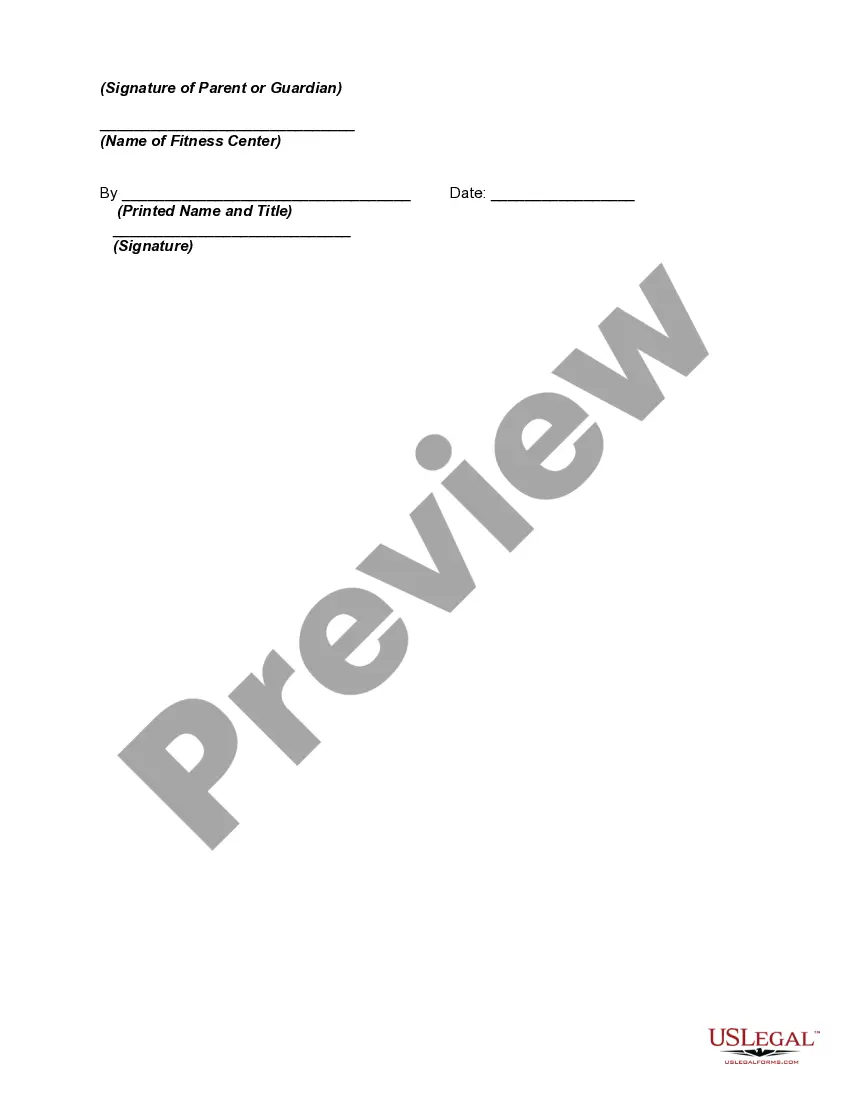
How to fill out Personal Training Or Trainer And Fitness Center Membership Application And Agreement Including Waiver And Indemnification Agreement?
It’s clear that you cannot transform into a legal authority in a single night, nor can you comprehend how to swiftly prepare a Personal Trainer Form With Multiple Locations without possessing a distinct set of abilities.
Assembling legal documents is an extended task necessitating a particular education and expertise. Therefore, why not delegate the creation of the Personal Trainer Form With Multiple Locations to the professionals.
With US Legal Forms, one of the most extensive legal template repositories, you can access everything from court documentation to templates for internal corporate communication.
Begin your search afresh if you need any other form.
Establish a complimentary account and select a subscription plan to procure the template.
- We recognize the significance of compliance and adherence to federal and state laws and regulations.
- Thus, on our platform, all templates are location-specific and current.
- Here’s how you can commence using our platform and acquire the form you need in just a few moments.
- Locate the document you require by utilizing the search bar at the top of the page.
- View it (if this option is available) and examine the accompanying description to determine if the Personal Trainer Form With Multiple Locations is what you’re looking for.
Form popularity
FAQ
There are three common elements to all product liability lawsuits, regardless of the legal theory that the lawsuit is brought under. The lawsuit must involve a product, the product must be found to be defective, and the product defect must be found to be the proximate cause of the injury.
There are three common elements to all product liability lawsuits, regardless of the legal theory that the lawsuit is brought under. The lawsuit must involve a product, the product must be found to be defective, and the product defect must be found to be the proximate cause of the injury.
Strict Liability and Products Liability Plaintiffs in states that recognize strict liability for manufacturing defects will not need to show that the manufacturer failed to use due care or was reckless. A plaintiff can recover damages even if the manufacturer used all appropriate care in the preparation of the product.
28-01.3-08. Except as provided in subsections 4 and 5, there may be no recovery of damages in a products liability action unless the injury, death, or property damage occurs within ten years of the date of initial purchase for use or consumption, or within eleven years of the date of manufacture of a product. 2.
A negligence claim requires that the person bringing the claim (the plaintiff) establish four distinct elements: duty of care, breach, causation, and damages.
If strict liability applies, the plaintiff does not need to prove that a manufacturer was negligent but only that the product was defective or posed a risk of harm. By eliminating the issue of fault, the concept of no-fault, or strict liability, allows plaintiffs to recover where they otherwise might not.
In order to prevail in negligence, a plaintiff must prove each of the following elements to succeed: The defendant owed the plaintiff a duty. The defendant breached that duty. The defendant's breach of duty caused an injury to the plaintiff.
You and your attorney must provide evidence of injury, death, or property loss to demonstrate the existence of the defect, such as medical records, police reports, and eye witness testimonies. The product was defective. A personal injury lawyer must prove the existence of a defect.