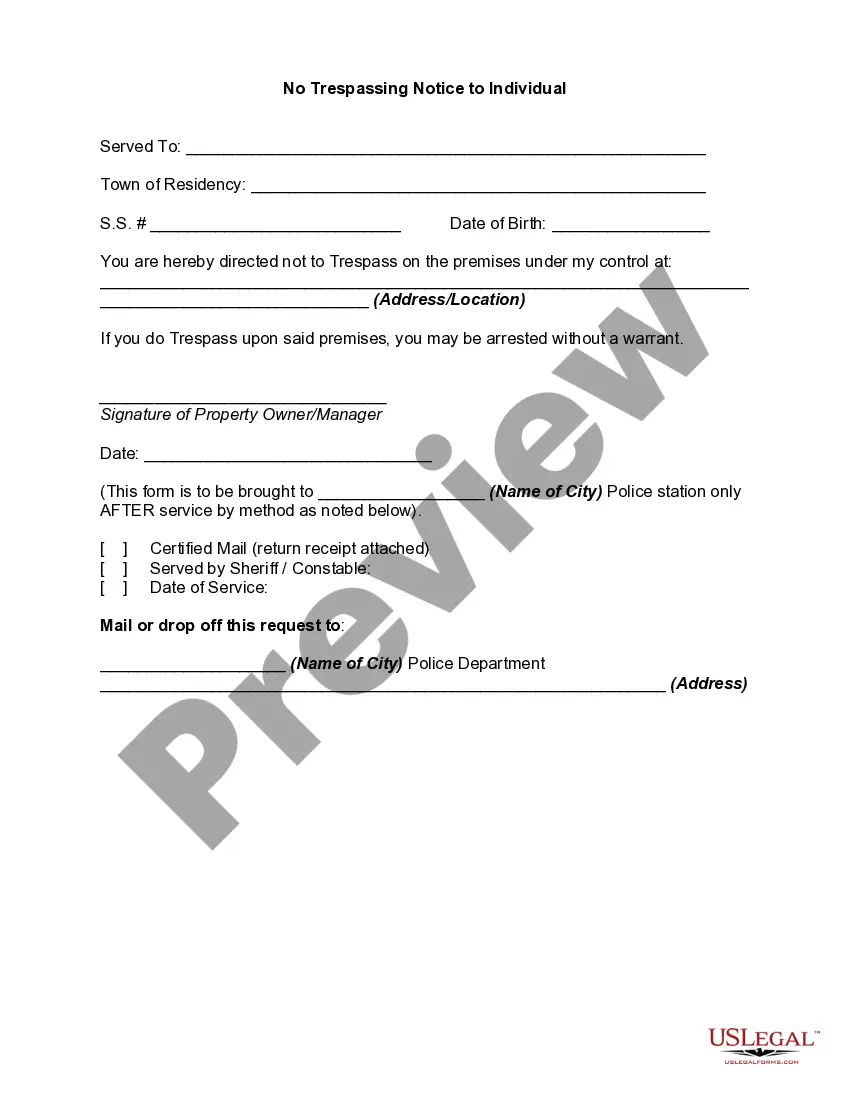
Trespassing 3
Description
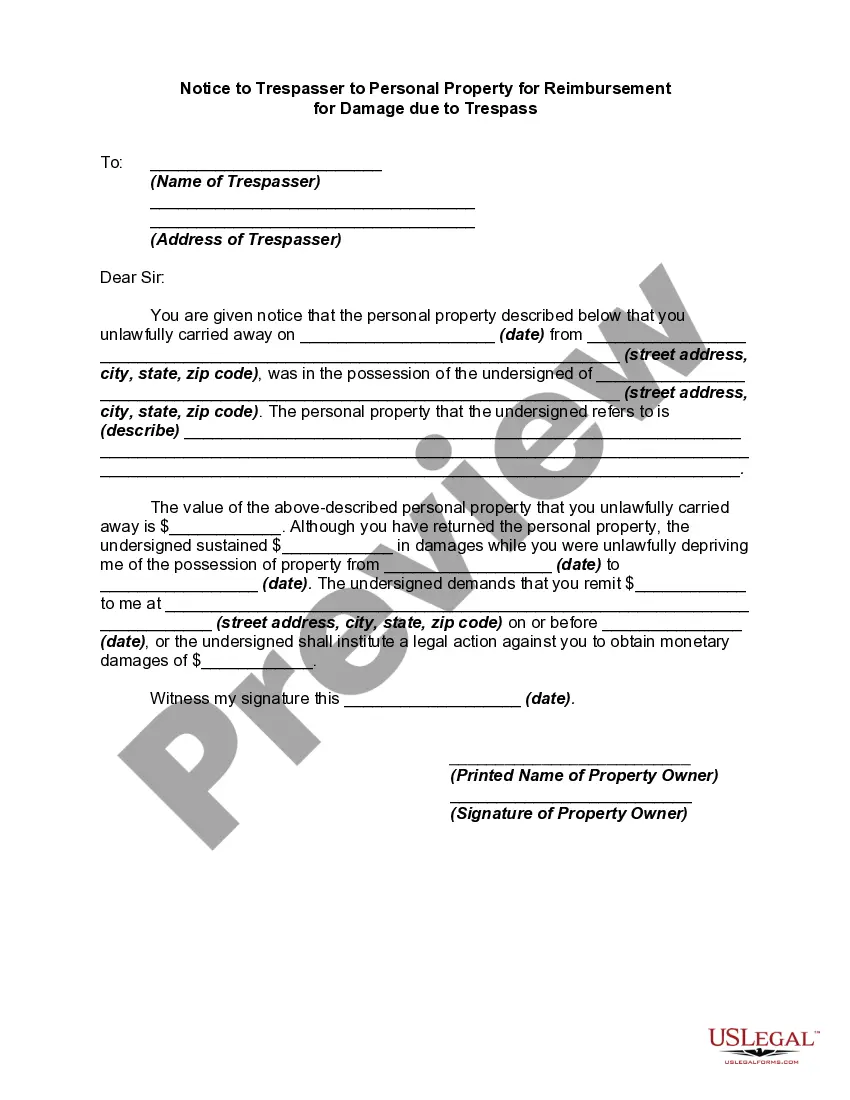
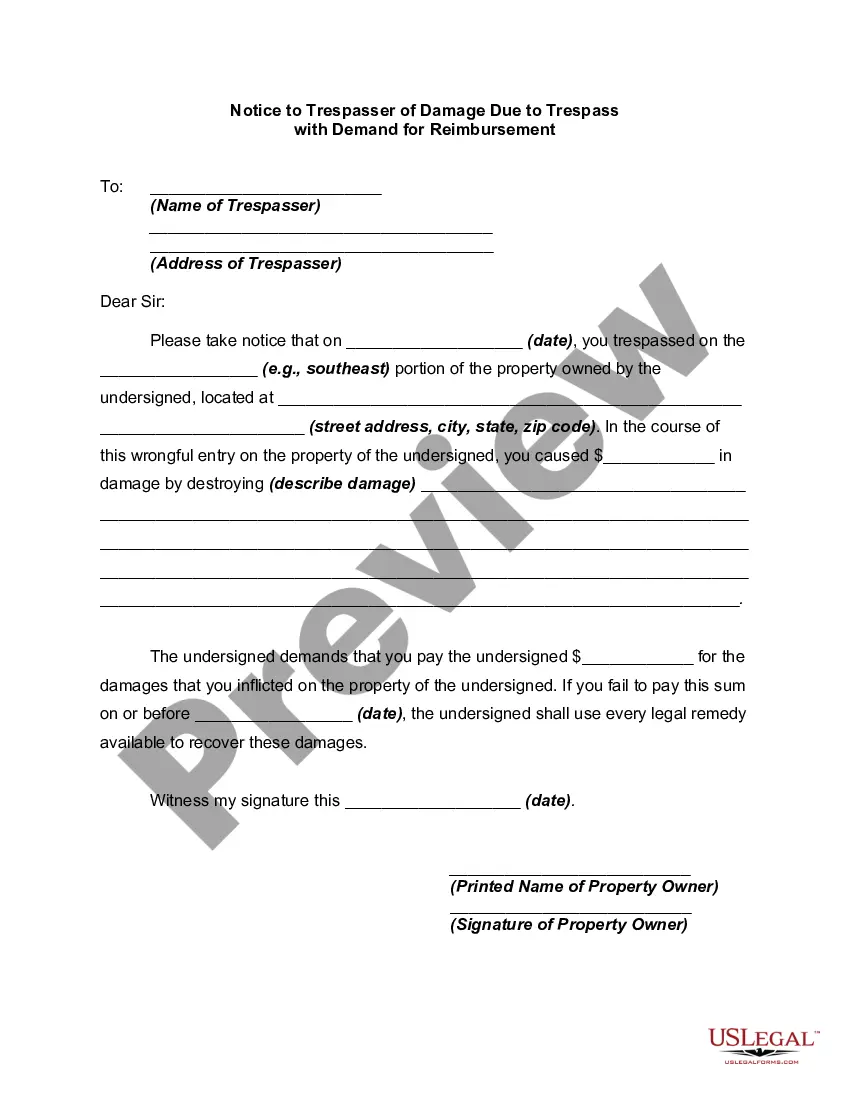
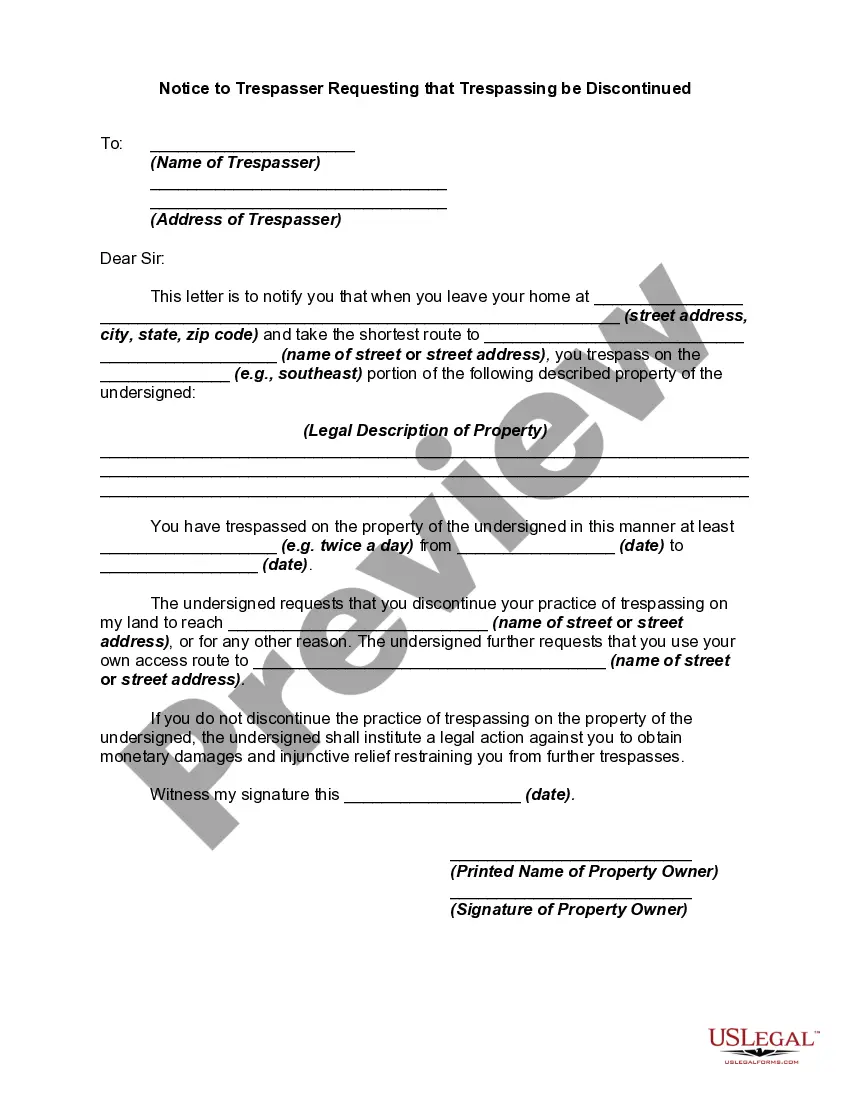
Get your form ready online
Our built-in tools help you complete, sign, share, and store your documents in one place.
Make edits, fill in missing information, and update formatting in US Legal Forms—just like you would in MS Word.
Download a copy, print it, send it by email, or mail it via USPS—whatever works best for your next step.
Sign and collect signatures with our SignNow integration. Send to multiple recipients, set reminders, and more. Go Premium to unlock E-Sign.
If this form requires notarization, complete it online through a secure video call—no need to meet a notary in person or wait for an appointment.
We protect your documents and personal data by following strict security and privacy standards.

Make edits, fill in missing information, and update formatting in US Legal Forms—just like you would in MS Word.

Download a copy, print it, send it by email, or mail it via USPS—whatever works best for your next step.

Sign and collect signatures with our SignNow integration. Send to multiple recipients, set reminders, and more. Go Premium to unlock E-Sign.

If this form requires notarization, complete it online through a secure video call—no need to meet a notary in person or wait for an appointment.

We protect your documents and personal data by following strict security and privacy standards.
Looking for another form?


How to fill out No Trespassing Notice To Individual?
- Log in to your account if you've previously utilized our services and download the desired form template by clicking the Download button. Ensure that your subscription is active; otherwise, renew it as per your payment plan.
- If you are new to our service, begin by checking the Preview mode and read the form description carefully. Confirm that the selected form aligns with your needs and complies with local jurisdiction requirements.
- If the form doesn't meet your requirements, utilize the Search tab to find a more suitable template and proceed to the next step.
- Select the document you need by clicking on the Buy Now button, then choose your preferred subscription plan and register an account for access to our extensive library.
- Complete your purchase by entering your credit card information or utilizing your PayPal account to finalize the subscription payment.
- Finally, download your form to your device, allowing you to easily complete it. You can also access it later in the My Forms section of your profile.
In conclusion, US Legal Forms stands out with its extensive collection of over 85,000 fillable and editable legal forms. This not only simplifies the process of creating legal documents but also ensures that you have the best resources for each unique situation.
Start exploring the benefits today and experience seamless document preparation!
Form popularity
FAQ
In Alabama, criminal trespassing 3rd degree occurs when a person enters or remains on a property without permission, typically in cases where the property is not clearly marked as private. This is considered a violation, not a felony, but can still carry penalties such as fines or community service. Understanding the nuances of this law can help you determine your rights and responsibilities regarding property access. For more assistance, check the resources available on US Legal Forms.
The term 'tres' originates from Latin and means 'to cross.' In the context of trespassing, it refers to the act of unlawfully crossing onto someone else's property without permission. Understanding this root can clarify the legal implications of trespassing, which often involves a direct violation of someone's property rights. If you find yourself needing more guidance on trespassing laws, you might consider exploring the resources available on the US Legal Forms platform.
Yes, no trespassing signs can serve as a legal deterrent against trespassers on your property. By clearly marking your property, you demonstrate your intent to keep others out, which can strengthen your case if a legal dispute arises. However, the effectiveness of these signs may vary depending on local laws. To ensure full protection, consult resources at US Legal Forms to understand your legal standing.
Filing a no trespassing order typically involves submitting the appropriate forms to your local court or law enforcement agency. You may need to provide evidence of past trespassing incidents to support your request. Once filed, this order can help protect your property from unwanted intrusions. For a streamlined process, consider using US Legal Forms, which simplifies the documentation needed.
Deciding whether to press charges for trespassing often depends on the situation. If someone repeatedly trespasses on your property, it may be necessary to take legal action to protect your rights. Pressing charges can deter further incidents and establish boundaries. If you need guidance, US Legal Forms can provide tools to assist in your decision-making process.
Criminal trespass 3rd degree in Alabama occurs when someone unlawfully enters or remains on someone else’s property without permission. This can include various scenarios, like entering a fenced area or refusing to leave a property after being asked. It's important to be aware that this type of trespass can lead to legal consequences. If you find yourself facing similar issues, consider using the resources at US Legal Forms to understand your rights.
To file trespassing charges, gather relevant evidence and contact local law enforcement to report the incident. Providing documentation, such as photographs or eyewitness accounts, can help authorities take your claims seriously. Knowing the steps involved in trespassing 3 charges can streamline the process, so consider utilizing resources from USLegalForms for appropriate forms.
Third-degree trespassing typically involves unlawful entry onto a property without intent to commit a crime. This offense is often classified as a misdemeanor and may result in fines or short-term incarceration. Understanding the specifics of trespassing 3 and its degrees can clarify legal challenges you may face.
The worst punishment for trespassing can vary by state and the severity of the case. In some instances, trespass can lead to fines, community service, or even jail time. It's essential to be aware of the potential repercussions under trespassing 3 laws to avoid any serious legal consequences.
Yes, a property owner can choose to drop criminal trespassing charges, typically by communicating with the appropriate legal authorities. The decision often depends on the relationship with the trespasser and the circumstances surrounding the incident. If you're involved in such a situation, understanding the process surrounding trespassing 3 can be beneficial.