Trespass With A Deadly Weapon
Description
Get your form ready online
Our built-in tools help you complete, sign, share, and store your documents in one place.
Make edits, fill in missing information, and update formatting in US Legal Forms—just like you would in MS Word.
Download a copy, print it, send it by email, or mail it via USPS—whatever works best for your next step.
Sign and collect signatures with our SignNow integration. Send to multiple recipients, set reminders, and more. Go Premium to unlock E-Sign.
If this form requires notarization, complete it online through a secure video call—no need to meet a notary in person or wait for an appointment.
We protect your documents and personal data by following strict security and privacy standards.

Make edits, fill in missing information, and update formatting in US Legal Forms—just like you would in MS Word.

Download a copy, print it, send it by email, or mail it via USPS—whatever works best for your next step.

Sign and collect signatures with our SignNow integration. Send to multiple recipients, set reminders, and more. Go Premium to unlock E-Sign.

If this form requires notarization, complete it online through a secure video call—no need to meet a notary in person or wait for an appointment.

We protect your documents and personal data by following strict security and privacy standards.
Looking for another form?
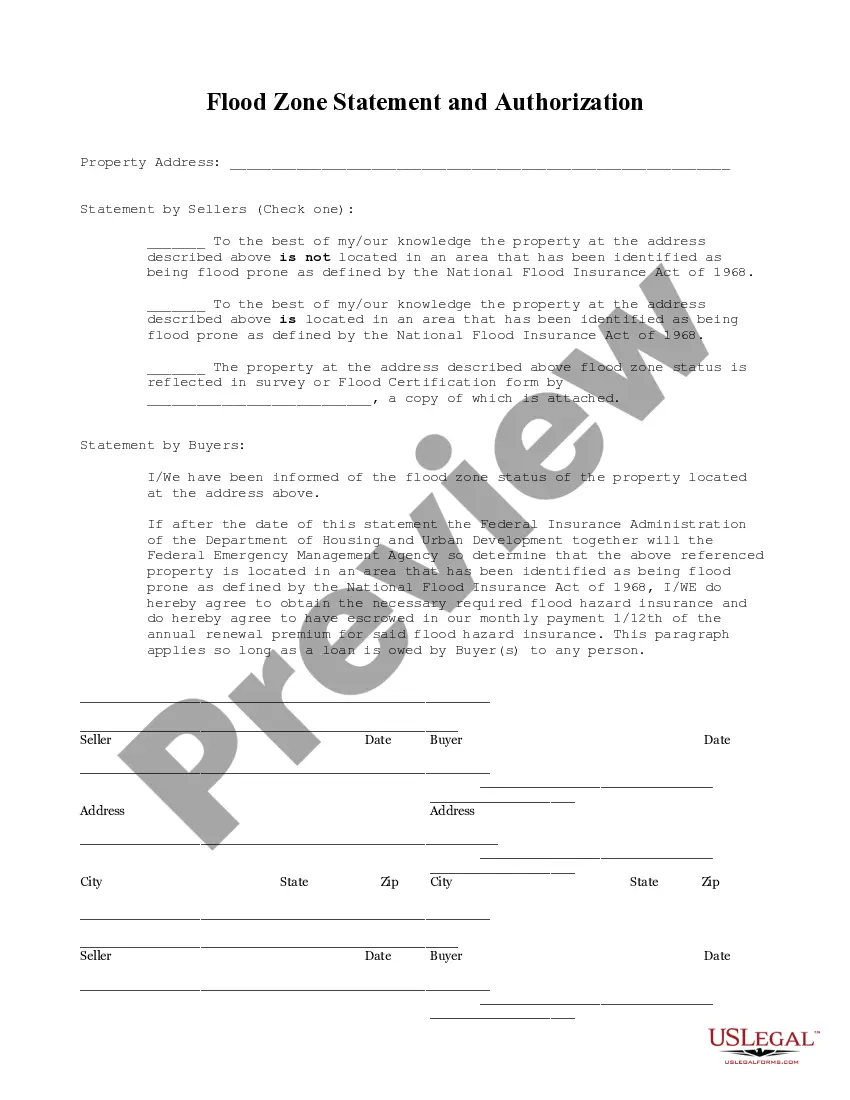

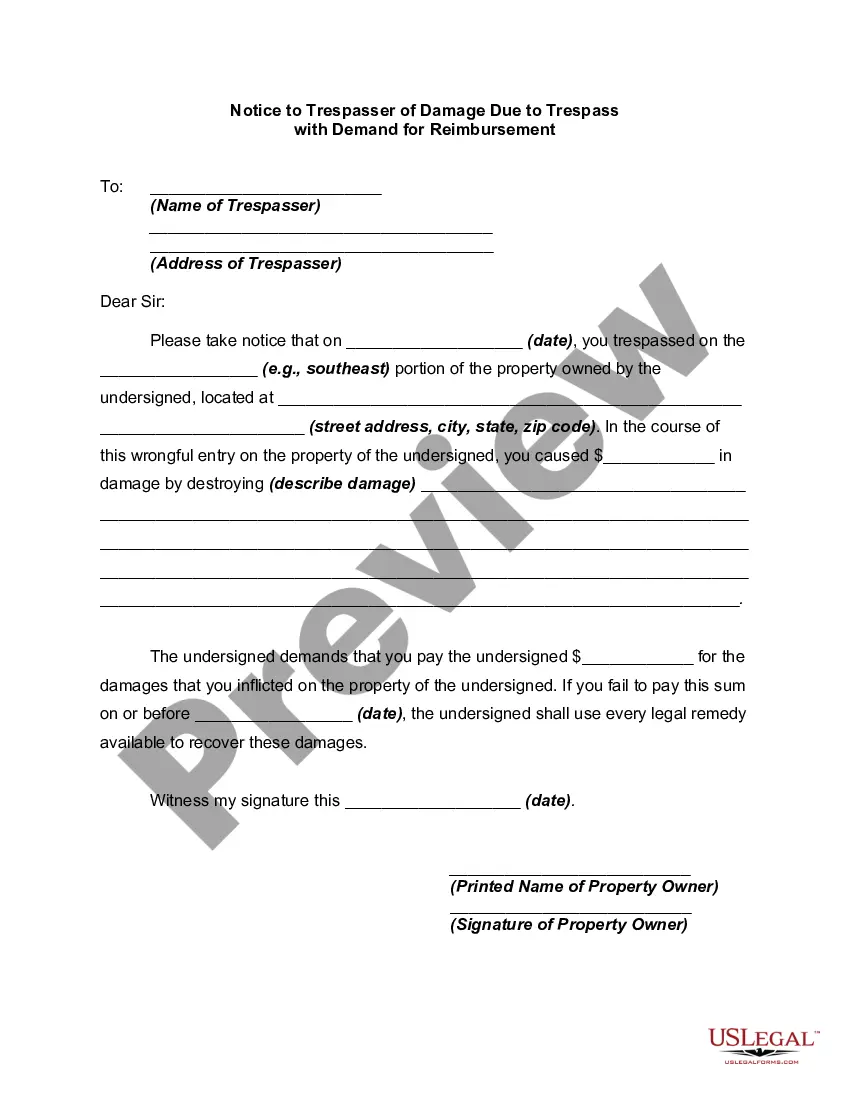
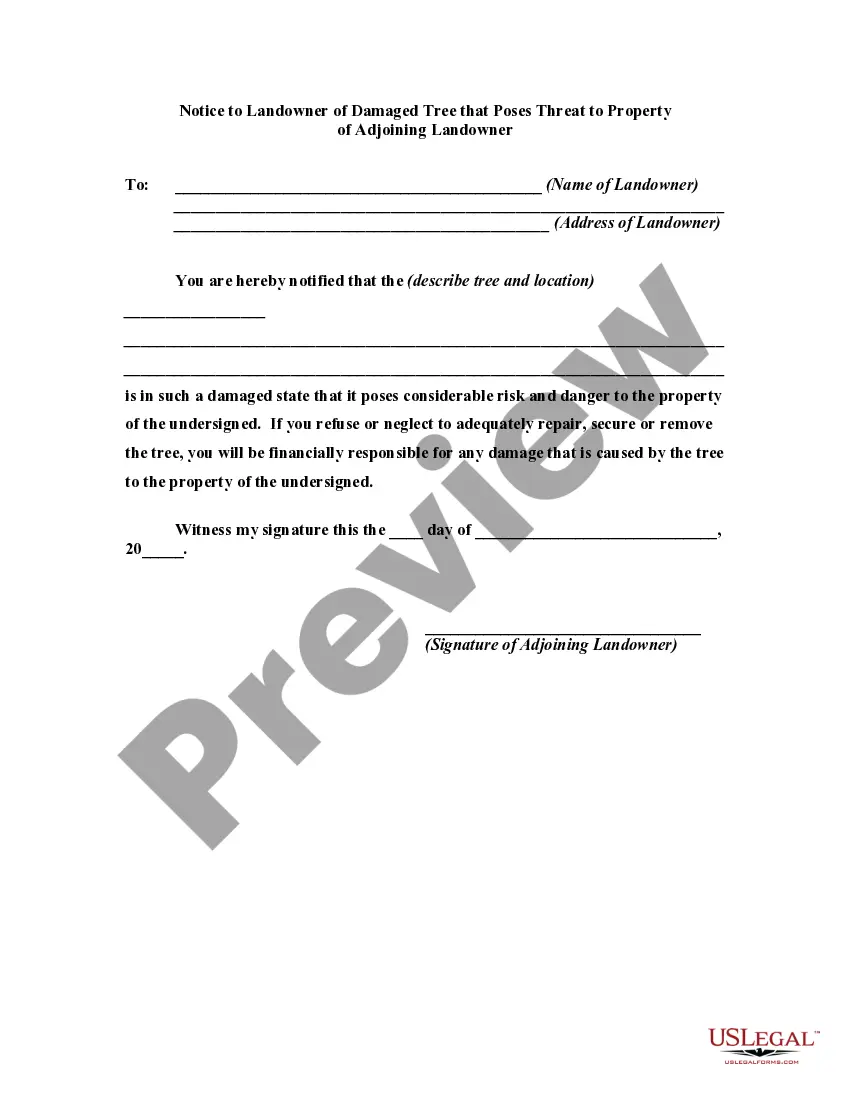
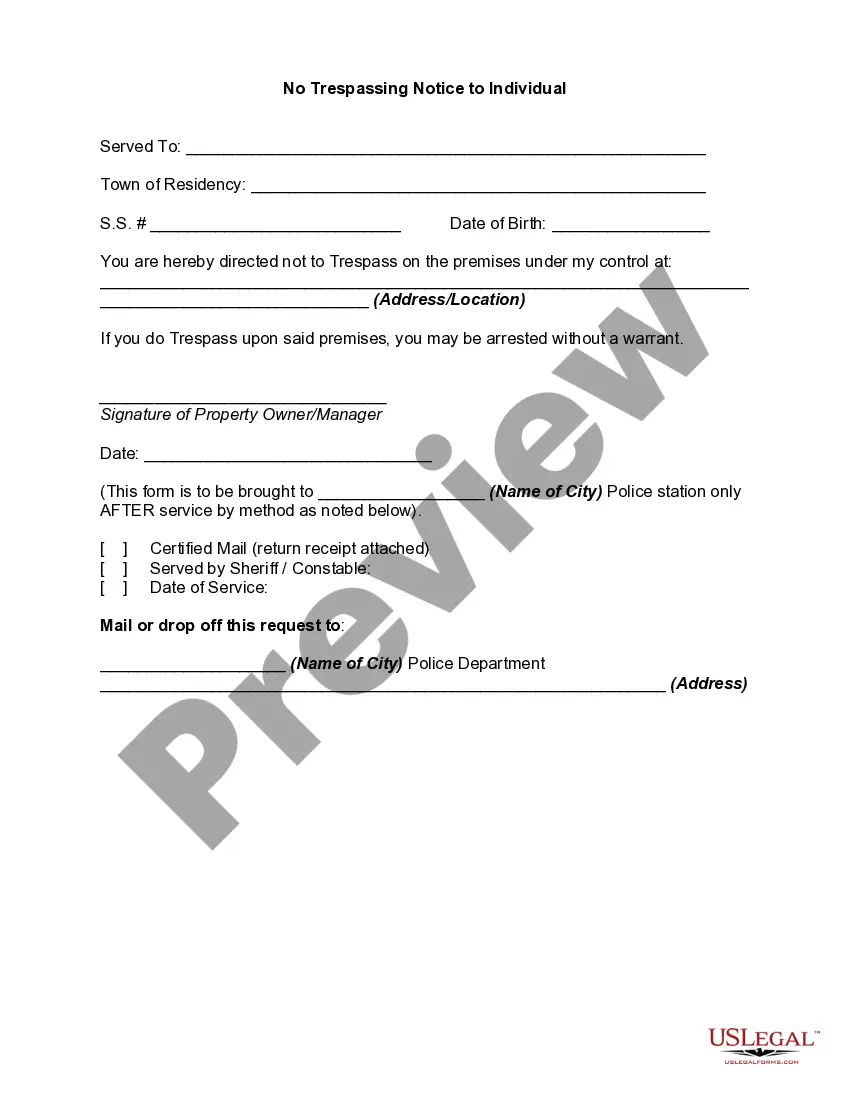
How to fill out Notice To Trespasser Of Damage Due To Trespass With Demand For Reimbursement?
- Log in to your existing account at US Legal Forms by clicking on the Login link.
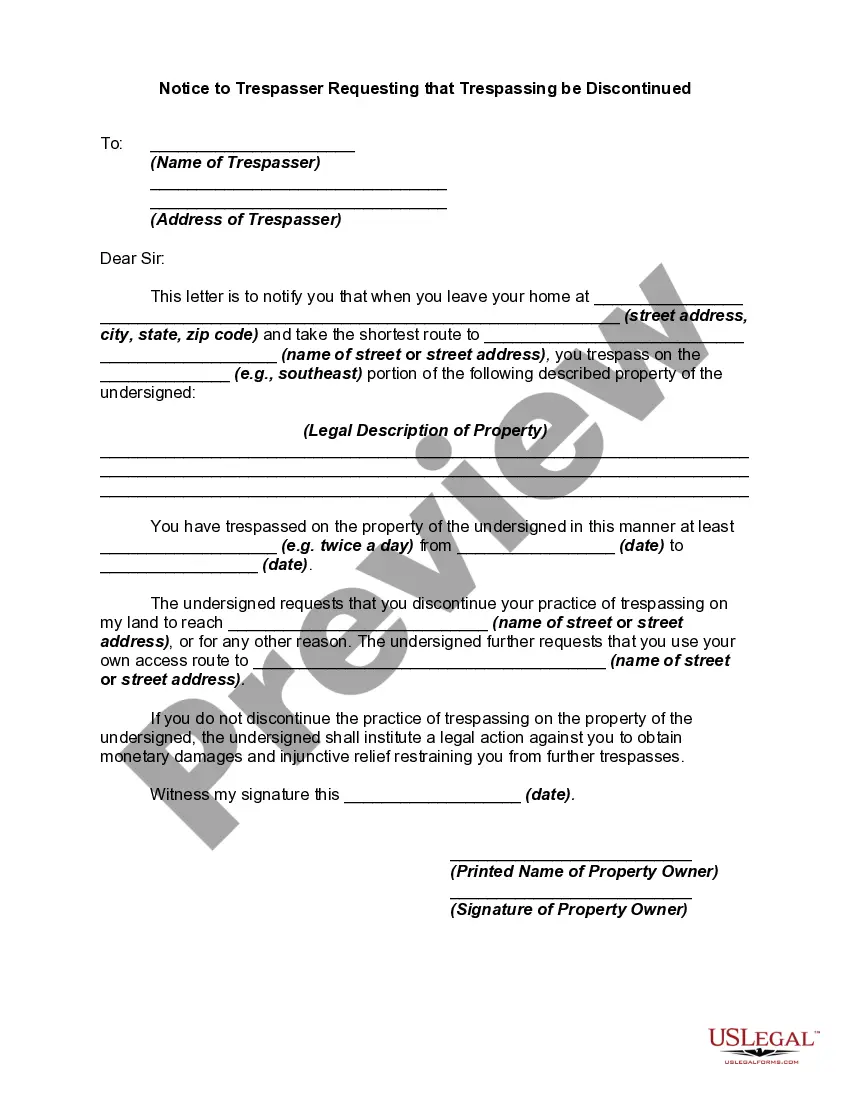
- If you're new, start by choosing the specific form for trespassing with a deadly weapon from our extensive online library.
- Utilize the Preview mode and description to confirm that the selected form meets your requirements and complies with local laws.
- If the form is not suitable, use the Search tab to find an appropriate alternative.
- Once you have the right document, click on the Buy Now button and select your desired subscription plan, creating an account if needed.
- Complete your purchase by entering your payment information, either via credit card or PayPal.
- Finally, download the form to your device and access it anytime through the My Forms section in your profile.
By following these steps, you ensure that you are legally prepared and protected. US Legal Forms not only offers a robust collection of forms but also supports your journey with resources and expert assistance as needed.
Take the first step today—explore the vast library of legal forms offered by US Legal Forms and confidently create your documents!
Form popularity
FAQ
A criminal trespass order typically remains in effect for the duration specified by the court, often a year or more depending on the severity of the case. In instances involving a trespass with a deadly weapon, the court may impose stricter conditions or longer durations. Always consult with legal experts to understand your options and the implications of such orders.
The main types of trespass are civil and criminal trespass. Civil trespass occurs without intent to commit a further crime, while criminal trespass involves unlawful entry with the intent to carry out a crime, which can include carrying a deadly weapon. Knowing the nuances of these types can help protect your rights.
If someone is trespassing on your property, first assess the situation for safety. Document any details, and if they are armed or aggressive, contact law enforcement immediately; especially if they possess a deadly weapon. It is also wise to understand your legal rights regarding trespass to ensure you take appropriate action.
A trespass order in Connecticut usually lasts for one year, but it might be extended based on the circumstances. If an individual feels threatened due to a trespass with a deadly weapon, they should consider seeking legal advice. Keeping informed about these timelines can help ensure the safety of your property and personal space.
Trespassing itself is typically classified as a misdemeanor in Connecticut; however, certain conditions can enhance it to a felony. For instance, if an individual trespasses with a deadly weapon, this can lead to more serious charges and harsher penalties. Therefore, it's critical to understand the level of severity associated with your specific situation.
In Connecticut, trespassing penalties can vary based on the specific circumstances and intent. If someone commits trespass with a deadly weapon, it can lead to severe repercussions, including fines and potential jail time. The law looks at the intent behind the trespass, so it's essential to consult with legal resources for specific guidance.
In South Carolina, laws for repeat offenders can result in harsher sentences and penalties for continued offenses, including trespassing with a deadly weapon. Repeat offenders may face increased fines and longer prison terms. Understanding these laws can be vital for both individuals and property owners during legal proceedings. Seeking guidance from resources like USLegalForms could be beneficial for anyone navigating these complex situations.
The statute regarding trespassing after notice in South Carolina establishes that once an individual is formally notified not to enter or remain on certain property, doing so becomes illegal. This is particularly relevant in cases involving a trespass with a deadly weapon. Property owners typically give notice through signs, verbal warnings, or written communication. Knowing how this statute works can empower property owners to enforce their rights effectively.
Malicious injury to personal property, under S.C. 16 11 510, refers to intentionally damaging or destroying someone else's belongings. This law emphasizes the importance of respecting others' property and imposes severe penalties when a deadly weapon is involved. If you find yourself in a dispute related to such actions, being aware of this statute can aid your case. Turning to platforms like USLegalForms can offer essential resources for understanding your rights.
Statute 16 11 0620 in South Carolina addresses the offense of carrying a weapon on school property. If an individual trespasses with a deadly weapon on school grounds, they can face serious legal consequences. This law is designed to protect students and staff from potential threats. Understanding this statute is essential for both property owners and trespassers.