Trespassing With Intent
Description
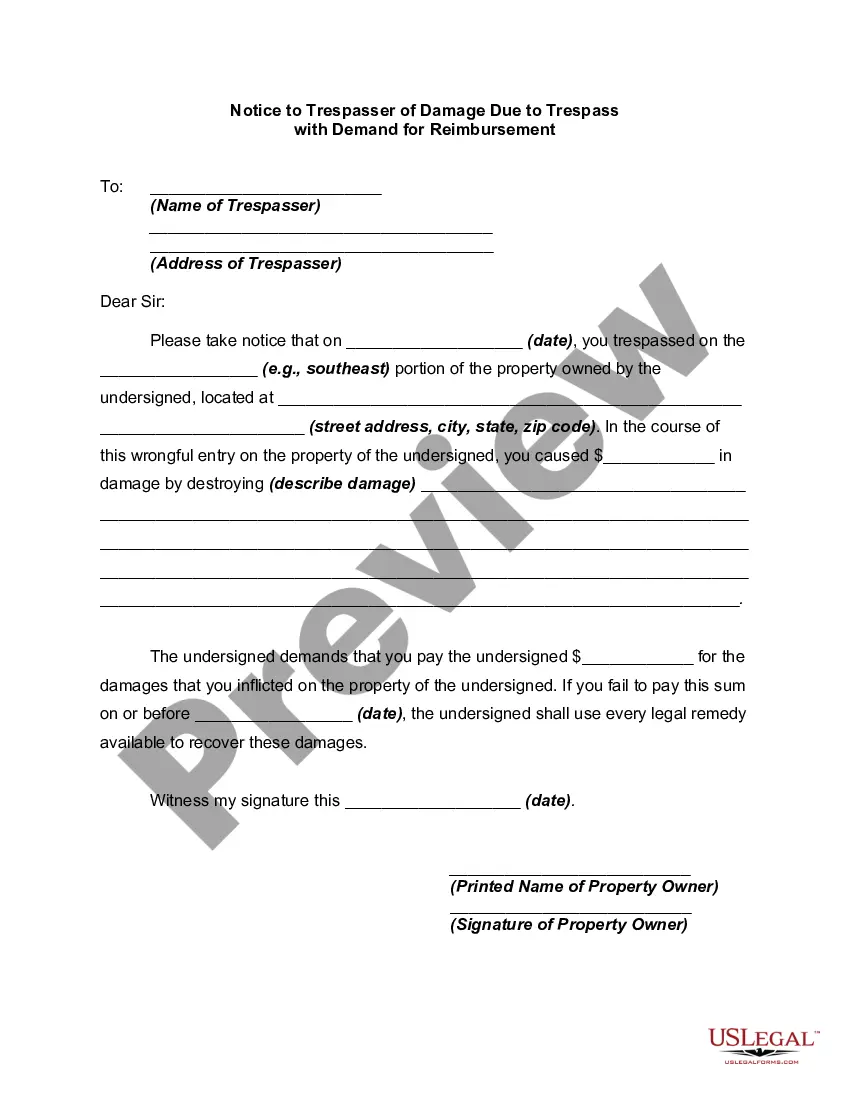
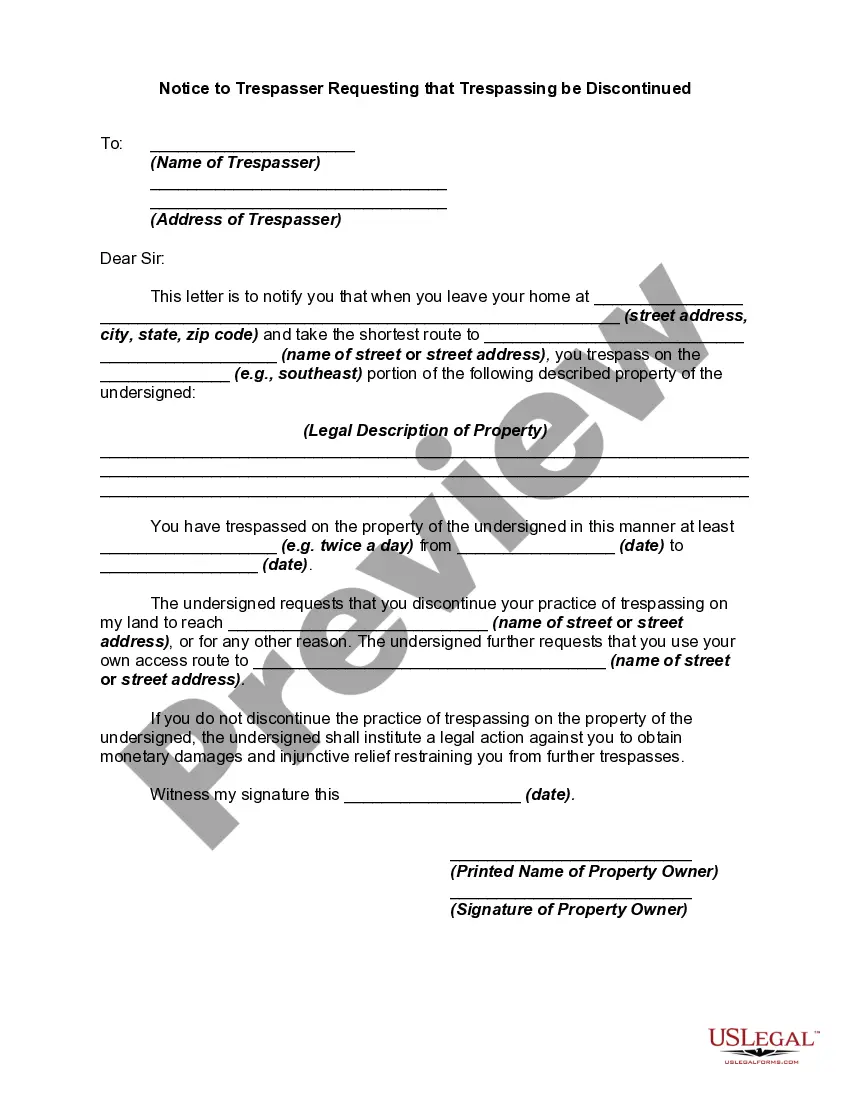
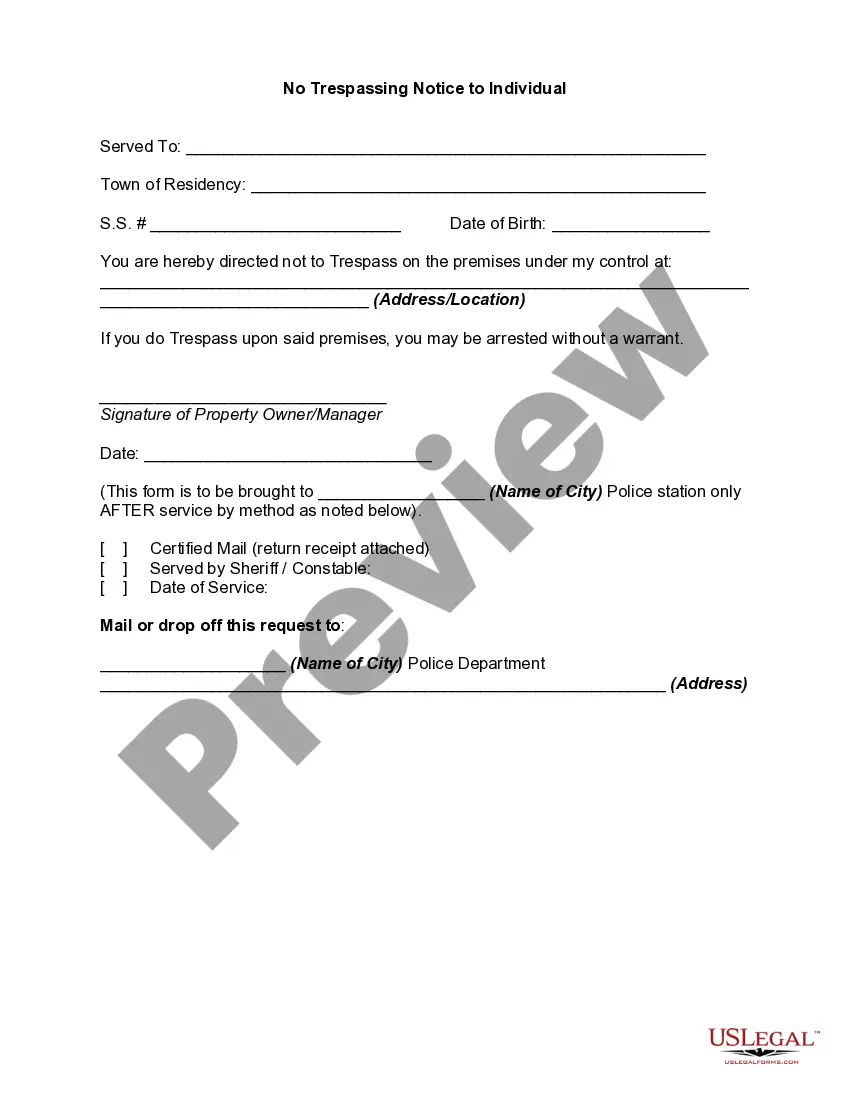
Get your form ready online
Our built-in tools help you complete, sign, share, and store your documents in one place.
Make edits, fill in missing information, and update formatting in US Legal Forms—just like you would in MS Word.
Download a copy, print it, send it by email, or mail it via USPS—whatever works best for your next step.
Sign and collect signatures with our SignNow integration. Send to multiple recipients, set reminders, and more. Go Premium to unlock E-Sign.
If this form requires notarization, complete it online through a secure video call—no need to meet a notary in person or wait for an appointment.
We protect your documents and personal data by following strict security and privacy standards.

Make edits, fill in missing information, and update formatting in US Legal Forms—just like you would in MS Word.

Download a copy, print it, send it by email, or mail it via USPS—whatever works best for your next step.

Sign and collect signatures with our SignNow integration. Send to multiple recipients, set reminders, and more. Go Premium to unlock E-Sign.

If this form requires notarization, complete it online through a secure video call—no need to meet a notary in person or wait for an appointment.

We protect your documents and personal data by following strict security and privacy standards.
Looking for another form?


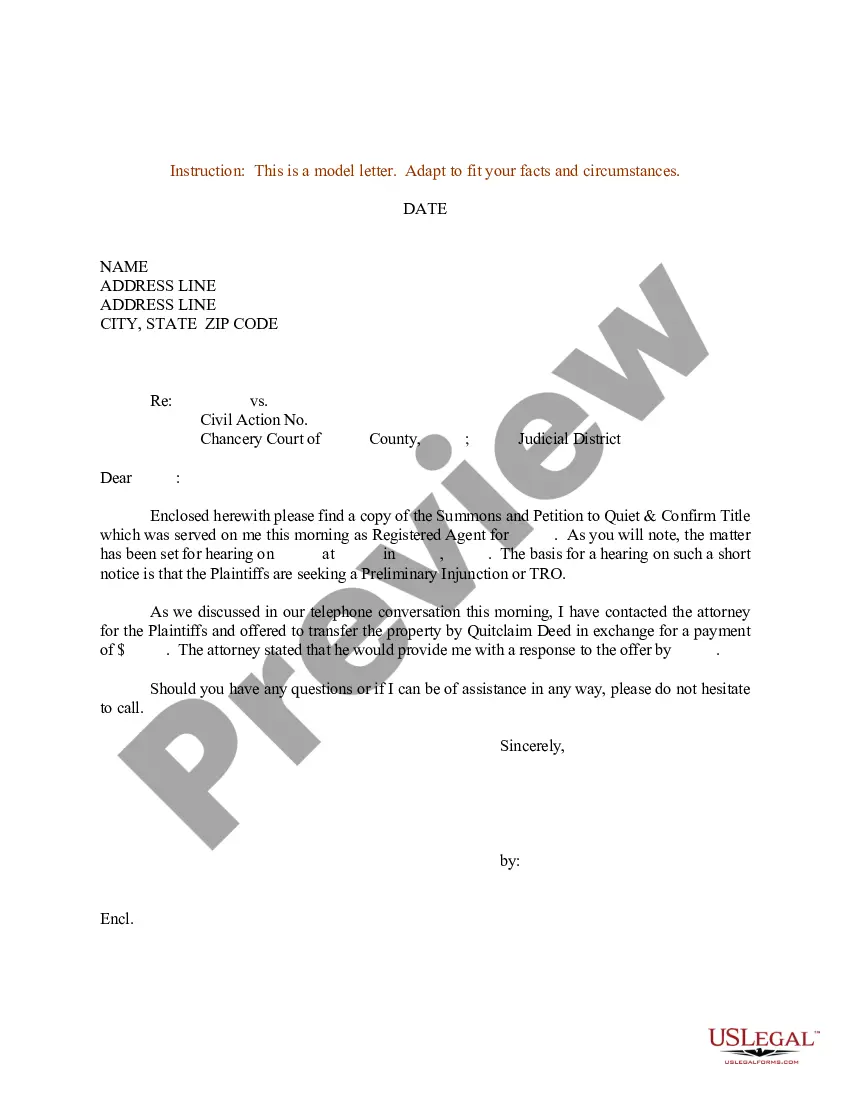

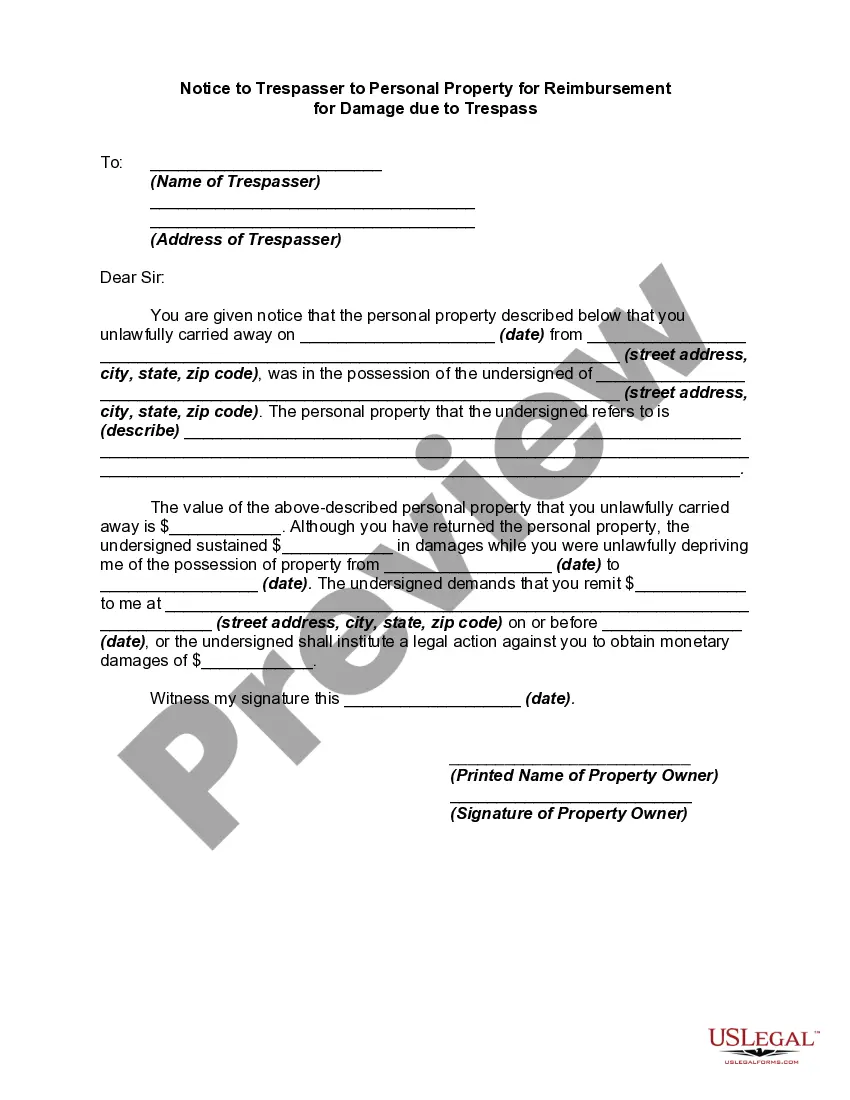
How to fill out Notice To Trespasser To Personal Property For Reimbursement For Damage Due To Trespass?
- Log in to your US Legal Forms account, verifying that your subscription is active. If it's not, renew it using your payment plan.
- Review the available templates by checking the Preview mode and ensuring it meets your local jurisdiction's requirements.
- If you find another form that fits your needs better, use the Search tab to locate a suitable template.
- Once you've selected the correct form, click the Buy Now button and choose your desired subscription plan.
- Complete your purchase by entering your credit card details or by using your PayPal account.
- Download the form and save it on your device for easy access through the My Forms section of your account.
In conclusion, US Legal Forms simplifies the process of documenting legal matters, ensuring you have access to a wide array of forms and expert assistance. Take advantage of this robust resource today and streamline your legal experience.
Visit US Legal Forms now to begin navigating your legal documentation needs with confidence!
Form popularity
FAQ
Writing a certified letter for trespassing involves drafting a formal notice to inform the recipient of your expectations regarding your property. Include relevant details such as the date, the recipient's information, and a description of the property. Clearly state that they are not allowed on your premises and mail the letter via certified mail to ensure you have proof of delivery, emphasizing the seriousness of intended trespassing.
To effectively communicate that someone is not allowed on your property, consider speaking with them directly, or ideally, send them a written notice. Make sure to explain your reasons clearly while remaining calm and respectful. A clear and firm message will help convey your boundaries, particularly when it comes to preventing trespassing with intent.
To write a trespass letter, start with a clear subject line that indicates the purpose of the letter. Include your name, address, and a description of the property in question. Clearly state that the individual may not enter your property and mention potential consequences for trespassing, reinforcing the idea of trespassing with intent.
An example of a trespassing letter is a formal notice stating that a specific individual is not allowed on your property. This letter should include details like the date, the recipient's name, and a clear statement about the trespass warning. Using a structured letter can eliminate confusion and make your intentions clear, particularly when dealing with a potential trespasser with intent.
A trespass warning does not need to be written to be effective. However, providing a written notice significantly strengthens your position, especially if an issue arises later. If you suspect someone intends to trespass, documenting your warning may help enforce your rights. Remember, clear communication can deter potential trespassers.
The maximum penalty for trespassing can vary by state, ranging from fines to potential jail time. Generally, trespassing with intent to commit an illegal act may incur harsher penalties. It is crucial to understand the laws in your state and seek advice from legal experts or services like US Legal Forms to ensure you fully comprehend your rights and obligations.
In a trespassing case, the burden of proof lies primarily with the property owner. They must demonstrate that the trespasser entered the property without permission and had the intent to do so. Understanding the nuances of trespassing with intent will help you present your case more effectively, and platforms like US Legal Forms provide valuable resources to assist you.
To obtain a trespass order, you typically need to file a petition with the local court. This petition should detail the circumstances surrounding the trespassing incident and provide evidence of the trespasser's intent. If you feel that you are a victim of trespassing with intent, consider using resources like US Legal Forms to access the necessary forms and guidance to streamline the process.
In Florida, trespassing occurs when someone knowingly enters or remains on property without permission, which can include various types of land. The law distinguishes between civil and criminal trespass, often depending on the intent behind the action. Understanding these statutes can help you deal effectively with trespassers and ensure your rights are protected.
In Maryland, trespassing involves entering or remaining on someone else's property without permission. Trespassing with intent often includes actions such as vandalism or intended harm. It’s essential to understand local laws to identify specific instances that qualify as trespassing, as penalties can vary based on intent and damage caused.