Disciplinary Action In Tagalog
Description
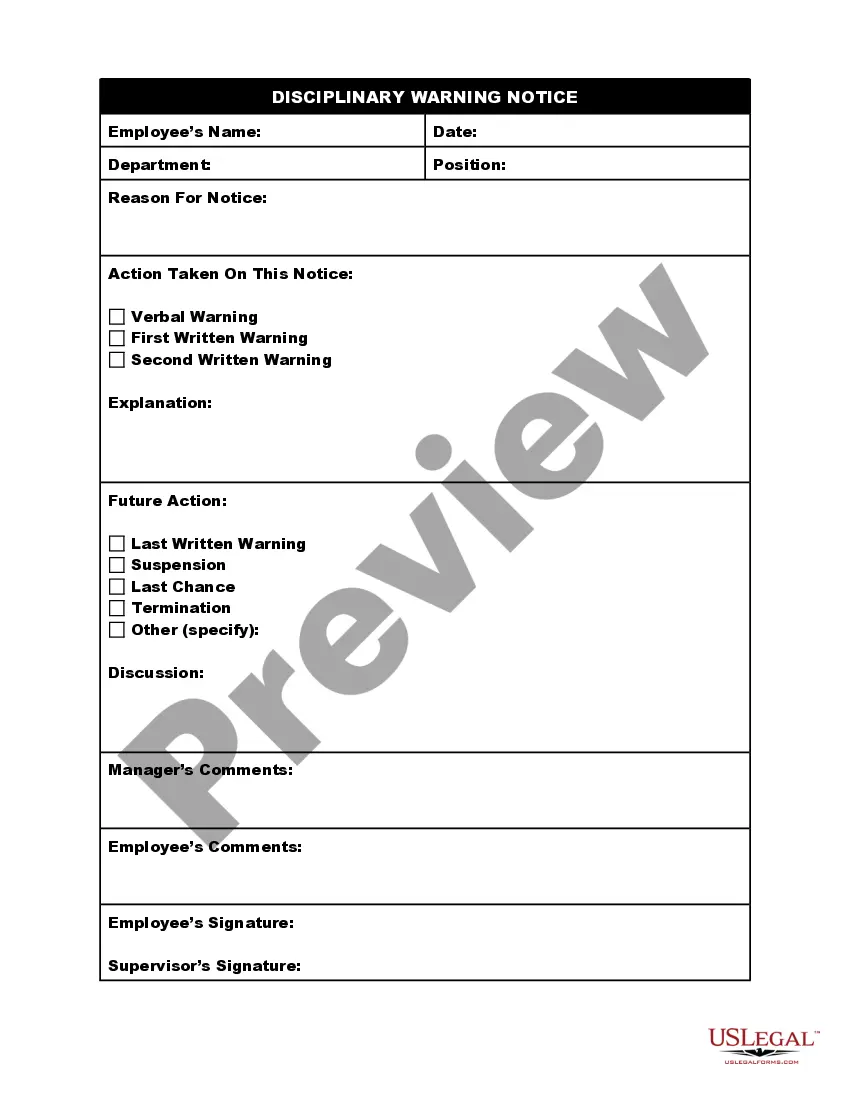
Get your form ready online
Our built-in tools help you complete, sign, share, and store your documents in one place.
Make edits, fill in missing information, and update formatting in US Legal Forms—just like you would in MS Word.
Download a copy, print it, send it by email, or mail it via USPS—whatever works best for your next step.
Sign and collect signatures with our SignNow integration. Send to multiple recipients, set reminders, and more. Go Premium to unlock E-Sign.
If this form requires notarization, complete it online through a secure video call—no need to meet a notary in person or wait for an appointment.
We protect your documents and personal data by following strict security and privacy standards.

Make edits, fill in missing information, and update formatting in US Legal Forms—just like you would in MS Word.

Download a copy, print it, send it by email, or mail it via USPS—whatever works best for your next step.

Sign and collect signatures with our SignNow integration. Send to multiple recipients, set reminders, and more. Go Premium to unlock E-Sign.

If this form requires notarization, complete it online through a secure video call—no need to meet a notary in person or wait for an appointment.

We protect your documents and personal data by following strict security and privacy standards.
Looking for another form?




How to fill out Disciplinary Notice To Employee?
Creating legal documents from the ground up can frequently be overwhelming.
Some situations may require extensive research and significant financial expenditure.
If you’re seeking a simpler and more economical means of generating Disciplinary Action in Tagalog or any other records without unnecessary hurdles, US Legal Forms is always available to assist.
Our online repository of over 85,000 current legal templates encompasses nearly every aspect of your financial, legal, and personal affairs. With just a few clicks, you can promptly obtain state- and county-compliant forms meticulously crafted by our legal professionals.
US Legal Forms enjoys a strong reputation and over 25 years of experience. Join us today and make document processing straightforward and efficient!
- Utilize our website whenever you require dependable and trustworthy services through which you can effortlessly locate and download the Disciplinary Action in Tagalog.
- If you're familiar with our site and have previously established an account, simply Log In to your account, select the form, and download it or retrieve it again later from the My documents section.
- No account? No worries. It requires minimal time to create one and browse the catalog.
- Before proceeding to download Disciplinary Action in Tagalog, adhere to these guidelines.
- Review the document preview and descriptions to ensure you have located the desired form.
Form popularity
FAQ
In the Philippines, disciplinary actions include verbal warnings, written notices, suspension, and, in severe cases, termination. Companies must adhere to the Labor Code, ensuring a fair process is followed. Recognizing the legal framework helps both employers and employees navigate their rights and responsibilities. Understanding 'disciplinary action in tagalog' can cross linguistic barriers for clarity in these procedures.
An example of disciplinary action is a one-week suspension for repeated violations of company policy. This action serves as both penalty and a prompt for the employee to improve. Documenting such instances properly is critical for future reference. Exploring how to articulate 'disciplinary action in tagalog' can aid in addressing similar situations effectively.
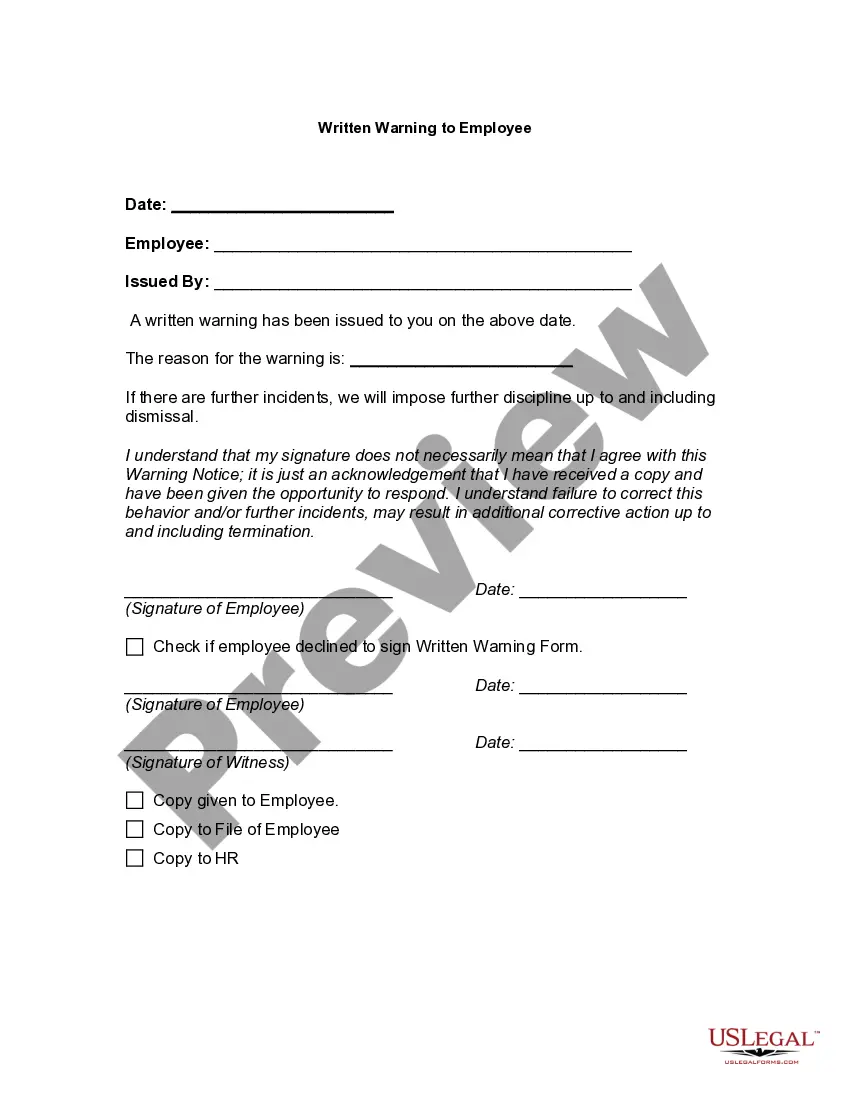
A disciplinary action example could be a written warning issued to an employee who fails to meet attendance expectations. The warning should detail specific incidents, allowing the employee to understand the breach. This procedure not only corrects behavior but also protects the employer legally. Finding resources that explain 'disciplinary action in tagalog' can enhance comprehension of these processes.
Disciplinary action at work typically includes any formal response to inappropriate behavior or poor performance. This may involve warnings, training sessions, or other corrective measures. It’s essential to follow established policies and avoid jumping to conclusions. Familiarity with 'disciplinary action in tagalog' can assist employees in understanding these actions in their cultural contexts.
Not necessarily. Disciplinary action can range from a simple warning to termination, depending on the situation. It is a way to address behavioral or performance issues formally without immediately resorting to firing. Understanding this process can help you navigate your job security, especially when familiarizing yourself with 'disciplinary action in tagalog'.
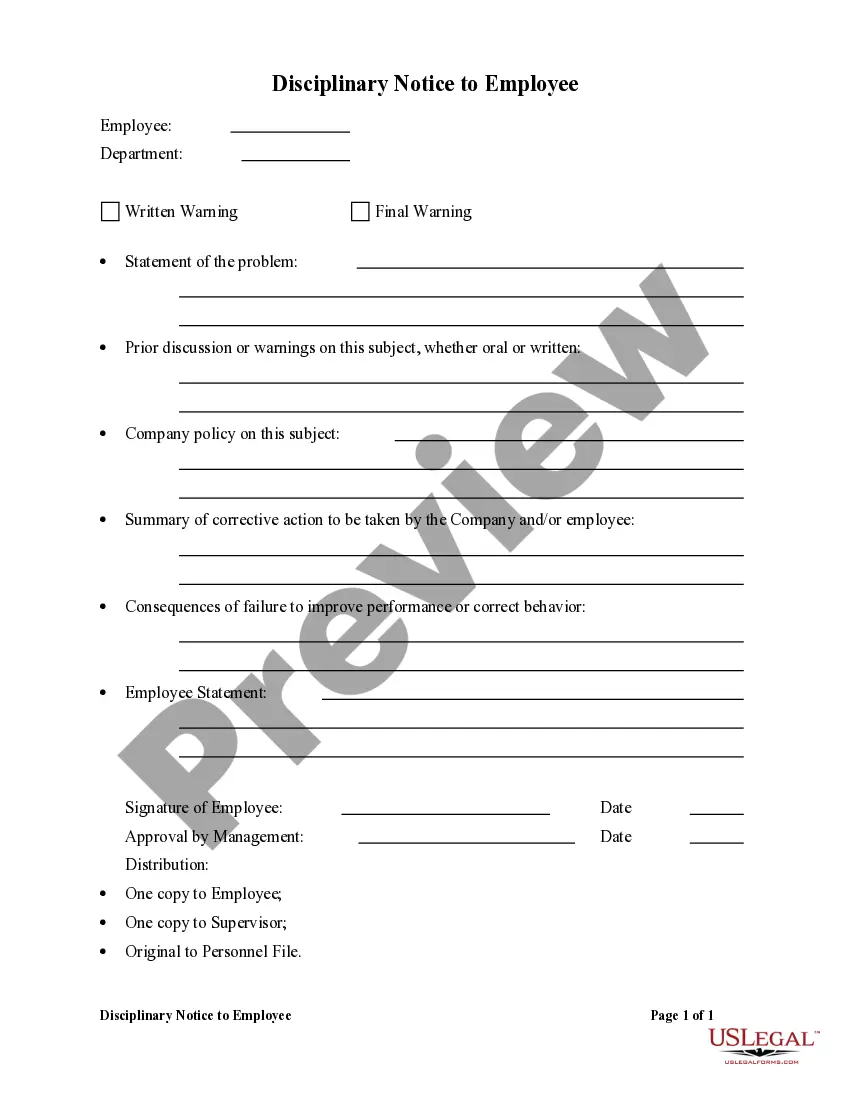
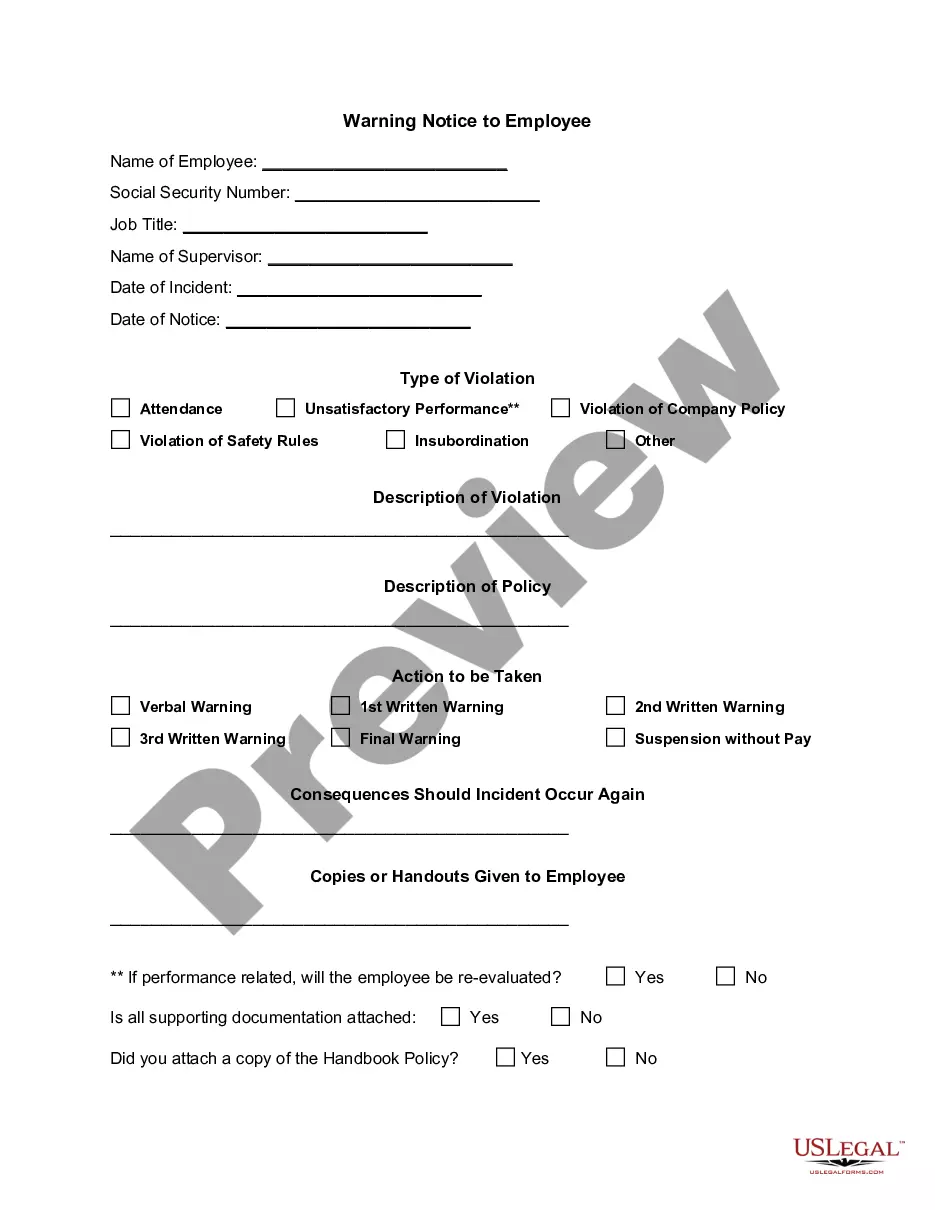
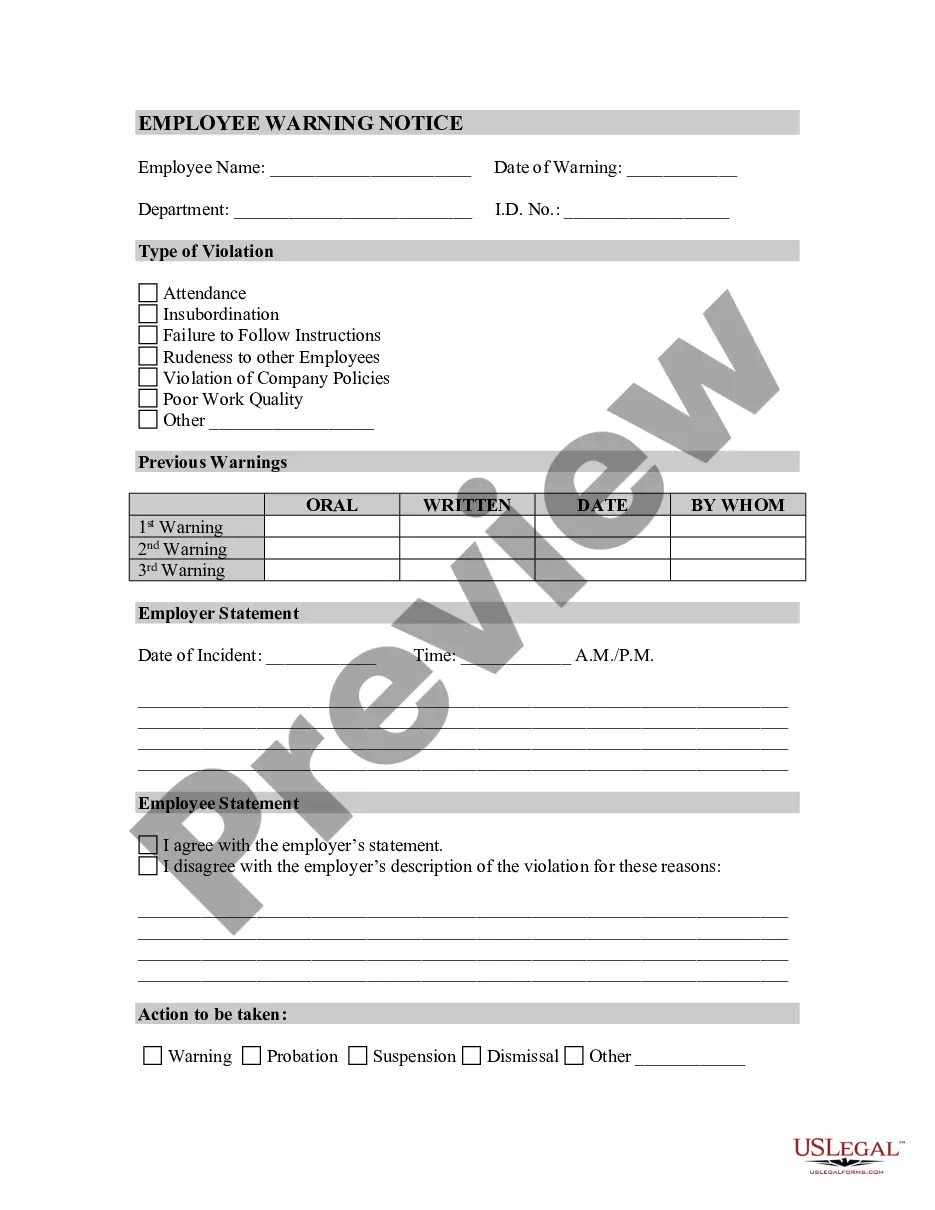
Filling out a disciplinary action form involves providing essential details, such as the employee's name, the nature of the violation, and any prior discussions on the issue. Ensure that you include specific examples to substantiate the action taken. It's important to maintain a professional tone throughout the document. Using templates from platforms like USLegalForms can make this process easier.
The four common disciplinary actions include verbal warnings, written warnings, suspension, and termination. Each level of action escalates based on the severity or frequency of the employee’s misconduct. Implementing these steps systematically ensures fairness and clarity in the process. Knowing how to express these concepts as 'disciplinary action in tagalog' may support clear communication with employees.
To take disciplinary action against an employee, you should first document the behavior or performance issue clearly. Communicate the concern with the employee in a private setting, and provide them a chance to respond. After discussion, you can determine the appropriate course of action, which may include formal procedures according to company policy. Remember, understanding 'disciplinary action in tagalog' can help bridge cultural gaps in communication.
You can use the term 'disciplinary action' in a sentence like this: 'The company implemented disciplinary action to address violations of employee conduct.' It illustrates the application of rules and procedures designed to enforce standards. Using the term correctly is crucial in professional and legal discussions, especially in relation to disciplinary action in tagalog.
The term agitative can be translated into Tagalog as 'nag-uudyok' or 'naghihikbi.' This word typically describes actions that provoke a response or stir emotions. Its relevance may come up in discussions surrounding disciplinary action in tagalog, especially regarding behavioral issues.