Real Property For Tax Purposes
Description
Get your form ready online
Our built-in tools help you complete, sign, share, and store your documents in one place.
Make edits, fill in missing information, and update formatting in US Legal Forms—just like you would in MS Word.
Download a copy, print it, send it by email, or mail it via USPS—whatever works best for your next step.
Sign and collect signatures with our SignNow integration. Send to multiple recipients, set reminders, and more. Go Premium to unlock E-Sign.
If this form requires notarization, complete it online through a secure video call—no need to meet a notary in person or wait for an appointment.
We protect your documents and personal data by following strict security and privacy standards.

Make edits, fill in missing information, and update formatting in US Legal Forms—just like you would in MS Word.

Download a copy, print it, send it by email, or mail it via USPS—whatever works best for your next step.

Sign and collect signatures with our SignNow integration. Send to multiple recipients, set reminders, and more. Go Premium to unlock E-Sign.

If this form requires notarization, complete it online through a secure video call—no need to meet a notary in person or wait for an appointment.

We protect your documents and personal data by following strict security and privacy standards.
Looking for another form?






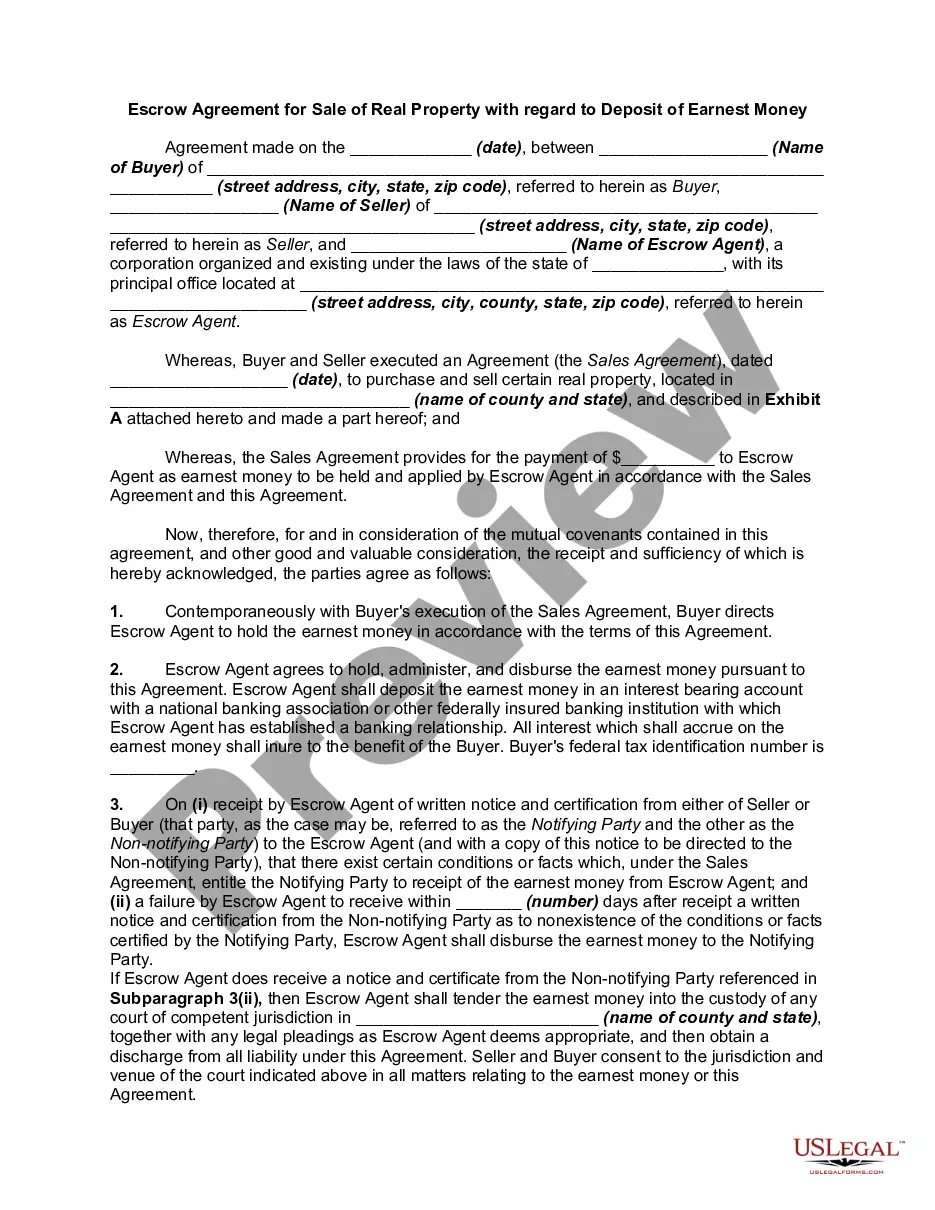
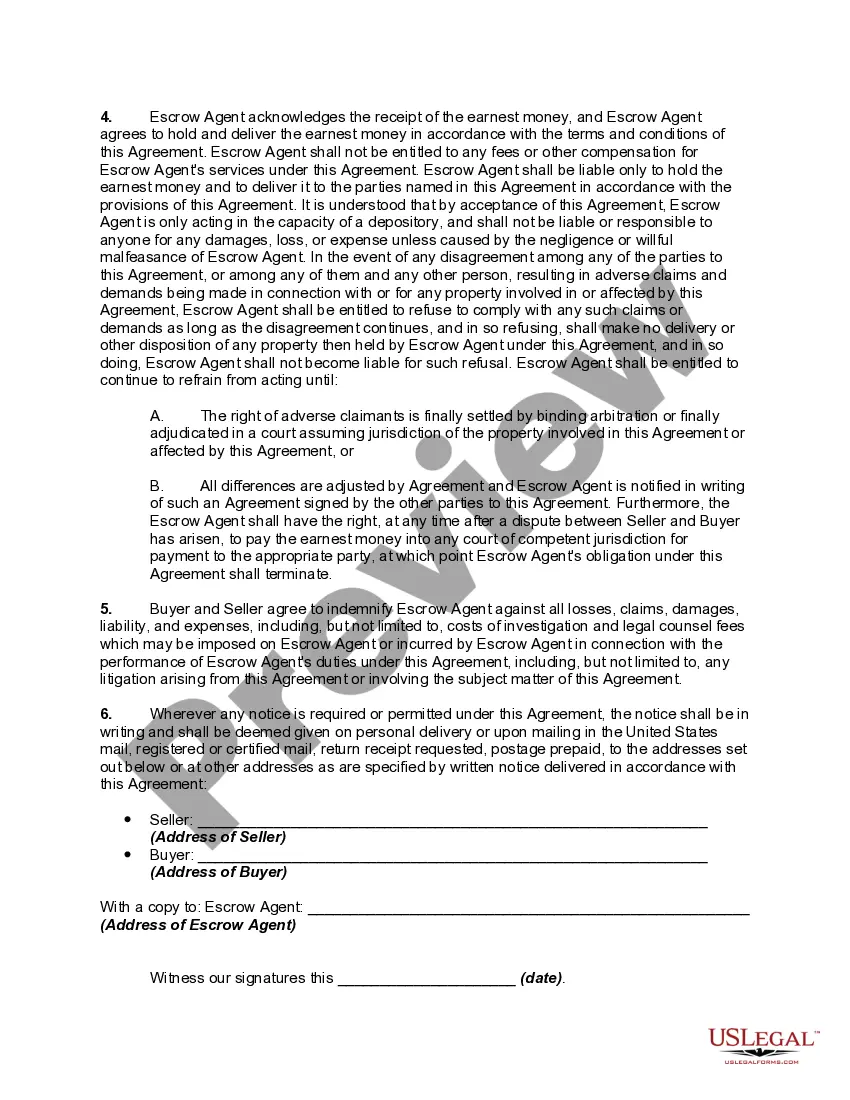
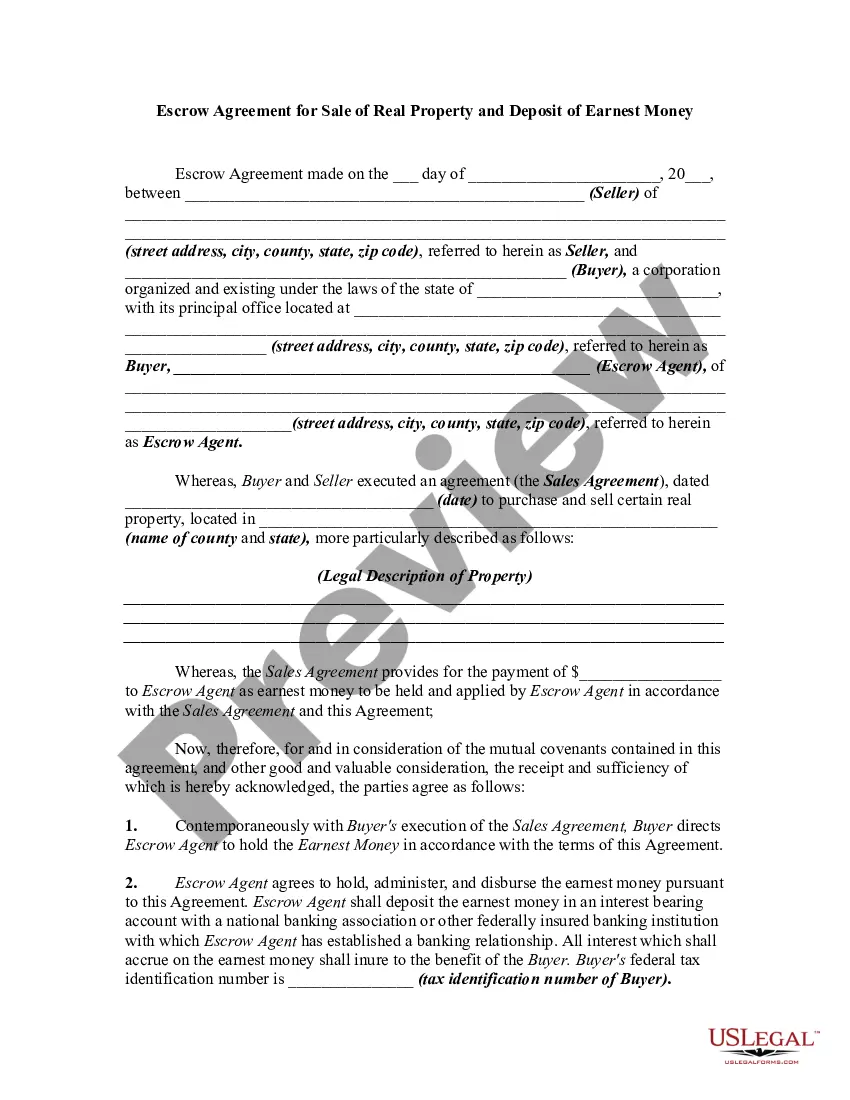
How to fill out Escrow Agreement For Sale Of Real Property With Regard To Deposit Of Earnest Money?
Dealing with legal documents and processes can be a lengthy addition to the daily routine.
Assets for Tax Purposes and similar forms frequently necessitate that you locate them and comprehend the most effective method to fill them out correctly.
As a result, whether you are managing financial, legal, or personal issues, having a comprehensive and user-friendly online catalog of forms readily available will be incredibly beneficial.
US Legal Forms is the leading online platform for legal templates, offering over 85,000 state-specific documents and a variety of tools to help you complete your paperwork with ease.
Simply Log In to your account, locate Assets for Tax Purposes, and obtain it immediately in the My documents section. You can also retrieve previously saved forms.
- Browse the assortment of pertinent documents accessible to you with a single click.
- US Legal Forms supplies state- and county-specific forms that can be downloaded at any time.
- Safeguard your paperwork management processes by utilizing a high-quality service that enables you to prepare any form in minutes without any additional or hidden charges.
Form popularity
FAQ
To report property taxes to the IRS, you must include them on Schedule A if you are itemizing your deductions. Your property taxes, associated with real property for tax purposes, should be clearly listed in the appropriate section. It's advisable to consult tax professionals or utilize reliable tax preparation software like US Legal Forms to ensure everything is filed correctly.
Yes, property taxes are generally deductible on your federal tax return under specific circumstances. When you claim real property for tax purposes, these taxes can reduce your overall taxable income if you itemize deductions. Be sure to retain all payment records, as accurate documentation is crucial for claiming this deduction.
The $2500 expense rule allows taxpayers to deduct any individual expense under this amount for items related to real property for tax purposes without needing to capitalize. This means you can quickly write off smaller expenses, such as repairs and maintenance, directly in the year you incur them. Keeping good records is vital to maximize these deductions.
When filing your tax return online, property tax information typically goes on Schedule A if you're itemizing your deductions. You will find a section specifically for real property for tax purposes, allowing you to input the amounts precisely. Most tax software guides you through the process, making it straightforward to include property taxes.
Yes, you can include property taxes when preparing your tax return. Specifically, real property for tax purposes can be listed as an itemized deduction, which may reduce your taxable income. However, it's essential to follow the IRS guidelines when claiming these deductions to ensure accuracy and compliance.
Many individuals overlook deductions related to real property for tax purposes, which can significantly impact their tax returns. Failing to track all expenses tied to real estate, such as maintenance or improvements, is common. Additionally, not understanding tax credits available for property owners can lead to missed opportunities for savings.
In Arizona, certain individuals may qualify for property tax credits, including seniors, disabled persons, and low-income homeowners. Generally, you must meet specific income thresholds and own your real property. It's advantageous to explore these credits through platforms like US Legal Forms to ensure you receive any entitled benefits.
One of the most overlooked tax breaks involves deductions related to real property for tax purposes, specifically for energy-efficient home improvements. Homeowners can often claim credits for solar installations or energy-saving systems. Educating yourself about such breaks can lead to significant savings.
People often receive substantial tax refunds, such as $10,000, by effectively utilizing deductions and credits related to real property for tax purposes. This may include deductions for mortgage interest, property taxes, and available tax credits. It’s beneficial to review your financial situation and tax strategy annually to optimize your refund potential.
Common property tax deduction mistakes include failing to claim deductions for home office expenses, not accounting for property depreciation, and not filing for available exemptions. Each of these can significantly affect your real property for tax purposes. Staying informed can help you maximize your tax benefits.