Contract Dog For For Allergies
Description
Get your form ready online
Our built-in tools help you complete, sign, share, and store your documents in one place.
Make edits, fill in missing information, and update formatting in US Legal Forms—just like you would in MS Word.
Download a copy, print it, send it by email, or mail it via USPS—whatever works best for your next step.
Sign and collect signatures with our SignNow integration. Send to multiple recipients, set reminders, and more. Go Premium to unlock E-Sign.
If this form requires notarization, complete it online through a secure video call—no need to meet a notary in person or wait for an appointment.
We protect your documents and personal data by following strict security and privacy standards.

Make edits, fill in missing information, and update formatting in US Legal Forms—just like you would in MS Word.

Download a copy, print it, send it by email, or mail it via USPS—whatever works best for your next step.

Sign and collect signatures with our SignNow integration. Send to multiple recipients, set reminders, and more. Go Premium to unlock E-Sign.

If this form requires notarization, complete it online through a secure video call—no need to meet a notary in person or wait for an appointment.

We protect your documents and personal data by following strict security and privacy standards.
Looking for another form?
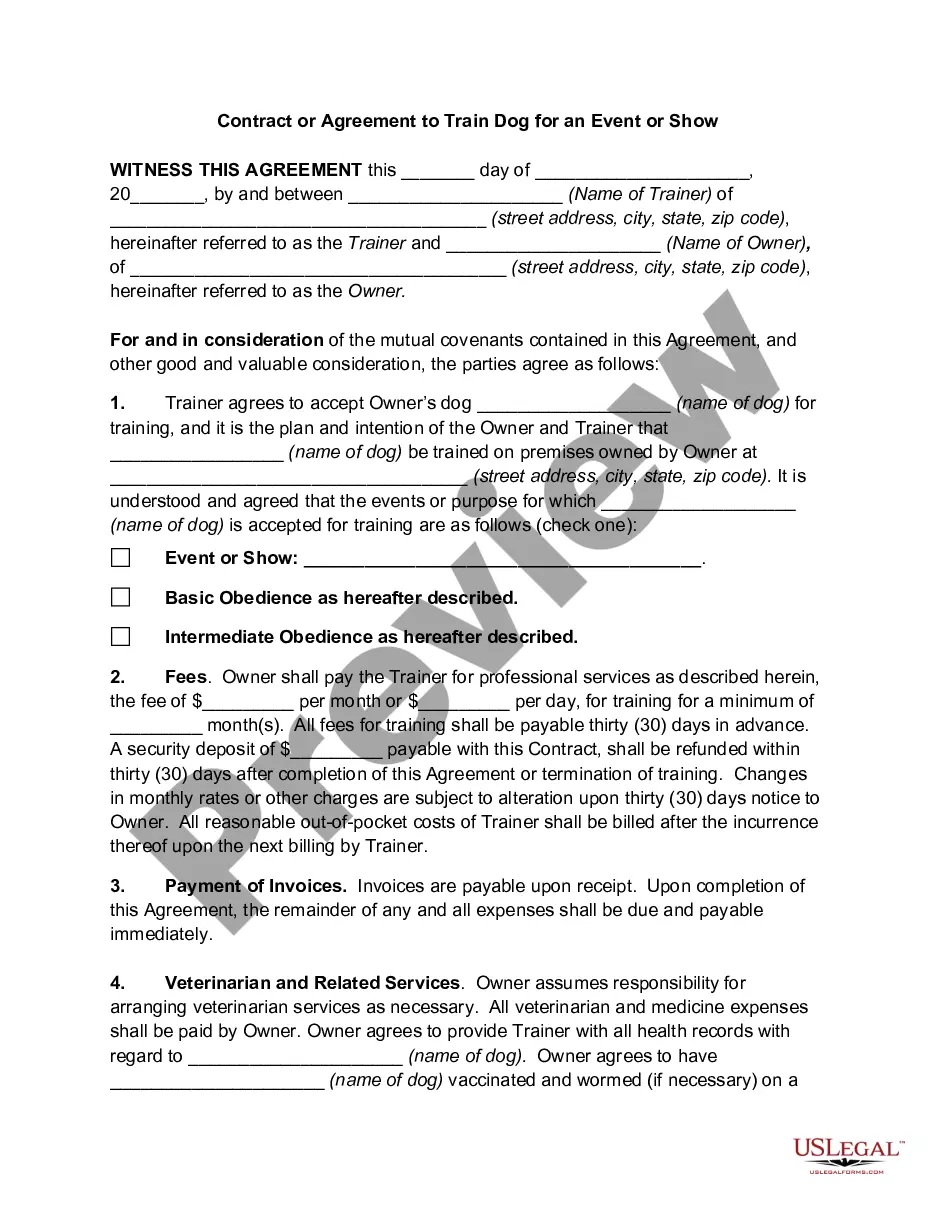
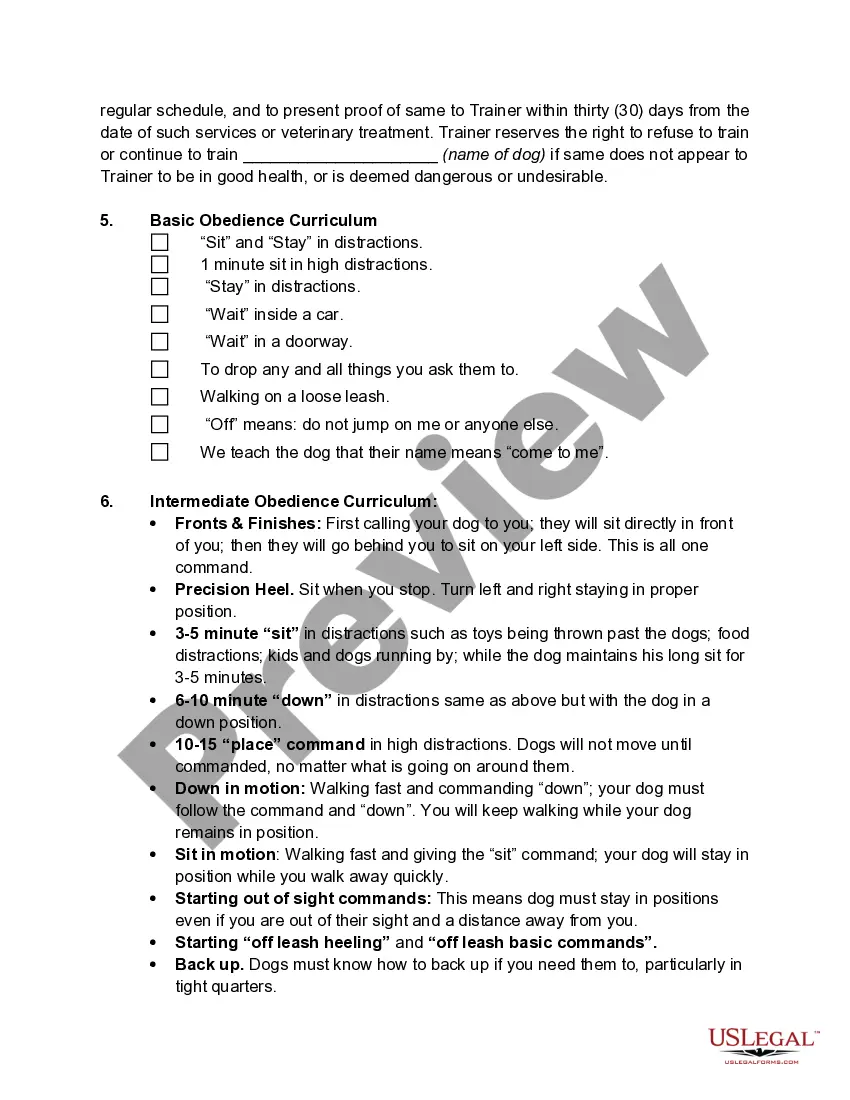
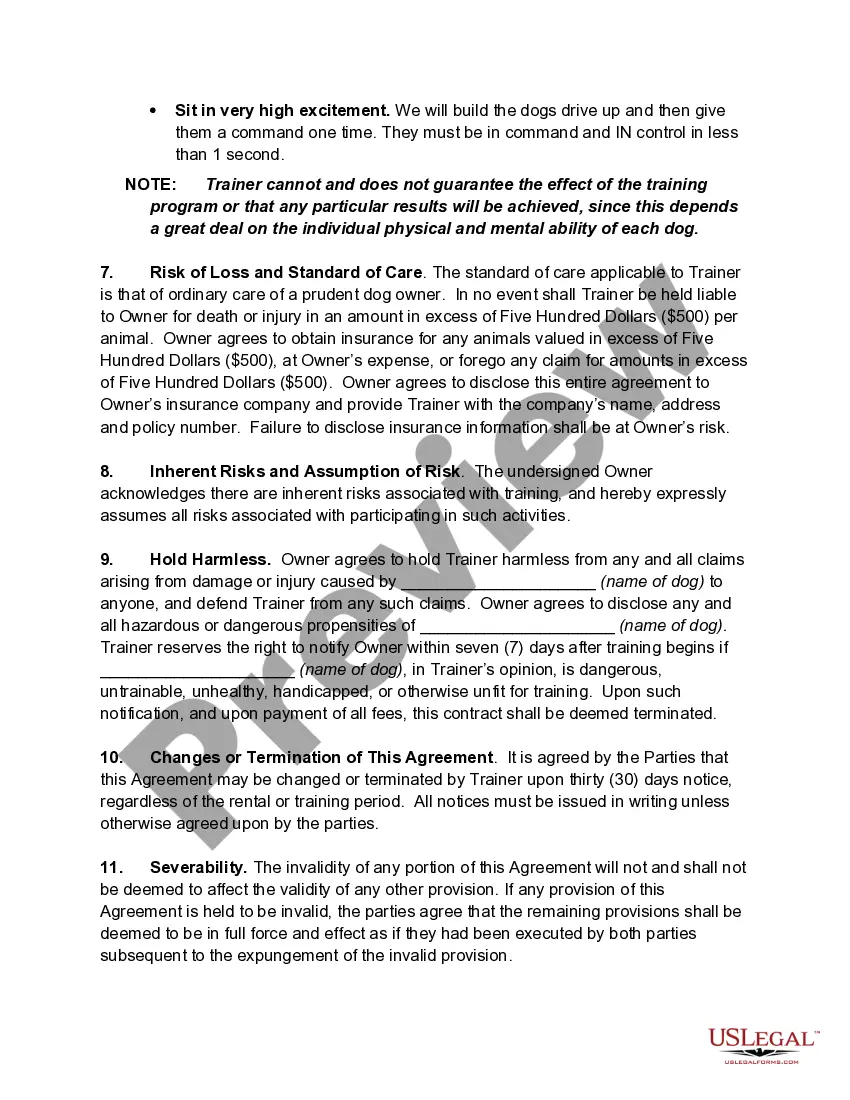
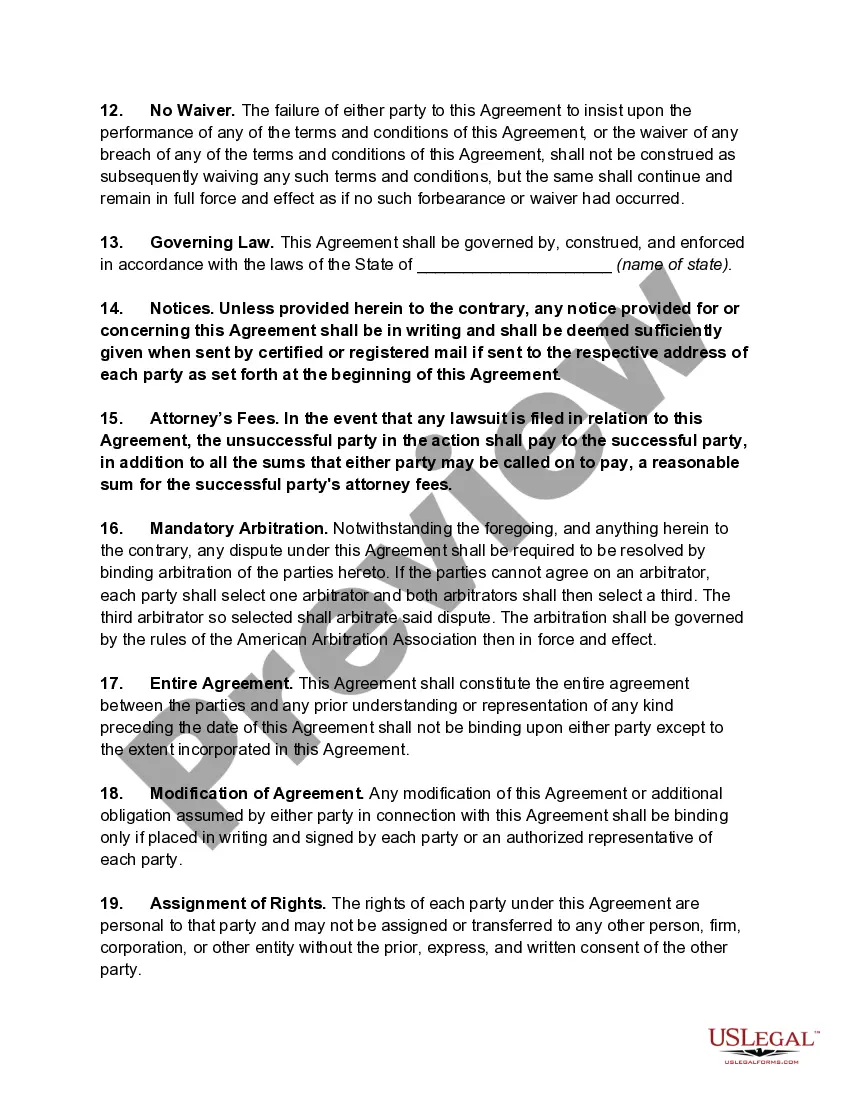
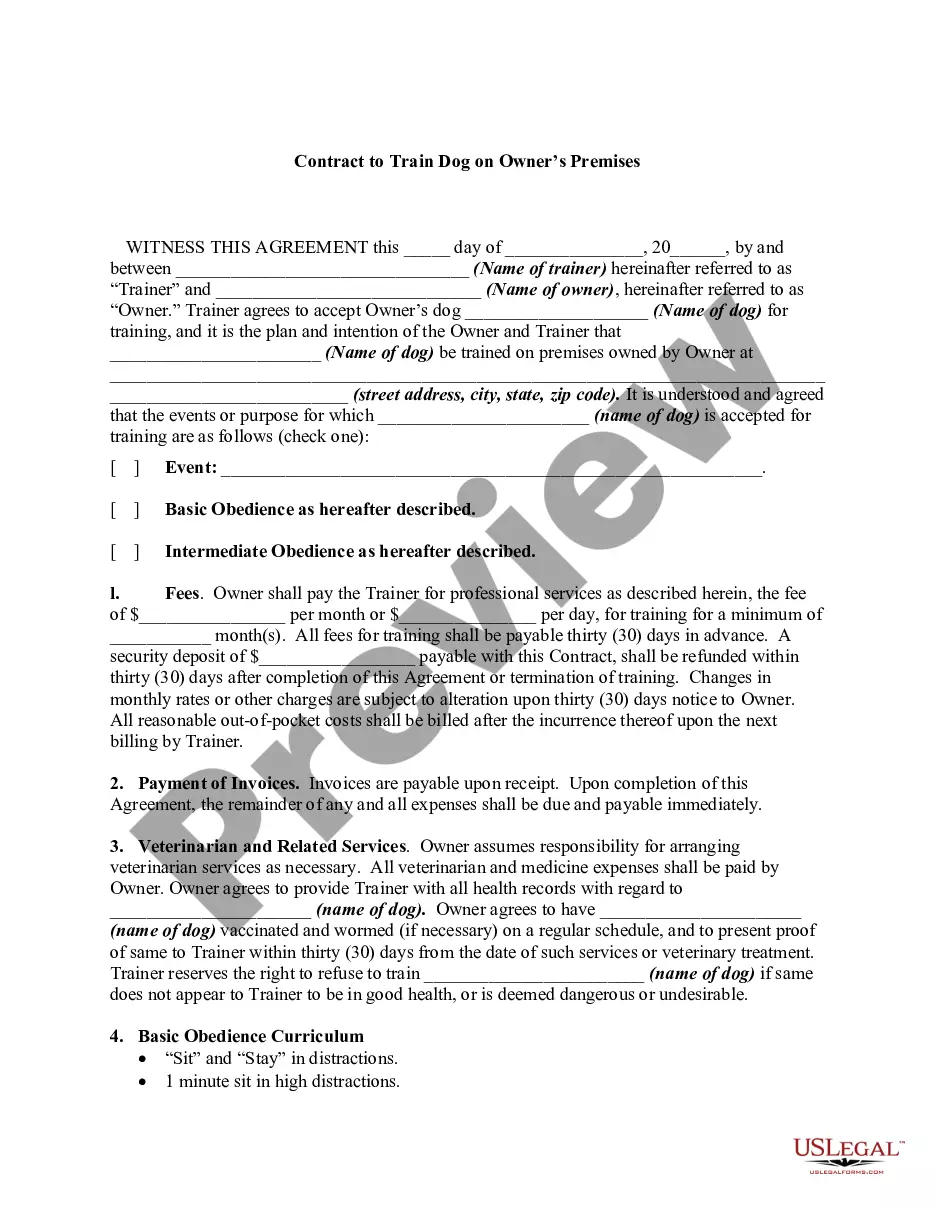
How to fill out Contract Or Agreement To Train Dog For An Event Or Show?
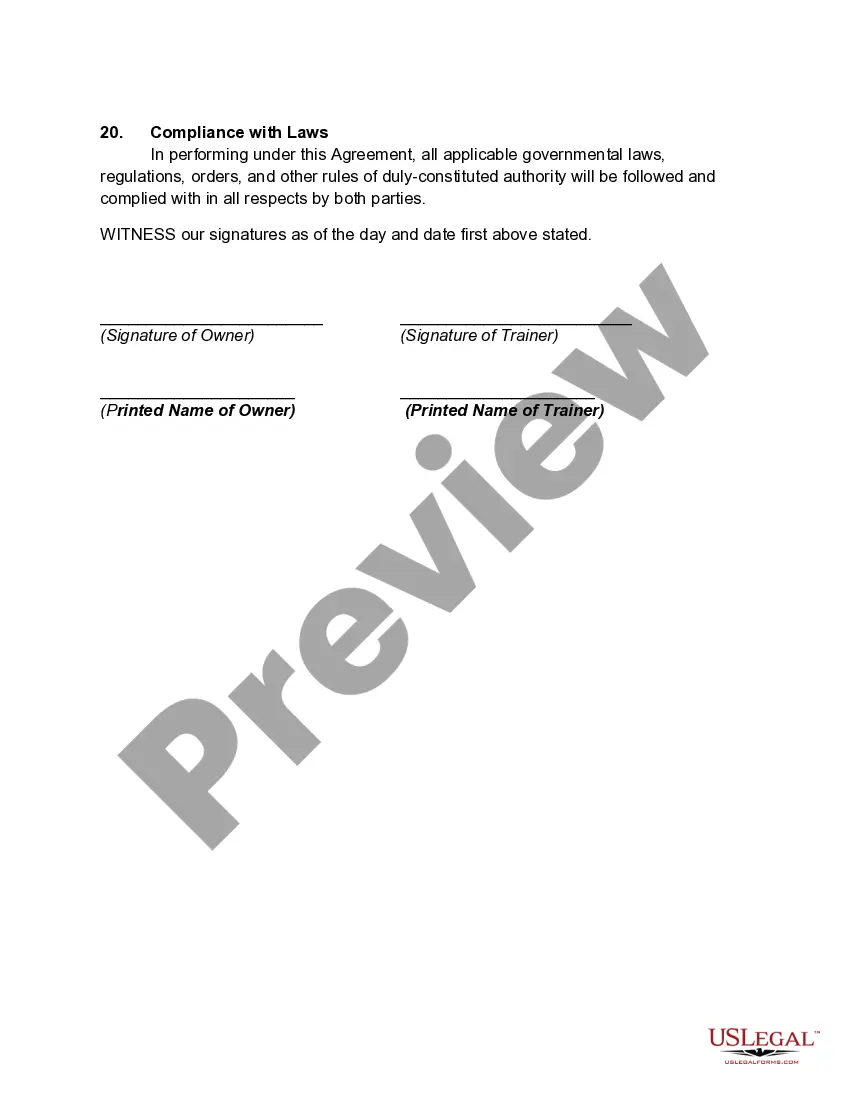
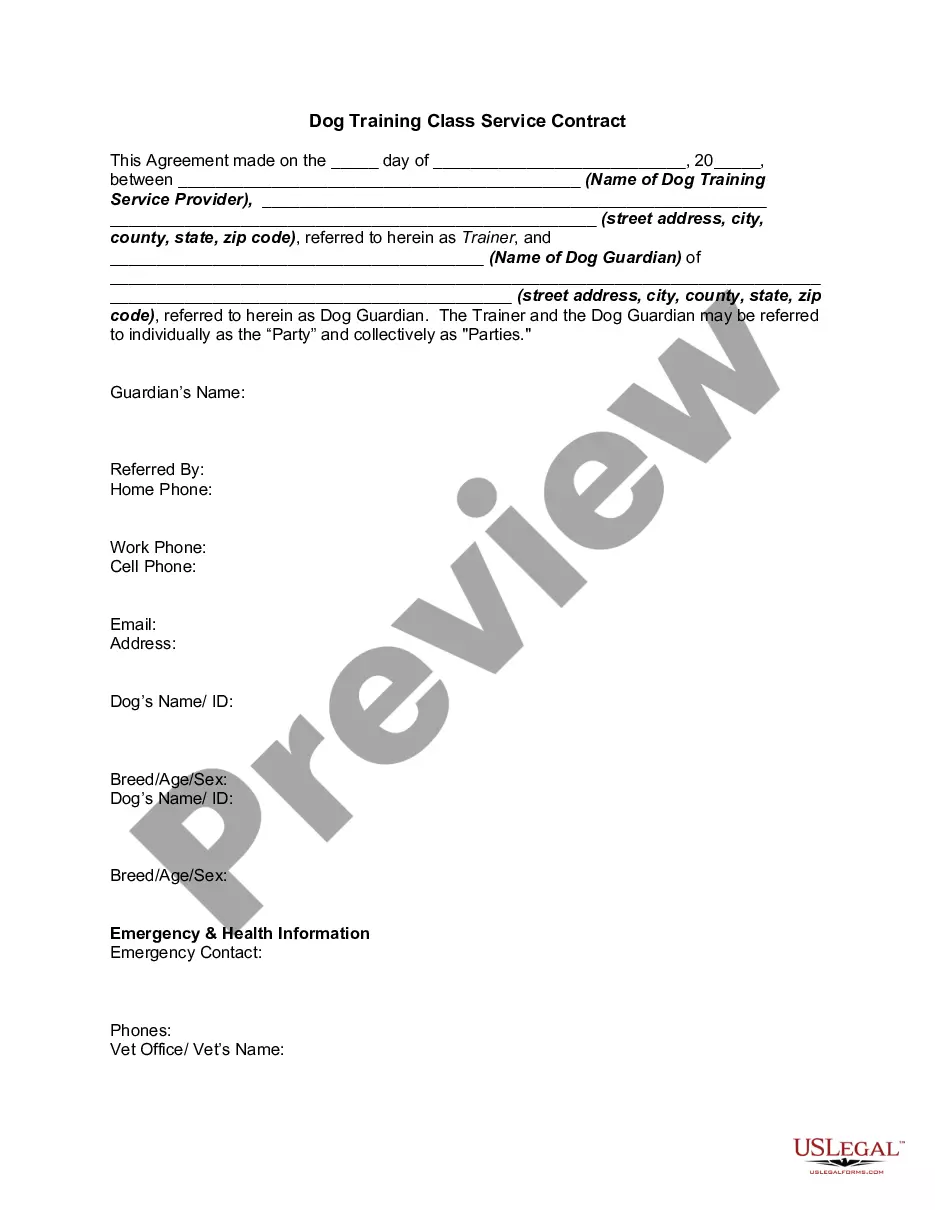
The Contract Dog For Allergies you observe on this page is a versatile legal template crafted by expert lawyers in compliance with federal and local regulations.
For over 25 years, US Legal Forms has supplied individuals, organizations, and attorneys with more than 85,000 validated, state-specific forms for any business and personal situation. It’s the quickest, simplest, and most reliable method to acquire the documents you require, as the service ensures bank-level data security and anti-malware safeguards.
Select the format you prefer for your Contract Dog For Allergies (PDF, DOCX, RTF) and download the sample onto your device.
- Search for the document you require and examine it.
- Browse through the sample you searched and preview it or review the form description to confirm it meets your needs. If it does not, utilize the search option to locate the suitable one. Click Buy Now when you have found the template you need.
- Subscribe and Log In.
- Choose the pricing plan that fits you and create an account. Use PayPal or a credit card to make a swift payment. If you already possess an account, Log In and check your subscription to proceed.
- Obtain the fillable template.
Form popularity
FAQ
Getting a service dog for allergies involves several steps. First, consult with a medical professional to obtain documentation of your allergy condition. Next, research reputable organizations that train service dogs and apply for a dog that meets your specific needs. Finally, consider using US Legal Forms to access the necessary contracts and legal documentation to ensure a smooth process in acquiring your contract dog for allergies.
To qualify for a service dog, you typically need a documented disability that impacts your daily life. This can include severe allergies that require assistance from a trained dog. Additionally, you must demonstrate that you are capable of caring for the dog and that it will provide a tangible benefit to your health. The US Legal Forms platform offers resources to help you understand the qualification process for obtaining a contract dog for allergies.
Yes, you can get a service dog for allergies. These specially trained dogs can help you manage your allergy symptoms by alerting you to allergens or providing support during allergy episodes. It's important to understand that the dog must be trained specifically for your needs and that allergies can vary greatly among individuals. Utilizing the US Legal Forms platform can help guide you through the necessary steps to secure a contract dog for allergies.
To qualify for an Emotional Support Animal (ESA) dog, you typically need a letter from a licensed mental health professional stating your need for the animal. This letter should detail how the ESA helps alleviate symptoms of your condition. Additionally, some housing providers or airlines may require further documentation before accepting an ESA. For those considering a contract dog for allergies, ensuring you have the right paperwork can streamline the process.
To obtain an allergy detection dog, start by researching organizations that specialize in training these dogs. Many programs require a formal application process, where you explain your specific needs and allergies. Once approved, you may undergo an evaluation to determine the best match for your situation. Utilizing a contract dog for allergies can provide not only safety, but also companionship and support in managing your condition.
Yes, you can deny a service dog if you have allergies that could significantly impact your health. However, under the Americans with Disabilities Act, businesses must provide reasonable accommodations for those with allergies to ensure safety and comfort. It's essential to communicate your needs clearly to the establishment. If you are considering a contract dog for allergies, consult with a professional to explore your options and rights.
The only accurate way to diagnose an animal with a food allergy is to remove all of the currently fed foods and start a strict elimination diet trial. Available blood and saliva tests are not reliable for diagnosing food allergies in cats and dogs, and skin testing has also been found to be ineffective.
Corticosteroids delivered as a nasal spray can reduce inflammation and control symptoms of hay fever. These drugs include fluticasone propionate (Flonase Allergy Relief), mometasone furoate (Nasonex), triamcinolone (Nasacort Allergy 24HR) and ciclesonide (Omnaris).
Try an allergy pill You can safely give your pet an over-the-counter anti-histamine to relieve their symptoms.
A RAST test, or radioallergosorbent test, is a blood test that can be used to determine whether a dog is allergic to certain things. This test is often performed as part of the workup for atopy (a skin manifestation of inhalant allergy) in dogs.