Quash Courthouse Motion For Execution
Description
Get your form ready online
Our built-in tools help you complete, sign, share, and store your documents in one place.
Make edits, fill in missing information, and update formatting in US Legal Forms—just like you would in MS Word.
Download a copy, print it, send it by email, or mail it via USPS—whatever works best for your next step.
Sign and collect signatures with our SignNow integration. Send to multiple recipients, set reminders, and more. Go Premium to unlock E-Sign.
If this form requires notarization, complete it online through a secure video call—no need to meet a notary in person or wait for an appointment.
We protect your documents and personal data by following strict security and privacy standards.

Make edits, fill in missing information, and update formatting in US Legal Forms—just like you would in MS Word.

Download a copy, print it, send it by email, or mail it via USPS—whatever works best for your next step.

Sign and collect signatures with our SignNow integration. Send to multiple recipients, set reminders, and more. Go Premium to unlock E-Sign.

If this form requires notarization, complete it online through a secure video call—no need to meet a notary in person or wait for an appointment.

We protect your documents and personal data by following strict security and privacy standards.
Looking for another form?



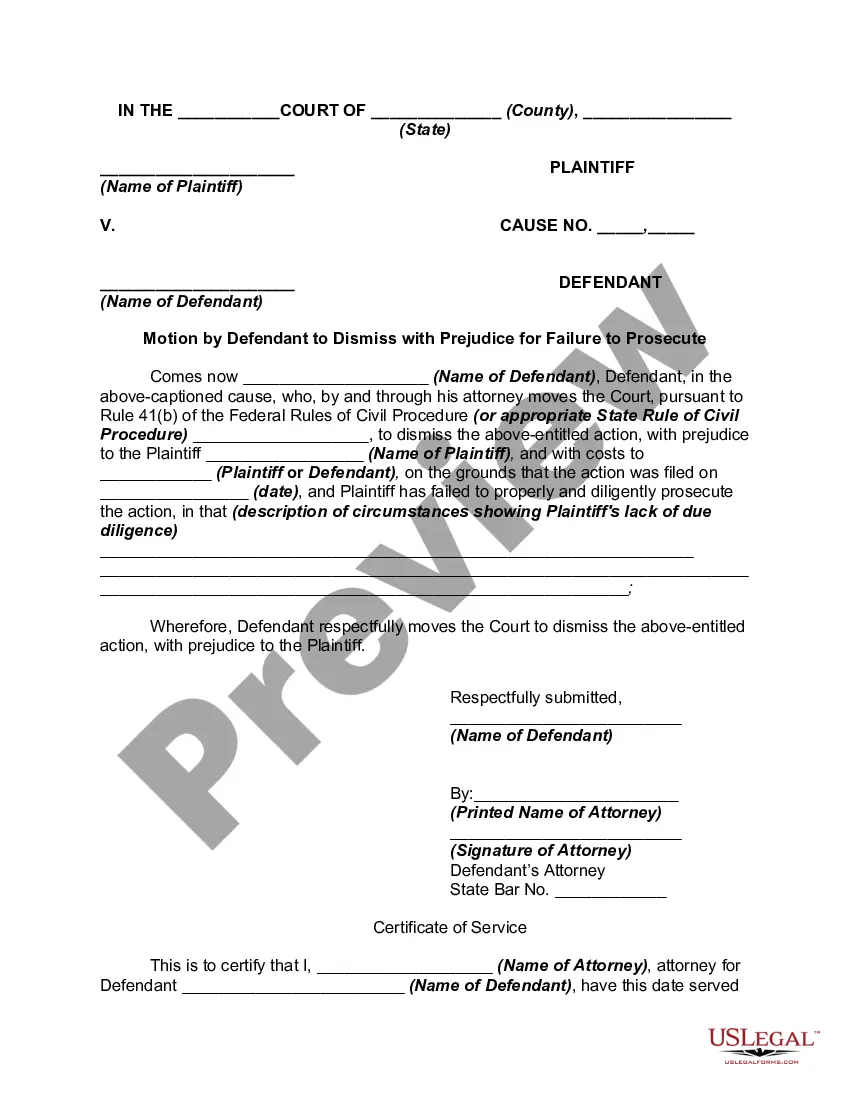




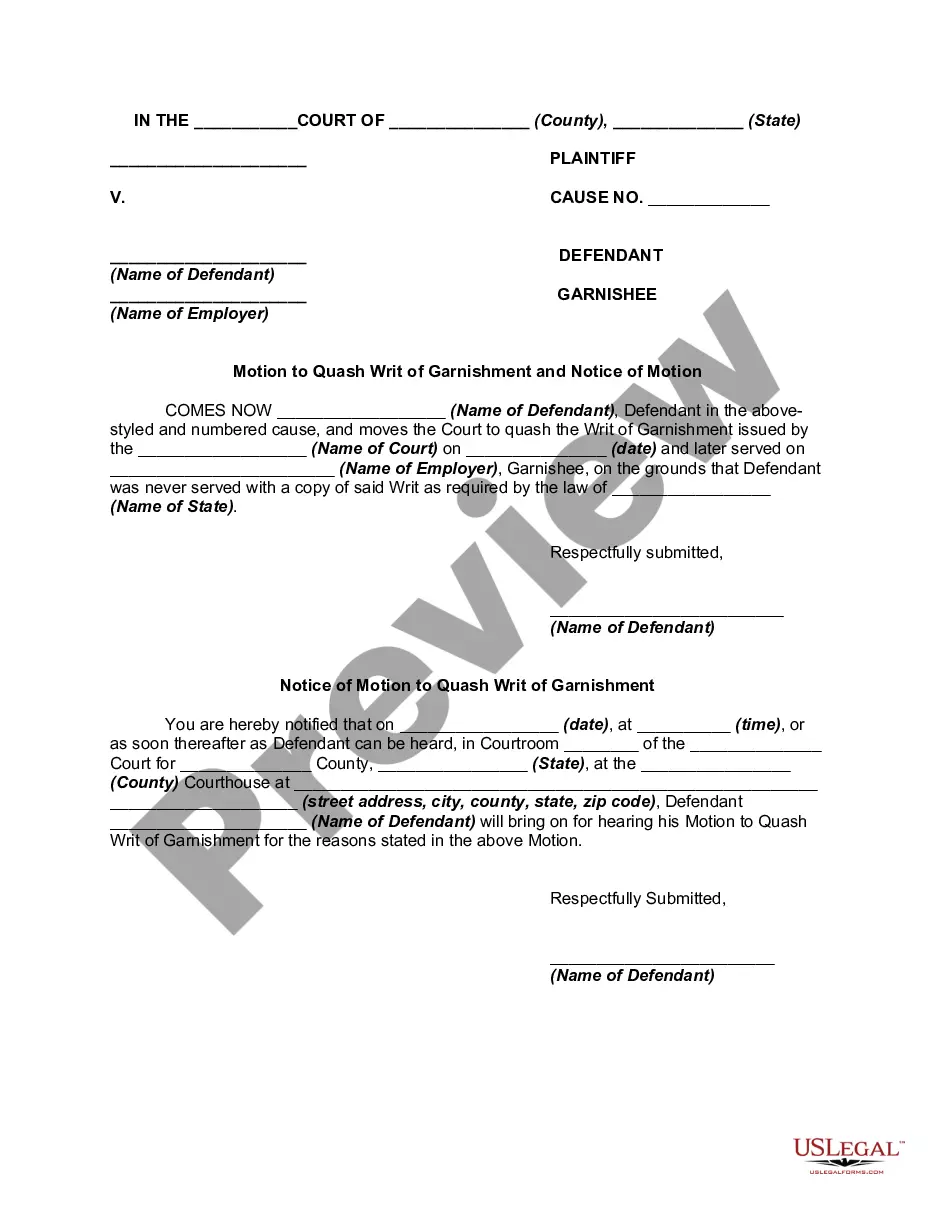
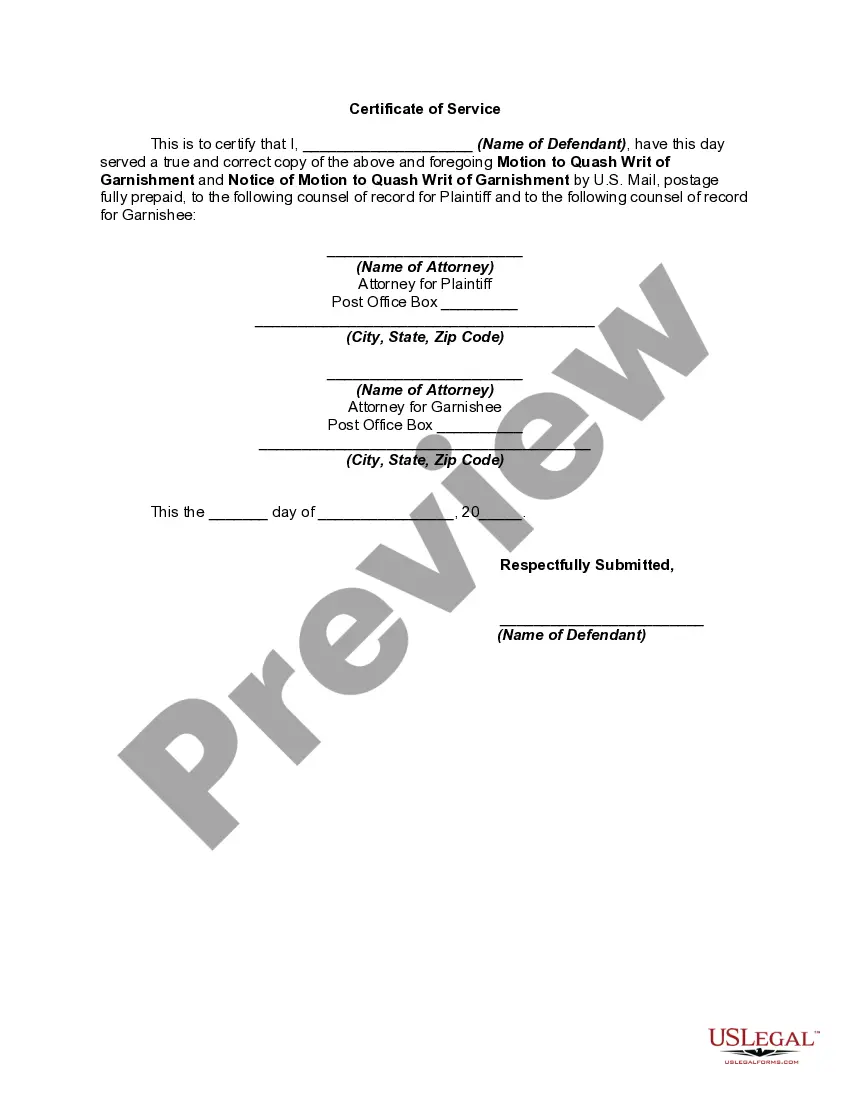
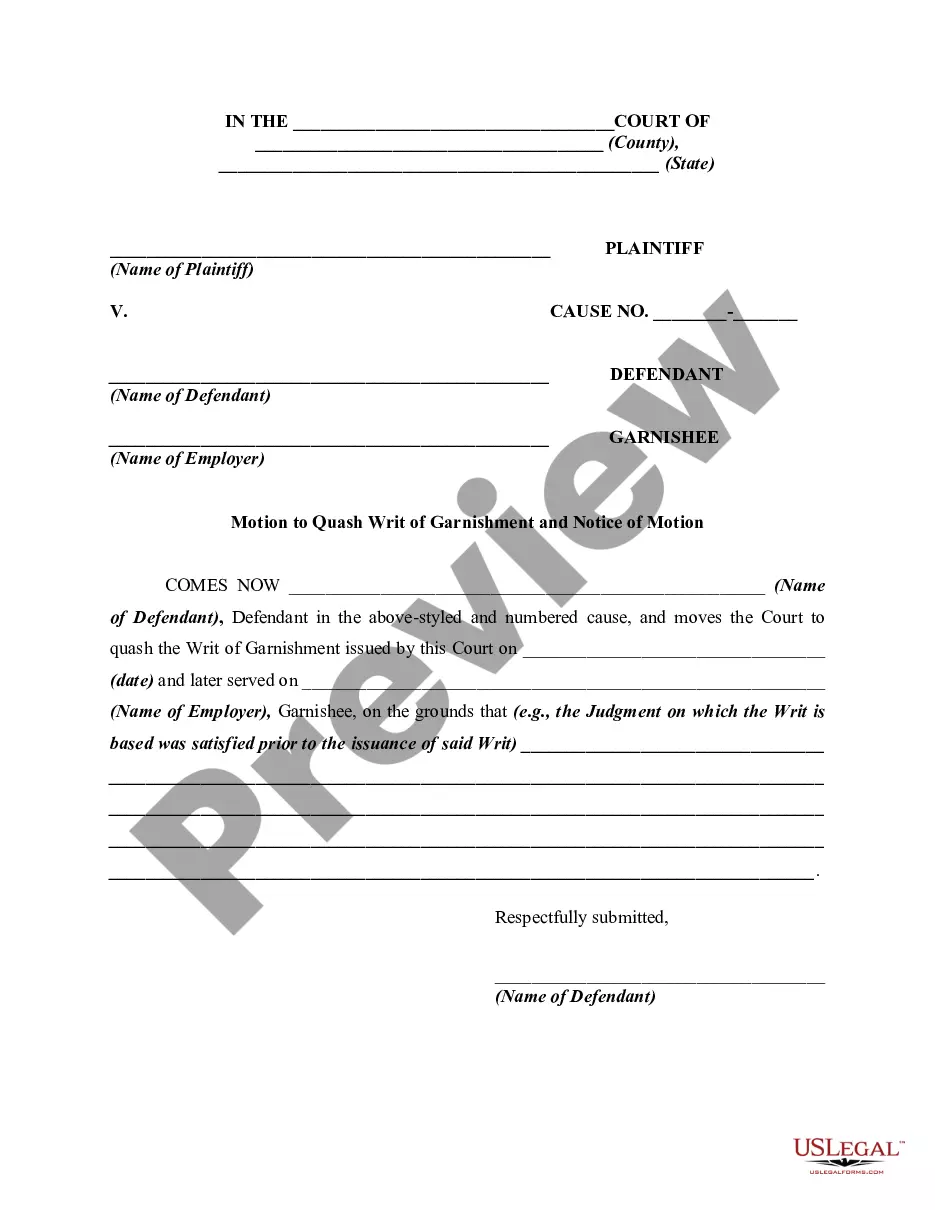
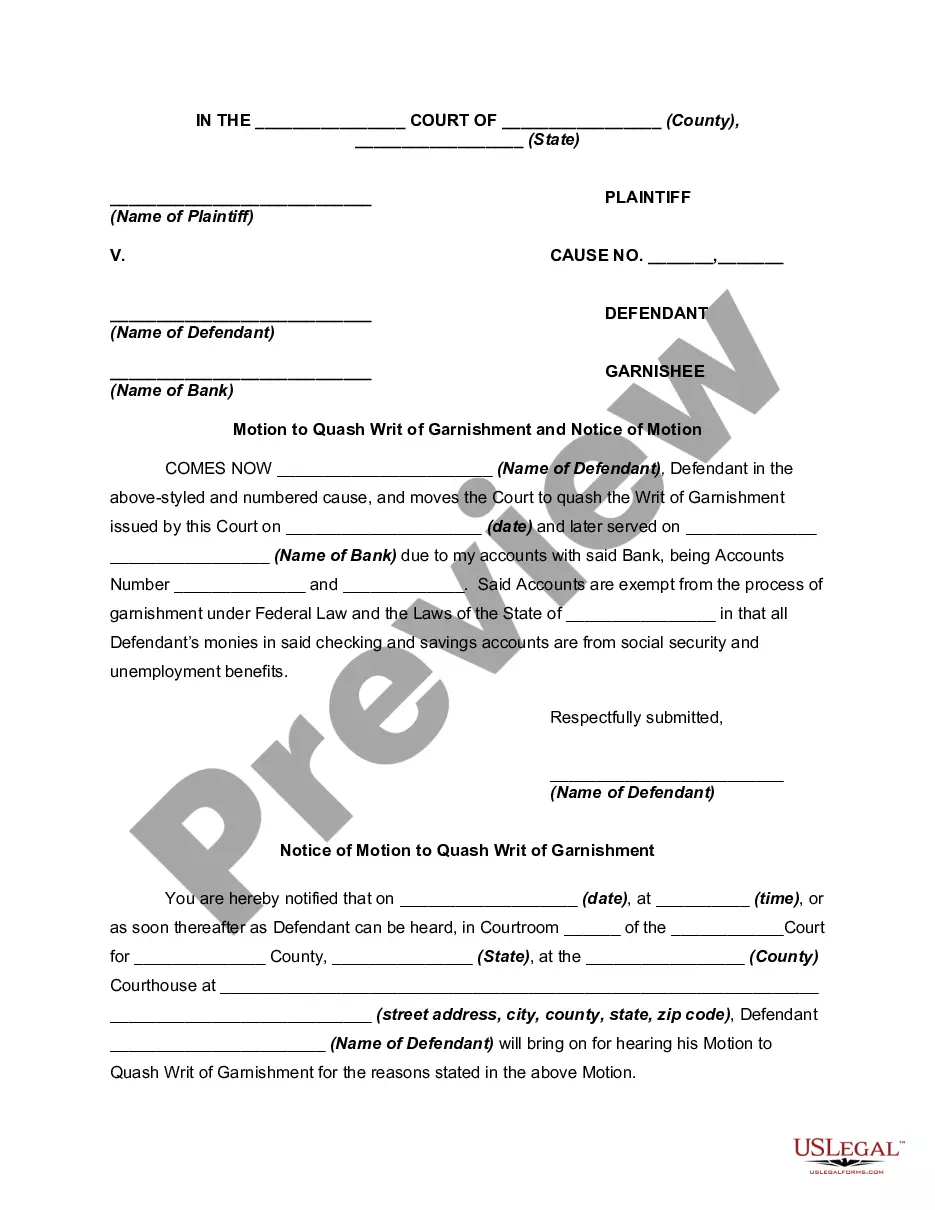
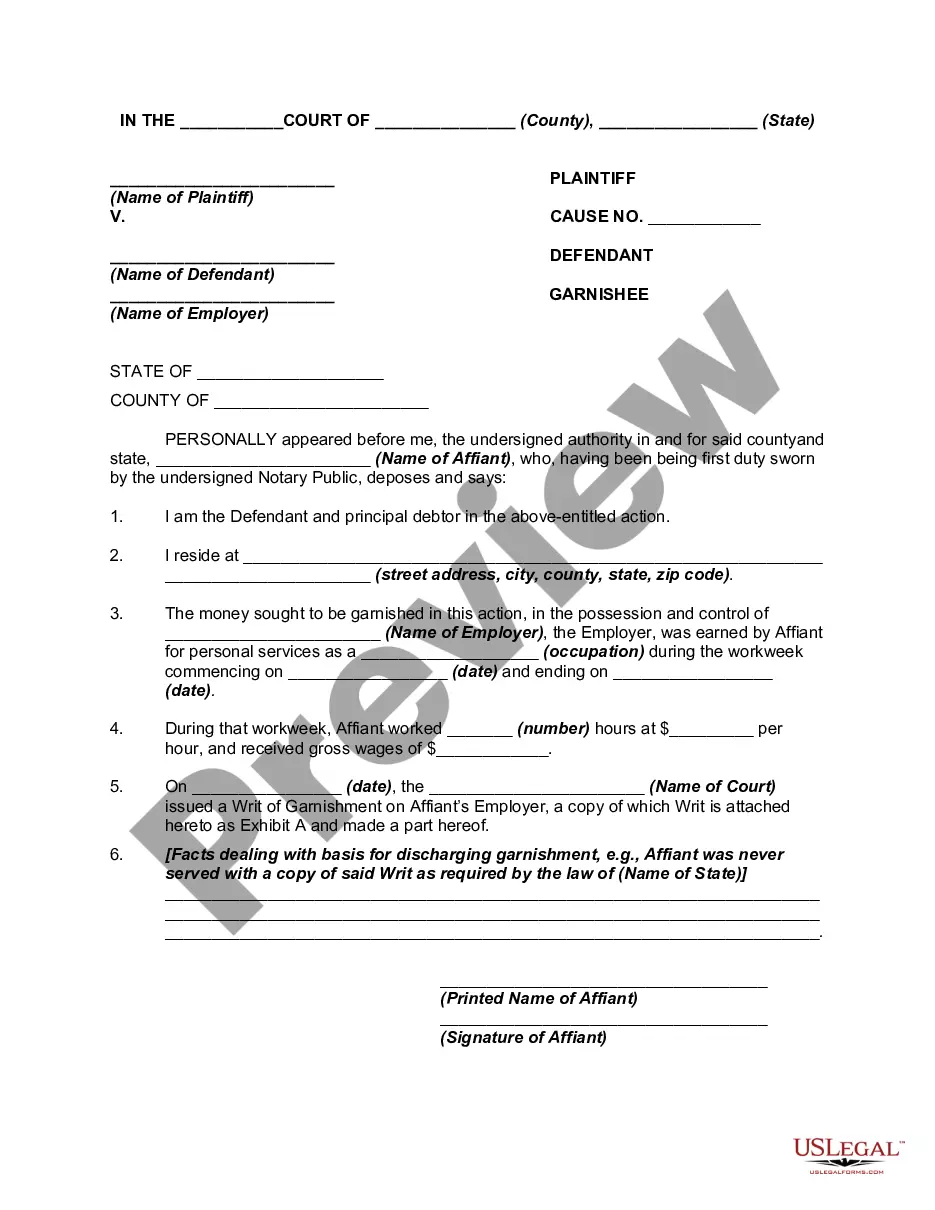
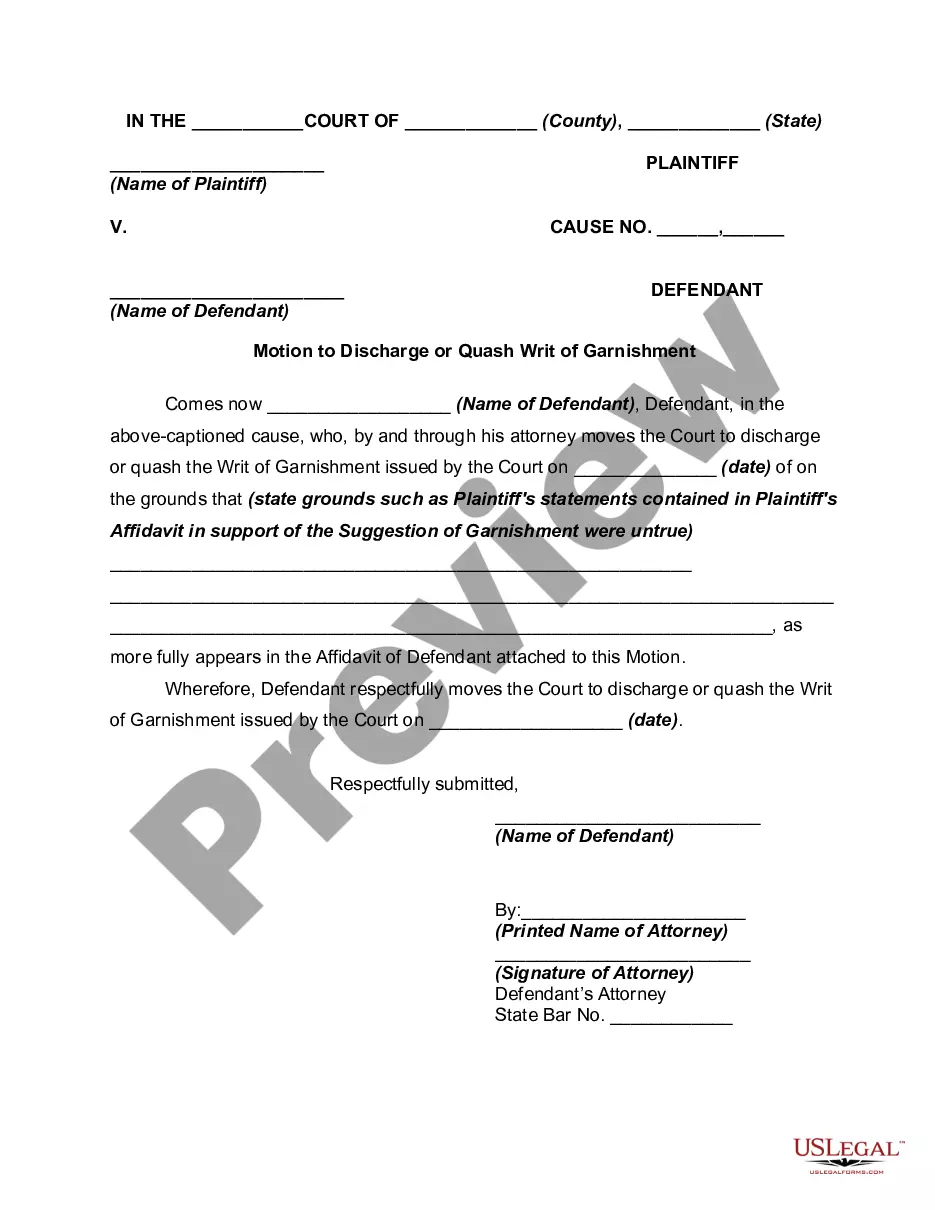
How to fill out Motion Of Defendant To Discharge Or Quash Writ Of Garnishment For Failure To Serve Copy Of Writ On Defendant And Notice Of Motion?
- If you are a returning user, log into your account and download the required form by clicking the Download button. Ensure your subscription is active; renew it if necessary.
- If this is your first visit, begin by checking the form preview and description. Confirm that it meets your specific needs and adheres to local jurisdiction requirements.
- Search for additional templates if necessary. Use the Search tab to find any alternative forms that match your criteria, and ensure they fit your requirements.
- Purchase your document by clicking the Buy Now button and choosing your preferred subscription plan. Registration is required to access the resources within the library.
- Complete your purchase by entering your credit card information or using your PayPal account to finalize the subscription.
- Lastly, download your form to save it on your device, allowing you to complete it. You can always access it later from the My Forms menu in your profile.
In conclusion, US Legal Forms empowers individuals and attorneys alike to efficiently create and manage legal documents. With a robust selection of over 85,000 fillable forms and expert support, you're never alone in navigating legal complexities.
Start your journey today by visiting US Legal Forms and ensuring your legal documents are completed accurately and on time!
Form popularity
FAQ
To file a motion to quash, start by drafting a written motion that clearly outlines your reasons. Make sure to include all relevant details and any supporting documents. After preparing your motion, file it with the court and serve it to the opposing party. For assistance, consider using US Legal Forms, as it provides easy-to-use templates that streamline the process of quash courthouse motion for execution.
Common reasons for filing a motion to quash subpoenas include relevance, burden, and privilege. If the information requested is not pertinent to your case or poses an undue burden, you have grounds to quash courthouse motion for execution. Additionally, if the information covered is confidential, that can also justify your motion. Each reason should be backed by a clear rationale to improve your chances of success.
A motion to quash can be based on several grounds, including improper service or lack of jurisdiction. If the court did not have the authority to issue the summons, you may successfully quash courthouse motion for execution. It's essential to present valid reasons supported by facts to strengthen your case. Understanding these bases will help you navigate the legal landscape more effectively.
Typically, you have 30 days from the date you received the summons to file a motion to quash service. This timeframe ensures that you protect your rights and respond promptly. Delaying beyond this period may result in losing your opportunity to quash courthouse motion for execution. Be sure to check your local rules for any specific deadlines that may apply.
The primary purpose of a motion to quash is to ensure that legal procedures are followed correctly and to challenge actions that may infringe upon an individual’s rights. By filing this motion, you can contest a courthouse motion for execution that seems unfair or lacks proper legal foundation. This tool serves to protect your interests in the legal system and can provide a pathway to a more just resolution.
A motion to quash execution specifically targets the enforcement of a court's judgment, aiming to halt immediate actions to collect on a debt or judgment. If you find yourself facing a courthouse motion for execution, filing this motion can help you argue why the enforcement should stop and allow for further examination of your circumstances. Such measures can be crucial in protecting your rights and assets.
When a case is quashed, it typically means that the court finds the legal action or order invalid or unenforceable. This ruling can halt ongoing legal proceedings, including halting a courthouse motion for execution that is considered improper or erroneous. Consequently, the party affected by the quash may have an opportunity to present their case again under corrected circumstances.
A motion to quash often focuses on specific legal issues or the validity of a particular action, like a courthouse motion for execution, while a motion to dismiss seeks to end the entire case. Essentially, a motion to quash targets a specific problem, whereas a motion to dismiss argues that there is no legal basis to continue the case. Understanding these differences can help you determine the most suitable action for your situation.
Someone might file a motion to quash to challenge the validity of a court order or to stop enforcement of a judgment that they believe is unjust. Individuals may want to address procedural errors or lack of jurisdiction that could invalidate the courthouse motion for execution. This action can provide the opportunity for the courts to review the circumstances and potentially provide a more favorable outcome for the party filing the motion.
To make a motion to quash, first gather all relevant documents and evidence that support your request. Next, prepare a formal motion that clearly states your reasons for wanting to quash the courthouse motion for execution. You’ll need to file this motion with the court and provide copies to all involved parties. Always consider consulting with a legal professional to ensure your motion meets specific legal requirements.