Divorce Respondent With For And Against
Description

Get your form ready online
Our built-in tools help you complete, sign, share, and store your documents in one place.
Make edits, fill in missing information, and update formatting in US Legal Forms—just like you would in MS Word.
Download a copy, print it, send it by email, or mail it via USPS—whatever works best for your next step.
Sign and collect signatures with our SignNow integration. Send to multiple recipients, set reminders, and more. Go Premium to unlock E-Sign.
If this form requires notarization, complete it online through a secure video call—no need to meet a notary in person or wait for an appointment.
We protect your documents and personal data by following strict security and privacy standards.

Make edits, fill in missing information, and update formatting in US Legal Forms—just like you would in MS Word.

Download a copy, print it, send it by email, or mail it via USPS—whatever works best for your next step.

Sign and collect signatures with our SignNow integration. Send to multiple recipients, set reminders, and more. Go Premium to unlock E-Sign.

If this form requires notarization, complete it online through a secure video call—no need to meet a notary in person or wait for an appointment.

We protect your documents and personal data by following strict security and privacy standards.
Looking for another form?

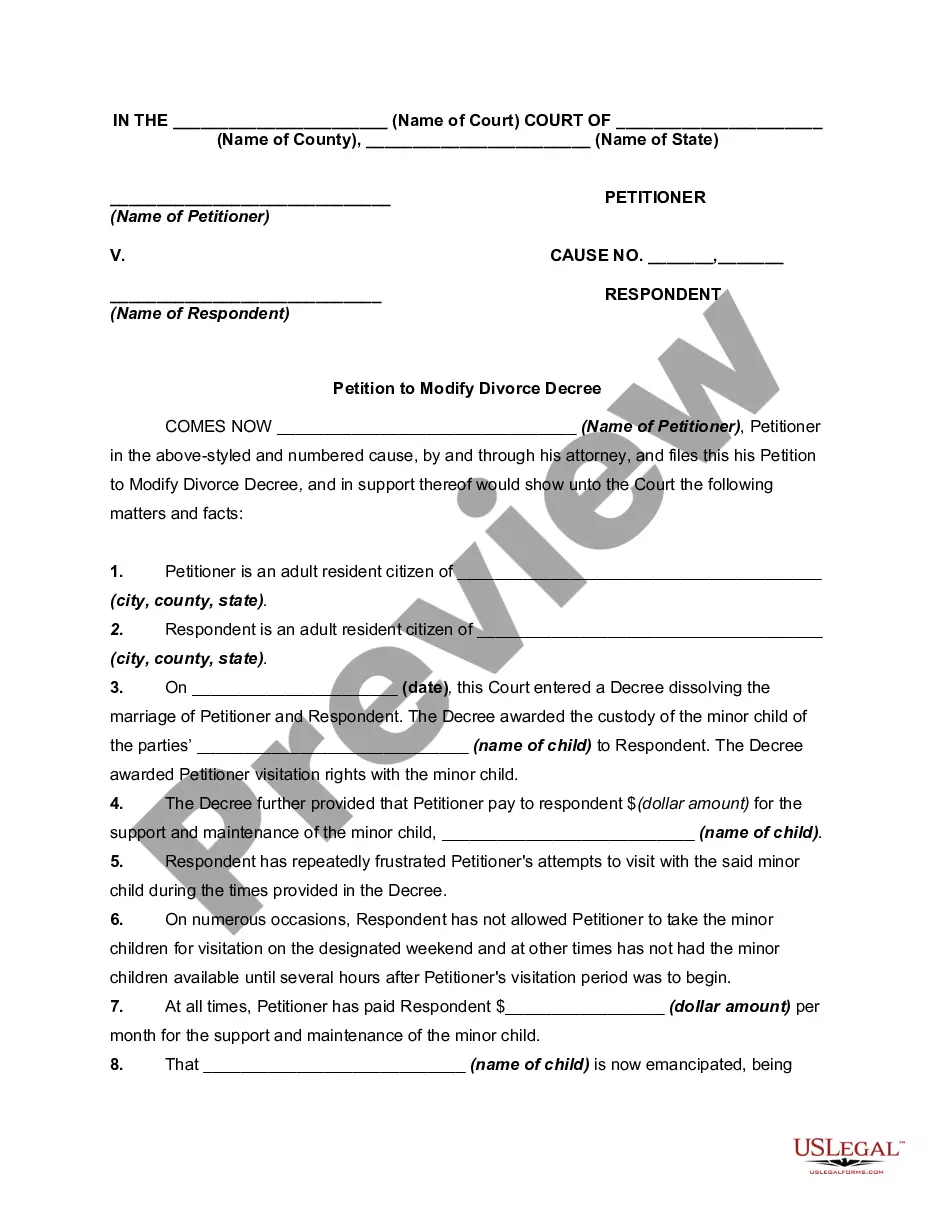
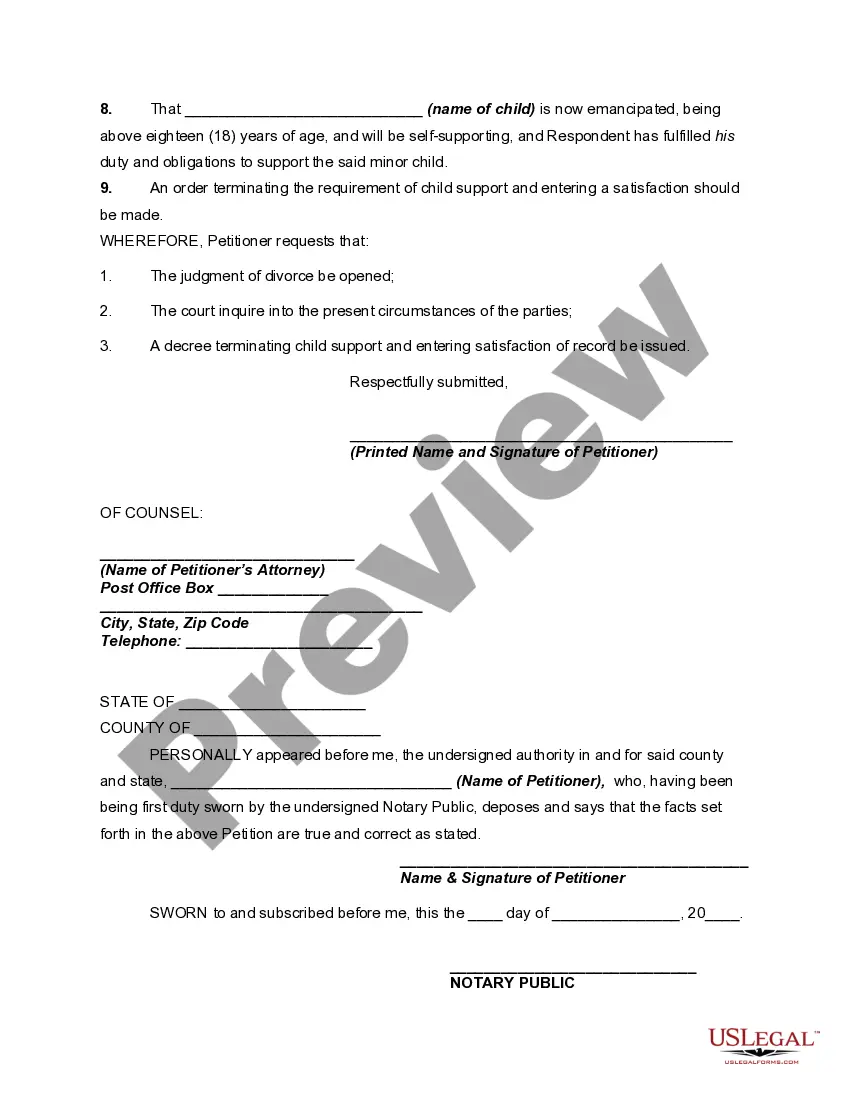
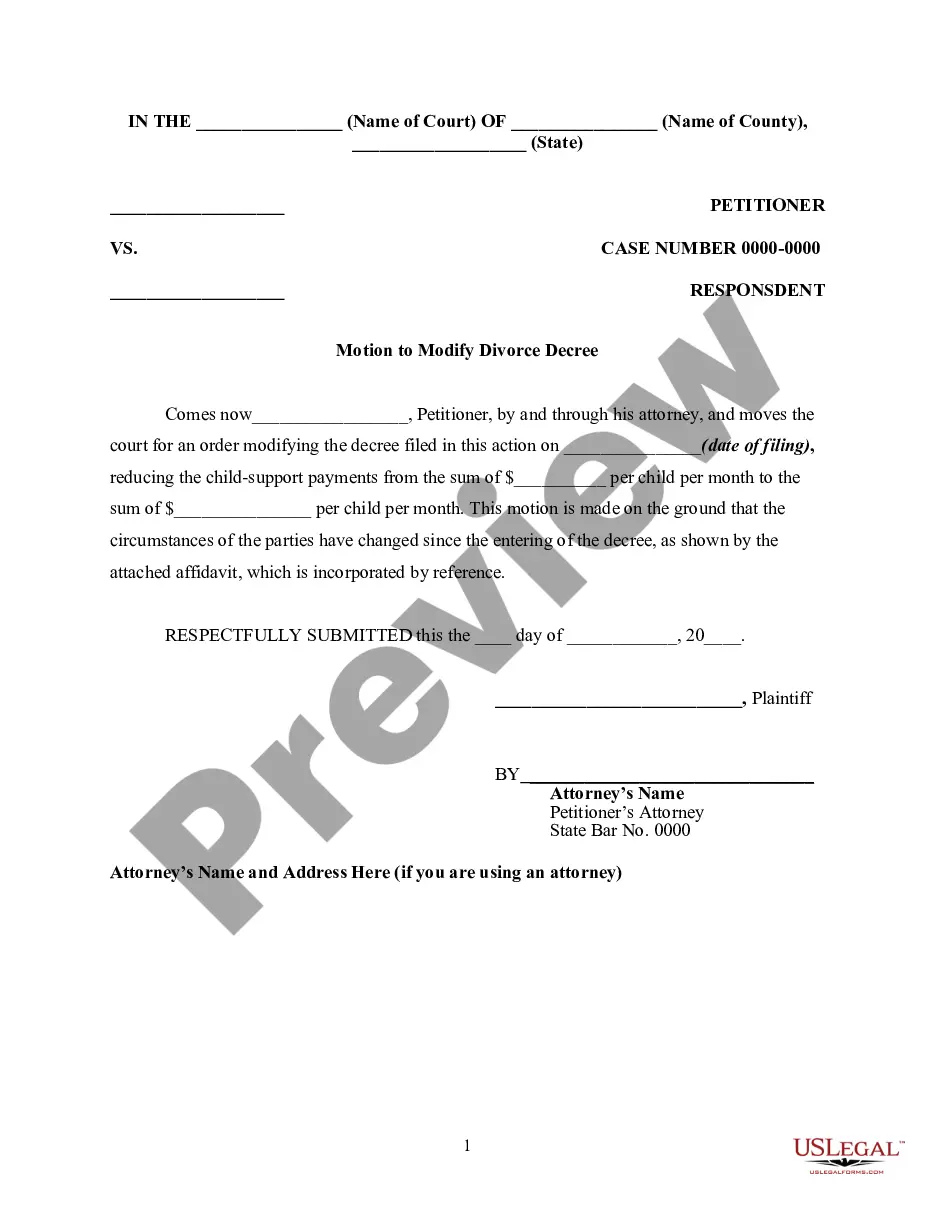
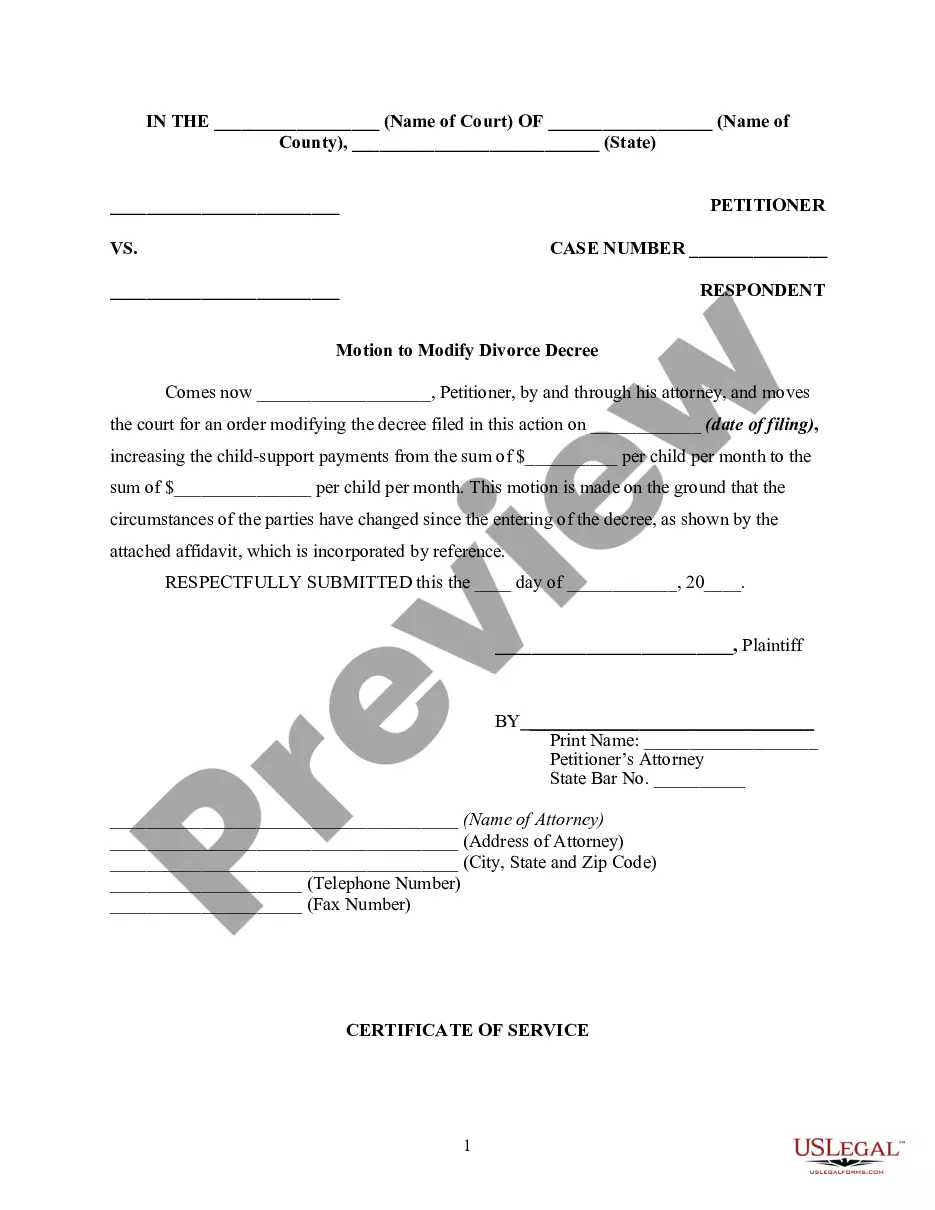
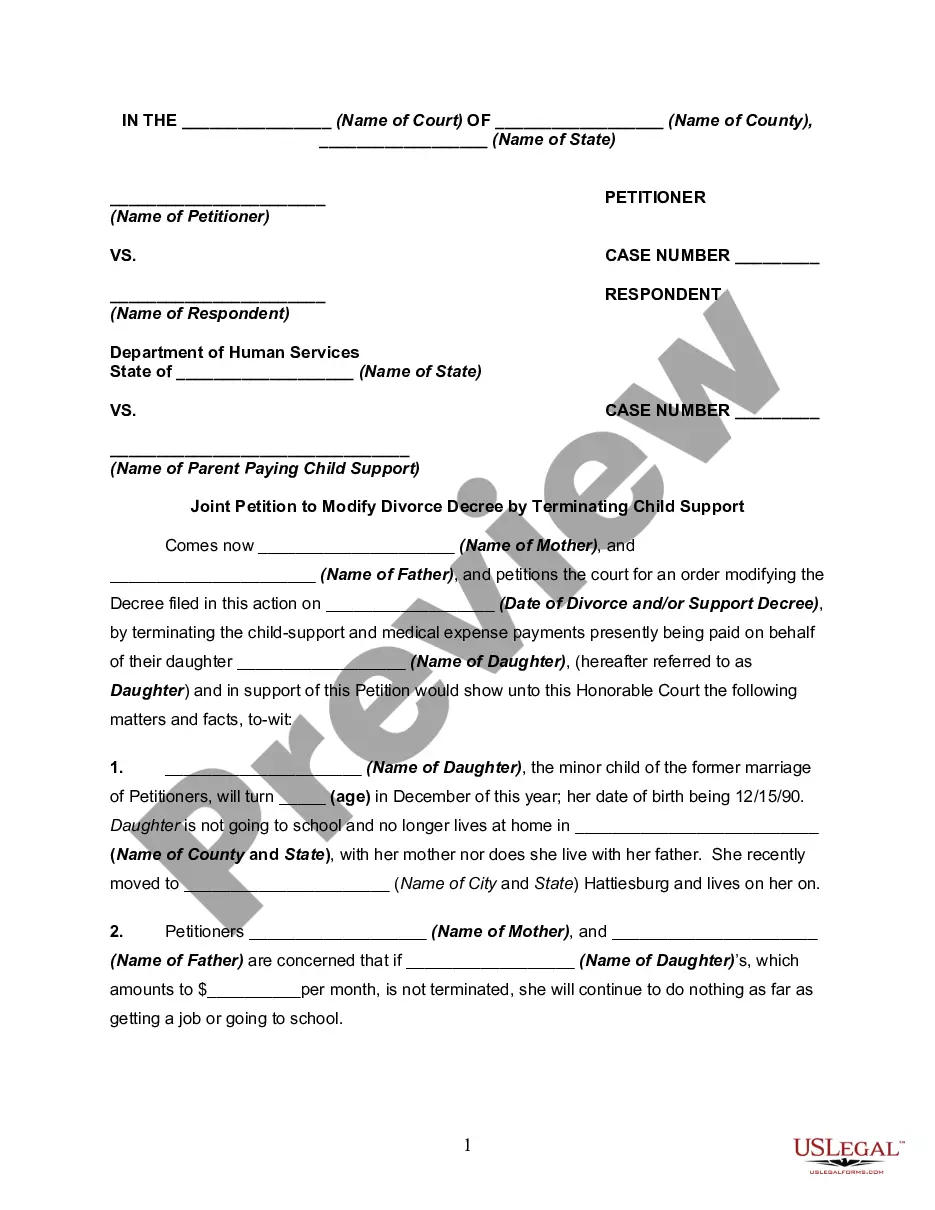
How to fill out Petition To Modify Or Amend Divorce Decree Stopping Child Support On The Grounds That Respondent Interfered With Visitation Rights And Child Is Now An Adult?
- Log in to your existing US Legal Forms account. Ensure your subscription is active to access the necessary templates.
- If you're a new user, start by checking the preview mode and form description to find the right document that aligns with your local jurisdiction.
- If needed, use the Search tab to find other templates that may better suit your requirements.
- Once identified, click the 'Buy Now' button and select a subscription plan that fits your needs. You'll need to create an account for full access.
- Complete your purchase by entering your payment details or using PayPal for an easier transaction.
- Download your chosen form. It's now saved on your device and available in the 'My Forms' section of your profile for future use.
With US Legal Forms, users benefit from a vast library exceeding 85,000 legal documents. This extensive collection, combined with access to expert guidance, means you can confidently complete your forms with precision.
Ready to get started? Explore the robust resources at US Legal Forms today to effectively manage your divorce process!
Form popularity
FAQ
Yes, it's possible to obtain a divorce without going to court, especially if both parties agree on the terms. This is often achieved through mediation or by filing an uncontested divorce. Utilizing resources from platforms like uslegalforms can simplify this process, allowing you to handle most paperwork without court appearances, making it more convenient for both parties.
If a divorce respondent is not properly served, they may not be legally bound by the proceedings. This means the court cannot move forward with the divorce until proper service occurs. It's vital to follow the correct procedures, and using platforms like uslegalforms can help ensure that all legal obligations are met during the divorce process.
In Texas, a divorce respondent typically has 20 days to file a response after being served with divorce papers. This timeframe is crucial, as failing to respond within this period can result in a default judgment. It's advisable to take this deadline seriously and seek legal assistance to ensure your rights are protected.
Accepting a divorce you don’t want can be emotionally challenging. It's essential to consult with a legal professional to understand your rights and options, as this can help you navigate the process. You can also consider mediation to discuss terms amicably, looking for arrangements that might work in your favor, even if the divorce is unavoidable.
When a divorce respondent doesn't respond after being served, the petitioner can request a default judgment from the court. This often leads to the divorce being finalized without the respondent's agreement or participation. It is important to note that this can affect the division of assets, custody arrangements, and other vital aspects of the divorce.
If the divorce respondent does not reply, the court may move forward without their input. This situation is known as a default judgment, where the court may grant the divorce based on the petitioner's claims. It's essential to understand the implications of a default judgment, as it could result in decisions made without the respondent's perspective.
Many people who initiate divorce reflect on their decision, and it's normal to have mixed feelings. While some might experience regret, the underlying issues often validate their choice to file. Understanding the Divorce respondent with for and against can equip individuals to navigate these emotions better. Platforms like uslegalforms provide the resources needed to make informed choices, reducing potential regrets.
Filing for divorce gives you control over the process from the beginning. As the filer, you can choose the timing and manage the narrative, which can help in emotional preparation. You may also have the opportunity to present your case first, addressing vital issues like asset distribution and custody arrangements effectively. Thus, understanding the role of a Divorce respondent with for and against can be essential in making an informed decision.
After a counterclaim is filed, the court will schedule proceedings to address both the original petition and the counterclaims. Each party will then present their arguments, and the court will consider all evidence before making decisions. It's important for a divorce respondent to be prepared for potential negotiations or settlements following this stage. Legal platforms can provide guidance throughout this process.
One of the significant mistakes during a divorce is failing to communicate clearly and promptly. Poor communication can lead to misunderstandings, escalated conflicts, and suboptimal outcomes. Additionally, neglecting to seek legal advice can hinder your position as a divorce respondent. Utilizing resources from platforms like USLegalForms can help you avoid common pitfalls and ensure a smoother process.