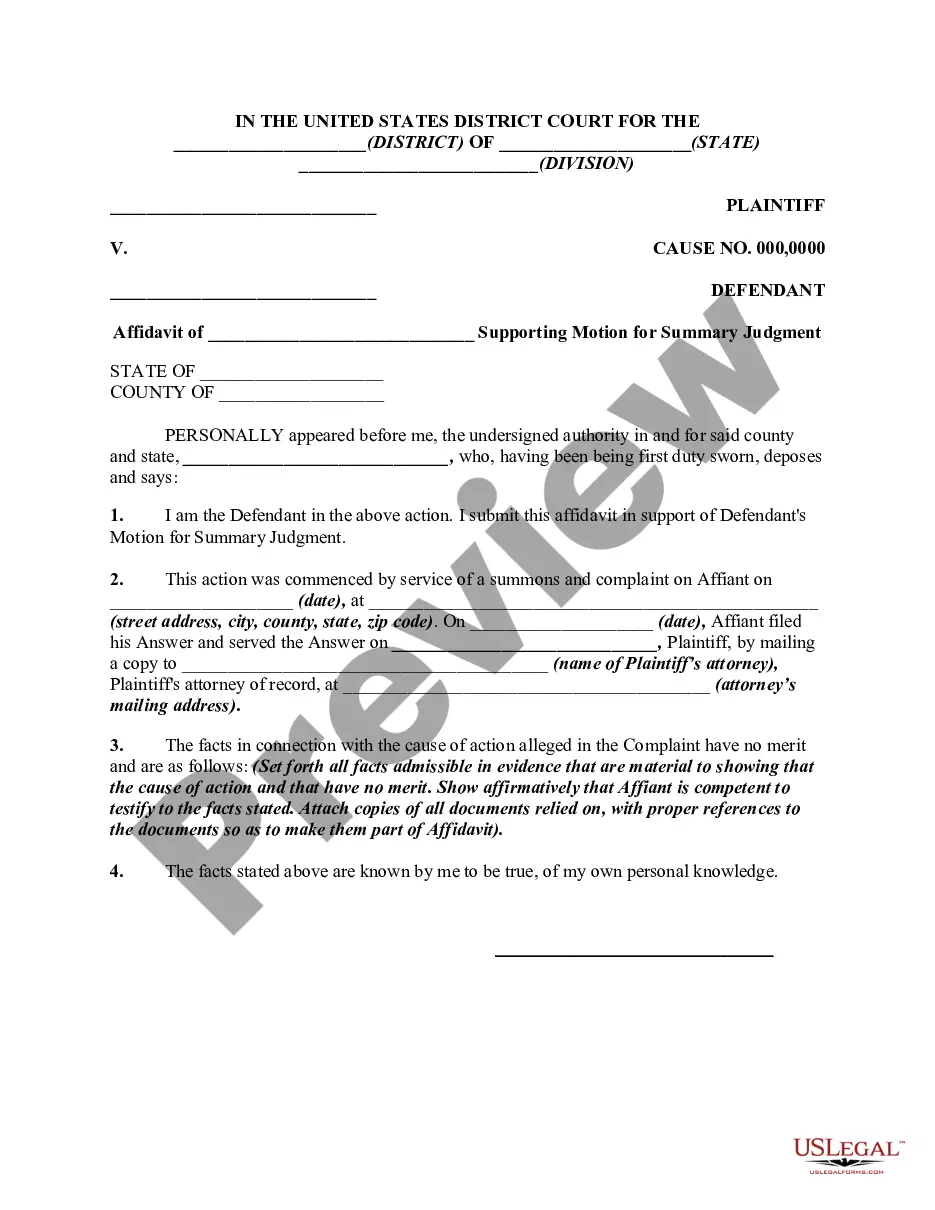
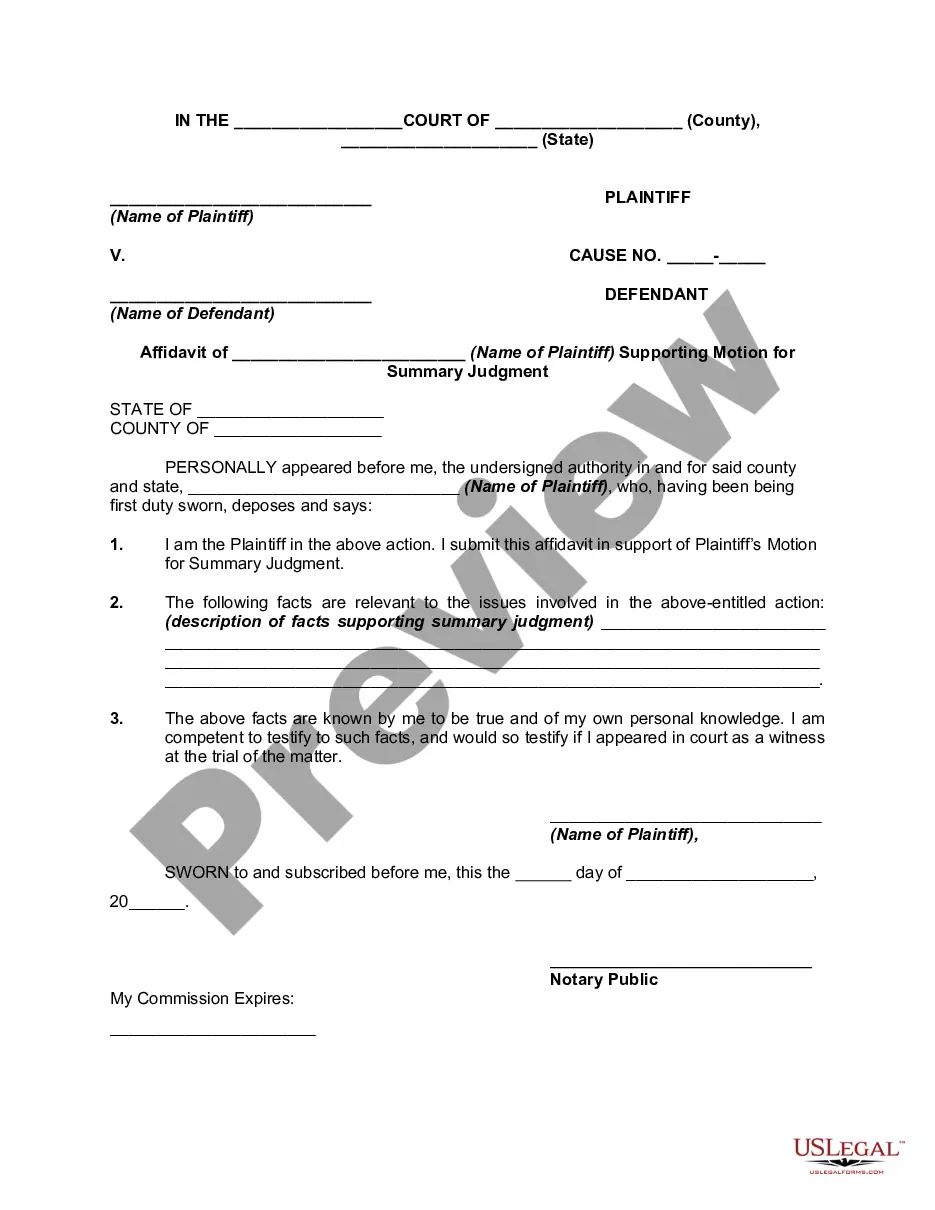
Form Civil Procedure For Summary Judgment
Description

Get your form ready online
Our built-in tools help you complete, sign, share, and store your documents in one place.
Make edits, fill in missing information, and update formatting in US Legal Forms—just like you would in MS Word.
Download a copy, print it, send it by email, or mail it via USPS—whatever works best for your next step.
Sign and collect signatures with our SignNow integration. Send to multiple recipients, set reminders, and more. Go Premium to unlock E-Sign.
If this form requires notarization, complete it online through a secure video call—no need to meet a notary in person or wait for an appointment.
We protect your documents and personal data by following strict security and privacy standards.

Make edits, fill in missing information, and update formatting in US Legal Forms—just like you would in MS Word.

Download a copy, print it, send it by email, or mail it via USPS—whatever works best for your next step.

Sign and collect signatures with our SignNow integration. Send to multiple recipients, set reminders, and more. Go Premium to unlock E-Sign.

If this form requires notarization, complete it online through a secure video call—no need to meet a notary in person or wait for an appointment.

We protect your documents and personal data by following strict security and privacy standards.
Looking for another form?

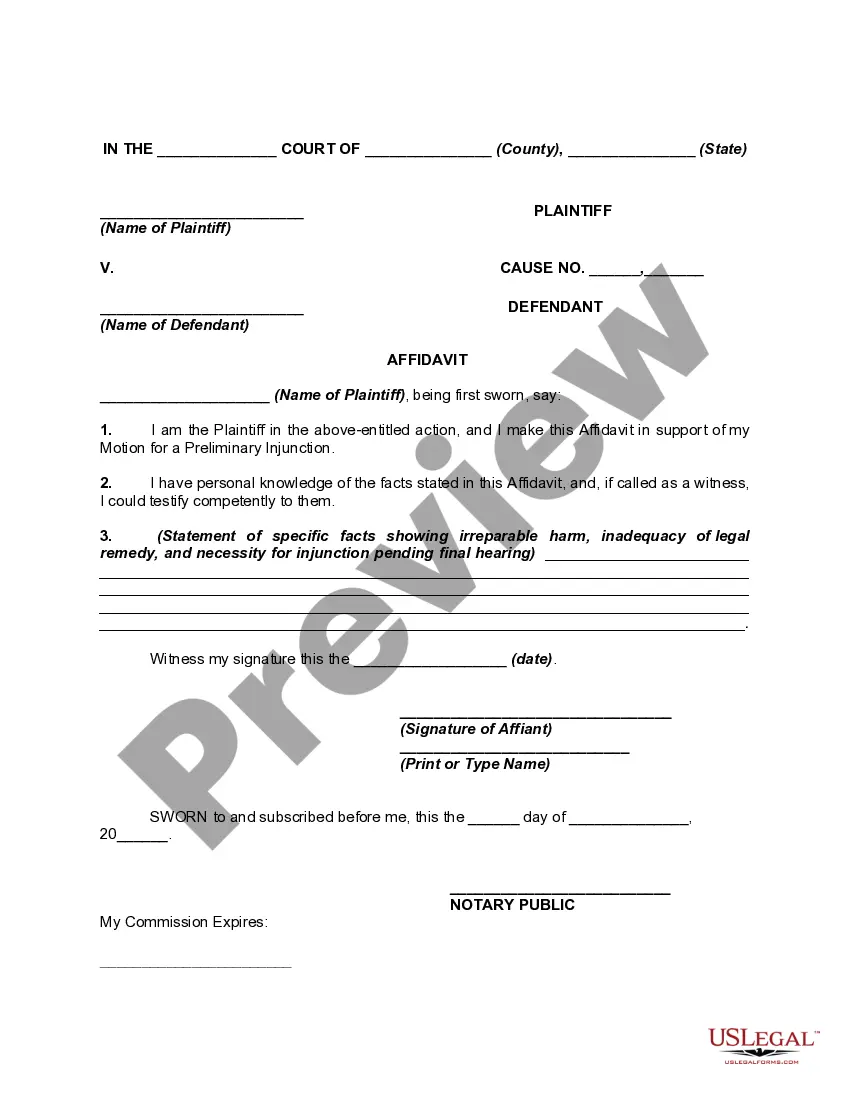
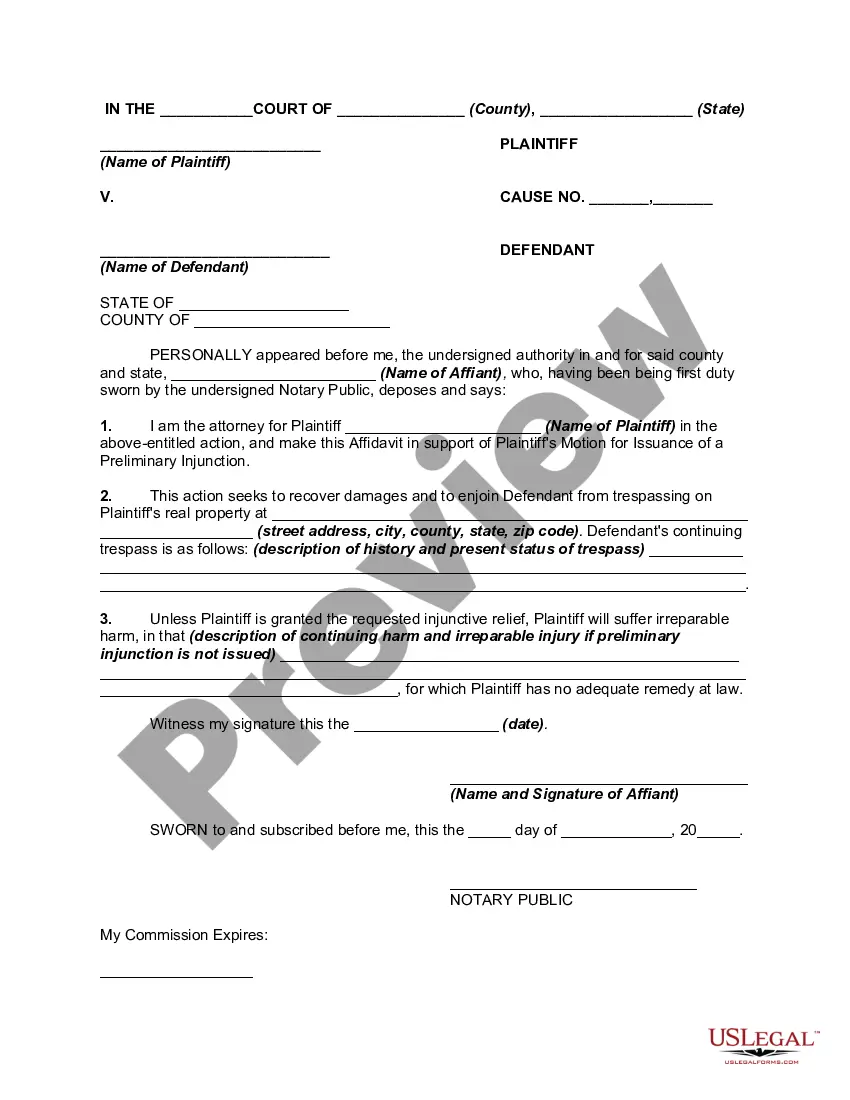
How to fill out Affidavit In Support Of Motion For Preliminary Injunction?
Managing legal papers and activities can be an exhausting addition to your schedule.
Forms like Civil Procedure For Summary Judgment frequently necessitate that you locate them and grasp how to fill them out accurately.
For that reason, whether you are handling financial, legal, or personal affairs, utilizing a thorough and user-friendly online directory of forms at your disposal will be incredibly beneficial.
US Legal Forms is the premier online service for legal templates, offering over 85,000 state-specific forms along with a range of resources that will assist you in completing your documents swiftly.
Is it your first experience with US Legal Forms? Sign up and create an account in just a few minutes, and you will gain access to the form directory along with Form Civil Procedure For Summary Judgment. Afterward, follow the outlined steps to complete your form.
- Explore the collection of relevant documents accessible to you with just one click.
- US Legal Forms provides state- and county-specific forms available for download at any time.
- Safeguard your document management procedures by utilizing a premium service that allows you to prepare any form within minutes without any additional or concealed charges.
- Just Log In to your account, locate Form Civil Procedure For Summary Judgment, and download it directly from the My documents section.
- You can also access previously downloaded forms.
Form popularity
FAQ
Therefore, to win on summary judgment you have to convince a judge that it is a good use of his or her very limited time and resources to write the decision. This means that your written material has to demonstrate that the law and facts support summary judgment, and contain no misstatements of law or fact.
Judges may grant partial summary judgment. For example, a judge might rule on some factual issues, but leave others for trial. Alternately, a judge might grant summary judgment regarding liability, but still hold a trial to determine damages.
Replies should be succinctly stated. If the response to a fact is ?undisputed,? the reply should also state ?undisputed.? If you contend that despite a response of ?disputed,? the non-moving party has failed to raise a genuine dispute of material fact, you should succinctly state why.
The chance of success in these cases is less than 10% [1]. Another study found that summary judgment is mostly granted in Title VII cases, for example, cases involving equal pay or employment discrimination [2]. When it comes to federal cases, summary judgments are filed in 17% of total cases.
The theory of summary judgment is that judges may rule for one side or the other only after finding that no "genuine" issues of "material" fact are in dispute.