Crime Dismissed
Description


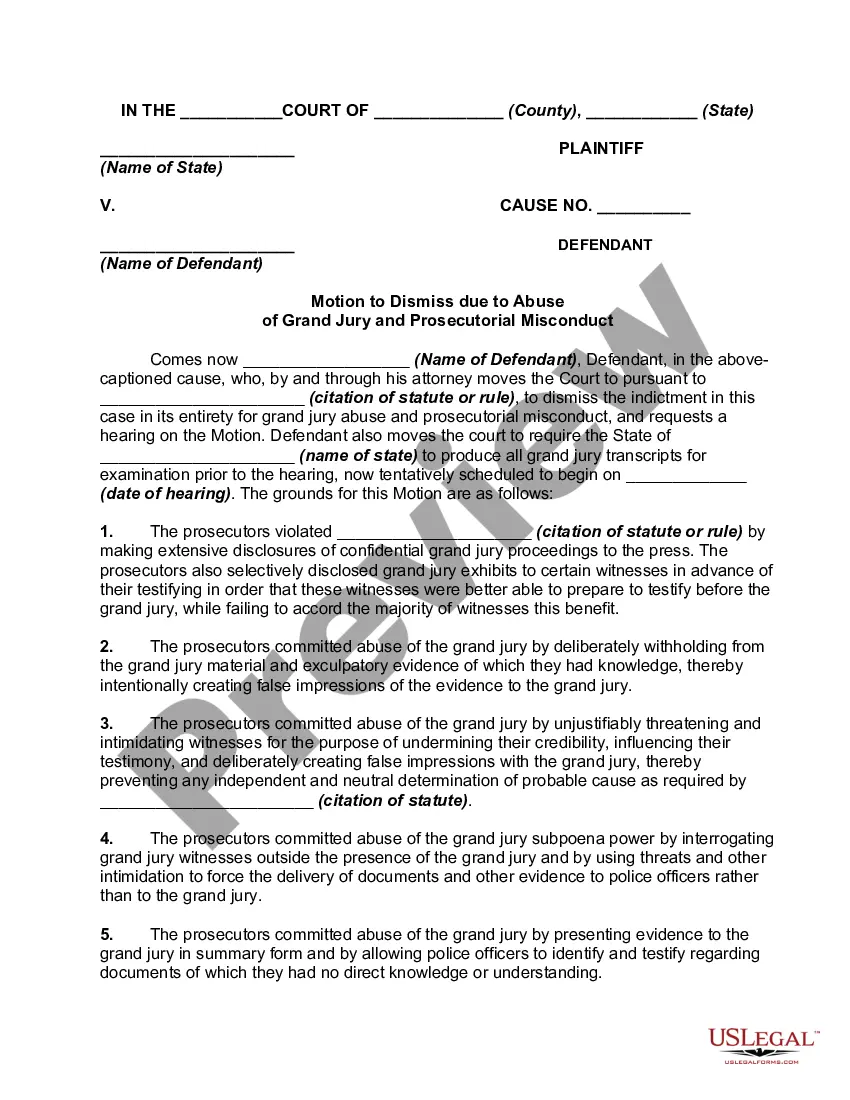
Get your form ready online
Our built-in tools help you complete, sign, share, and store your documents in one place.
Make edits, fill in missing information, and update formatting in US Legal Forms—just like you would in MS Word.
Download a copy, print it, send it by email, or mail it via USPS—whatever works best for your next step.
Sign and collect signatures with our SignNow integration. Send to multiple recipients, set reminders, and more. Go Premium to unlock E-Sign.
If this form requires notarization, complete it online through a secure video call—no need to meet a notary in person or wait for an appointment.
We protect your documents and personal data by following strict security and privacy standards.

Make edits, fill in missing information, and update formatting in US Legal Forms—just like you would in MS Word.

Download a copy, print it, send it by email, or mail it via USPS—whatever works best for your next step.

Sign and collect signatures with our SignNow integration. Send to multiple recipients, set reminders, and more. Go Premium to unlock E-Sign.

If this form requires notarization, complete it online through a secure video call—no need to meet a notary in person or wait for an appointment.

We protect your documents and personal data by following strict security and privacy standards.
Looking for another form?

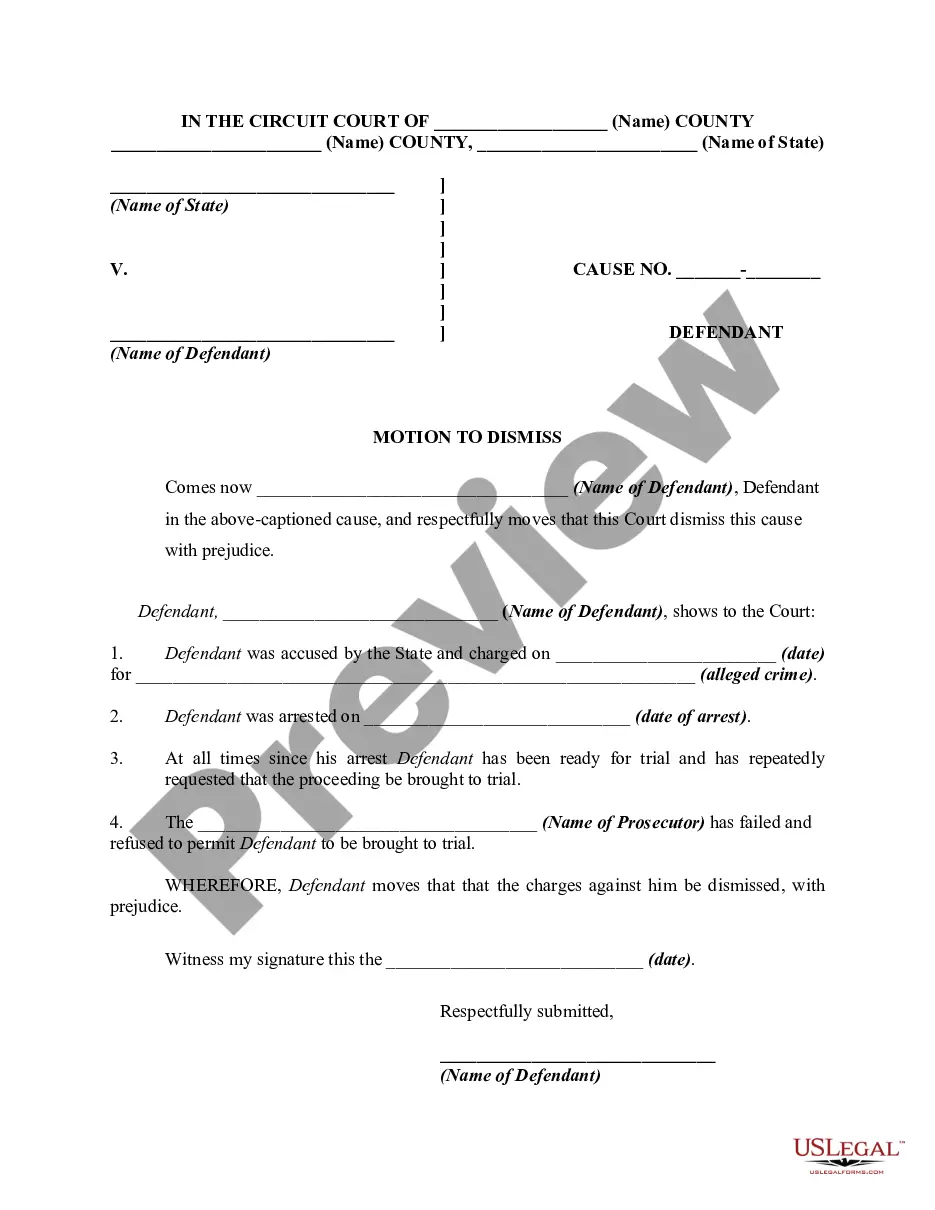
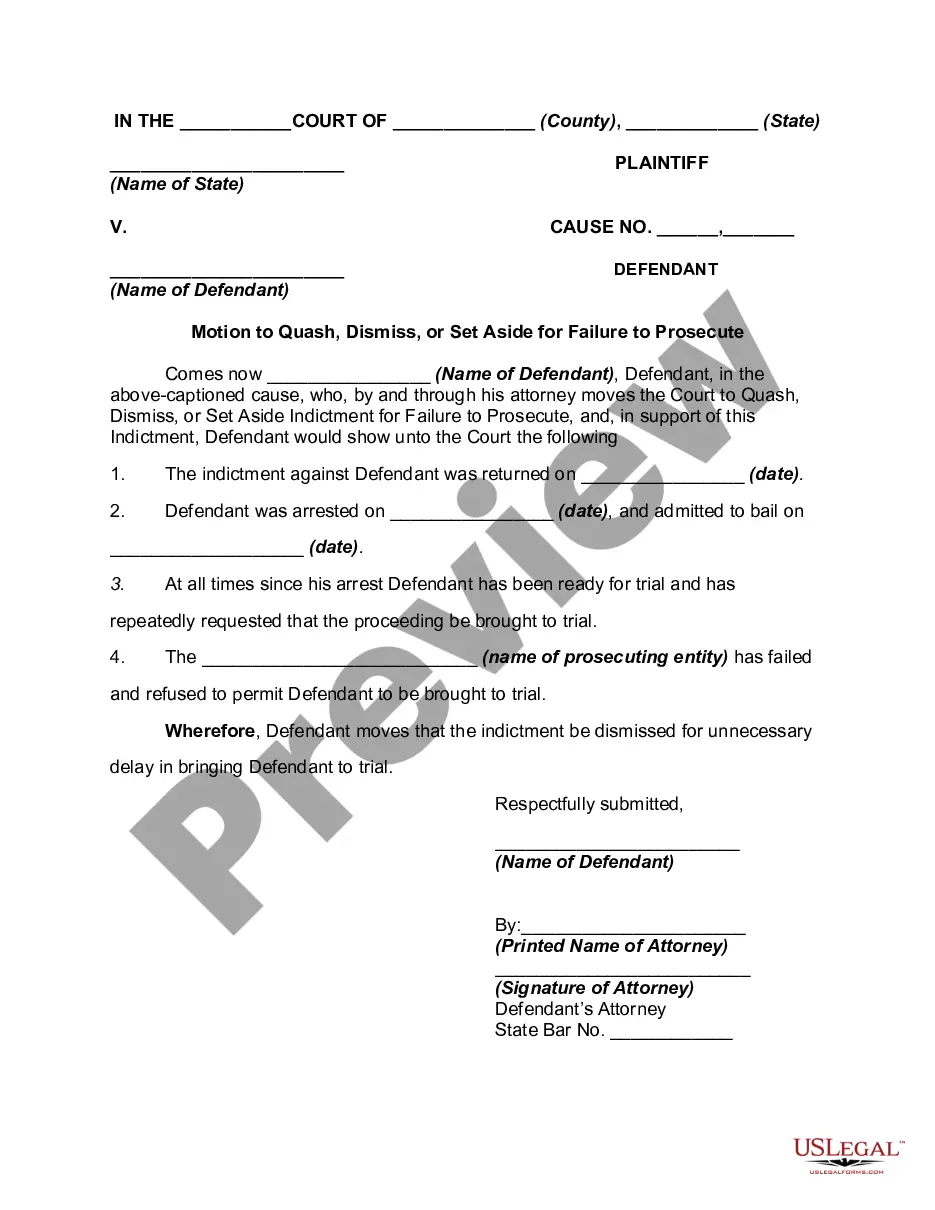
How to fill out Motion To Quash, Dismiss, Or Set Aside Criminal Charges For Failure To Prosecute?
- Log in to your US Legal Forms account if you're a returning user, ensuring your subscription is active. If it's expired, renew it first.
- For first-time users, visit the homepage and explore the Preview mode to review different forms, confirming they suit your jurisdiction requirements.
- In case you don't find the right document, utilize the Search feature to locate forms that meet your specific needs.
- Click on the Buy Now button after selecting your form, then choose a suitable subscription plan, and create an account if needed to unlock full access.
- Complete your purchase using credit card details or through PayPal to finalize the subscription and gain access to the form.
- Download the document to your device, saving it for easy access in your personalized 'My Forms' section whenever required.
Utilizing US Legal Forms not only saves you time but also guarantees that you obtain accurate and compliant legal documents tailored to your needs. With over 85,000 templates available, each designed to be easily fillable and editable, you can tackle legal challenges confidently.
Ready to get started? Visit US Legal Forms today and take control of your legal documentation!
Form popularity
FAQ
A criminal case dismissed indicates that the court has ended the prosecution against the accused. This dismissal can prevent further legal consequences, such as a trial or heavy sentences. In many cases, a crime dismissed helps preserve the defendant's reputation and future opportunities. For tailored assistance on how to handle a dismissed case, consider utilizing uslegalforms for support.
When an action is dismissed, it means that the court has decided to terminate the case without a trial. This decision can happen at various stages of the legal process, often due to insufficient evidence or failure to follow legal procedures. The consequence of a crime dismissed is that it significantly clears the individual's record, allowing them to move forward without ongoing legal issues. Learn more about how uslegalforms offers tools to prepare for such developments.
When a case is dismissed, the charges against the defendant are removed from the court's docket. This action may occur for various reasons, such as lack of evidence or procedural errors. The result is that the individual no longer faces legal penalties, leading to a significant relief. If you need guidance on how to manage such situations, uslegalforms can provide the necessary resources.
Yes, when a case is dismissed, it generally means a positive outcome for the defendant. This dismissal can indicate that the evidence was insufficient or that other legal issues arose. As a result, a crime dismissed may allow the defendant to avoid the stress and consequences of a trial. You can explore how uslegalforms can assist you in navigating these complexities.
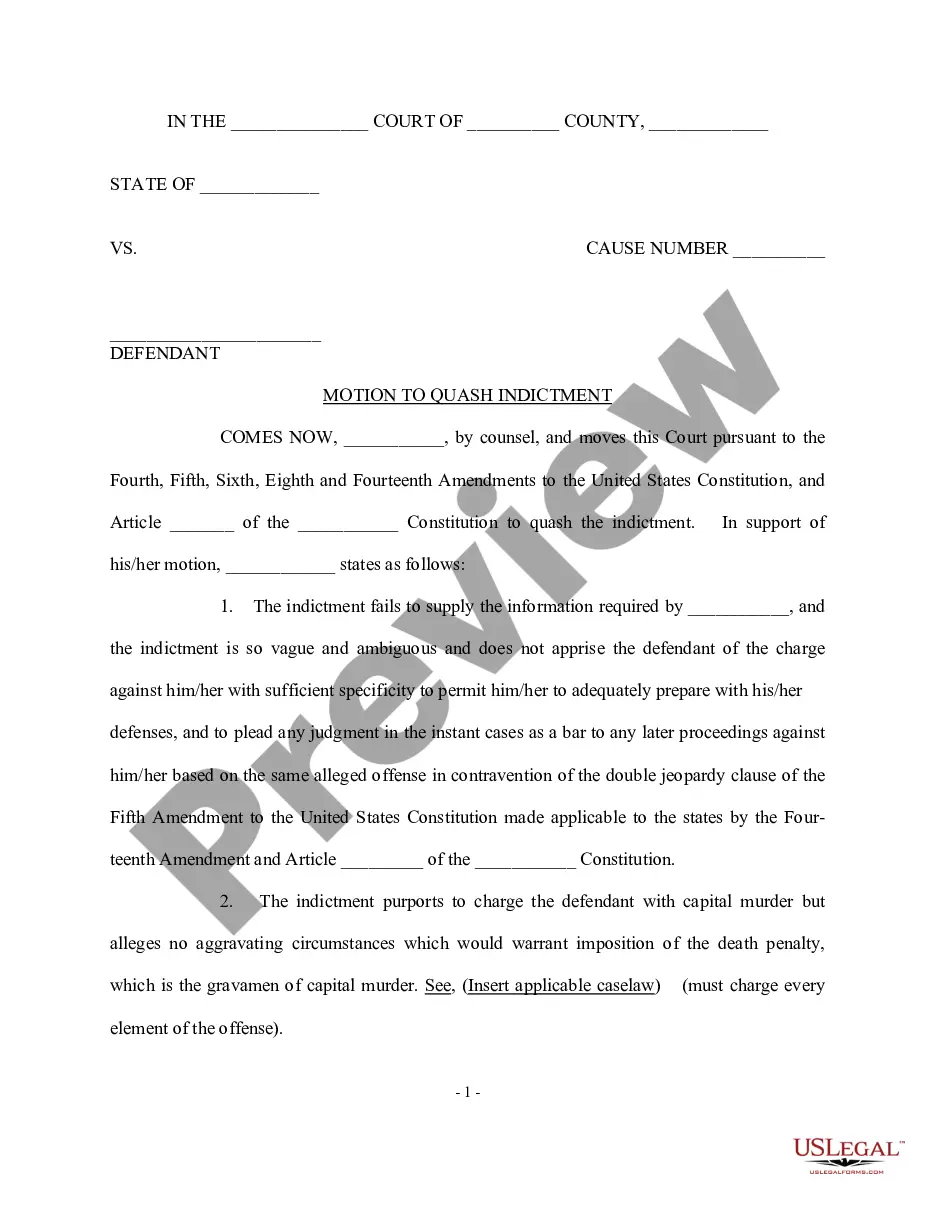
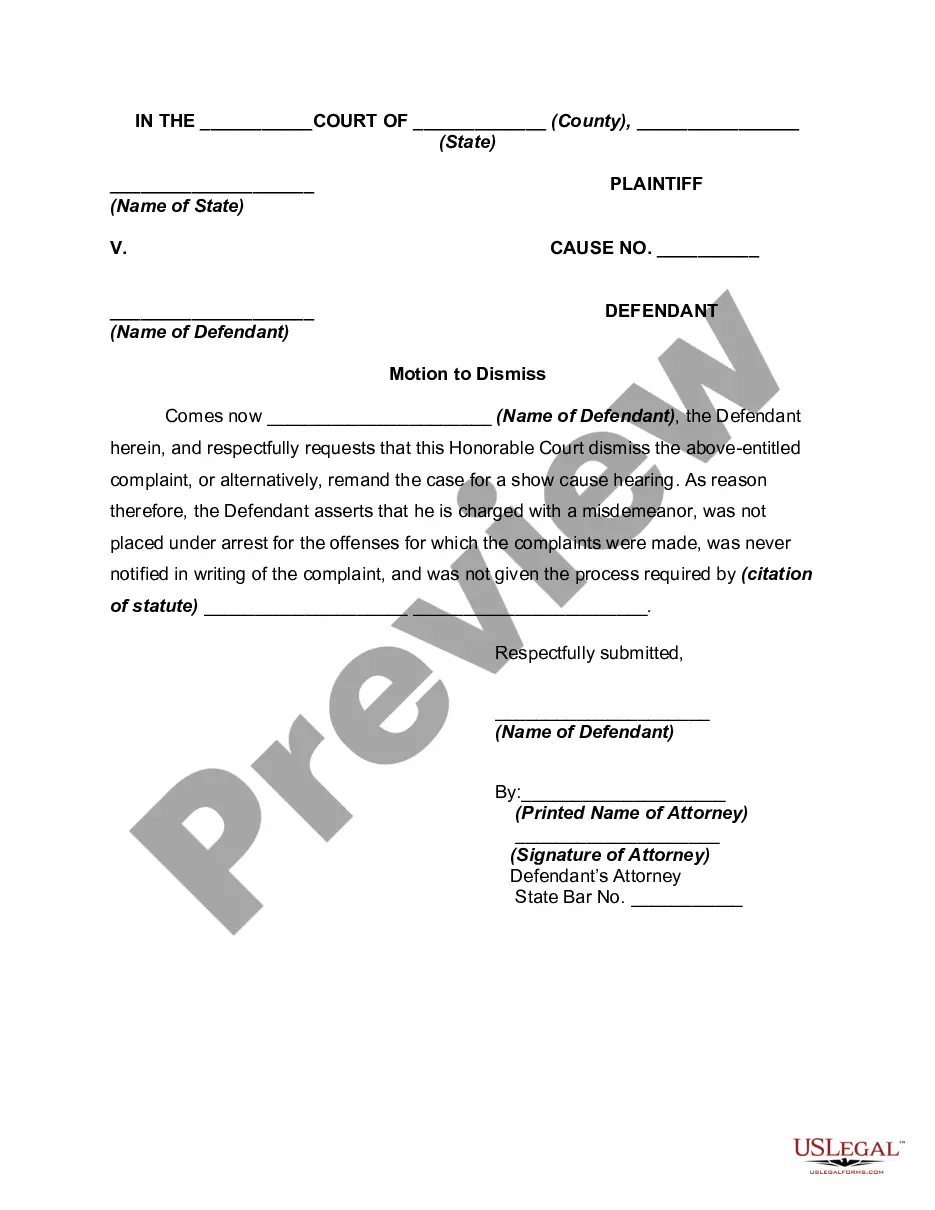
To have your criminal case dismissed, you might need to present evidence demonstrating a lack of basis for the charges, or your attorney could file a motion to dismiss. It's essential to engage with a legal professional who can identify potential weaknesses in the case against you. Utilizing resources like US Legal Forms can provide templates and guidance for motions to ensure you navigate the process correctly. Dismissal can offer a fresh start, so it’s worth pursuing aggressively.
Yes, if your criminal case is dismissed, you may have grounds to sue, especially if there were violations of your legal rights. It's vital to consider the nature of your dismissal and whether any wrongful actions contributed to your situation. Seeking professional legal guidance can provide clarity on your options moving forward. Platforms like US Legal Forms can assist you in understanding the nuances of such legal actions.
One common reason for cases getting dismissed is the lack of sufficient evidence to support the charges. Prosecutors must have enough proof to proceed, and if they don’t, the court may dismiss the case. Other factors may include procedural errors or witness availability. Knowing these reasons can help you navigate your own legal challenges more effectively.
No, dismissed and not guilty are not synonymous. A dismissed case means the court has decided not to pursue the case any further, while not guilty indicates a verdict after trial that finds you did not commit the crime. Both outcomes provide relief, but they signify different legal conclusions. It’s important to understand these terms for your own peace of mind.
If your criminal case is dismissed, you generally have the option to pursue a civil lawsuit, particularly if you believe your rights were violated. However, the circumstances of your case matter greatly. Before deciding to move forward with a lawsuit, it is wise to seek legal advice to ensure your rights are protected. Ultimately, consulting a platform like US Legal Forms can help guide you through the legal complexities.
Charges dropped refer to the prosecutor's decision to stop pursuing the case before it goes to trial. On the other hand, a case dismissed occurs typically after a judge has evaluated the evidence and determined that the case should not proceed further. Understanding these distinctions is important for anyone involved in the legal system. In both scenarios, it's beneficial to consult with a legal expert to navigate your options.