What Is A Subpoena Duces Tecum Quizlet
Description

Get your form ready online
Our built-in tools help you complete, sign, share, and store your documents in one place.
Make edits, fill in missing information, and update formatting in US Legal Forms—just like you would in MS Word.
Download a copy, print it, send it by email, or mail it via USPS—whatever works best for your next step.
Sign and collect signatures with our SignNow integration. Send to multiple recipients, set reminders, and more. Go Premium to unlock E-Sign.
If this form requires notarization, complete it online through a secure video call—no need to meet a notary in person or wait for an appointment.
We protect your documents and personal data by following strict security and privacy standards.

Make edits, fill in missing information, and update formatting in US Legal Forms—just like you would in MS Word.

Download a copy, print it, send it by email, or mail it via USPS—whatever works best for your next step.

Sign and collect signatures with our SignNow integration. Send to multiple recipients, set reminders, and more. Go Premium to unlock E-Sign.

If this form requires notarization, complete it online through a secure video call—no need to meet a notary in person or wait for an appointment.

We protect your documents and personal data by following strict security and privacy standards.
Looking for another form?




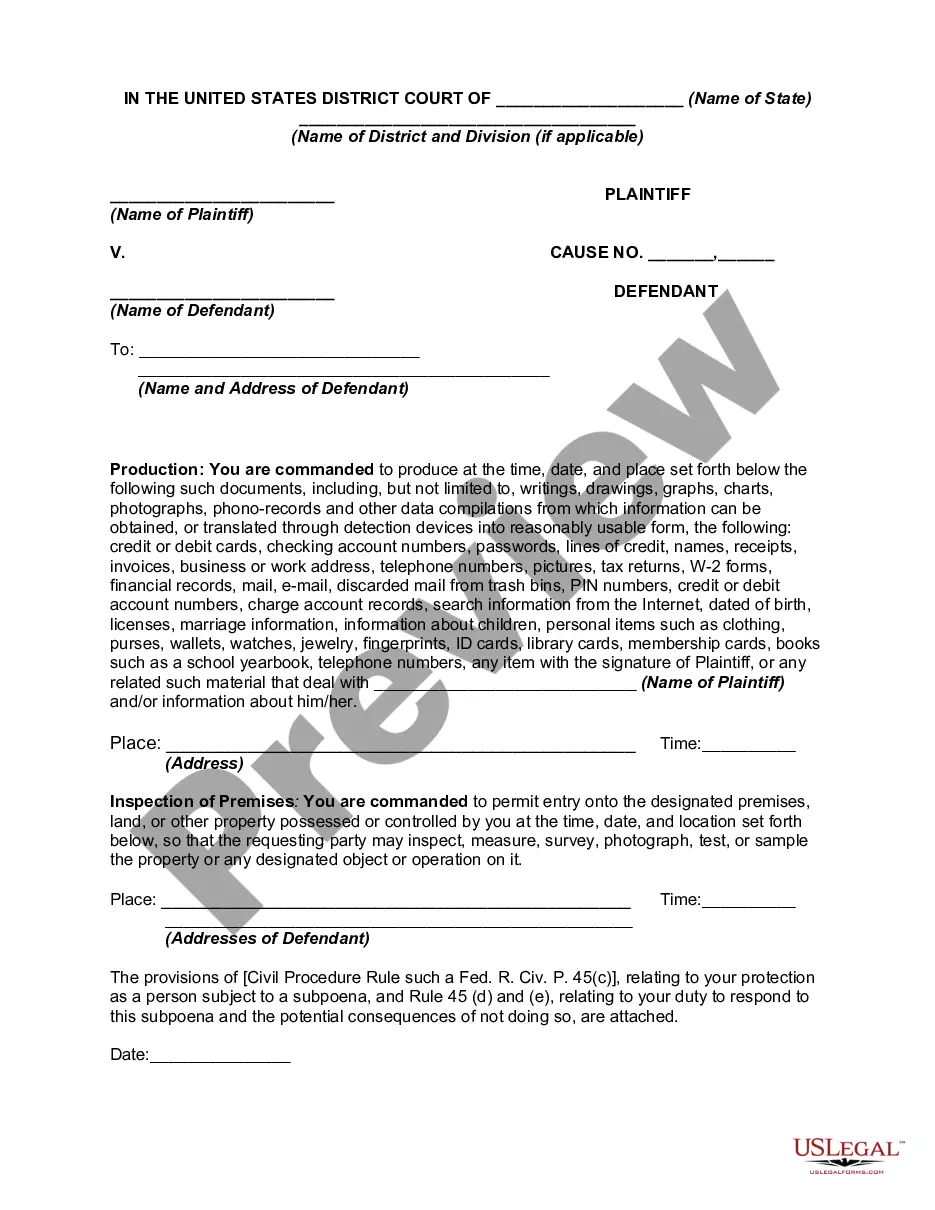
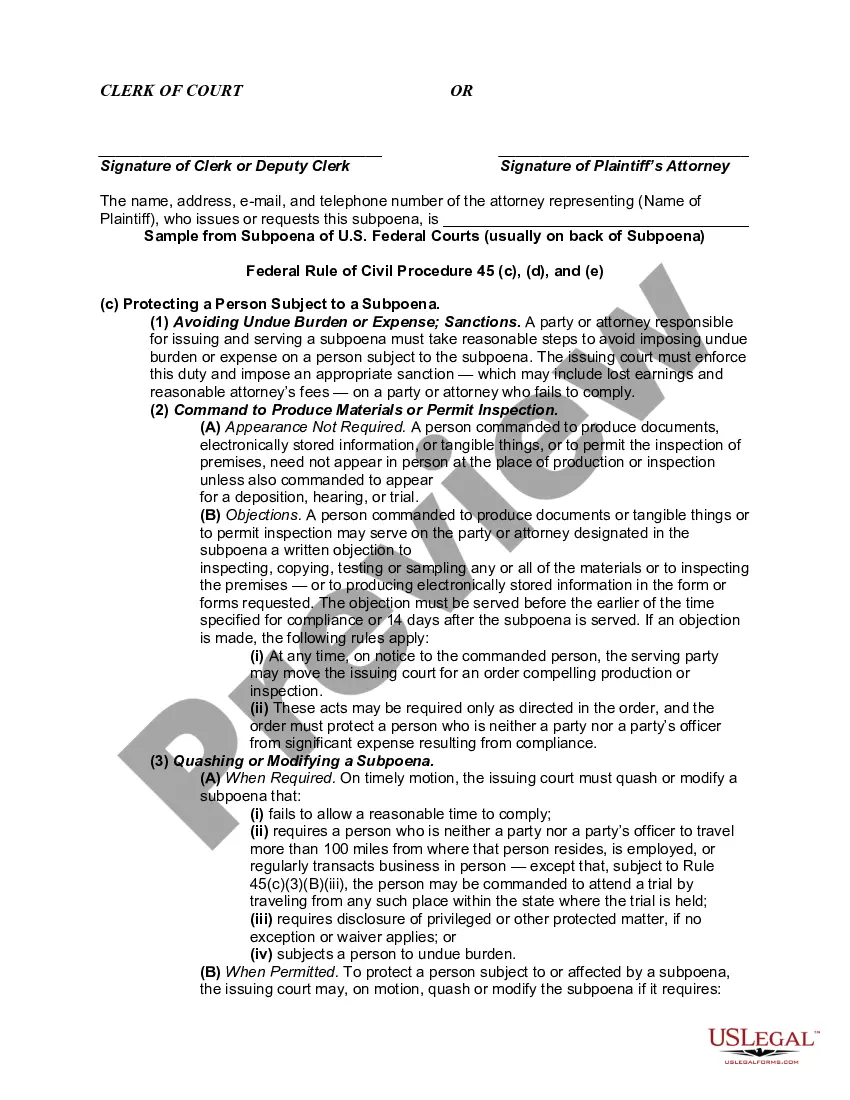
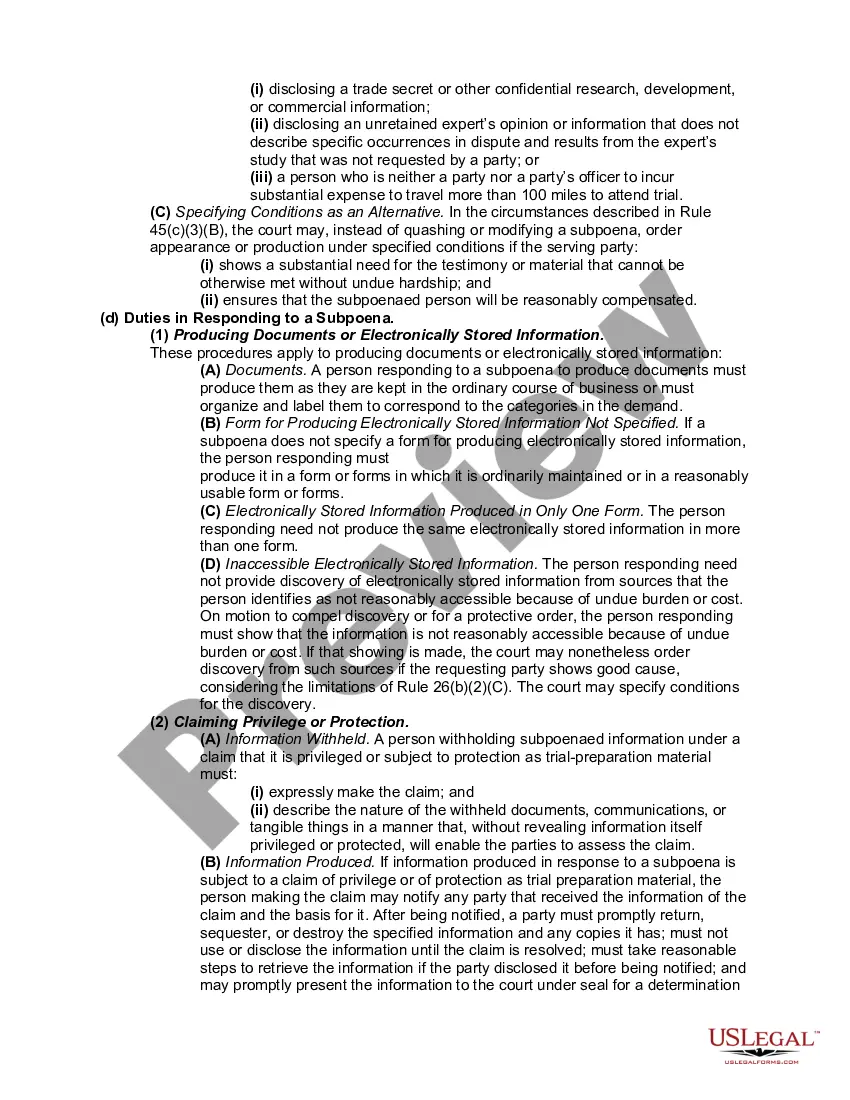
How to fill out Subpoena To Produce Documents, Information, Or Objects Or Permit Inspection Of Premises In A Civil Action Involving Identity Theft?
- If you’re an existing user, log into your account to access your downloadable forms. Ensure that your subscription is active to avoid interruptions.
- For new users, start by browsing the Preview mode to check the description of the forms. Make sure it aligns with your needs and follows your local jurisdiction's requirements.
- If the form does not suit your requirements, utilize the Search feature to find alternative templates that meet your needs.
- Once you find the correct document, click the Buy Now button and select the subscription plan that works best for you. You will need to create an account to gain access to the full library.
- Complete your purchase by entering your payment information via credit card or PayPal to finalize your subscription.
- After your payment is processed, download the template directly to your device. You can always find it again in the My Forms section of your profile.
By following these steps, you can easily access the forms you need while ensuring all legal documents are accurate and tailored to your situation.
Start your journey towards efficient legal documentation with US Legal Forms today—navigate legal requirements with confidence!
Form popularity
FAQ
A subpoena duces tecum can be deemed invalid for several reasons. If it lacks proper authorization, is overly broad, or does not provide sufficient time for compliance, it may not hold up in court. Additionally, if it requests privileged information or is served inappropriately, it may be subject to challenge. Understanding these factors can help you navigate what is a subpoena duces tecum quizlet more effectively.
Yes, you can oppose a subpoena duces tecum. This legal document, which requires you to produce documents or evidence, can be challenged in court if you believe it is overly broad, irrelevant, or burdensome. It is essential to prepare your arguments and file a motion to quash the subpoena, as this process secures your rights. For understanding more about this, you can refer to resources that explain what is a subpoena duces tecum quizlet.
The main difference between a summons and a subpoena duces tecum lies in their purposes. A summons initiates a legal case by compelling a party to appear in court, while a subpoena duces tecum specifically requires the production of documents or evidence. Knowing this distinction can help you understand your rights and responsibilities in legal proceedings.
Subpoena duces tecum means a legal document that mandates a person to produce documents or records in a court case. It directs the recipient to deliver specified evidence, such as emails, contracts, or other relevant materials. By understanding what this means, you can better navigate the legal landscape in instances where documentation is vital.
A subpoena duces tecum quizlet provides concise definitions and explanations for the term and its applications in legal contexts. It's a helpful study tool for students or professionals needing a quick reference. This format makes complex legal concepts more accessible, allowing for better understanding and retention of information surrounding subpoenas.
Subpoena duces tecum refers to a legal order requiring someone to provide documents, records, or evidence in a legal proceeding. The phrase itself means 'bring with you' in Latin, highlighting the need for physical evidence. Understanding this term can clarify its role in legal processes, offering insight into legal requests for material relevant to a case.
A subpoena duces tecum is often compared to a traditional subpoena, which commands a person to appear in court. However, while a regular subpoena focuses on appearance, a subpoena duces tecum seeks documents or evidence relevant to a case. Both are legal tools that help gather information, but the specific focus on documents sets the duces tecum apart.
A declaration for subpoena duces tecum is a formal statement filed in court that accompanies the subpoena document. It explains the relevance of the requested documents and justifies the need for the evidence. This declaration plays a key role in the legal process by outlining why the court should grant the subpoena. To ensure all legal documents are correctly formatted and presented, consider utilizing US Legal Forms.
The difference between a subpoena and a subpoena duces tecum lies in their requirements. A standard subpoena orders an individual to appear and testify, while a subpoena duces tecum requires the production of documents or evidence. Understanding this distinction is crucial for individuals involved in legal proceedings. US Legal Forms offers resources that clarify these terms and help users navigate their legal situations.
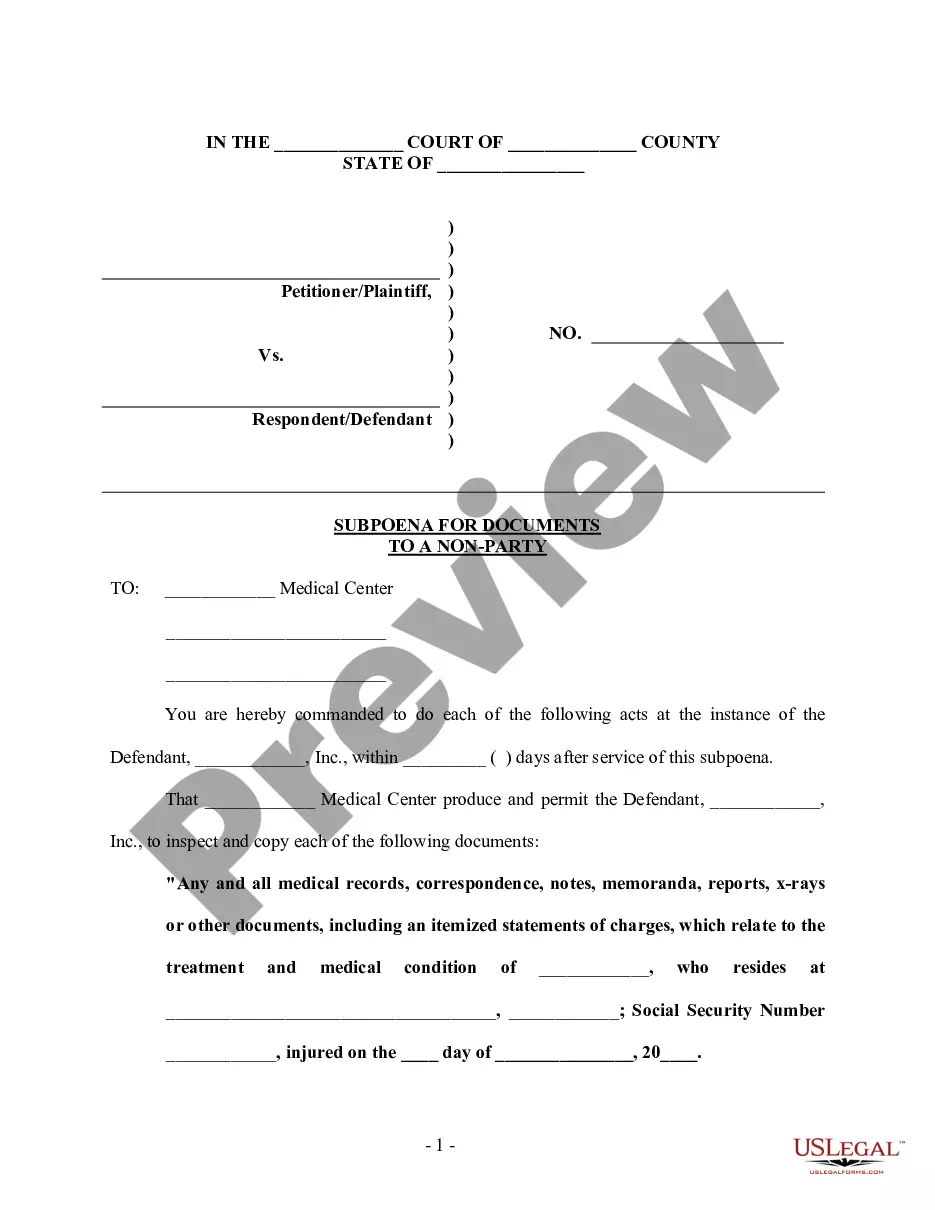
Attorneys use a subpoena duces tecum primarily to obtain evidence needed for their cases. This can include documents, records, or other pertinent materials that support their arguments in court. By issuing this type of subpoena, attorneys ensure that they have all relevant information to strengthen their position. For legal professionals seeking to craft effective subpoenas, US Legal Forms can be a valuable resource.