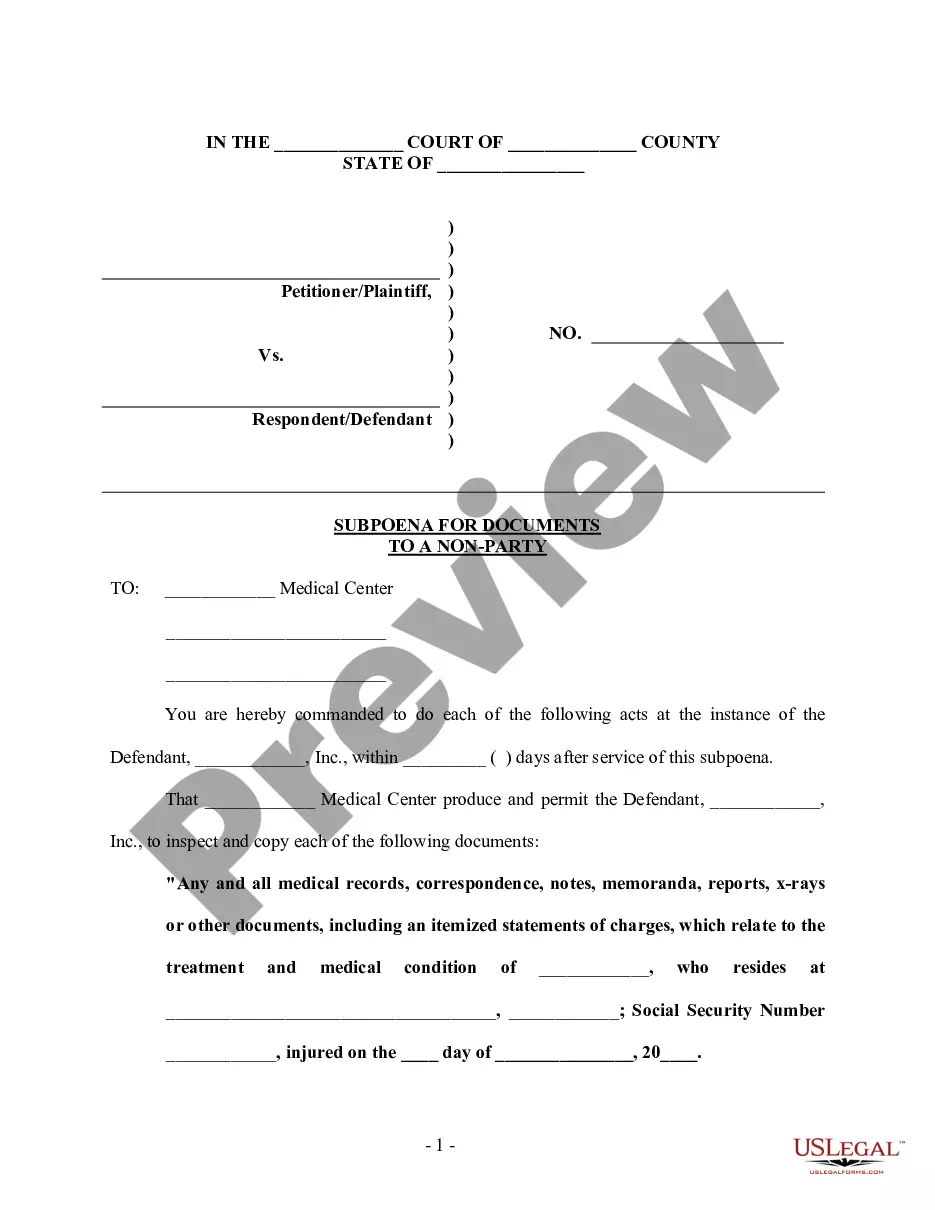
Subpoena Template With Email
Description
Get your form ready online
Our built-in tools help you complete, sign, share, and store your documents in one place.
Make edits, fill in missing information, and update formatting in US Legal Forms—just like you would in MS Word.
Download a copy, print it, send it by email, or mail it via USPS—whatever works best for your next step.
Sign and collect signatures with our SignNow integration. Send to multiple recipients, set reminders, and more. Go Premium to unlock E-Sign.
If this form requires notarization, complete it online through a secure video call—no need to meet a notary in person or wait for an appointment.
We protect your documents and personal data by following strict security and privacy standards.

Make edits, fill in missing information, and update formatting in US Legal Forms—just like you would in MS Word.

Download a copy, print it, send it by email, or mail it via USPS—whatever works best for your next step.

Sign and collect signatures with our SignNow integration. Send to multiple recipients, set reminders, and more. Go Premium to unlock E-Sign.

If this form requires notarization, complete it online through a secure video call—no need to meet a notary in person or wait for an appointment.

We protect your documents and personal data by following strict security and privacy standards.
Looking for another form?


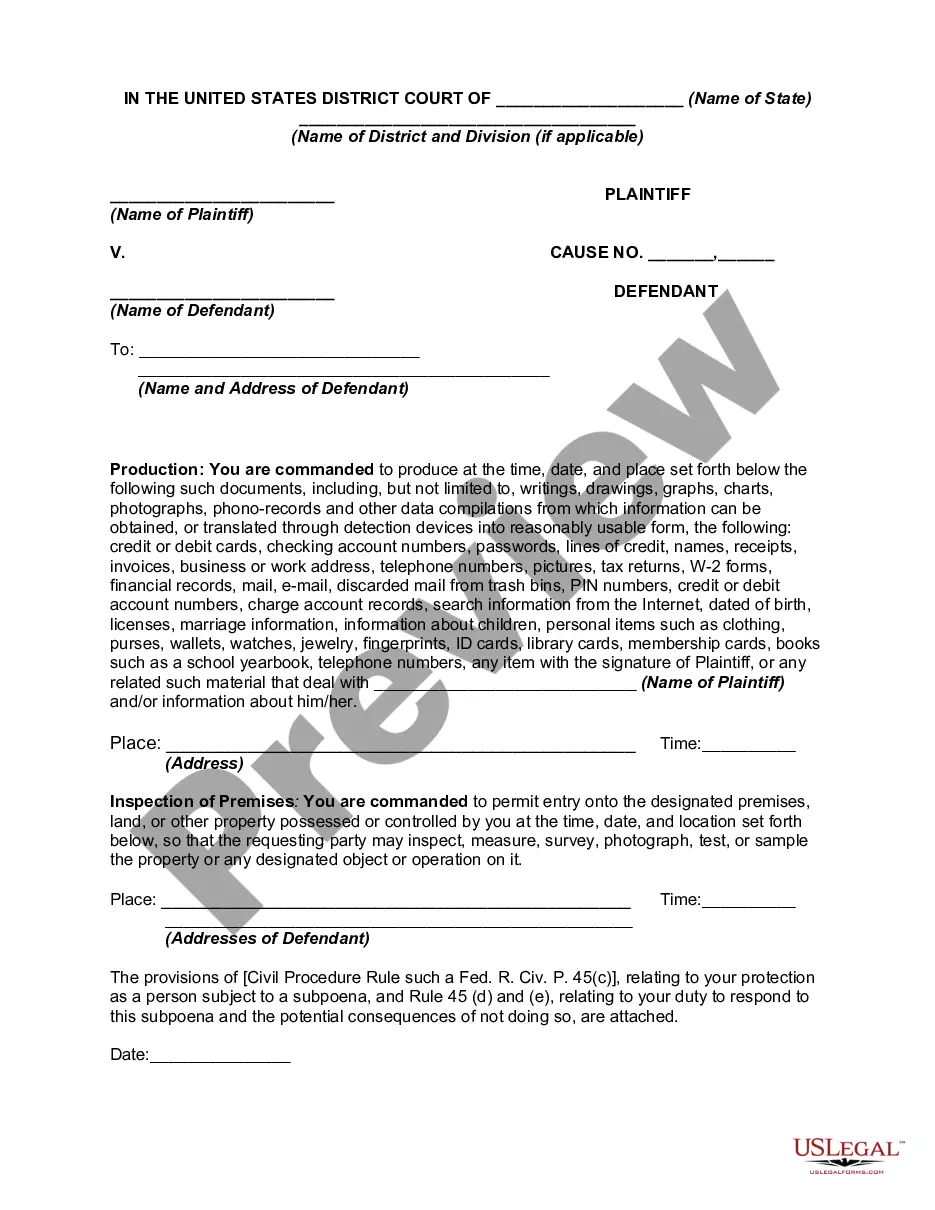
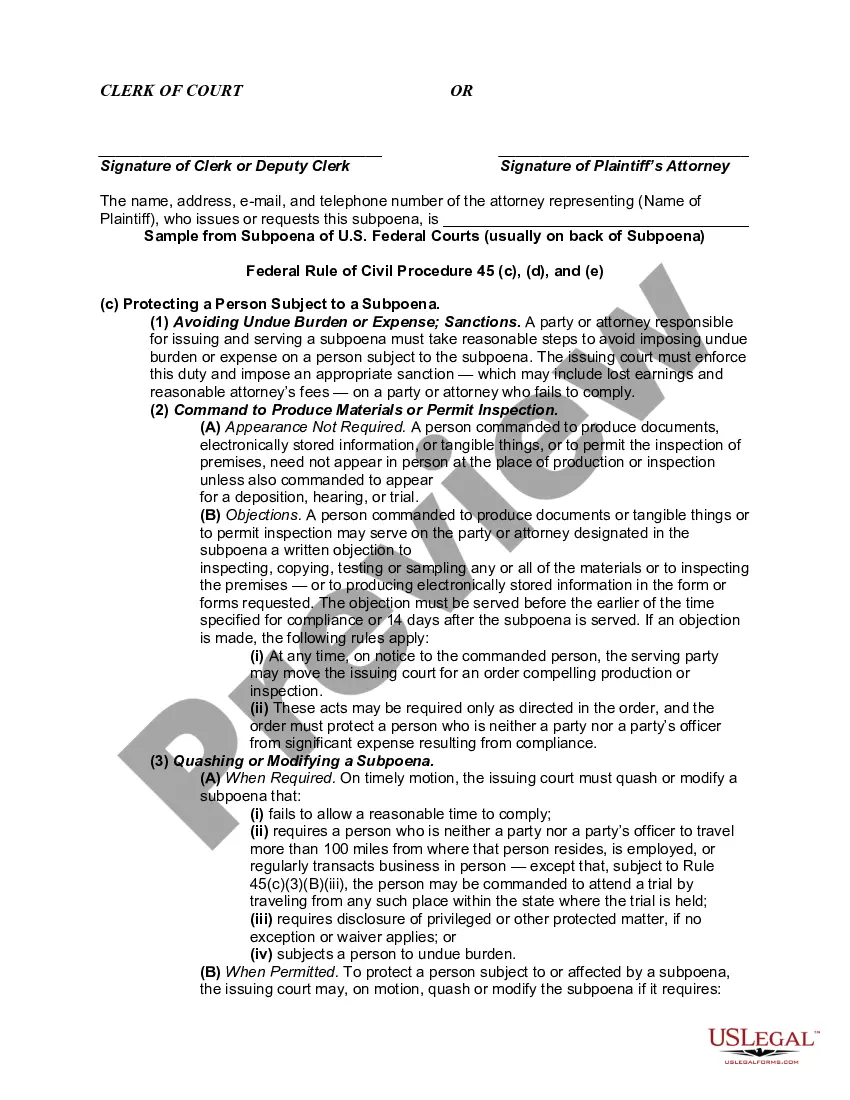
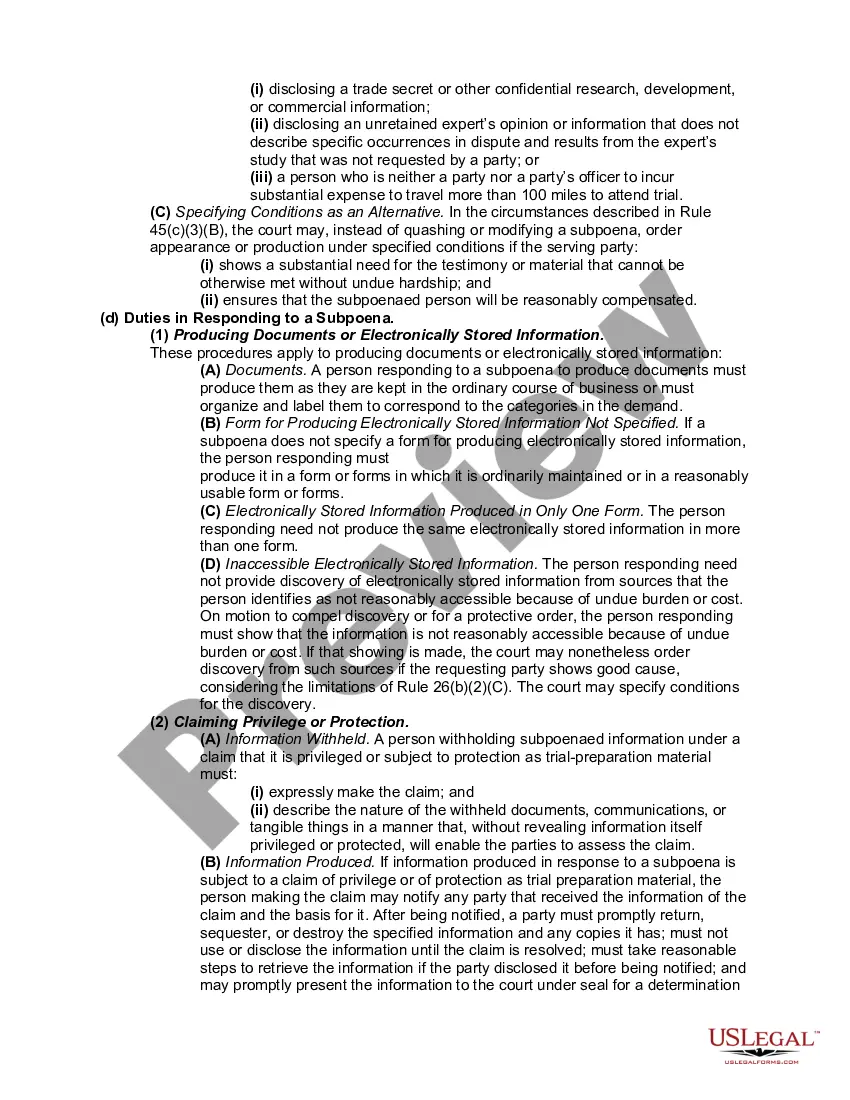
How to fill out Subpoena To Produce Documents, Information, Or Objects Or Permit Inspection Of Premises In A Civil Action Involving Identity Theft?
Acquiring legal document examples that adhere to federal and local regulations is essential, and the web provides a plethora of alternatives to select from.
However, what's the use of squandering time searching for the suitable Subpoena Template With Email sample online if the US Legal Forms online repository already compiles such templates in one location.
US Legal Forms is the premier online legal database with over 85,000 fillable templates created by lawyers for any professional or personal circumstance.
Utilize the Preview feature or the text description to ensure it meets your requirements.
- They are easy to navigate with all documents organized by state and intended use.
- Our specialists keep abreast of legal updates, so you can always be confident your form is current and compliant when obtaining a Subpoena Template With Email from our site.
- Acquiring a Subpoena Template With Email is fast and straightforward for both existing and new customers.
- If you already possess an account with an active subscription, Log In and store the document sample you require in the appropriate format.
- If you are new to our site, follow the instructions below.
Form popularity
FAQ
Generally, a liability waiver should include the following provisions: Risks. First and foremost, it should include a list of the representative inherent risks and any special risks of a trip and/or core activities in an itinerary. ... Liability Waiver Release. ... Assumption of Risk. ... Indemnification. ... Forum/Venue Selection.
Examples of waivers include the waiving of parental rights, waiving liability, tangible goods waivers, and waivers for grounds of inadmissibility. Waivers are common when finalizing lawsuits, as one party does not want the other pursuing them after a settlement is transferred.
How to Write a Release of Liability Form Fill in the information of both parties, including each person's name and address. Include the details of the event. ... Add if there is a payment required by the releasee. ... Write a section for signatures, which will contain the names and dates of both parties.
The liability release form, also known as the waiver form, contains a legally binding agreement between two parties, stating that one of them (the releasor) promises not to sue the other side (the releasee) for past, current, or future damages, losses, or injuries.
A liability waiver form is a legal contract that educates one party about the risks associated with an activity. Once signed, it prevents the participant from opening a lawsuit against the company in the event of damage or loss, effectively shifting responsibility for injuries from the company to the customer.
As tempting as it may be, you should never write your own liability waiver. Unless you're a fully qualified lawyer with experience in this area, it's likely that you'll omit critical language that puts your business at risk for lawsuits.
To build a waiver of liability: Choose a waiver template. Determine the type of activity or service. State the purpose of the waiver. Identify the risks. Include a title. Include customer information. Include waiver terms. Include a statement of understanding.
A liability waiver form is a legal contract that educates one party about the risks associated with an activity. Once signed, it prevents the participant from opening a lawsuit against the company in the event of damage or loss, effectively shifting responsibility for injuries from the company to the customer.