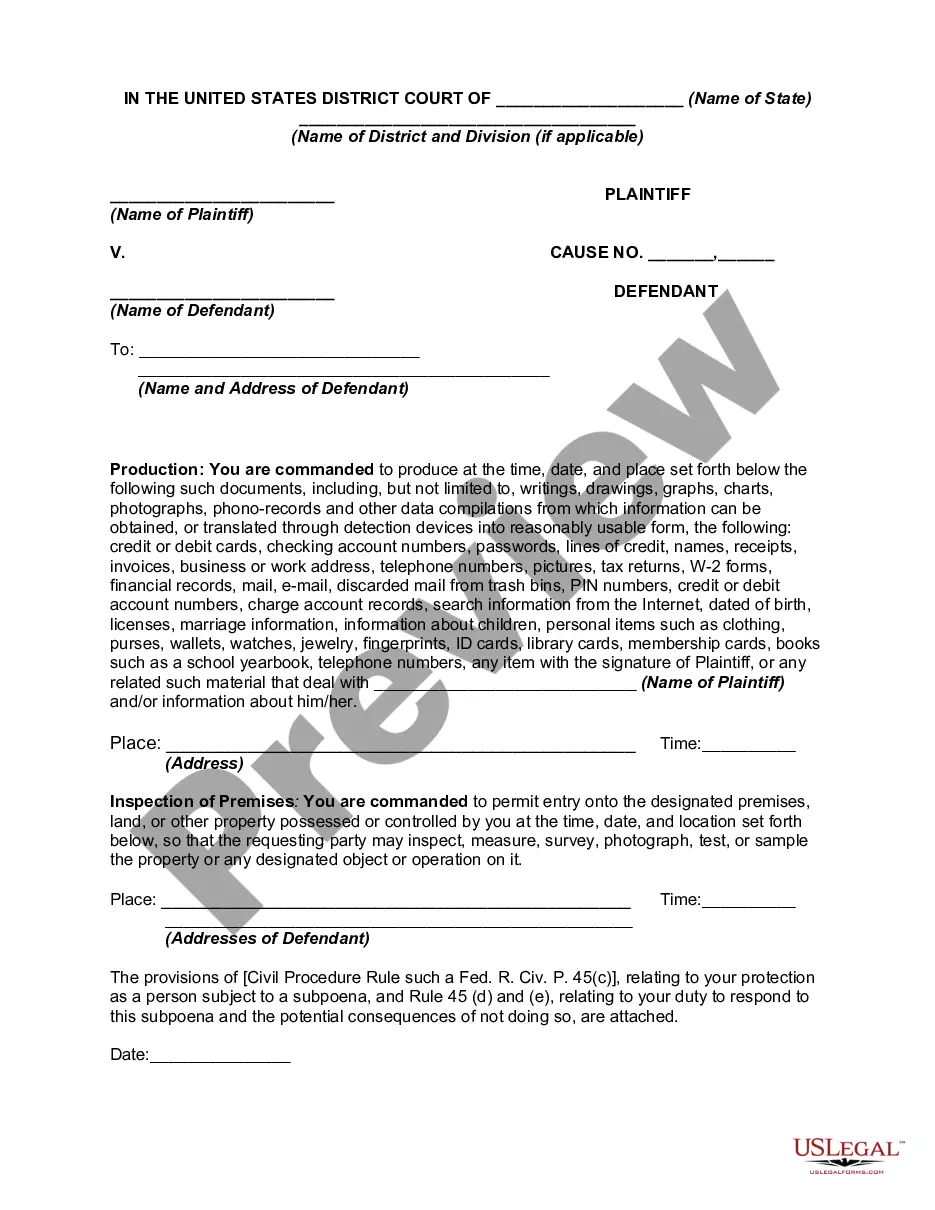
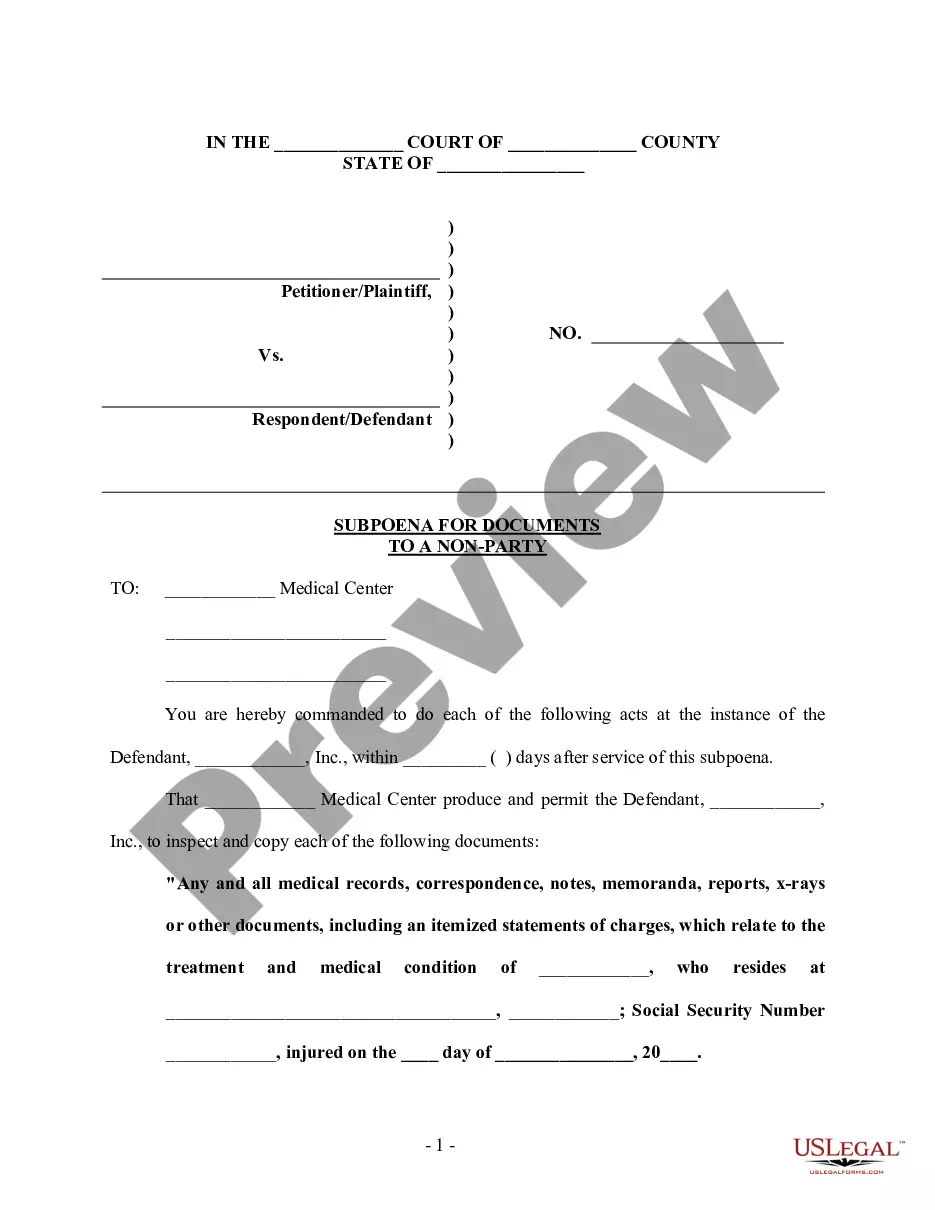
Subpoena Documents Template For Records
Description

Get your form ready online
Our built-in tools help you complete, sign, share, and store your documents in one place.
Make edits, fill in missing information, and update formatting in US Legal Forms—just like you would in MS Word.
Download a copy, print it, send it by email, or mail it via USPS—whatever works best for your next step.
Sign and collect signatures with our SignNow integration. Send to multiple recipients, set reminders, and more. Go Premium to unlock E-Sign.
If this form requires notarization, complete it online through a secure video call—no need to meet a notary in person or wait for an appointment.
We protect your documents and personal data by following strict security and privacy standards.

Make edits, fill in missing information, and update formatting in US Legal Forms—just like you would in MS Word.

Download a copy, print it, send it by email, or mail it via USPS—whatever works best for your next step.

Sign and collect signatures with our SignNow integration. Send to multiple recipients, set reminders, and more. Go Premium to unlock E-Sign.

If this form requires notarization, complete it online through a secure video call—no need to meet a notary in person or wait for an appointment.

We protect your documents and personal data by following strict security and privacy standards.
Looking for another form?


How to fill out Subpoena To Produce Documents, Information, Or Objects Or Permit Inspection Of Premises In A Civil Action Involving Identity Theft?
Obtaining a reliable source for accessing the most up-to-date and pertinent legal templates is half the battle when dealing with bureaucracy. Sourcing the correct legal documents requires precision and meticulousness, which is why it is essential to obtain samples of Subpoena Documents Template For Records solely from trustworthy providers, such as US Legal Forms. An incorrect template will squander your time and prolong your situation. With US Legal Forms, you have minimal concerns. You can access and verify all the details regarding the document’s applicability and significance for your situation and in your state or locality.
Consider the outlined steps to complete your Subpoena Documents Template For Records.
Eliminate the complications that come with your legal documentation. Explore the extensive US Legal Forms library to find legal templates, verify their relevance to your circumstance, and download them instantly.
- Utilize the catalog navigation or search bar to locate your sample.
- Examine the form’s description to determine if it meets the requirements of your state and county.
- Review the form preview, if available, to ensure it is the document you require.
- Return to the search and find the appropriate template if the Subpoena Documents Template For Records does not align with your needs.
- Once you are confident about the form’s applicability, download it.
- If you are a registered customer, click Log in to verify and access your chosen templates in My documents.
- If you do not have an account yet, click Buy now to acquire the template.
- Select the pricing plan that best fits your preferences.
- Proceed to the registration to finalize your purchase.
- Complete your purchase by selecting a payment option (credit card or PayPal).
- Choose the file format for downloading Subpoena Documents Template For Records.
- Once you have the form on your device, you can edit it using the editor or print it and fill it out manually.
Form popularity
FAQ
An example of a subpoena is a court order demanding an individual to appear in court or produce specific documents relevant to a case. For instance, a subpoena documents template for records may request business financial records for an ongoing investigation. These templates streamline the creation of an effective subpoena, ensuring all legal obligations are met. Utilizing a reliable platform like US Legal Forms can help you create such documents accurately.
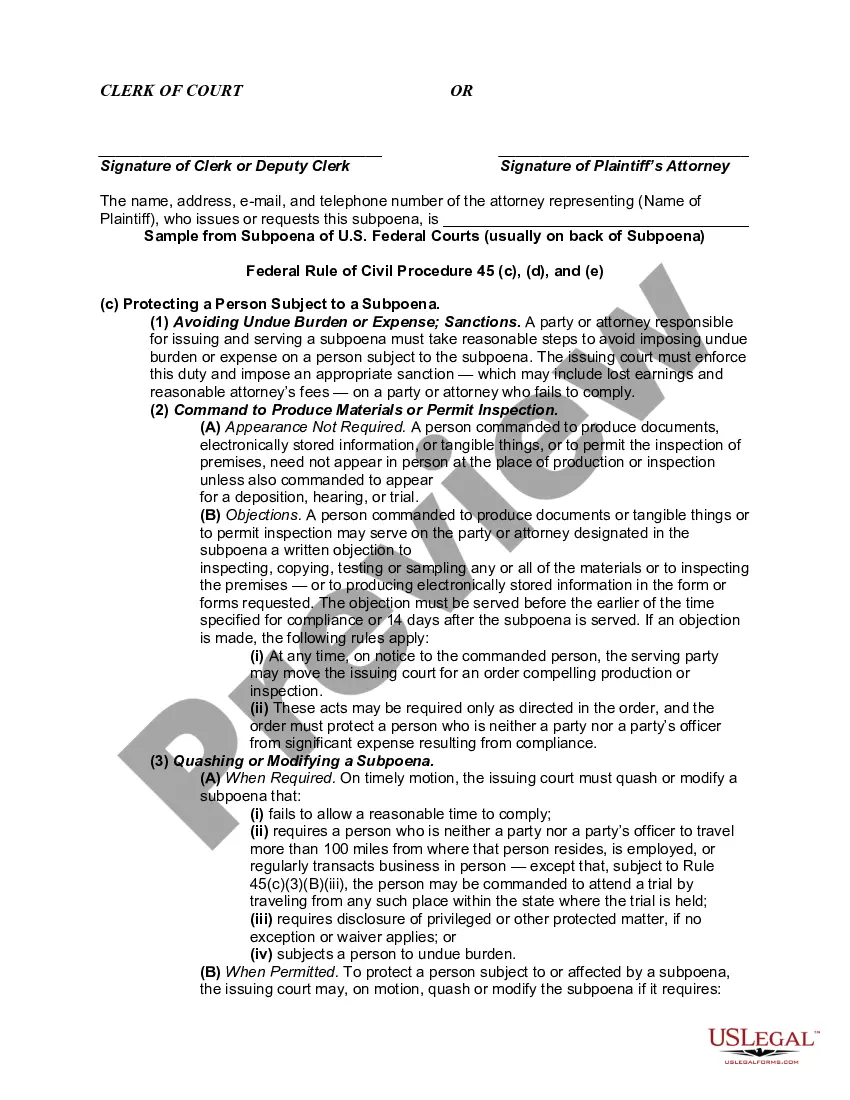
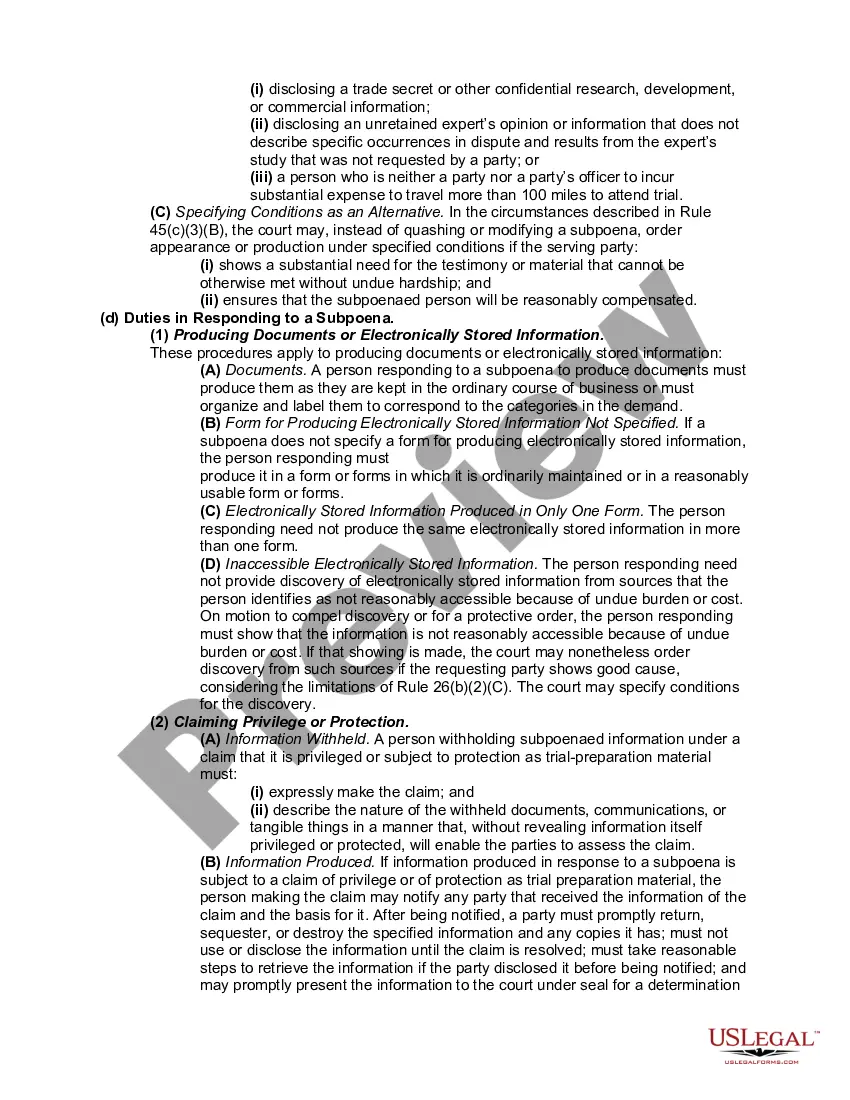
Responding to a subpoena to produce documents requires careful attention. First, review the subpoena thoroughly to understand what documents are requested. You should gather the requested documents and determine if any objections apply. If you find the subpoena unclear or overly broad, consider consulting a legal expert or using resources like US Legal Forms for guidance on how to respond appropriately.
Filling out a subpoena involves several steps, starting with gathering the required information such as the name of the court, parties involved, and details of the documents needed. Utilizing a subpoena documents template for records can make this process easier and more efficient. You will need to clearly specify what documents or evidence you are requesting. After completing the form, ensure you sign and date the subpoena before serving it.
Yes, you can write your own subpoena using a subpoena documents template for records. This template provides a structured format that ensures you include all necessary information. However, it is important to check your state’s specific requirements, as they may vary. If you need help, platforms like US Legal Forms offer customizable templates to simplify this process.
Preparing for trial You can ask them to come to court, or you can obtain subpoenas from a justice of the peace at the court registry. A subpoena is a court order requiring a witness who has material evidence to come to court. If you have a lawyer, they will take care of interviewing and subpoenaing your witnesses.
No. Refusing a subpoena can result in you being held in contempt of court and the court may issue a warrant for your arrest.
A subpoena is a legal document issued by the Court at the request of a party to a case. A subpoena compels a person to produce documents or give evidence at a hearing or trial.
A motion to quash a subpoena may be filed if someone believes that it was not issued legally. Such a motion generally means that the subject of the subpoena can refuse to comply with it until the court has made a decision on the motion.
If the subpoena or summons is not cancelled and you do not make other arrangements with the lawyer on when to give your testimony, then you must go to court. If you don't go, the lawyer can ask the judge to have you arrested and brought to court. A court can issue a material witness warrant for your arrest.