Finders Fee Agreement Sample With Retainer
Description
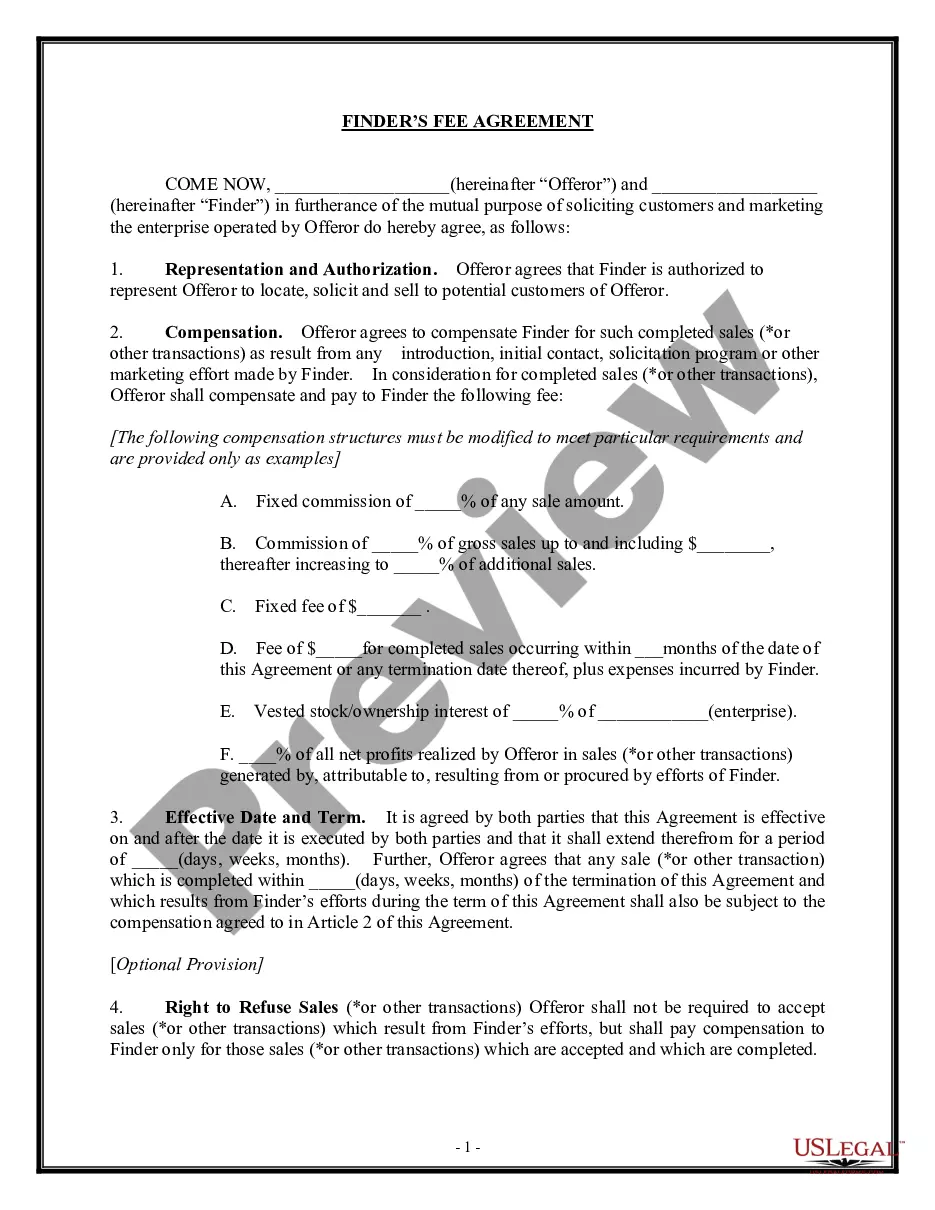
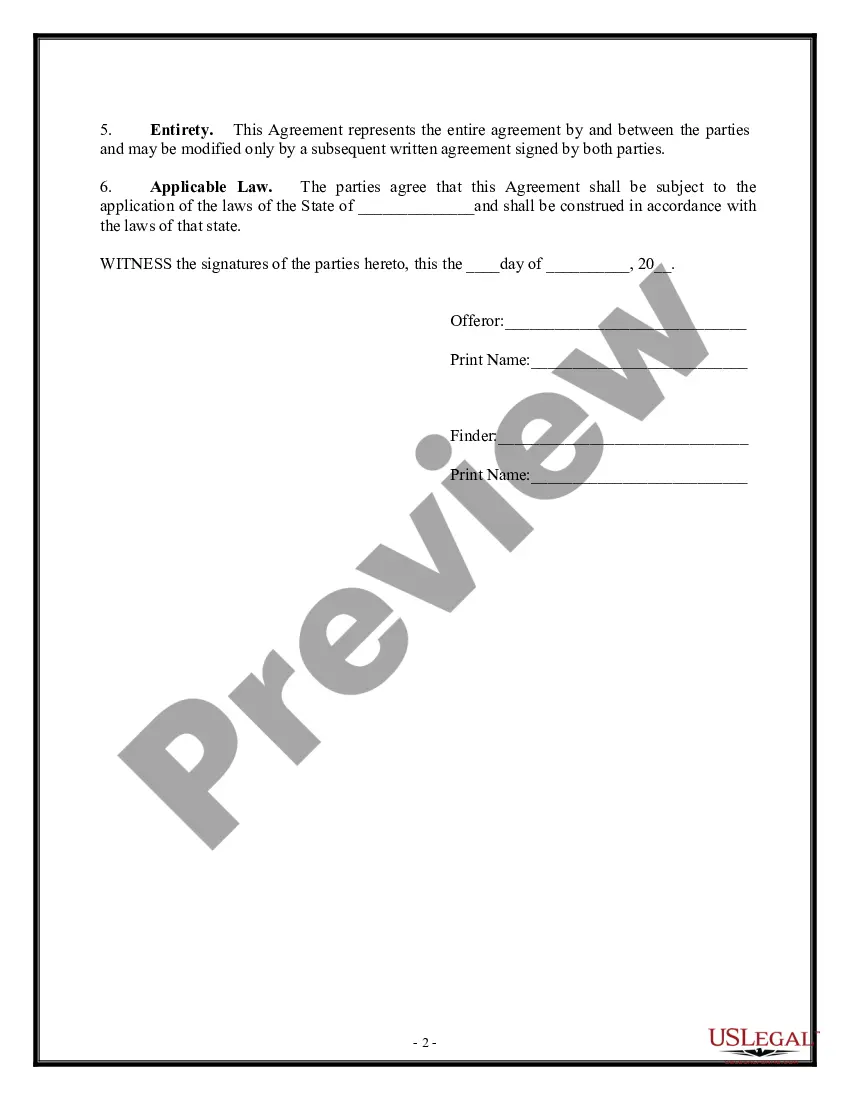
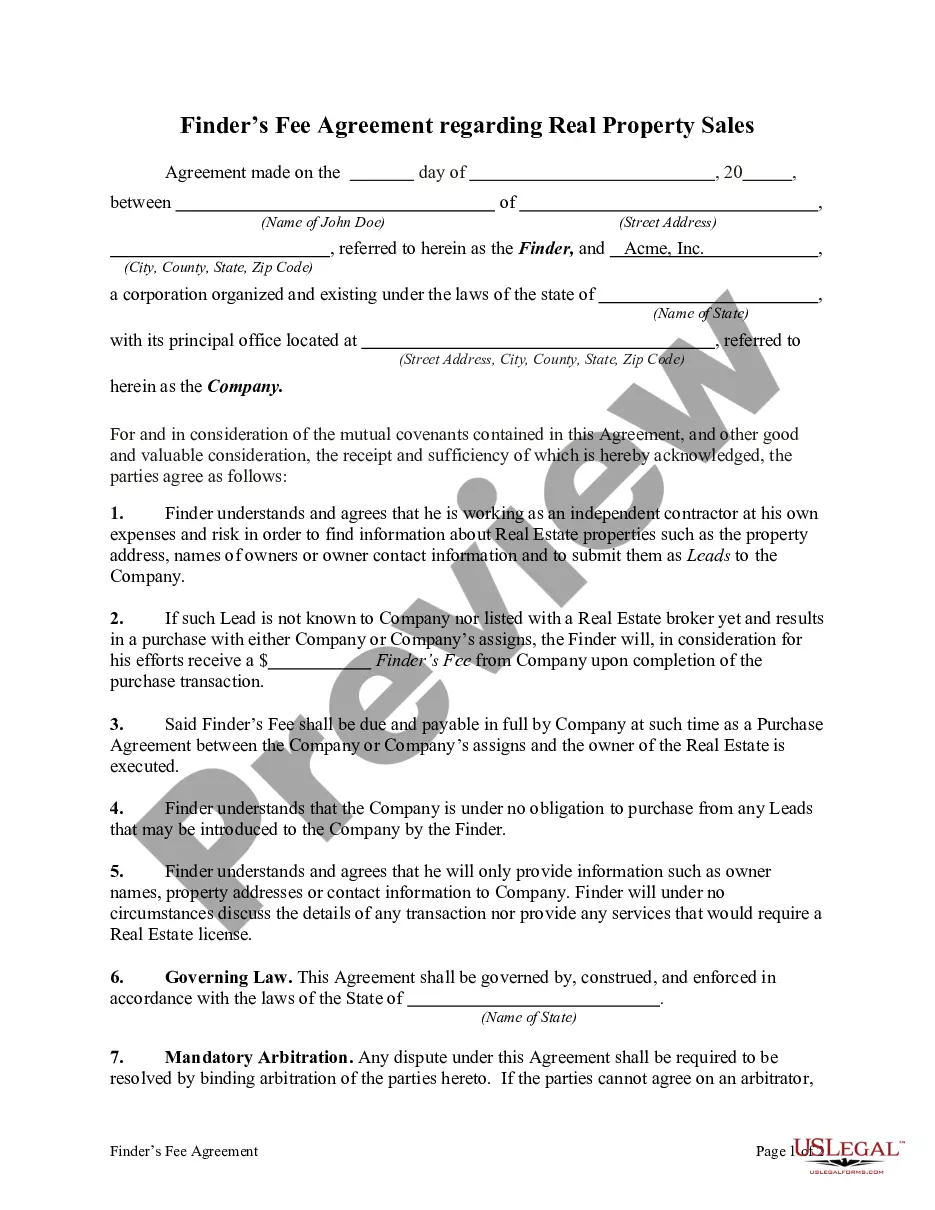
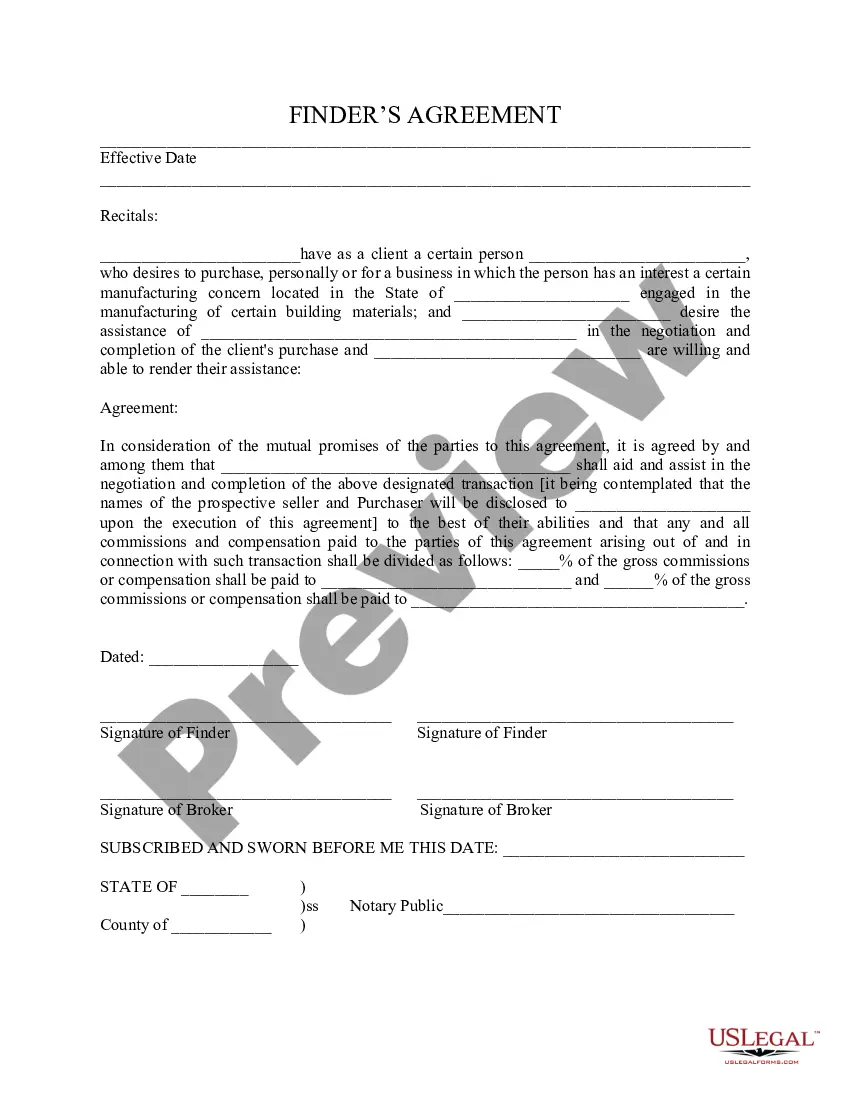
Get your form ready online
Our built-in tools help you complete, sign, share, and store your documents in one place.
Make edits, fill in missing information, and update formatting in US Legal Forms—just like you would in MS Word.
Download a copy, print it, send it by email, or mail it via USPS—whatever works best for your next step.
Sign and collect signatures with our SignNow integration. Send to multiple recipients, set reminders, and more. Go Premium to unlock E-Sign.
If this form requires notarization, complete it online through a secure video call—no need to meet a notary in person or wait for an appointment.
We protect your documents and personal data by following strict security and privacy standards.

Make edits, fill in missing information, and update formatting in US Legal Forms—just like you would in MS Word.

Download a copy, print it, send it by email, or mail it via USPS—whatever works best for your next step.

Sign and collect signatures with our SignNow integration. Send to multiple recipients, set reminders, and more. Go Premium to unlock E-Sign.

If this form requires notarization, complete it online through a secure video call—no need to meet a notary in person or wait for an appointment.

We protect your documents and personal data by following strict security and privacy standards.
Looking for another form?

How to fill out Finders Fee Agreement?
Regardless of whether for commercial intentions or personal matters, every individual must handle legal issues at some point in their lives.
Filling out legal documentation necessitates meticulous care, commencing with selecting the appropriate form template. For example, if you choose an incorrect instance of a Finders Fee Agreement Sample With Retainer, it will be rejected once submitted.
With an extensive catalog from US Legal Forms available, you never have to waste time searching for the right template online. Take advantage of the library’s user-friendly navigation to find the suitable form for any situation.
- Obtain the template you require by utilizing the search bar or browsing the catalog.
- Review the form's details to ensure it suits your situation, state, and jurisdiction.
- Click on the form's preview to inspect it.
- If it is the incorrect document, return to the search feature to locate the Finders Fee Agreement Sample With Retainer template you seek.
- Acquire the template once it aligns with your needs.
- If you already possess a US Legal Forms account, simply click Log in to access previously stored documents in My documents.
- If you do not have an account yet, you can obtain the form by clicking Buy now.
- Select the suitable pricing option.
- Fill out the account registration form.
- Choose your preferred payment method: you can utilize a credit card or PayPal account.
- Pick the document format you desire and download the Finders Fee Agreement Sample With Retainer.
- Once downloaded, you can fill in the form with the assistance of editing software or print it out and complete it by hand.
Form popularity
FAQ
Setting up a retainer agreement involves evaluating your service needs and discussing these with the client to reach a mutual understanding. Once you agree on the terms, put everything in writing to avoid confusion. Accessing a Finders fee agreement sample with retainer on platforms like uslegalforms can streamline this process and offer guidance to ensure effectiveness.
To write a retainer agreement, begin by clearly specifying the involved parties and detailing the services to be provided. Next, outline the fees, payment schedules, and any additional terms that are crucial for both parties. Utilizing a Finders fee agreement sample with retainer can provide a helpful framework, ensuring you cover all necessary points while maintaining simplicity.
A retainer agreement generally includes key elements such as the client’s information, the provider's services, payment terms, and termination clauses. Additionally, it may define how the retainer fee will be applied to services rendered. For those looking at a Finders fee agreement sample with retainer, understanding these components can greatly aid in drafting a balanced and clear contract.
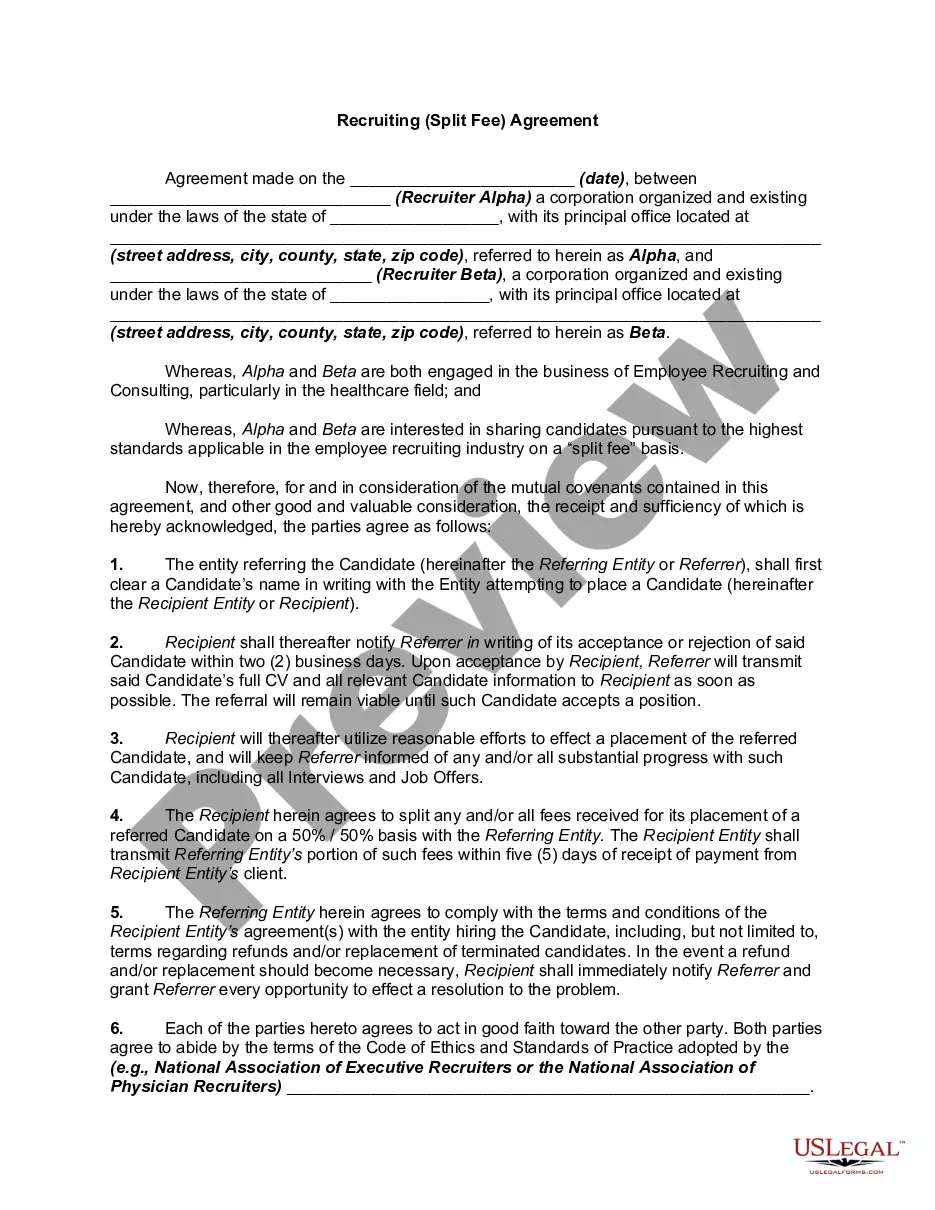
What Is a Typical Finder's Fee? A finder's fee need not be excessive ? the most common structure is between 5-15% of the deal value (agreed upon by both parties ahead of time).
The Company agrees to indemnify and hold harmless each Investor from any liability for any commission or compensation in the nature of a finders' fee (and the costs and expenses of defending against such liability or asserted liability) for which the Company or any of its officers, employees or representatives is ...
The terms of finder's fees can vary greatly, with some citing 5% to 35% of the total value of the deal being used as a benchmark. It's a staple of Fundera's business model. In many cases, the finder's fee may simply be a gift from one party to another, as no legal obligation to pay a commission exists.
The terms of finder's fees can vary greatly, with some citing 5% to 35% of the total value of the deal being used as a benchmark. It's a staple of Fundera's business model. In many cases, the finder's fee may simply be a gift from one party to another, as no legal obligation to pay a commission exists.
Finders work as intermediaries, connecting sellers to buyers of property, and are not realtors. In some housing markets, particularly those that are extremely depressed, some homeowners are willing to pay finder's fees to people who are able to connect them to buyers.