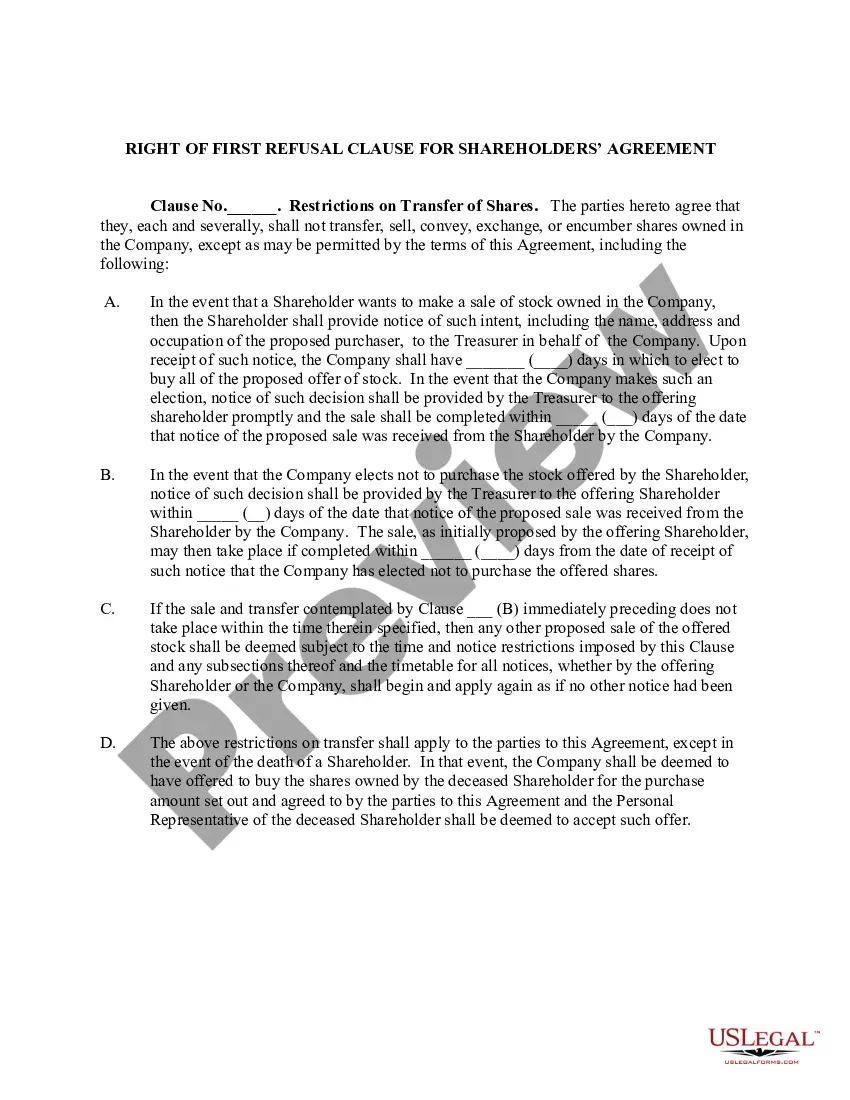
Right Of Last Refusal
Description
Get your form ready online
Our built-in tools help you complete, sign, share, and store your documents in one place.
Make edits, fill in missing information, and update formatting in US Legal Forms—just like you would in MS Word.
Download a copy, print it, send it by email, or mail it via USPS—whatever works best for your next step.
Sign and collect signatures with our SignNow integration. Send to multiple recipients, set reminders, and more. Go Premium to unlock E-Sign.
If this form requires notarization, complete it online through a secure video call—no need to meet a notary in person or wait for an appointment.
We protect your documents and personal data by following strict security and privacy standards.

Make edits, fill in missing information, and update formatting in US Legal Forms—just like you would in MS Word.

Download a copy, print it, send it by email, or mail it via USPS—whatever works best for your next step.

Sign and collect signatures with our SignNow integration. Send to multiple recipients, set reminders, and more. Go Premium to unlock E-Sign.

If this form requires notarization, complete it online through a secure video call—no need to meet a notary in person or wait for an appointment.

We protect your documents and personal data by following strict security and privacy standards.
Looking for another form?


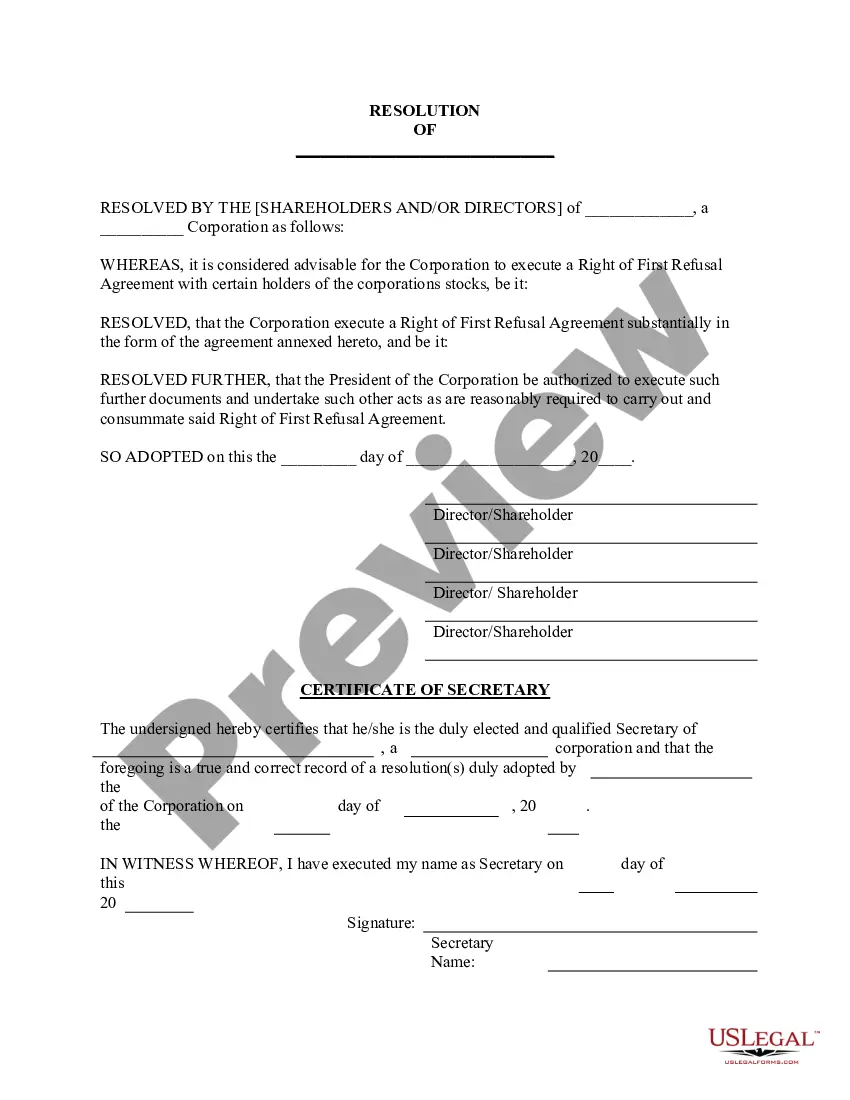
How to fill out Right Of First Refusal Clause For Shareholders' Agreement?
The Right Of Last Refusal present on this site is a reusable legal document crafted by expert attorneys in accordance with federal and local laws.
For over 25 years, US Legal Forms has supplied individuals, businesses, and legal practitioners with more than 85,000 validated, state-specific documents for any commercial and personal needs. It is the fastest, most direct, and most trusted way to acquire the materials you require, as the service guarantees the utmost level of data protection and anti-malware safeguards.
Subscribe to US Legal Forms to have verified legal templates for every situation in life at your fingertips.
- Search for the document you need and review it.
- Browse through the sample you sought and preview it or examine the form description to ensure it meets your criteria. If it doesn’t, use the search bar to find the correct one. Click Buy Now when you have found the template you require.
- Register and Log In.
- Choose the payment plan that fits you and set up an account. Use PayPal or a credit card for a swift transaction. If you already possess an account, Log In and verify your subscription to proceed.
- Obtain the editable template.
- Select the format you prefer for your Right Of Last Refusal (PDF, Word, RTF) and store the sample on your device.
- Complete and sign the documents.
- Print out the template to fill it in manually. Alternatively, use an online multi-functional PDF editor to quickly and precisely complete and sign your form with a legally-binding electronic signature.
- Re-download your documents.
- Access the same document again whenever necessary. Open the My documents tab in your profile to retrieve any previously saved forms.
Form popularity
FAQ
The time limit for a right of last refusal is typically outlined in the legal agreement between the parties involved. This limit can depend on the transaction terms and may vary for different agreements. It’s essential to check your document to grasp the exact time frame you have. If you need assistance drafting or understanding these contracts, US Legal Forms offers comprehensive tools and resources that can help.
The duration of a right of last refusal varies and is usually defined in the contract. Some agreements specify a set number of years, while others may link it to specific events, such as the potential sale of property. It's important to read your contract carefully to understand the timeframe involved. If you're unsure, consulting an attorney can provide clarity on your specific situation.
Yes, a right of last refusal can expire, depending on the terms established in your agreement. Typically, contracts will outline the duration of the right and any conditions under which it may cease to exist. If these terms aren’t clearly defined, misunderstandings may arise. For peace of mind, consider seeking advice from professionals experienced with real estate law.
The right of last refusal often comes with specific limitations that you should consider. For instance, it may not apply to all types of sales or transfers. Additionally, the terms may vary based on jurisdiction and the specific agreement between parties. It's crucial to review your contract or consult a legal expert for precise details.
An example of a right of refusal is when an existing business partner has the first option to buy a share of the company before it can be offered to outside investors. This safeguard helps maintain long-term relationships and protects the interests of the existing partners in the business. Such arrangements enhance trust and provide security for all involved parties.
Exiting a right of last refusal involves understanding the specifics of the agreement. Parties often can negotiate terms for a waiver or a buyout of the right. However, consulting a legal professional can ensure all steps are correctly followed and that you understand any implications of terminating the agreement.
An example of the right of last refusal could be a company that has an agreement to secure the option to buy shares from a majority shareholder. If the majority shareholder decides to sell their shares, the company can exercise this right to buy them before seeking other buyers. This clause provides a strategic advantage to the company, ensuring control over ownership.
While the right of last refusal offers some benefits, it also has potential downsides. The party holding the right may miss opportunities if they lack the financial means to act quickly or if the terms are less favorable than the open market. Additionally, it can complicate negotiations, as sellers might hesitate to deal with buyers who have this right, limiting their options.
The right of last refusal primarily benefits the tenant or the buyer who holds this option. This arrangement gives you the chance to match an outside offer before the property owner can sell to another party. It allows you to secure the property you are interested in and helps you avoid losing it to someone else. Ultimately, this right provides you with a strategic advantage in real estate negotiations.