Employment Contract For Project Manager
Description
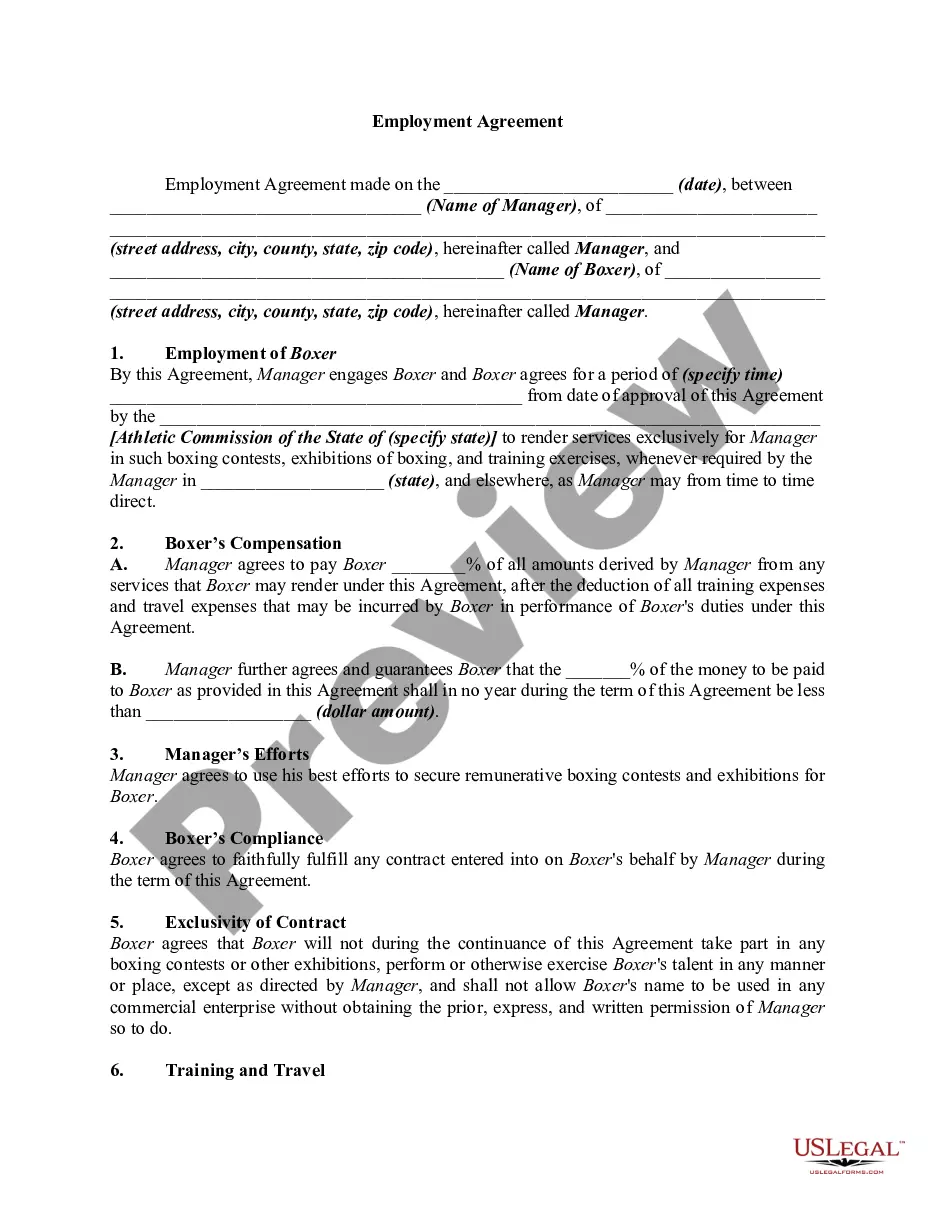
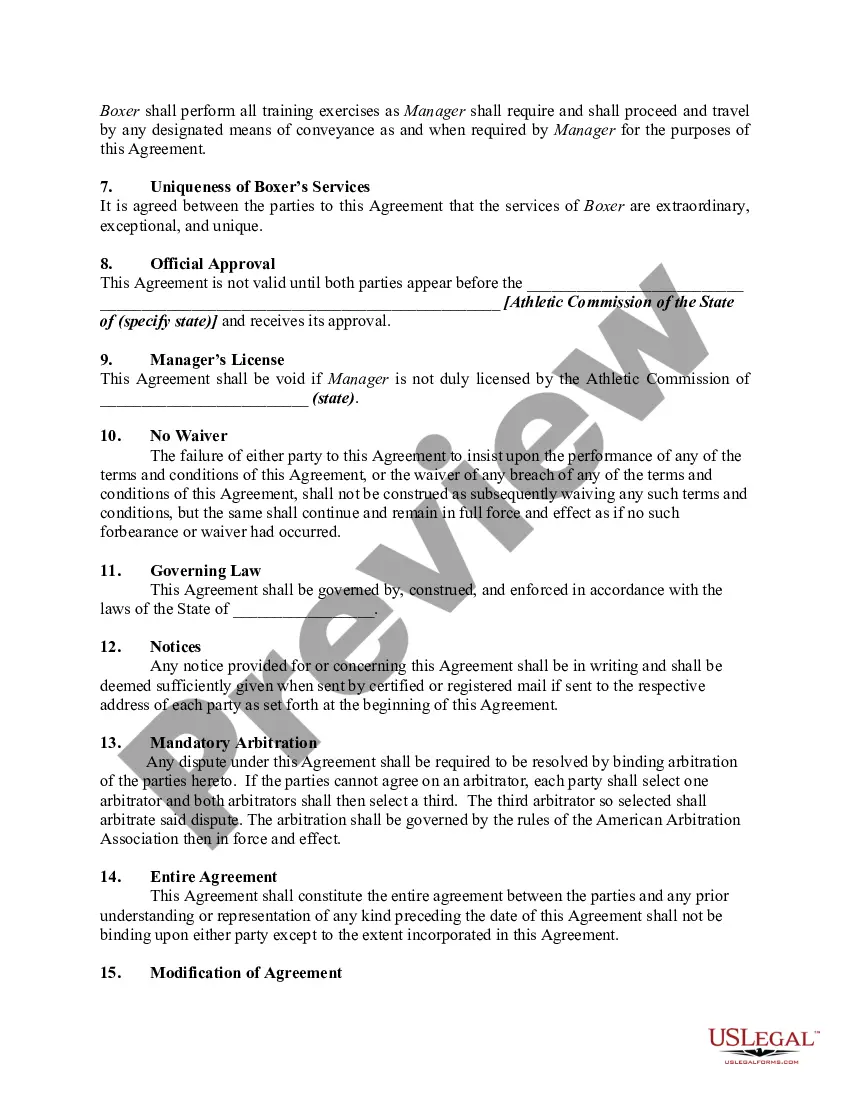
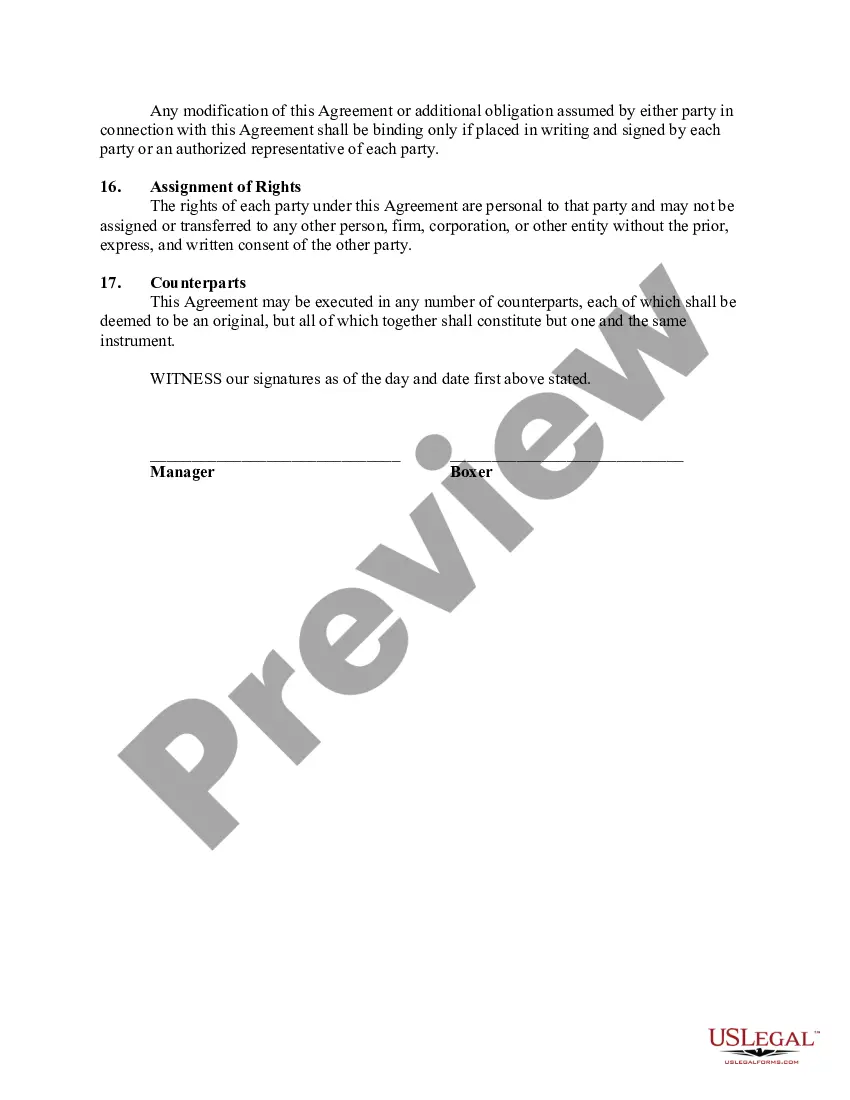
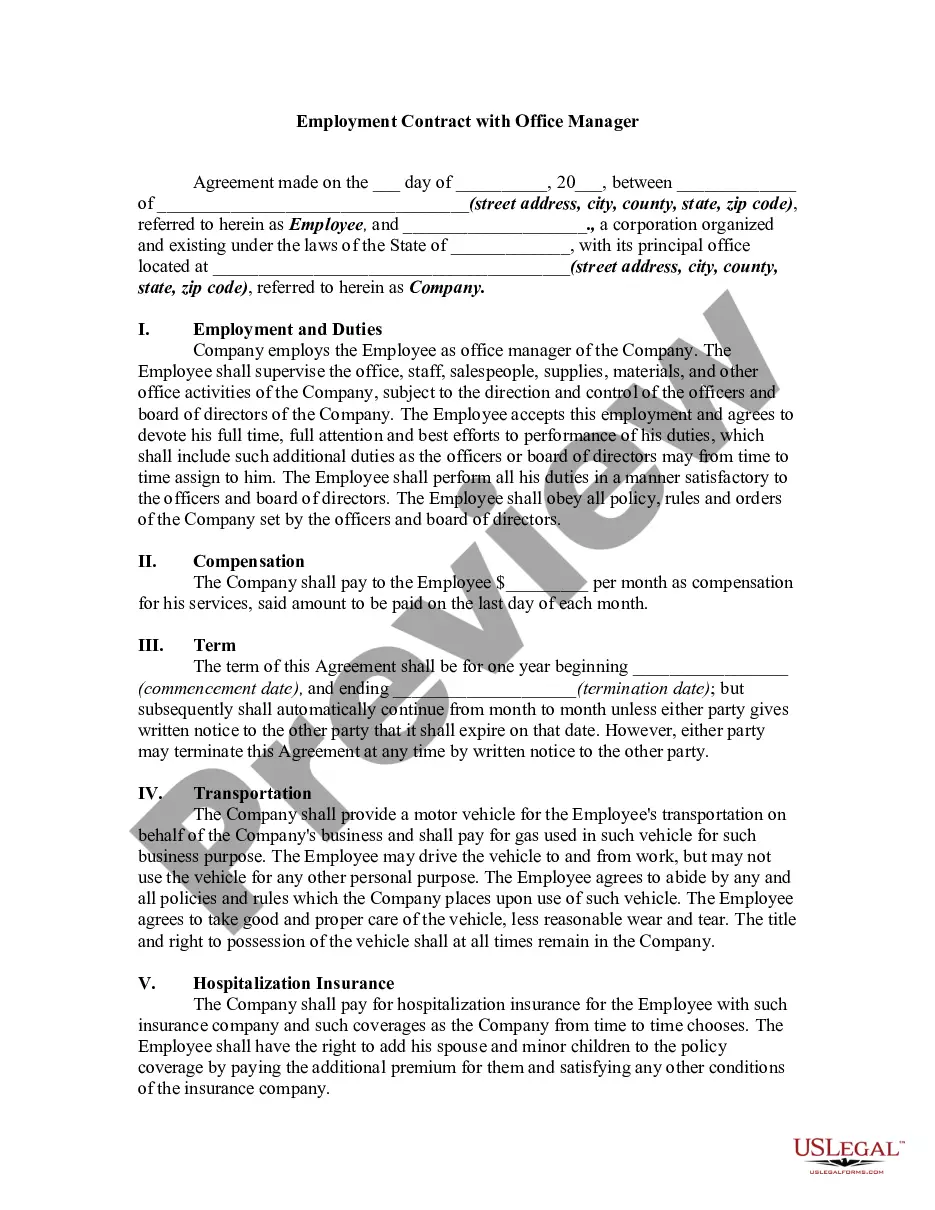

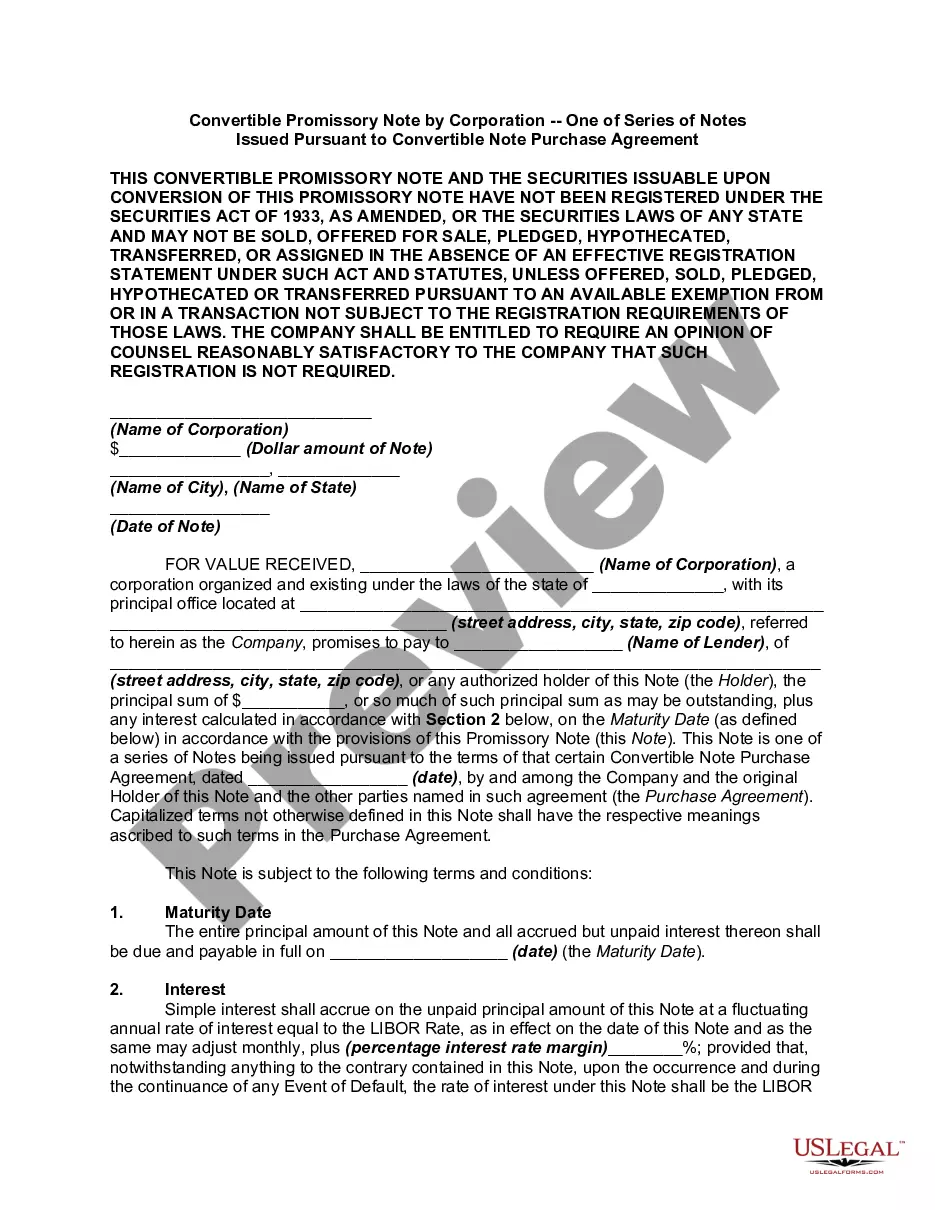
How to fill out Employment Contract Between Professional Boxer And Manager?
Regardless of whether it's for professional objectives or personal matters, everyone must confront legal issues at some point in their life.
Completing legal forms requires meticulous care, starting with selecting the appropriate form template. For instance, if you select an incorrect version of an Employment Contract for Project Manager, it will be declined once submitted. Thus, it is vital to obtain a reliable source of legal forms such as US Legal Forms.
Once saved, you can fill out the form using editing software or print it and complete it manually. With an extensive US Legal Forms catalog available, you no longer need to waste time searching for the suitable template online. Take advantage of the library’s user-friendly navigation to find the ideal template for any occasion.
- Locate the template you require using the search bar or catalog navigation.
- Review the form’s description to ensure it aligns with your circumstances, state, and county.
- Click on the form’s preview to examine it.
- If it is not the correct form, return to the search function to find the Employment Contract for Project Manager template you need.
- Download the template when it fits your requirements.
- If you have a US Legal Forms account, click Log in to access previously saved documents in My documents.
- If you do not have an account yet, you can acquire the form by clicking Buy now.
- Select the appropriate pricing plan.
- Complete the account registration form.
- Choose your payment method: you can utilize a credit card or PayPal account.
- Select the document format you prefer and download the Employment Contract for Project Manager.
Form popularity
FAQ
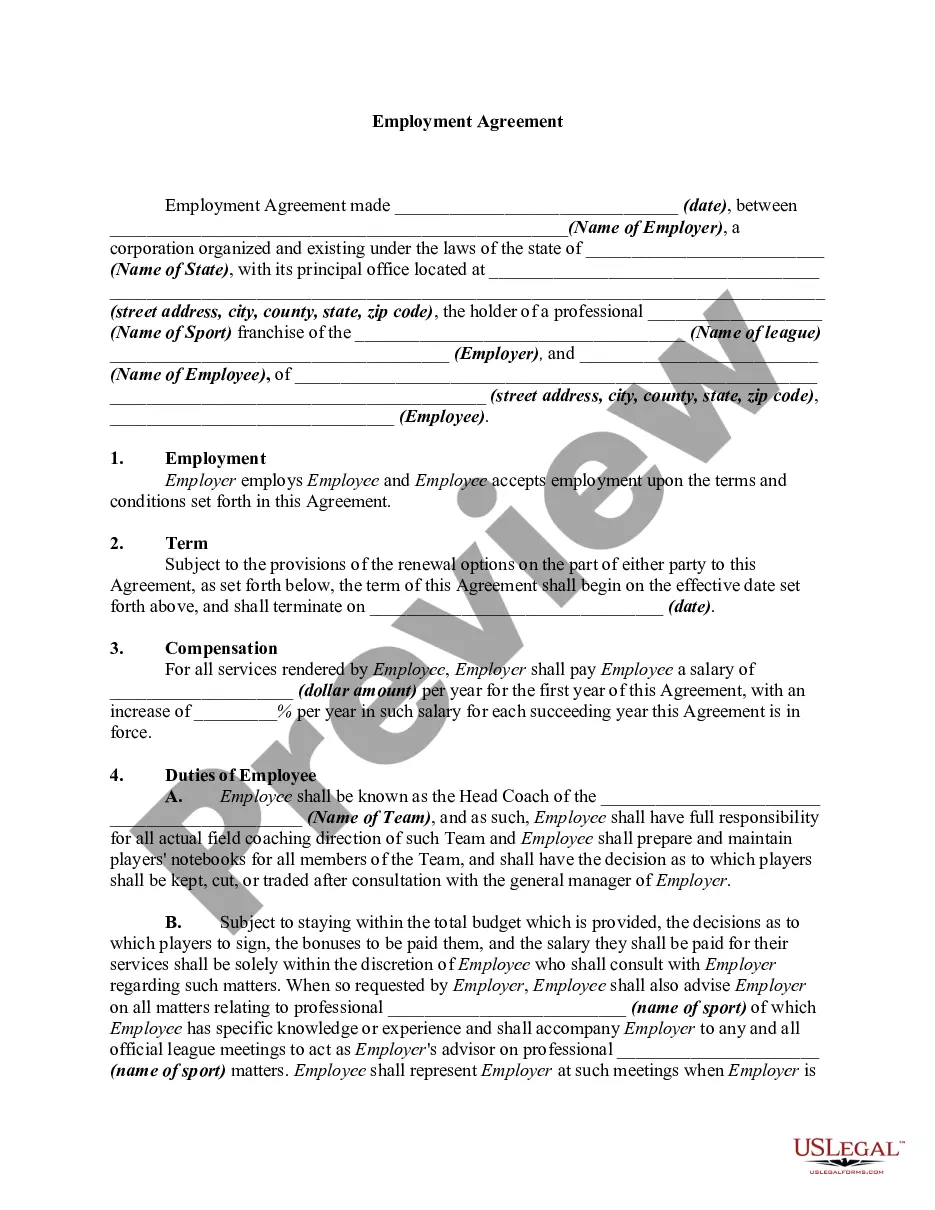
When creating an Employment Contract, you can include the following terms: The type and rate of compensation. The frequency of payment. Vacation time. Specified work hours. Specified work location. Employee responsibilities. Length of a probationary period. Confidentiality, non-solicitation, or non-competition clauses.
An employment contract typically includes the following elements: Duration of employment, if applicable. Salary or wages. General job responsibilities. Work schedule. Benefits. Confidentiality. Non-compete agreement. Severance pay, if applicable.
The contract typically includes basic information, such as the employee's job title, start date, and work schedule. It also outlines the employee's compensation?including salary, bonuses, and leave?and employee benefits like health insurance and retirement.
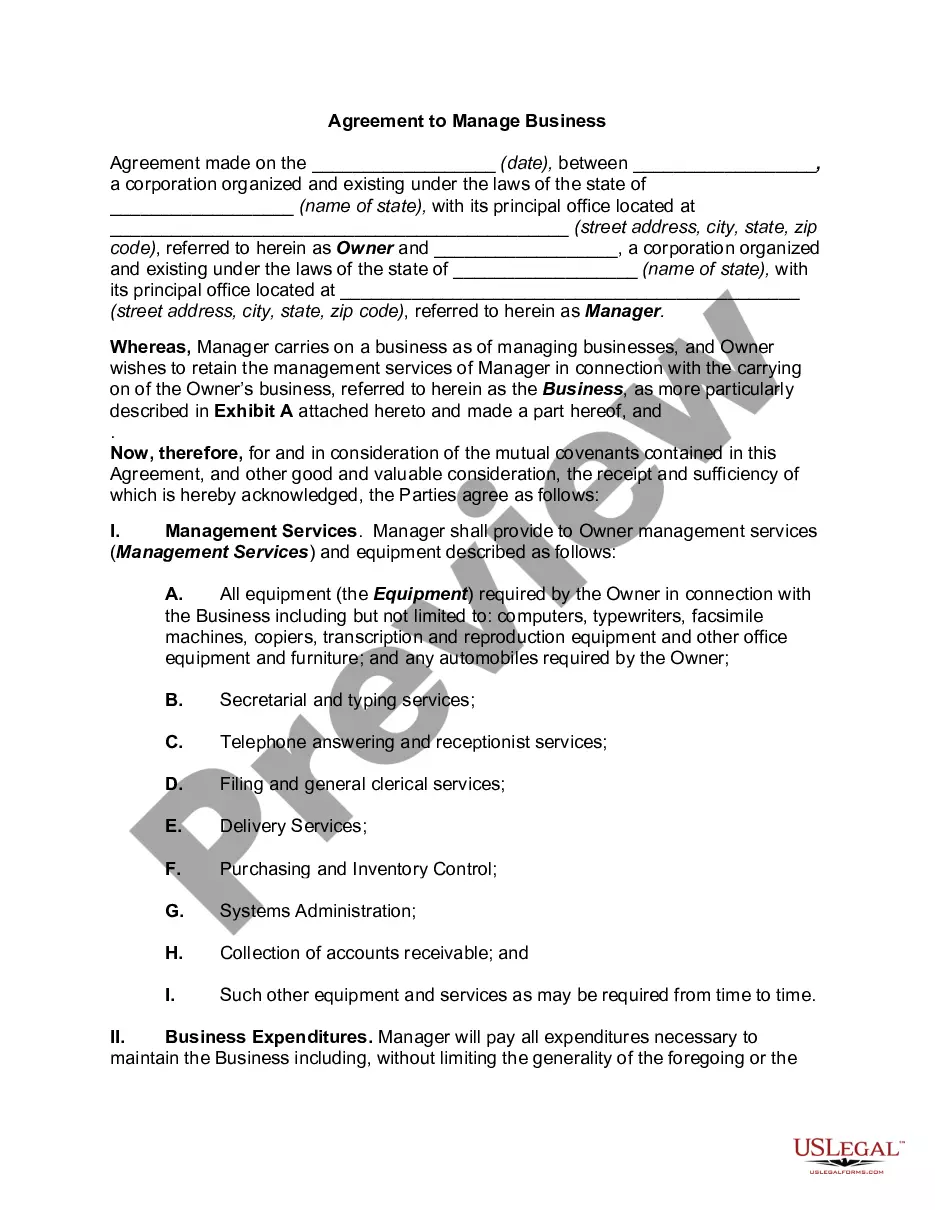
As a contract project manager, you work as a contractor for a company and provide management for the duration of a single project. In this role, you may guide the project to completion, help manage expenses, and ensure that other employees fulfill their duties and responsibilities.
7 things you need to include in an employment contract Job information. Compensation and benefits. Time off, sick days and vacation policy. Employee classification. The schedule and employment period. Confidentiality, privacy and responsibility. Termination, severance and survival.