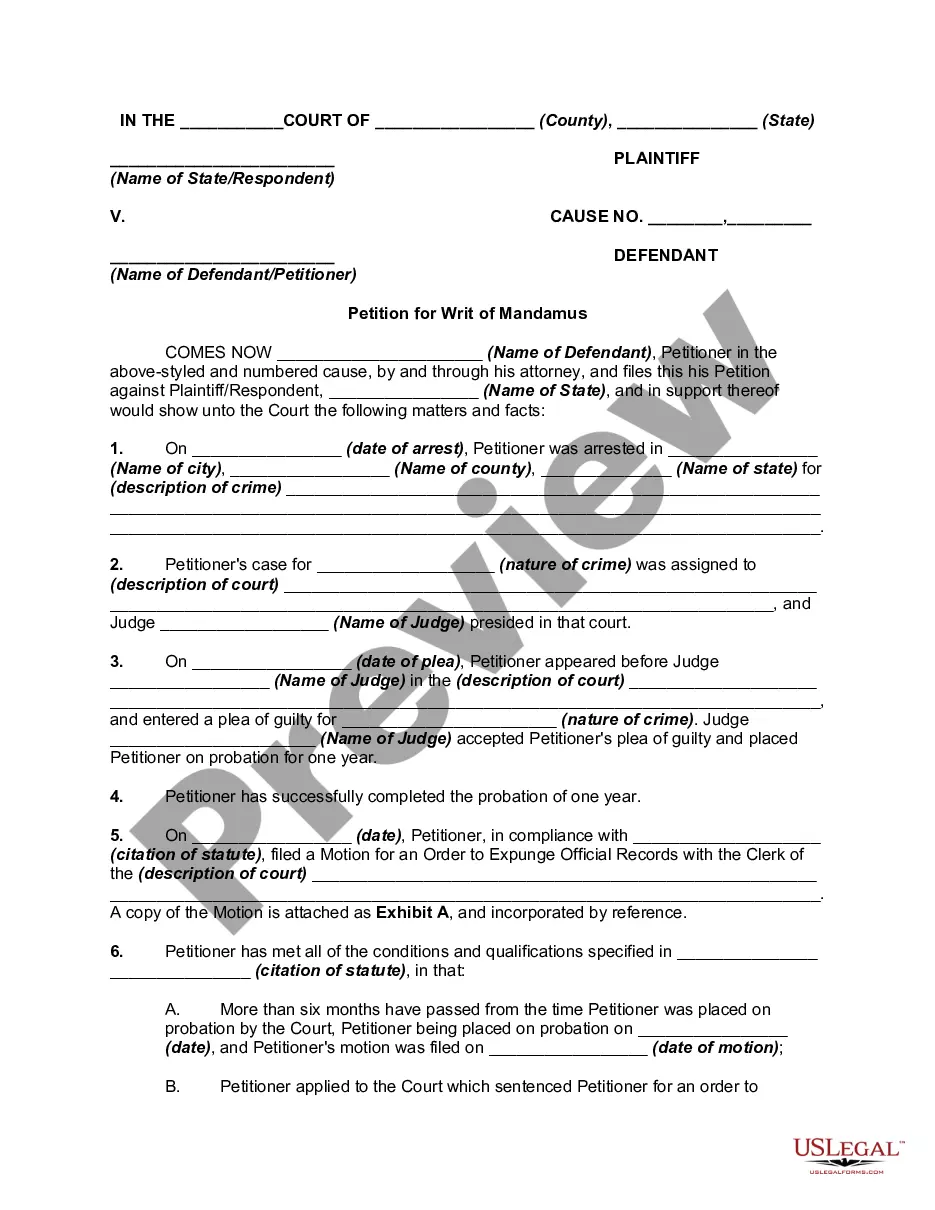
Writ Petition For Mandamus
Description
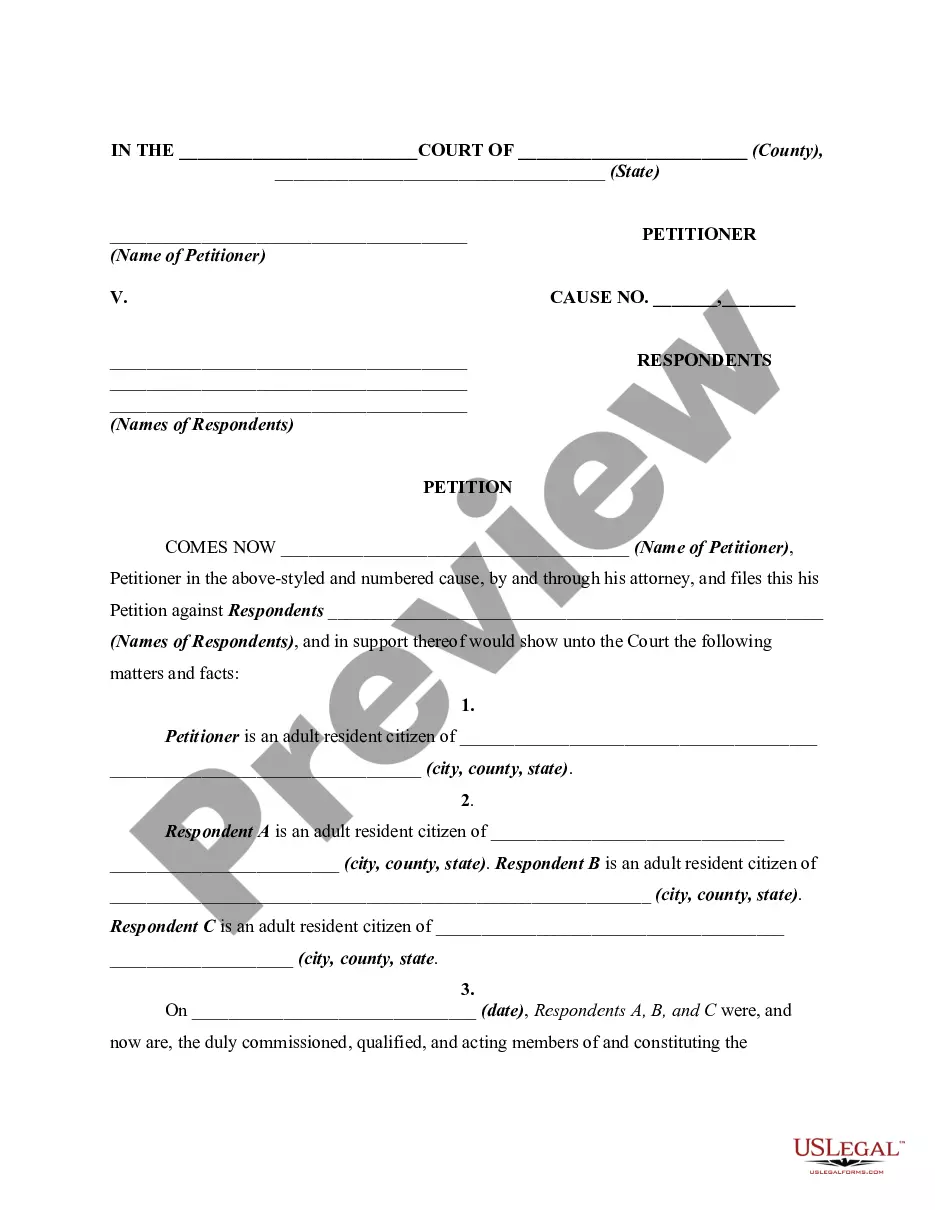
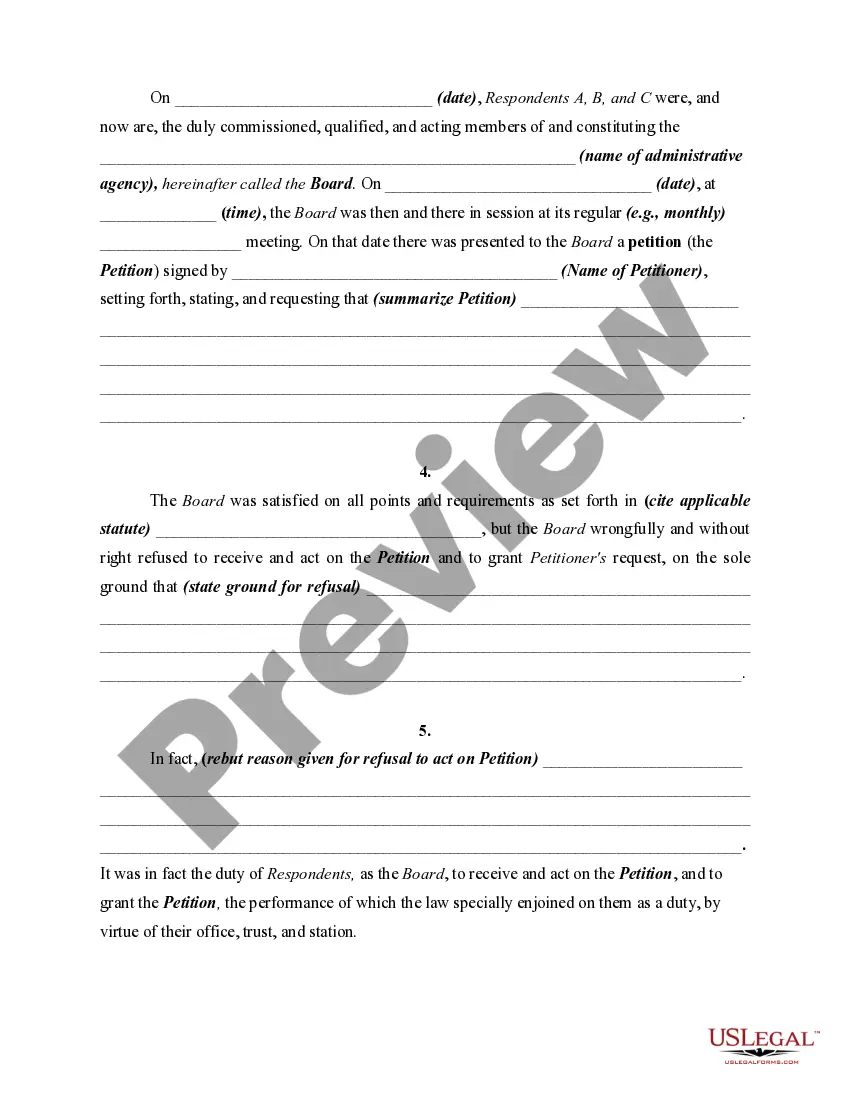
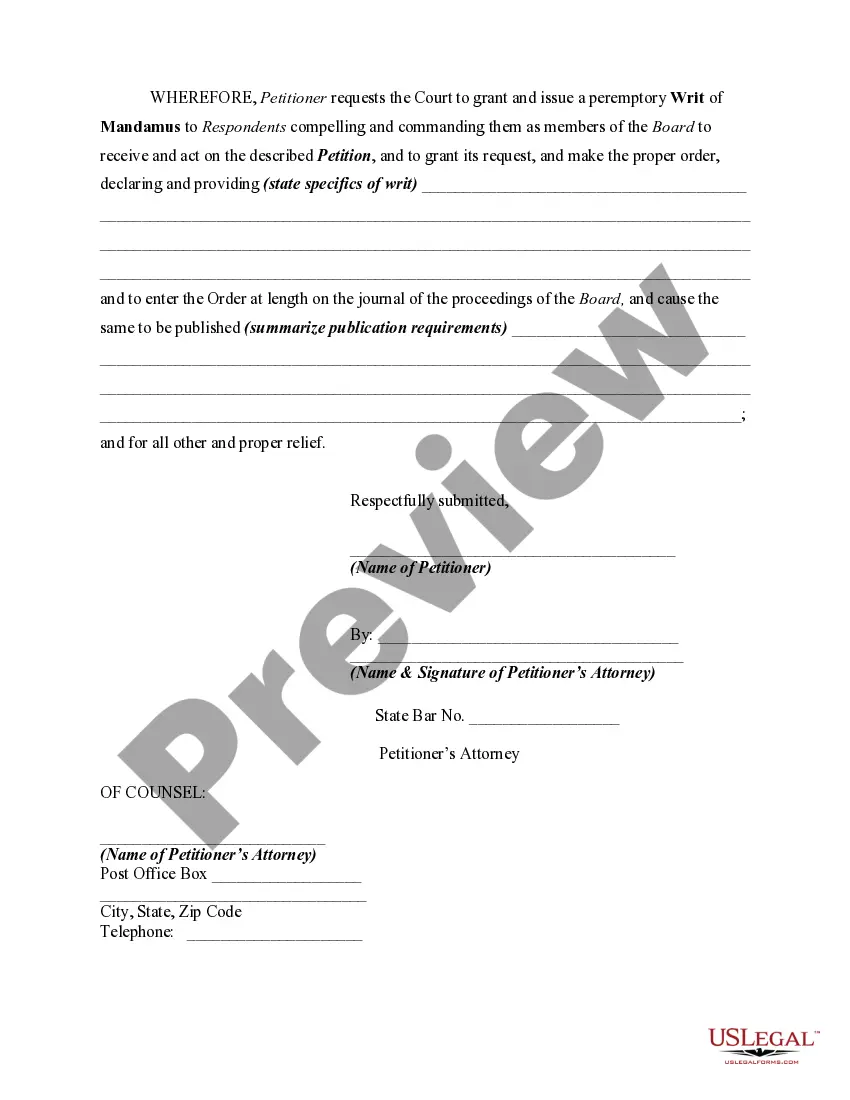
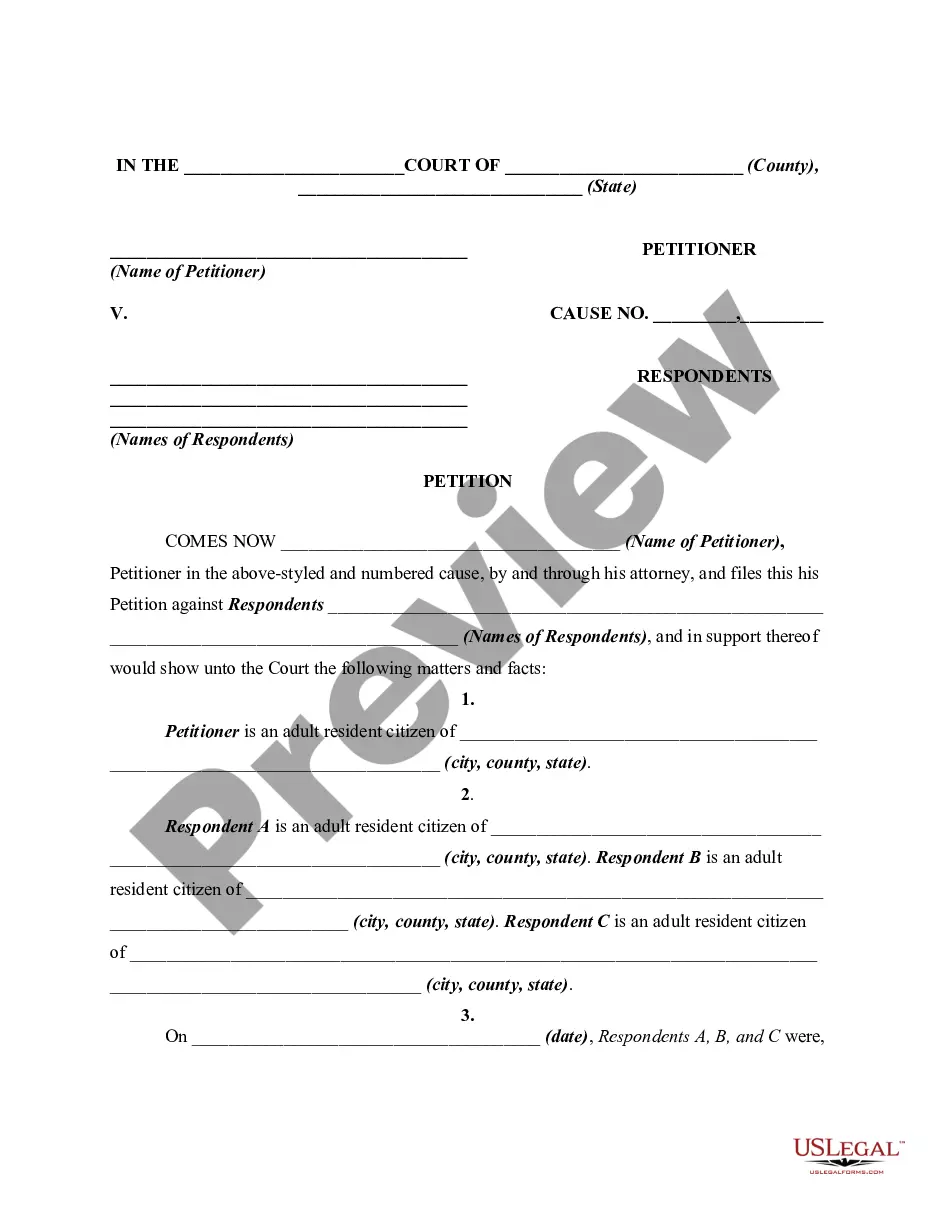
Get your form ready online
Our built-in tools help you complete, sign, share, and store your documents in one place.
Make edits, fill in missing information, and update formatting in US Legal Forms—just like you would in MS Word.
Download a copy, print it, send it by email, or mail it via USPS—whatever works best for your next step.
Sign and collect signatures with our SignNow integration. Send to multiple recipients, set reminders, and more. Go Premium to unlock E-Sign.
If this form requires notarization, complete it online through a secure video call—no need to meet a notary in person or wait for an appointment.
We protect your documents and personal data by following strict security and privacy standards.

Make edits, fill in missing information, and update formatting in US Legal Forms—just like you would in MS Word.

Download a copy, print it, send it by email, or mail it via USPS—whatever works best for your next step.

Sign and collect signatures with our SignNow integration. Send to multiple recipients, set reminders, and more. Go Premium to unlock E-Sign.

If this form requires notarization, complete it online through a secure video call—no need to meet a notary in person or wait for an appointment.

We protect your documents and personal data by following strict security and privacy standards.
Looking for another form?


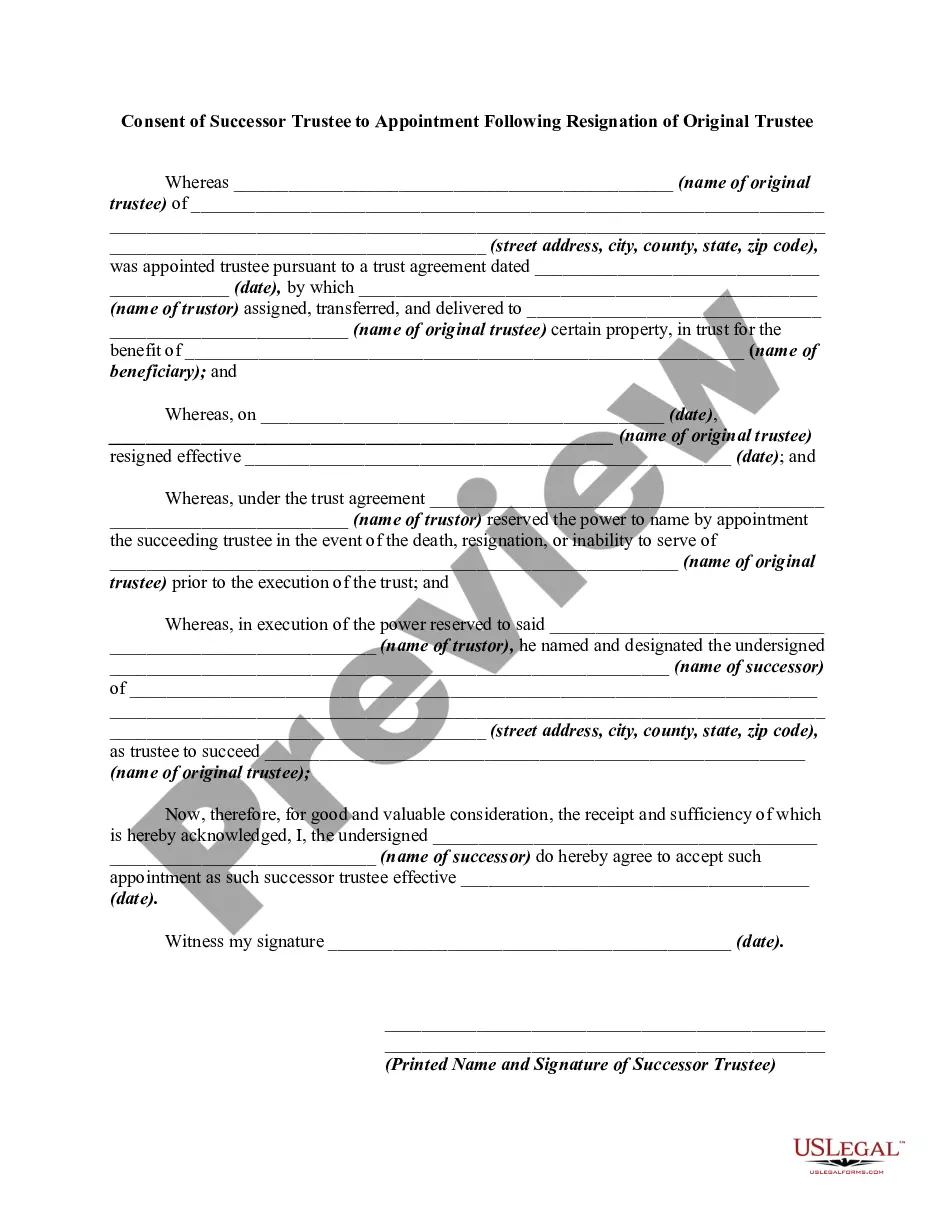

How to fill out Petition Or Application For Writ Of Mandamus Or Mandate For Refusal Of Administrative Agency To Act On Petition?
Regardless of whether it is for professional objectives or personal matters, everyone must address legal circumstances at some juncture in their life.
Filling out legal documents requires meticulous care, starting with selecting the correct form template. For example, if you choose an incorrect version of the Writ Petition For Mandamus, it will be rejected upon submission.
With an extensive US Legal Forms library available, you do not need to waste time searching for the correct template online. Utilize the library's straightforward navigation to find the suitable form for any circumstance.
- Locate the template you need via the search bar or catalog navigation.
- Review the form's description to ensure it corresponds to your situation, state, and area.
- Click on the form's preview to examine it.
- If it is the wrong form, return to the search feature to locate the Writ Petition For Mandamus template you require.
- Download the file if it satisfies your needs.
- If you possess a US Legal Forms account, click Log in to access previously saved documents in My documents.
- If you do not have an account yet, you can obtain the form by clicking Buy now.
- Select the appropriate pricing option.
- Complete the account registration form.
- Choose your payment method: a credit card or PayPal account.
- Select the document format you prefer and download the Writ Petition For Mandamus.
- Once saved, you can fill out the form using editing software or print it to complete it manually.
Form popularity
FAQ
If you are in possession of a will of a deceased person, you must either file it with the appropriate court or deliver it to the person named in the will as executor, as under Rhode Island law the will is to be filed within 30 days after death.
If you are in possession of a will of a deceased person, you must either file it with the appropriate court or deliver it to the person named in the will as executor, as under Rhode Island law the will is to be filed within 30 days after death.
Interested individuals can access Rhode Island Probate Records through two primary sources: the Probate Courts in each county and the Rhode Island State Archives Repository.
In Rhode Island, you can use a summary probate procedure as long as there's no real estate and probatable property is valued at less than $15,000. Note, Rhode Island doesn't have an Affidavit procedure for small estates.
Making a Will in Rhode Island Decide what property to include in your will. Decide who will inherit your property. Choose an executor to handle your estate. Choose a guardian for your children. Choose someone to manage children's property. Make your will. Sign your will in front of witnesses. Store your will safely.
In Rhode Island, a decedent's will should be filed in the probate court of the town or city in which the decedent had resided.
Probate is required in Rhode Island for most estates, though some estates may be able to avoid it depending on the estate's value, the will and a few other factors. Several assets almost always must enter probate, including: Real estate. Assets with tenants in common.
In Rhode Island, you can make a living trust to avoid probate for virtually any asset you own?real estate, bank accounts, vehicles, and so on. You need to create a trust document (it's similar to a will), naming someone to take over as trustee after your death (called a successor trustee).