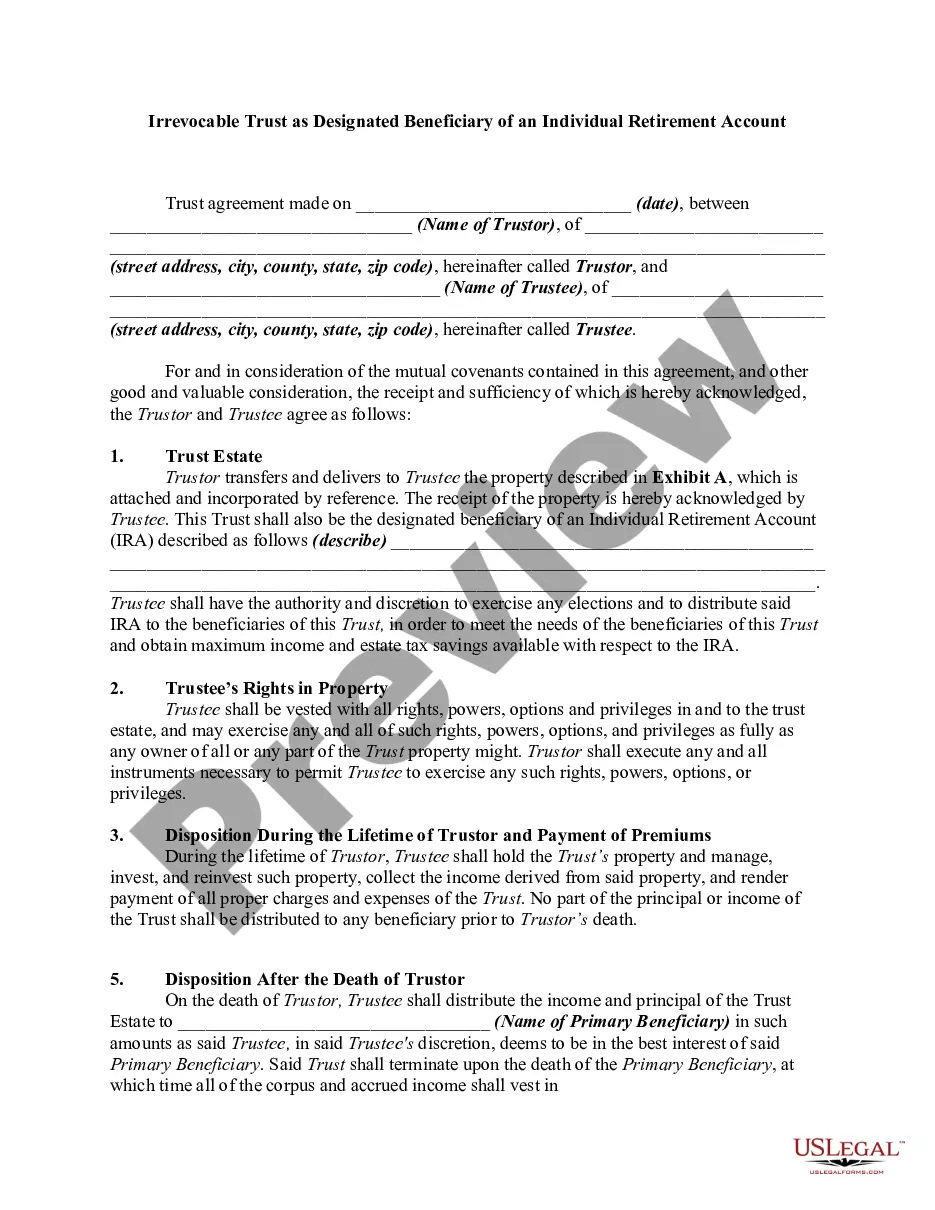
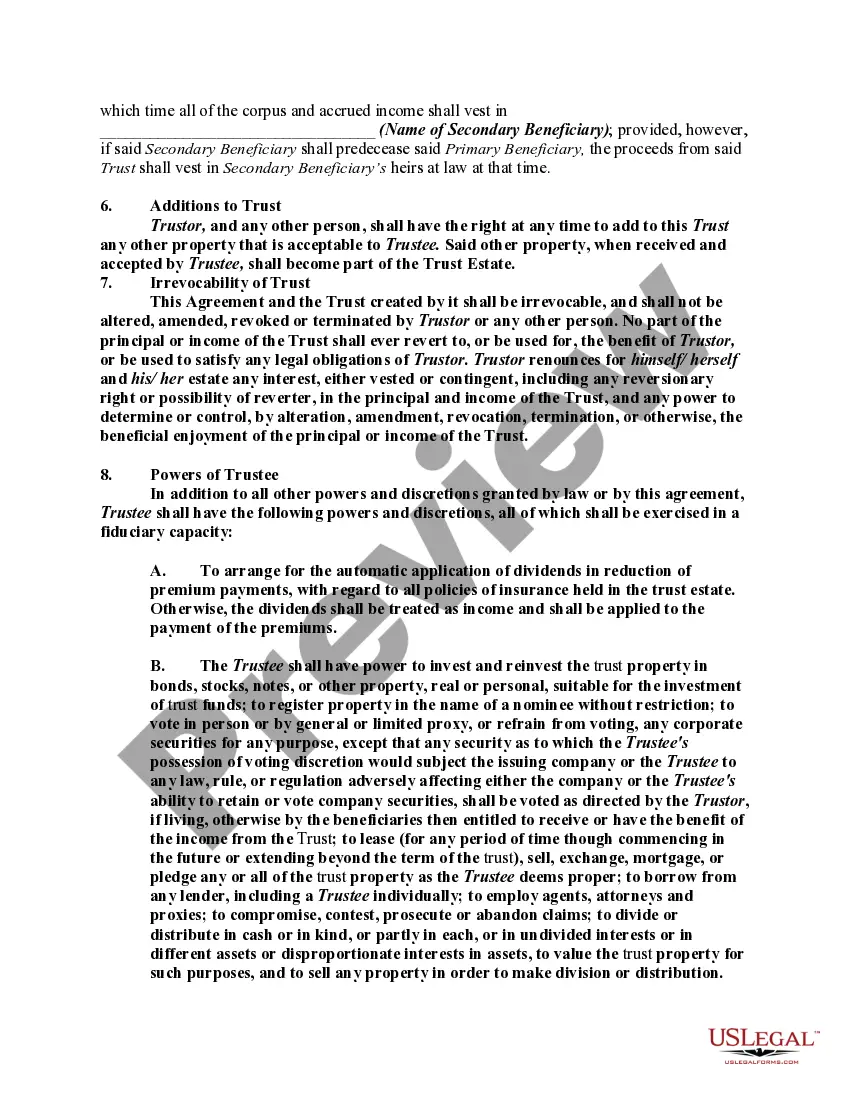
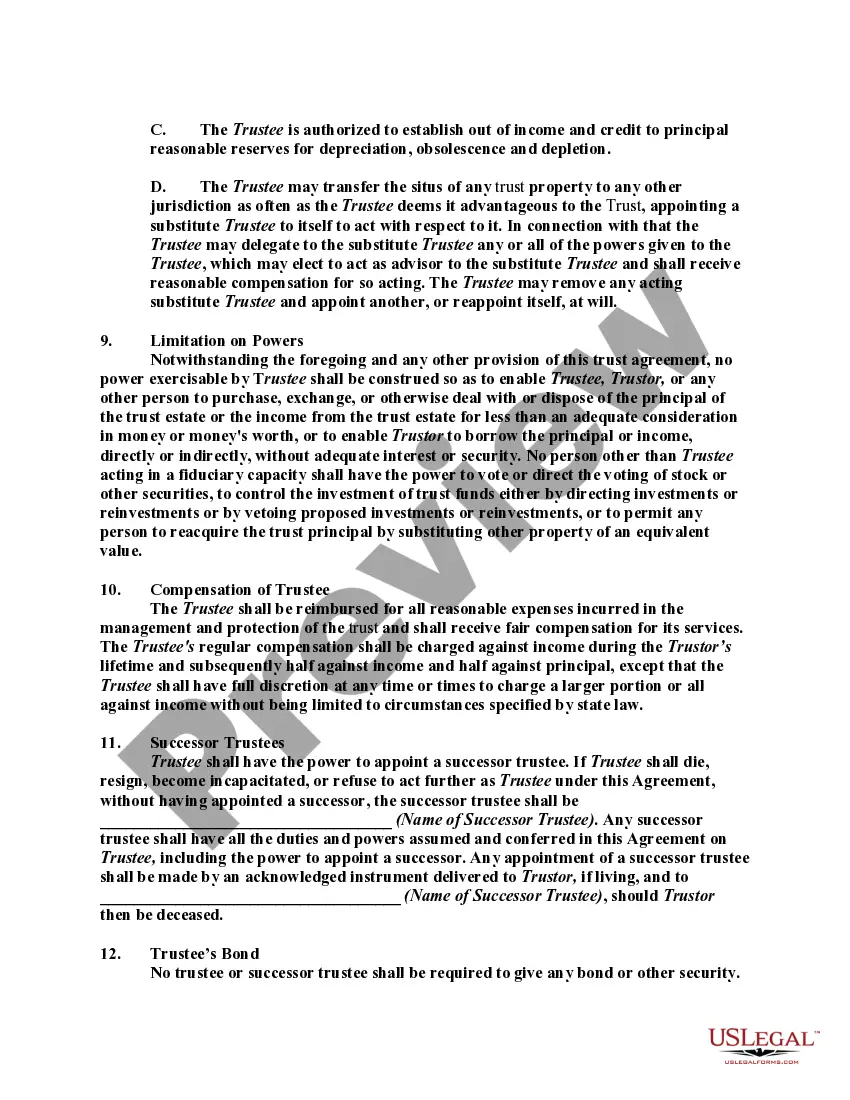
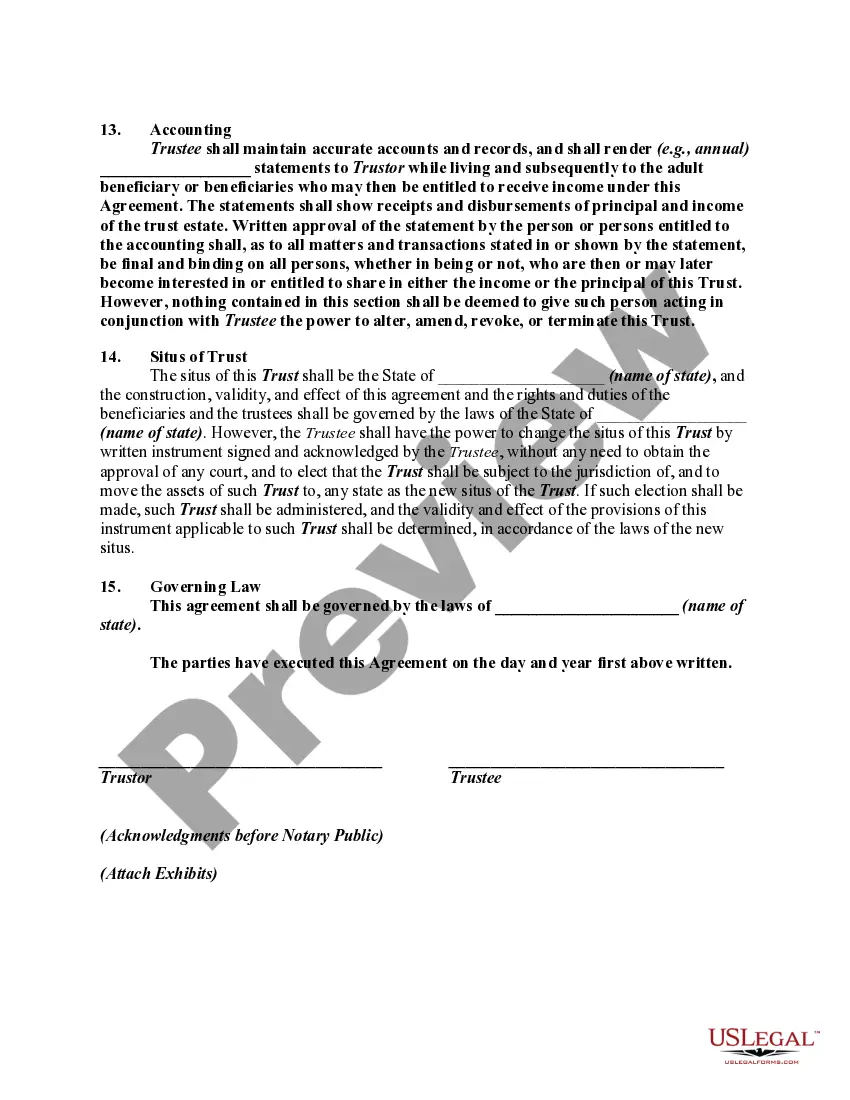
Irrevocable Trust With Grantor As Beneficiary
Description

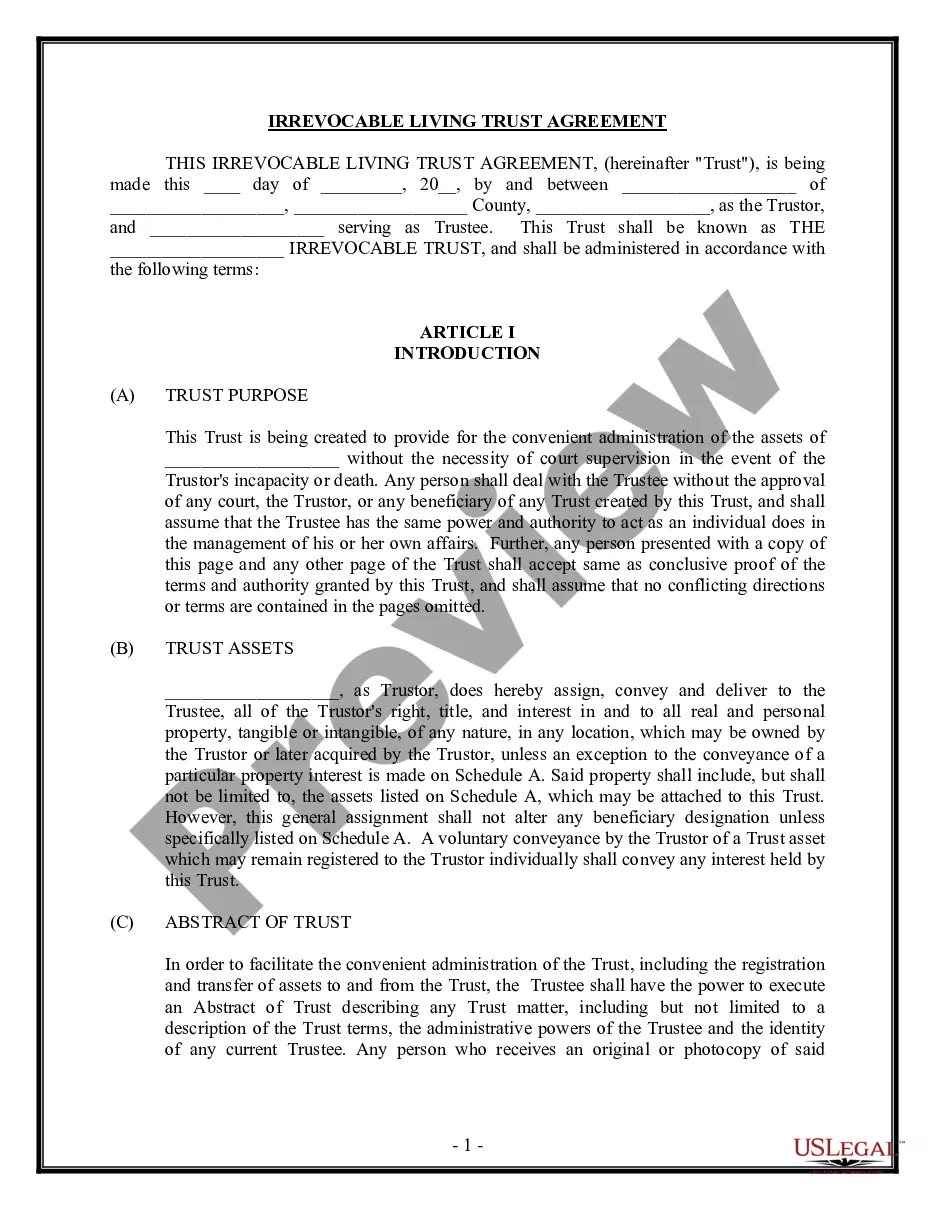
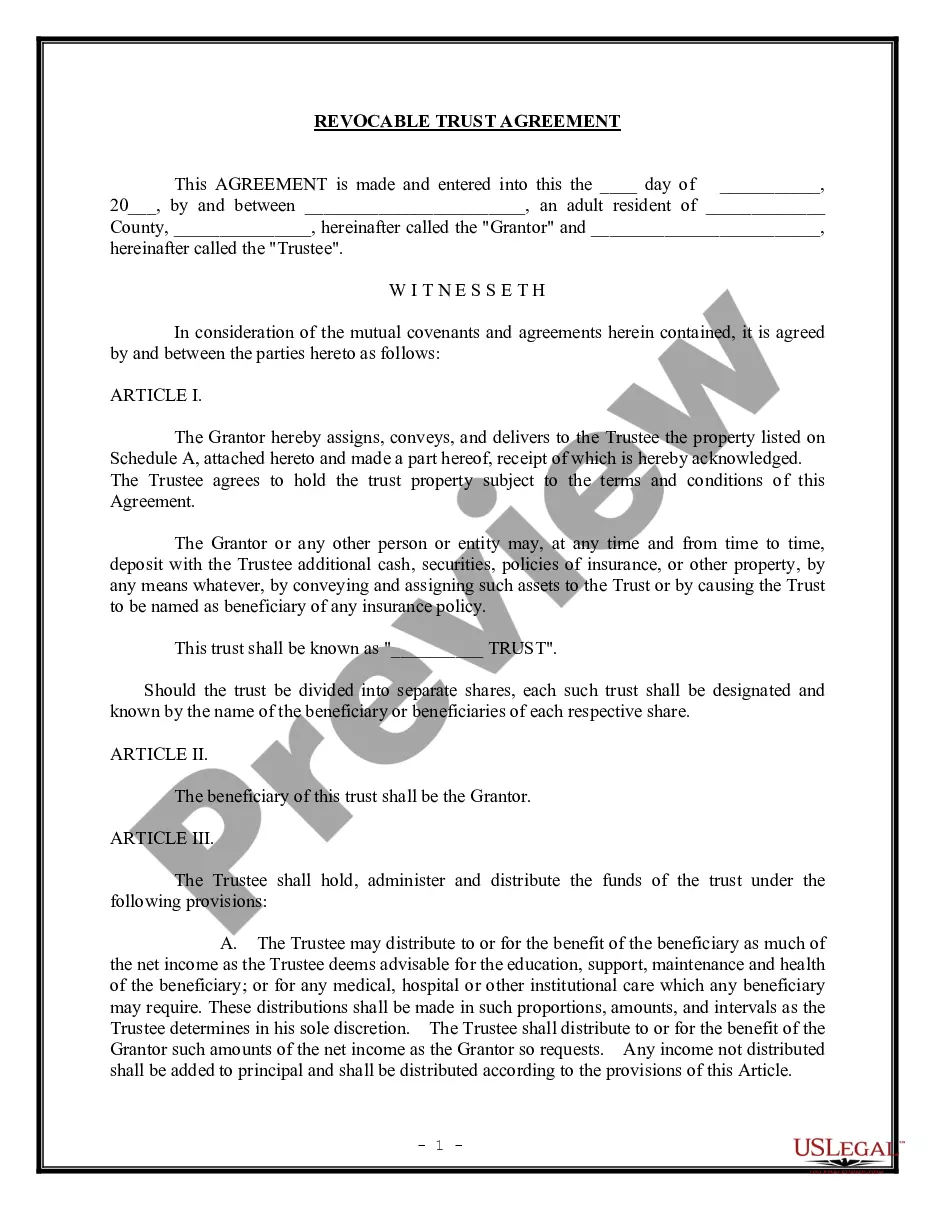
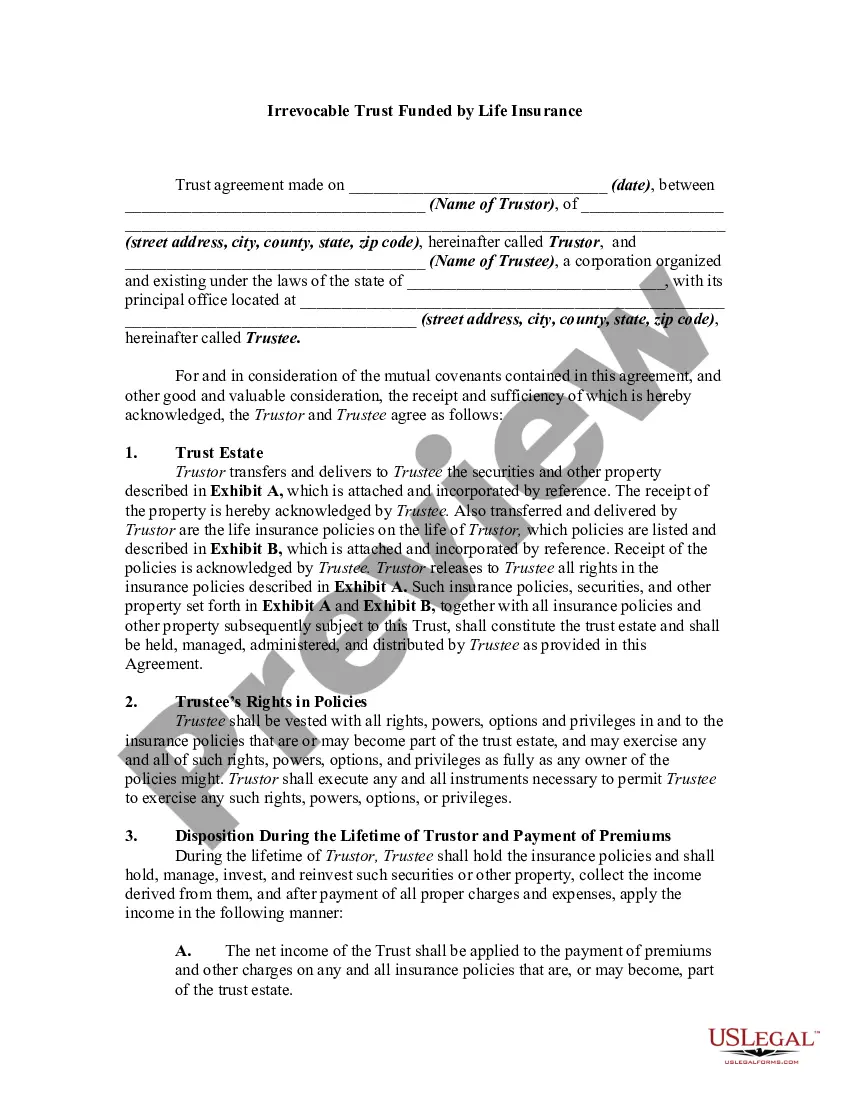
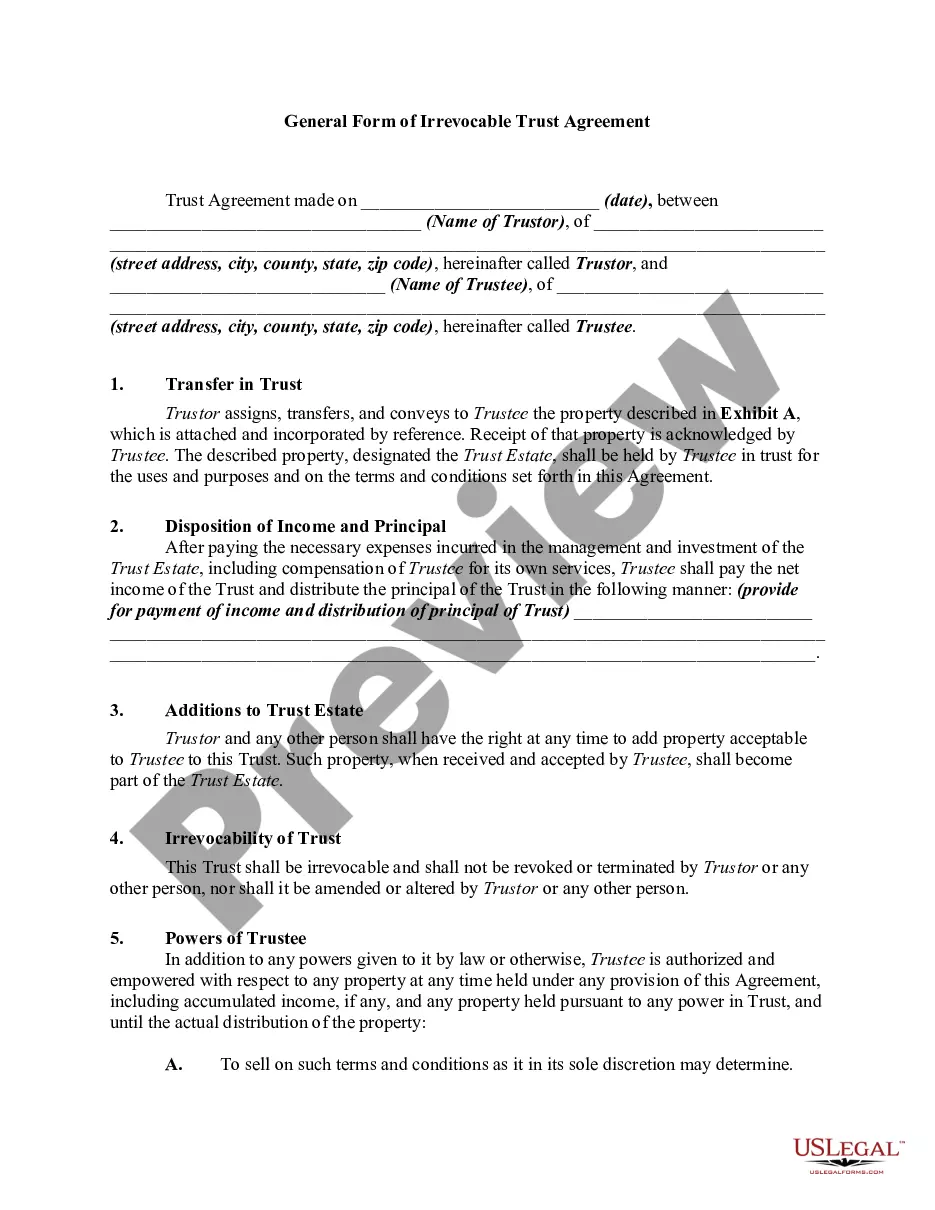
Get your form ready online
Our built-in tools help you complete, sign, share, and store your documents in one place.
Make edits, fill in missing information, and update formatting in US Legal Forms—just like you would in MS Word.
Download a copy, print it, send it by email, or mail it via USPS—whatever works best for your next step.
Sign and collect signatures with our SignNow integration. Send to multiple recipients, set reminders, and more. Go Premium to unlock E-Sign.
If this form requires notarization, complete it online through a secure video call—no need to meet a notary in person or wait for an appointment.
We protect your documents and personal data by following strict security and privacy standards.

Make edits, fill in missing information, and update formatting in US Legal Forms—just like you would in MS Word.

Download a copy, print it, send it by email, or mail it via USPS—whatever works best for your next step.

Sign and collect signatures with our SignNow integration. Send to multiple recipients, set reminders, and more. Go Premium to unlock E-Sign.

If this form requires notarization, complete it online through a secure video call—no need to meet a notary in person or wait for an appointment.

We protect your documents and personal data by following strict security and privacy standards.
Looking for another form?


How to fill out Irrevocable Trust As Designated Beneficiary Of An Individual Retirement Account?
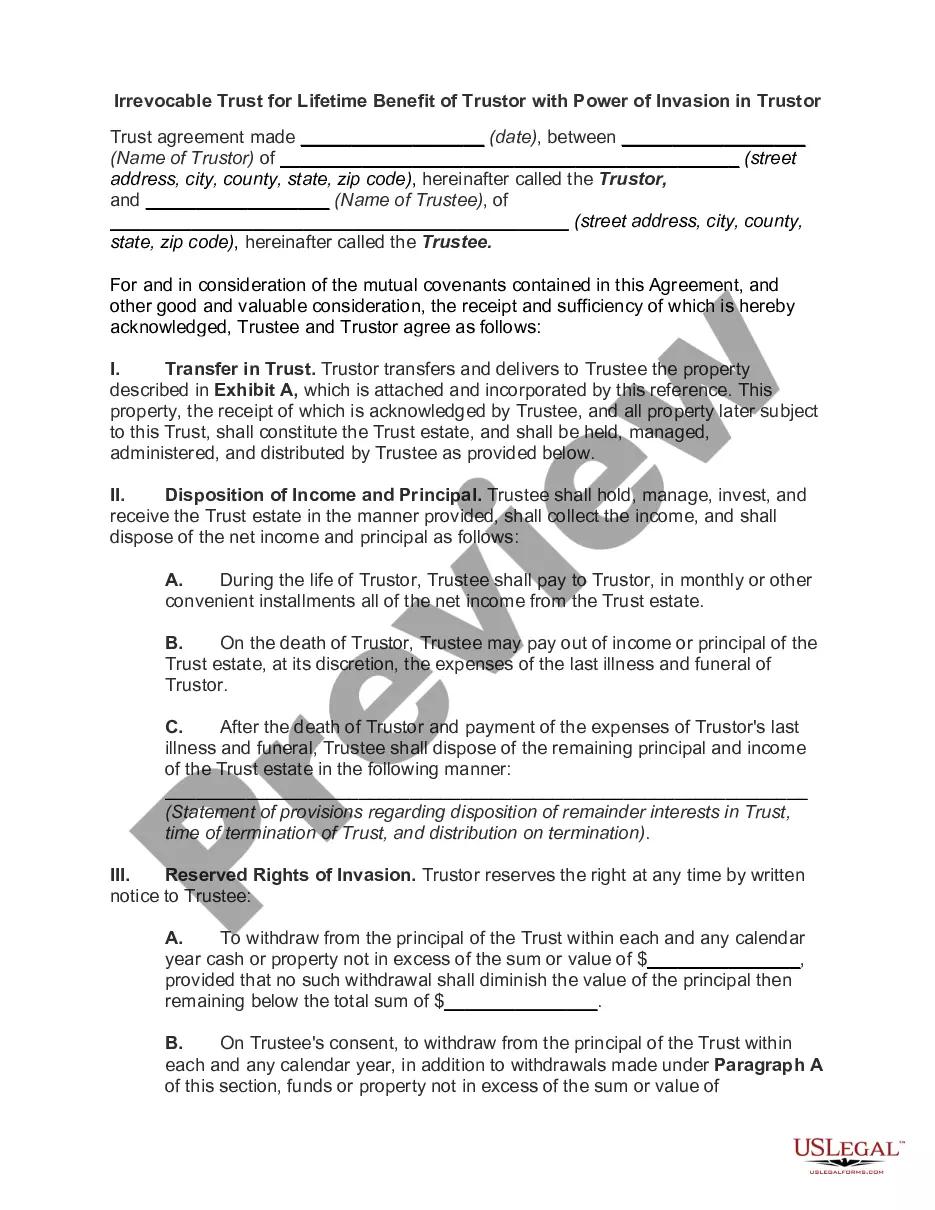
The Unalterable Trust With Grantor As Recipient you observe on this page is a reusable formal framework crafted by professional attorneys in accordance with federal and local regulations.
For over 25 years, US Legal Forms has supplied individuals, organizations, and lawyers with more than 85,000 validated, state-specific documents for any business and personal situation. It’s the fastest, simplest, and most dependable method to acquire the paperwork you require, as the service ensures bank-level data protection and anti-malware safeguards.
Select the format you desire for your Unalterable Trust With Grantor As Recipient (PDF, Word, RTF) and save the document on your device.
- Search for the document you require and examine it.
- Browse through the sample you searched and view it or check the form description to confirm it meets your requirements. If it does not, utilize the search feature to locate the correct one. Click Buy Now when you have identified the template you seek.
- Subscribe and Log In.
- Choose the pricing plan that fits you and create an account. Use PayPal or a credit card to make a swift payment. If you already possess an account, Log In and verify your subscription to proceed.
- Acquire the editable template.
Form popularity
FAQ
The grantor is the person who creates a trust, and the beneficiaries are the persons identified in the trust to receive the assets. The assets in the trust are supplied by the grantor. The associated property and funds are transitioned into the ownership of the trust.
Key Takeaways. A grantor is the entity that establishes a trust and legally transfers control of those assets to a trustee, who manages it for one or more beneficiaries. In certain types of trusts, the grantor may also be the beneficiary, the trustee, or both.
Creators of irrevocable trusts are commonly called grantors. A grantor of an irrevocable trust creates the trust and contributes funds or property to the trust. However, the grantor cannot amend or revoke the trust agreement.
The grantor (as an individual or couple) transfers their assets to an irrevocable trust. However, unlike other irrevocable trusts, the grantor can be the income beneficiary. Their children or spouse would be the residual beneficiaries.
Creating an Irrevocable Trust The trustee, who can also be a named beneficiary, is responsible for managing the trust. The beneficiaries are those relatives, friends, or charitable organizations who will receive assets from the trust.