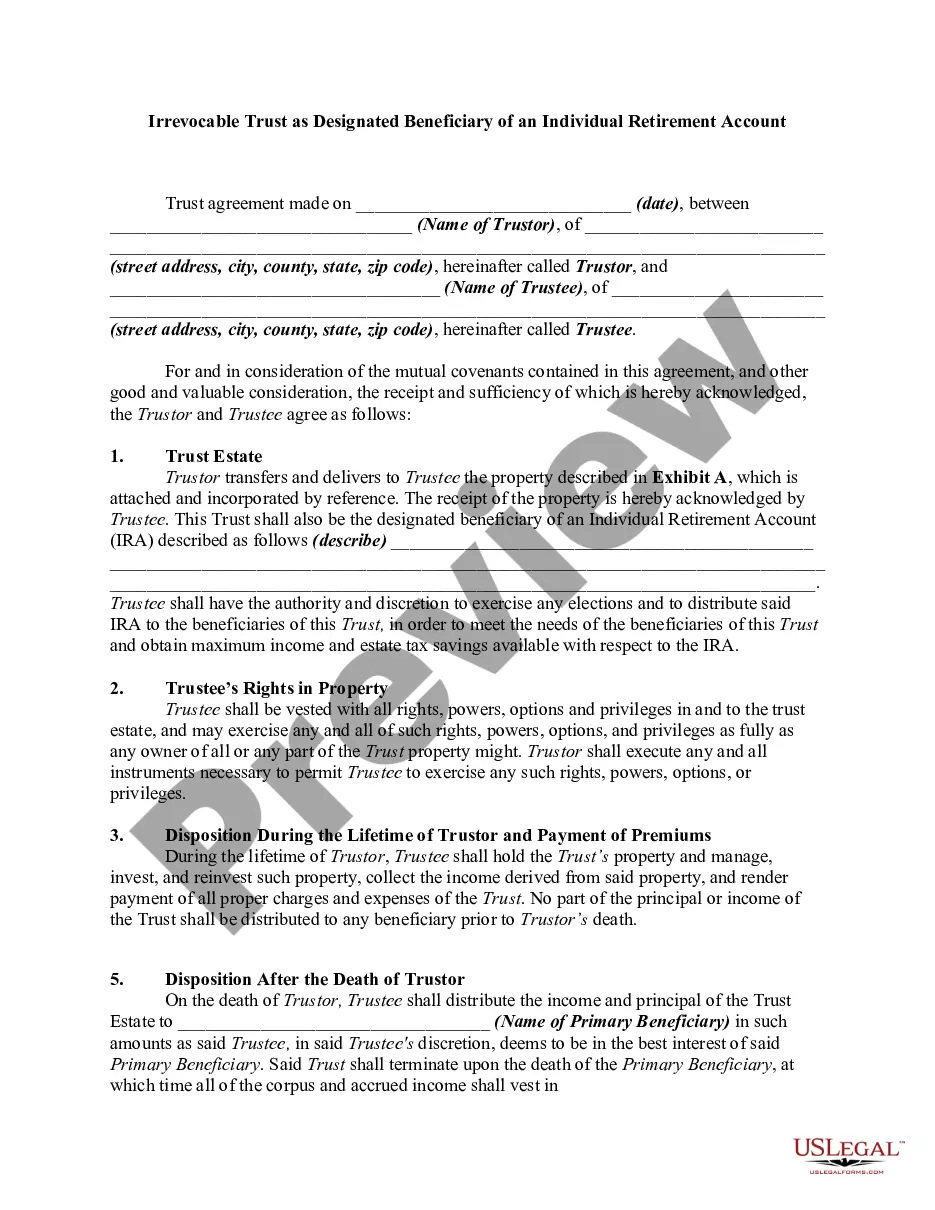
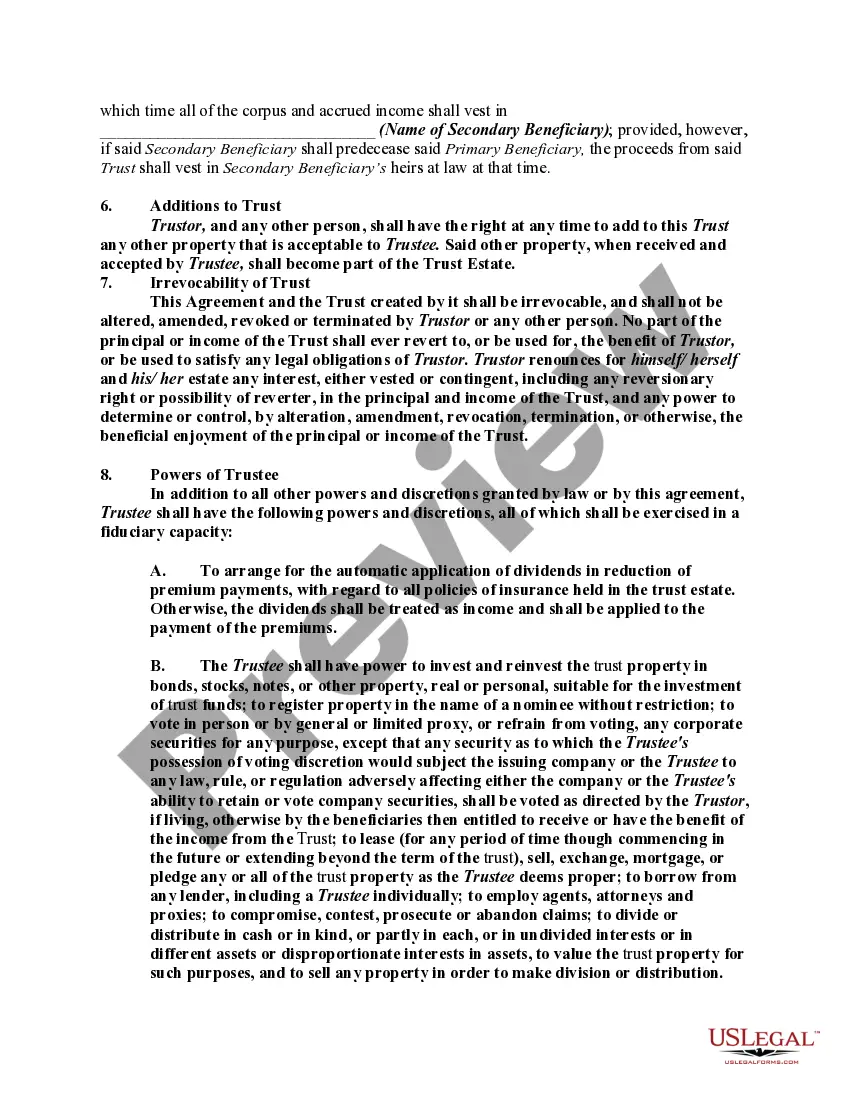
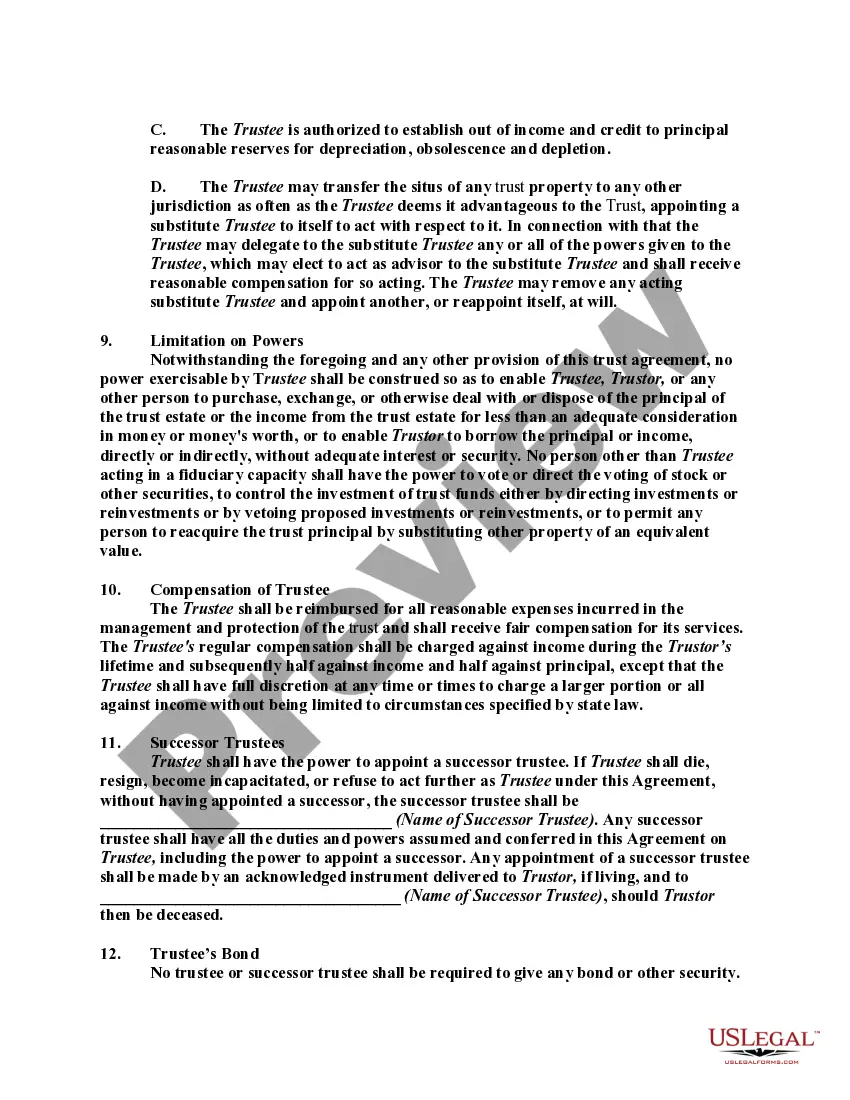
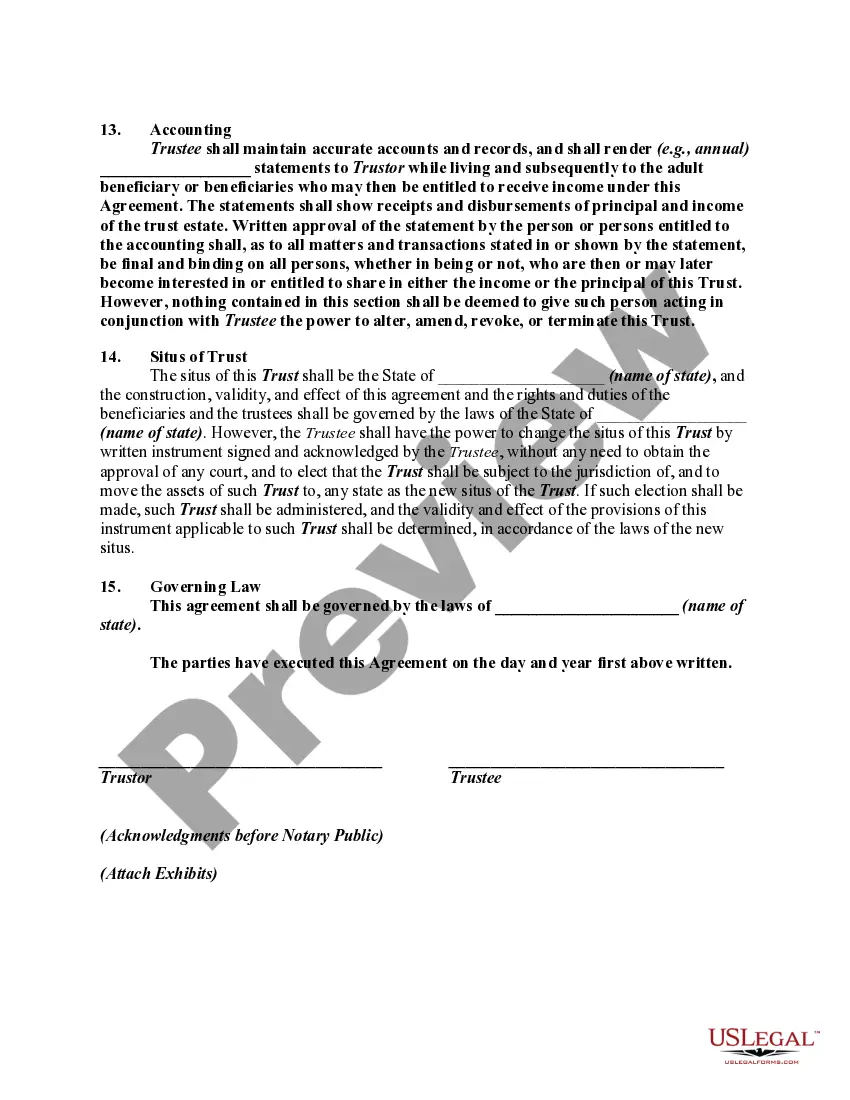
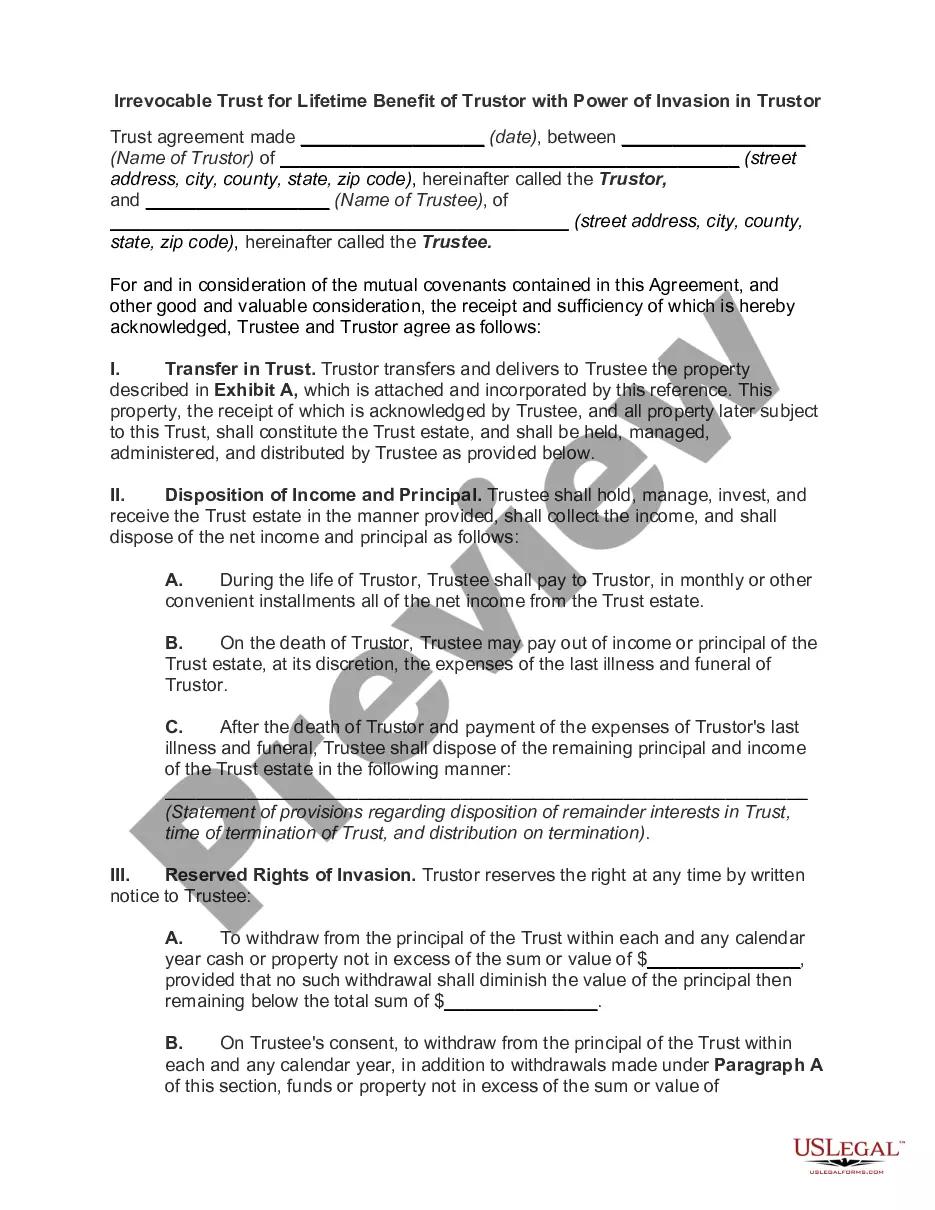
Irrevocable Trust Template With Beneficiary
Description

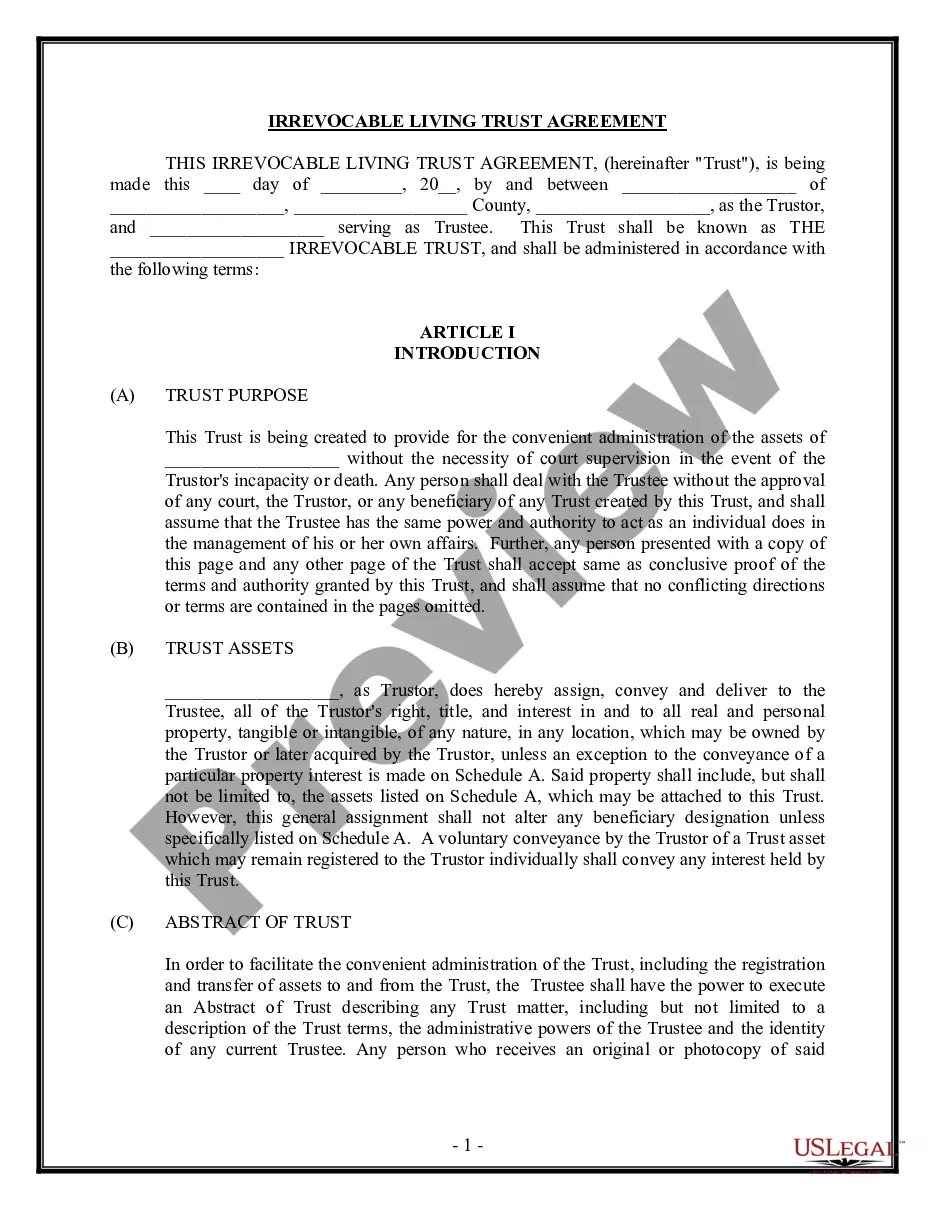
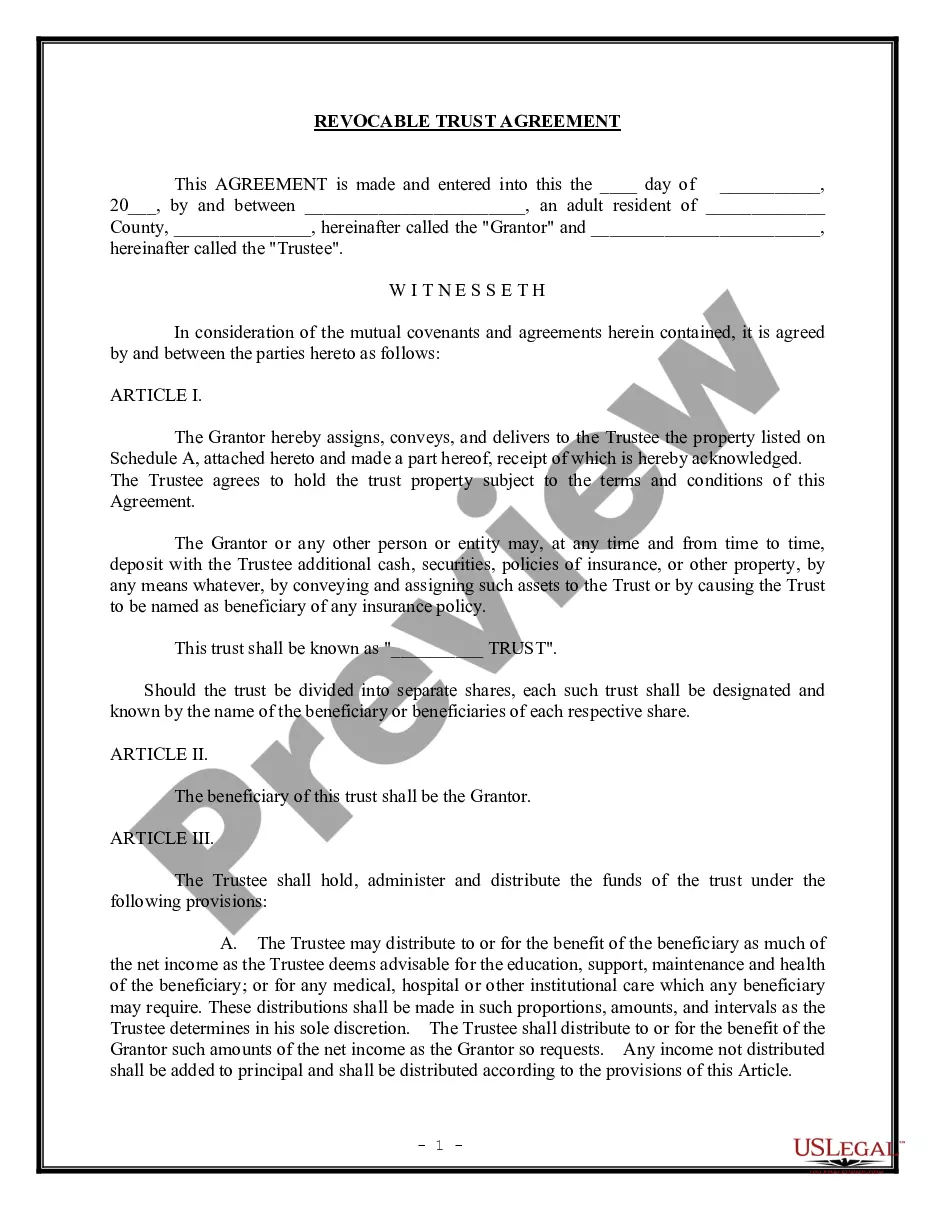
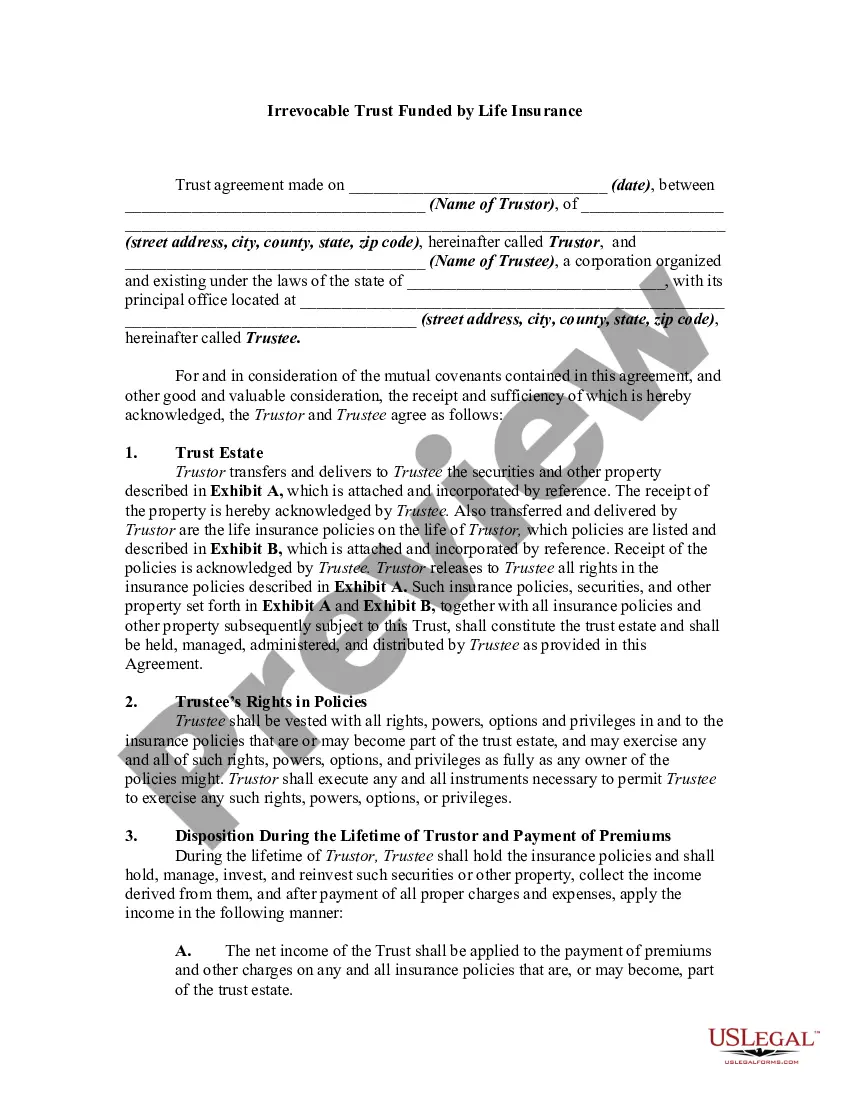
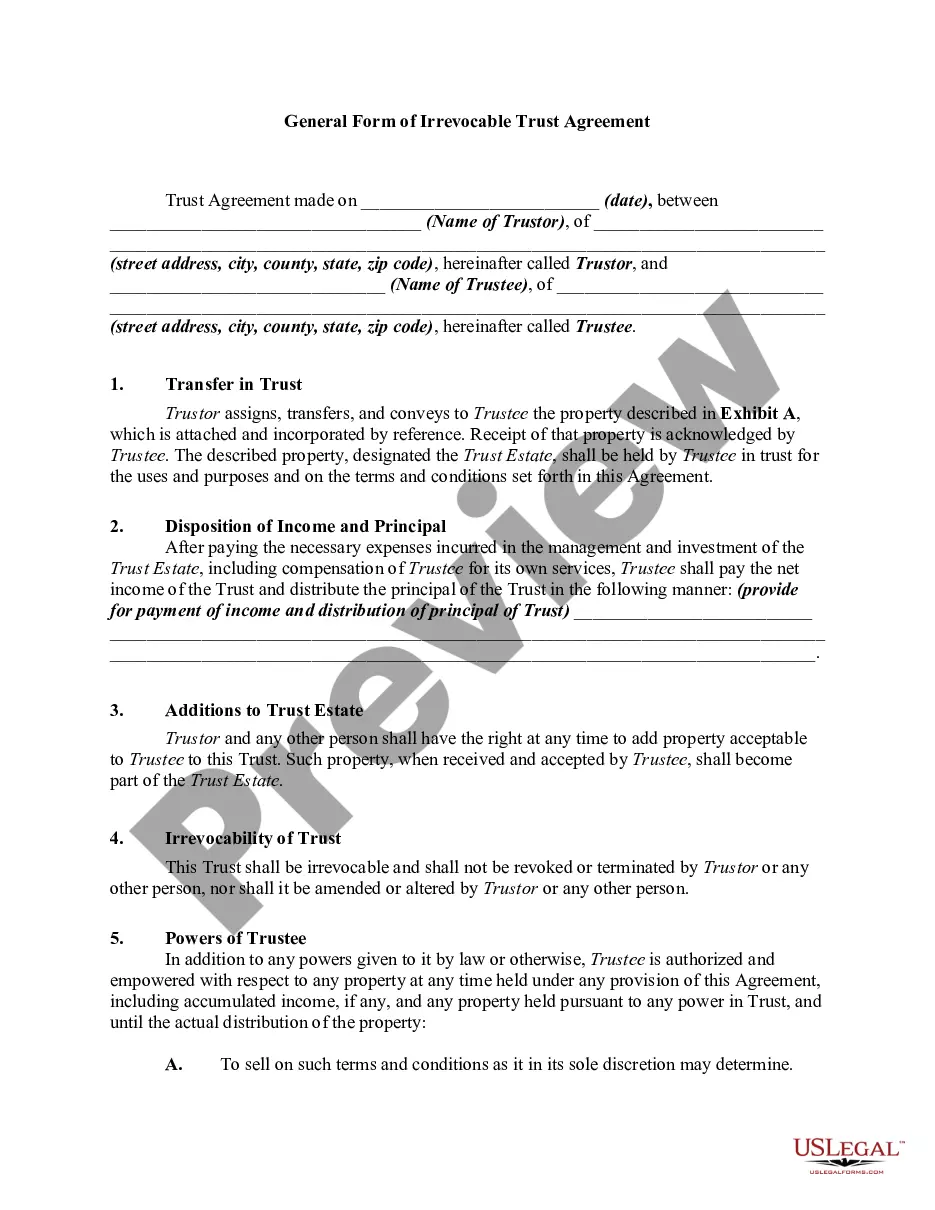
Get your form ready online
Our built-in tools help you complete, sign, share, and store your documents in one place.
Make edits, fill in missing information, and update formatting in US Legal Forms—just like you would in MS Word.
Download a copy, print it, send it by email, or mail it via USPS—whatever works best for your next step.
Sign and collect signatures with our SignNow integration. Send to multiple recipients, set reminders, and more. Go Premium to unlock E-Sign.
If this form requires notarization, complete it online through a secure video call—no need to meet a notary in person or wait for an appointment.
We protect your documents and personal data by following strict security and privacy standards.

Make edits, fill in missing information, and update formatting in US Legal Forms—just like you would in MS Word.

Download a copy, print it, send it by email, or mail it via USPS—whatever works best for your next step.

Sign and collect signatures with our SignNow integration. Send to multiple recipients, set reminders, and more. Go Premium to unlock E-Sign.

If this form requires notarization, complete it online through a secure video call—no need to meet a notary in person or wait for an appointment.

We protect your documents and personal data by following strict security and privacy standards.
Looking for another form?





How to fill out Irrevocable Trust As Designated Beneficiary Of An Individual Retirement Account?
- Log in to your US Legal Forms account if you're a returning user. Ensure your subscription is active; renew it if necessary.
- Preview the template and read the form description thoroughly to confirm it aligns with your specific needs and complies with local laws.
- If the template does not meet your requirements, utilize the Search feature to explore other options until you find the right form.
- Select the desired subscription plan and click on the Buy Now button. You will need to create an account if this is your first purchase.
- Complete your payment by providing your credit card details or using PayPal for convenience.
- Download the irrevocable trust template to your device, and you can access it any time from the My Forms section of your profile.
After following these steps, you will have all the necessary documents to effectively set up your irrevocable trust. US Legal Forms' extensive library and resources ensure you have the support needed for proper execution.
Ready to take control of your estate planning? Start using US Legal Forms today and ensure your documents are prepared accurately and efficiently.
Form popularity
FAQ
Writing an irrevocable trust document starts with using a reliable irrevocable trust template with beneficiary. This template will guide you in specifying key elements such as the trust's purpose, trustees, and beneficiaries. Ensure that you include clear instructions for management and distribution of assets. After drafting, consider having the document reviewed by a legal professional for compliance and clarity.
You certainly can set up an irrevocable trust by using a reputable irrevocable trust template with beneficiary. These templates provide a structured framework to draft your trust document. However, seeking guidance from a legal expert is advisable to ensure that all necessary provisions and legal requirements are met. This step minimizes the risk of errors that could affect the trust's effectiveness.
Filing taxes for an irrevocable trust involves reporting the trust's income on IRS Form 1041. The trustee must ensure accurate records are kept of all income generated and distributions made to beneficiaries. Since an irrevocable trust is treated as a separate tax entity, it is essential to understand the tax implications for both the trust and the beneficiaries. Utilizing an irrevocable trust template with beneficiary can guide you through this complicated process.
Yes, you can create an irrevocable trust on your own using an irrevocable trust template with beneficiary. However, it is crucial to ensure that you follow the legal requirements specific to your state. While templates can streamline the process, consulting a legal professional can help you avoid pitfalls. Make sure your document clearly delineates terms and conditions to protect your beneficiaries.
While it is possible to set up an irrevocable trust without an attorney, it is advisable to seek legal assistance to avoid potential pitfalls. You can use an irrevocable trust template with beneficiary allocations to create your document, but the legal aspects may vary by state. Ensuring that the document is valid and enforceable is crucial, which is where professional guidance can be beneficial.
You can manage your own irrevocable trust, but it involves particular responsibilities and legal obligations. If you choose to create an irrevocable trust template with beneficiary provisions, you must adhere to the terms laid out in the document. Managing a trust can become complex, so many people consider hiring a professional trustee to ensure compliance with the laws.
The primary downside of an irrevocable trust is that once established, it cannot be altered or revoked without significant legal hurdles. This means you lose direct control over the assets transferred to the trust. Additionally, an irrevocable trust template with beneficiary designations can limit flexibility for long-term financial changes. It's essential to weigh these factors carefully before proceeding.
To write an irrevocable trust document, start by outlining your assets and deciding how you want to allocate them to beneficiaries. You can use an irrevocable trust template with beneficiary specifications to streamline this process. Include details about the trust's purpose, management, and any specific instructions. Finally, ensure the document is signed and witnessed in accordance with state law.
You can write your own irrevocable trust, but it is crucial to ensure that it meets legal standards. Using an irrevocable trust template with beneficiary sections can simplify this process. However, because the trust is irrevocable, any mistakes could have long-term consequences. Many people choose to consult with an attorney for additional guidance.
Yes, an irrevocable trust can and typically does have beneficiaries. The beneficiaries are the individuals or entities that will receive benefits from the trust once it is established. When you create an irrevocable trust template with beneficiary designations, you clearly define who will benefit from the trust assets. This structure helps in estate planning and can provide financial support to your loved ones.