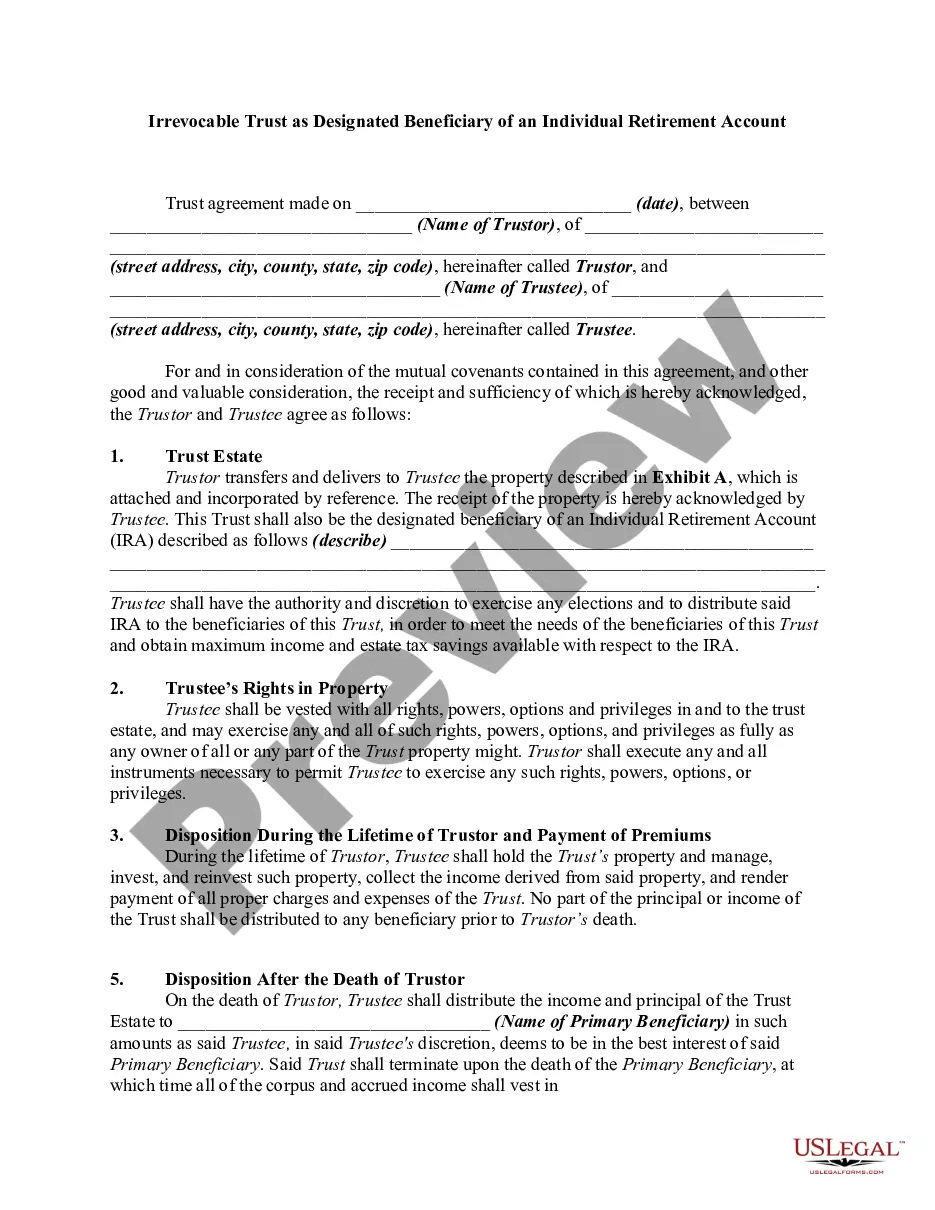
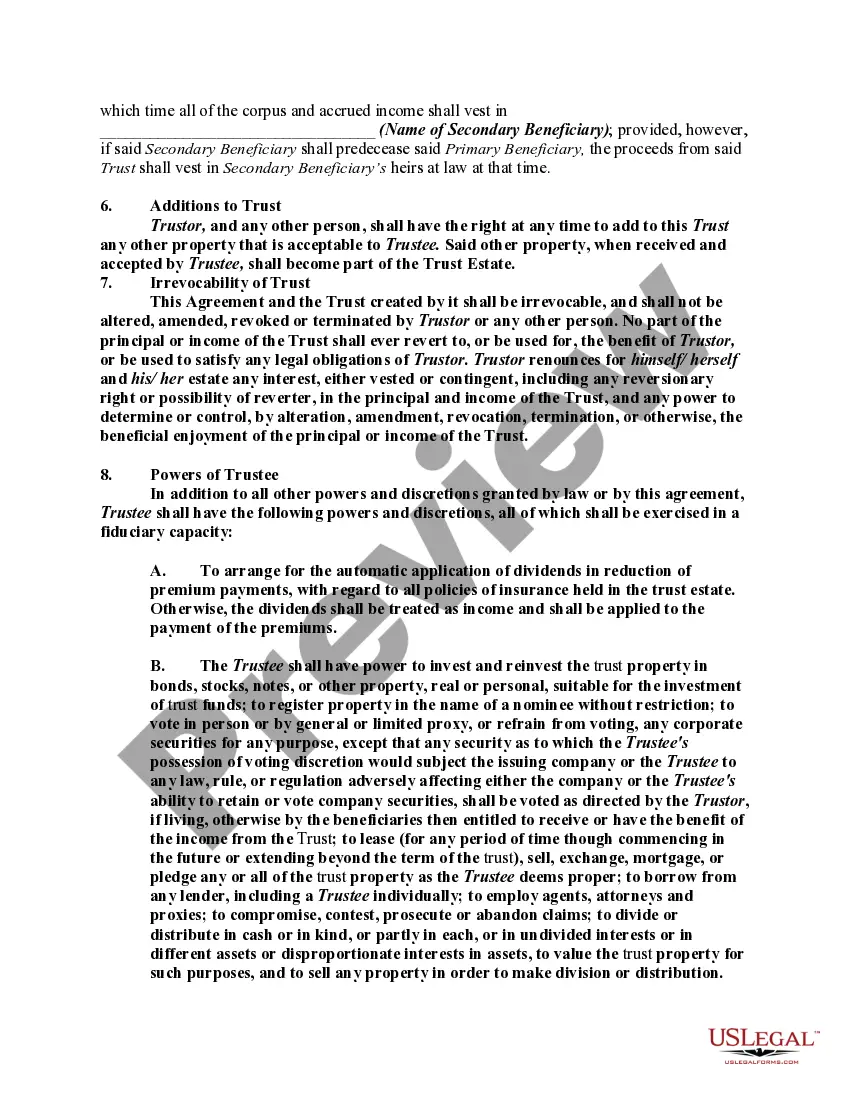
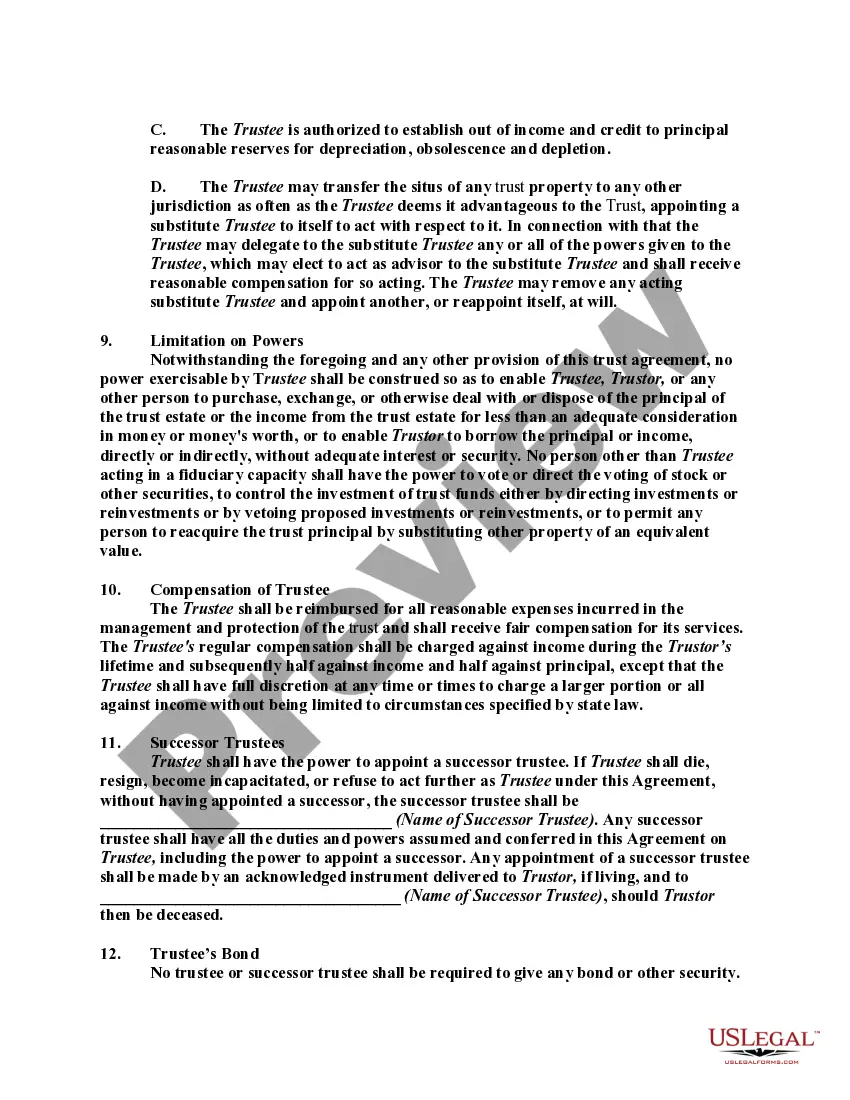
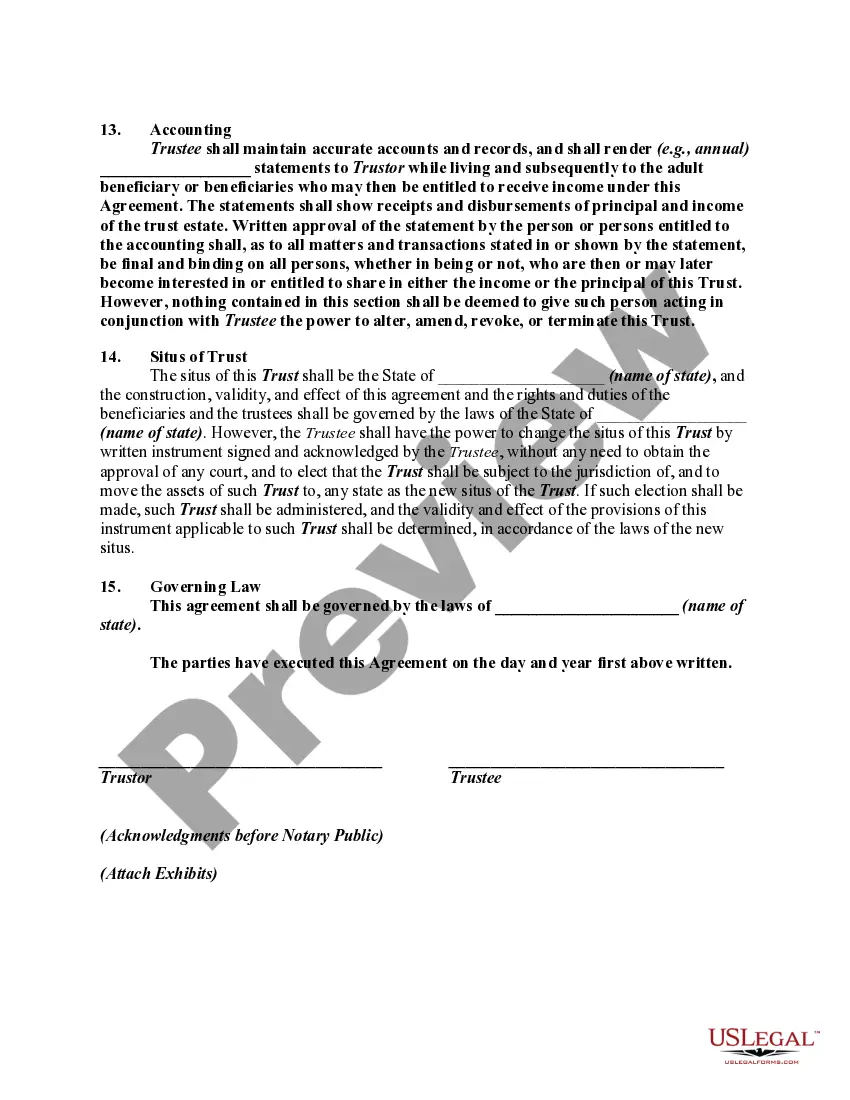
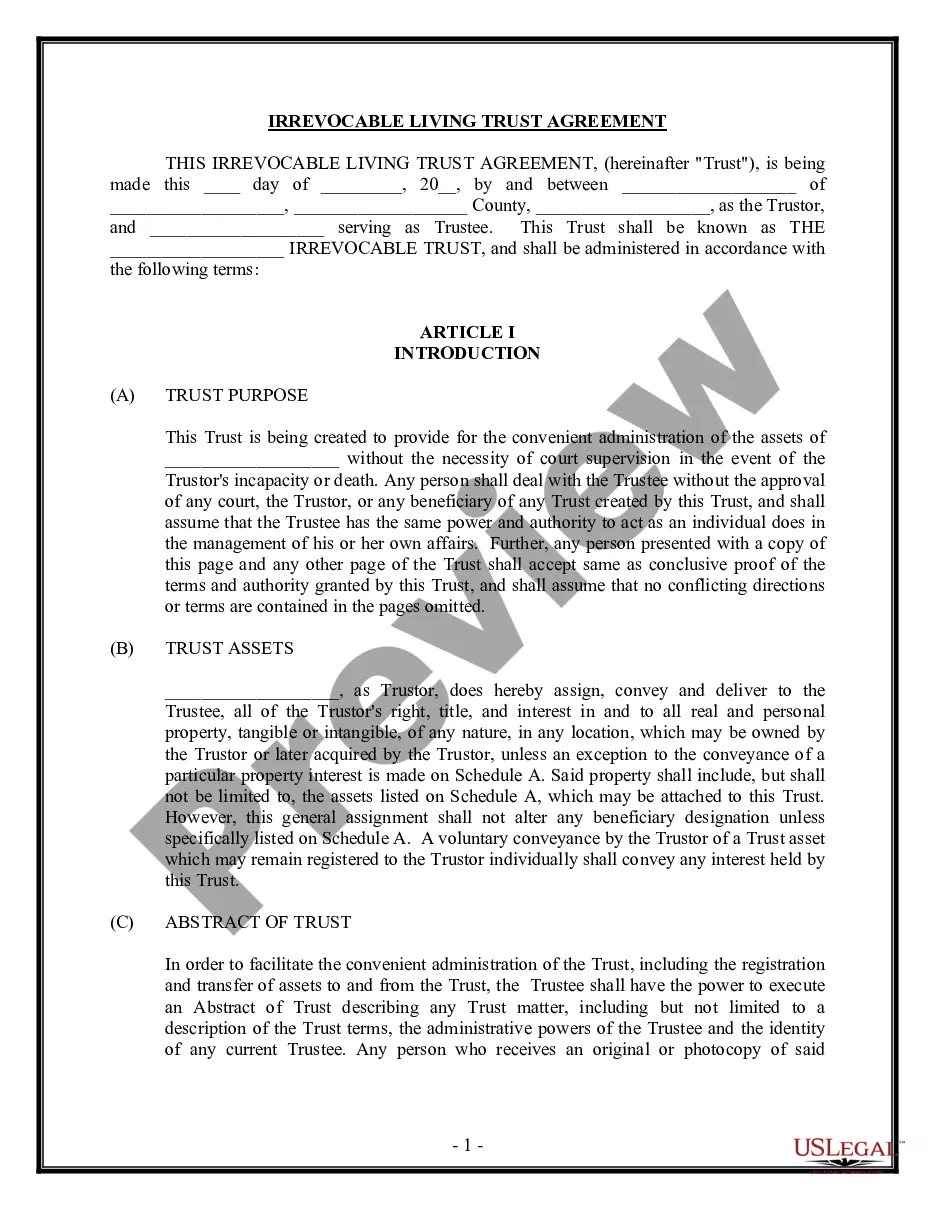
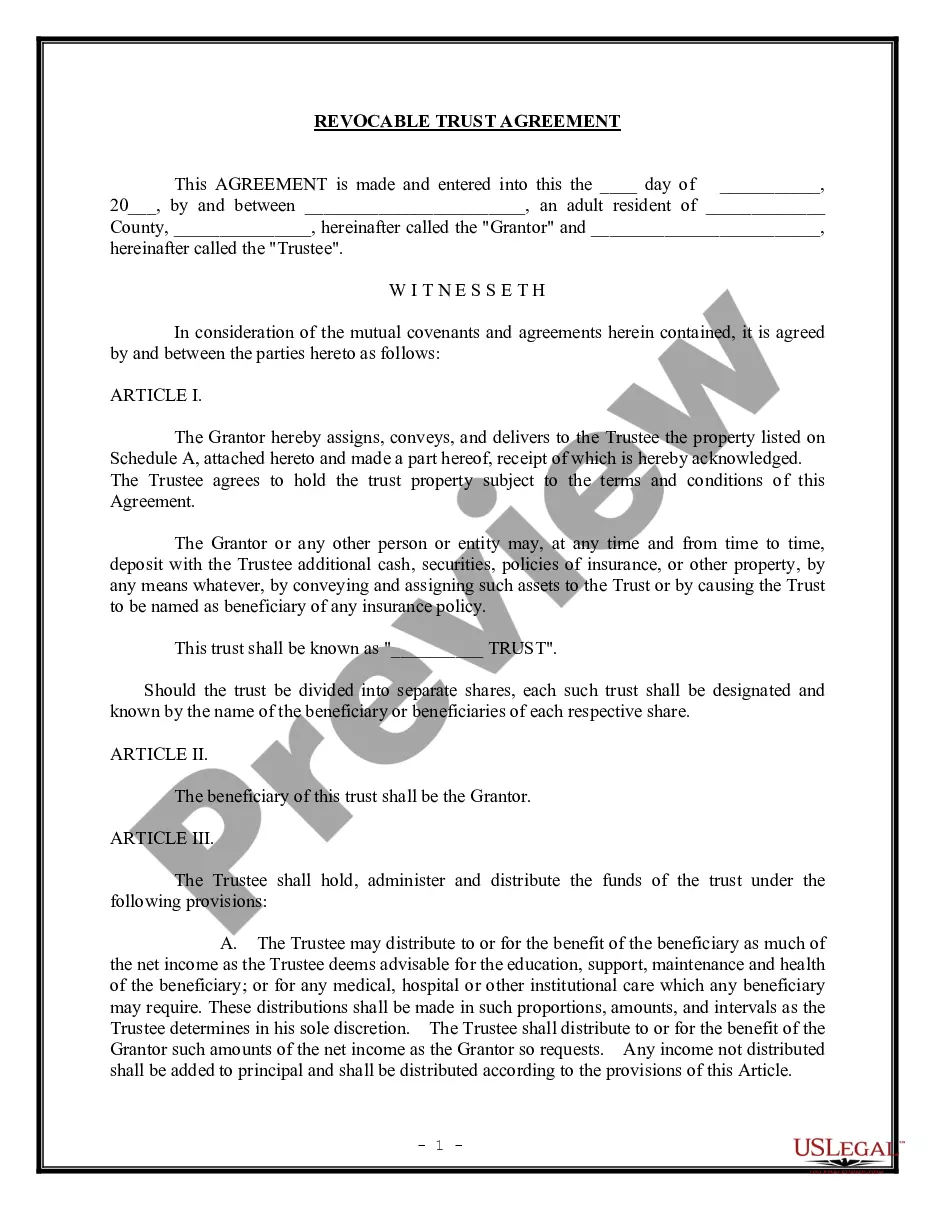
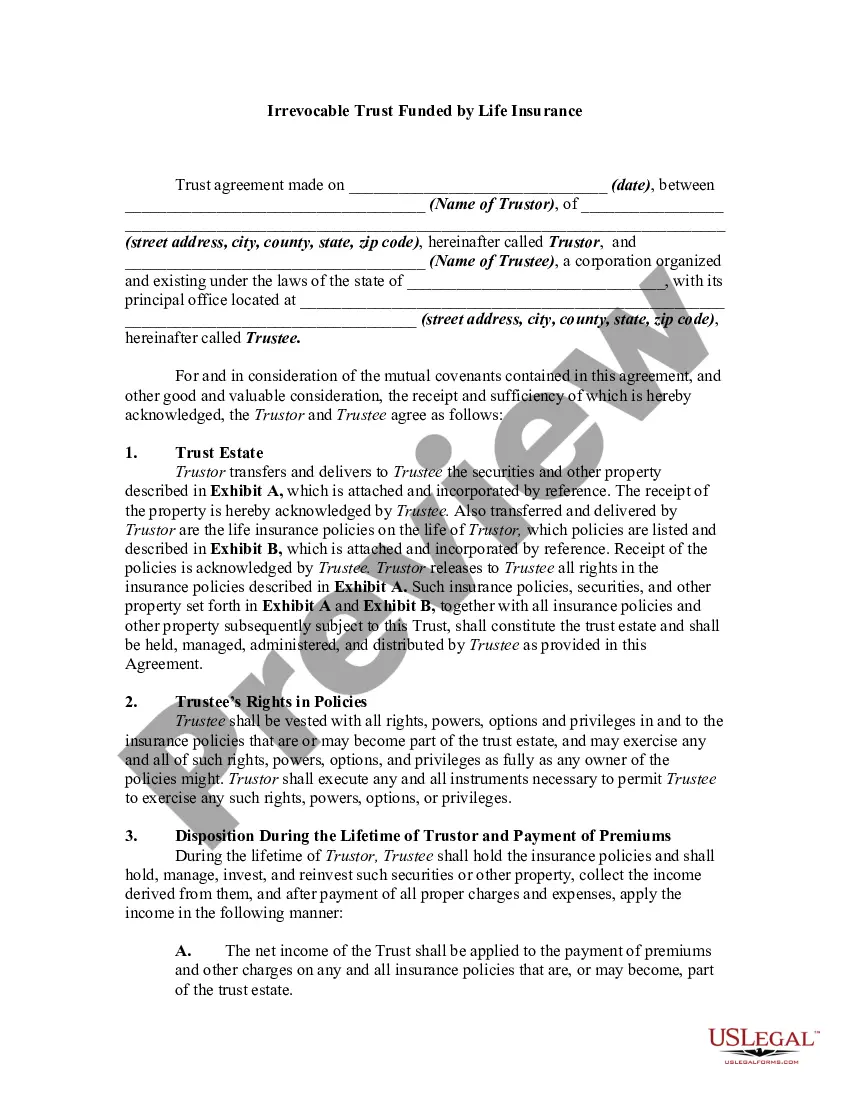
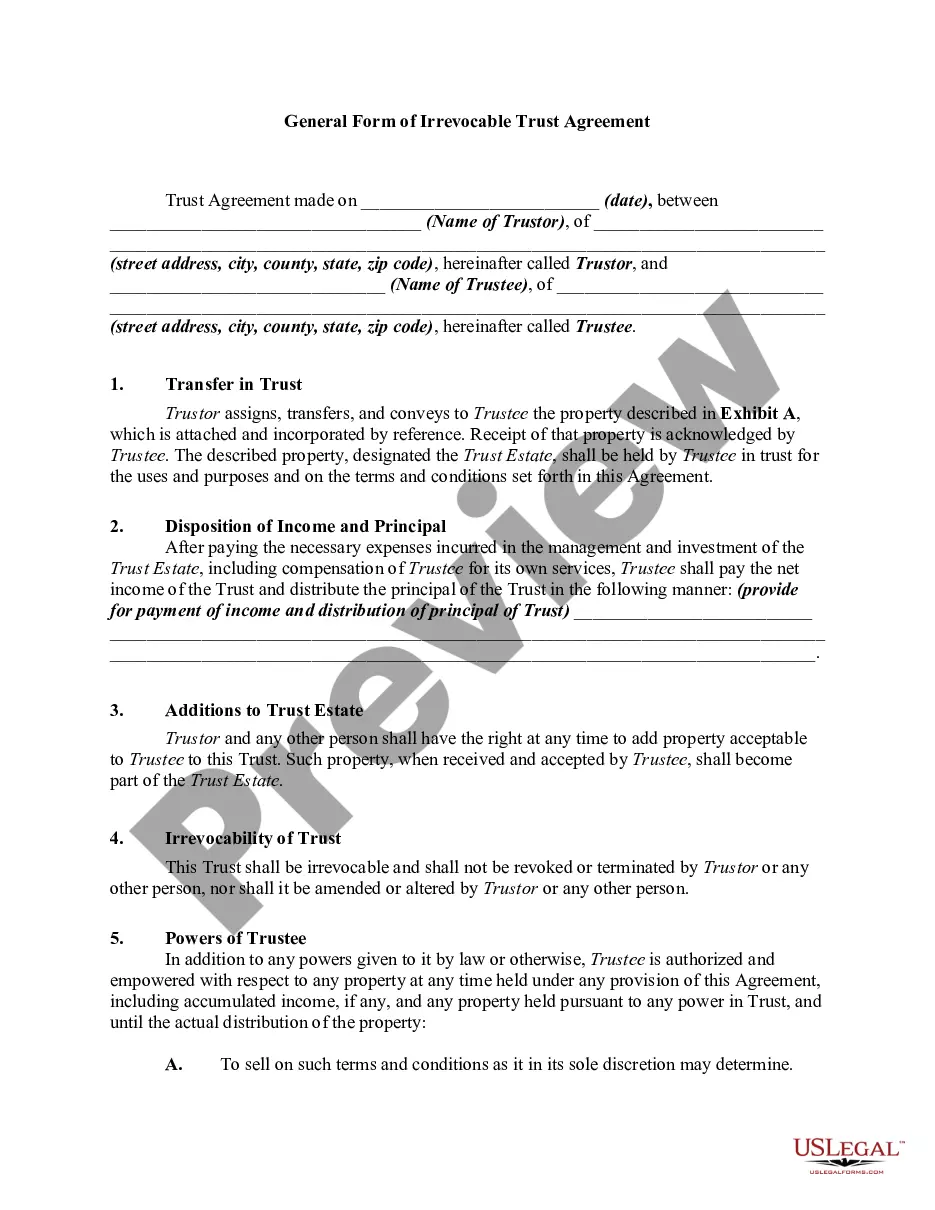
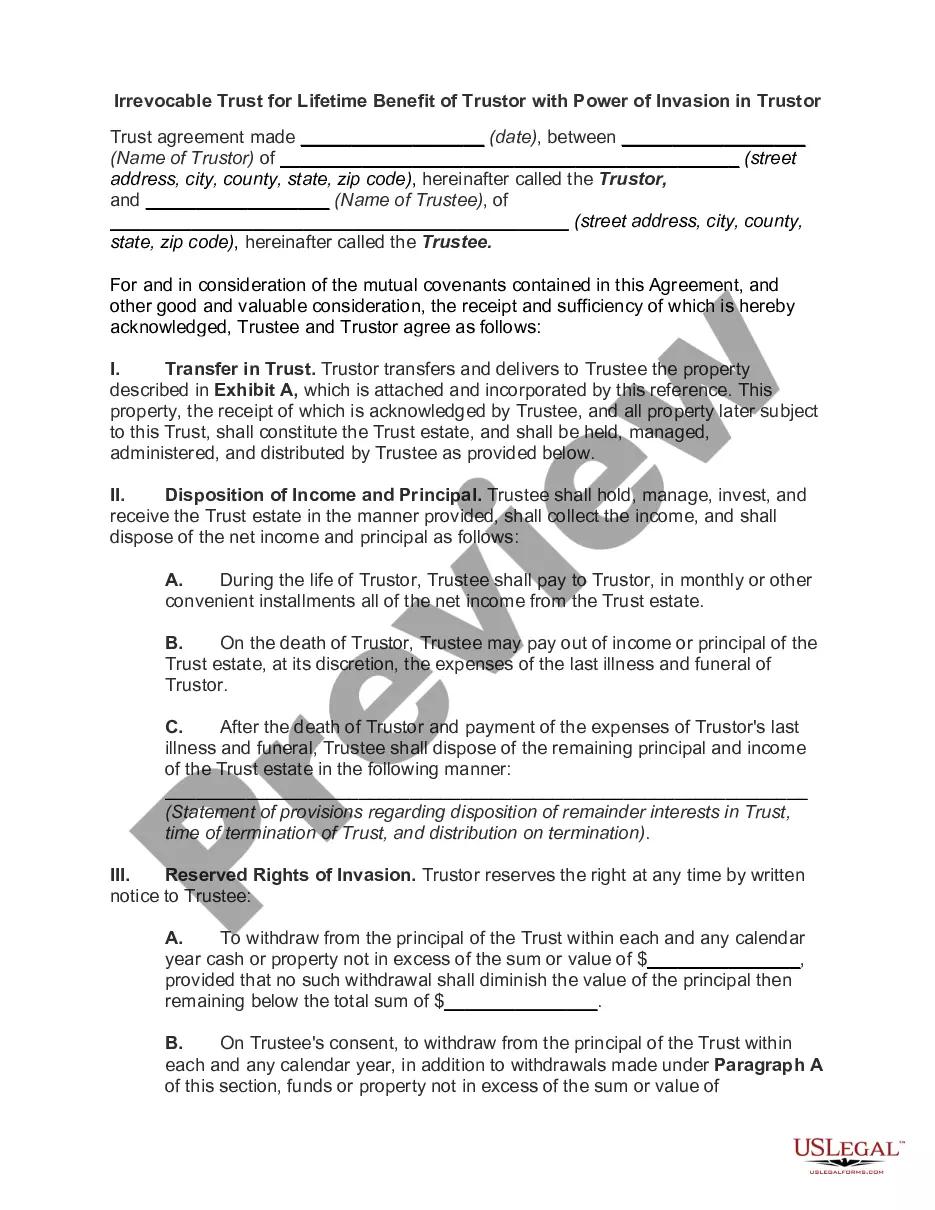
Irrevocable Trust Template
Description

Get your form ready online
Our built-in tools help you complete, sign, share, and store your documents in one place.
Make edits, fill in missing information, and update formatting in US Legal Forms—just like you would in MS Word.
Download a copy, print it, send it by email, or mail it via USPS—whatever works best for your next step.
Sign and collect signatures with our SignNow integration. Send to multiple recipients, set reminders, and more. Go Premium to unlock E-Sign.
If this form requires notarization, complete it online through a secure video call—no need to meet a notary in person or wait for an appointment.
We protect your documents and personal data by following strict security and privacy standards.

Make edits, fill in missing information, and update formatting in US Legal Forms—just like you would in MS Word.

Download a copy, print it, send it by email, or mail it via USPS—whatever works best for your next step.

Sign and collect signatures with our SignNow integration. Send to multiple recipients, set reminders, and more. Go Premium to unlock E-Sign.

If this form requires notarization, complete it online through a secure video call—no need to meet a notary in person or wait for an appointment.

We protect your documents and personal data by following strict security and privacy standards.
Looking for another form?
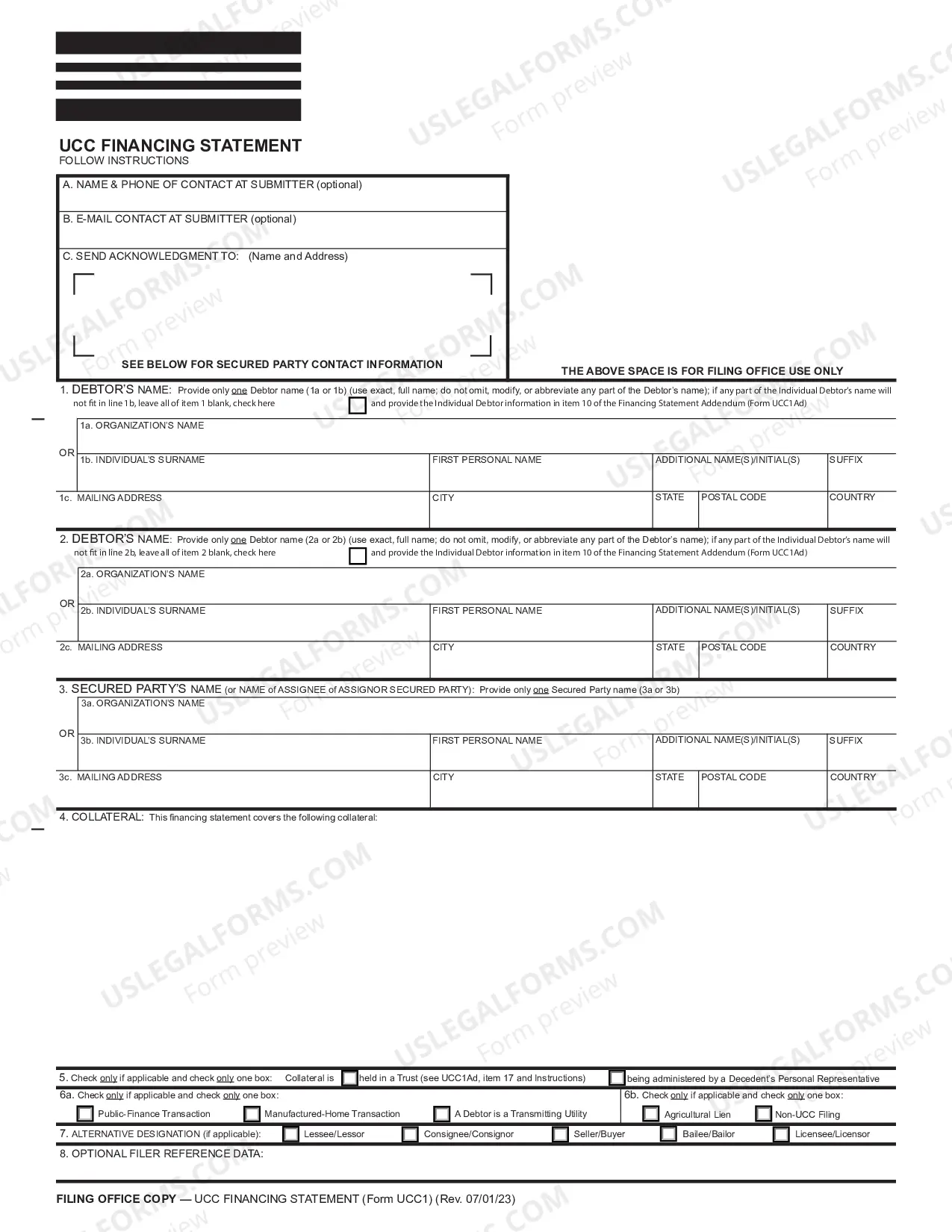





How to fill out Irrevocable Trust As Designated Beneficiary Of An Individual Retirement Account?
- Log in to your US Legal Forms account if you are a returning user. Ensure your subscription is active, and click the Download button for the needed template.
- For new users, browse the Preview mode to review and select the irrevocable trust template that best fits your requirements and complies with your jurisdiction.
- If necessary, search for alternative templates using the Search tab to find the right match.
- Once you've found the appropriate template, click on the Buy Now button and choose your preferred subscription plan. You will need to create an account to access the full library.
- Complete your purchase by entering your payment details or utilizing PayPal for convenience.
- After payment, download the irrevocable trust template to your device, ensuring it's accessible anytime via the My Forms section of your profile.
By utilizing US Legal Forms, you gain access to over 85,000 editable and fillable legal documents, empowering you to create precise and legally sound agreements.
Start planning for your future by accessing your irrevocable trust template today. Visit US Legal Forms and take control of your estate planning.
Form popularity
FAQ
Filing an irrevocable trust typically involves completing the trust document and ensuring all necessary parties sign it. You may also need to provide it to your county court for legal recognition in certain cases. Using an irrevocable trust template can streamline this process, making it easier for you to set up your trust correctly and efficiently.
Generally, an irrevocable trust does not need to be filed with the court unless it is involved in litigation or needs to be validated. However, maintaining proper documentation is crucial. A well-designed irrevocable trust template can help ensure all necessary documents are organized and accessible, just in case.
You can avoid certain taxes on an irrevocable trust by utilizing specific tax strategies, such as utilizing exemptions and deductions. Additionally, proper asset allocation can minimize tax burdens. An irrevocable trust template can provide insights into structuring the trust effectively to help you manage taxes efficiently.
Typically, you should avoid placing personal residences, retirement accounts, and assets that may increase in value into an irrevocable trust. These assets may have implications regarding taxes or personal needs in the future. Consulting an irrevocable trust template can guide you on the best practices for asset selection, ensuring you protect your interests.
The IRS has introduced new guidelines regarding irrevocable trusts that focus on reporting requirements and tax implications. These rules aim to enhance transparency and ensure accurate tax assessments. Using an irrevocable trust template can help you comply with these new regulations, ensuring that your trust is correctly set up.
Yes, the IRS can take your house if it is in an irrevocable trust, but it depends on various factors. If you owe taxes, the IRS may place a lien on the trust assets. Using an irrevocable trust template can help you structure the trust properly to provide some protection against creditors.
Yes, you can write your own irrevocable trust, but it requires careful attention to detail. Utilizing an irrevocable trust template can make this process easier by providing a structured format to follow. However, it’s recommended to consult a legal expert to ensure that the trust meets all legal standards and effectively carries out your wishes.
One downside of putting assets in a trust, especially an irrevocable trust, is the permanent separation from your ownership. Once assets are placed in the trust, they cannot be reclaimed without significant legal hurdles. This can lead to concerns about future needs or changes in financial circumstances, making a thorough review of your situation crucial before embracing the concept of an irrevocable trust template.
Writing an irrevocable trust document involves careful consideration of various factors, including the beneficiaries and terms of the trust. It is advisable to start by using an irrevocable trust template as a foundation, which you can customize according to your specific needs. Legal advice can ensure that the document complies with state laws and properly reflects your intentions.
One of the biggest mistakes parents make is not properly funding the trust. Simply creating a trust document, like an irrevocable trust template, is not enough; they must transfer assets into the trust for it to function effectively. Failing to do so can result in the trust not providing the intended benefits for their heirs.