Paternity Form To Print
Description
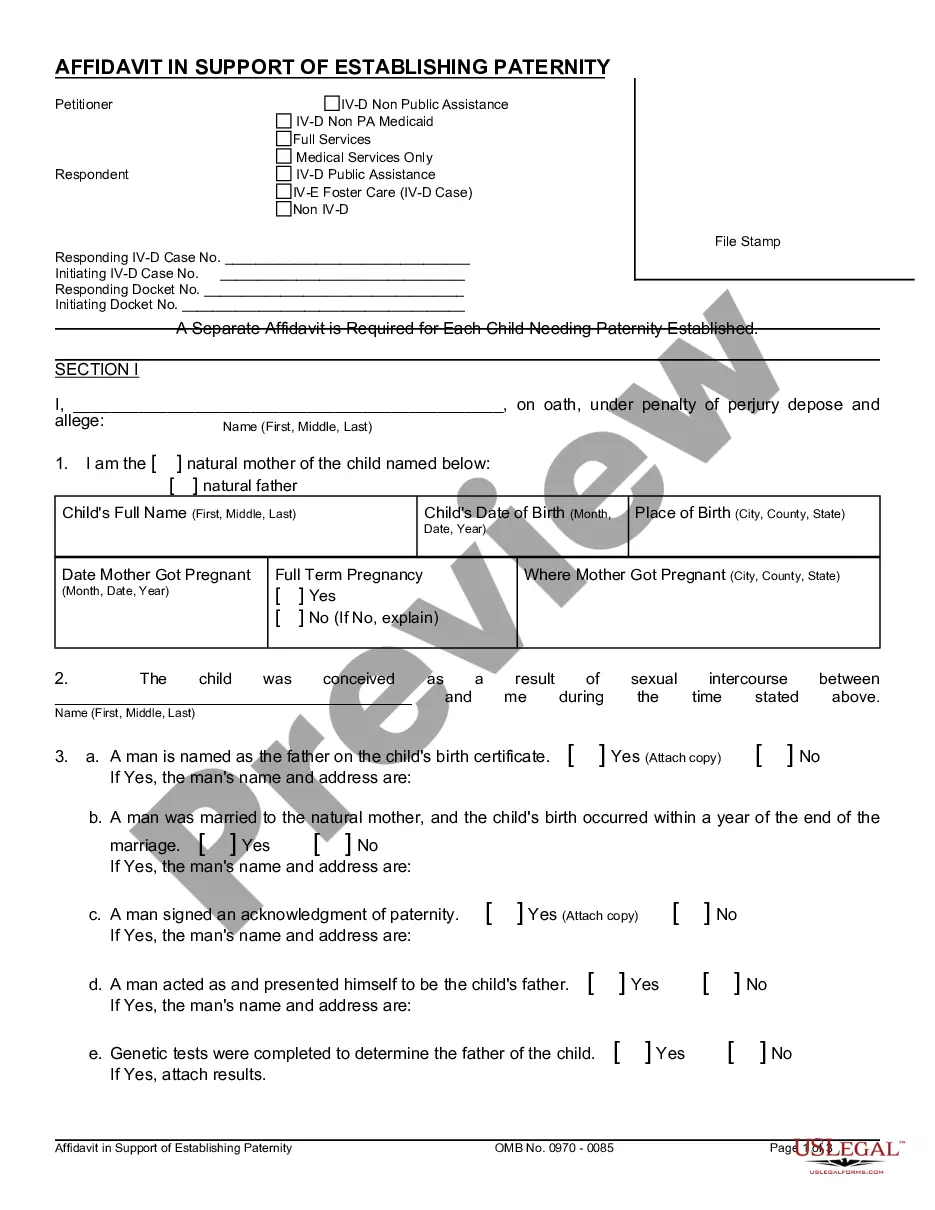
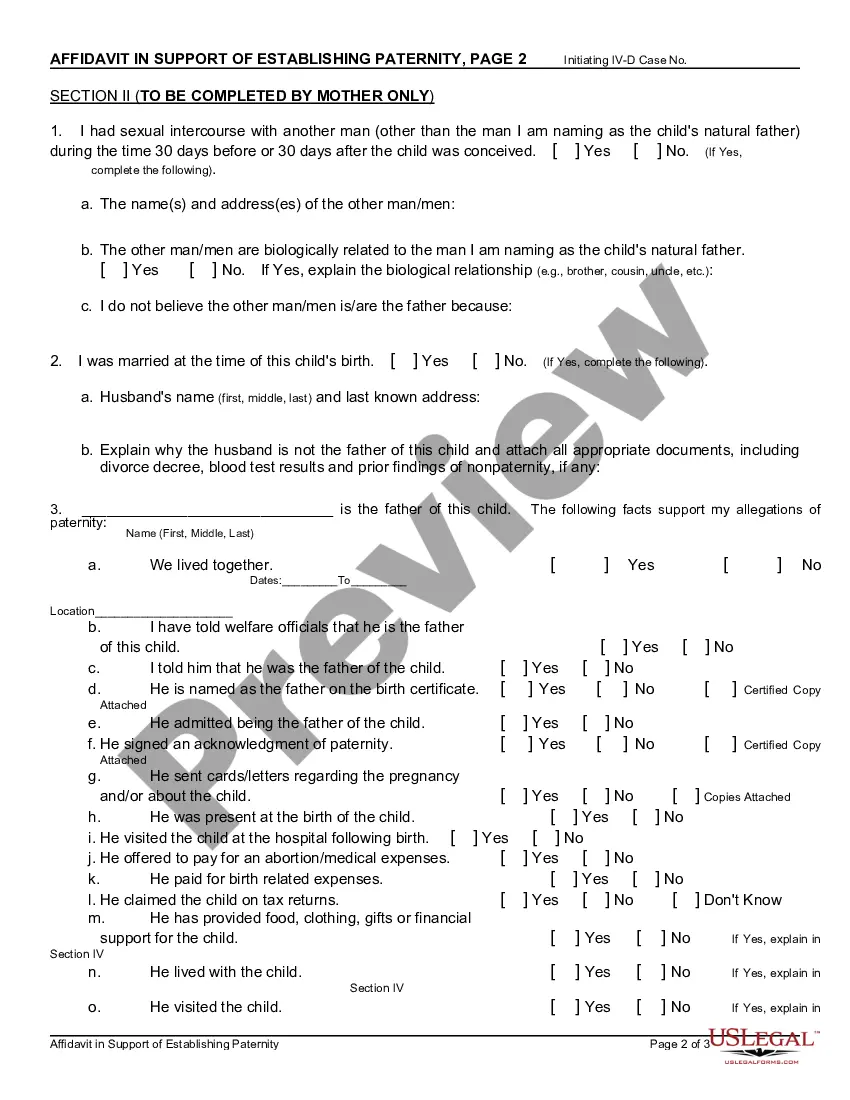

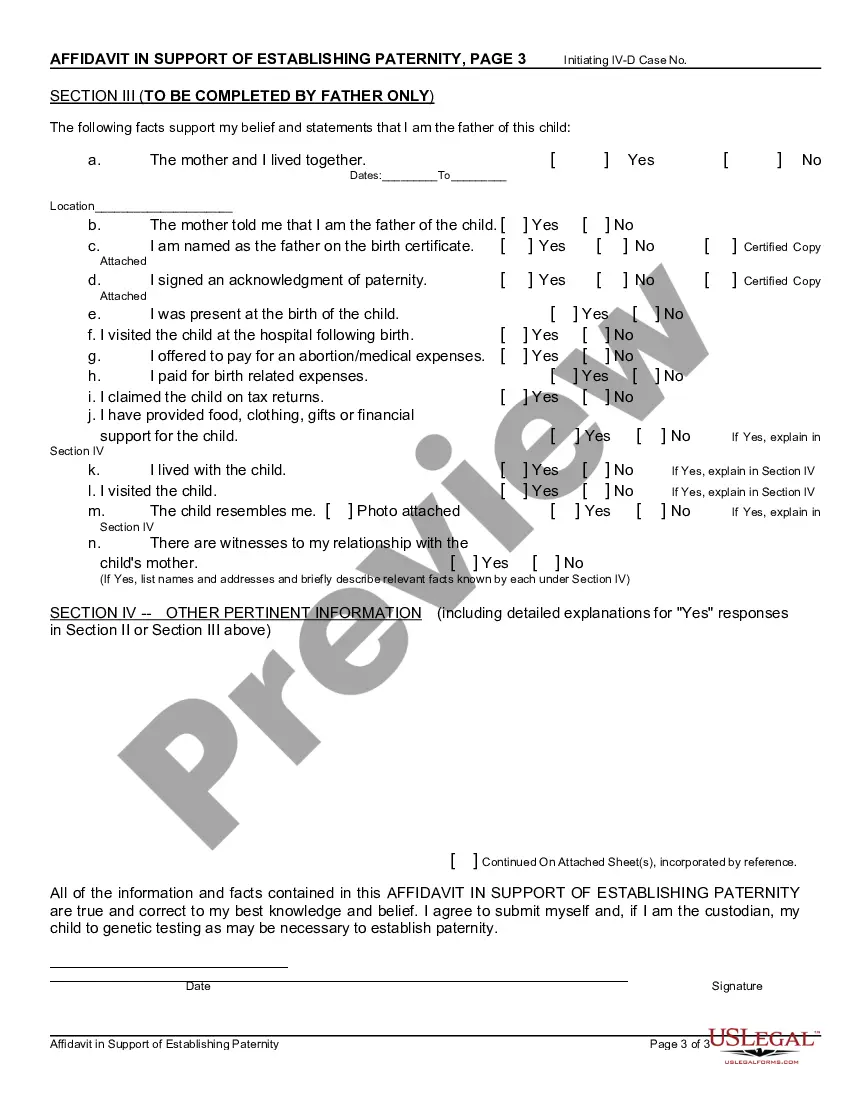

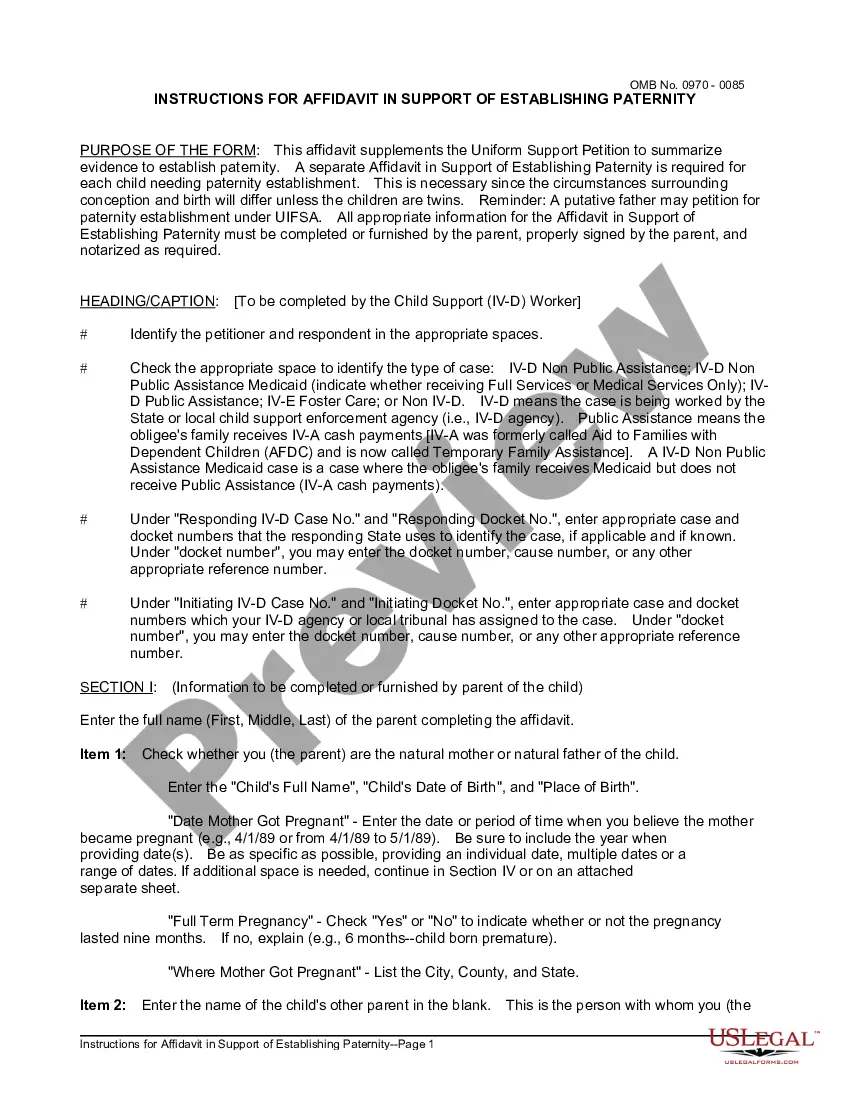
Get your form ready online
Our built-in tools help you complete, sign, share, and store your documents in one place.
Make edits, fill in missing information, and update formatting in US Legal Forms—just like you would in MS Word.
Download a copy, print it, send it by email, or mail it via USPS—whatever works best for your next step.
Sign and collect signatures with our SignNow integration. Send to multiple recipients, set reminders, and more. Go Premium to unlock E-Sign.
If this form requires notarization, complete it online through a secure video call—no need to meet a notary in person or wait for an appointment.
We protect your documents and personal data by following strict security and privacy standards.

Make edits, fill in missing information, and update formatting in US Legal Forms—just like you would in MS Word.

Download a copy, print it, send it by email, or mail it via USPS—whatever works best for your next step.

Sign and collect signatures with our SignNow integration. Send to multiple recipients, set reminders, and more. Go Premium to unlock E-Sign.

If this form requires notarization, complete it online through a secure video call—no need to meet a notary in person or wait for an appointment.

We protect your documents and personal data by following strict security and privacy standards.
Looking for another form?
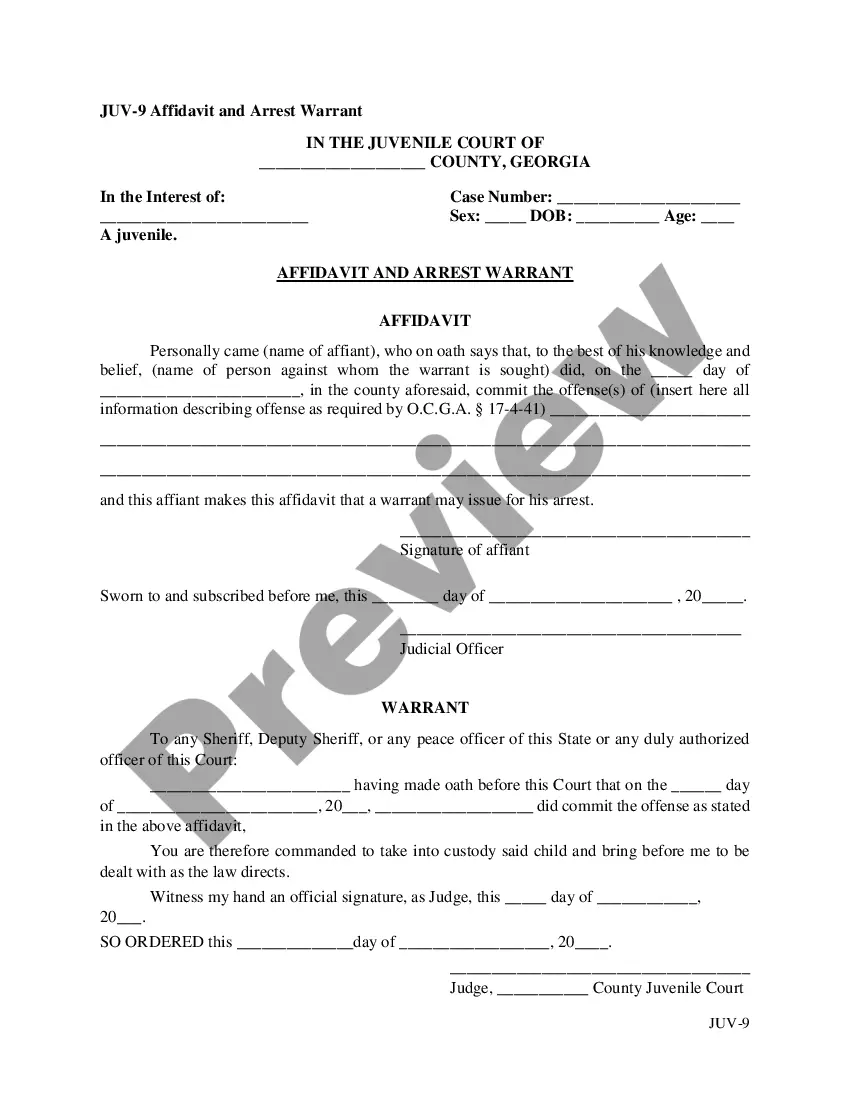




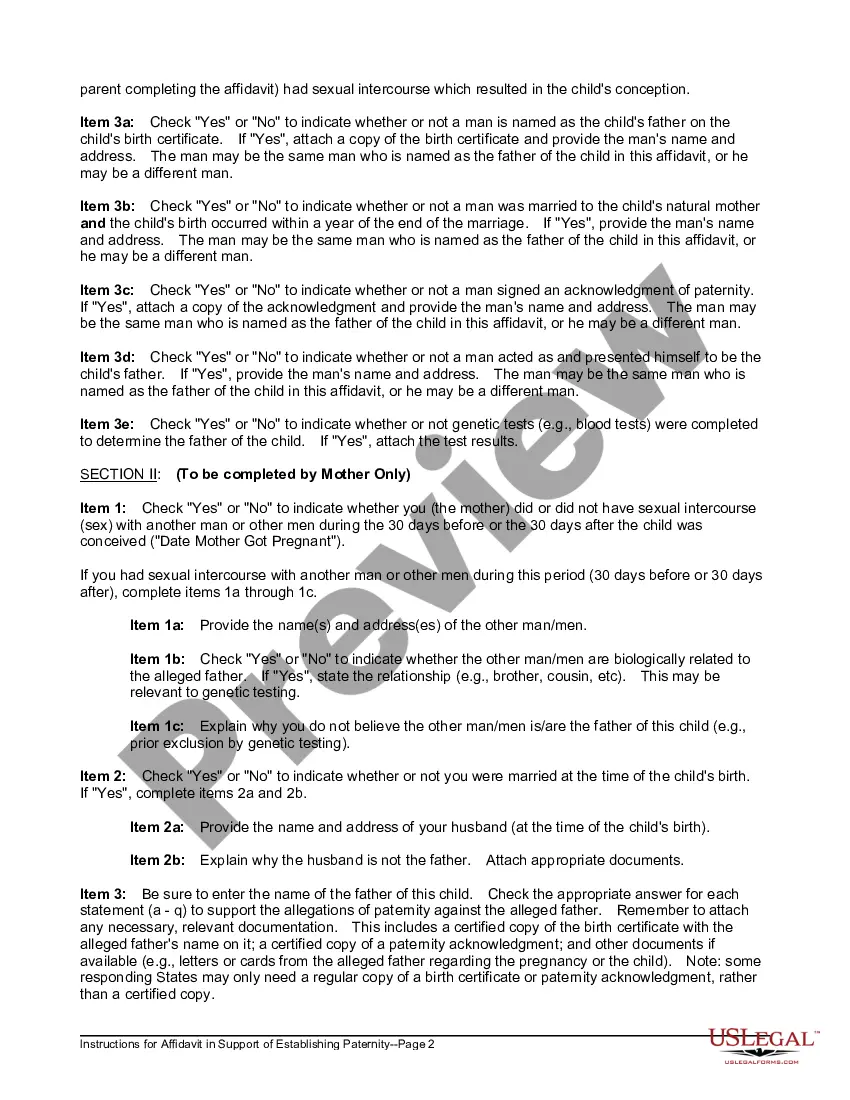
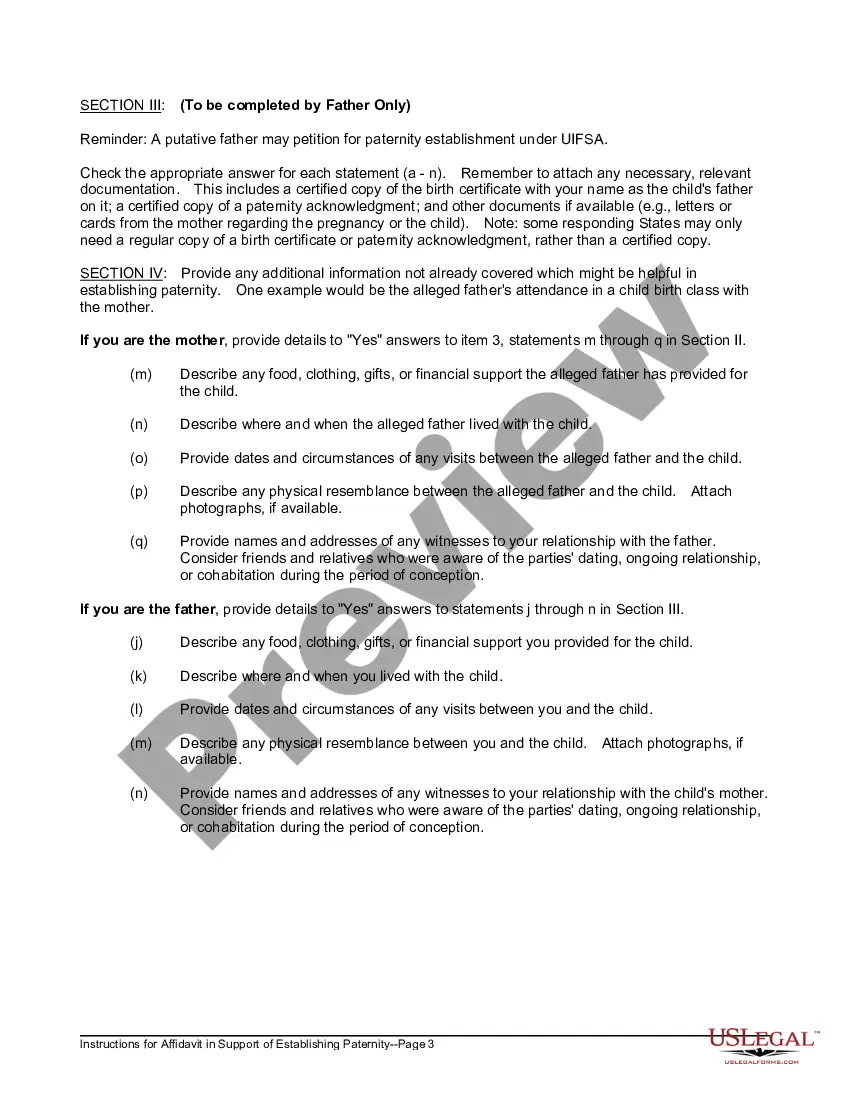
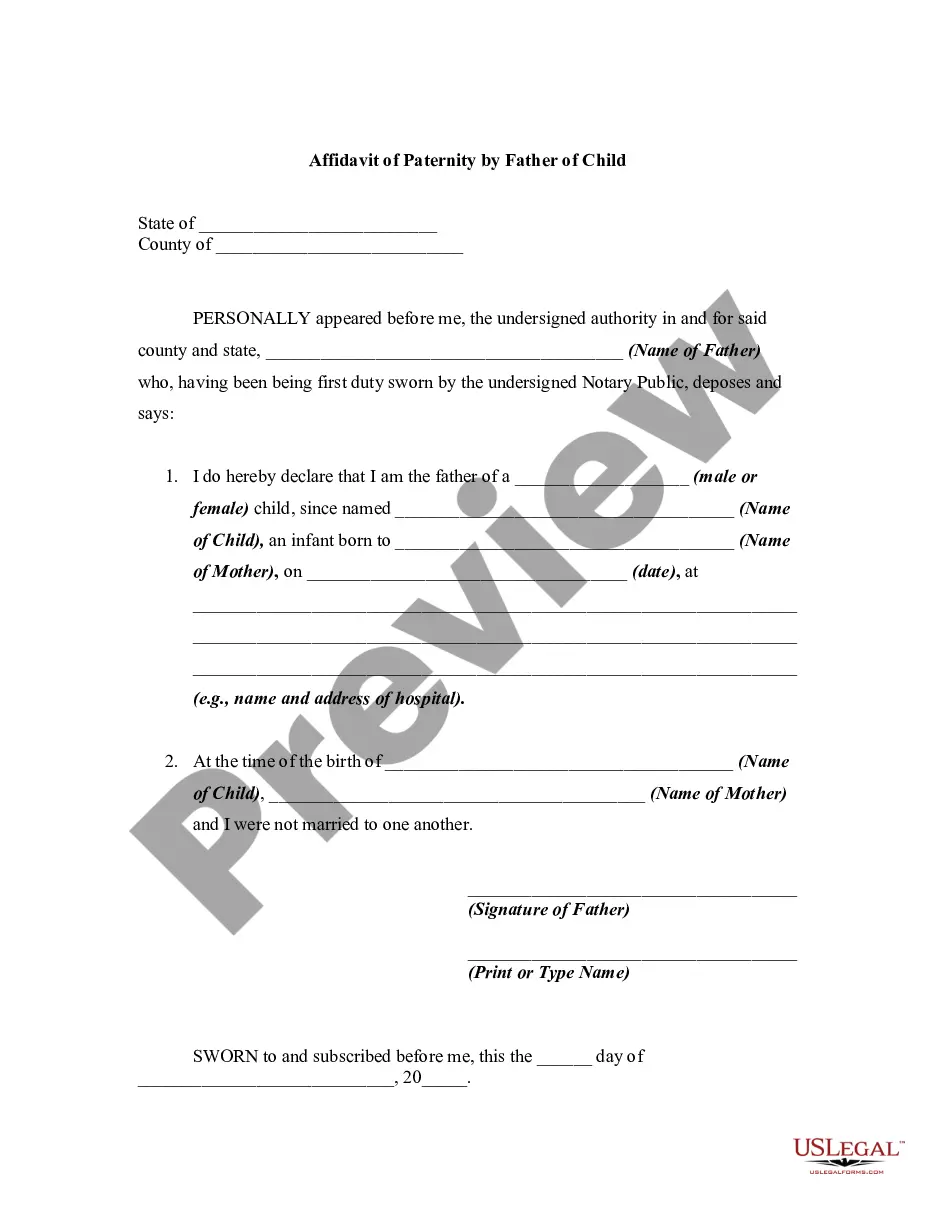
How to fill out Affidavit In Support Of Establishing Paternity?
The Paternity Document To Print you observe on this site is a reusable legal document crafted by expert attorneys in accordance with federal and state statutes and regulations.
For over 25 years, US Legal Forms has supplied individuals, companies, and lawyers with more than 85,000 validated, state-specific documents for any business and personal occasion. It’s the fastest, simplest, and most trustworthy method to acquire the papers you require, as the service assures bank-level data security and anti-malware safeguards.
Re-download your documents as needed. Access the My documents tab in your profile to retrieve any previously downloaded documents.
- Search for the form you need and review it.
- Browse through the example you looked for and preview it or check the form description to guarantee it meets your needs. If it doesn’t, use the search feature to find the correct one. Click Buy Now once you have located the document you need.
- Choose and Log In.
- Select the pricing plan that fits your needs and create an account. Utilize PayPal or a credit card for immediate payment. If you already possess an account, Log In and check your subscription to proceed.
- Obtain the fillable document.
- Select the format you desire for your Paternity Document To Print (PDF, Word, RTF) and download the sample onto your device.
- Fill out and sign the document.
- Print the document to complete it manually. Alternatively, use an online multifunctional PDF editor to swiftly and accurately fill out and sign your form electronically.
Form popularity
FAQ
Establishing Paternity in North Carolina In North Carolina, listing someone as the father on the child's birth certificate is not valid proof of paternity, so state law provides two ways for a father to establish paternity: (1) affidavit of parentage; and (2) civil action.
Paternity can be established by voluntary acknowledgment of paternity or by court order. The most convenient time for parents to establish paternity for their child is in the hospital when the child is born. The father must be present and provide identification to have his name placed on the Affidavit of Parentage.
The father's name will appear on the birth certificate, and the father must consent to the name of the child before the child's name appears on the birth certificate. A father signing just the birth certificate, without signing a Paternity Acknowledgement Affidavit, does not constitute paternity.
Under Pennsylvania law, paternity is presumed when parents are married at the time of the child's birth. However, when parents are unmarried when the child is born, paternity must be legally established before the name of the child's father can appear on the birth certificate.
Parents who are not married can establish legal paternity for a child by: Signing an Affidavit Acknowledging Paternity at the hospital when the baby is born. When both parents complete this Affidavit, the man becomes the legal father of the child and his name is placed on the child's birth certificate.