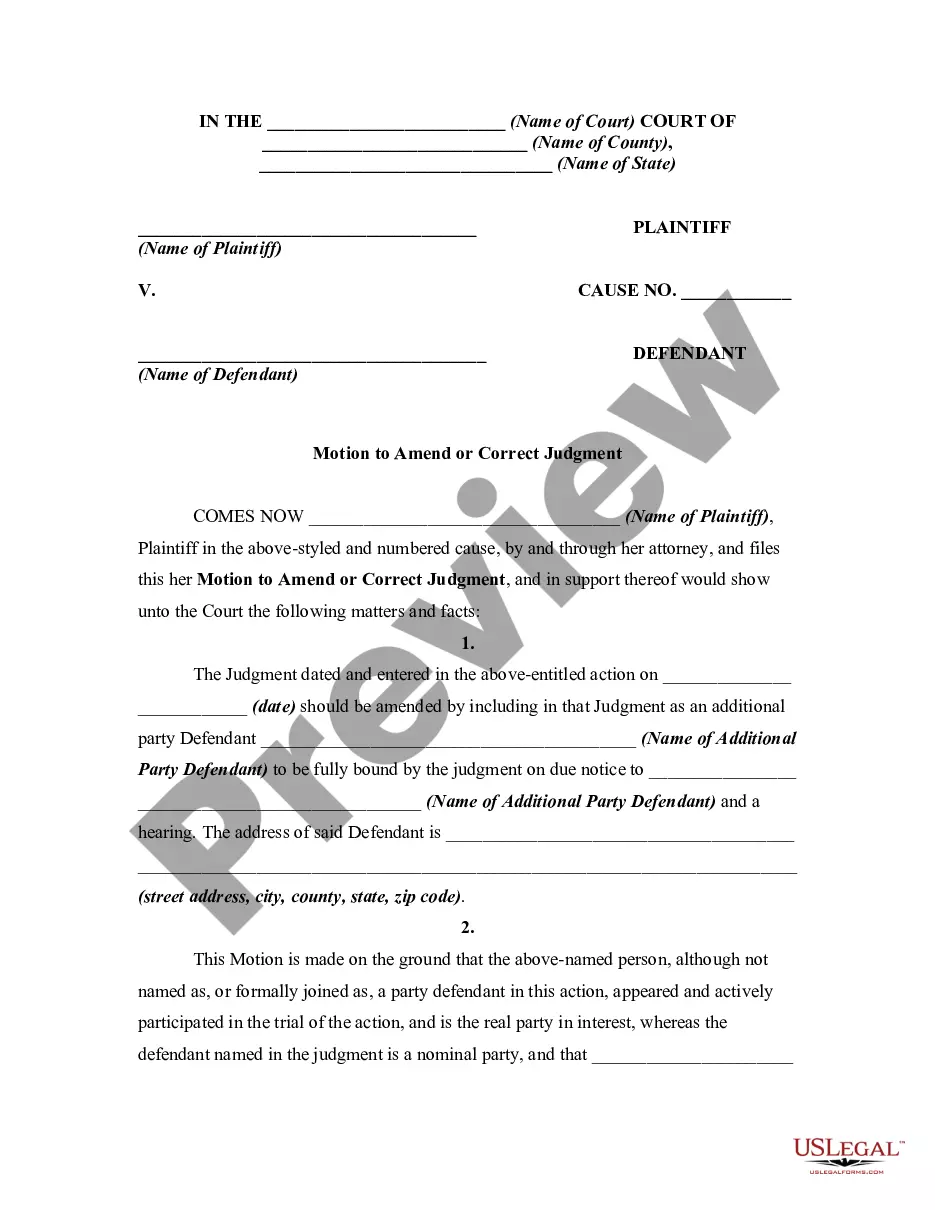
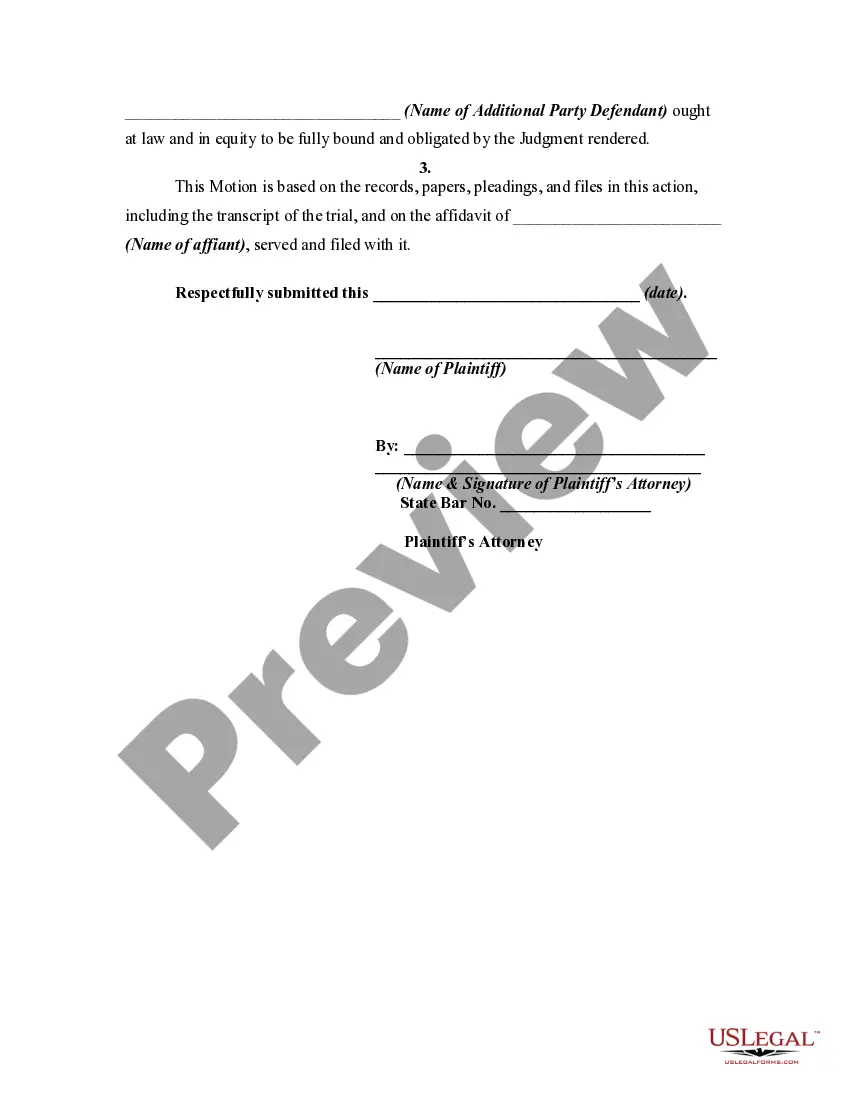
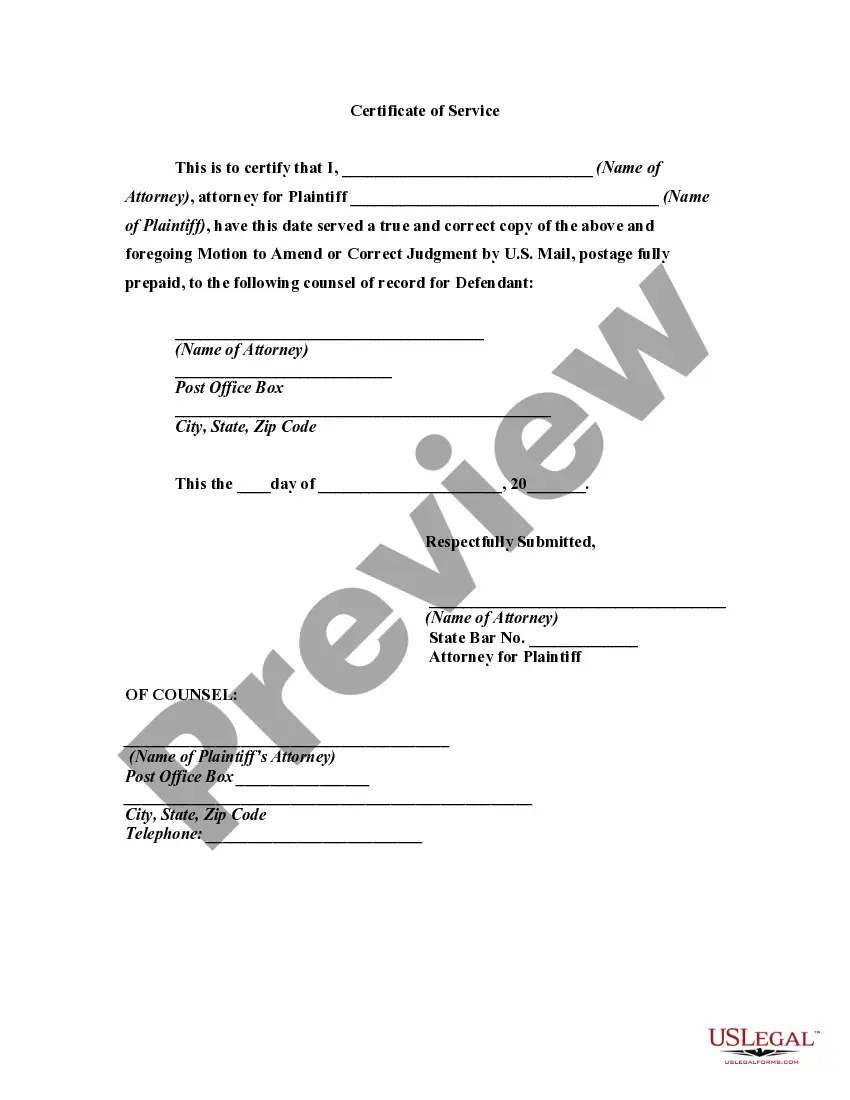
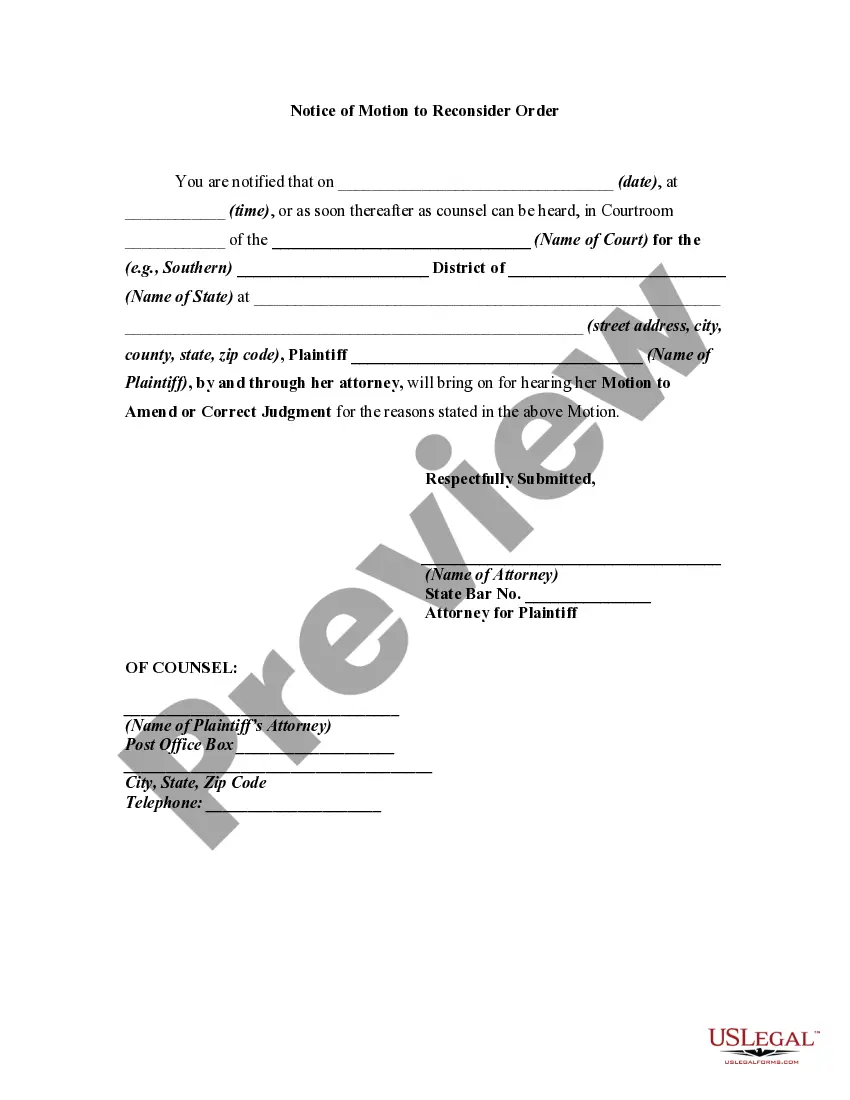
Motion For Correction Of Judgment
Description
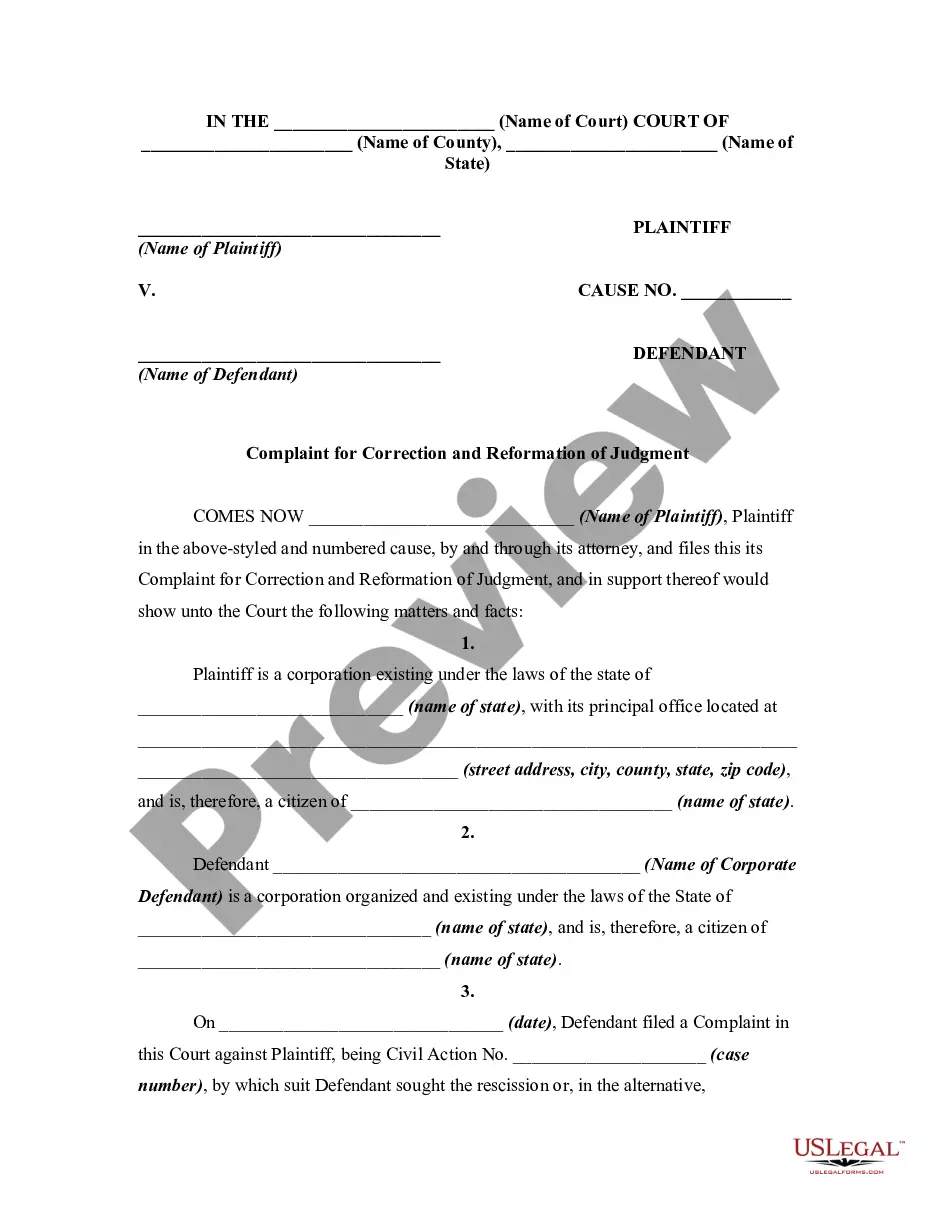
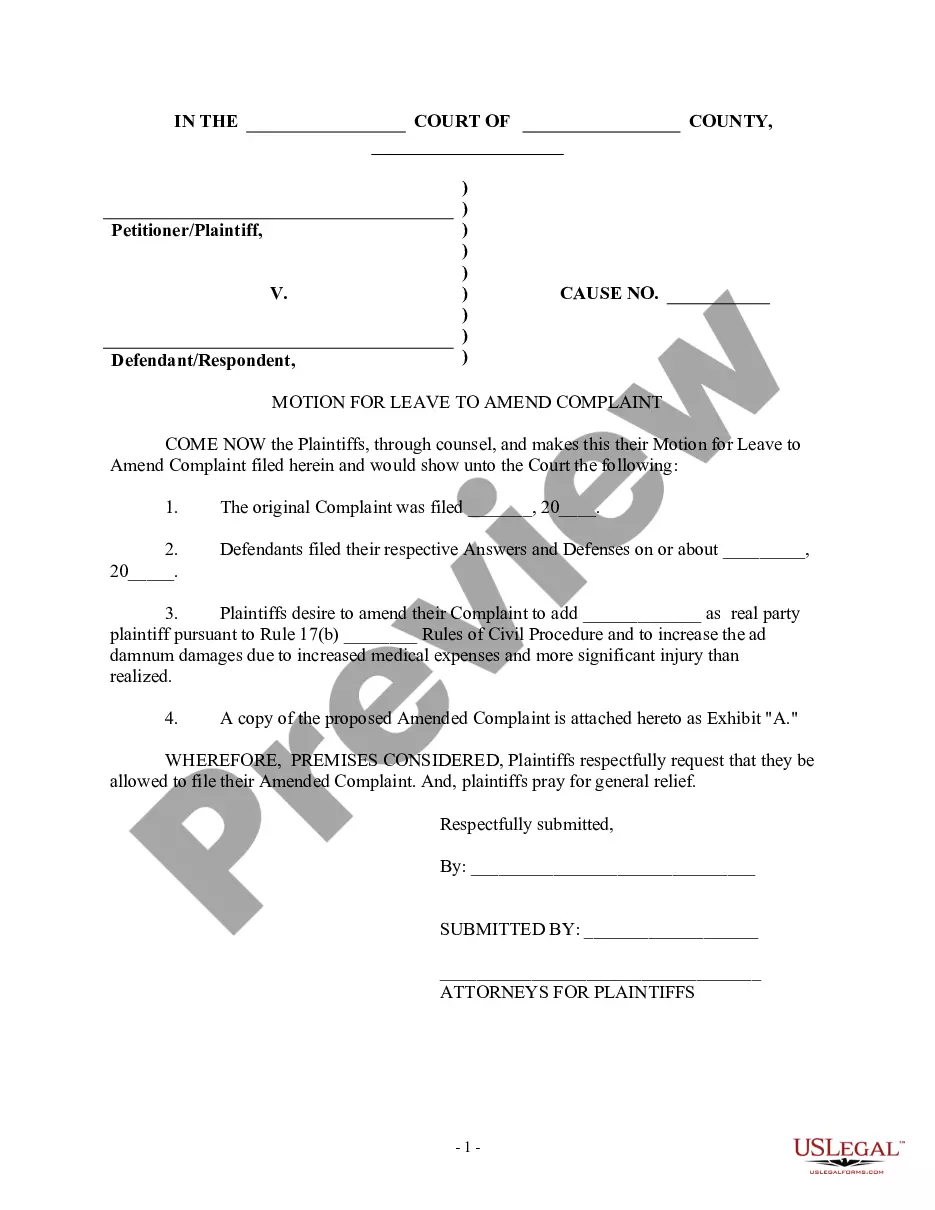
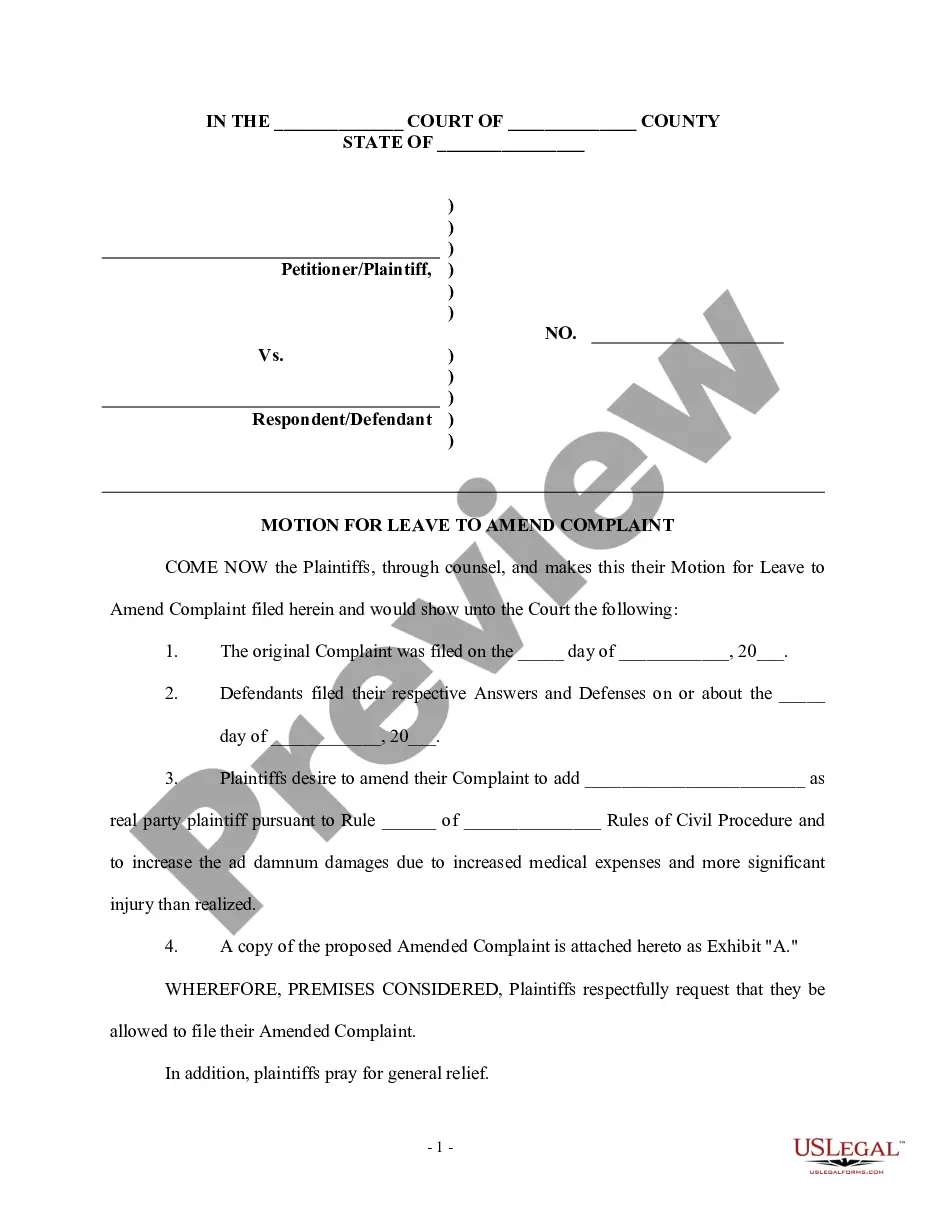
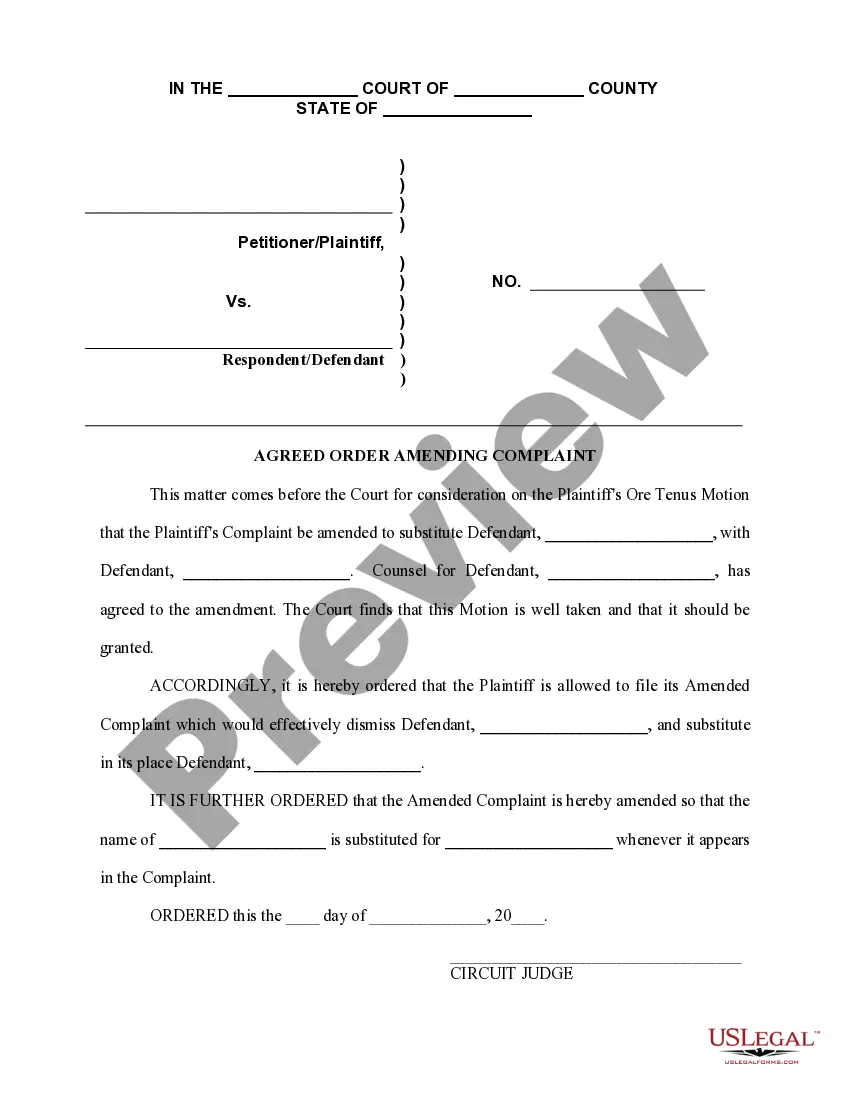
Get your form ready online
Our built-in tools help you complete, sign, share, and store your documents in one place.
Make edits, fill in missing information, and update formatting in US Legal Forms—just like you would in MS Word.
Download a copy, print it, send it by email, or mail it via USPS—whatever works best for your next step.
Sign and collect signatures with our SignNow integration. Send to multiple recipients, set reminders, and more. Go Premium to unlock E-Sign.
If this form requires notarization, complete it online through a secure video call—no need to meet a notary in person or wait for an appointment.
We protect your documents and personal data by following strict security and privacy standards.

Make edits, fill in missing information, and update formatting in US Legal Forms—just like you would in MS Word.

Download a copy, print it, send it by email, or mail it via USPS—whatever works best for your next step.

Sign and collect signatures with our SignNow integration. Send to multiple recipients, set reminders, and more. Go Premium to unlock E-Sign.

If this form requires notarization, complete it online through a secure video call—no need to meet a notary in person or wait for an appointment.

We protect your documents and personal data by following strict security and privacy standards.
Looking for another form?
How to fill out Motion To Amend Or Correct Judgment To Include Additional Party Defendant As Real Party In Interest?
Creating legal documents from the ground up can occasionally feel overwhelming.
Certain situations may require extensive research and significant financial investment.
If you are looking for a simpler and more cost-effective method for preparing Motion For Correction Of Judgment or any other documentation without excessive effort, US Legal Forms is always accessible.
Our online collection of over 85,000 current legal documents addresses nearly every aspect of your financial, legal, and personal affairs.
Before proceeding to download the Motion For Correction Of Judgment, adhere to these recommendations: Review the document preview and descriptions to verify that you're viewing the correct document. Ensure that the template you select aligns with the regulations and laws of your state and county. Choose the most appropriate subscription option to acquire the Motion For Correction Of Judgment. Download the form, then complete, sign, and print it. US Legal Forms boasts a strong reputation and over 25 years of experience. Join us now and make document completion a simple and efficient process!
- With just a few clicks, you can swiftly obtain state- and county-specific forms meticulously assembled for you by our legal experts.
- Utilize our platform whenever you need a dependable and trustworthy service to easily find and download the Motion For Correction Of Judgment.
- If you are familiar with our services and have previously set up an account with us, simply Log In, choose the template, and download it immediately or re-download it later from the My documents section.
- Not registered yet? It's not an issue. Registering takes very little time, and you can easily navigate the library.
Form popularity
FAQ
The five types of judgment mentioned in the Bible can include condemnation, correction, discernment, evaluation, and vindication. These concepts provide insight into moral and spiritual accountability. For anyone grappling with legal challenges, connecting these judgments to personal situations can offer profound understanding when preparing a motion for correction of judgment.
In the context of the Bible, particularly within the Seventh-day Adventist (SDA) interpretation, the three types of judgment often discussed include the investigative judgment, the executive judgment, and the final judgment. Each represents a different aspect of divine justice. For individuals seeking spiritual guidance alongside legal matters, understanding these judgments can offer a broader perspective when considering a motion for correction of judgment.
The three types of judgment typically include default judgment, summary judgment, and final judgment. Each type serves a distinct purpose within the legal system. If you believe there has been an error in your case, submitting a motion for correction of judgment can clarify the misunderstanding and help achieve the right outcome.
The three elements of judgment include the facts of the case, the applicable law, and the application of the law to those facts. Each of these components must be carefully considered for a fair ruling. When filing a motion for correction of judgment, understanding these elements is crucial, as they can help highlight any mistakes in the original decision.
A motion for judgment is a formal request made to a court to issue a decision regarding a case. This motion can compel the court to rule in favor of one party based on the evidence presented. When considering a motion for correction of judgment, the aim is often to rectify errors made in previous rulings, ensuring fairness and accuracy in the legal process.
Rule 60 relief from judgment acts as a mechanism for parties to rectify judgments that may have been issued unjustly or based on new information. This relief is sought through a motion for correction of judgment, highlighting the specific reasons for challenging the initial ruling. Understanding this rule is essential if you find yourself in a situation that warrants judicial review. Through this process, you can seek a more equitable outcome.
Filing a motion for judgment involves crafting a formal request that outlines your legal arguments and evidence supporting your position. Begin by referencing the applicable laws and previous case outcomes. After completing the motion, file it with the court, ensuring all parties are duly notified. Resources available through USLegalForms can assist in providing templates that simplify this process.
The Rule of 60 allows parties to seek relief from a judgment under certain conditions, such as mistakes or newly discovered evidence. This rule serves as a legal safety net that enables you to challenge a judgment that may have resulted from inequity. Using a motion for correction of judgment can effectively harness this rule to address and rectify any inequalities. It is essential to follow the proper procedures when invoking Rule 60.
A motion for relief of judgment refers to a request for the court to overturn or modify a previously issued judgment. Such a motion can be based on valid grounds such as changes in circumstance or procedural errors. Opting for a motion for correction of judgment can help restore fairness if you believe the judgment was flawed. Knowing how to navigate this process is crucial for achieving justice.
Rule 59 pertains to motions for a new trial or to alter a judgment, while Rule 60 focuses on providing relief from judgments due to errors or injustices. Essentially, Rule 59 is proactive, aiming to address issues right after a verdict, whereas Rule 60 is more about correcting past errors. Understanding these differences is vital when filing a motion for correction of judgment. This knowledge ensures you choose the correct rule for your specific situation.