Amend Judgment With The Supreme Court
Description
Get your form ready online
Our built-in tools help you complete, sign, share, and store your documents in one place.
Make edits, fill in missing information, and update formatting in US Legal Forms—just like you would in MS Word.
Download a copy, print it, send it by email, or mail it via USPS—whatever works best for your next step.
Sign and collect signatures with our SignNow integration. Send to multiple recipients, set reminders, and more. Go Premium to unlock E-Sign.
If this form requires notarization, complete it online through a secure video call—no need to meet a notary in person or wait for an appointment.
We protect your documents and personal data by following strict security and privacy standards.

Make edits, fill in missing information, and update formatting in US Legal Forms—just like you would in MS Word.

Download a copy, print it, send it by email, or mail it via USPS—whatever works best for your next step.

Sign and collect signatures with our SignNow integration. Send to multiple recipients, set reminders, and more. Go Premium to unlock E-Sign.

If this form requires notarization, complete it online through a secure video call—no need to meet a notary in person or wait for an appointment.

We protect your documents and personal data by following strict security and privacy standards.
Looking for another form?









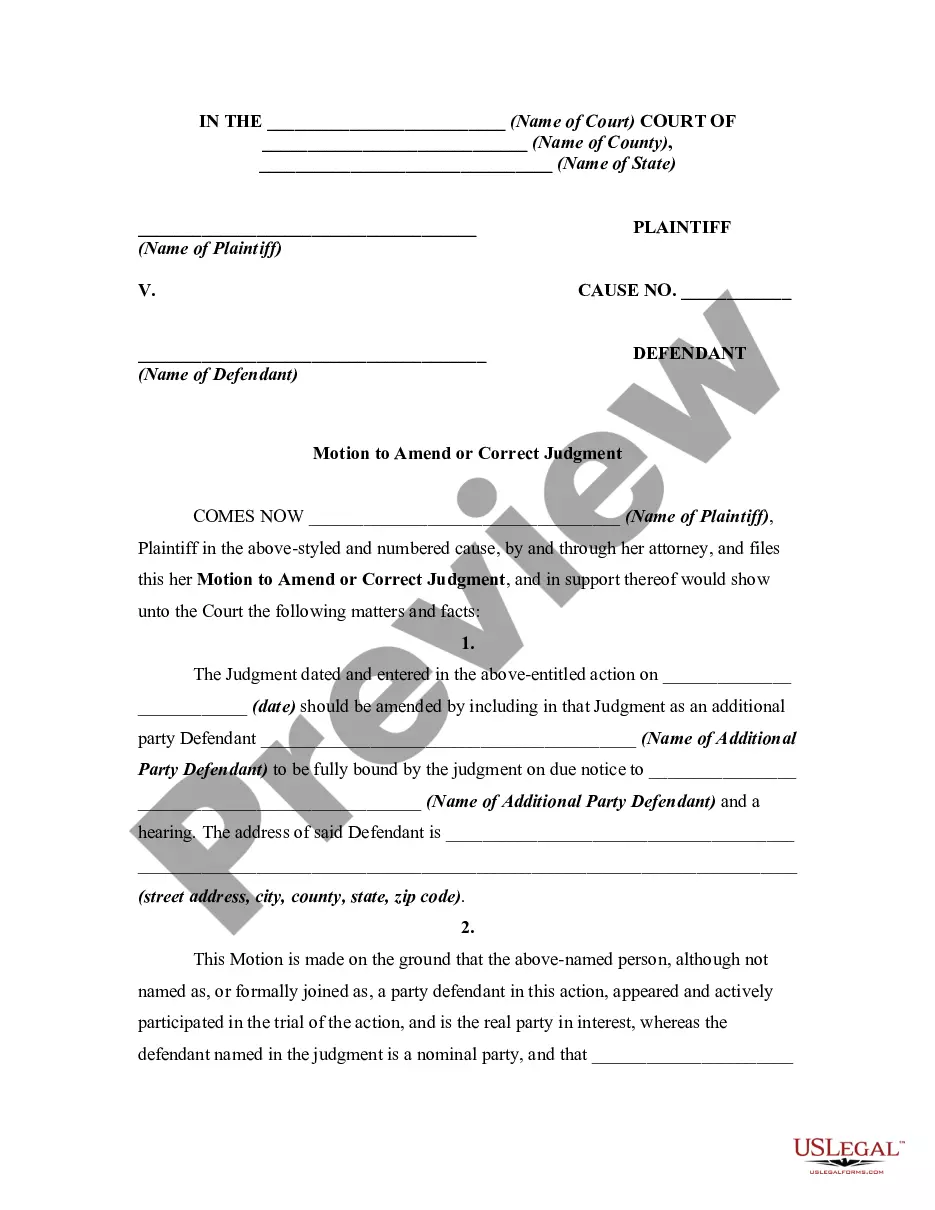
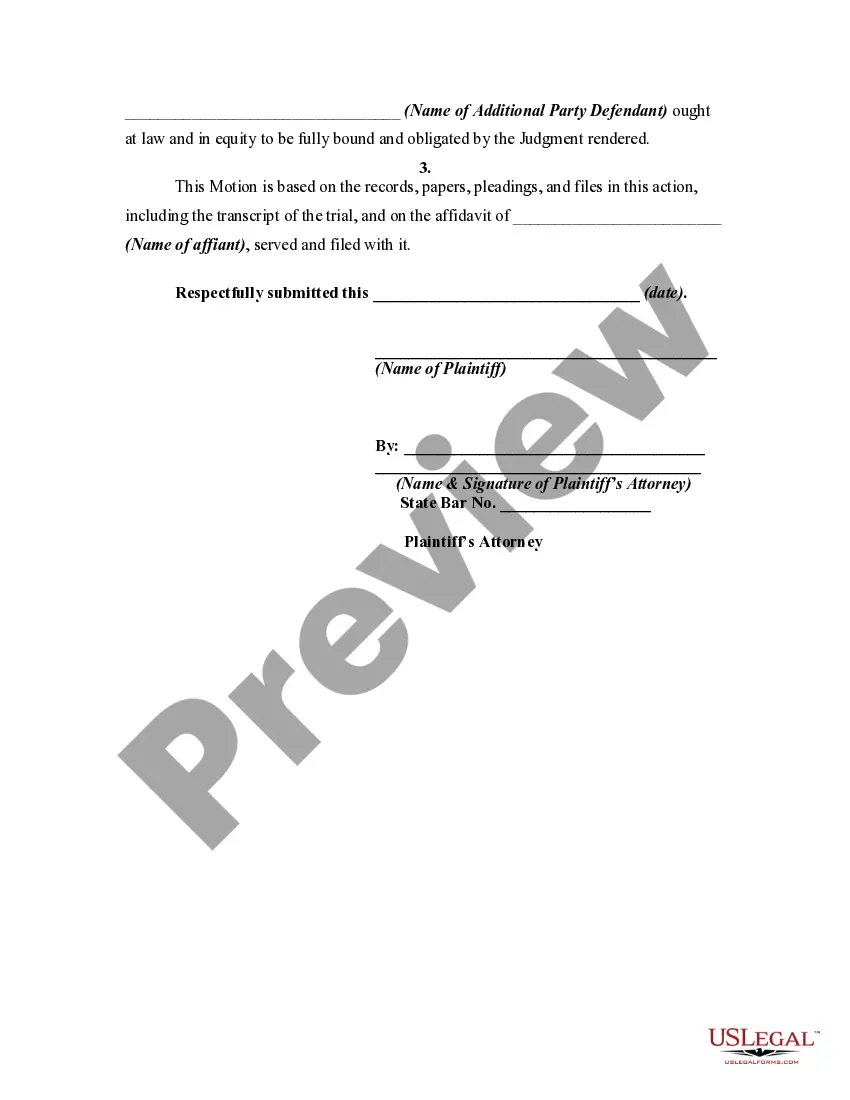
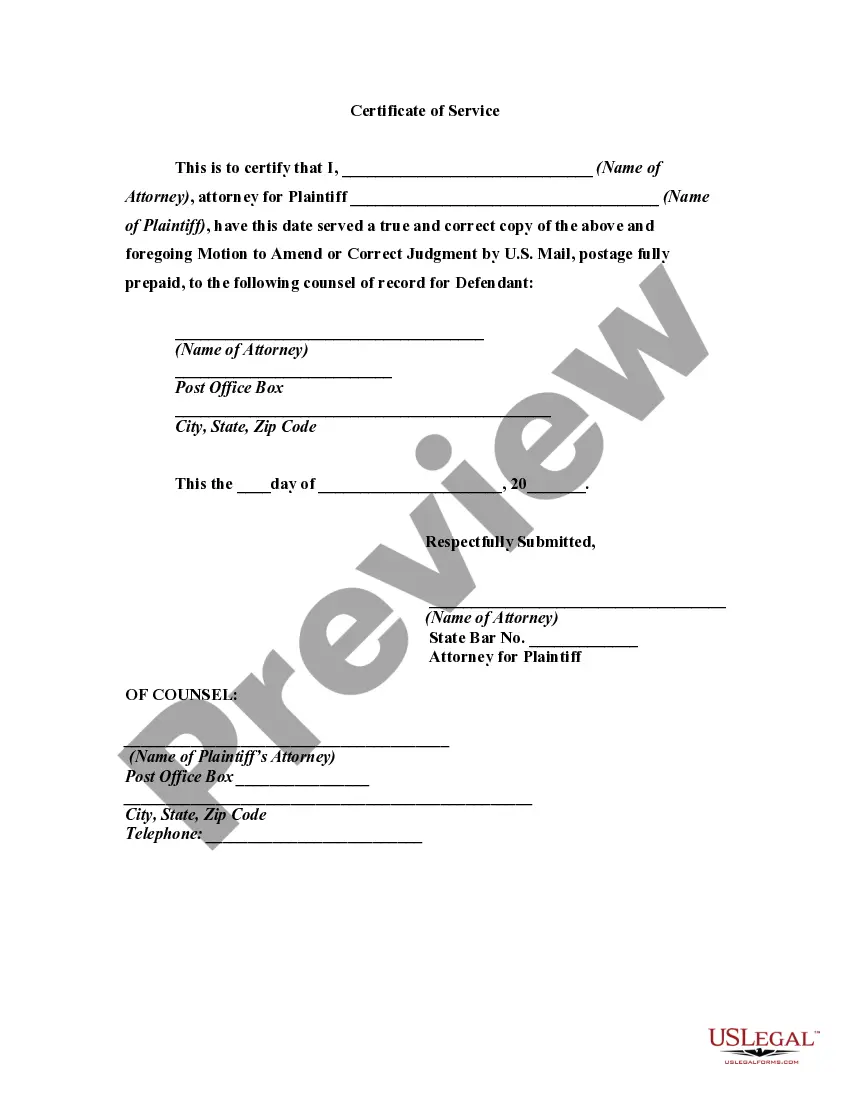
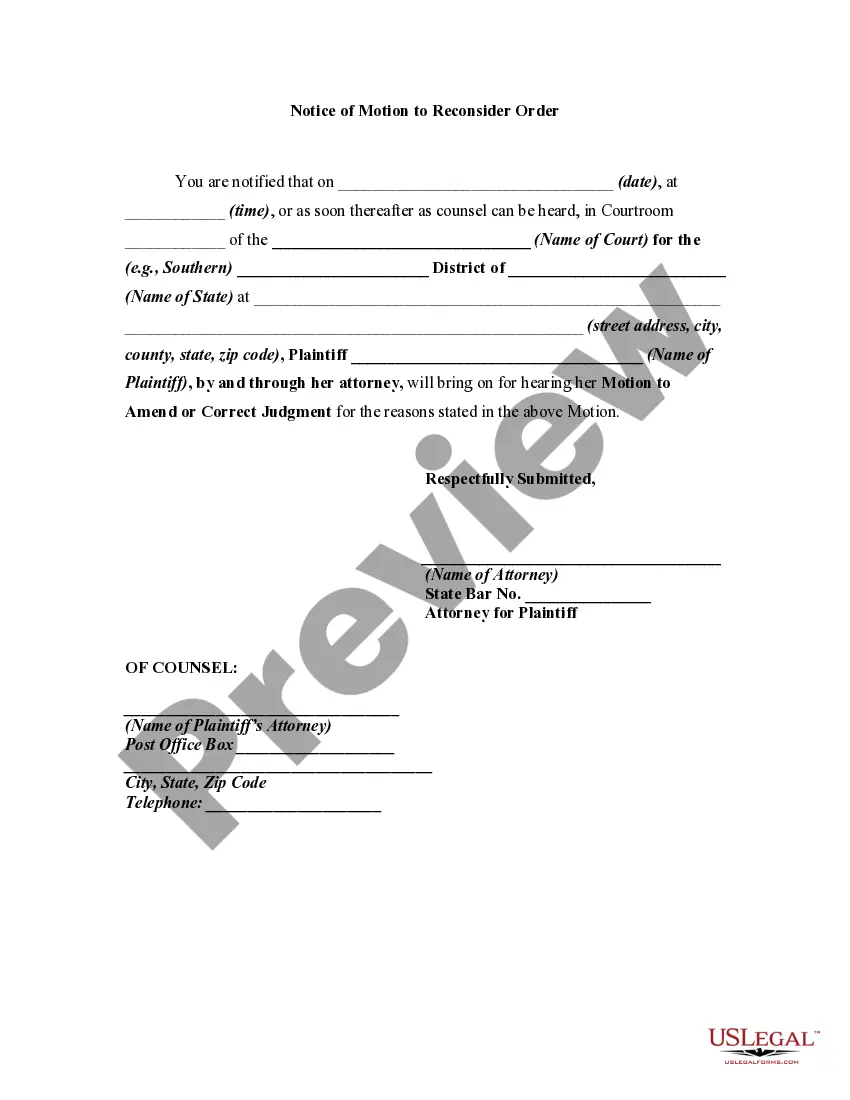
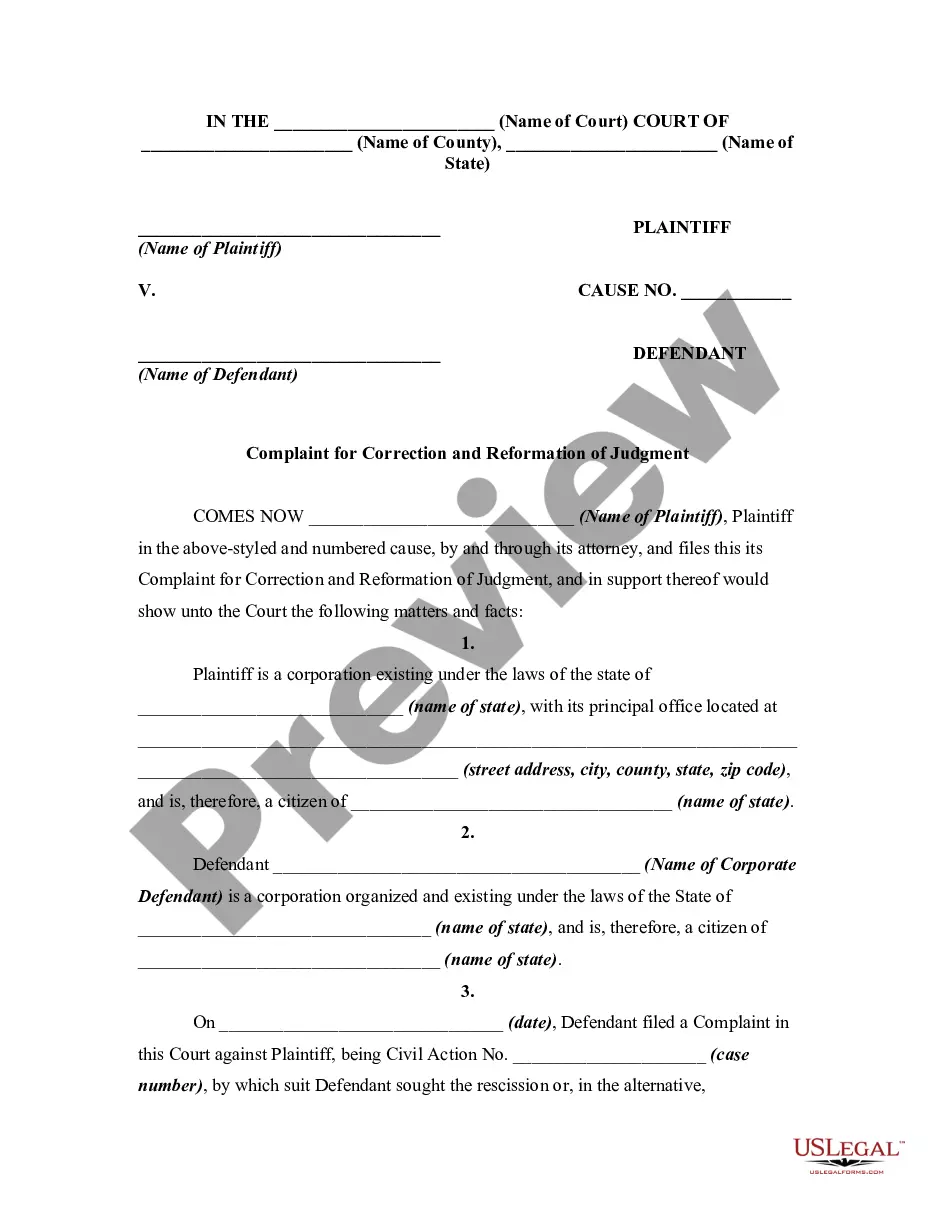
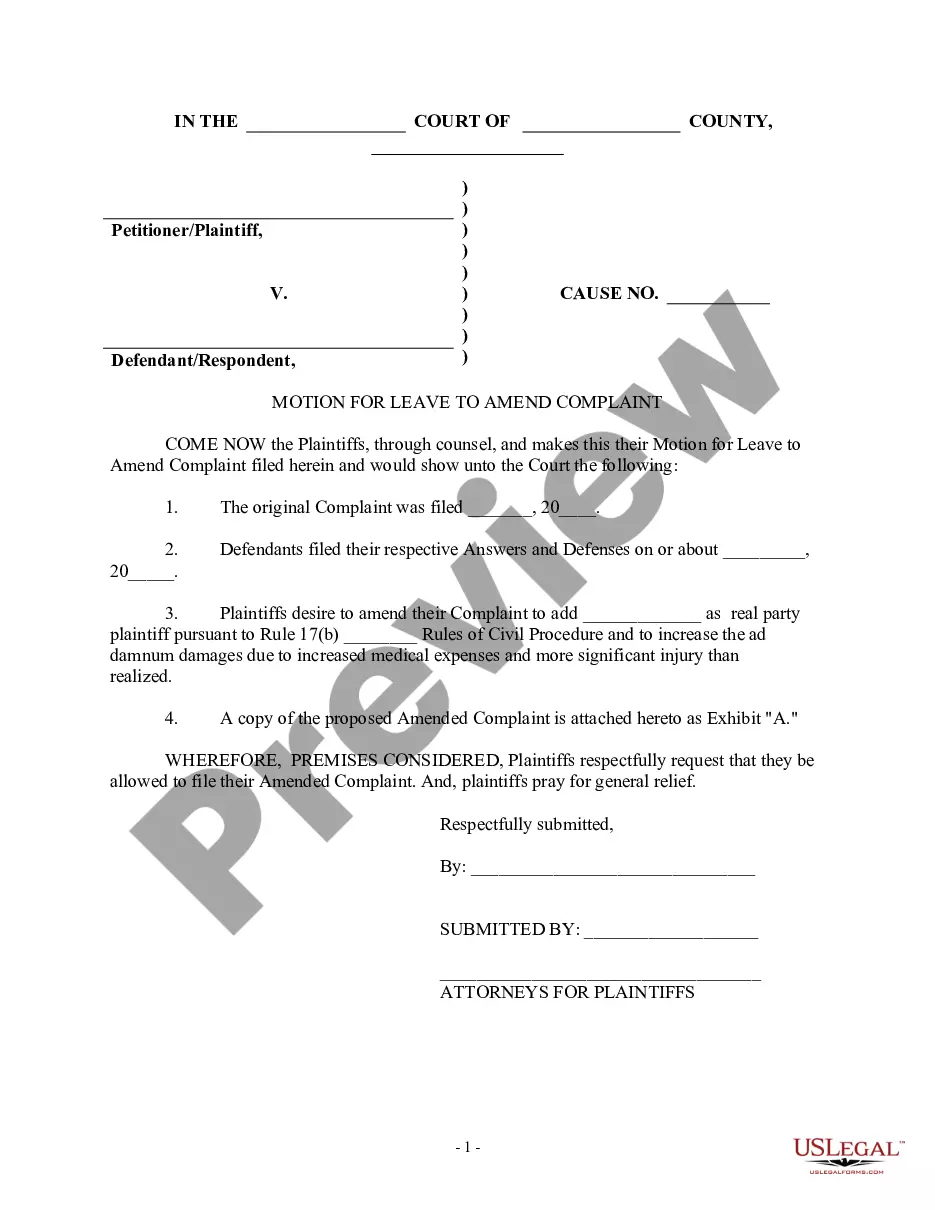
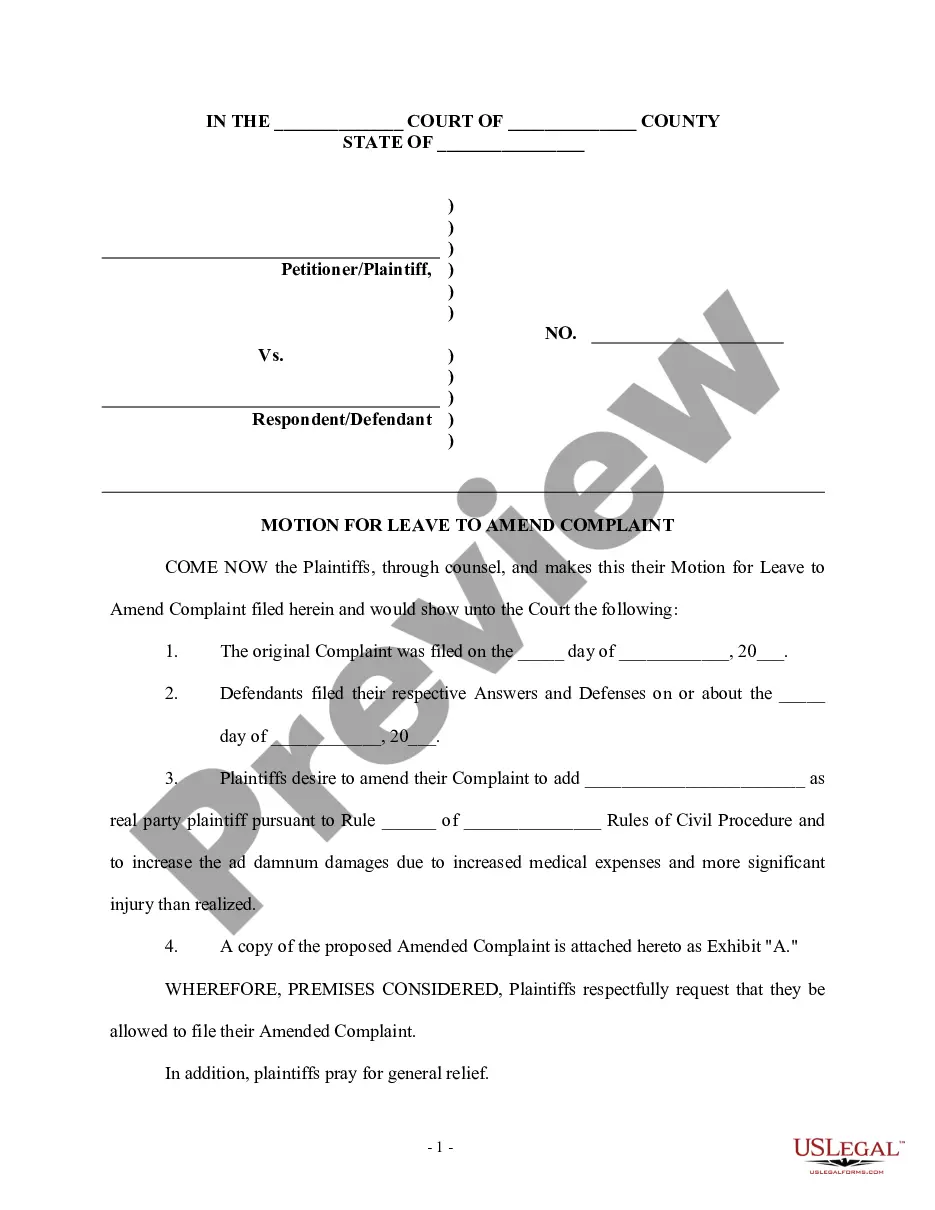
How to fill out Motion To Amend Or Correct Judgment To Include Additional Party Defendant As Real Party In Interest?
- Begin by logging into your US Legal Forms account to access your previously downloaded templates. Verify that your subscription remains current to avoid any interruptions.
- If it's your first time, explore the extensive library. Start by reviewing the form previews and descriptions to find the appropriate document that fulfills your specific jurisdictional requirements.
- Should you need a different template, utilize the search bar to locate alternatives that better suit your needs.
- Once you identify the correct form, click on the 'Buy Now' option. Select a subscription plan that works best for you, and create an account to unlock a full array of resources.
- Complete your purchase by entering your payment details, either through credit card or PayPal, to ensure you have access to your documents.
- Finally, download the completed form to your device. You can always revisit your account through the 'My Forms' menu for future reference.
In conclusion, utilizing US Legal Forms simplifies the process of amending judgments with the Supreme Court. Their extensive resources and expert assistance empower users to create precise legal documents seamlessly.
Start your journey toward amending your judgment today by visiting US Legal Forms.
Form popularity
FAQ
Changing a Supreme Court decision can be very challenging, as these decisions are often seen as final. You can consider filing a motion to amend judgment with the supreme court, which may allow you to present new arguments or evidence. Consulting with legal experts can help clarify your options and improve your chances in such endeavors.
If you disagree with a Supreme Court decision, you generally have limited options since the Supreme Court's ruling is final. You might consider seeking a rehearing or exploring possibilities for amending the judgment with the supreme court, especially if new evidence comes to light. Legal guidance can assist you in determining the best course of action in such complex situations.
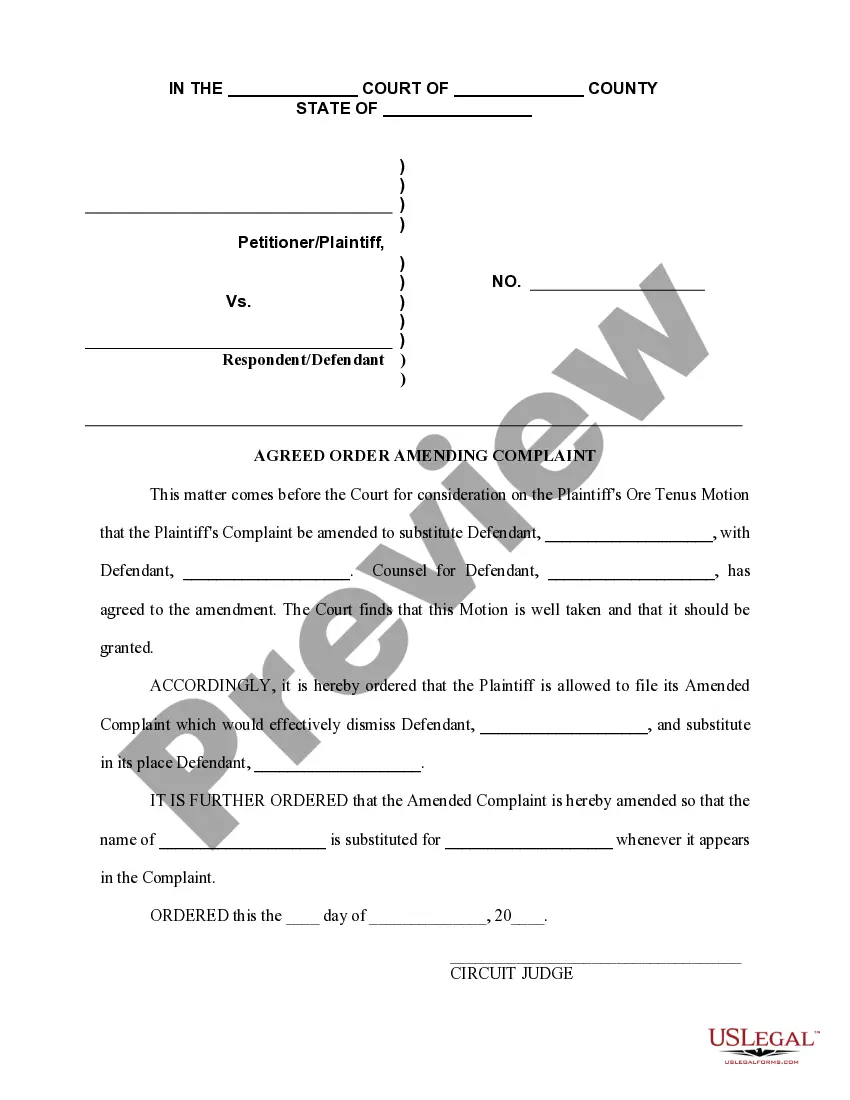
A motion to leave to amend is a formal request made to the court, asking for permission to alter the previously filed pleadings or documents. This request is often necessary to adapt to new developments or to rectify mistakes. In the context of seeking to amend judgment with the supreme court, such motions can be critical to achieving favorable outcomes.
The purpose of a motion to amend is to correct or modify existing legal documents to reflect new information or to clarify previous claims. This helps in creating a clear and concise presentation of your case. If you aim to amend judgment with the supreme court, this motion allows you to strengthen your position effectively.
A motion to leave to amend allows a party to request permission from the court to change or improve their legal documents after they have been filed. This is crucial when errors are identified or new evidence emerges. When you want to amend judgment with the supreme court, this motion becomes a necessary step to ensure your arguments are accurately presented.
The President cannot unilaterally change the number of Supreme Court Justices; such a change requires Congressional approval. Historically, Congress has varied the number of Justices, but it is a complex process. If you find yourself navigating legal intricacies like these, platforms such as US Legal Forms can assist you in understanding your options.
Overturning a Supreme Court ruling can only occur through a new Supreme Court decision or an amendment to the Constitution. Typically, this process requires a significant shift in legal interpretation or societal norms. If you need to address issues related to the Supreme Court's decisions, consider utilizing services like US Legal Forms to facilitate your legal journey.
To amend judgment means to modify or change a legal decision made by a court, usually to correct errors or adjust the outcome. This process is essential for achieving justice and ensuring that all legal procedures are followed properly. For those looking to amend a judgment with the Supreme Court's involvement, resources like US Legal Forms can provide guidance and templates.
Yes, you can amend a default judgment under certain circumstances. The process typically involves filing a motion to the court explaining why the amendment is necessary. If you are seeking to amend a judgment effectively with the Supreme Court's guidance, consider using US Legal Forms to simplify the documentation process.
The Supreme Court itself does not undergo amendments in the traditional sense. Rather, the Constitution may be amended, which could indirectly affect the Supreme Court’s powers or structure. To stay informed on these changes, you can refer to trustworthy legal platforms like US Legal Forms for up-to-date information.