Write File Format Python
Description




Get your form ready online
Our built-in tools help you complete, sign, share, and store your documents in one place.
Make edits, fill in missing information, and update formatting in US Legal Forms—just like you would in MS Word.
Download a copy, print it, send it by email, or mail it via USPS—whatever works best for your next step.
Sign and collect signatures with our SignNow integration. Send to multiple recipients, set reminders, and more. Go Premium to unlock E-Sign.
If this form requires notarization, complete it online through a secure video call—no need to meet a notary in person or wait for an appointment.
We protect your documents and personal data by following strict security and privacy standards.

Make edits, fill in missing information, and update formatting in US Legal Forms—just like you would in MS Word.

Download a copy, print it, send it by email, or mail it via USPS—whatever works best for your next step.

Sign and collect signatures with our SignNow integration. Send to multiple recipients, set reminders, and more. Go Premium to unlock E-Sign.

If this form requires notarization, complete it online through a secure video call—no need to meet a notary in person or wait for an appointment.

We protect your documents and personal data by following strict security and privacy standards.
Looking for another form?
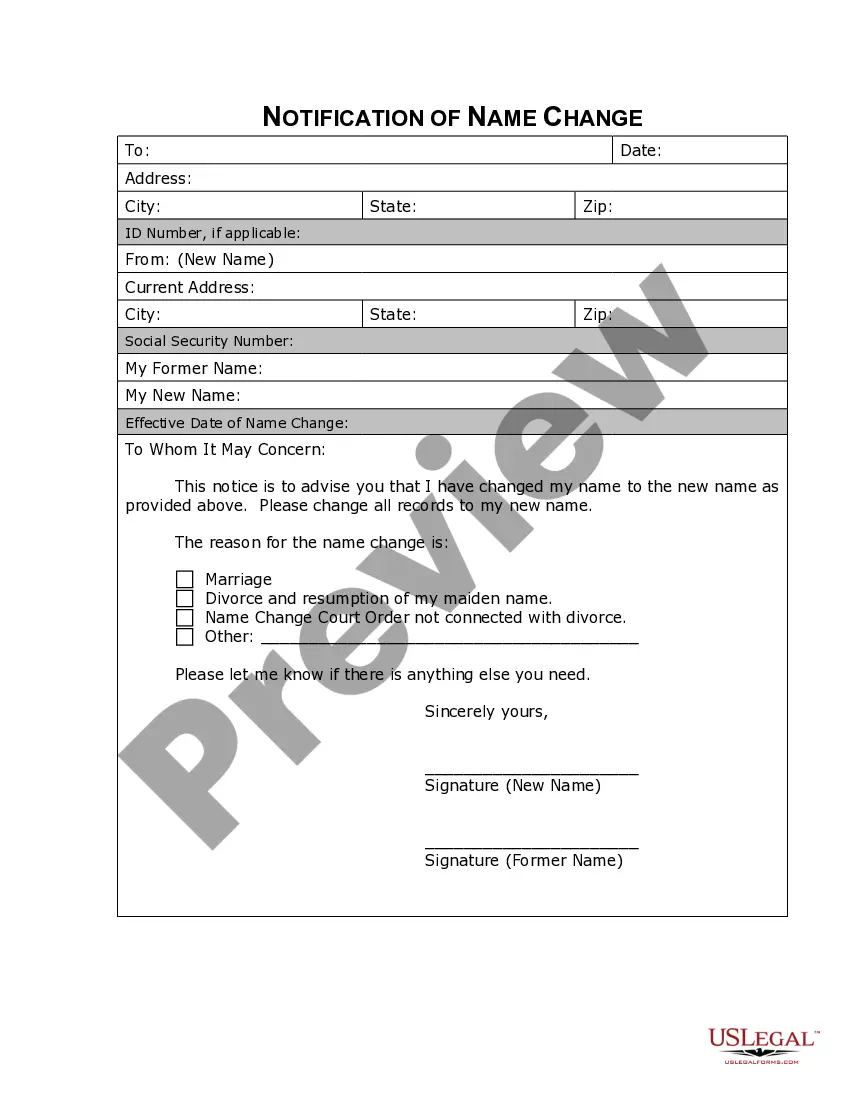
How to fill out Writ Of Replevin Or Repossession?
Creating legal documents from the ground up can occasionally be daunting.
Certain situations may require extensive research and significant financial investment.
If you desire a more direct and cost-effective method of generating Write File Format Python or any other forms without unnecessary complications, US Legal Forms is always accessible to you.
Our online repository of over 85,000 current legal documents covers nearly every facet of your financial, legal, and personal matters.
However, before you rush to download Write File Format Python, consider these tips: Check the form preview and descriptions to ensure you have identified the form you need. Verify that the selected form meets the requirements of your state and county. Choose the most suitable subscription plan to obtain the Write File Format Python. Download the file, then complete, sign, and print it out. US Legal Forms has a flawless reputation and over 25 years of experience. Join us now and make document completion easy and efficient!
- With just a few clicks, you can swiftly access state- and county-specific templates meticulously crafted by our legal experts.
- Utilize our website whenever you require a dependable and trustworthy service through which you can effortlessly find and download the Write File Format Python.
- If you're already familiar with our services and have previously created an account, simply Log In, find the form, and download it or retrieve it later from the My documents section.
- Not registered yet? No worries. It only takes a few minutes to sign up and explore the library.
Form popularity
FAQ
To write a formatted string in Python, use either f-strings or the `str.format()` method, both of which allow you to include variables within strings gracefully. For example, you can create a formatted string like `f'The result is {result}'` to incorporate variables directly. This technique is important when you aim to write file format Python with clear and informative outputs.
1. Open a file in Python with the open() function 'r' : This mode indicate that file will be open for reading only. 'w' : This mode indicate that file will be open for writing only. ... 'a' : This mode indicate that the output of that program will be append to the previous output of that file.
Therefore, you can refer to the file as 'C:/Users/yourname/Desktop/alice. txt'. RECOMMENDED. If using backslash, because it is a special character in Python, you must remember to escape every instance: 'C:\\Users\\yourname\\Desktop\\alice.
Traditional DOS paths A volume or drive letter followed by the volume separator ( : ). A directory name. The directory separator character separates subdirectories within the nested directory hierarchy. An optional filename. The directory separator character separates the file path and the filename.
There are two ways to specify a file path. An absolute path, which always begins with the root folder. A relative path, which is relative to the program's current working directory.
With Write to file Python, you can create a .text files (guru99.txt) by using the code, we have demonstrated here: Step 1) Open the .txt file f= open("guru99.txt","w+") ... Step 2) Enter data into the file for i in range(10): f.write("This is line %d\r\n" % (i+1)) ... Step 3) Close the file instance f.close()